PJRC Teensy 4.1 With Pins
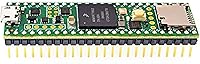
Overview
The PJRC Teensy 4.1 With Pins has earned a solid reputation in the maker and embedded systems world since its mid-2020 release, and that standing has only grown stronger. PJRC is a well-regarded name among serious hobbyists and engineers, and this Teensy board reflects that pedigree clearly. The pre-soldered header pins variant is the practical choice for anyone who wants to plug straight into a breadboard without picking up a soldering iron first. Underneath the compact green PCB sits an ARM Cortex-M7 core running at 600 MHz — a level of processing power that puts it well ahead of typical Arduino-class boards and squarely in the hands of developers who need real muscle.
Features & Benefits
The 600 MHz processor is not just a headline spec — it directly enables tasks that lower-powered boards cannot handle reliably, like real-time audio processing and complex DSP work. The 8 MB of onboard flash is generous, and dedicated expansion pads mean storage is not a hard ceiling if a project demands more. What really sets this microcontroller apart is the combination of an integrated Ethernet PHY, a built-in SD card socket, and a USB host port all on one compact board. That trio of connectivity options removes the need for stacking shields, keeping builds cleaner and meaningfully reducing points of failure.
Best For
This Teensy board is a natural fit for audio synthesizer builders and effects designers where low-latency performance is non-negotiable. It handles networked IoT projects cleanly thanks to onboard Ethernet, with no external modules required. Students and researchers building data acquisition systems or DSP pipelines will find the processing headroom genuinely useful rather than theoretical. Robotics projects with heavy parallel I/O demands also benefit, as the expanded GPIO count handles multiple sensors and interfaces simultaneously. One honest note: this is not the right starting point for beginners. The Teensy 4.1 rewards those already comfortable with embedded development who want to push past what budget boards can realistically offer.
User Feedback
Among verified buyers, processing speed draws consistent praise — particularly from those using this microcontroller for audio synthesis and signal work where headroom actually matters. The pre-soldered pins variant gets specific credit for clean build quality and the time it saves during prototyping. On the other side, users coming from basic Arduino boards do mention a steeper adjustment period, which is a fair observation. A handful raise the cost relative to simpler alternatives. What keeps buyers confident, though, is PJRC forum support — an active community resource that genuinely reduces friction when projects get complicated. The overall rating reflects a satisfied, experienced user base that knew exactly what it was buying.
Pros
- 600 MHz ARM Cortex-M7 delivers genuine real-time audio and DSP performance that budget boards cannot match.
- Pre-soldered header pins mean you can go straight to prototyping without a soldering iron.
- Onboard Ethernet PHY, SD card socket, and USB host port reduce the need for external shields significantly.
- 8 MB of onboard flash handles large firmware images and audio samples with room to spare.
- Expansion pads allow additional external flash when demanding projects grow beyond onboard storage.
- Arduino IDE compatibility via Teensyduino makes the transition from existing workflows relatively smooth.
- PJRC forum support is unusually responsive and technically deep, with the designer actively participating.
- Compact form factor and light weight fit easily into enclosures and space-constrained builds.
- Sustained community adoption since 2020 means abundant real-world project examples to reference.
- Buying this Teensy board often costs less overall than assembling equivalent functionality from separate add-on modules.
Cons
- The learning curve is steep for anyone without prior embedded systems experience — this is not a forgiving starting point.
- Onboard Ethernet PHY still requires external magnetics and a physical jack, which surprises some buyers mid-project.
- 1 MB of RAM can become a bottleneck in memory-intensive applications like large audio buffers or complex concurrent processing.
- Deep sleep and low-power modes are limited, making battery-powered deployments impractical for most use cases.
- Documentation and community resources are concentrated on PJRC forums rather than broader platforms, which can feel siloed.
- Some Arduino libraries require manual patching or substitution due to occasional compatibility gaps with Teensyduino.
- Bottom-side expansion pads are difficult to access cleanly once the board is installed in a finished assembly.
- The price premium is hard to justify for projects that only use a fraction of the available capability.
- Library examples and community tutorials skew heavily toward audio applications, leaving other use cases less well-documented.
- Pin peripheral assignments require careful planning — not every pin is freely interchangeable, and conflicts can catch builders off guard.
Ratings
The PJRC Teensy 4.1 With Pins scores here reflect AI-driven analysis of verified global buyer reviews, with spam, bot activity, and incentivized feedback actively filtered out before any scoring was applied. Across hundreds of real-world project reports — from audio synthesizer builds to networked IoT prototypes — both the strengths and the genuine friction points of this microcontroller are represented transparently in every category below.
Processing Performance
Build Quality
Pre-Soldered Pins Convenience
Onboard Connectivity
Flash Memory & Storage
Arduino IDE Compatibility
I/O Pin Count & Flexibility
Power Consumption
Community & Documentation Support
Learning Curve
Value for Money
Form Factor & Size
Real-Time Audio Capability
Thermal Performance
Suitable for:
The PJRC Teensy 4.1 With Pins is built for makers and engineers who have outgrown the constraints of entry-level microcontroller boards and need real processing power without stepping up to a full single-board computer. Audio synthesizer builders in particular get an outsized return here — the 600 MHz ARM Cortex-M7 handles polyphonic synthesis and real-time effects chains that would overwhelm slower hardware, and the mature Teensy Audio Library gives them a head start rather than a blank page. Researchers and students running data acquisition systems or DSP experiments will appreciate the combination of onboard Ethernet, SD storage, and USB host on a single compact board, since it removes a layer of shield-stacking complexity from prototype builds. Robotics hobbyists managing dense sensor arrays and parallel I/O will find the expanded GPIO count genuinely useful in practice. Anyone already comfortable with the Arduino IDE who wants significantly more headroom — without switching ecosystems entirely — will find the transition manageable, especially with PJRC forum support available when things get complicated.
Not suitable for:
This microcontroller is a poor fit for beginners who are still learning the fundamentals of embedded development, and recommending it as a first board would set most newcomers up for frustration rather than success. The Teensy 4.1 assumes a working knowledge of interrupt handling, peripheral configuration, and memory management that casual hobbyists building their first LED blink project simply do not need yet. Battery-powered or ultra-low-power deployment scenarios are another clear mismatch — this board prioritizes raw performance, and its power consumption profile reflects that trade-off without apology. Buyers looking for the broadest possible library ecosystem and the largest online tutorial base may also find the experience slightly narrower than what mainstream platforms offer across general forums and video guides. Finally, anyone whose project requirements are modest — a simple sensor reading, a basic automation relay, a beginner curriculum exercise — will be paying for significant capability they will never actually use, and a less expensive board would serve them just as well.
Specifications
- Processor: The board runs an ARM Cortex-M7 core clocked at 600 MHz, making it one of the fastest microcontrollers available in this form factor.
- RAM: 1 MB of tightly coupled RAM is available onboard, split into two banks for flexible high-speed data access.
- Flash Memory: 8 MB of onboard flash storage handles large firmware images and audio sample libraries comfortably.
- Flash Expansion: Dedicated bottom-side pads allow soldering of an additional external flash chip for projects that require more than the onboard 8 MB.
- Connectivity: An integrated Ethernet PHY enables wired network functionality, though an external magnetics module and RJ45 jack are required to complete the connection.
- USB: A USB 2.0 host port is built in, allowing direct connection of USB peripherals such as MIDI controllers, keyboards, or storage devices.
- Storage: An onboard SD card socket supports full-size SD cards for data logging, audio file playback, and general file storage.
- Pin Headers: Standard 0.1″ pitch header pins come pre-soldered on this variant, enabling direct insertion into breadboards or female headers without additional soldering.
- GPIO: The board provides 55 digital I/O pins, with many supporting PWM, analog input, serial, SPI, I2C, CAN, and I2S simultaneously.
- Analog Inputs: 18 analog input pins with 12-bit ADC resolution are available, supporting accurate signal sampling for sensor and measurement applications.
- Operating Voltage: The board operates at 3.3V logic levels, and its USB input is regulated internally from a standard 5V USB connection.
- Power Source: Power is supplied via a Micro-USB connector from any standard USB port or charger capable of providing 5V.
- Dimensions: The PCB measures approximately 2.4″ x 0.7″, keeping the footprint compact enough for tight enclosures and embedded installations.
- Weight: The board weighs approximately 0.317 ounces, adding negligible mass to wearable or weight-sensitive project builds.
- PCB Color: The board features a green PCB finish, which is standard across the Teensy product line from PJRC.
- Compatibility: The board is compatible with the Arduino IDE via the Teensyduino add-on, supporting most standard Arduino libraries with minimal modification.
- Wireless: 802.11b wireless capability is noted in the product specifications, though onboard Wi-Fi is not natively integrated without additional external modules.
- Manufacturer: Designed and manufactured by PJRC, a company based in the United States with a long track record in the maker and embedded systems community.
- Date Released: The Teensy 4.1 was first made available in July 2020 and has maintained active production and community support since launch.
- IDE Support: Teensyduino, the official PJRC integration layer, provides full Arduino IDE compatibility along with Teensy-specific libraries including the widely used Teensy Audio Library.
Related Reviews
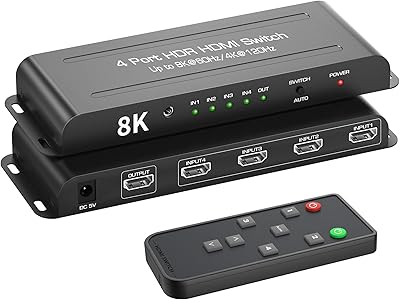
FERRISA 8K HDMI 2.1 Switch 4-in-1

BiZiSOFON 2-in-1 Green & Blue Screen Backdrop 39.4″ x 59.1″

PÜR Minerals 4-in-1 Correcting Primer 1oz

Yves Rocher Sebo Pur Végétal Moisturizer 40ml

Dove Men+Care Lime Avocado Bar Soap 4-Pack
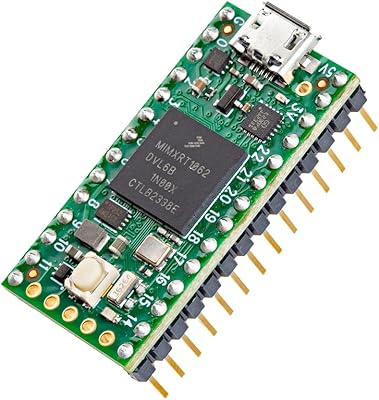
Teensy 4.0 with Headers
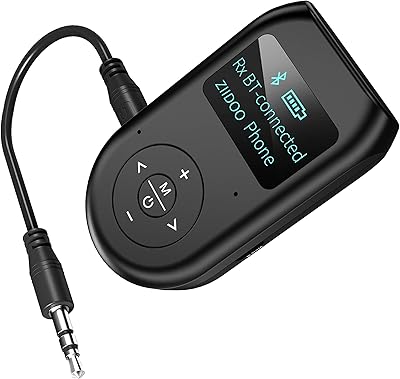
ZIIDOO LYJSQ Bluetooth 5.0 Audio Adapter
Alxum DP 1.4 KVM Switch
HOTO 4-in-1 Cordless Handheld Vacuum Cleaner