Overview

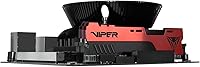
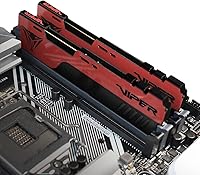
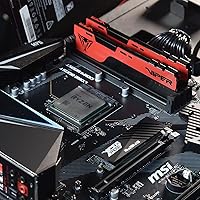
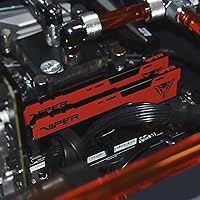
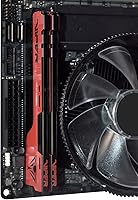
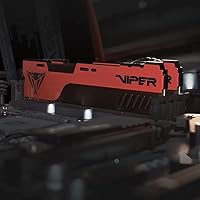
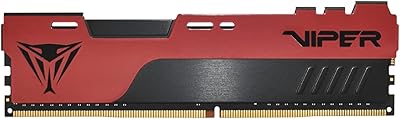
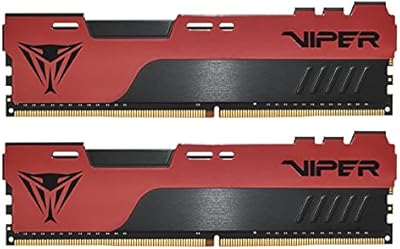
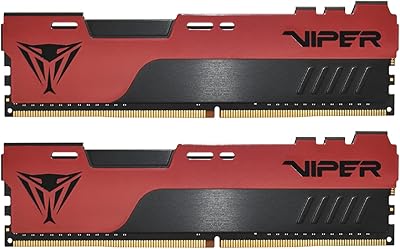
The Patriot Viper Elite II 16GB DDR4 RAM is a single-stick module pushing 4000MHz — a speed that stands out even among enthusiast-grade DDR4 options. Patriot Memory has been producing performance DRAM for decades, and this Viper Elite II stick sits in a sweet spot where serious clock speed meets accessible pricing. Most DDR4 modules at this tier top out around 3200–3600MHz, so a single UDIMM rated for 4000MHz is genuinely notable. The key to hitting those speeds without manual fuss is XMP 2.0 support, which lets you enable a single BIOS toggle and walk away — no spreadsheet of subtimings required.

Features & Benefits

Running at 4000MHz via an XMP 2.0 profile, this high-speed DDR4 module delivers its rated speed the moment you enable the setting in your motherboard BIOS. The 1.4V operating voltage sits a touch above standard DDR4 spec but stays well within what modern consumer boards handle without complaint. CL20 latency sounds loose until you put it in context — at 4000MHz, absolute access latency stays competitive with tighter-timed kits running considerably lower frequencies. The non-ECC unbuffered format is the correct choice for consumer desktop builds, and a limited lifetime warranty means Patriot is willing to back this module for the long haul.

Best For

This Viper Elite II stick suits desktop builders who want to start with a single 16GB module and keep a slot free for a matching stick later — it is a practical path to dual-channel without locking into a kit purchase upfront. It performs well on Intel and AMD platforms where the memory controller genuinely supports XMP 2.0 at this frequency. If raw clock speed matters more to you than ultra-tight timings, this module matches that priority well. One point worth clarifying: despite some ambiguous listing language, this is a UDIMM desktop module only and will not fit a laptop.

User Feedback

Across more than 1,200 ratings averaging 4.6 stars, satisfaction runs high with this module. Buyers most frequently praise out-of-the-box XMP reliability, with many reporting the stick posts at the full 4000MHz on the first boot without extra BIOS work. Heat spreader build quality also draws consistent compliments. The criticisms worth noting: a portion of users encountered compatibility issues on older motherboards whose memory controllers struggled at this frequency, so checking your board's QVL is a smart step before purchasing. Some buyers also flag that single-channel bandwidth can be a bottleneck in memory-intensive workloads, though for typical gaming use the practical difference is small.

Pros

  • XMP 2.0 enables 4000MHz with a single BIOS toggle — no manual timing adjustments needed.
  • 4000MHz is unusually fast for a single consumer UDIMM, offering real headroom over typical DDR4 options.
  • Running one stick leaves a slot open, making future dual-channel upgrades straightforward and affordable.
  • The Patriot 4000MHz RAM ships with a lifetime warranty, which is rare at this price tier.
  • Buyers consistently report the XMP profile activates reliably on first boot without additional tuning.
  • CL20 latency at 4000MHz keeps real-world access times competitive with slower, tighter-timed alternatives.
  • 1.4V voltage is elevated but well within what modern consumer desktop motherboards handle without issue.
  • Heat spreader build quality draws positive comments from users who have run the module under sustained loads.
  • Over 1,200 ratings averaging 4.6 stars reflects a consistently positive ownership experience across a large sample.
  • Patriot Memory is a well-established DRAM brand with a long track record in performance modules.

Cons

  • Single-channel configuration limits memory bandwidth until a second matching stick is purchased and installed.
  • 4000MHz can exceed the stable memory controller range on older or budget motherboards, causing boot or stability issues.
  • CL20 latency will disappoint buyers who want aggressively tight timings alongside high clock speeds.
  • Motherboard QVL compatibility is not guaranteed — research is essential before purchasing for less common platforms.
  • A single 16GB stick may feel limiting for memory-intensive workloads like 4K video editing or virtual machines.
  • Finding a matching stick later is not always straightforward if this exact model becomes harder to source.
  • The product listing ambiguously mentions laptop compatibility, which can mislead buyers unfamiliar with UDIMM formats.
  • At 4000MHz, some users may need to manually adjust voltage or secondary timings if XMP causes instability on edge-case boards.

Ratings

The scores below reflect our AI-driven analysis of verified global buyer reviews for the Patriot Viper Elite II 16GB DDR4 RAM, with spam, bot-submitted, and incentivized feedback actively filtered out before scoring. Each category is evaluated on the honest balance of what real users praised and where they ran into friction — nothing is softened to flatter the product. If a weak spot exists, you will see it reflected in the numbers.

XMP Profile Reliability
88%
A large portion of buyers report that enabling XMP in BIOS and booting straight to 4000MHz worked exactly as expected on the first attempt, with no secondary tuning required. For builders who want to set it and forget it, this level of out-of-box reliability at such a high frequency is genuinely impressive.
A meaningful minority of users — particularly those on older AM4 boards or entry-level Intel chipsets — found that the XMP profile caused POST failures or required manual voltage nudges to stabilize. Platform compatibility is the single biggest variable that can undermine an otherwise reliable module.
Value for Money
83%
Buyers consistently note that reaching 4000MHz without paying a premium-tier price feels like a smart trade, especially when paired with the lifetime warranty. For enthusiasts who have priced out competing high-frequency options, this Viper Elite II stick tends to come in at a competitive position for what it delivers.
A subset of buyers who later discovered their platform could not sustain 4000MHz felt the value proposition collapsed, since they effectively paid for a speed ceiling they could not use. If your board tops out at 3600MHz, you are not fully utilizing what you spent.
Compatibility Range
67%
33%
On supported Intel Z-series and higher-end AMD X570 and B550 boards, this high-speed DDR4 module slots in without drama and performs as advertised. Buyers with current-generation platforms who did their homework on QVL support report smooth experiences with no instability under typical gaming and productivity loads.
The 4000MHz target is aggressive enough that it exposes memory controller variance more than a 3200MHz or 3600MHz module would. Builders on budget boards, older chipsets, or platforms with tighter memory controller ceilings have reported needing to drop speeds manually, and a few encountered persistent instability that required time-consuming troubleshooting.
Single-Channel Trade-off
71%
29%
Starting with a single 16GB stick is a deliberate strategy for many builders, and this module makes that choice logical — the free second slot means upgrading to dual-channel later requires only purchasing one more matching stick. For general gaming at 1080p and 1440p, single-channel at 4000MHz does not feel punishing in practice.
Users running memory-bandwidth-sensitive workloads — video editing, large game asset streaming, or heavy multitasking — do notice the single-channel ceiling, and a few reviewers expressed regret at not starting with a matched dual-channel kit. The trade-off is real and worth thinking through before purchase.
Heat & Thermal Performance
81%
19%
The heat spreader handles sustained loads without causing concern for most users, and in cases with reasonable airflow the module runs cool even during extended gaming sessions. Running at 1.4V does push slightly more heat than a stock-voltage stick, but buyers rarely cite temperatures as a problem.
In small form factor builds or cases with poor airflow directly over the DIMM slots, a handful of users noted that the module ran warmer than expected. It is not a dealbreaker, but in thermally constrained environments the 1.4V operating voltage is worth factoring into your case and cooling planning.
Build & Physical Quality
84%
The heat spreader feels solid and premium relative to what buyers expect at this price point, with a design that looks clean without being ostentatious. Most users who comment on build quality express pleasant surprise at how substantial the module feels compared to no-name alternatives.
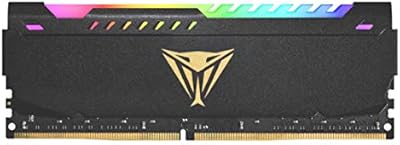
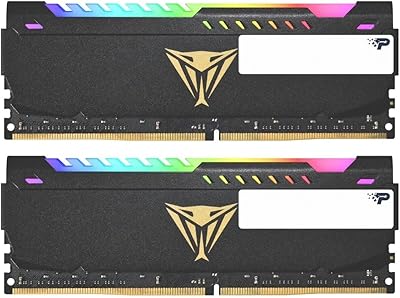
A small number of buyers noted that the heat spreader aesthetics feel a bit plain compared to flashier RGB competitors on the market. There are no RGB options in this specific model, which is a non-issue for most builders but a miss for those curating a lit system aesthetic.
Speed at Advertised Frequency
86%
When the platform cooperates, this Viper Elite II stick genuinely delivers at its 4000MHz rating — benchmark results from buyers on compatible systems match what the spec sheet promises. The CL20 latency at that frequency produces real-world access times that hold up well against lower-speed alternatives with tighter timings.
The caveat is that actual throughput is only as good as what your memory controller can handle, and on platforms where 4000MHz is not stable, buyers end up running the module at JEDEC defaults that make the rated speed feel like a marketing number rather than a guarantee.
Ease of Installation
91%
Physically installing the module is as straightforward as any standard UDIMM — buyers across skill levels report no issues seating it correctly. For those on compatible platforms, enabling XMP takes one BIOS visit and a single setting change, which makes the overall setup experience genuinely accessible even for first-time builders.
The one friction point some buyers encounter is navigating BIOS menus on unfamiliar motherboards to locate the XMP toggle, which can be named differently depending on the manufacturer. This is a minor inconvenience rather than a real barrier, but first-time builders occasionally need a quick search to find the right setting.
Lifetime Warranty
89%
A limited lifetime warranty on a memory module at this price bracket is a meaningful differentiator, and buyers mention it as a genuine confidence booster when making the purchase decision. Patriot Memory's warranty reputation in the enthusiast community is generally solid, which adds weight to the promise.
A few users noted that the RMA process requires going directly through Patriot Memory rather than through the retailer after the standard return window closes, which adds a step. Response times from Patriot support vary according to reviews, and some buyers experienced longer-than-expected turnaround on warranty claims.
Latency at Rated Speed
77%
23%
At 4000MHz, CL20 is a reasonable and expected timing, and buyers who understand the relationship between frequency and latency appreciate that the module does not compromise stability to achieve artificially tight numbers. Real-world performance in gaming and productivity reflects this balanced approach well.
Buyers migrating from a lower-frequency CL14 or CL16 kit sometimes feel the CL20 number is a step backward before understanding the context. For anyone who prioritizes ultra-tight primary timings above all else, this module is not designed around that use case and the numbers will feel looser than they prefer.
Platform Documentation
58%
42%
When buyers do their own research ahead of time — specifically checking their motherboard QVL — they generally find the compatibility information they need. The module's model number is clearly documented, which makes cross-referencing manufacturer support lists straightforward for experienced builders.
The product listing itself contains misleading information, including a reference to laptop compatibility that does not apply to this UDIMM format. Buyers who rely solely on the listing rather than independent research can make mismatched purchases, and Patriot has not addressed this discrepancy with a clear warning in the product description.
Availability of Matching Module
63%
37%
At the time most buyers purchased, finding a second matching PVE2416G400C0 to build out a dual-channel pair was relatively feasible through standard retail channels. Buyers who planned ahead and noted the model number reported being able to source a second stick without major difficulty.
As DDR4 inventory shifts with the industry transition to DDR5, some buyers have expressed concern about long-term availability of an exact matching module. Sourcing the same firmware revision of a specific SKU months or years after initial purchase is a real-world challenge that a few reviewers flagged as a potential future headache.

Suitable for:

The Patriot Viper Elite II 16GB DDR4 RAM is a strong pick for desktop builders who want high-frequency memory without the complexity of manual overclocking. If you are starting a build with a single 16GB stick and plan to add a matching module down the line, this Viper Elite II stick gives you a practical, upgrade-friendly path into dual-channel without committing to a kit today. Gamers on modern Intel or AMD platforms whose motherboards fully support XMP 2.0 will get the most out of the 4000MHz profile — enabling it is a one-setting BIOS change, and the stick reliably delivers. Enthusiasts who prioritize raw clock speed over chasing ultra-tight timings will find the CL20-at-4000MHz trade-off sensible and well-suited to their priorities. The lifetime warranty is also a meaningful perk for anyone planning to keep their system running for several years.

Not suitable for:

The Patriot Viper Elite II 16GB DDR4 RAM is not a good fit for users who need to maximize memory bandwidth immediately, since running a single UDIMM means sacrificing dual-channel performance until a second matching stick is added. Buyers with older motherboards or budget AM4 boards should check their QVL carefully — 4000MHz pushes the limits of many memory controllers, and there is a real risk of instability or falling back to lower speeds. This is strictly a desktop module, so anyone shopping for a laptop memory upgrade should look elsewhere entirely, despite any ambiguous language in the product listing. Workstation or server users requiring ECC or registered DIMM support will find this high-speed DDR4 module entirely unsuitable for their platform requirements. Finally, if your workflow is heavily memory-bandwidth-dependent — think large video editing timelines or massive data processing — going straight to a matched dual-channel kit is likely the smarter investment from the start.

Specifications

  • Brand: Manufactured by Patriot Memory, a long-established performance DRAM brand.
  • Model Number: The exact model identifier for this module is PVE2416G400C0.
  • Series: This module belongs to the Viper Elite II product line.
  • Capacity: Provides 16GB of total memory in a single-module (1x16GB) configuration.
  • Memory Type: Uses DDR4 SDRAM technology, the standard for modern consumer desktop platforms.
  • Speed Rating: Rated for 4000MHz operation when the XMP 2.0 profile is enabled in BIOS.
  • Latency Timings: Operates at CL20 primary latency, which is typical and appropriate for DDR4 at 4000MHz.
  • Operating Voltage: Runs at 1.4V, slightly above the DDR4 JEDEC baseline of 1.2V but within safe consumer tolerances.
  • XMP Support: Supports Intel XMP 2.0, enabling automatic overclocking to the rated speed via a single BIOS setting.
  • DIMM Format: Uses the standard Unbuffered Non-ECC DIMM (UDIMM) form factor designed for consumer desktop systems only.
  • ECC Support: Does not support Error-Correcting Code (ECC), making it unsuitable for workstation or server applications.
  • Channel Config: Ships as a single module, leaving one DIMM slot free for future dual-channel expansion with a matching stick.
  • Compatible Platform: Compatible with Intel and AMD desktop motherboards that support XMP 2.0 and high-frequency DDR4 operation.
  • Warranty: Covered by Patriot Memory's limited lifetime warranty against manufacturing defects.
  • BSR Ranking: Ranked #250 in the Computer Memory category on Amazon at time of review.
  • Customer Rating: Holds a 4.6 out of 5 star average across more than 1,200 verified customer ratings.
  • Release Date: First made available for purchase in May 2021.

Related Reviews

Patriot Viper Elite II DDR4 RAM 16GB 2666MHz CL16
87%
88%
Performance
94%
Ease of Installation
85%
Overclocking Capability
92%
Compatibility with Desktop Systems
91%
Energy Efficiency (1.2V)
More
Patriot Viper Elite II 16GB DDR4 RAM
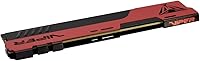
81%
91%
Value for Money
94%
Installation Ease
86%
XMP Performance
93%
System Stability
88%
Thermal Performance
More
Patriot Viper Elite II 32GB DDR4 RAM
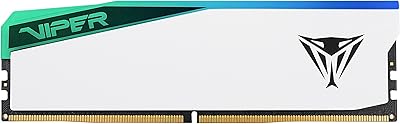
81%
91%
Installation Experience
88%
XMP Compatibility
84%
Platform Compatibility
86%
Value for Money
82%
Memory Speed & Bandwidth
More
Patriot Viper Elite II 64GB DDR4 RAM
82%
91%
XMP Setup Experience
88%
Daily Stability
84%
Platform Compatibility
73%
Value for Money
79%
Thermal Performance
More
Patriot Viper Elite 5 16GB DDR5 RAM
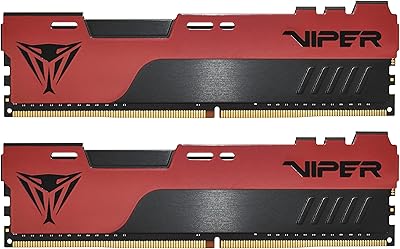
70%
78%
Speed & Performance
84%
XMP & EXPO Setup
71%
Platform Compatibility
74%
Value for Money
47%
Spec Accuracy & Transparency
More
Patriot Viper Steel RGB 16GB DDR4 RAM
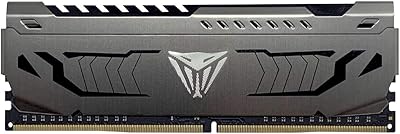
80%
93%
Setup & Installation
91%
Stability & Reliability
78%
Value for Money
74%
Memory Performance
82%
RGB Lighting Quality
More
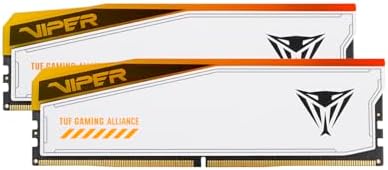
Patriot Viper Steel DDR4 RAM 64GB (2x32GB) 3200MHz CL16
87%
92%
Gaming Performance
89%
System Stability
88%
Compatibility
84%
Ease of Installation
90%
Overclocking Potential
More
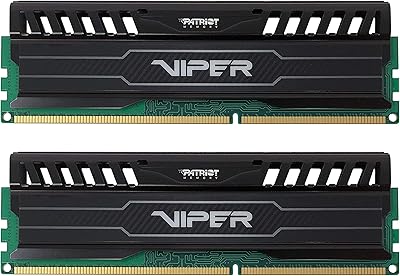
Patriot Viper Steel RGB 16GB DDR4 RAM
80%
88%
Value for Money
81%
Performance
74%
XMP Reliability
79%
RGB Quality
77%
Compatibility
More
Patriot Memory Viper 3 DDR3 16GB (2x8GB) 1866MHz CL10 UDIMM RAM
85%
91%
Performance in Gaming
88%
Overclocking Capability
87%
Value for Money
65%
Heat Management
90%
System Stability under Load
More
Patriot Viper Elite 5 32GB DDR5 RAM
77%
91%
Ease of Setup
83%
Performance Value
78%
Platform Compatibility
86%
Build & Aesthetic
71%
Thermal Management
More

FAQ

You do need to enable the XMP 2.0 profile manually in your motherboard BIOS — it will not run at 4000MHz straight out of the box. That said, it is a single toggle, not a deep dive into manual timings. Most modern Intel and AMD boards make this very straightforward, and users consistently report it posts at the rated speed on the first try after enabling XMP.

No — this is a full-size UDIMM designed exclusively for desktop systems. Laptop memory uses a physically smaller SO-DIMM format, so this module will not fit a laptop slot regardless of DDR4 compatibility. The product listing mentions laptops, but that appears to be an error. Stick to desktop builds only.

For most gaming workloads, the difference between 3600MHz and 4000MHz is relatively small in raw frame rate terms. Where higher frequency tends to help most is on AMD Ryzen platforms, where the memory controller is tightly coupled to the CPU fabric speed. If you are on Ryzen, the jump from 3200MHz to higher frequencies is more meaningful than on Intel. Going from 3600MHz to 4000MHz is a smaller marginal gain, though it does give you bragging rights and a bit of future headroom.

Yes, and that is actually one of the smarter ways to use this module. Starting with a single 16GB stick keeps one slot free, so you can add a second identical Patriot Viper Elite II 16GB unit down the line and switch to dual-channel. Just make sure to buy the same model number to avoid timing or compatibility mismatches between the two sticks.

In isolation, CL20 sounds loose compared to CL14 or CL16 kits, but latency has to be evaluated relative to clock speed. At 4000MHz, the actual nanosecond access time works out to around 10ns, which is quite reasonable. A slower 3200MHz CL16 kit, for comparison, also lands around 10ns. So no, CL20 at 4000MHz is not a performance penalty — it is simply how high-frequency DDR4 math works out.

It may work, but there is no guarantee it will run stably at the full 4000MHz XMP speed. Memory controllers have ceiling frequencies, and if yours tops out around 3600MHz, the module will likely fall back to JEDEC defaults (typically 2133 or 2400MHz) unless you manually dial in an intermediate speed. Check your board's memory support page carefully before buying if 4000MHz operation is important to you.

User feedback on the heat spreader is generally positive — most buyers describe the build quality as solid for the price tier. This high-speed DDR4 module runs at 1.4V, which produces slightly more heat than a standard 1.2V stick, so some airflow over the DIMMs is helpful. In typical mid-tower cases with reasonable airflow, temperature is not a concern under normal gaming or productivity workloads.

This module supports XMP 2.0, which is Intel's overclocking specification. AMD EXPO is a newer standard introduced with Ryzen 7000 series and DDR5. On AMD Ryzen DDR4 platforms (like AM4), XMP profiles are still widely recognized and usable — most AM4 boards can apply XMP settings without issue. EXPO specifically applies to the newer AM5 DDR5 ecosystem.

Absolutely. If 4000MHz XMP proves unstable on your specific motherboard and memory controller combination, you can simply disable XMP and run the module at standard JEDEC speeds, or manually set an intermediate frequency like 3600MHz or 3800MHz with adjusted timings. The stick is still perfectly functional at lower speeds — you just would not be using its full rated potential.

Patriot Memory's limited lifetime warranty covers manufacturing defects, and their RMA process is generally regarded as straightforward. You would need to contact Patriot Memory directly rather than going through Amazon for warranty claims after the return window closes. Keep your proof of purchase on hand, as it is typically required when initiating a claim.

Where to Buy