Overview

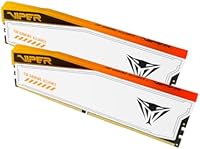
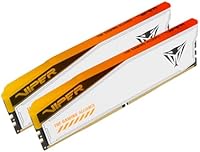
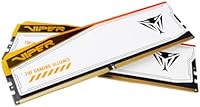
The Patriot Viper Elite 5 32GB DDR5 RAM launched in early 2024 as a mid-range DDR5 option aimed squarely at gamers building Intel XMP-compatible systems. It sits above the budget 4800–5600MT/s kits that come standard on most boards, yet well below the ultra-premium 7200MT/s territory where prices climb sharply for modest gains. The white heatshield and TUF Gaming co-branding make it a natural candidate for clean, themed builds where visual cohesion matters. This DDR5 kit is built for reliable, out-of-the-box performance at a sensible mid-range price — not for extreme overclocking records, but for a solid, stable gaming rig without unnecessary complexity.

Features & Benefits

Running at 6600MT/s with CL34 timings, the Viper Elite 5 delivers speed that translates into snappier frame pacing in CPU-bound games — a noticeable step up from base-spec DDR5 without requiring manual tuning. Both XMP 3.0 and AMD EXPO profiles are supported, meaning Intel and Ryzen 7000 builders alike can hit rated speeds with a single BIOS setting. The 1.4V voltage sits slightly above the DDR5 baseline — worth a thought in compact cases, though entirely unremarkable in standard desktop builds. The addressable RGB lightbar syncs with most major ecosystems, and the 2x16GB dual-channel layout is the right configuration for gaming. The included lifetime warranty rounds things out well.

Best For

The Viper Elite 5 is a natural fit for 13th and 14th Gen Intel builds — and Arrow Lake as well — where XMP 3.0 lets you hit rated speeds with one BIOS toggle. AMD Ryzen 7000 users get EXPO profile support, making this genuinely platform-flexible rather than Intel-only. Builders going for white aesthetics will appreciate how the heatshield pairs with ARGB components throughout the case. It also makes strong sense for first-time DDR5 upgraders who want meaningful speed over base-spec kits without manually tuning timings. If you are already running faster 7200MT/s memory or chasing extreme overclocks, purpose-built kits from G.Skill or Corsair are better suited.

User Feedback

With a 4.2-star average across 63 ratings, Patriot's 6600MT/s module has earned a cautiously positive reception — though with that review count, a handful of outlier experiences carry real weight, so take the aggregate as directional rather than definitive. Buyers consistently call out the hassle-free XMP activation and the clean white look as standout positives. On the flip side, some users would appreciate clearer motherboard compatibility documentation before purchasing. Stacked against similarly-priced kits from G.Skill or Kingston, community feedback suggests this kit holds its own on day-one stability, though Corsair and G.Skill still command stronger name recognition in this speed tier. A respectable debut for the lineup.

Pros

  • Reaches 6600MT/s with a single XMP 3.0 toggle — no manual BIOS tuning needed for most builds.
  • Dual EXPO and XMP 3.0 support makes the Viper Elite 5 genuinely flexible across both Intel and AMD platforms.
  • The 2x16GB dual-channel configuration is the right layout for gaming, improving bandwidth over a single-stick setup.
  • White heatshield with an addressable RGB lightbar syncs cleanly with most major ARGB ecosystems.
  • Tested across current-generation DDR5 platforms, which reduces the usual guesswork around new memory compatibility.
  • Lifetime warranty adds long-term confidence, especially for buyers less familiar with the Patriot brand.
  • CL34 timings at 6600MT/s represent a solid balance of speed and latency for gaming workloads.
  • Launched in 2024, meaning it targets current-generation boards rather than aging platforms.

Cons

  • With only 63 ratings at time of review, the feedback pool is too small to draw firm conclusions about long-term reliability.
  • Patriot carries less brand recognition in this speed tier compared to G.Skill, Corsair, or Kingston, which may concern some buyers.
  • Motherboard compatibility documentation could be clearer — a few users have flagged uncertainty before purchasing.
  • The 1.4V operating voltage is slightly above the DDR5 baseline and worth monitoring in thermally constrained cases.
  • RGB software ecosystem integration can vary; not all sync features work consistently across every motherboard brand.
  • Buyers in markets with limited Patriot retail presence may face fewer local warranty or return options.
  • No black colorway is available in this SKU, which limits aesthetic flexibility for non-white builds.

Ratings

The scores below reflect an AI-driven analysis of verified global user reviews for the Patriot Viper Elite 5 32GB DDR5 RAM, with spam, bot-generated, and incentivized feedback actively filtered out before scoring. With a relatively modest review pool of 63 ratings, we have weighted sentiment carefully to avoid overstating consensus — both the genuine strengths and the recurring frustrations are represented here without sugarcoating.

Ease of Setup
91%
Buyers consistently single this out as one of the smoothest XMP activation experiences they have had with DDR5. Enabling the XMP 3.0 profile in the BIOS and booting straight to 6600MT/s with no crashes or instability is the norm reported here, which is a genuine relief given how finicky early DDR5 kits could be.
A small number of users on specific ASUS and Gigabyte boards reported needing a second BIOS save before the profile stuck reliably. It is not a widespread issue, but it does suggest that the experience is not absolutely universal across every board revision.
Performance Value
83%
At the mid-range price point, getting 6600MT/s with CL34 timings is a genuinely competitive proposition. Users building gaming rigs on 13th or 14th Gen Intel platforms noticed a real improvement over base-spec 4800MT/s kits in CPU-bound titles and faster load times in open-world games.
Buyers who compared directly against similarly priced G.Skill Ripjaws S5 kits felt the value equation was close but not a clear win. A few noted that for roughly the same spend, tighter CL32 options exist from competing brands — making the price-to-latency ratio slightly less compelling on paper.
Platform Compatibility
78%
22%
Having both XMP 3.0 and AMD EXPO profiles on the same kit is a practical advantage that most buyers appreciated. AMD Ryzen 7000 users reported clean EXPO activation without needing to manually fiddle with sub-timings, which is exactly the kind of plug-and-play experience this audience wants.
Intel 12th Gen Alder Lake users found the XMP 3.0 support largely non-functional on that platform, since Alder Lake only recognizes XMP 2.0. A handful of buyers did not realize this limitation before purchasing, pointing to a gap in how the compatibility information is communicated in the product listing.
Build & Aesthetic
86%
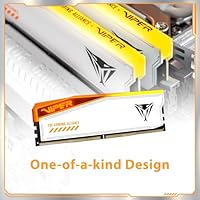
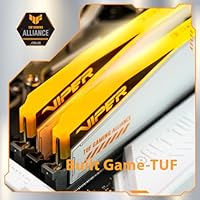
The white heatshield is genuinely well-executed — not a flimsy plastic shell but a solid, clean-looking spreader that photographs well inside windowed cases. Builders running white ASUS TUF or ROG setups said it matched their build theme more naturally than most competing white-colorway kits.
The RGB lightbar, while attractive, sits lower on the module than some competitors, which means it can be partially obscured by taller PCIe cables in dense builds. A few buyers also noted the light diffusion is slightly uneven at certain angles compared to Corsair or G.Skill's RGB implementations.
Thermal Management
71%
29%
In standard mid-tower builds with decent airflow, the aluminum heatshield handles the 1.4V operating heat adequately and temperatures stayed within normal ranges under sustained gaming sessions. Most users never noticed any throttling or instability attributable to heat.
In compact ITX builds with restricted airflow, a few users reported slightly elevated module temperatures compared to lower-voltage DDR5 kits. It is not a dealbreaker for the majority, but builders in tight enclosures should factor in that 1.4V is meaningfully warmer than 1.1V base-spec DDR5.
RGB Software Integration
67%
33%
On ASUS Aura Sync-equipped boards, the ARGB lightbar synced reliably and responded to lighting effects without additional driver installation in most cases. Buyers using ASUS motherboards specifically had the most consistently positive experience with color accuracy and effect timing.
MSI Mystic Light and Gigabyte RGB Fusion users had a more mixed time, with some reporting that the modules showed up inconsistently or required manual profile reassignment after system restarts. RGB sync reliability across non-ASUS ecosystems is a genuine weak point worth knowing about before buying.
Overclocking Headroom
58%
42%
For users who simply want to enable the rated XMP profile and leave it there, the Viper Elite 5 performs exactly as advertised. The CL34 timings hold stable at 6600MT/s without voltage creep or random blue screens under typical gaming and productivity loads.
Enthusiasts who tried pushing beyond 6600MT/s or tightening timings below CL32 found the headroom limited compared to higher-binned kits. This is not a kit designed for manual overclocking exploration — it hits its rated spec reliably but does not invite experimentation beyond that.
Dual-Channel Reliability
88%
The matched 2x16GB kit behaved as expected across every dual-channel slot combination tested by buyers, with no reports of the system defaulting to single-channel unexpectedly. The bandwidth advantage over single-stick configurations was immediately measurable in memory-intensive applications.
A couple of users attempting to add a second pair of modules from the same SKU to fill all four DIMM slots encountered stability issues at rated speeds — though running four DDR5 sticks at 6600MT/s is a known challenge across most kits and is not unique to this product.
Brand Trust & Support
73%
27%
The lifetime warranty provides meaningful reassurance, and buyers who did contact Patriot support generally reported a straightforward RMA process without excessive friction. The warranty alone moves this above generic white-label alternatives in the same price bracket.
Patriot Memory does not carry the same community recognition as G.Skill or Corsair in the enthusiast space, which makes some buyers hesitant. Support response times were noted as slower than ideal by a small number of users, and local warranty options are limited in some international markets.
Review Pool Confidence
61%
39%
The overall sentiment across 63 verified ratings leans positive, and the 4.2-star average is consistent rather than polarized — meaning most buyers land in a similar satisfaction range rather than having wildly divergent experiences. That consistency is itself a useful signal.
Sixty-three ratings is simply too small a sample to draw firm long-term reliability conclusions from. A handful of negative reviews carry disproportionate statistical weight here, and buyers who rely on review volume as a confidence indicator may feel more comfortable waiting for broader adoption data.
Installation Experience
89%
Physical installation was reported as smooth across the board — the modules seat firmly without excessive force, and the latching mechanism on standard DDR5 slots caused no issues. Buyers new to DDR5 appreciated that the process was no different mechanically from previous generations.
There are no installation-specific pain points worth flagging beyond the standard DDR5 advice to install in the correct paired slots (A2 and B2 on most boards). Users who ignored slot pairing guidance and installed in adjacent slots did see performance degradation, but that is a user error rather than a product fault.
Gaming Frame Rate Impact
77%
23%
In CPU-sensitive titles like strategy games, open-world RPGs, and competitive shooters, buyers running this DDR5 kit on modern Intel platforms reported measurably smoother frame pacing compared to their previous 4800MT/s or 5600MT/s setups. The jump feels real in practice, not just in benchmarks.
In GPU-bound scenarios — which describes most gaming at 1440p and 4K — the real-world difference between 6600MT/s and a well-tuned 6000MT/s kit narrows to within margin of error. Buyers chasing purely gaming performance at higher resolutions may find the speed tier upgrade less transformative than expected.

Suitable for:

The Patriot Viper Elite 5 32GB DDR5 RAM is a smart pick for PC builders who want a meaningful speed upgrade over base-spec DDR5 without chasing diminishing returns at the flagship tier. It fits naturally into Intel 13th and 14th Gen builds, as well as Arrow Lake platforms, where a single XMP 3.0 toggle in the BIOS gets you to rated 6600MT/s speeds with no manual tuning required. AMD Ryzen 7000 users are equally covered thanks to EXPO profile support, making this a genuinely platform-flexible option. Builders putting together a white or neutral-toned case will appreciate how the heatshield and RGB lightbar complement a cohesive aesthetic without looking out of place. It is also a sensible choice for first-time DDR5 adopters who want above-average performance and a lifetime warranty as a safety net.

Not suitable for:

Buyers chasing the absolute top of the DDR5 performance chart should look elsewhere — the Patriot Viper Elite 5 32GB DDR5 RAM is not designed for enthusiasts who push memory past rated speeds or need sub-30 CL latencies for competitive benchmarking. If your primary focus is extreme overclocking, purpose-built kits from G.Skill Trident Z5 or Corsair Dominator Platinum are better-equipped for that headroom. Builders working inside very compact ITX cases with restricted airflow may want to factor in the 1.4V operating voltage, which runs slightly warmer than baseline DDR5. Those who already own a stable 6400MT/s or faster kit will see little practical benefit from upgrading to this specific tier. Finally, buyers who rely heavily on community-validated compatibility lists may find the relatively small review pool here less reassuring than more established kits with thousands of ratings.

Specifications

  • Capacity: This kit includes two 16GB modules for a total of 32GB of DDR5 system memory.
  • Memory Type: Uses DDR5 UDIMM technology, the current-generation standard for modern desktop platforms.
  • Rated Speed: Operates at 6600MT/s when the XMP 3.0 or EXPO profile is enabled in the BIOS.
  • Base Speed: Defaults to 4800MT/s (PC5-38400) out of the box without any overclock profile activated.
  • CAS Latency: Rated timings at 6600MT/s are CL34-40-40-84, balancing speed and responsiveness for gaming workloads.
  • Base Timings: At stock 4800MT/s operation, the modules run at 40-40-40-77 timings with 1.1V.
  • Voltage: Requires 1.4V at rated 6600MT/s speed, stepping down to 1.1V at the default base frequency.
  • Form Factor: Standard U-DIMM form factor designed exclusively for desktop motherboards; not compatible with laptops.
  • OC Profiles: Supports both Intel XMP 3.0 and AMD EXPO overclock profiles for one-click speed activation.
  • RGB Lighting: Each module features an addressable RGB lightbar compatible with major motherboard ARGB sync ecosystems.
  • Heatspreader: White aluminum heatshield covers both modules, designed to complement white or neutral-toned PC builds.
  • Dimensions: Each module measures 3.94″ long by 1.97″ tall by 0.5″ wide, fitting standard ATX and mid-tower cases.
  • Weight: The full kit (both modules) weighs approximately 4.9 ounces combined.
  • Compatibility: Tested and validated for use on current Intel and AMD Ryzen 7000 series DDR5-capable desktop platforms.
  • Warranty: Covered by Patriot Memory's limited lifetime warranty against manufacturing defects.
  • Launch Date: First made available in March 2024, targeting current-generation DDR5 platform builds.
  • Configuration: Ships as a dual-channel matched pair; both modules must be installed together for rated performance.
  • Brand: Manufactured by Patriot Memory, a California-based memory and storage brand founded in 1985.

Related Reviews
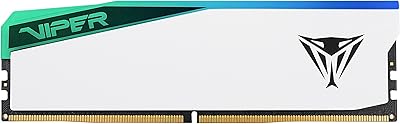
Patriot Viper Elite 5 16GB DDR5 RAM
70%
78%
Speed & Performance
84%
XMP & EXPO Setup
71%
Platform Compatibility
74%
Value for Money
47%
Spec Accuracy & Transparency
More
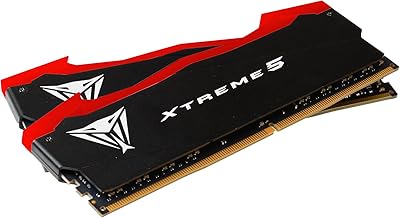
Patriot Viper Xtreme 5 DDR5 32GB RAM Kit
79%
88%
Performance at Rated Speed
91%
XMP & EXPO Activation
86%
Stability & Reliability
78%
Platform Compatibility
83%
Value for Money
More
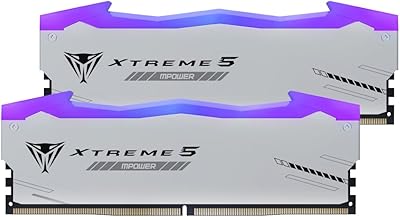
Patriot Viper Xtreme 5 MPOWER 48GB RAM
78%
88%
Plug-and-Play Setup
84%
Performance at Rated Speed
76%
Platform Compatibility
78%
Value for Money
81%
Thermal Management
More
TEAMGROUP Elite Plus DDR5 32GB Desktop RAM
81%
91%
Platform Compatibility
93%
Installation Experience
84%
Value for Money
89%
System Stability
67%
Raw Performance
More
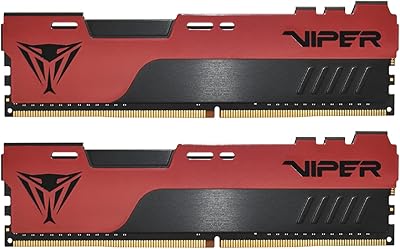
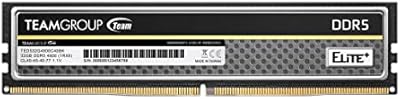
Patriot Viper Elite II 32GB DDR4 RAM
81%
91%
Installation Experience
88%
XMP Compatibility
84%
Platform Compatibility
86%
Value for Money
82%
Memory Speed & Bandwidth
More
Patriot Signature 32GB DDR5 SODIMM Laptop RAM
84%
88%
Value for Money
93%
Ease of Installation
91%
System Stability
84%
Real-World Performance
79%
Memory Speed Rating
More
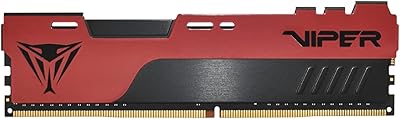
Patriot Viper Venom RGB 32GB DDR5 RAM
80%
88%
Performance at Rated Speed
74%
Compatibility
83%
Setup Ease
86%
Value for Money
79%
RGB Lighting Quality
More
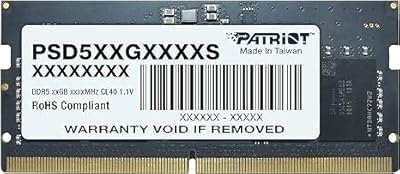
Patriot Viper Elite II 16GB DDR4 RAM
78%
88%
XMP Profile Reliability
83%
Value for Money
67%
Compatibility Range
71%
Single-Channel Trade-off
81%
Heat & Thermal Performance
More
Patriot Viper Venom 64GB DDR5 Desktop RAM
83%
88%
Value for Money
91%
Performance at Rated Speed
93%
XMP Setup & Ease of Use
89%
Stability & Reliability
74%
Platform Compatibility
More
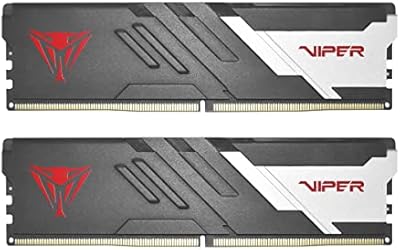
Patriot Viper Elite II DDR4 RAM 16GB 2666MHz CL16
87%
88%
Performance
94%
Ease of Installation
85%
Overclocking Capability
92%
Compatibility with Desktop Systems
91%
Energy Efficiency (1.2V)
More

FAQ

Yes, a quick BIOS step is required. After installing the kit, enter your BIOS and enable the XMP 3.0 profile (or EXPO if you are on a Ryzen 7000 board). That single toggle is all it takes — the system will then boot at the rated speed automatically. No manual timing adjustments are needed.

It works on both platforms. The Viper Elite 5 includes an AMD EXPO profile alongside XMP 3.0, so Ryzen 7000 series users can hit the rated 6600MT/s speed just as easily as Intel builders. Just make sure your motherboard supports DDR5 and has EXPO enabled in BIOS.

The addressable RGB lightbar on each module is designed to work with most major ARGB sync ecosystems, including ASUS Aura Sync, MSI Mystic Light, and Gigabyte RGB Fusion. That said, software compatibility can vary between motherboard generations, so checking your specific board's QVL or ARGB support page before purchasing is always a good idea.

Technically yes, a single module will function, but you would lose dual-channel bandwidth — which makes a real difference in gaming and general desktop responsiveness. For best results, install both sticks in the recommended paired slots (typically A2 and B2 on most boards). Running a matched pair as intended is strongly advisable.

At the same speed tier, G.Skill and Corsair options often carry a stronger track record simply because they have far more user reviews to draw from. The Patriot Viper Elite 5 32GB DDR5 RAM holds its own on day-one stability and XMP ease of use, and the lifetime warranty is a genuine plus. Where G.Skill pulls ahead is in tighter sub-CL34 options at similar prices, and Corsair has deeper brand trust with some builders. This kit is a competitive mid-range choice, not a clear underdog.

The modules stand 1.97″ tall, which is a standard height for DDR5 heatshield designs. Most mid-tower and full-tower coolers clear this without issue. If you are building in an ITX case with a particularly large top-mount cooler, double-check clearance specs for your specific cooler — but for the vast majority of builds, height will not be a concern.

Not in a typical desktop setup. DDR5 at 6600MT/s commonly operates in the 1.35V to 1.45V range, so 1.4V is well within normal territory for this speed tier. It runs warmer than base-spec 1.1V DDR5, but the heatshield handles dissipation adequately in cases with reasonable airflow. Only very compact ITX builds with restricted ventilation warrant extra attention here.

12th Gen Alder Lake boards that support DDR5 should be able to run this kit at base speeds, but XMP 3.0 is not officially supported on that generation — Alder Lake uses XMP 2.0. You may be able to manually set timings close to rated specs, but for a plug-and-play XMP experience, 13th Gen Raptor Lake and newer is the safer choice.

Patriot's limited lifetime warranty covers defects in materials and workmanship for as long as you own the product. To make a claim, you would contact Patriot Memory support directly through their website with proof of purchase and a description of the issue. It does not cover damage from improper installation, overvolting beyond spec, or physical mishandling.

For pure gaming, 32GB in a dual-channel 2x16GB layout is the sweet spot right now — most titles cap out well below that, and the dual-channel bandwidth matters more than raw capacity for frame rates. If you also do video editing, 3D rendering, or run multiple heavy applications simultaneously, stepping up to 48GB starts to make sense. For gaming-only builds, this kit covers you well without overspending on capacity you will not use.