Overview

The OSD Audio ACE670 6.5″ In-Ceiling Speaker sits comfortably in the mid-range of the installed audio market, targeting home theater builders who care as much about how a room looks as how it sounds. OSD Audio has built a quiet but solid reputation among custom installers, and the ACE670 reflects that pedigree. What immediately sets it apart from typical ceiling speakers is its trimless flush-mount design — no visible border, just a grille that sits almost invisibly against the drywall. Designed to serve as a dedicated LCR channel speaker, it handles left, center, or right duties in a surround setup. One caveat upfront: sold as a single unit, wired only, it requires a separate AV receiver to come alive.

Features & Benefits

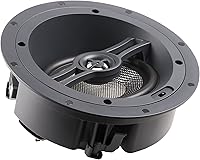
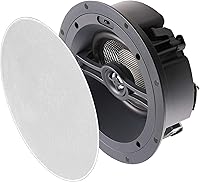
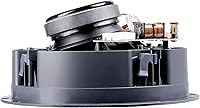
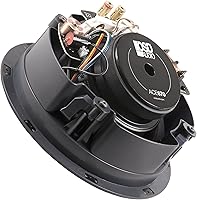
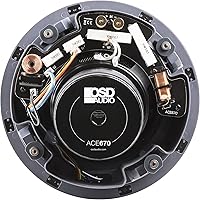
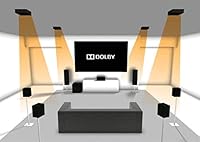
The ACE670's most useful design choice is the 6.5-inch carbon fiber woofer mounted at a fixed 15-degree angle. When speakers fire straight down from a ceiling, the listening angle feels unnatural — the tilt redirects sound energy toward the seated position for a more cohesive soundstage. The pivoting aluminum tweeter lets you aim the high-frequency output after mounting, which matters when seating isn't directly below the cutout. A magnetic micro-flange grille snaps on cleanly, leaving no visible border on the ceiling. Contour switches let you tune bass and treble to suit the room's acoustics — a practical option in untreated spaces. The angled geometry also makes this in-ceiling LCR speaker suitable for Dolby Atmos height channels, provided your receiver supports the format and you configure it correctly.

Best For

This trimless ceiling speaker makes the most sense for homeowners building a clean, dedicated home theater — the kind where visible speaker bezels would break the room's aesthetic. It fits naturally into 5.1 or 7.1 surround configurations as a left, center, right, or height channel speaker. If you're adding Dolby Atmos to an existing setup, the angled driver geometry does the work that repositioning a conventional speaker cannot. The 8.12-inch ceiling cutout and 4.5-inch depth clearance requirement should be confirmed before purchasing — cable routing needs planning before drywall goes up. Buyers pairing this with a mid-range AV receiver in the 50 to 100-watt range are in its sweet spot; very low-powered amplifiers will underserve it in larger listening rooms.

User Feedback

The ACE670 carries a 4.7-star average across roughly 60 ratings — a strong score, though the modest review count means it's worth reading individual experiences rather than trusting the aggregate alone. Buyers consistently highlight how clean the install looks once the magnetic grille snaps into place, and many note that sound clarity is impressive for the price tier. The contour switch gets mixed mentions — listeners who dial it in tend to appreciate the flexibility, while others leave it at default and report no issues. The most common frustration is discovering single-unit pricing after expecting a pair, so budget accordingly. A few reviewers flag ceiling depth as something they underestimated during installation. Comparisons to similarly priced competitors tend to favor the ACE670, especially on overall appearance.

Pros

  • The trimless magnetic grille sits completely flush with the ceiling, leaving no visible frame or border after installation.
  • A fixed 15-degree angled woofer redirects bass energy toward the listening position, improving imaging over standard downward-firing ceiling speakers.
  • The pivoting tweeter can be independently aimed after mounting, a genuine advantage when seating is off-center from the cutout.
  • Contour switches allow on-the-spot bass and treble tuning without any extra equipment or apps.
  • At 89 dB sensitivity and 8 ohms, this in-ceiling LCR speaker pairs efficiently with most mid-range AV receivers without demanding high output.
  • Carbon fiber composite cone construction keeps the woofer stiff and light, supporting cleaner reproduction across the frequency range.
  • Frequency response reaching down to 45Hz gives the ACE670 meaningfully more low-end presence than many ceiling speakers at a comparable price.
  • The angled driver geometry makes it a viable Dolby Atmos height channel speaker when used with a properly configured Atmos receiver.
  • Magnetic grille attachment means no exposed screws or clips on the ceiling surface once the install is complete.
  • OSD Audio's track record in the installed audio niche adds reasonable confidence in build quality and long-term durability.

Cons

  • Sold as a single unit only — buyers building a full surround setup must purchase and budget for multiple speakers separately.
  • Requires a dedicated AV receiver or amplifier; there is no onboard power, no wireless option, and no self-amplification.
  • The 8.12-inch cutout diameter and 4.5-inch depth clearance requirement can rule out installation in homes with shallow ceiling cavities.
  • With roughly 60 ratings at time of writing, the review pool is too small to treat the high average score as fully settled.
  • Dolby Atmos functionality depends entirely on your receiver — the speaker's geometry supports height placement but does not process or decode Atmos on its own.
  • In-wall wire routing demands advance planning; retrofitting an existing finished room adds meaningful time and effort to the install.
  • Contour switch settings must be configured before the grille snaps on — making post-install adjustments means removing the grille each time.
  • Buyers in smaller rooms or apartments may find the 90W power handling spec exceeds what their space and receiver setup can practically use.

Ratings

The scores below were generated by our AI review engine after analyzing verified buyer feedback for the OSD Audio ACE670 6.5″ In-Ceiling Speaker from communities worldwide, with spam, bot-generated, and incentivized submissions actively filtered out before any score is calculated. We analyzed both what real buyers genuinely appreciated and where they consistently hit friction — from installation surprises to acoustic performance in real listening rooms — so the ratings reflect the full picture rather than just the highlights. Every category, from the ACE670's strongest areas to its genuine limitations, is transparently grounded in aggregated owner experience.

Sound Imaging
91%
The fixed 15-degree woofer angle combined with the pivoting tweeter is the ACE670's standout differentiator — in rooms where seating spreads across a wide area, it places sound far more convincingly than a flat-firing ceiling unit. Reviewers with off-center seating specifically note the improved soundstage cohesion after pivoting the tweeter toward their listening zone.
The 15-degree angle is fixed, so there is a ceiling placement sweet spot — mount the speaker too far from the listening area and the angled projection can work against you rather than for you. First-time installers who do not map their seating layout before cutting ceiling holes occasionally report that the angle ends up pointing sound toward the wrong wall.
Aesthetic Integration
93%
This is where the ACE670 is hardest to fault. The trimless micro-flange grille, once painted to match the ceiling, essentially disappears — buyers report that guests frequently do not notice the speakers at all. For minimalist home theater builds where visible hardware would break the design intent, this is difficult to match at the price point.
The only aesthetic complaint that surfaces occasionally is grille paint adhesion — applying too many coats or skipping primer can cause the edge seal to crack slightly over time. A small number of buyers also note that any imprecision in hole cutting becomes slightly visible at the grille perimeter, since the trimless design leaves no frame to conceal minor irregularities.
Off-Axis Performance
88%
For rooms where seating spans a wide area rather than sitting directly below each speaker, the angled woofer and pivoting tweeter hold tonal consistency considerably better than conventional down-firing ceiling speakers. Users in open-plan living spaces praise how the speaker maintains clarity and balance across different listening positions without a strict sweet spot.
The off-axis benefit does taper off at more extreme angles — listeners positioned at a sharp horizontal angle to the speaker, such as in a wide wraparound seating arrangement, may still experience some high-frequency rolloff. The tweeter pivot range has physical limits, and no amount of aiming fully compensates for a speaker mounted too far from the primary seating area.
Installation Ease
78%
22%
The magnetic grille and spring-clamp mounting mechanism make the physical installation noticeably cleaner than traditional screw-framed in-ceiling speakers. Buyers with prior experience running speaker wire through walls report a straightforward process, and the included hardware covers the basics without requiring specialty tools.
For first-time DIY installers, the real challenge is not the speaker itself but the prerequisite work: cutting a clean 8.12-inch hole, fishing wire through finished walls, and confirming ceiling depth clearance beforehand. Several reviewers underestimated the 4.5-inch depth requirement and discovered the mismatch only after the hole was already cut.
Value for Money
81%
19%
At its price point, the ACE670 delivers a combination of trimless aesthetics, angled driver geometry, and carbon fiber cone quality that would typically cost noticeably more from European or premium-tier audio brands. Buyers who have shopped the in-ceiling speaker market consistently place it among the better mid-range options, particularly for the clean-install use case.
The single-unit pricing model means the true cost of a stereo pair or full surround setup adds up quickly, and some buyers feel the per-unit price is harder to justify when purchasing four to six units for a complete installation. Competing budget brands offer framed ceiling speakers at significantly lower per-unit costs, though without the trimless design or angled driver.
Sound Quality
86%
Buyers consistently describe the sound as punchy and clear for a ceiling-mounted speaker, with a frequency range that holds up across both dialogue-heavy film scenes and music playback. The carbon fiber cone contributes to a tighter, more controlled mid-range response than what you typically get from polypropylene-based ceiling speakers in this price bracket.
A handful of listeners note that the sound can feel slightly bright in untreated rooms with hard surfaces — something the contour switch helps address but does not fully resolve. The ACE670 is not a substitute for floor-standing speakers, and buyers expecting concert-hall depth from a ceiling unit will be disappointed regardless of brand.
Grille Design
89%
The magnetic micro-flange grille is the detail that most separates this in-ceiling LCR speaker from framed competitors — it snaps on cleanly, accepts paint when properly primed, and leaves a nearly invisible footprint on a finished ceiling. For buyers who care about room aesthetics, the no-frame design is a genuinely meaningful upgrade over standard ceiling speaker hardware.
The trimless approach creates a small trade-off: the grille edge relies on precise ceiling contact, so any imprecision in hole cutting or drywall imperfections can leave a slightly visible gap at the perimeter. Buyers who paint the grille also report that heavy paint application can cause the edge to sit less flush than it does straight out of the box.
Driver Materials
84%
Carbon fiber composite woofer cones are stiffer and lighter than the polypropylene alternatives common at this price tier, translating into a more accurate mid-range response with less coloration from the cone itself. The aluminum dome tweeter extends high-frequency detail without the rolled-off softness found in some silk-dome alternatives used in budget ceiling speakers.
Carbon fiber and aluminum are performance materials, but in a ceiling speaker the gains are incremental rather than dramatic compared to high-quality polypropylene — room acoustics, receiver quality, and placement will have a larger impact on the final sound than driver material alone. Buyers expecting the material spec to transform average room acoustics will be working against physics.
Treble & Highs
83%
The 1-inch aluminum dome tweeter produces crisp, detailed highs that hold up well in film soundtracks and acoustic music — vocals in particular sound natural and well-defined rather than edgy. Users who have moved up from basic polypropylene-tweeter ceiling speakers consistently describe the treble clarity as one of the most immediately noticeable improvements.
In rooms with very reflective surfaces — tile floors, glass walls, low ceilings — the aluminum dome can emphasize upper-frequency harshness at higher volumes, a characteristic not unique to this speaker but worth managing with room treatment or contour switch adjustment. Listeners who prefer a warmer high-frequency character may find a soft-dome tweeter alternative better suited to their taste.
Build Quality
82%
18%
The housing feels solid for a mid-range ceiling speaker, and the carbon fiber woofer cone is noticeably more rigid than the standard polypropylene drivers found in similarly priced competitors. The magnetic grille mechanism in particular shows thoughtful construction — it snaps on with satisfying precision and shows no signs of loosening after repeated removal.
The housing is plastic-dominant, which is entirely standard for in-ceiling speakers but means it can feel lightweight before install compared to premium in-wall builds. A small number of buyers have noted minor cosmetic inconsistencies in grille finish out of the box, though these are cosmetic rather than structural concerns.
Bass Performance
74%
26%
The 6.5-inch carbon fiber woofer reaches down to 45Hz, noticeably deeper than the 60-80Hz floor many competing ceiling speakers hit in this size class. For home theater dialogue, action sequences, and moderate music playback, the low-end output is genuinely satisfying without a subwoofer in smaller listening rooms.
In larger rooms or dedicated home theater spaces, a subwoofer becomes essentially mandatory — the 6.5-inch driver simply cannot move enough air to fill bigger spaces with convincing low frequencies at reference volume levels. Buyers who listen to bass-heavy music genres or want a theatrical low-end experience will find this speaker's bottom end polite rather than powerful.
Dolby Atmos Support
77%
23%
The 15-degree woofer tilt and pivoting tweeter genuinely position this trimless ceiling speaker for Atmos height channel duty in a way that flat-firing ceiling speakers cannot replicate. When properly configured with an Atmos-capable receiver, buyers using it in height positions describe a convincing overhead sound effect for object-based audio content.
Dolby Atmos does not work out of the box — a compatible AV receiver with Atmos decoding enabled and correct channel assignment is required, adding setup complexity that catches some buyers off guard. The speaker carries no official Dolby certification, so Atmos performance depends heavily on receiver quality and accurate ceiling placement rather than on the speaker alone.
Tuning Flexibility
72%
28%
The onboard contour switches for bass and treble give buyers a meaningful option to compensate for room acoustics without needing an external equalizer or receiver DSP adjustments. Users who dial the bass setting up slightly in acoustically dry rooms or down in livelier open-plan spaces report a noticeably more balanced result from the same hardware.
The contour switches offer only two-position adjustment rather than continuous control, so they help with broad tonal shaping but will not satisfy buyers who want fine-grained EQ tuning. More practically, the switches are only reachable with the grille removed — post-install adjustments mean pulling the grille back off the ceiling, which discourages experimentation once the system is running.
Ceiling Clearance
62%
38%
The 4.5-inch depth profile is practical for most standard modern ceiling constructions with typical joist spacing and open cavities. Buyers in newer construction homes generally report no issues fitting the speaker body into the ceiling cavity, and the spring-clamp mounting system works without requiring direct access above the drywall.
In older homes with shallower ceiling cavities, plaster ceilings, or HVAC ducts running close to the surface, the 4.5-inch depth requirement is a genuine obstacle — some buyers discover the problem only after the hole is already cut. Several reviewers in older construction properties report having to abort installation entirely due to insufficient clearance above the drywall.

Suitable for:

The OSD Audio ACE670 6.5″ In-Ceiling Speaker is built for homeowners who want a surround sound system that disappears into the architecture of a room rather than occupying floor or shelf space. If you are planning a 5.1 or 7.1 home theater install and care about how the finished room looks, the trimless flush-mount grille means no visible borders or bezels interrupting a clean ceiling. It is a strong fit for Dolby Atmos upgrades specifically — the fixed 15-degree woofer angle and pivoting tweeter let you direct sound toward the listening position without cutting a new hole or repositioning brackets after the fact. Buyers who are comfortable running speaker wire through walls or ceilings and already own a capable AV receiver in the 50 to 100-watt-per-channel range are in the exact demographic this speaker was designed for. It also suits rooms where seating is not perfectly centered below the cutout, since the tweeter can be aimed independently once the unit is mounted.

Not suitable for:

The OSD Audio ACE670 6.5″ In-Ceiling Speaker is not the right choice for anyone expecting a plug-and-play audio upgrade — it requires wire routing through your ceiling or walls, a compatible AV receiver, and a precut hole just over 8 inches in diameter. Buyers expecting a stereo pair should budget carefully upfront, since this is sold as a single unit, a detail that catches a surprising number of people off guard at checkout. If your ceiling joists, HVAC runs, or insulation leave fewer than 4.5 inches of clearance above the drywall, installation will not be feasible without significant structural work. Renters or anyone in a space where permanent ceiling modifications are off the table should look elsewhere entirely. Those hoping Dolby Atmos will work simply by mounting this speaker should understand that a compatible Atmos-capable receiver and correct channel configuration are both required — the speaker's angled geometry supports the format, but it cannot decode signals on its own.

Specifications

  • Woofer: Features a 6.5″ carbon fiber composite cone driver fixed at a 15-degree angle to direct bass energy toward the listening position rather than straight down.
  • Tweeter: Equipped with a 1″ aluminum dome tweeter that pivots independently, allowing precise high-frequency aiming after the speaker body is secured in the ceiling.
  • Speaker Type: Classified as an LCR (Left, Center, Right) in-ceiling speaker, purpose-built to serve across multiple channel positions in a home theater surround setup.
  • Power Handling: Rated at a maximum of 90W continuous, making it compatible with most mid-range AV receivers and dedicated amplifiers without risk of overloading the driver.
  • Sensitivity: Rated at 89 dB, meaning the speaker produces a healthy output level without requiring unusually high amplifier power to drive it effectively.
  • Impedance: Operates at 8 ohms, a standard load that is compatible with the vast majority of consumer AV receivers and stereo amplifiers.
  • Frequency Response: Covers 45Hz to 20kHz, offering more low-end extension than many comparably sized in-ceiling speakers, reducing reliance on a subwoofer for everyday listening.
  • Cutout Diameter: Requires an 8.12″ circular ceiling cutout; this measurement should be confirmed against your ceiling joist spacing before purchasing.
  • Body Dimensions: The speaker housing measures 9.75″ in outer diameter and 4.5″ in depth, requiring a minimum of 4.5″ of clear space above the drywall for installation.
  • Grille Design: Uses a trimless micro-flange grille attached magnetically, leaving no visible border or frame on the ceiling surface once the speaker is installed.
  • Contour Switches: Onboard bass and treble contour switches are located on the rear of the housing and must be set before the grille is attached.
  • Connectivity: Connects via standard two-conductor speaker wire only; there is no wireless, Bluetooth, or powered input of any kind.
  • Atmos Geometry: The angled woofer and pivoting tweeter make this speaker geometrically suited for Dolby Atmos height channel use when paired with a compatible Atmos-capable AV receiver.
  • Mounting Type: Designed for flush ceiling mounting, with included hardware that clamps the speaker body securely against the drywall from inside the cutout.
  • Unit Count: Sold as a single speaker; buyers building a stereo pair or multi-speaker surround system must purchase each unit separately.
  • Waterproofing: Not rated for wet or outdoor environments; this speaker is designed exclusively for dry, climate-controlled interior spaces.
  • Warranty: Covered by OSD Audio's full manufacturer warranty; buyers should confirm current warranty terms directly with OSD Audio at the time of purchase.

Related Reviews
OSD Audio ACE640 6.5″ In-Ceiling Speaker Pair
85%
91%
Sound Clarity
78%
Bass Response
88%
Tweeter Directionality
85%
Installation Ease
82%
Build Quality
More
OSD Audio ICE610 6.5″ In-Ceiling Speaker Pair
79%
83%
Sound Clarity
61%
Bass Performance
91%
Installation Ease
78%
Build Quality
86%
Grille & Aesthetics
More
Polk Audio MC60 6.5-inch In-Ceiling Speaker
80%
88%
Sound Clarity
91%
Installation Ease
83%
Moisture Resistance
72%
Value for Money
79%
Tweeter Performance
More
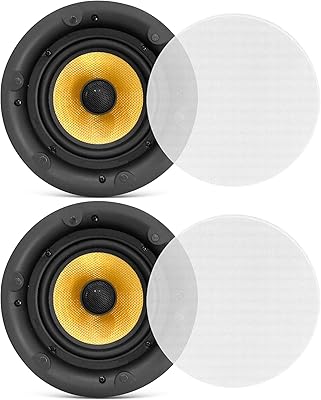
PRV Audio 6MB100-4 6.5″ Midbass Car Speakers
79%
93%
Mounting Depth & Fitment
88%
Midrange Sound Quality
71%
Bass Response
89%
Installation Ease
52%
High-Frequency Extension
More
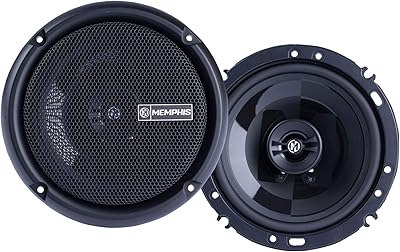
Memphis Audio PRX602 6.5″ Coaxial Speakers
79%
84%
Sound Clarity
58%
Bass Response
88%
Tweeter Performance
86%
Swivel Tweeter System
91%
Installation Ease
More
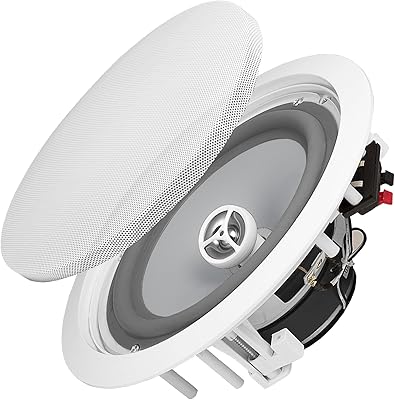
Pyle PDIC68FG 6.5” Ceiling Speaker Set
86%
86%
Sound Quality
92%
Ease of Installation
68%
Bass Response
88%
Build Quality
90%
Compatibility with Ceiling/Wall
More
OSD Audio ICE800WRS 8-inch In-Ceiling Speaker Pair
79%
83%
Sound Quality
88%
Weather & Moisture Resistance
81%
Ease of Installation
86%
Value for Money
79%
Build Quality
More
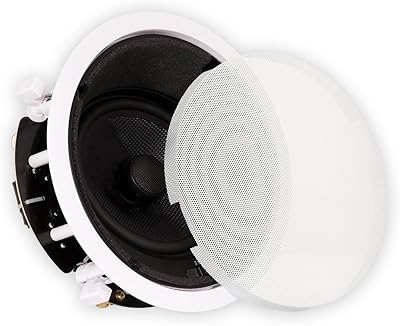
Theater Solutions TSS6A 6.5″ Angled In-Ceiling Speaker
87%
91%
Sound Quality
87%
Ease of Installation
89%
Build Quality
92%
Value for Money
85%
Frequency Response
More
Herdio HCS-818 6.5-Inch Passive Ceiling Speakers
75%
73%
Sound Quality
91%
Installation Ease
84%
Value for Money
67%
Build Quality
88%
Amplifier Compatibility
More
Pyle PDMR6 6.5″ Car Midrange Speaker
74%
88%
Value for Money
71%
Sound Quality
67%
Build Quality
62%
Power Handling
83%
Ease of Installation
More

FAQ

Just one speaker per order — and that catches more buyers off guard than you might expect. If you're building a stereo setup or a full surround system, you'll need to add the correct number of units to your cart individually and plan your total budget before you buy.

Yes, and it's an important distinction. The OSD Audio ACE670 6.5″ In-Ceiling Speaker is geometrically designed to serve as a height channel speaker, but your AV receiver must explicitly support Dolby Atmos decoding and have the correct channel layout configured. Without that, it will simply function as a standard ceiling speaker — still useful, just not delivering the Atmos overhead effect.

Most handy homeowners can manage it, but it does require running speaker wire through your ceiling or walls, cutting a clean 8.12-inch circular hole, and having at least 4.5 inches of clearance above the drywall for the speaker body. If you've done in-wall wiring before, this is a familiar process. If it's your first time, budget a few extra hours and map out your cable runs before touching the ceiling.

Yes, and many installers do exactly that. Since the grille attaches magnetically, you can paint it separately while it's off the speaker and snap it back on once it's dry. Just avoid applying too many heavy coats — excessive paint buildup along the edge can affect how cleanly the micro-flange seats against the ceiling.

The ACE670 is genuinely easy to drive. Receivers outputting anywhere from 50 to 100 watts per channel are well matched. You can go a bit lower in a small room, but in a larger home theater space, amplifiers under 30 watts per channel may not give you the headroom you need at realistic listening volumes.

You set it after the speaker body is secured in the ceiling but before the grille goes on. Once the unit is in place, you simply pivot the tweeter dome toward your main seating area by hand — no tools needed. It takes about ten seconds, but it makes a noticeable difference to high-frequency clarity for off-axis listeners.

Not without removing the grille first. The bass and treble contour switches sit on the rear of the housing, so they are only accessible when the grille is off. It is worth spending a few minutes experimenting with the settings before snapping the grille into place, especially in a room with hard reflective surfaces.

It handles music just as well. The angled woofer and pivoting tweeter are actually useful for music too, since they let you direct sound toward the listening area even from an overhead position. Whether you are listening to a film soundtrack or a playlist, the imaging holds up well for a ceiling-mounted driver.

The difference is almost entirely visual, but it is significant for people who care about clean room aesthetics. This trimless ceiling speaker leaves no border or bezel around the grille — painted to match your ceiling, it becomes nearly invisible. Conventional framed speakers leave a visible ring of plastic or metal, which tends to stand out in otherwise minimal spaces.

Yes, and that is actually one of the stronger arguments for choosing this in-ceiling LCR speaker over a standard flat-firing design. The 15-degree angled woofer and independently pivoting tweeter let you aim the sound toward your listening zone rather than straight down at the floor. For rooms with a couch against a wall or seating spread across a wide area, that adjustability matters.