Overview

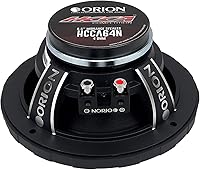
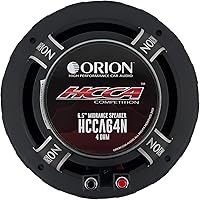
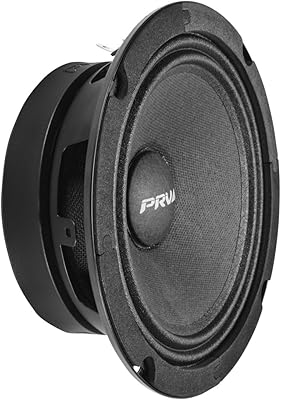
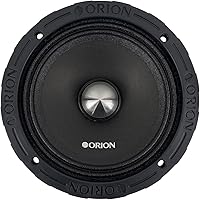
The Orion HCCA64N 6.5-inch Midrange Car Speakers belong squarely in the pro car audio world — these are not weekend upgrade speakers you bolt in and forget. Orion's HCCA series has long carried competition-grade credentials, and this model continues that tradition. A midrange driver handles the frequency band where most of what you actually hear lives: vocals, guitars, kick drums, horns. Without a capable driver covering that range, even a great subwoofer and tweeter setup sounds hollow. These Orion midrange drivers are sold as a pair, which helps with upfront budgeting, but be clear: they require an external amplifier and a crossover to perform correctly.
Features & Benefits

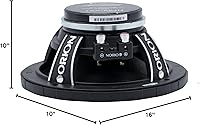
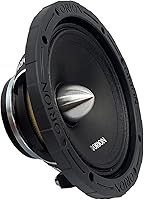
The neodymium magnet in the HCCA64N speakers is worth understanding before you dismiss it as marketing. Neodymium is significantly lighter than the ferrite magnets used in cheaper drivers but produces a stronger magnetic field — that combination translates directly into a 99 dB sensitivity rating, which is genuinely high for this class. In practice, your amplifier does not need to work as hard to produce loud, clean output. The 1.5-inch voice coil is wound to handle sustained high-power sessions without thermal breakdown, which matters if you run your system hard at shows or long drives. A bullet-style phase plug smooths frequency dispersion at the upper end of the midrange, reducing harshness without requiring a separate tweeter to compensate. The shallow 2.65-inch depth makes door and kick-panel installs realistic in most vehicles.

Best For

These neodymium car speakers are built for people who take their car audio seriously — not as background noise, but as a real listening experience. They slot naturally into active 3-way systems where a dedicated midrange driver fills the gap between a subwoofer and a high-frequency tweeter, making vocals and instruments sound present and defined. SPL competitors and anyone pushing high-powered amplifiers will appreciate how efficiently these drivers convert wattage into output. That said, they reward experience: without a properly tuned crossover, you will not get the best from them. If your doors are shallow, the low mounting depth is a genuine advantage. Genre-wise, they shine on anything with heavy vocal or instrumental content — hip-hop, rock, and Latin music tend to benefit most.

User Feedback

Across more than 160 verified ratings, the HCCA64N speakers average 4.6 out of 5 stars — a strong result that reflects genuine satisfaction with output and build quality, not just initial impressions. Buyers consistently highlight how loud and clean these drivers run at high volumes, especially when paired with a capable amplifier. On the critical side, a recurring theme involves crossover misconfiguration: buyers who ran them full-range or with an underpowered amp reported thin or distorted sound, which is a setup issue rather than a product flaw. A few noted that grille fitment required extra attention during install. Long-term feedback is largely positive — most owners report no degradation after months of heavy use, which suggests the voice coil and magnet assembly hold up under real-world conditions.

Pros

  • A 99 dB sensitivity rating means these neodymium car speakers reach impressive volumes without demanding excessive amplifier power.
  • The neodymium magnet assembly runs cooler and lighter than ferrite alternatives, contributing to long-term reliability under sustained use.
  • At just 2.65 inches deep, these Orion midrange drivers fit comfortably in shallow door panels and kick-panel locations.
  • The bullet-style phase plug helps disperse high-midrange frequencies evenly, reducing listening fatigue on long drives.
  • Sold as a matched pair, buyers get consistent acoustic performance across both channels without chasing compatibility.
  • Verified buyers report no noticeable degradation in output or clarity after months of high-volume daily use.
  • The 1.5-inch high-temperature voice coil handles extended power sessions without the thermal stress that damages cheaper drivers.
  • At 4 ohms, these drivers are compatible with a wide range of aftermarket amplifiers without complex impedance matching.

Cons

  • These are midrange-only drivers — without a proper crossover, bass and high-frequency response will sound noticeably incomplete.
  • An external amplifier is non-negotiable; passive head-unit power will not drive these speakers to their potential.
  • Buyers unfamiliar with crossover tuning may need professional installation help, which adds to the overall cost.
  • The Orion HCCA64N 6.5-inch Midrange Car Speakers carry a price that reflects their pro-grade positioning, making them a significant commitment for a component upgrade.
  • Some users noted grille fitment required additional adjustment, which can be frustrating during an already involved installation.
  • Running them without a crossover or with an underpowered amp produces thin, distorted sound that misrepresents the speaker's actual capability.
  • The limited warranty may leave buyers wanting more protection given the investment involved in a full amplified system.
  • Not waterproof or water-resistant, so installations in open-air vehicles or exposed positions are not recommended.

Ratings

The scores presented here were generated by AI after analyzing verified buyer reviews for the Orion HCCA64N 6.5-inch Midrange Car Speakers, actively filtering out incentivized, spam, and bot-generated feedback to reflect the real-world consensus across hundreds of genuine purchases worldwide. Each category is weighted against both the consistent praise and the recurring frustrations that surface across the review pool — nothing has been smoothed over or inflated. Both the standout strengths and the legitimate pain points are transparently reflected in every score, giving you an honest picture of where these neodymium car speakers deliver and where they demand more from the buyer.

Sound Clarity
88%
Buyers running these in properly tuned 2-way and 3-way systems consistently describe the midrange as sharp and natural, particularly on vocals, acoustic guitar, and live percussion. Listeners who focus on hip-hop and Latin music specifically mention how individual instruments cut through clearly even at high volumes — something cheaper drivers rarely achieve.
A subset of buyers noted that running these without a properly configured crossover produced a muddy, indistinct sound that misrepresented the driver's actual capability. The clarity these neodymium car speakers are known for is heavily dependent on correct crossover points and a clean amplifier signal — both of which add setup complexity.
Build Quality
91%
The HCCA64N speakers feel substantial and well-machined in hand — the basket, cone, and phase plug assembly all show the kind of fit and finish that holds up under repeated installation and removal. Multiple buyers who have owned the drivers for over a year of heavy daily use report no rattles, warping, or mechanical failures.
A handful of buyers flagged that the separately sold grille accessories require extra fitting adjustment, and the attachment points felt less precise than the driver itself. The speaker core is excellent, while the peripheral accessories feel like they belong to a slightly lower product tier — a recurring but minor note across the review pool.
Sensitivity & Efficiency
93%
At 99 dB sensitivity, these Orion midrange drivers are among the most efficient in the 6.5-inch class — buyers running modest amplifiers report volume and punch levels they previously associated with much more powerful setups. That efficiency also keeps the drivers running cooler under load, which pays dividends in long-term reliability.
Because these drivers are so sensitive, they reveal noise and distortion from the signal chain more readily than less efficient speakers. Buyers with older head units or budget amplifiers noted audible hiss or interference at idle that they had not experienced with their previous speakers — quality upstream components matter considerably more here.
Power Handling
86%
Buyers who run these with well-matched amplifiers delivering clean power in the 200 to 350 watt RMS range consistently report that the drivers handle sustained loud listening sessions without any signs of thermal stress or compression. The high-temperature voice coil clearly does its job during extended highway drives with the volume pushed hard.
The peak wattage figure draws buyers who overestimate what amplifier is appropriate, and a few reported driver damage after pairing with undersized amps running in clipping. The RMS rating is the number that matters for everyday use, and that message is not always clear to first-time buyers entering the pro-grade component market.
Value for Money
74%
26%
Buyers who understood what they were purchasing — a pro-grade dedicated midrange driver requiring a full component system — generally felt the price was justified given the output quality and durability. Compared to similarly specced competition-tier midrange drivers from other brands, these Orion drivers hold their own without demanding a significantly higher outlay.
Buyers who expected plug-and-play convenience felt the total system cost — speakers plus amplifier plus crossover — was a significant investment for a midrange upgrade alone. The value equation shifts unfavorably for listeners who only wanted a modest improvement, where a simpler full-range component set would have delivered better results per dollar spent.
Installation Ease
67%
33%
The 2.65-inch mounting depth is a genuine practical advantage over deeper competing drivers, and multiple buyers specifically noted fitting these into vehicles where previous speakers required modification or custom spacers. The standard 4-ohm impedance and conventional wired terminals keep the electrical side of the install manageable for anyone with aftermarket car audio experience.
Several buyers without prior component-system experience described the installation as more involved than expected, particularly around crossover setup and amplifier integration. A recurring grille fitment complaint — needing extra adjustment to seat the grille properly — also added friction to what is already a more demanding install than a typical factory speaker swap.
Midrange Detail
89%
Listeners who prioritize vocal intelligibility describe these drivers as genuinely impressive at separating competing frequencies in a dense mix. Rock guitar, brass horns, and human voice all come through with texture and presence that owners of lesser midrange drivers notice immediately on first listen — particularly appreciated during long, genre-varied road trips.
A small number of buyers felt the upper midrange could trend slightly bright on compressed audio sources like streaming at lower bitrates, introducing a hint of edge on certain recordings. This is less a driver deficiency and more a reflection of how honestly these speakers reveal the quality — or lack thereof — of the source material.
Voice Coil Durability
87%
The high-temperature voice coil is the kind of engineering detail that reveals itself over time rather than at purchase, and long-term feedback from buyers who regularly push their systems at car shows and outdoor events is largely positive. Most report that even after extended high-volume sessions, output remains consistent and uncompressed.
The few buyers who reported voice coil failure were, on closer inspection, running the drivers with clipping amplifiers — a setup error rather than a material defect. Real-world reports of premature coil failure under correct operating conditions are limited, but the scope of the limited warranty adds uncertainty for buyers planning intensive competition use.
Crossover Compatibility
72%
28%
These drivers respond well to both passive and active crossover configurations, and buyers running them through a DSP processor with precise tuning describe notably improved imaging and cleaner frequency transitions between system layers. They reward careful setup work in a way that cheaper, less revealing drivers simply cannot demonstrate.
Crossover dependency is the most common frustration in the review pool — buyers unfamiliar with tuning often struggled to find the right settings, and some gave up and ran them full-range, which left them disappointed with the result. The learning curve for newcomers to component systems is steeper than the product listing implies.
Mounting Flexibility
81%
19%
The 2.65-inch mounting depth opens up installation options that deeper drivers cannot access — buyers with compact doors or tight kick-panel spaces specifically praised fitting these without building custom spacers or cutting into door internals. The 5.75-inch cutout diameter also aligns cleanly with most factory opening sizes across popular vehicle platforms.
A few buyers noted that certain vehicles — particularly older domestic models with non-standard mounting configurations — required custom adapter rings or additional fabrication work. These are not universal drop-in replacements, and the physical specs need to be carefully verified against each specific vehicle's door cavity before committing to a purchase.
High-Volume Output
92%
SPL-focused buyers who measure output levels at car shows report that these drivers deliver the loud, distortion-free midrange presence needed to balance high-powered subwoofers without getting lost in the mix. Even at sustained high volumes, the clarity holds — which is precisely where many competing midrange drivers start to compress and harden noticeably.
Buyers who pushed past the RMS threshold using poorly matched amplifiers experienced distortion and, in isolated cases, driver damage — a consequence of setup decisions rather than the driver's inherent capability. Achieving the high-volume performance these drivers are built for still requires the amplifier and crossover working together correctly.
System Versatility
69%
31%
For experienced builders, these drivers slot into a wide range of system configurations — 2-way component setups, traditional 3-way builds, and active DSP-driven systems all benefit from the efficiency and output these drivers bring. Buyers who designed their own systems from scratch found them to be a reliable, high-performing anchor for the midrange stage.
These are not versatile for casual buyers — the amplifier, crossover, and system-level tuning requirements severely limit their appeal outside dedicated car audio builds. Buyers who wanted a flexible driver for a simpler mixed system or single-amplifier setup consistently found the constraints more frustrating than the specs suggested they would be.
Long-Term Reliability
83%
Owners who have run these Orion midrange drivers in daily-driven vehicles for six months to over a year consistently report that output quality, cone integrity, and overall performance remain stable over time. The magnet assembly and high-temperature voice coil appear to handle the sustained vibration and heat cycles of regular road use without issue.
The limited warranty is the main concern for reliability-focused buyers, particularly those planning intensive competition use where drivers are pushed harder and more frequently than in daily listening scenarios. The complete absence of any water resistance also limits suitability for convertibles or installs near window seals — a real constraint for a subset of buyers.
Amplifier Pairing
76%
24%
The 4-ohm impedance makes these drivers compatible with a broad range of aftermarket amplifiers, and the high sensitivity means even a moderately powered amp delivering a clean 150 to 200 watts RMS can produce impressive results. Buyers who paired these with quality class-D amplifiers specifically noted clean, efficient performance across a wide range of listening volumes.
Because these drivers are efficient and revealing, they expose the shortcomings of budget amplifiers more starkly than a less sensitive speaker would — background noise, clipping artifacts, and gain-staging errors all become readily audible. Buyers who did not budget adequately for the amplifier portion of the system were consistently the least satisfied with the overall outcome.

Suitable for:

The Orion HCCA64N 6.5-inch Midrange Car Speakers are built for a specific kind of buyer: someone already committed to a properly amplified, multi-driver car audio system who needs a dedicated midrange driver that can genuinely keep pace with a powerful subwoofer and quality tweeters. If you are building or upgrading a 2-way or 3-way component setup and need a 6.5-inch driver to anchor the critical vocal and instrumental frequency range, these fit that role well. SPL enthusiasts and competition-level builders will appreciate the high sensitivity rating, which means your amplifier works less hard to deliver clean, high-volume output. The shallow mounting depth is a real practical advantage for vehicles with tight door cavities where deeper drivers simply will not fit. Genre matters too — listeners who play music heavy on vocals, percussion, and live instrumentation tend to get the most out of what these drivers do best.
Not suitable for:

If you are hoping to pull these out of the box and swap them into your factory speaker locations without any additional equipment, the Orion HCCA64N 6.5-inch Midrange Car Speakers are not the right choice — they are purpose-built midrange drivers, not full-range replacements, and they require an external amplifier and a properly configured crossover to function as intended. Casual listeners who want a simple plug-and-play upgrade will find the setup complexity frustrating and the sound underwhelming without the right supporting components. Budget-conscious buyers should also factor in the total system cost: adding a quality amplifier and crossover network on top of the speaker price means this is an investment that adds up quickly. Anyone running a basic head unit with no amplification will not be powering these drivers adequately, and the result will be thin, distorted audio that gives a misleading impression of the speakers themselves. If your car audio goals are modest or you are not comfortable tuning crossover points, there are simpler full-range speakers better suited to your needs.
Specifications

  • Driver Size: Each driver measures 6.5 inches in nominal diameter, with an overall outer diameter of 6.85 inches and a mounting cutout diameter of 5.75 inches.
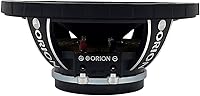
  • Mounting Depth: The required mounting depth is 2.65 inches, with an overall driver depth of 2.97 inches, allowing installation in most shallow door and kick-panel locations.
  • Power Handling: Each driver is rated for 350W RMS continuous power handling, with a momentary peak tolerance of 1400W per driver.
  • Impedance: These drivers present a nominal impedance of 4 ohms, which is compatible with the majority of aftermarket car amplifiers.
  • Sensitivity: The sensitivity is rated at 99 dB measured at 1 watt input and 1 meter distance, placing these drivers among the most efficient in their class.
  • Voice Coil: Each driver is equipped with a 1.5-inch diameter high-temperature voice coil engineered to sustain prolonged high-power operation without thermal breakdown.
  • Magnet Type: The motor assembly uses a neodymium magnet, which delivers stronger magnetic flux density at a significantly lower weight than conventional ferrite magnets.
  • Phase Plug: A bullet-style phase plug is integrated into the cone to promote even high-midrange frequency dispersion across the listening environment.
  • Speaker Type: These are dedicated midrange drivers intended for use within a multi-driver component audio system, not as standalone full-range replacements.
  • Frequency Range: The drivers are suited to the midrange frequency band, with an upper response extending to approximately 12,000 Hz.
  • Sold As: The product is sold as a factory-matched pair, with both drivers included in a single package.
  • Pair Weight: The combined weight of both drivers is 6.54 pounds, with each individual unit weighing approximately 3.27 pounds.
  • Connectivity: These drivers use a standard wired corded-electric connection and are not designed for or compatible with any wireless audio technology.
  • Configuration: The pair is configured for stereo playback in a 2.0 channel arrangement, with one driver assigned to each channel.
  • Warranty: Orion covers these drivers under a limited warranty; buyers should confirm the current terms and duration directly with the manufacturer or authorized retailer.

Related Reviews
RECOIL MS65-4P 6.5-Inch Midrange Car Speakers
75%
88%
Midrange Sound Quality
86%
Value for Money
79%
Build Quality
83%
Installation Ease
77%
Power Handling
More
Rockville RM68PRO 6.5” Midrange Car Speaker, 200W
87%
87%
Sound Clarity
90%
Mid-Bass Response
85%
Power Handling
88%
Ease of Installation
91%
Build Quality
More
Pyle PDMR6 6.5″ Car Midrange Speaker
74%
88%
Value for Money
71%
Sound Quality
67%
Build Quality
62%
Power Handling
83%
Ease of Installation
More
Pyramid WX65X 6.5-inch Car Woofer Speaker
70%
83%
Value for Money
74%
Bass Output
67%
Sound Clarity
88%
Installation Ease
62%
Build Quality
More
JVC CS-DF620 Car Speakers 6.5 Inch
85%
84%
Sound Quality
88%
Bass Performance
91%
Ease of Installation
85%
Build Quality
92%
Value for Money
More
JVC CS-DR621 6.5-inch Car Speakers
78%
83%
Sound Clarity
58%
Bass Performance
79%
Tweeter Quality
76%
Build Quality
91%
Installation Ease
More
CT Sounds TROPO-6.5-D2 6.5″ Car Subwoofer
77%
83%
Bass Output for Size
88%
Value for Money
79%
Build Quality
76%
Thermal Management
84%
Installation Ease
More
CT Sounds Meso-6.5-D4 6.5 Inch Dual 4 Ohm Car Subwoofer
83%
90%
Bass Performance
85%
Power Handling
88%
Build Quality
65%
Installation Ease
92%
Cooling System Effectiveness
More
PRV Audio 6MR200A 6.5-Inch Shallow Midrange Speaker
85%
91%
Sound Clarity
94%
Shallow Mount Design
93%
Value for Money
88%
Installation Experience
79%
Build Quality
More
Cerwin-Vega V465C 6.5-inch 2-Way Car Speakers
77%
88%
Bass Performance
74%
High-Frequency Clarity
81%
Sound Quality Overall
89%
Installation Ease
86%
Compatibility
More

FAQ

You will need a dedicated aftermarket amplifier. Factory head units do not supply the clean, stable power these drivers require, and running them off a low-power source causes distortion rather than just reduced volume. Plan on pairing them with an amp that can deliver a consistent output in line with their continuous RMS rating.

A common starting point is a high-pass filter around 200 to 300 Hz on the low end and a low-pass around 3,500 to 5,000 Hz on the upper end, though the ideal settings depend on your specific subwoofer and tweeter. Tune by ear starting from those points, and if you have an active DSP processor, that will give you the most precise control over the crossover slopes.

The 5.75-inch mounting diameter fits most factory 6.5-inch cutouts, but the depth is the more critical measurement to verify. Check that you have at least 2.65 inches of clearance behind the mounting surface before ordering, as some door panels have obstructions — window regulators, door internals — that reduce the available depth significantly.

For a balanced, complete sound you will want to pair them with tweeters. These drivers are optimized for the midrange band and are not designed to reproduce the upper high frequencies that dedicated tweeters handle. Without a tweeter in the system, the top end of your audio will feel rolled off, and instruments like cymbals and upper-register strings will lack presence.

You can, but the results will disappoint. Without a high-pass filter, the cone is asked to reproduce bass frequencies it was not engineered for, which strains the driver and muddies the midrange clarity that makes these worth buying. The crossover is not optional if you want to hear what these neodymium car speakers are actually capable of.

Look for an amplifier that delivers roughly 200 to 350 watts RMS per channel at 4 ohms — staying near or slightly under the driver's continuous rating gives clean, stable power without thermal stress on the voice coil. The peak wattage figure on the spec sheet reflects a momentary tolerance, not a recommended operating target, so focus your amp shopping on the RMS column.

They work well in daily-driven builds when the system is properly tuned. Buyers in the broader review pool consistently report clear, detailed midrange that holds up on long drives without fatigue. That said, they are genuinely overbuilt for casual listening — if you only want a modest improvement over factory speakers, a simpler component set would deliver a better return on total investment.

Play a familiar track with prominent vocals and listen for clear, focused midrange without harshness or boxiness. If you hear distortion at moderate volume levels, check your amplifier gain and crossover settings before assuming a driver issue — those are almost always the culprit. Thin or muddy low-end typically signals a crossover point that needs adjustment rather than a hardware problem.

Durability feedback across the review pool is largely positive — most owners running these in properly amplified systems report no noticeable drop in output or clarity after months of regular high-volume use. The high-temperature voice coil appears to deliver on its promise for listeners who push the system hard, though pairing with an appropriate amplifier is consistently the deciding factor in long-term reliability.

Grilles are not included in the package — you receive the matched pair of drivers only. Orion offers compatible grilles separately, and the GRM65 6.5-inch grille is listed as compatible with the HCCA series. If protective or decorative grille coverage is part of your install plan, factor that in as an additional purchase.