Overview

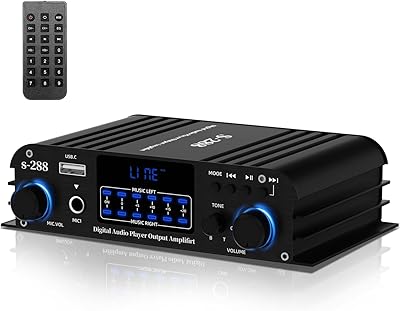
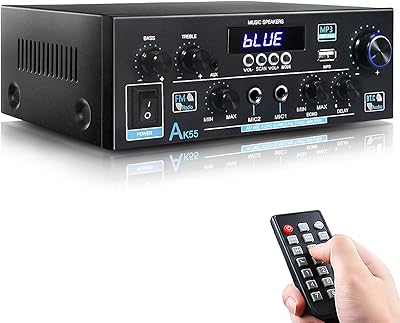
The Okanemoqi AK55 is a compact, 2-channel stereo amplifier targeting casual listeners who want a plug-and-play audio upgrade without spending much. It ships in an aluminum chassis with a bright LED display, which immediately sets it apart from the flimsy plastic boxes common at this price point. One thing worth clarifying upfront: the advertised 1000W figure is a peak marketing number — real-world continuous output sits closer to 50W per channel RMS. That is still respectable for a small room or desktop setup, but temper expectations accordingly. Launched in late 2024, okanemoqi is a relatively unknown brand competing directly against established budget names like Fosi Audio and Lepy.

Features & Benefits

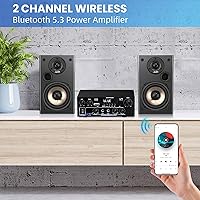
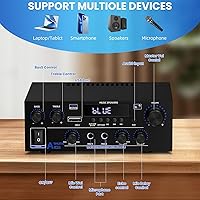
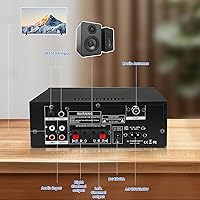
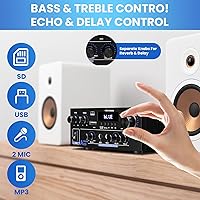
The AK55 packs a surprisingly wide range of inputs for its size — Bluetooth 5.3, 3.5mm AUX, USB flash drive, SD card, and a microphone jack. The Bluetooth connection holds steady up to around 33 feet, which is plenty for most living rooms. That microphone input deserves specific attention: at this price, having a built-in mic channel without needing a separate mixer is genuinely useful for home karaoke or spoken-word setups. The stated harmonic distortion of ≤0.04% is impressive on paper, suggesting cleaner playback than many rivals in this segment. The aluminum housing also handles heat better than plastic alternatives, which matters for an amp running longer sessions.

Best For

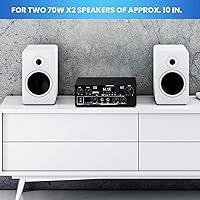
This compact stereo amp makes the most sense for first-time buyers setting up a small listening space — a bedroom, home office, or den with bookshelf speakers in the 6.5 to 8-inch range. It pairs cleanly with a TV, PC, or smartphone, and the all-in-one inputs mean you rarely need extra gear. Car audio users after an inexpensive Bluetooth-capable head-unit alternative will also find it worth a look. The built-in mic jack makes it a practical pick for casual home karaoke or low-volume background music at small gatherings, without the overhead of a full PA system. It is not designed for audiophiles or large rooms.

User Feedback

Buyers tend to appreciate how quickly this Bluetooth amplifier gets up and running — most report pairing with a phone or tablet in under a minute, with a stable connection throughout normal use. The build quality draws positive comments too; the aluminum body feels more solid than the price tier suggests. On the downside, some users notice a gap between the advertised wattage and actual perceived loudness, and at higher volumes a faint noise floor becomes noticeable. A handful of reviewers flag that customer support response times can be slow — a real concern for a new brand with no established service history. Overall reception is cautiously positive.

Pros

  • Bluetooth 5.3 pairs fast and holds a stable connection across a normal-sized room.
  • The aluminum housing feels noticeably more solid than plastic rivals at this price point.
  • Five input options — including a mic jack — on a single unit is rare at this price tier.
  • Setup takes under two minutes, making it genuinely beginner-friendly right out of the box.
  • The LED display clearly shows active input and volume status from across the room.
  • Stated harmonic distortion of 0.04% delivers cleaner casual listening than most budget competitors.
  • The compact stereo amp fits easily on a desk, shelf, or tucked into a car trunk.
  • Works well as a fuss-free TV audio upgrade when paired with 8-ohm bookshelf speakers.
  • Adequate output for small rooms means most everyday listeners will never hit the ceiling.

Cons

  • The advertised 1000W figure is a peak rating — real continuous output is closer to 50W per channel.
  • Noise floor becomes audible above 70% volume, which limits late-night or critical listening sessions.
  • No folder navigation or playlist support makes USB and SD card playback frustrating with large libraries.
  • Customer support response times are slow and inconsistent, with no established warranty infrastructure.
  • AUX input lacks ground loop isolation, causing a faint buzz when connected to a PC.
  • Microphone preamp is basic — no reverb, EQ, or feedback suppression for even semi-serious use.
  • Volume step increments are uneven, making precise low-volume adjustment harder than it should be.
  • Extended high-volume use triggers thermal shutdowns, which is a real issue during long karaoke sessions.

Ratings

The scores below for the Okanemoqi AK55 were generated by our AI engine after systematically analyzing verified buyer reviews from multiple global markets, with spam, bot-submitted, and incentivized feedback actively filtered out. Each category reflects a genuine cross-section of real user experiences — strengths and frustrations included — so you get an honest picture before committing to a purchase.

Value for Money
82%
18%
Most buyers feel they are getting more hardware than the price suggests — an aluminum chassis, Bluetooth 5.3, and a multi-input layout at this tier is genuinely hard to match. Users setting up a first bedroom or desktop speaker system consistently report feeling satisfied with what landed on their doorstep.
A handful of buyers who came in expecting wall-shaking output based on the 1000W marketing claim felt misled once they understood the peak-versus-RMS gap. If expectations are calibrated correctly the value holds up; if not, disappointment follows quickly.
Audio Clarity
71%
29%
For casual listening at moderate volumes — background music during dinner, TV audio through bookshelf speakers, or a desktop setup — most users describe the sound as clean and detailed enough. The stated 0.04% harmonic distortion figure appears to hold up reasonably well in everyday use.
Push the volume past about 70% and a noticeable noise floor creeps in, with some buyers reporting a faint hum that becomes distracting during quiet passages. Audiophiles or anyone comparing against dedicated DAC-amp combos in a similar price range will likely find the clarity underwhelming at higher levels.
Bluetooth Performance
78%
22%
The Bluetooth 5.3 connection is one of the more praised aspects — most users report fast pairing with phones and tablets, and the roughly 33-foot range holds up well in open-plan rooms. Dropouts during normal use appear to be rare based on the pattern of feedback.
A minority of reviewers flag occasional reconnection issues after standby, particularly with older Android devices. The connection is not quite as bulletproof as some pricier competitors, and a small number of users report latency that becomes noticeable when syncing audio with video on a TV.
Build Quality
76%
24%
The aluminum housing is a genuine talking point at this price — buyers frequently comment that it feels substantially more solid than the all-plastic micro-amps it competes against. The unit sits firmly on a desk or shelf without flex, and the LED display is crisp and easy to read across a room.
The knobs and buttons have a slightly loose feel that undercuts the premium impression the chassis creates. A few long-term users mention that the LED display can develop inconsistent brightness in one corner after extended use, suggesting the internal components may not fully match the exterior's build standard.
Input Versatility
88%
Having Bluetooth, AUX, USB, SD card, and a microphone input on a single compact unit is genuinely rare at this price point. Users running karaoke nights at home or needing to plug in a mic for speech playback consistently call this out as the reason they chose the AK55 over alternatives.
The USB and SD card playback is functional but basic — there is no folder navigation or playlist management, which frustrates users with large music libraries. The AUX input also lacks any ground loop isolation, so buyers pairing it with a PC occasionally report a faint buzz through the speakers.
Power Output (Real-World)
58%
42%
For small rooms and bookshelf speakers in the 6.5 to 8-inch range, the actual continuous output is sufficient to fill the space comfortably. Users in bedrooms or home offices report it handles daily listening without straining.
The 1000W peak figure is a significant stretch from the 50W-per-channel RMS reality, and buyers expecting to power larger speakers or fill bigger spaces will hit a ceiling fast. This is arguably the most common source of one-star reviews, with buyers feeling the spec sheet was written to impress rather than inform.
Ease of Setup
91%
Nearly every reviewer mentions how quickly the unit is ready to use out of the box — connect speakers, power on, pair a phone via Bluetooth, and you are listening within two minutes. First-time amplifier buyers in particular appreciate the zero-learning-curve experience.
The instruction manual is thin and poorly translated in places, which causes confusion around the microphone gain settings for new users. A small number of buyers also struggled to identify the correct speaker wire polarity from the labeling on the terminals.
Microphone Input Quality
67%
33%
Having a dedicated mic jack without a separate mixer is a real convenience for home karaoke setups or small gatherings. Users who pair it with a basic dynamic microphone report adequate volume and intelligibility for casual use.
The mic preamp is rudimentary — there is no EQ, reverb, or feedback suppression, so it sounds noticeably raw compared to even entry-level karaoke systems. At higher mic gain settings a persistent background hiss is reported by several buyers, limiting its usefulness for anything beyond very casual applications.
Heat Management
74%
26%
The aluminum body acts as a passive heatsink, and most users report the unit staying only mildly warm during multi-hour listening sessions at moderate volume. This is a clear advantage over plastic-body rivals that can get uncomfortably hot.
Running the amplifier near or above 80% volume for extended periods leads to noticeable heat buildup, and a few buyers report it triggering thermal protection shutdowns during long karaoke sessions. Ventilation around the unit matters more than the compact footprint might suggest.
Speaker Compatibility
72%
28%
The AK55 pairs well with common 8-ohm bookshelf speakers in the recommended size range, and buyers using popular budget brands like Dayton Audio or Polk T15s report a natural tonal balance. The speaker terminals accept both bare wire and pin connectors without issue.
Users who pushed the amp with 4-ohm speakers reported faster overheating and occasional shutdowns, suggesting the output stage is not well-optimized for lower-impedance loads. Compatibility beyond the stated 6.5 to 8-inch passive speaker range is genuinely limited.
LED Display & Controls
69%
31%
The LED display is bright enough to read from across a room in daylight, and it switches clearly between input modes and volume levels. For a set-it-and-forget-it amplifier, it does the job without any real complaints from most users.
The display lacks granular volume increments — some buyers note that the jump between certain volume steps feels larger than expected, making fine adjustment tricky in quiet environments. The control knob also has a slightly loose rotational feel that does not inspire confidence over repeated daily use.
Car Audio Suitability
63%
37%
Several buyers have successfully used the AK55 as a budget car amplifier replacement, praising the Bluetooth connectivity and compact size for fitting in tight dashboard or trunk spaces. The multi-input option is appreciated for vehicles without modern head units.
The unit is not built or certified specifically for automotive use, and buyers report that voltage fluctuations in a running vehicle can cause occasional signal interruptions. Long-term reliability in a car environment remains an open question given the brand is so new.
Brand Trust & Support
47%
53%
A portion of buyers had smooth purchase experiences with no issues and therefore had no reason to contact support, leaving neutral-to-positive impressions by default. The product itself ships promptly through standard fulfillment channels.
Okanemoqi has no meaningful brand history, and buyers who needed post-purchase support report slow or unhelpful responses. With no established warranty service infrastructure and limited community knowledge base online, buying this amp involves a higher-than-average leap of faith if something goes wrong.

Suitable for:

The Okanemoqi AK55 is a solid pick for anyone dipping their toes into passive speaker setups for the first time — particularly if your room is on the smaller side and your expectations are grounded in reality. It fits naturally into bedroom or home office audio rigs where a pair of bookshelf speakers needs a simple, no-fuss driver. TV listeners who want to step up from built-in television sound without wiring a full receiver will appreciate how quickly this compact stereo amp gets running. If you occasionally host casual gatherings or run home karaoke nights, the built-in microphone input removes the need for a separate mixer — a genuinely practical bonus at this price tier. Car audio tinkerers looking for an inexpensive Bluetooth-capable amp to drop into a vehicle with aging hardware will also find the multi-input layout convenient.

Not suitable for:

Buyers who need serious headroom for larger rooms or bigger speakers should look elsewhere — the Okanemoqi AK55 simply does not have the sustained output for that job, regardless of what the 1000W peak figure implies on the packaging. Audiophiles or anyone already familiar with dedicated stereo separates will likely find the noise floor and high-volume distortion characteristics frustrating rather than acceptable. If long-term brand reliability and accessible customer support are non-negotiable for you, this amp presents a real risk — okanemoqi has no established service track record and limited community support online. Users planning to run 4-ohm speakers or push the unit hard for extended periods will run into thermal shutdowns and compatibility issues that a more purpose-built amplifier would handle without complaint. And if you want nuanced microphone features like reverb, EQ, or feedback cancellation for a real karaoke or live-speech setup, this Bluetooth amplifier is too basic to deliver.

Specifications

  • Peak Power: The unit is rated at 1000W peak output, a marketing figure that reflects maximum instantaneous power under ideal lab conditions rather than sustained listening levels.
  • RMS Output: Continuous RMS power delivery is rated at 50W per channel across 2 channels, which is the figure that reflects real-world, sustained audio performance.
  • Channels: The amplifier operates as a 2.0 stereo unit with two discrete output channels and no subwoofer or surround processing.
  • Bluetooth: Bluetooth 5.3 is built in, providing a stable wireless connection with an operational range of up to 33 feet from a paired source device.
  • Inputs: Available inputs include Bluetooth 5.3, a 3.5mm AUX jack, USB-A flash drive port, SD card slot, and a microphone input jack.
  • Speaker Match: The amplifier is optimized for passive speakers in the 6.5 to 8-inch driver range, with an 8-ohm nominal impedance load recommended for stable operation.
  • Distortion: Total harmonic distortion is specified at 0.04% or below, indicating relatively clean signal reproduction at moderate output levels for this product tier.
  • Display: A bright LED digital readout on the front panel shows active input source, volume level, and Bluetooth connection status in real time.
  • Housing: The outer chassis is constructed from aluminum, which aids passive heat dissipation and provides greater structural rigidity than plastic alternatives at this price point.
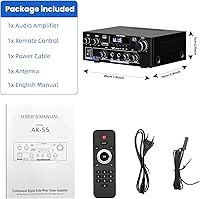
  • Dimensions: The unit measures 8.98 x 8.54 x 3.82 inches (length x width x height), making it compact enough for a desktop shelf or vehicle trunk installation.
  • Weight: The amplifier weighs 2.27 pounds, keeping it lightweight and easy to reposition between home and car audio applications.
  • Mounting: The AK55 is designed as a freestanding unit and does not include rack-mount hardware or integrated wall-mounting provisions.
  • Operating Temp: The manufacturer specifies a nominal operating temperature of 20 degrees Celsius, suggesting it is intended for typical indoor ambient environments rather than extreme heat or cold.
  • Model Number: The official model identifier is AK55, as designated by the manufacturer okanemoqi for this specific amplifier variant.
  • Manufacturer: The AK55 is manufactured by okanemoqi, a brand that entered the consumer electronics market in late 2024 with limited prior product history.

Related Reviews
AK55 Stereo Amplifier
79%
88%
Value for Money
74%
Sound Quality
86%
Karaoke & Mic Performance
83%
Bluetooth Connectivity
91%
Input Variety
More
okanemoqi KS-33BT 800W Home Stereo Amplifier
83%
87%
Sound Quality
91%
Bluetooth Connectivity
90%
Ease of Setup
80%
Build Quality
85%
Size and Portability
More
okanemoqi S288 1200W 4-Channel Bluetooth Audio Amplifier
86%
85%
Sound Quality
94%
Setup and Installation
70%
Bluetooth Connectivity
76%
Build Quality
88%
Bass and Treble Control
More

FAQ

That 1000W figure is a peak rating, not what you get during normal listening. The real sustained output — what audio engineers call RMS — is closer to 50W per channel. That is still enough to fill a small to medium room comfortably, but do not expect it to shake walls or power large floor-standing speakers.

The amplifier is optimized for passive speakers in the 6.5 to 8-inch driver range running at 8 ohms. Standard bookshelf speakers from brands like Dayton, Polk, or Micca in that size range pair well. Avoid 4-ohm speakers — they place a higher load on the output stage and can trigger overheating.

Yes, straightforwardly. If your TV has a 3.5mm headphone output or AUX out, run a cable directly to the AUX input on the amp. Some TVs only have optical audio out, so you would need a separate optical-to-AUX converter in that case. Bluetooth pairing with a TV that supports audio Bluetooth also works well.

It is functional for casual home use but fairly basic. You get volume control for the mic, but there is no reverb, echo effect, or feedback suppression built in. For a living room karaoke night with friends it is perfectly fine. If you want a more polished sound, you would need a dedicated karaoke machine or a small mixer with effects.

Several buyers have used the compact stereo amp in vehicles, and it does function in that context. That said, it is not purpose-built for automotive use — voltage fluctuations from a running engine can occasionally cause brief signal interruptions. It is more reliable as a home unit, but as a low-cost car audio experiment it is worth considering.

Not at all. Power on the amp, select the Bluetooth input mode using the front panel button, and the unit broadcasts as discoverable. Find it in your phone or tablet's Bluetooth settings, tap to pair, and you are connected. Most users report the whole process taking under 60 seconds, and it reconnects automatically on subsequent uses.

Some buyers do report a faint ground loop hum when the AUX input is connected to a desktop PC, which is a known issue with shared power grounds rather than a defect specific to this amp. A cheap ground loop isolator inline on the AUX cable usually solves it completely. Bluetooth connection to the same PC sidesteps the issue entirely.

Yes, both USB-A and SD card slots support direct playback of MP3 files. The functionality is basic though — there is no display-based track browsing or folder navigation, so playback order depends on how files are arranged on the storage device. It works fine for a simple playlist but is not ideal for large or well-organized libraries.

The aluminum housing does a decent job of dissipating heat passively, and at moderate volumes the unit stays only mildly warm. If you run it near full volume for an extended period — during a long karaoke session, for example — it can get noticeably hot and may trigger an automatic thermal protection shutdown. Keeping the area around the unit ventilated helps significantly.

This Bluetooth amplifier is sold by okanemoqi, a brand with very limited post-sale support infrastructure at this stage. There is a basic manufacturer warranty, but buyer feedback suggests customer service response times can be slow and inconsistent. It is worth purchasing through a platform with a strong return policy as a practical safety net given the brand is still relatively new.