Overview

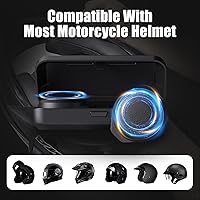
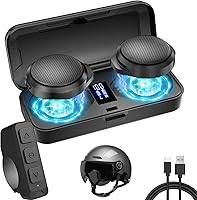
The OBEST H360 Motorcycle Helmet Bluetooth Headset is a TWS audio solution built for riders and skiers who want reliable wireless audio without spending big on a dedicated intercom system. What makes it stand out at this price point is the included charging case — not just a storage box, but a 1900mAh power bank that dramatically extends how long you can run the earbuds between wall charges. Bluetooth 5.3 handles connectivity, which is the current standard for stable, fast pairing. Whether you're commuting daily on a bike or heading up a ski slope on weekends, this wireless riding headset covers both scenarios without requiring two separate devices.
Features & Benefits

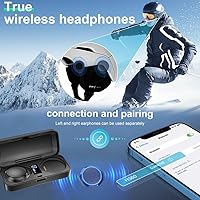
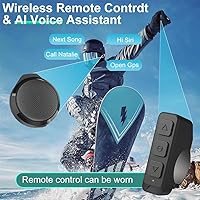
The true wireless setup here is more practical than it sounds. You can use both earbuds simultaneously or just pop one in if you need to stay aware of traffic — a small but genuinely useful detail for urban riders. Pairing via Bluetooth 5.3 is quick and holds steady up to about 10 meters, so your phone doesn't need to be right on your tank bag. The ANC microphone helps cut wind noise during calls, though at highway speeds it manages the workload rather than eliminating it entirely. Velcro mounting keeps installation tool-free, and the oversized control buttons are large enough to hit reliably even through thick ski or winter gloves.

Best For

This helmet headset makes the most sense for motorcycle commuters who want music and call handling on daily rides but aren't ready to invest in a full mesh intercom system. It's also a solid pick for skiers and snowboarders — the glove-friendly buttons and wind-resistant build translate well to the mountain. Riders who cover multi-day trips will appreciate having the 1900mAh charging case along, since it means you're not hunting for outlets at every stop. That said, if your helmet liner has shallow or no speaker pockets, fitting the earbuds neatly might take extra effort — liner compatibility is worth checking before you buy.

User Feedback

Buyers generally respond well to the button layout — thick-glove usability gets mentioned repeatedly as a genuine win. Battery life also earns consistent praise, with most users finding the active playtime reasonable for a typical commute or ski session. On the flip side, wind noise performance at higher speeds draws mixed reviews; it helps noticeably at lower speeds but some riders report it falls short on fast highways. A handful of users note earbud pairing drops during initial setup, though these tend to resolve after a reset. Fit is the other variable — riders with full-face helmets report smoother installs, while those with older or non-standard liners occasionally struggle to secure the earbuds cleanly.

Pros

  • The charging case provides a meaningful power reserve, making multi-day use practical without constant access to a wall outlet.
  • Bluetooth 5.3 pairs quickly and holds a stable connection throughout normal urban and trail riding distances.
  • True wireless design lets you use a single earbud independently, which is useful when you need one ear free for traffic awareness.
  • Velcro mounting is genuinely tool-free and reversible, so swapping the headset between helmets takes minutes.
  • Oversized buttons work reliably with thick gloves, which is a real advantage during winter rides or ski sessions.
  • Wind noise reduction is effective at lower speeds, keeping calls clear during city commutes and casual rides.
  • The dual-use design covers both motorcycle riding and skiing without requiring separate devices or accessories.
  • Water resistance adds a practical layer of durability for riders caught in light rain.
  • At this price tier, the inclusion of a charging case is above average and adds tangible everyday value.

Cons

  • ANC performance drops off noticeably at highway speeds, making calls harder to manage on fast roads.
  • Initial earbud pairing can be unreliable for some users and may require a manual reset to resolve.
  • Helmet liner compatibility is not guaranteed — riders with non-standard or older helmets may struggle to fit the earbuds cleanly.
  • Active battery life of 5.5 hours per charge is adequate for commuting but may fall short on longer full-day rides.
  • No intercom or bike-to-bike communication capability, which limits its usefulness for group touring.
  • Sound quality is functional rather than impressive — not the right choice if audio fidelity is a priority for you.
  • The in-ear fit inside a helmet can shift over longer rides depending on liner padding thickness and pressure from the helmet shell.
  • No companion app means limited ability to adjust EQ settings or customize the audio experience.

Ratings

The OBEST H360 Motorcycle Helmet Bluetooth Headset has been scored by our AI system after analyzing verified global buyer reviews, with spam, bot-submitted, and incentivized feedback actively filtered out before scoring. The ratings below reflect both what this wireless riding headset genuinely gets right and where real-world users have run into friction — nothing is glossed over. Each category score is weighted against comparable helmet audio solutions at the same price tier, so you can make a properly calibrated decision.
Bluetooth Stability
83%
Riders consistently report that the Bluetooth 5.3 connection holds reliably during city commutes and ski runs, with very few mid-ride dropouts under normal conditions. The 10-meter range is more than sufficient for keeping your phone in a jacket pocket or tank bag without signal hiccups.
A small but notable group of users mention occasional instability when riding near areas with high wireless interference, such as dense urban intersections. The connection does not always auto-recover as quickly as expected after a brief signal interruption.
Wind Noise Reduction
61%
39%
At urban and suburban riding speeds, the ANC microphone does a reasonable job of keeping call audio intelligible for the person on the other end. Skiers on blue and green runs report noticeably cleaner call quality compared to non-ANC helmet audio options at this price.
At sustained speeds above 60 mph, wind noise bleeds through significantly and call clarity suffers in a way that is hard to ignore. Several highway commuters noted they resorted to pulling over for important calls because the microphone simply could not keep up with the wind load at speed.
Battery Life
78%
22%
For daily commuters whose rides fall under 90 minutes each way, the 5.5-hour active battery comfortably covers a full day of riding without needing to dip into the case charge. The charging case acting as a power reserve is genuinely appreciated by riders doing weekend multi-day trips.
The distinction between active battery life and the 50-hour standby figure trips up some buyers who expect longer uninterrupted playtime. Heavy users — those streaming music continuously at higher volumes — report getting closer to 4.5 hours rather than the full 5.5-hour claim.
Helmet Compatibility
67%
33%
Riders with modern helmets designed with audio-ready liner pockets — common in mid-range and premium helmets from major brands — report a smooth, clean installation that takes only a few minutes per side. The Velcro system is genuinely reversible, which is appreciated by riders who own multiple helmets.
Older helmets and budget models with flat, uncut liners make installation awkward or impossible without DIY modifications to the liner itself. Several buyers with full-face adventure helmets noted the earbud thickness creates pressure points during longer rides.
Glove Usability
86%
The oversized physical buttons are one of the most consistently praised aspects of this headset among cold-weather users. Skiers wearing thick snowboard gloves specifically call out how easy it is to adjust volume or skip tracks without removing a glove or pulling over.
A few users with particularly bulky motocross gloves report that the button placement on the control module requires a moment of searching before hitting it accurately. Touch-based inputs are effectively unusable with gloves on, so full reliance falls on the physical buttons.
Sound Quality
72%
28%
For a helmet-integrated solution at this price point, the dynamic driver delivers clear enough audio for music enjoyment during moderate-speed rides and commutes. Vocals and mid-range frequencies come through with reasonable clarity, which is what most riders actually want for podcasts and navigation cues.
Bass response is underwhelming for music listeners who prefer a fuller low-end, and at higher volumes some users detect distortion creeping into the high frequencies. Audiophiles will find the output functional but not satisfying — this is a communication-first device, not a hi-fi audio product.
TWS Pairing Reliability
64%
36%
When the two earbuds pair correctly, the stereo experience works well and the auto-connect on power-up is convenient for daily riders who just want to put the helmet on and go. Single-earbud mode works reliably and is a genuinely useful feature for traffic-aware urban riding.
A recurring complaint involves the two earbuds failing to sync properly on initial setup or after extended storage, requiring a full manual reset to resolve. This is not a universal issue but it appears frequently enough in buyer feedback to be a real consideration rather than an isolated case.
Mounting & Installation
79%
21%
The Velcro system requires no tools, no drilling, and leaves no permanent marks on the helmet liner, which sets it apart from some competitors that use adhesive-only solutions. Riders who swap the headset between two helmets report that reinstallation is quick once they have done it the first time.
The Velcro adhesive backing can lose grip over time, particularly in helmets where the liner fabric is very smooth or slightly oily from use. A handful of users report having to replace the Velcro pads after several months of regular installation and removal cycles.
Charging Case Design
81%
19%
The case is compact enough to slip into a jacket pocket or glove box without bulk, and the LED display showing charge level is a small but practical touch that avoids guesswork on remaining power. Riders on multi-day trips specifically highlight the case as the feature that tips the value equation in this headset's favor.
The case hinge and latch feel plasticky relative to what buyers in this price range might hope for, and a couple of users have noted the lid does not close as snugly after extended use. Charging speed for the case itself is not particularly fast compared to newer competing products.
Microphone Call Quality
69%
31%
In calm environments and at low riding speeds, call recipients report the microphone picks up voice clearly enough that callers rarely need to be told the rider is on a bike. The dual-microphone setup does a better job than single-mic competitors at rejecting ambient noise during stationary or slow-speed use.
Call quality degrades noticeably as speed increases, and callers on the other end sometimes describe wind artifacts as distracting during highway riding. The microphone sensitivity also picks up engine vibration on heavier motorcycles, which adds a low-frequency hum in the background during calls.
Water Resistance
74%
26%
Light rain during a commute or morning fog on the mountain does not faze the headset, and riders in wet climates report no moisture-related failures after several months of regular use. The water resistance also covers sweaty sessions, which matters for skiers wearing the headset during high-exertion runs.
The water resistance rating does not cover submersion or sustained heavy rain, and the charging case itself is not rated for exposure to moisture, so wet storage is a real risk. Riders who regularly ride in heavy rain should treat the water resistance as a safety net for light exposure rather than a durable weatherproof seal.
Value for Money
77%
23%
Relative to other helmet audio options with charging cases and Bluetooth 5.3 at this price tier, the OBEST H360 offers a competitive bundle that would cost meaningfully more from established intercom brands. Commuters who primarily need music and occasional calls will find the feature set genuinely justifies the spend.
Riders with higher performance demands — particularly for wind noise handling or premium audio — will likely feel the limitations before they feel satisfied with the value. A step up in budget opens access to significantly more capable options from brands with longer track records in the helmet audio space.

Suitable for:

The OBEST H360 Motorcycle Helmet Bluetooth Headset is a strong fit for daily commuter riders who want music and hands-free calling without committing to the cost and complexity of a full intercom system. If your rides typically last a couple of hours or less, the earbud battery life covers you comfortably, and the charging case means you can top up overnight and head out again the next morning without anxiety. Skiers and snowboarders will find it equally practical — the glove-friendly buttons and wind-resistant build translate well to cold-weather outdoor use, making it a genuinely dual-purpose device rather than a stretched compromise. Riders who take multi-day trips and want a compact audio solution that doesn't require hunting for outlets constantly will also appreciate the case acting as a portable power reserve. It suits anyone upgrading from a wired helmet speaker setup who wants the flexibility of true wireless without a steep price tag.
Not suitable for:

Riders who spend significant time at sustained highway speeds should approach the OBEST H360 Motorcycle Helmet Bluetooth Headset with realistic expectations — the ANC microphone helps at moderate speeds, but wind noise management at 70 mph or above is limited, and call clarity can suffer noticeably. If you need bike-to-bike communication with a riding partner, this headset has no intercom functionality whatsoever, so it is simply the wrong category of device for group touring. Helmets with shallow liner pockets or non-standard internal layouts can make installation genuinely awkward, and there is no guarantee of a clean fit without physically testing it in your specific helmet first. Audiophiles or riders who prioritize premium sound quality will likely find the dynamic driver output acceptable but unremarkable. Anyone expecting full noise isolation in loud riding environments is likely to be disappointed — this wireless riding headset manages wind noise rather than eliminating it.
Specifications

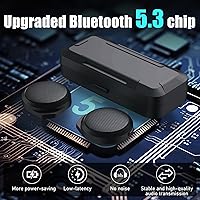
  • Bluetooth Version: The headset uses a Bluetooth 5.3 chip, providing faster pairing and improved signal stability compared to older Bluetooth standards.
  • Wireless Range: Maintains a stable connection within approximately 10 meters of the paired device under normal conditions.
  • Earpiece Shape: In-ear design with a profile intended to sit flush within helmet speaker pockets or against the ear inside the liner.
  • Audio Driver: Equipped with a dynamic driver type, delivering balanced sound suitable for music playback and voice calls during riding.
  • Impedance: Driver impedance is rated at 80 Ohm, which is on the higher side for in-ear headphones and contributes to controlled output levels.
  • Noise Control: Active Noise Cancellation is applied primarily through the microphone array to reduce wind noise during calls rather than for passive listening isolation.
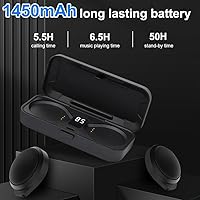
  • Earbud Battery: Each fully charged earbud supports up to 5.5 hours of continuous active use, such as music playback or call handling.
  • Charging Case: The included charging case holds a 1900mAh battery, extending the total system standby time to up to 50 hours between wall charges.
  • Connectivity: Uses True Wireless Stereo (TWS) technology, allowing both earbuds to operate together or a single earbud to be used independently.
  • Control Method: Primary controls use oversized physical buttons plus touch input, designed to remain operable while wearing thick riding or ski gloves.
  • Mounting Method: Earbuds attach inside the helmet using a Velcro-based system, requiring no tools and allowing removal and reinstallation without permanent modification.
  • Water Resistance: Rated as water resistant, providing protection against light rain and moisture exposure during outdoor riding or skiing.
  • Compatibility: Designed to fit most audio-ready motorcycle and ski helmets that include pre-cut speaker pockets or cavities in the liner.
  • Package Dimensions: The retail package measures 7.01 x 4.06 x 1.73 inches, making it compact enough for storage in a tank bag or gear kit.
  • Item Weight: Complete package weighs 9.1 ounces, keeping the overall kit light and easy to transport between rides or sessions.
  • Model Number: Manufactured under model designation H360 by OBEST.
  • Included Items: Package includes the earbuds, charging case, and a charging cable; no headphone jack adapter is included as the unit is fully wireless.
  • Primary Use Cases: Designed specifically for motorcycle commuting and helmet-based skiing or snowboarding audio use.

Related Reviews

Khptop X7 Motorcycle Helmet Bluetooth Headset
87%
88%
Audio Quality
94%
Battery Life
90%
Ease of Installation
82%
Noise Cancellation
87%
Build Quality
More
JZAQ BT40 Helmet Bluetooth Headset
71%
83%
Value for Money
71%
Battery Life
78%
Waterproof Performance
61%
Sound Quality
67%
Helmet Compatibility & Fit
More
FreedConn FG Motorcycle Bluetooth Helmet Headset
75%
86%
Ease of Setup
57%
Intercom Range
78%
Call Audio Quality
61%
Music Audio Quality
83%
Battery Life
More
JZAQ BT30 Motorcycle Helmet Bluetooth Headset
74%
88%
Battery Life
84%
Value for Money
54%
Wind Noise & Noise Cancellation
83%
Waterproofing & Weather Resistance
86%
Ease of Installation
More
EJEAS E1+ Motorcycle Helmet Bluetooth Headset
70%
88%
Value for Money
91%
Battery Life
83%
Bluetooth Connectivity
61%
Noise Reduction
74%
Audio Quality
More
LEXIN G2P Motorcycle Helmet Bluetooth Headset
78%
83%
Audio Clarity
61%
Intercom Range
88%
Battery Life
66%
Noise Cancellation
81%
Build Quality
More
Touch Two C9 Motorcycle Helmet Bluetooth Headset
73%
88%
Value for Money
84%
Ease of Installation
71%
Audio Quality
59%
Intercom Performance
62%
Microphone Clarity
More
FreedConn R3 PRO Motorcycle Helmet Bluetooth Headset
79%
83%
Intercom Range & Stability
88%
Audio Quality
74%
Camera Video Quality
91%
Battery Life
87%
Waterproofing & Weather Resistance
More
Khptop Y80 Bluetooth Motorcycle Helmet Intercom Headset
86%
88%
Communication Range
91%
Noise Cancellation
95%
Battery Life
86%
Waterproof Durability
89%
Ease of Installation
More
EuroFone S2 Motorcycle Bluetooth Headset
74%
88%
Value for Money
91%
Waterproofing
74%
Sound Quality
86%
Battery Life
63%
Intercom Performance
More

FAQ

It fits most helmets that have pre-cut speaker pockets built into the liner — these are often labeled as audio-ready or communication-ready helmets. If your helmet has a flat, uncut liner with no pockets, fitting the earbuds neatly can be tricky. It is worth checking your specific helmet model before purchasing.

The 5.5 hours refers to active use — music playing, calls happening, audio streaming continuously. The 50-hour figure represents total standby time across the earbuds and charging case combined, meaning the case can recharge the earbuds multiple times before the whole system needs a wall charge. Think of the case like a portable battery bank specifically for the earbuds.

Yes, that is one of the practical advantages of the TWS design. You can run a single earbud independently, which is useful when you want to keep one ear open for traffic or ambient sounds. The other earbud stays charging in the case until you need it.

The ANC on the OBEST H360 Motorcycle Helmet Bluetooth Headset targets microphone-level wind noise, meaning it primarily helps keep your voice clearer during calls rather than blocking wind noise from what you hear. At city and suburban speeds it works reasonably well, but at sustained highway speeds above 60 mph, wind interference on calls becomes more noticeable. It manages the problem rather than solving it completely.
Installation uses Velcro adhesive backing — you peel and stick the Velcro into the speaker pocket of your helmet liner, then press the earbud unit against it. No drilling or permanent modification is needed. The whole process usually takes a few minutes per side, and the earbuds can be removed and reinstalled if you switch helmets.

They genuinely work for skiing. The water resistance handles light snow and moisture, the glove-friendly buttons are large enough to operate with ski or snowboard gloves on, and the charging case means you are not hunting for a USB port mid-mountain. The main limitation in any outdoor use is that heavy wind at speed will affect call quality.

A small number of users have reported pairing drops between the two earbuds, particularly during initial setup. In most cases, placing both earbuds back in the case, closing it, then reopening it and re-pairing from scratch resolves the issue. This is a known occasional quirk with TWS earbuds in general and not unique to this model.

Yes, it connects via standard Bluetooth and is compatible with both Android and iOS devices. Since Bluetooth 5.3 is a hardware standard rather than a platform-specific protocol, it pairs with any phone that supports Bluetooth.

Yes, the microphone array is designed specifically for call handling during riding. The ANC helps at moderate speeds, and the controls let you answer or end calls without taking your hands off the bars. At higher speeds, you may need to speak up or pull over for critical calls where clarity matters.

The charging case charges via a cable (included in the package), using a standard connection. You charge the case from any USB power source — a wall adapter, power bank, or laptop port — and the case in turn charges the earbuds when they are placed inside it.