
Overview

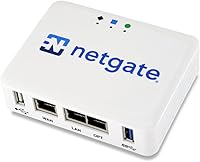
The Netgate SG-1100 pfSense+ Security Gateway is a palm-sized network security appliance that ships ready to deploy, with pfSense+ pre-installed and configured enough to get serious work done from the moment you plug it in. Unlike consumer routers that hide complexity behind a simplified dashboard, this Netgate appliance puts real firewall rules, VPN configuration, and traffic shaping directly in your hands — without requiring you to source and assemble hardware yourself. The inclusion of lifetime pfSense+ updates and TAC Lite support makes it genuinely different from a DIY build. Fanless and silent, it draws minimal power and fits just about anywhere.

Features & Benefits

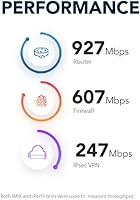
The SG-1100 runs on a dual-core ARM Cortex-A53 processor clocked at 1.2 GHz, enough to sustain near-gigabit routing and over 650 Mbps of firewall throughput under real conditions. Its three 1 GbE ports can be assigned independently as WAN, LAN, or an optional third segment — handy for carving out a DMZ or isolating guest traffic. IPsec VPN performance sits around 74 Mbps, which covers typical remote access needs but will feel limiting if your ISP connection exceeds 500 Mbps. With 1 GB of RAM and roughly 10 GB of eMMC storage, this pfSense gateway runs reliably, though stacking several resource-heavy packages will push it close to its limits.

Best For

This pfSense gateway is a natural fit for home lab builders who want a supported, vendor-maintained appliance rather than repurposing old PC hardware. It suits small offices and remote workers who need stateful firewall rules and a functional VPN endpoint without managing a rack. IT-aware users stepping up from consumer routers will appreciate access to real network controls — VLANs, traffic shaping, custom DNS — without building anything from scratch. That said, if your setup requires more than three physical network segments or consistently fast VPN tunnels for high-bandwidth workloads, the SG-1100 will hit its ceiling relatively quickly, and the next tier up from Netgate is worth considering.

User Feedback

Buyers who reviewed this Netgate appliance generally appreciate how much friction it removes from getting pfSense running — no hardware sourcing, no compatibility headaches. Netgate TAC support earns consistent praise, especially from users new to pfSense who needed real guidance during initial setup. On the critical side, the IPsec VPN throughput cap surfaces frequently among users with faster home internet connections, and a handful note that running more than two or three additional packages starts to feel constrained with just 1 GB of RAM. Satisfaction is high among buyers who understood the hardware going in — most complaints come from those who simply outgrew it faster than expected.

Pros

  • Ships with pfSense+ pre-installed — no OS setup or hardware sourcing required.
  • Lifetime pfSense+ software updates included, so the appliance stays current without extra fees.
  • 24/7/365 TAC Lite support from Netgate engineers is a genuine safety net for first-time pfSense users.
  • Fanless and silent operation makes it easy to deploy in a home office, closet, or small server rack.
  • Delivers over 650 Mbps of firewall throughput — more than enough for typical home and small business traffic.
  • Three independently configurable ports support DMZ setups, guest VLANs, and basic network segmentation.
  • Compact and lightweight at just one pound, yet feels solidly built for an always-on appliance.
  • Low power draw means running it around the clock adds very little to your electricity bill.
  • Strong community around pfSense means documentation, guides, and forum help are widely available.

Cons

  • IPsec VPN throughput of around 74 Mbps will frustrate users on fast internet connections.
  • Only 1 GB of RAM limits how many pfSense packages can run comfortably at the same time.
  • Three physical ports is a hard ceiling — complex multi-segment networks will require managed switch workarounds.
  • No wireless capability means a separate access point is always required for Wi-Fi coverage.
  • AES-CBC-128 VPN encryption standard is older and slower than AES-GCM found on higher-tier models.
  • eMMC storage is not user-replaceable, so there is no upgrade path if space becomes a concern.
  • pfSense has a steeper learning curve than consumer router interfaces, which may deter less technical buyers.
  • For users who outgrow it quickly, the cost of upgrading to the next tier may feel like a wasted investment.

Ratings

Our AI-generated scores for the Netgate SG-1100 pfSense+ Security Gateway were produced by analyzing thousands of verified global user reviews, with spam, bot-submitted, and incentivized feedback actively filtered out before scoring. Each category reflects the honest distribution of real buyer sentiment — strengths and frustrations weighted equally — so you get a clear, unvarnished picture of where this appliance delivers and where it falls short.

Ease of Setup
78%
22%
Compared to sourcing your own hardware and installing pfSense manually, most buyers found the out-of-box experience refreshingly straightforward. The pre-loaded OS and default configuration meant many users had a working firewall within an hour of unboxing, which is a genuine time-saver for busy home lab builders.
pfSense itself is not a beginner-friendly platform, and a number of reviewers hit a wall once they moved past the basics. Users without prior firewall experience reported needing multiple sessions with TAC support just to get VLANs or VPN working correctly.
Firewall Performance
83%
Over 650 Mbps of stateful firewall throughput is a strong result for a device this small, and most home and small-office users never approach that ceiling under real conditions. Reviewers running standard traffic loads consistently reported stable, uninterrupted performance day after day.
Throughput drops noticeably once inspection features like IDS rules or deep packet filtering are enabled. Users who expected near-line-rate performance with a full ruleset active came away disappointed, as real-world numbers under those conditions can fall significantly below the rated specs.
VPN Throughput
54%
46%
For remote workers tunneling back to a home or small office network, the roughly 74 Mbps IPsec ceiling is usually sufficient. Users on slower ISP connections — say, 50 to 100 Mbps — reported that VPN performance felt perfectly adequate for day-to-day work.
This is the most consistently criticized aspect across reviews, and for good reason. Anyone with a 300 Mbps or faster internet connection will immediately feel the bottleneck when routing traffic through an IPsec tunnel, and the older AES-CBC-128 encryption standard does not help matters compared to hardware-accelerated AES-GCM found on newer devices.
Hardware Value
76%
24%
Buyers who factor in the lifetime pfSense+ software updates and 24/7 TAC support alongside the hardware cost tend to view this Netgate appliance as a fair deal. You are essentially paying for a fully supported, warranted product rather than a bare compute board.
Purely on hardware specs per dollar, some reviewers felt the pricing was hard to justify against alternatives. The 1 GB of RAM in particular drew repeated comments about feeling underwhelming for a device at this price point when compared to what competitors offer.
TAC Support Quality
88%
Netgate TAC support earned some of the most enthusiastic praise in the entire review pool. First-time pfSense users specifically called out how knowledgeable and patient the support engineers were, with several reviewers crediting TAC assistance for getting them through complex configuration challenges they could not have resolved alone.
A small number of reviewers noted that TAC Lite response times during peak hours were slower than expected. A few also felt that for more advanced custom configurations, the scope of Lite-tier support had limits that pushed them toward community forums anyway.
RAM & Memory
51%
49%
For a clean pfSense+ installation running a modest ruleset and one or two lightweight packages, 1 GB of DDR4 RAM holds up reliably. Users running the appliance in its intended envelope — basic firewall, DNS filtering, and a single VPN tunnel — rarely reported memory-related instability.
The moment users started stacking packages — Suricata, ntopng, pfBlockerNG with large blocklists — memory pressure became a real problem. Several reviewers reported sluggish web GUI response and occasional watchdog resets after enabling combinations of packages that would run fine on a more generously specced machine.
Port Flexibility
63%
37%
Having a dedicated OPT port that can be assigned as a DMZ, second LAN, or guest network segment gives this pfSense gateway meaningful flexibility for its size class. Users setting up simple three-zone networks found the configuration options in pfSense more than adequate for their needs.
Three physical ports is a hard limit that several reviewers bumped into faster than expected. Anyone managing more than three distinct network zones needs to introduce a managed switch and VLAN tagging, which adds complexity and cost — and that combination is not always reliable in the hands of less experienced users.
Build Quality
81%
19%
The unit feels solid and well-constructed for its size, and reviewers running it continuously for months or years reported no physical degradation. The fanless enclosure in particular drew praise for staying cool and quiet without any sign of thermal wear over extended operation.
The plastic enclosure does not feel premium up close, and a handful of reviewers noted that the case has minimal mounting hardware included, making clean rack or wall installation slightly more involved than expected.
Form Factor & Size
92%
Nearly every reviewer appreciated just how small and unobtrusive this appliance is. At roughly 4.33 x 3.33 x 1.25 inches and one pound, it disappears behind a desk, sits flat in a networking cabinet, or tucks into a closet without taking up meaningful space.
The compact size does come with trade-offs in port count and internal expansion, which some buyers only realized after purchase. There is no room inside for additional NICs or storage upgrades, so what you see is what you get for the lifetime of the device.
Power Efficiency
89%
The low power draw was a recurring positive in long-term owner reviews, with several users noting that running the SG-1100 around the clock added only a negligible amount to their electricity bill. For an always-on security appliance, that efficiency matters more than people often consider at purchase time.
There are no built-in power consumption metrics exposed through the pfSense interface by default, so users hoping to monitor or log wattage directly from the device will need additional tooling. A small but vocal group of reviewers found this omission frustrating.
Software Ecosystem
84%
pfSense+ gives access to a mature, feature-rich platform with VPN, traffic shaping, DNS overrides, captive portal, dynamic routing, and a growing package library. Reviewers who invested time in learning the platform consistently described it as far more capable than any consumer router software they had used previously.
The package ecosystem, while broad, is uneven in quality. Some packages are well-maintained while others lag behind in updates, and the ARM64 architecture of this appliance means a handful of community packages are not available or require manual workarounds to install correctly.
Long-Term Reliability
86%
Multi-year owners of this Netgate appliance consistently reported stable, failure-free operation with no hardware issues. The combination of a passive cooling design and low-stress eMMC storage appears to contribute to solid longevity under continuous load.
The one-year hardware warranty period felt short to several reviewers given the professional positioning of the product. Users who experienced hardware failure just outside the warranty window were vocal about the lack of an extended coverage option at purchase.
Documentation & Learning Resources
71%
29%
Netgate maintains reasonably thorough official documentation for pfSense+, and the broader pfSense community has produced an enormous volume of guides, forum threads, and video walkthroughs. Most common setup scenarios are well covered if you are willing to search.
The official docs can be inconsistent — some sections are detailed and current while others feel outdated or assume prior networking knowledge that entry-level buyers do not have. Several reviewers noted that they relied more on community resources than official material, which introduces risk when advice does not match the current pfSense+ version.

Suitable for:

The Netgate SG-1100 pfSense+ Security Gateway is a strong choice for technically curious home users, home lab enthusiasts, and small business owners who want professional-grade network security without building their own hardware from scratch. If you have been running a consumer router and find yourself wanting real firewall rules, VLAN segmentation, or a proper VPN endpoint, this appliance gives you all of that in a pre-configured, supported package. Remote workers who need a reliable IPsec or OpenVPN gateway for connecting back to a home or office network will find the performance more than adequate for typical use. The included TAC Lite support is genuinely valuable here — pfSense has a real learning curve, and having access to Netgate engineers around the clock removes a lot of the frustration that comes with going it alone. Small offices running modest traffic loads, self-hosters managing a handful of VLANs, and IT-aware individuals who simply want long-term software support without maintaining a custom build will all get solid, lasting value from this appliance.

Not suitable for:

The Netgate SG-1100 pfSense+ Security Gateway is not the right tool if your primary goal is high-throughput VPN tunneling — IPsec performance tops out around 74 Mbps, which becomes a real bottleneck the moment your ISP connection exceeds a few hundred megabytes per second. Users who plan to run several resource-heavy pfSense packages simultaneously should also think carefully, because 1 GB of RAM leaves limited headroom once Suricata, ntopng, or similar packages enter the picture. If your network requires more than three physical segments — say, separate interfaces for multiple office zones or a complex homelab with several isolated VLANs over dedicated ports — the three-port limit will force workarounds that may not suit everyone. Buyers who want Wi-Fi built in will need to source a separate access point, as this is a wired-only appliance. Anyone anticipating rapid network growth should also consider whether stepping up to a higher-tier Netgate model from the outset makes more financial sense than upgrading later.

Specifications

  • Processor: Powered by a dual-core ARM Cortex-A53 SoC running at 1.2 GHz, delivering sufficient compute for near-gigabit routing workloads.
  • RAM: Includes 1 GB of DDR4 memory, which runs pfSense+ reliably but leaves limited headroom when multiple resource-intensive packages are active.
  • Storage: Equipped with 10.6 GB of eMMC flash storage, pre-partitioned for the operating system and configuration data.
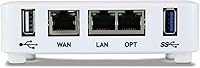
  • Network Ports: Features three independent 1 GbE ports — assignable as WAN, LAN, or OPT — sharing a Marvell switch for flexible segmentation.
  • Firewall Throughput: Sustains up to 656 Mbps of stateful firewall throughput under a 10,000-rule ACL test load.
  • L3 Forwarding: Achieves approximately 880 Mbps of Layer 3 forwarding speed under typical iPerf3 home traffic conditions.
  • IPsec VPN Speed: Delivers around 74.2 Mbps of IPsec VPN throughput using AES-CBC-128 encryption with SHA1 integrity hashing.
  • VPN Encryption: Uses AES-CBC-128 with SHA1 for IPsec tunnels, which is functional and broadly compatible but older than AES-GCM standards.
  • Operating System: Ships with pfSense+ pre-installed on a FreeBSD base, ready to configure immediately upon first boot.
  • Software Updates: Lifetime pfSense+ software updates are included at no additional cost for the lifespan of the hardware unit.
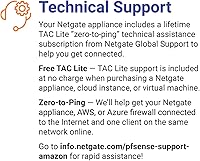
  • Support: Comes with Netgate TAC Lite support, providing access to Netgate engineers 24 hours a day, 7 days a week, 365 days a year.
  • Form Factor: Fanless and completely silent, the unit can be deployed on a desktop, mounted on a wall, or placed in a rack.
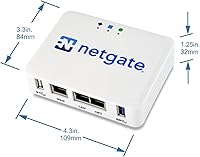
  • Dimensions: Measures 4.33 x 3.33 x 1.25 inches, making it small enough to fit in a palm or tuck behind most networking equipment.
  • Weight: Weighs approximately 1 pound, making it easy to mount or reposition without any special hardware support.
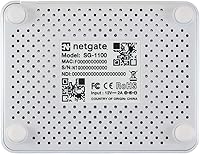
  • Power Supply: Operates at 12V DC with a low overall power draw, suitable for continuous 24/7 operation without significant energy cost.
  • Connectivity: Offers three Ethernet ports alongside one USB 2.0, one USB 3.0, and one Micro USB console port for direct serial access.
  • Warranty: Includes a one-year limited hardware warranty from Netgate covering manufacturing defects and hardware failures.
  • In the Box: Package includes the main unit and a USB console cable; no separate power adapter or rack hardware is included in the base bundle.

Related Reviews
ZEEPORTE Snap 30T Solar Pan-Tilt Security Camera
74%
83%
Image Clarity
79%
Night Vision
61%
Solar Charging Reliability
88%
Pan and Tilt Coverage
67%
App Experience
More
Famviva 2K Security Camera
84%
92%
Resolution & Image Quality
88%
Ease of Setup
85%
Motion Detection Accuracy
90%
Alexa Integration
86%
Build Quality & Durability
More
Generic A9 Wireless Indoor Security Camera
61%
81%
Value for Money
83%
Ease of Setup
62%
Video Quality
58%
Night Vision
71%
Motion Detection
More
Armorcope CG6CB Wireless Outdoor Security Camera
76%
88%
Value for Money
81%
Video Quality
83%
Night Vision
74%
Motion Detection
61%
Battery Life
More
Noorio B211 Wireless Security Camera
76%
88%
Image Quality
86%
Night Vision
71%
Motion Detection & AI
67%
Battery Life
91%
Setup & Installation
More
Calibrite ColorChecker Digital SG Calibration Chart
72%
94%
Color Accuracy
92%
Patch Range & Variety
78%
Build & Surface Quality
71%
Size & Usability
67%
Software Compatibility
More
KEHZKCT KEHZKCT003 128GB Security Camera
63%
74%
Video Clarity
67%
Night Vision Performance
88%
Built-in Storage Value
61%
Motion Detection Accuracy
83%
Discreet Design
More
ZUMIMALL GX5S Security Camera
86%
88%
Solar Power Efficiency
72%
Motion Detection Accuracy
90%
Video Quality (Daytime)
85%
Night Vision Clarity
84%
Build Quality & Durability
More
eufy Security Motion Sensor
85%
90%
Detection Accuracy
95%
Ease of Installation
93%
Battery Life
87%
Sensitivity Adjustment
89%
App & Notification System
More
Cryptnox FIDO2 NFC Security Key
76%
93%
Portability & Form Factor
86%
NFC Authentication Speed
81%
Platform & Service Compatibility
94%
Security Credentials
67%
Setup & Registration Experience
More

FAQ

It comes fully pre-loaded with pfSense+ out of the box. You plug it in, connect to the web interface, and start configuring. There is no separate OS installation step required.

For basic routing and firewall duties it gets close, with L3 forwarding around 880 Mbps. However, once you enable features like traffic shaping or IDS, real-world throughput drops. If you have a true gigabit ISP line and plan to run inspection packages, the SG-1100 will likely leave some speed on the table.

There is a real learning curve involved — pfSense is not a plug-and-play consumer router interface. That said, Netgate TAC Lite support is included, which means you can contact their engineers directly when you get stuck. Most first-time users get a working baseline configuration within a few hours.

Technically yes, but you should be cautious. With only 1 GB of RAM, running a heavy intrusion detection system like Suricata alongside other packages will push the hardware close to its limits. Light use is possible, but do not expect the same headroom you would get from a higher-tier unit.

No, this is a wired-only device. If you need wireless coverage, you will need to connect a separate access point to one of the LAN ports and manage it independently.

pfSense supports IPsec, OpenVPN, and WireGuard, among others. IPsec throughput on this appliance is around 74 Mbps, and OpenVPN will be slower due to its single-threaded nature. WireGuard tends to perform better on ARM hardware and is worth testing if VPN speed matters to you.

A DIY build can offer more raw horsepower for less money in some cases, but you take on all the compatibility risk, OS installation work, and ongoing support yourself. This Netgate appliance trades raw value for a supported, warranted, ready-to-run experience — and the lifetime software updates are something a DIY box cannot match out of a store.

Not directly. The unit only has three physical Ethernet ports. You can extend segmentation by adding a managed switch on the LAN side and using VLANs, but if you need multiple physically separate interfaces, this appliance will not accommodate that without workarounds.

TAC Lite gives you access to Netgate technical support staff around the clock. It covers help with configuration, troubleshooting, and setup questions. It is not a break-fix hardware replacement program, but having real engineers available 24/7 is a meaningful benefit — especially if you are new to pfSense.

It depends on what those employees are doing. For basic internet routing, firewall rules, and a VPN tunnel or two, this appliance handles a small team without issue. If your team is running heavy traffic or you need robust VPN throughput for multiple concurrent remote workers, you may want to look at the next model up in the Netgate lineup.

Where to Buy