Overview

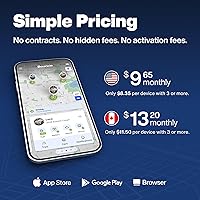
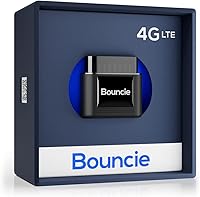
The Bouncie OBD GPS Tracker for Vehicles has quietly built a solid reputation since its 2018 launch, and it's easy to see why. You plug it into your car's OBD2 port — done in seconds, no tools, no wiring — and it starts reporting over 4G LTE almost immediately. There's no internal battery; it draws power straight from the vehicle, which keeps the hardware compact and cost-effective. A flat monthly subscription with no contracts and no activation fees makes the ongoing cost easy to stomach. Coverage extends across the US, Canada, and Mexico, which handles most North American driving needs comfortably.
Features & Benefits

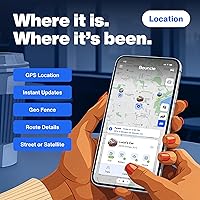
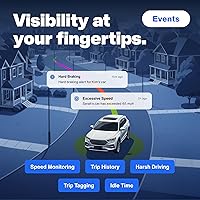
What this OBD tracker does well is pack a lot of genuinely useful functionality into a small device. Real-time location updates refresh frequently, and the app stores unlimited trip history using Google Maps — both street and satellite views — so you can replay any route at any time. Beyond location, it tracks how a vehicle is actually being driven: speed spikes, hard braking, rapid acceleration, and extended idle time all get logged. Set up a geo-fence around your neighborhood or job site and you'll get a notification the moment the vehicle crosses it. The engine diagnostics feature is a quiet standout — fault codes and maintenance alerts can catch problems before they turn expensive.

Best For

The Bouncie tracker makes the most sense for a few specific types of buyers. Parents of newly licensed teenagers will probably get the most value here — geo-fence alerts and speed notifications make it practical to monitor driving habits without hovering. Small business owners running a handful of service vehicles also fit well; the driving-behavior data alone can help reduce fuel costs and flag reckless use before it becomes a liability. It's also worth considering if you want an early heads-up on engine trouble rather than waiting for a dashboard warning light. And since there's no long-term contract, it's genuinely low-risk to try.

User Feedback

Across thousands of reviews, a few themes come up consistently. Installation speed gets mentioned constantly — most people have it running in under two minutes, which is about as frictionless as hardware setup gets. The app's accuracy and clean interface also draw regular praise. On the flip side, the most common frustration is straightforward: because this vehicle tracker draws power from the OBD port, someone unplugging it kills your visibility entirely — a real limitation worth knowing upfront. A handful of users also note that accident alerts can fire on minor bumps, creating occasional false alarms. Overall, 4.6 stars across more than 6,000 reviews is a meaningful signal, even if not the whole story.

Pros

  • Plugs into any OBD2 port in seconds — no tools, no wiring, no installation headaches.
  • Real-time location updates are consistently accurate, with unlimited trip history stored in the app.
  • Geo-fence alerts notify you the moment a vehicle crosses a boundary you define.
  • Driving-behavior reports cover speed, hard braking, and acceleration — useful for both parents and fleet managers.
  • Engine fault-code monitoring can flag issues early, potentially saving costly repair bills.
  • The monthly subscription is competitively priced with no activation fees and no cancellation penalties.
  • Works across the US, Canada, and Mexico without needing a separate plan.
  • The companion app is clean and straightforward, even when managing multiple vehicles.
  • Over 6,000 ratings averaging 4.6 stars reflects a broad, sustained base of satisfied users.
  • Tiny form factor means it sits flush in the OBD port and stays out of the way.

Cons

  • No internal battery means tracking goes dark the instant the device is unplugged from the port.
  • Accident detection can trigger on minor bumps or rough roads, leading to occasional false alarms.
  • Requires an ongoing monthly subscription — the total cost climbs steadily over multi-year use.
  • Incompatible with vehicles built before 1996 that lack an OBD2 port.
  • Does not automatically contact emergency services — accident alerts are SMS-only notifications.
  • A determined driver who knows the device is there can easily disable it without any tools.
  • No built-in backup power means a dead car battery also kills all tracking and data logging.
  • App feature depth may feel limited for large fleet operators who need advanced reporting or integrations.

Ratings

The scores below reflect an AI-driven analysis of thousands of verified global reviews for the Bouncie OBD GPS Tracker for Vehicles, with spam, incentivized submissions, and bot activity actively filtered out before scoring. Each category is rated independently, drawing on patterns in real buyer experiences across family, fleet, and personal use contexts. Both the standout strengths and the friction points buyers actually encountered are represented transparently in every score.

Ease of Installation
96%
Buyers across virtually every experience level — from tech-savvy fleet managers to parents who have never touched a vehicle diagnostic tool — consistently report being fully operational in under two minutes. There are no tools, no wiring, and no app pairing puzzles; you push it into the OBD2 port and it starts working.
A small number of users noted that locating the OBD2 port itself took longer than the actual installation, particularly in older or less common vehicle models where the port is tucked in an awkward spot. This is a vehicle-design issue rather than a product flaw, but it does add a few minutes for some buyers.
Real-Time Tracking Accuracy
88%
In areas with solid 4G LTE coverage, the location data is consistently described as accurate and fast-refreshing — useful for checking whether a delivery driver is actually at the address they claimed, or confirming a teenager made it to school safely. Google Maps integration makes the data immediately readable without any learning curve.
In rural corridors or areas with weak cellular infrastructure, updates can lag noticeably, with some users reporting gaps of several minutes before the app reflects the vehicle's actual position. This is a cellular-dependency issue inherent to any LTE-based tracker, but buyers in low-coverage regions should factor it in.
App Experience
83%
The companion app draws regular praise for its clean layout and the way it surfaces the most useful data — current location, recent trips, and alert history — without burying them in menus. Fleet users managing multiple vehicles appreciate that everything lives under one account without the interface becoming cluttered.
Some users with larger fleets or more advanced reporting needs find the app functional but shallow, lacking export options or the kind of granular analytics that dedicated fleet management platforms offer. Occasional sync delays between the device and the app have also been flagged, though they appear to be intermittent rather than systematic.
Value for Money
91%
The combination of a modest upfront hardware cost and a low flat monthly subscription — with no activation fee and no contract — puts this OBD tracker in a category that is genuinely hard to match on pure price-to-feature ratio. Buyers who switched from pricier competitors frequently call out the cost difference as a major factor in their satisfaction.
Over a multi-year horizon, the subscription cost accumulates, and a handful of users feel the recurring charge becomes harder to justify if they are only using basic location tracking and not the full feature set. There is no one-time purchase option for buyers who prefer to avoid ongoing fees entirely.
Geo-Fence Reliability
84%
Parents setting boundaries around a teenager's approved driving zones, and business owners defining job-site perimeters, both report that geo-fence notifications arrive promptly and with reliable accuracy. The ability to create multiple zones with custom alert rules adds practical flexibility for users managing more than one vehicle or location.
A subset of users notes that geo-fence boundaries can occasionally trigger slightly early or late depending on GPS resolution at the perimeter, resulting in alerts that fire a block or two before the actual boundary. It does not undermine the feature's utility, but high-precision boundary enforcement may occasionally feel approximate.
Driving Behavior Monitoring
81%
19%
Fleet managers trying to reduce liability and fuel waste find the hard-braking, rapid-acceleration, and idle-time logs genuinely actionable — the kind of data that can directly inform a conversation with a driver about their habits. For parents, seeing a teen's speed history after a long solo drive adds a layer of accountability that a simple location ping cannot provide.
The behavior reports are useful for identifying patterns over time but do not offer real-time in-cab coaching or alerts to the driver themselves. Users hoping to use this feature as an active coaching tool — rather than a post-trip review tool — may find it somewhat passive in practice.
Accident Detection
67%
33%
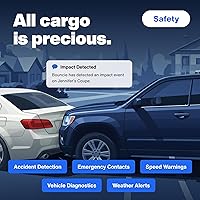
The impact-detection feature provides genuine peace of mind for parents and fleet managers who want a heads-up if something serious happens on the road. When a real collision occurs, the automatic SMS alert to a designated contact ensures someone is notified quickly without relying on the driver to make a call.
False positives are a documented and recurring issue — speed bumps, potholes, and aggressive parking maneuvers can all trigger accident alerts, which erodes confidence in the feature over time. More critically, the system sends an SMS notification only; it does not contact emergency services, so it functions as an alert relay rather than a true emergency response tool.
Engine Diagnostics
78%
22%
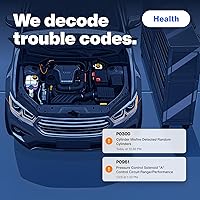
For vehicle owners who want an early warning before a check-engine light turns into a costly repair, the continuous OBD2 fault-code monitoring is a practical and underappreciated feature. Several buyers specifically credit it with catching sensor issues and minor faults early, avoiding breakdowns that would have cost far more to fix roadside.
The diagnostic data is surfaced at a consumer-friendly level, which means it lacks the depth that a professional scan tool or dedicated telematics platform would provide. Buyers who want detailed freeze-frame data or advanced multi-system diagnostics will hit the ceiling of what this vehicle tracker can offer fairly quickly.
Device Durability
79%
21%
The unit is compact and solidly built for its price point, and the vast majority of long-term users report no physical failures even after years of continuous use plugged into the OBD2 port. Its light weight means it does not torque or stress the port connector over time the way heavier devices sometimes can.
Because it sits exposed in the OBD2 port, it is vulnerable to knocks from bags or feet in lower-mounted port locations. A small number of users report that the device worked loose over time in ports that did not grip firmly, occasionally interrupting connectivity without any visible physical damage.
Tamper Resistance
38%
62%
For use cases where the driver is unaware of the tracker or simply unlikely to interfere — such as monitoring a company vehicle used by a compliant employee — the device functions without issue and requires no special hiding strategy given its small footprint.
Anyone who knows the device is there can remove it in seconds with no tools. This is the single most significant structural limitation of the plug-in OBD2 form factor, and it makes this vehicle tracker a poor choice for any scenario where tamper resistance or covert installation is genuinely important.
Power Continuity
44%
56%
Drawing power directly from the vehicle eliminates battery management entirely — there is no charging schedule to maintain, no dead battery to worry about mid-trip, and no degradation in tracking performance over time due to a worn internal cell.
The complete absence of an internal battery means tracking stops instantly if the device is unplugged or if the vehicle's own battery dies. For buyers who need continuous tracking through a vehicle shutdown, a breakdown, or a deliberate disconnect, this is a hard technical ceiling that no software update can address.
Coverage Range
86%
North American coverage spanning the US, Canada, and Mexico without any additional fees or plan changes is a practical advantage for cross-border commuters, logistics operators, and anyone whose vehicles regularly travel between countries. Most comparable trackers at this price point cover only the US.
Coverage is entirely dependent on the underlying 4G LTE cellular network, which means performance varies by region. Users in mountainous, rural, or frontier areas where LTE infrastructure is thin will experience tracking gaps that buyers in urban and suburban environments simply will not encounter.
Subscription Flexibility
89%
The cancel-anytime, no-contract model is genuinely appreciated by buyers who want to test the tracker seasonally — such as during a summer road trip or a period when a teen is driving regularly — without being locked into an annual commitment. No activation or return fees remove the financial friction from trying the service.
There is no annual prepay option available to users who want a discount in exchange for committing upfront, which means cost-conscious buyers cannot reduce the per-month rate by paying ahead. Some users also note that the subscription is per device, so multi-vehicle households face a proportionally higher ongoing cost.
Multi-Vehicle Management
74%
26%
The ability to manage several vehicles from a single app account is well-suited to families with two or three cars and small business owners running a handful of service vehicles. Adding a new vehicle is straightforward — buy another tracker, plug it in, and it appears in the same dashboard.
Users managing larger fleets — say, ten or more vehicles — tend to find the app interface gets unwieldy and lacks the reporting depth, user-permission controls, and integration options that purpose-built fleet management software provides. The Bouncie tracker scales comfortably to small fleets but shows its limits at medium and large scale.

Suitable for:

The Bouncie OBD GPS Tracker for Vehicles is a strong fit for anyone who wants practical, low-friction vehicle oversight without committing to a long-term contract. Parents of teen drivers will find real value in the geo-fence and speed alert combination — it offers meaningful visibility into driving habits without requiring constant check-ins. Small business owners managing a few vans or service trucks can use the driving-behavior data to cut fuel waste and address risky driving before it becomes a liability. It also appeals to individual car owners who simply want an early warning on engine trouble; getting a fault-code alert before a breakdown can save a significant repair bill. The no-contract, cancel-anytime model makes it genuinely accessible for buyers who want to test the waters before committing.
Not suitable for:

The Bouncie OBD GPS Tracker for Vehicles has a fundamental limitation that rules it out for certain buyers entirely: because it draws power from the OBD2 port with no internal battery, tracking stops the moment someone unplugs it. If you are trying to monitor a vehicle where the driver knows the device is there and might remove it, this tracker offers little protection. It also will not work on vehicles manufactured before 1996, since those predate the OBD2 standard. Buyers who need covert, tamper-resistant tracking — say, for theft recovery or monitoring a vehicle they do not control — should look at hardwired or battery-backed alternatives. Similarly, anyone expecting a certified emergency-response system should know that the accident detection here sends an SMS alert but does not automatically contact emergency services.
Specifications

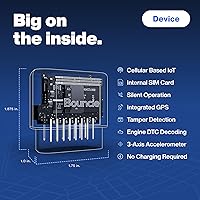
  • Connectivity: The device uses 4G LTE CAT M1 cellular technology to transmit location and vehicle data in real time.
  • Coverage Area: Active tracking coverage spans the United States, Canada, and Mexico with no additional plan required.
  • Installation: The tracker plugs directly into a vehicle's OBD2 port with no tools, wiring, or professional installation needed.
  • Compatibility: Works with any OBD2-equipped vehicle manufactured in 1996 or later, covering the vast majority of cars, trucks, and SUVs on the road today.
  • Power Source: The device draws power entirely from the vehicle's OBD2 port and has no internal battery of its own.
  • Dimensions: The unit measures 1.75 x 1.87 x 1 inches, keeping a low profile once inserted into the OBD2 port.
  • Weight: The tracker weighs 1.28 ounces, light enough that it does not stress the OBD2 port connector over time.
  • Mapping: Location data is rendered through Google Maps, supporting both street-level and satellite views inside the companion app.
  • Data Retention: Trip and route history is stored without any cap, allowing users to review past journeys at any point after the subscription begins.
  • Alert Types: The device can send notifications for geo-fence boundary crossings, speed threshold breaches, hard braking, detected impacts, and engine fault codes.
  • Accident Detection: Onboard sensors monitor for sudden impacts and automatically send an SMS alert to a designated contact when a significant event is detected.
  • Engine Monitoring: The OBD2 interface continuously reads diagnostic data from the vehicle's ECU, surfacing fault codes and maintenance indicators through the app.
  • Driving Behavior: The tracker logs speed, rapid acceleration, hard braking, and idle time, providing a per-trip breakdown of driving patterns.
  • Mobile App: A companion app is available for both iOS and Android, supporting single-vehicle personal accounts and multi-vehicle fleet dashboards.
  • Subscription Model: Service requires a flat monthly subscription with no activation fee, no cancellation penalty, and no long-term contract obligation.
  • Geo-Fencing: Users can define custom geographic zones and receive push or SMS notifications whenever the tracked vehicle enters or exits those boundaries.
  • Seller Rank: The device holds a top-three position in the GPS Trackers category on Amazon and ranks within the top 1,000 products across all Electronics.
  • User Rating: It carries a 4.6 out of 5 star average rating based on more than 6,000 verified customer reviews on Amazon.
  • Market Availability: The product has been continuously available since July 2018 and is not discontinued by the manufacturer.
  • Manufacturer: Bouncie is the brand and manufacturer, a company focused specifically on connected vehicle tracking products.

Related Reviews

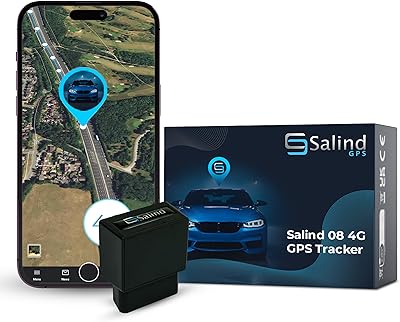
Salind GPS 4G LTE OBD Vehicle Tracker
86%
91%
Performance & Accuracy
93%
Real-Time Tracking
89%
Ease of Installation
72%
Subscription Cost
88%
Battery Life
More
Vyncs OBD GPS Vehicle Tracker
75%
93%
Ease of Setup
71%
GPS Accuracy
62%
GPS Update Speed
58%
App Experience
83%
Value for Money
More
VITALGLOW GPS Tracker for Vehicles
78%
88%
Value for Money
91%
Ease of Setup
79%
Tracking Accuracy
63%
Battery Life
67%
App Experience
More
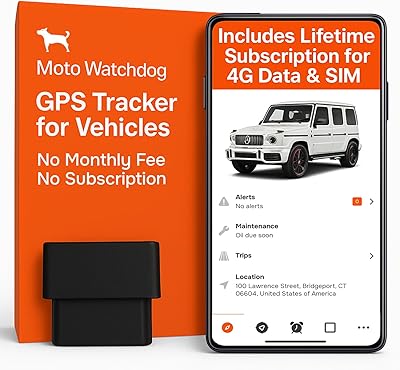
Moto Watchdog OBD GPS Tracker
86%
91%
Real-Time Tracking Accuracy
88%
Ease of Installation
85%
Geo-Fencing Features
94%
No Subscription Fees
65%
Mobile App Compatibility
More
GPS7000 G1 4G Vehicle GPS Tracker
71%
83%
Ease of Installation
67%
GPS Accuracy
62%
App Experience
78%
Geofencing Reliability
54%
Subscription Transparency
More
Spy Spot GV53MG GPS Vehicle Tracker
73%
83%
Tracking Accuracy
79%
Kill Switch Reliability
61%
Ease of Installation
58%
Value for Money
62%
App & Portal Usability
More
SinoTrack ST-901L 4G GPS Tracker
73%
88%
Value for Money
83%
Tracking Accuracy
86%
Anti-Theft Features
78%
App Usability
61%
Installation Experience
More
GIILAVY GF11-7B Mini GPS Tracker for Vehicles
83%
89%
Value for Money
85%
Real-Time Tracking Accuracy
90%
Ease of Setup
81%
App Usability
65%
Battery Life
More
BAANOOL BN-403B 4G GPS Tracker for Vehicles
85%
91%
Real-Time Tracking Performance
88%
Ease of Use
85%
Battery Life
92%
Waterproof Durability
81%
App User Experience
More
SinoTrack ST-906L 4G GPS Tracker for Vehicles
85%
88%
Real-Time Tracking Accuracy
91%
Setup and Installation
75%
App Performance
84%
Voice Monitoring Functionality
85%
Battery Life
More

FAQ

It is about as simple as hardware installation gets. You find the OBD2 port under your dashboard — usually near the steering column — and push the tracker in until it clicks. Most people are up and running in under two minutes, and you do not need any technical background to do it.

Almost certainly yes. Any vehicle sold in the US from 1996 onward is required to have an OBD2 port, so a 2005 model is well within range. The only edge cases are certain older European imports or non-standard configurations, but for standard cars and trucks, compatibility is rarely an issue.

Since the Bouncie OBD GPS Tracker for Vehicles draws all its power from the OBD2 port, a dead car battery means the tracker goes offline too. There is no internal backup battery to keep it running. This is worth knowing if uninterrupted tracking during a vehicle breakdown is important to your use case.
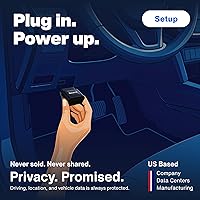
Yes, and that is a real limitation. The tracker sits in an accessible port under the dashboard, and anyone who knows it is there can remove it in seconds. If tamper resistance is a priority, a hardwired device with a hidden installation would be a better fit.

No — it does not automatically contact emergency services. When the sensors detect a significant impact, the system sends an SMS alert to a phone number you designate in advance. You or whoever receives that message would then need to follow up. Think of it as an impact notification tool rather than an emergency response system.

Location updates come through over 4G LTE and refresh frequently enough that most users describe the tracking as effectively real time. In areas with strong cellular coverage, the lag is minimal. In rural dead zones where cell service is weak, updates may be delayed until the vehicle re-enters coverage.

Yes. The companion app supports multi-vehicle dashboards, which makes it practical for small business owners or families with more than one car. Each vehicle needs its own tracker and its own monthly subscription, but they all live under a single account.

No contract, no minimum term. The subscription runs month to month, and you can cancel at any time without a penalty fee. There is also no activation fee when you sign up, which keeps the initial commitment low.

This is a known pain point that comes up in user feedback with some regularity. The sensitivity of the impact sensor is fixed in the hardware, so there is no manual threshold you can dial down in the app. If you drive on rough roads frequently or encounter a lot of speed bumps, you may see occasional false alerts. It is an inconvenience rather than a dealbreaker for most users, but worth knowing ahead of time.

Coverage extends across all three countries — the United States, Canada, and Mexico — without needing a separate plan or additional fees. For anyone who regularly drives across the border, or manages vehicles that do, this is a practical advantage over trackers with US-only coverage.