Mokxihit Duplex DMR Hotspot WiFi Digital Voice Modem
Overview
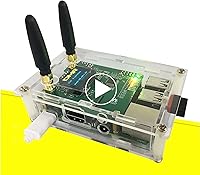
The Mokxihit Duplex DMR Hotspot WiFi Digital Voice Modem is a pre-assembled unit designed to connect licensed amateur radio operators to internet-linked digital voice networks like BrandMeister and YSF reflectors. Think of a hotspot as a personal radio gateway — it lets your handheld or mobile radio communicate over the internet rather than relying on local RF infrastructure. This digital voice modem runs on a Raspberry Pi Model 2B, which is a separate purchase and a real dependency worth noting upfront. It supports both WiFi and wired Ethernet, giving you flexibility in how you connect it to your home network. At its price point, it sits firmly in mid-range assembled hotspot territory.
Features & Benefits
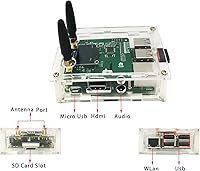
Duplex operation is where this DMR hotspot distinguishes itself from cheaper simplex-only units — it can receive on one UHF frequency while transmitting on another, covering the 430 to 450 MHz range with two active timeslots for efficient DMR talkgroup use. Protocol coverage is broad: DMR, D-STAR, YSF, P25, and Fusion are all supported, meaning you are not locked into a single digital mode. The OLED display shows real-time status at a glance, which is genuinely useful during setup or when monitoring live activity. Power comes from a standard 5V USB source — a laptop, a phone charger, or a power bank all work fine. No soldering required.
Best For
This ham radio hotspot makes the most sense for licensed operators who already have some digital radio experience and want a personal gateway without sourcing and assembling individual components. If you are running a home node on BrandMeister, connecting to YSF reflectors, or experimenting with D-STAR linking, multi-protocol flexibility in a single box is a real convenience. Operators who already own a Raspberry Pi Model 2B are in the best position to get up and running quickly. It is less suitable for complete beginners — you will need working familiarity with Pi-Star firmware configuration to get meaningful use out of it. Those comfortable with that process will find it a capable, well-specified unit.
User Feedback
Operators who have used this digital voice modem generally report that initial setup with Pi-Star goes smoothly, though the included documentation is minimal — the community wiki does most of the heavy lifting there. WiFi connectivity gets mixed reviews; several users note that wired Ethernet is noticeably more stable for sustained operation, particularly in RF-noisy environments. The OLED display earns consistent praise for being readable and practical during monitoring. On the downside, RF output power is modest, so do not expect wide-area coverage — this is built for close-range personal use. Customer support response times appear reasonable based on reported experiences, with most queries addressed promptly. Overall sentiment leans cautiously positive among experienced operators.
Pros
- Supports five digital voice protocols in one pre-assembled unit — no separate hardware needed per mode.
- Duplex operation handles simultaneous receive and transmit, a real advantage over simplex-only alternatives.
- Pre-assembled format eliminates soldering and component alignment work before you even start software setup.
- Wired Ethernet connection delivers rock-solid uptime, even during extended operating sessions in busy shack environments.
- OLED display shows call signs, frequency, and connection status without needing a separate monitor connected.
- Compact and light enough to pack into a portable go-kit alongside your handheld radio.
- Standard 5V USB power means any quality phone charger or power bank keeps this ham radio hotspot running.
- Two-timeslot DMR support allows participation in multiple talkgroups on a single frequency efficiently.
- UHF frequency range aligns well with standard digital hotspot allocations used across most regions.
- Customer support response times appear reasonable for straightforward hardware questions based on reported experiences.
Cons
- Included documentation is sparse — most operators end up relying on community forums and the Pi-Star wiki instead.
- WiFi connectivity degrades noticeably in RF-noisy shack environments, making Ethernet effectively mandatory for many users.
- RF output power is modest, limiting practical use to personal close-range operation rather than shared or club nodes.
- Requires a separately purchased Raspberry Pi Model 2B — this digital voice modem is not a standalone device.
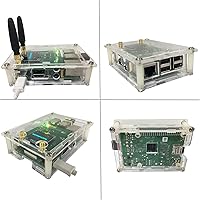
- Enclosure finishing feels budget-grade, with minor board wobble reported inside the case by some buyers.
- Duplex calibration is sensitive to RF offset settings; misconfiguration causes audio artifacts that take time to diagnose.
- Technical support beyond basic troubleshooting tends toward generic responses rather than problem-specific guidance.
- Heat buildup during extended duplex operation in enclosed spaces has caused thermal issues for a small number of users.
- Underpowered USB sources, such as older laptop ports, can trigger instability during transmit cycles.
- UHF-only coverage means operators needing VHF digital hotspot capability must look elsewhere.
Ratings
The Mokxihit Duplex DMR Hotspot WiFi Digital Voice Modem has been scored by our AI system after analyzing verified buyer reviews from global markets, with spam, bot activity, and incentivized feedback actively filtered out. Scores reflect the full picture — where this digital voice modem genuinely delivers for licensed ham radio operators, and where real-world frustrations surfaced. Both strengths and recurring pain points are transparently represented in every category below.
Multi-Protocol Support
Duplex Operation
Setup & Firmware Compatibility
WiFi Connectivity Stability
Wired Ethernet Reliability
OLED Display Readability
RF Output Power & Range
Build Quality & Assembly
Power Supply Simplicity
Value for Money
Timeslot Performance
Frequency Range Coverage
Customer Support Responsiveness
Physical Footprint & Portability
Suitable for:
The Mokxihit Duplex DMR Hotspot WiFi Digital Voice Modem is purpose-built for licensed amateur radio operators who are already comfortable navigating digital modes and want a personal gateway into networks like BrandMeister, YSF reflectors, or D-STAR linking. If you own a Raspberry Pi Model 2B and have some familiarity with Pi-Star firmware, this unit gets you to a working hotspot node without sourcing and assembling individual components yourself. Operators running a home shack who want to participate across multiple digital voice protocols — DMR, D-STAR, YSF, P25, and Fusion — without buying separate hardware for each will find the consolidation genuinely practical. It also suits those who want a compact, portable node they can drop into a go-kit bag and power from a USB battery bank during field operations. If you prefer a wired Ethernet connection for reliability and already have the Pi infrastructure sorted, this digital voice modem is a capable, well-specified unit at a reasonable price for what it delivers.
Not suitable for:
The Mokxihit Duplex DMR Hotspot WiFi Digital Voice Modem is a poor fit for anyone expecting a fully standalone, out-of-the-box experience — it requires a Raspberry Pi Model 2B, Pi-Star firmware setup, and a working understanding of RF offset configuration before it does anything useful. Complete newcomers to digital amateur radio who have not yet worked with hotspot firmware will likely find the minimal documentation frustrating, and the learning curve steep enough to become discouraging. If your primary goal is wide-area RF coverage — sharing the node with a club, for instance, or covering a large property — the modest output power will disappoint. Operators who exclusively use a single digital mode and have no interest in multi-protocol flexibility are paying for capability they will never use. Anyone relying heavily on WiFi in an RF-dense shack environment should also think carefully, as interference-related dropouts are a documented pattern that wired Ethernet solves but does not always suit every installation.
Specifications
- Brand: Manufactured by IWatson Electronics and sold under the Mokxihit brand.
- Protocols: Supports DMR, D-STAR, YSF, P25, and Fusion digital voice modes in a single unit.
- Operating Mode: Functions in both Duplex and Simplex modes depending on configuration in Pi-Star firmware.
- Frequency Range: Covers 430–450 MHz in the UHF band; no VHF support is included.
- Timeslots: Supports 2 DMR timeslots, allowing receive and transmit to operate on separate frequencies simultaneously.
- Connectivity: Connects to a home network via 2.4 GHz WiFi or wired Ethernet port.
- Power Input: Powered via 5V USB, compatible with standard phone chargers, laptop USB ports, or USB power banks.
- Compatible Platform: Designed specifically for use with a Raspberry Pi Model 2B, which is sold separately.
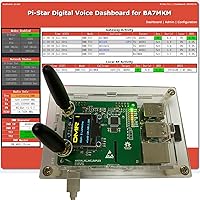
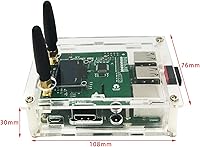
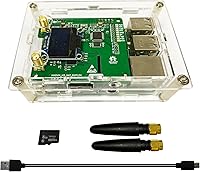
- Display: Equipped with a small OLED screen that shows real-time connection status, frequency, and call sign data.
- Assembly Status: Arrives fully pre-assembled; no soldering or component installation is required before use.
- Dimensions: Measures 5.9″ long by 3.9″ wide by 1.6″ tall.
- Weight: Weighs 7.8 ounces, making it compact enough for portable or go-kit use.
- Color Options: Available in two color variants; green is the confirmed option noted in product listings.
- Firmware: Intended for use with Pi-Star firmware, which must be separately downloaded, configured, and flashed to the Raspberry Pi.
- Date Available: First listed for sale in November 2022.
Related Reviews
NETGEAR Nighthawk C7100V Cable Modem WiFi Router Combo with Voice
OM Digital Solutions WS-500 Digital Voice Recorder
Xelarvex 136GB Digital Voice Recorder
NETGEAR CM500V DOCSIS 3.0 Cable Modem with Voice
Vormooi O1 160GB Digital Voice Recorder
Cainda F2 WiFi Digital Microscope

EVIDA 64GB Digital Voice Recorder
G L87 136GB Digital Voice Recorder
Voxitenus 128GB Digital Voice Recorder