Overview

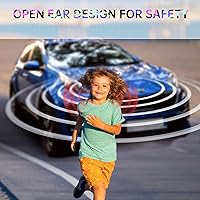
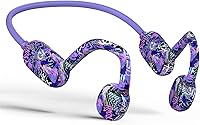
The Mehomeli MEKH003C Kids Open-Ear Bluetooth Headphones take a notably different approach from most children's audio gear: instead of sealing off the ears, they sit just outside them, letting ambient sound pass through naturally. That design choice isn't an accident — it's the whole point. For kids aged 3 to 14 who wear these on the school bus, at recess, or during a bike ride, staying aware of their surroundings matters far more than deep bass or noise isolation. These are safety-first headphones, built for parents who want their child to hear traffic, teachers, and other people while still enjoying audio. Solid everyday listening, not audiophile performance, is the promise here.
Features & Benefits

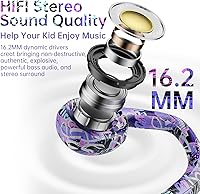
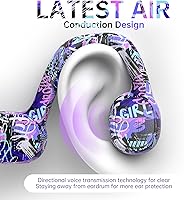
The air conduction design is what separates this neckband-style set from conventional kids' headphones: audio is directed toward the ear canal without physically covering it, so children naturally catch ambient sounds. The built-in 85 dB volume limit is hardware-enforced — not a software toggle a child can accidentally override — which aligns with pediatric hearing health recommendations. Bluetooth 5.2 keeps pairing fast and connection stable across a typical classroom distance. The 16.2 mm driver handles vocals and audiobooks cleanly, though it won't reproduce strong bass. IPX5 waterproofing covers sweat and light rain, and a titanium neckband adds durability without adding weight. Battery life stretches to 20 hours, comfortably outlasting a full school day.

Best For

These open-ear kids headphones are a natural fit for children between roughly 4 and 12 who move through the world — not just sit in front of a screen. Cycling, running around a playground, riding public transit: all scenarios where situational awareness genuinely matters. The hardware volume cap makes them an easy recommendation for parents who have worried about cumulative hearing damage from kids cranking up the volume unsupervised. Because the neckband design doesn't press against the ears, kids who wear glasses or helmets won't face the fit issues that plague traditional over-ear models. They also pair reliably with school tablets and Chromebooks, which removes a common frustration for families.

User Feedback

Parents consistently praise the lightweight, secure fit — several note that their kids forget they're wearing the Mehomeli kids headset after a few minutes of activity, which is about the highest compliment a kids' product can earn. Pairing with school-issued devices draws positive comments too. The honest caveats are worth flagging: because open-ear audio doesn't seal around the ear, sound leaks noticeably at higher volumes, making these less ideal in quiet libraries or during shared study time. A few buyers found the microphone adequate for casual calls but noted it picks up background noise during video lessons. Overall, most families report the headset holding up well through daily bag-tossing and outdoor use.

Pros

  • Open-ear design keeps kids audibly aware of traffic, teachers, and surroundings without removing the headset.
  • The 85 dB volume cap is baked into the hardware, so children cannot accidentally override it.
  • At just 30 grams, this neckband-style set is light enough that most kids genuinely forget they are wearing it.
  • Bluetooth 5.2 pairs quickly with school tablets, Chromebooks, and smartphones across all major operating systems.
  • IPX5 waterproofing handles sweat, rain, and the occasional puddle encounter without issue.
  • The titanium neckband flexes and bends repeatedly without losing its shape, surviving real daily kid-use.
  • Battery life comfortably covers a full school day and well beyond on a single charge.
  • Neckband form factor works well with glasses and helmets, which traditional over-ear cups often cannot accommodate.
  • Food-grade silicone pads are skin-friendly and unlikely to irritate younger or more sensitive children.
  • Touch controls are straightforward enough for children in the younger end of the target age range to operate independently.

Cons

  • Sound leaks noticeably at higher volumes, making these open-ear kids headphones disruptive in quiet shared spaces.
  • Bass response is thin — kids who enjoy bass-heavy music will notice the absence quickly.
  • The built-in MEMS microphone picks up background noise, which can be a problem during online lessons.
  • No wired backup option means a dead battery equals no audio, with no workaround available.
  • Touch controls can be accidentally triggered by younger children during play or when adjusting the fit.
  • Audio quality is adequate rather than impressive — parents should not expect much from the 16.2 mm driver.
  • The open-ear fit may feel unfamiliar or less satisfying to kids who have previously used in-ear or over-ear headphones.
  • Younger toddlers at the low end of the stated age range may find the neckband sizing less stable during active movement.

Ratings

The scores below are generated by AI after analyzing thousands of verified global purchases of the Mehomeli MEKH003C Kids Open-Ear Bluetooth Headphones, with spam, bot activity, and incentivized reviews actively filtered out. Every category reflects the honest spread of buyer experiences — strong points and real frustrations alike — so parents can make a genuinely informed decision rather than rely on a polished average.

Child Safety Design
93%
The hardware-enforced 85 dB volume cap consistently earns trust from parents who have tried software-limited alternatives only to find their kids bypassing them. The open-ear format means children on bikes or walking to school stay audibly aware of their surroundings without removing the headset, which parents in verified reviews describe as genuinely reassuring.
A small number of parents noted that the open-ear positioning means younger toddlers occasionally receive less direct audio than expected, especially in noisy environments, making the listening experience feel less focused than sealed designs at the same volume level.
Comfort & Fit
88%
At 30 grams, this neckband-style set is light enough that children aged 5 and up routinely forget they have it on — a detail parents mention repeatedly after long school days or outdoor play sessions. The silicone ear pads and flexible neckband also mean no pressure hotspots, which matters for kids wearing the headset for two or more hours at a stretch.
Younger children at the low end of the age range, particularly 3 and 4-year-olds, can find the neckband fit less stable during vigorous movement. A handful of parents with very young children reported the neckband sitting slightly loose, which caused the drivers to drift away from an optimal ear position.
Hearing Health Protection
91%
Parents specifically seeking bluetooth headphones with a volume limit for children consistently single out the hardware cap as the top reason they chose these over competing models. Unlike many rivals where the limit can be unlocked through a paired app or parental settings menu, there is no override path here — which is exactly what cautious parents want.
The 85 dB limit, while appropriate by most pediatric standards, is occasionally flagged by parents of older kids in the 11–14 range who feel it is slightly conservative for outdoor use in windy or traffic-heavy environments where ambient noise competes with the audio.
Audio Quality
67%
33%
For audiobooks, podcasts, educational content, and light pop or children's music, the 16.2 mm dynamic driver performs adequately — vocals are clear and intelligible, which is the most important quality for school-age listening. Parents using these for remote learning report that content comes through without muddiness at mid-range volumes.
Bass is noticeably thin, and anyone expecting even modest low-end punch will be let down. The open-ear format inherently limits the driver's ability to produce rich or immersive sound, and at this price tier the driver itself is not exceptional, so music with complex arrangement or heavy production does not translate well.
Situational Awareness
94%
This is the single strongest functional advantage of these open-ear kids headphones, and user feedback reflects it clearly. Parents report their children responding naturally to their names, hearing doorbells, and reacting to traffic without any adjustment — something that was a daily frustration with their previous over-ear models.
The same open design that enables awareness means audio leaks outward at any volume above roughly half, which classmates and nearby adults will notice. In quiet library or classroom settings this becomes a genuine social issue, and several teachers noted in parent-relayed feedback that the sound bleed was distracting to other students.
Build & Durability
82%
18%
The titanium neckband handles the kind of daily abuse kids subject accessories to — being stuffed into backpacks, bent at odd angles, and occasionally stepped on — without losing its shape. Parents reporting back after two to three months of daily use generally describe the physical structure as intact and free from cracking or deformation.
The plastic housing around the driver units feels less premium under close inspection, and a few parents of particularly rough-handling young children reported surface scuffs and minor cosmetic wear appearing within the first few weeks, even if the headset kept functioning normally.
Water & Sweat Resistance
84%
The IPX5 certification holds up in practice — parents report confidently sending kids out in light rain and allowing use during sports without anxiety about damage. Sweat during physical activity has not caused issues for the large majority of buyers who tested this in active outdoor scenarios.
IPX5 covers splashing but not submersion, and a small number of buyers encountered problems after the headset was accidentally dropped into water or left in a wet bag for an extended period. The rating is solid for its intended use but should not be mistaken for full waterproofing.
Battery Life
89%
Twenty hours of real-world playback is a meaningful advantage for a kids' headset — parents report going three to four school days between charges under typical usage patterns. The absence of daily charging anxiety is a quality-of-life improvement that comes up repeatedly in longer-term buyer reviews.
Mehomeli does not publish charge time data, and some buyers noted the wait from empty to full felt longer than expected. There is also no battery level indicator on the headset itself, so the first sign of low battery for many kids is a sudden disconnection mid-lesson or mid-song.
Bluetooth Connectivity
86%
Bluetooth 5.2 delivers on its pairing speed promise — most parents describe first-time connections to tablets and Chromebooks completing in under 30 seconds, and reconnection on subsequent uses as near-instant. Signal dropout within the 33-foot range is rarely mentioned as an issue in school or home environments.
A modest subset of buyers encountered intermittent connection issues specifically with older Android tablets and certain school-issued Chromebook models, suggesting compatibility is not completely universal. Moving beyond the rated range in larger open spaces — like a school gymnasium — does produce occasional stuttering.
Microphone Quality
63%
37%
For simple voice calls, the MEMS microphone transmits speech clearly enough that the other party can follow the conversation without frequently asking for repeats. Parents using the Mehomeli kids headset for one-on-one video check-ins with grandparents or family report satisfactory results in quiet rooms.
Background noise pickup is the consistent weakness — in a kitchen, shared living space, or any room with ambient noise, the microphone picks up the environment as much as the child's voice. For formal online lessons where audio clarity matters to a teacher, this limitation comes up as a genuine frustration in buyer feedback.
Glasses & Helmet Compatibility
87%
The neckband form factor sidesteps the core interference problem that over-ear cups create with glasses arms and helmet straps. Parents of glasses-wearing children specifically call this out as a reason they selected this style, and feedback from families where children cycle to school confirms stable fit with helmets in place.
Children with very thick or wide-armed glasses frames occasionally find the driver unit position shifts slightly compared to children without eyewear, requiring minor manual readjustment. This is minor and not a dealbreaker, but the fit is not entirely friction-free for every glasses wearer.
Ease of Use for Kids
79%
21%
Touch controls are intuitive enough for children aged 6 and up to operate independently after a short learning period — parents appreciate not having to manage playback on behalf of older kids. The straightforward Bluetooth pairing process also means older children can connect the headset to a new device without parental help.
Younger children, particularly those aged 3–5, frequently trigger accidental touch inputs during play, causing unexpected pauses, volume changes, or disconnections. The touch sensitivity is calibrated for intentional adult-style taps and does not account well for the more unpredictable hand movements of toddlers.
Value for Money
83%
Given the niche it occupies — a durable, safety-focused, wireless open-ear option for children — the overall package represents strong value at its price point. Parents who have compared it to pricier alternatives in the kids' wireless category generally feel the core safety and fit features land at a level above what the cost implies.
Buyers expecting audio performance comparable to mainstream consumer headphones at a similar price will feel underserved, because the design priorities are safety and awareness rather than sound quality. If audio fidelity is the primary goal, the value proposition weakens considerably.
Device Compatibility
81%
19%
Cross-platform performance with iOS, Android, and Windows is largely trouble-free, covering the vast majority of devices families actually use — iPhones, iPads, Android tablets, Chromebooks, and Windows laptops all pair without special configuration. The absence of a dedicated app also means there is nothing to install or update.
The lack of a 3.5 mm jack is a hard stop for any device that lacks Bluetooth or whose Bluetooth is locked by a school IT policy. Parents of children using older classroom computers or shared audio equipment have no wired fallback option whatsoever with this headset.

Suitable for:

The Mehomeli MEKH003C Kids Open-Ear Bluetooth Headphones were clearly designed with one type of parent in mind: the one who wants their child to enjoy audio without tuning out the world around them. If your kid walks or cycles to school, rides public transit, or plays outdoors while listening to music or audiobooks, the open-ear design is a genuine practical advantage — they can hear a car horn, a teacher's instruction, or their name being called without pulling anything off. The hardware-enforced 85 dB volume cap is a real differentiator for families worried about cumulative hearing damage, especially since children are notoriously bad at self-regulating volume. Kids who wear glasses or bike helmets will also appreciate the neckband fit, which avoids the pressure and interference that over-ear cups create. For school-age children between roughly 4 and 12 using tablets or Chromebooks for remote learning, these pair quickly and reliably.
Not suitable for:

If your priority is audio quality or immersive listening, the Mehomeli MEKH003C Kids Open-Ear Bluetooth Headphones will disappoint — that is simply not what they are built for. The open-ear design means sound leaks outward at moderate to high volumes, which makes them disruptive in quiet shared spaces like libraries, classrooms during silent reading, or on a plane next to other passengers. Bass response is thin, so older kids who listen to music with heavy low-end will likely find them unsatisfying compared to even basic over-ear alternatives. The microphone handles casual use adequately, but parents relying on these for consistent, high-quality video lessons or conference calls may find background noise pickup frustrating. There is also no wired fallback — no 3.5 mm jack — so if the battery runs out mid-school day, the headset is simply done until recharged.

Specifications

  • Bluetooth Version: Uses Bluetooth 5.2, which offers faster initial pairing and a more stable connection compared to older Bluetooth standards.
  • Wireless Range: Maintains a reliable connection up to 33 feet (approximately 10 meters) from the paired device.
  • Driver Size: Equipped with a 16.2 mm full-range dynamic driver designed to reproduce vocals and mid-range frequencies clearly.
  • Volume Limit: Hardware-enforced 85 dB maximum volume cap, in line with pediatric hearing safety recommendations.
  • Battery Capacity: Built-in 165 mAh rechargeable battery supports up to 20 hours of continuous playback or call time.
  • Weight: The complete headset weighs approximately 30 grams (about 1.06 oz), making it one of the lighter options in the kids' headphone category.
  • Water Resistance: Rated IPX5, meaning the headset withstands sweat, splashing water, and light rain but should not be submerged.
  • Microphone: Includes a built-in MEMS microphone for calls, voice assistants, and remote learning sessions.
  • Neckband Material: The structural neckband is constructed from memory titanium, which allows 360-degree bending without permanent deformation.
  • Ear Pad Material: Contact surfaces use food-grade silicone, which is non-toxic and less likely to cause skin irritation during extended wear.
  • Age Range: Designed and sized for children aged 3 to 14 years.
  • Ear Design: Open-ear air conduction design positions drivers near the ear canal without sealing or covering it.
  • Connectivity: Wireless only via Bluetooth; there is no 3.5 mm headphone jack or wired fallback option.
  • Control Method: Touch controls on the headset handle playback, volume, and call management without physical buttons.
  • Compatibility: Works with smartphones, tablets, and computers running iOS, Android, and Windows operating systems.
  • Package Contents: Ships with the headset unit and a charging cable; no carrying case or additional accessories are included.
  • Model Number: Official model designation is MEKH003C, manufactured by Mehomeli.

Related Reviews
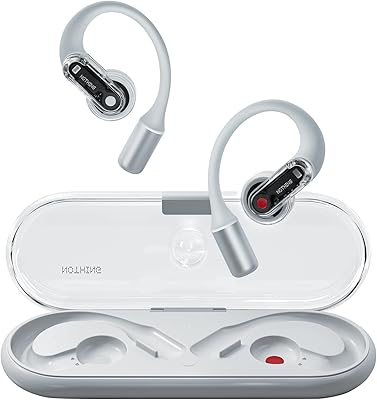
Nothing Ear (Open) Open-Ear Earbuds
79%
91%
Wearing Comfort
83%
Workout Stability
74%
Sound Quality
77%
Call Quality
49%
Sound Leakage
More
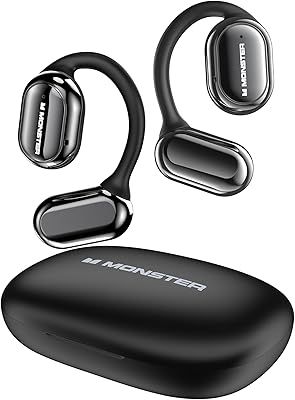
Monster AC100 Open-Ear Bluetooth Headphones
76%
88%
Battery Life
79%
Comfort & Fit
67%
Sound Quality
83%
Bluetooth Stability
71%
Call Quality
More
Gixxted O3 Open-Ear Bluetooth Headset
77%
88%
Wearing Comfort
79%
Microphone Clarity
62%
Audio Sound Quality
83%
Dual-Device Pairing
86%
Mute Button Usability
More
PocBuds V30 Open Ear Sport Earbuds
82%
91%
Comfort & Wearability
93%
Battery Life
84%
Fit Security During Exercise
63%
Sound Quality
96%
Situational Awareness
More
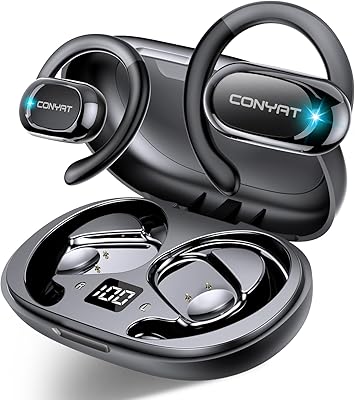
Conyat X7 Open Ear Bluetooth Headphones
83%
89%
Comfort & Fit
83%
Sound Quality
91%
Battery Life
85%
Waterproof Durability
87%
Connectivity & Bluetooth Range
More
Qecnato Q77 Open Ear Bluetooth Headphones
87%
88%
Comfort & Fit
94%
Battery Life
91%
Waterproof Durability
75%
Sound Quality
85%
Ease of Use
More
CoolJumper Q28 Open Ear Wireless Earbuds
80%
88%
Wearing Comfort
91%
Battery Life
62%
Sound Quality
84%
Workout Stability
86%
Water Resistance
More
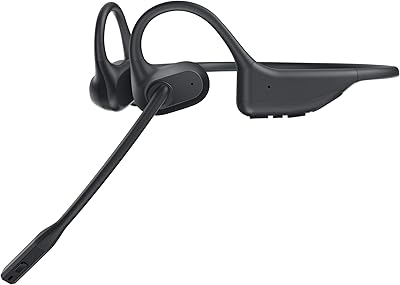
TAGRY K08 Open-Ear Wireless Earbuds
80%
88%
Wearing Comfort
83%
Battery Life
67%
Sound Quality
71%
Call Quality
91%
Waterproofing & Sweat Resistance
More
STECEi G219 Open-Ear Bluetooth Earbuds
81%
91%
Wearing Comfort
86%
Call Quality
73%
Audio Quality
68%
Sound Leakage
88%
Battery Life
More
MONODEAL HT03 Open Ear Bluetooth Headphones
85%
85%
Sound Quality
91%
Comfort & Fit
67%
Microphone Performance
88%
Battery Life
93%
Bluetooth Connectivity
More
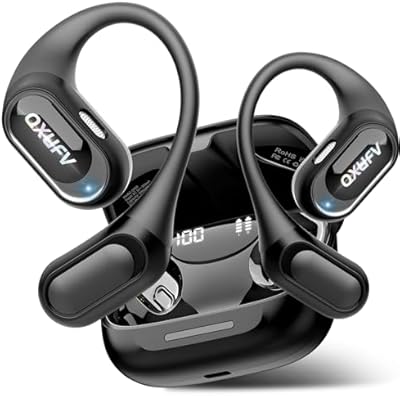
QXUFV QX68 Open Ear Bluetooth Headphones
88%
94%
Battery Life
92%
Comfort & Fit
89%
Sound Quality for Calls
90%
Waterproofing (IPX7)
86%
Ease of Use (Controls)
More

FAQ

Power on the headset and it should automatically enter pairing mode — you will typically see or hear an indicator confirming this. Then open Bluetooth settings on the tablet, look for the device name in the available list, and tap to connect. Most parents report the whole process takes under a minute, and the headset will reconnect automatically on subsequent uses.

No, and that is intentional. The cap is built into the hardware itself rather than being a software setting, so there is no toggle, app, or workaround that can raise the ceiling. This is actually one of the more meaningful design decisions here, since older kids who know their way around device settings cannot simply override it.

The neckband sits at the back of the neck and the drivers rest just in front of the ears, so there is no clamping force or over-ear cup to conflict with glasses frames. Parents of glasses-wearing children specifically mention this as a reason they chose this style over traditional over-ear models.

Yes, the built-in MEMS microphone handles everyday video calls and remote lessons adequately. That said, it does pick up some background noise in busier environments, so if your child is in a noisy room during a call, the other party may notice some ambient sound. For a quiet home setting, performance is generally fine.

Mehomeli does not publish an official charge time figure, but based on the 165 mAh battery size, a full recharge typically takes around 1.5 to 2 hours using a standard USB charging cable. It is worth building in charging time overnight so the headset is ready for a full school day.

The neckband design naturally resists falling off because it wraps around the back of the neck rather than relying solely on ear pressure to stay in place. Parents report the headset stays put during running, playground activity, and cycling. Very vigorous movements like gymnastics or contact sports may require testing with your specific child.

Any device with standard Bluetooth output can pair with these open-ear kids headphones, including Amazon Fire tablets and the Nintendo Switch in handheld mode. Echo devices do not support Bluetooth headphone output in the traditional sense, so that use case would not apply.

The stated age range starts at 3, but practically speaking, the neckband fit tends to work better on children aged 4 and up. Very young toddlers have smaller necks and less tolerance for wearing accessories consistently, so results will vary. The materials are non-toxic and the volume limit provides an important safety layer regardless of age.

The IPX5 rating means the headset can handle splashing water, sweat, and light rain without issue. What it cannot survive is submersion or being run under a tap, so while outdoor use in drizzle is fine, dropping them in a puddle or leaving them in a downpour is a different story.

Because this neckband-style set leaves the ears completely uncovered, ambient sound passes through at full, unfiltered volume — it is not a compromised in-between. A child can hold a normal conversation, hear a car approaching, or respond to their name without adjusting or removing the headset at all. The trade-off is that audio leaks outward too, which can be noticeable in quiet environments.