

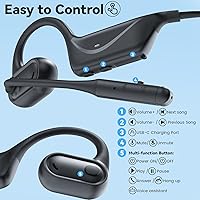
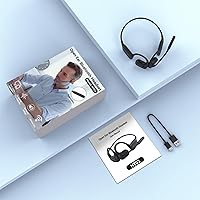
Overview

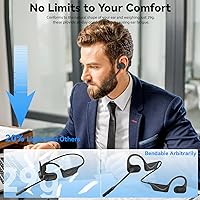
The MONODEAL HT03 Open Ear Bluetooth Headphones enter a crowded but still-maturing category: lightweight wireless headsets built for people who need to stay connected without tuning out the world around them. At 29 grams, the frame sits on your ears rather than clamping over them, and the memory titanium alloy structure flexes to fit your head without losing its shape over time. At a mid-range price point, buyers reasonably expect solid call performance and dependable connectivity — and for the most part, those expectations hold. Just know going in: open-ear designs are a deliberate trade-off. You gain comfort and awareness; you give up bass and isolation.

Features & Benefits

The Bluetooth 5.4 chip is a genuine practical upgrade here — connections lock in faster and hold more steadily than you get with older headsets, which matters when you are walking between rooms or jumping on a call at short notice. The real standout, though, is the rotatable boom microphone. Being able to swing it into position at your desk, then fold it away when you are on the move, is more useful than a fixed mic sitting in the same spot every time. Dual-mic noise reduction handles a noisy kitchen or a busy street reasonably well. Throw in multipoint pairing — two devices connected simultaneously — plus a dedicated hardware mute button, and this wireless headset covers the basics of a modern work setup without overcomplicating things.

Best For

These open-ear headphones are a strong match for remote and hybrid workers who are glued to their laptops for calls most of the day and need a headset that does not cause ear fatigue by late afternoon. Commuters, cyclists, and anyone who regularly works near a window or busy street will appreciate keeping one ear on the real world. They also work well for people who have always found in-ear tips physically uncomfortable. The two-device pairing is genuinely useful for someone bouncing between a work laptop and a personal phone. If you want deep bass, studio monitoring, or loud outdoor volume, these are the wrong choice — but for all-day call comfort at a reasonable price, they punch solidly in their lane.

User Feedback

Early buyers consistently praise the fit — most report wearing this wireless headset for four or five hours without any of the pressure or soreness you get from heavier over-ear models. Call quality on the mic side gets solid marks too, especially in moderately noisy environments. Where feedback turns more mixed is on the listening side: the open-ear format simply cannot produce much bass, and in genuinely loud spaces, the maximum volume can feel insufficient. A handful of users have raised questions about boom arm durability over time, though nothing conclusive yet — the product only launched in mid-2024, so the track record is still short. Multipoint device switching reportedly works, though some find it less instant than expected. Overall, realistic expectations lead to satisfied buyers; inflated ones do not.

Pros

  • At 29 grams, these open-ear headphones are light enough to forget you are wearing them through a full workday.
  • The rotatable boom mic can be swung into call position at a desk and folded away cleanly when you are on the move.
  • Bluetooth 5.4 delivers noticeably faster pairing and a more stable connection than older-generation wireless headsets.
  • A physical mute button on the headset lets you silence the mic instantly without fumbling through software menus.
  • Dual-device pairing means switching between a laptop and a phone happens without disconnecting and reconnecting manually.
  • The open-ear fit keeps your ear canal unblocked, reducing the discomfort and moisture buildup common in long sealed-headphone sessions.
  • Type-C charging and up to 12 hours of rated battery life means fewer interruptions on back-to-back heavy-call days.
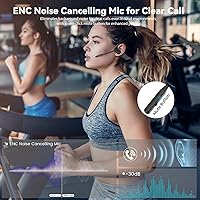
  • Dual-mic noise reduction performs well enough in moderately noisy environments to keep calls clear and understandable.
  • The memory titanium alloy frame holds its shape reliably over time and contours to your head without pinching.
  • Water resistance adds a practical layer of protection for workouts or light outdoor use in unpredictable weather.

Cons

  • Bass response is noticeably limited — the open-ear format is a physical constraint, not a tuning issue that software updates can resolve.
  • In loud environments, the maximum volume ceiling can feel insufficient to hear calls comfortably over background noise.
  • Long-term boom arm and hinge durability remain uncertain, since the product has only been on the market since mid-2024.
  • Multipoint device switching works in practice but can feel slower or less fluid than the specification implies.
  • Real-world battery life at higher volume levels may fall noticeably short of the 12-hour maximum rating on the box.
  • The open design means anyone sitting nearby can faintly hear your audio, which is not ideal for shared quiet workspaces.
  • No carrying case is included, making it less convenient to transport or protect this wireless headset when not in use.
  • Passive noise isolation is essentially zero, so ambient background noise bleeds in freely during both music playback and calls.

Ratings

The scores below reflect an AI-driven analysis of verified buyer reviews for the MONODEAL HT03 Open Ear Bluetooth Headphones, drawn from global purchase data with spam, bot-generated, and incentivized feedback actively filtered out. Each category is scored independently to give an honest picture of where these open-ear headphones genuinely excel and where real trade-offs exist. Strengths and pain points are both weighted transparently, so you can make a confident buying decision based on how the headset actually performs across a range of real-world use cases.

Wearing Comfort
91%
Weighing just 29 grams with soft silicone cushioning and a memory titanium frame that flexes to your head shape, most users report being able to wear these open-ear headphones through a full eight-hour workday without any pressure points or ear soreness. That kind of all-day comfort is genuinely rare at this price tier.
A small number of users with narrower or wider head shapes have noted that the fit feels either slightly loose or slightly snug out of the box, and the frame cannot be manually adjusted beyond the natural titanium flex. Those with atypical head proportions may want to test the fit before fully committing.
Call Microphone Quality
83%
The combination of dual ENC microphones and a rotatable boom arm means call recipients consistently report hearing the speaker clearly in moderately noisy environments — open offices, home kitchens, and light street noise. Positioning the boom arm close to the mouth noticeably improves pickup compared to leaving it folded away.
In genuinely loud settings — crowded public spaces or environments with heavy background noise — the ENC reaches its limits and some audio bleed-through is audible to callers. The microphone also lacks a separate gain control, so users in very noisy rooms cannot compensate beyond what the ENC is able to filter.
Bluetooth Connectivity
86%
Bluetooth 5.4 delivers a noticeably stable signal compared to older 5.0 or 5.2 headsets, with most users reporting no dropout during typical office and commuting use. Initial pairing is fast, and the connection generally holds reliably when moving between adjacent rooms mid-call.
A handful of users have reported occasional signal hiccups when multiple competing Bluetooth devices are present nearby, such as in a busy open-plan office. The headset does not always automatically prioritize the most recently active device, which can cause a brief lag when switching between audio sources.
Audio Quality
54%
46%
Vocal-heavy content — podcasts, audiobooks, and speech-focused audio — comes through with reasonable clarity and adequate volume for background listening during low-distraction tasks. The dynamic drivers handle mid-range frequencies well enough for casual ambient listening during a commute.
Bass response is physically constrained by the open-ear format, with no ear seal to generate low-end pressure, so music sounds noticeably thin and flat compared to any closed-back or in-ear alternative. This is a design reality rather than a correctable flaw — buyers who prioritize music fidelity should look at a different product category entirely.
Build Quality
67%
33%
The memory titanium alloy frame feels more substantial than the plastic shells found on cheaper headsets at this price point, and the silicone cushions show no obvious surface wear in short-term testing. The frame handles the daily routine of being draped around the neck between uses without visible fatigue.
The boom arm hinge is the most commonly flagged structural concern among early buyers, with some noting it feels less robust than the main frame under frequent daily rotation. Given the product only launched in mid-2024, long-term durability data remains thin, and no carrying case is included to protect the headset during transport.
Battery Life
74%
26%
Under realistic mixed-use conditions — a blend of calls and background music at moderate volume — most users report getting through a full workday without recharging, which is the practical benchmark that matters most for a work-focused headset. The 2-hour charge time is short enough to fit comfortably into a lunch break.
The rated 12-hour maximum is achievable only at lower volume levels; users running calls at higher volumes consistently report run times closer to 7 or 8 hours in practice. The headset cannot be used while charging, which creates a real gap if the battery runs out mid-session on a heavy meeting day.
Multipoint Pairing
71%
29%
Staying connected to a laptop and a phone simultaneously removes a daily friction point for anyone switching between work and personal calls, and setup is straightforward enough that most users get it working on the first attempt. The connections to both devices persist reliably after power cycling.
Device switching is not always instant — a brief lag of a few seconds when audio transfers between sources is common, and a small number of users report moments where the headset loses track of which device should be active. The feature works but does not feel as polished as it does on premium-tier headsets.
Noise Cancellation
77%
23%
The dual-mic ENC does a credible job filtering out steady ambient sounds — HVAC hum, a TV in another room, light street traffic — making this wireless headset usable in the kinds of background environments that most remote workers deal with on a daily basis. Call recipients in these conditions generally rate audio clarity positively.
Dynamic or unpredictable noise — sudden loud voices nearby, a passing vehicle, or a dog barking — breaks through the ENC noticeably more than steady background hum does. Users working from loud shared spaces or open co-working floors report inconsistent results and occasionally need to relocate for important calls.
Value for Money
82%
18%
At its mid-range price point, this wireless headset delivers work-relevant features — stable Bluetooth 5.4, a rotatable boom mic, multipoint pairing, and a hardware mute button — that many similarly priced competitors either skip or implement less thoughtfully. For call-heavy daily users, that feature-to-price ratio is strong.
Buyers who primarily want music-quality audio, strong passive isolation, or verified long-term build reliability may feel the value equation tips the wrong direction for their specific needs. The absence of any carrying case or documented warranty terms also makes the overall package feel slightly less complete than the price tag implies.
Fit & Stability
84%
The memory titanium frame contours to the back of the ears without relying on ear tips or tight clamping force, and most users — including those who find traditional earbuds fall out during movement — report a secure, stable fit through commutes, light workouts, and active work-from-home sessions.
The fit relies entirely on the tension of the titanium frame against the back of the ear, which means users with smaller ears or a narrower head profile sometimes report the headset sitting less securely than expected during fast movement. There are no adjustment mechanisms beyond the natural flex of the frame itself.
Controls & Usability
78%
22%
The dedicated hardware mute toggle is the standout control element — silencing the mic with a single physical switch during a live call, without touching a phone or laptop, saves real time for anyone in back-to-back meetings. The multifunction button covers power, playback, and call management without requiring a companion app.
With a single multifunction button handling multiple actions, distinguishing between a long press and a short press mid-call can occasionally trigger the wrong function, particularly while multitasking. There is also no LED status indicator visible from the wearer's perspective, making it harder to confirm mute status or battery level at a quick glance.
Situational Awareness
93%
Keeping the ear canal fully unobstructed means ambient sound — traffic, coworker voices, a doorbell — passes through naturally with no transparency mode or special setting required. Cyclists and street commuters in particular praise this as a meaningful safety advantage over sealed designs that require physically removing a headphone to hear the environment.
The same openness that improves awareness also means audio from the headset leaks faintly to people nearby, which can be mildly disruptive in quiet shared spaces like libraries or open-plan offices. There is no way to reduce this leakage short of switching to a closed headset type entirely.
Charging Design
88%
USB-C charging means most users can power the headset with the same cable already sitting on their desk, and the roughly 2-hour charge time fits neatly into a lunch break without feeling like a significant interruption. The port placement is accessible and does not require removing the headset from around the neck to plug in.
The inability to use the headset during charging is a limitation that surfaces most for users who run the battery down during a long meeting day and need immediate continued use. There is no pass-through or low-power listening mode — when the battery is depleted, the only option is to stop and wait.
Boom Mic Design
79%
21%
The 220-degree rotation range gives users genuine positional flexibility — swing it forward into call position at a desk, or rotate it fully out of the frame during a commute so it does not protrude at an awkward angle. This adaptability is more practical in daily use than a fixed-position mic for anyone who moves around throughout the day.
The boom arm is noticeably more slender than the main frame, and users who rotate it frequently have raised questions about hinge longevity beyond the first year of regular use. The deployed arm also adds a visible element to the side profile that some users find less discreet than they expected for use in public settings.

Suitable for:

The MONODEAL HT03 Open Ear Bluetooth Headphones are built for people whose workday is shaped by calls, video meetings, and constant context-switching — particularly remote and hybrid workers who spend several hours a day on calls and cannot afford the ear soreness that sealed headphones tend to cause by midafternoon. At just 29 grams, the headset is light enough to wear across an entire work shift without noticing it, and the open-ear fit means you can hold a side conversation or hear your doorbell without pulling anything off your head. Commuters and cyclists will find real value in the situational awareness this design preserves — keeping both ears alert to traffic is a genuine safety benefit, not a marketing point. The rotatable boom mic makes it practical for people who move between desk time and errands throughout the day, since the arm can be tucked away when not needed rather than hovering in your face. If you regularly bounce between a laptop and a phone, the two-device pairing removes a small but genuinely irritating friction point from your daily routine.

Not suitable for:

If you are primarily buying headphones for music listening, podcasts, or any content where audio richness and bass response matter, the MONODEAL HT03 Open Ear Bluetooth Headphones will likely leave you underwhelmed — open-ear drivers are physically constrained in ways no software tuning can fix. Anyone working in genuinely loud environments, such as a busy café, a construction site, or an open factory floor, will find both the maximum volume ceiling and the complete absence of passive isolation frustrating on a practical level. People who expect the call microphone to perform like a dedicated conferencing solution in extreme noise conditions should also temper expectations, as dual-mic noise reduction has real limits beyond moderate ambient sound. Those who are hard on their gear should note that long-term durability data for this model is still thin — it only launched in mid-2024 — so buyers who need a headset proven to survive years of heavy daily use may want to wait for a longer track record to develop. Finally, anyone who needs to work in a shared quiet space like a library should be aware that open-ear audio leaks to those nearby.

Specifications

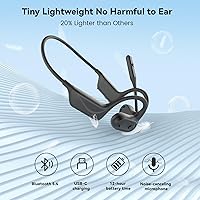
  • Weight: The headset weighs 29 grams, placing it among the lighter options in the open-ear wireless headset category.
  • Bluetooth Version: Uses a Bluetooth 5.4 chip, which provides faster initial pairing, reduced signal latency, and a more stable connection than Bluetooth 5.0 or 5.2 devices.
  • Ear Design: Open-ear, on-ear placement that rests against the outer ear without inserting into or fully enclosing the ear canal.
  • Microphone: Dual ENC (Environmental Noise Cancellation) microphones with a 220-degree rotatable boom arm that can be angled into call position or folded away when not in use.
  • Mute Control: A dedicated hardware mute toggle on the headset body allows instant microphone muting and unmuting without accessing any application or device settings.
  • Multipoint: Supports simultaneous Bluetooth connection to two devices — such as a laptop and a smartphone — at the same time.
  • Battery Life: Rated for up to 12 hours of continuous music playback at moderate volume; actual runtime may be shorter at higher volume levels or during heavy call use.
  • Charge Time: Reaches a full charge in approximately 2 hours via the included USB-C cable.
  • Charging Port: USB-C charging port; the manufacturer specifies the headset cannot be used while it is actively charging.
  • Frame Material: Main structural frame is made from memory titanium alloy, which flexes to fit the contours of the head and returns to its original shape when not worn.
  • Cushion Material: Ear-contact surfaces are wrapped in soft silicone to reduce skin irritation and maintain comfort during extended wear.
  • Audio Driver: Equipped with dynamic drivers, which are well-suited to mid-range and high-frequency reproduction for voice calls and general listening.
  • Water Resistance: Rated as water resistant, offering protection against light sweat and minor splashes; not rated for submersion or heavy rain exposure.
  • Controls: A multifunction button on the headset handles power on/off, play/pause, call answering and rejection, and voice assistant activation.
  • Compatibility: Compatible with smartphones, laptops, desktops, and tablets across Android and iOS platforms via standard Bluetooth.
  • Model Number: Official model designation is HT03, manufactured and sold under the MONODEAL brand.
  • In the Box: Package includes the open-ear headphones, one USB-C charging cable, and a printed user manual; no carrying case is included.

Related Reviews
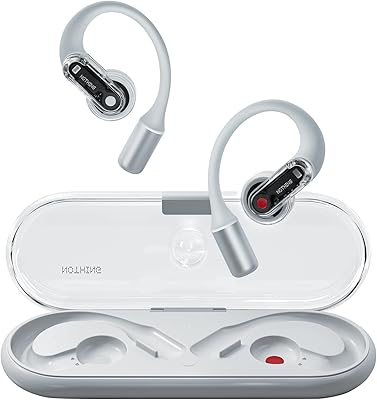
Nothing Ear (Open) Open-Ear Earbuds
79%
91%
Wearing Comfort
83%
Workout Stability
74%
Sound Quality
77%
Call Quality
49%
Sound Leakage
More
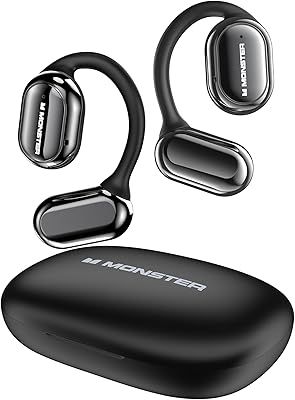
Monster AC100 Open-Ear Bluetooth Headphones
76%
88%
Battery Life
79%
Comfort & Fit
67%
Sound Quality
83%
Bluetooth Stability
71%
Call Quality
More
CoolJumper Q28 Open Ear Wireless Earbuds
80%
88%
Wearing Comfort
91%
Battery Life
62%
Sound Quality
84%
Workout Stability
86%
Water Resistance
More
Conyat X7 Open Ear Wireless Earbuds
78%
88%
Wearing Comfort
84%
Secure Fit During Activity
67%
Sound Quality
91%
Battery Life
82%
Water & Sweat Resistance
More
PocBuds V30 Open Ear Sport Earbuds
82%
91%
Comfort & Wearability
93%
Battery Life
84%
Fit Security During Exercise
63%
Sound Quality
96%
Situational Awareness
More
Qecnato Q77 Open Ear Bluetooth Earbuds
79%
88%
Wearing Comfort
84%
Fit Stability
67%
Audio Quality
91%
Battery Life
86%
Water & Sweat Resistance
More
Gixxted O3 Open-Ear Bluetooth Headset
77%
88%
Wearing Comfort
79%
Microphone Clarity
62%
Audio Sound Quality
83%
Dual-Device Pairing
86%
Mute Button Usability
More
QXUFV QX68 Open-Ear Bluetooth Headphones
80%
92%
Wearing Comfort
84%
Fit & Stability
74%
Sound Quality
96%
Situational Awareness
89%
Battery Life
More
TAGRY K08 Open-Ear Wireless Earbuds
80%
88%
Wearing Comfort
83%
Battery Life
67%
Sound Quality
71%
Call Quality
91%
Waterproofing & Sweat Resistance
More
STECEi G219 Open-Ear Bluetooth Earbuds
81%
91%
Wearing Comfort
86%
Call Quality
73%
Audio Quality
68%
Sound Leakage
88%
Battery Life
More

FAQ

Multipoint pairing lets the headset hold active connections to two Bluetooth devices simultaneously. Pair it to your first device normally, then put it back into pairing mode and connect your second device — after that initial setup, both connections stay active and the audio routes from whichever device is in use at the time. Most users find this works well for keeping a work laptop and a personal phone connected without any manual switching.

The dual-mic noise cancellation handles moderate background noise — open offices, a home kitchen with the radio on, a reasonably busy street — quite well in practice. In genuinely loud spaces, like a crowded café at peak hours or a space with heavy machinery, there are limits to what the ENC can filter out. For typical work-from-home or hybrid office conditions, call quality is generally solid.

You can take calls with the boom arm folded away, but keeping it angled close to the corner of your mouth will give noticeably better microphone pickup for the person on the other end. The 220-degree rotation range means you can position it tightly against your cheek at a desk or swing it fully out of the frame when you are walking around and do not want it in your way — which is more flexible than fixed-mic designs.

The memory titanium alloy frame flexes to conform to your head and holds its shape, and most users report the fit stays secure during light to moderate activity and commuting. For high-impact running with a lot of bouncing head movement, results depend on head shape and fit — the over-ear hook style generally holds better than earbuds for many people, but it is worth knowing that individual experiences vary. The water resistance covers workout sweat comfortably.

No — the manufacturer explicitly states the headset should not be used during charging. Plan around this by plugging it in during lunch or other breaks rather than expecting to run it tethered to a cable through a long meeting.

The MONODEAL HT03 Open Ear Bluetooth Headphones are fundamentally a call-first headset — the open-ear design means bass response is limited and there is no passive isolation, so music sounds more open and airy than rich or immersive. Vocals and mid-range content come through well enough for casual background listening. If music fidelity is a priority for you, a closed-back headphone or a quality in-ear monitor will be a better fit for that specific use case.

There is a dedicated hardware mute toggle directly on the headset body — flicking it silences the microphone immediately, with no keyboard shortcut, no clicking into your call app, and no navigating through menus. For people who spend several hours a day on back-to-back video calls, this is one of the more genuinely useful features this wireless headset offers.

The rated 12-hour figure is measured under controlled moderate-volume conditions, so real-world use tends to land a bit lower — somewhere in the 8-to-10-hour range for a typical mix of calls and background music at normal volume is a more grounded expectation. Most users report getting through a full workday without needing to recharge, which is the practical benchmark that matters most. The headset gives an audio alert when the battery runs low.

The headset is built as a single over-both-ears frame, so it is not designed to be worn on one side the way a mono Bluetooth earpiece is. That said, the open-ear format means ambient sound passes through naturally on both sides, keeping you aware of your surroundings even with the headset on — which is a reasonable trade-off for most people who want situational awareness.

A slightly damp cloth or a gentle alcohol wipe works well for the silicone surfaces — avoid soaking the headset or running it under water even though it is water resistant. A quick wipe-down after sweaty workouts keeps the cushions fresh and extends their comfort life. Avoid abrasive materials that could roughen or degrade the silicone over time, and store the headset somewhere it will not be bent or compressed in an unusual direction for long periods.