Tiebeauty Silicone Right-Hand Nail Practice Hand
Tiebeauty Silicone Right-Hand Nail Practice Hand — image 1
Tiebeauty Silicone Right-Hand Nail Practice Hand — image 2
Tiebeauty Silicone Right-Hand Nail Practice Hand — image 3
Tiebeauty Silicone Right-Hand Nail Practice Hand — image 4
Tiebeauty Silicone Right-Hand Nail Practice Hand — image 5
Tiebeauty Silicone Right-Hand Nail Practice Hand — image 6
81%
19%

Overview

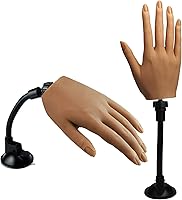
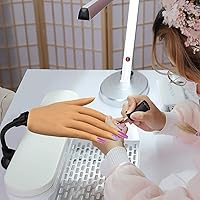
The Tiebeauty Silicone Right-Hand Nail Practice Hand is a training tool built for anyone serious about developing their nail art skills — whether you're just starting out in cosmetology school or already working behind a salon desk. What sets it apart from cheap plastic alternatives is how closely it replicates a real hand: life-size proportions, skin-like texture, and fingers that actually bend. The included stand keeps it upright during practice sessions, which matters more than it sounds when you're trying to focus on technique. This review covers build quality, real-world usability, and who will genuinely get the most from it.

Features & Benefits

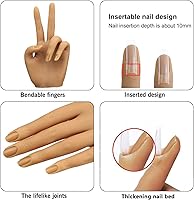
The silicone used in this mannequin hand is genuinely soft — it compresses like real skin and carries none of the chemical odor that plagues cheaper practice tools. The fingers have internal wire bones, so you can position each one at whatever angle you need without it snapping back out of place. Nail tips fit into the nail bed up to 10mm deep with no glue required, and swapping them between practice sets takes seconds. The material handles acetone without degrading and works fully with UV and LED lamps, meaning you can run through a complete gel workflow from application to cure without any workarounds.

Best For

This silicone practice hand makes the most sense for people who practice regularly and need a tool that holds up to repeated use. Cosmetology students get the clearest benefit — working through acrylics and gel overlays at home between classes builds muscle memory that flat practice wheels simply cannot replicate. Salon professionals will find it useful for trialing new designs before applying them to paying clients. It doubles as a clean display piece for nail artists photographing portfolio work or showcasing jewelry and rings. If you have been relying on paper tips or rigid plastic hands, the jump in realism here is immediately noticeable.

User Feedback

Buyers consistently highlight two strengths: the surprisingly realistic texture and the flexible finger movement, which most say they use constantly. The acetone compatibility earns genuine praise — being able to practice full removal without damaging the hand is a practical detail that adds real long-term value. Not everything is perfect, though. Some beginners find the nail tips sit slightly loose in the nail bed, requiring an adjustment period if you are used to glued tips. A few reviewers also wish the stand had more weight to it, noting it can shift when fingers are bent at sharper angles. At 4.3 out of 5 overall, verified buyers suggest the core experience is solid despite the minor fit-and-finish gripes.

Pros

  • The silicone texture closely mimics real skin, making technique transfer to actual clients feel natural.
  • Fingers bend and hold position thanks to internal wire bones, supporting practice at multiple angles.
  • No glue needed for nail tips — swap them out quickly between practice sets without cleanup hassle.
  • Fully acetone-resistant, so you can practice complete acrylic removal without worrying about material damage.
  • Works with both UV and LED nail lamps, allowing a true end-to-end gel or acrylic workflow.
  • The mannequin hand doubles as a display piece for nail portfolios, jewelry, rings, and watches.
  • Silicone is non-toxic and odor-free, making it comfortable to work with in any home or salon setting.
  • Easy to clean — a quick rinse with water restores it between sessions, extending its usable life significantly.
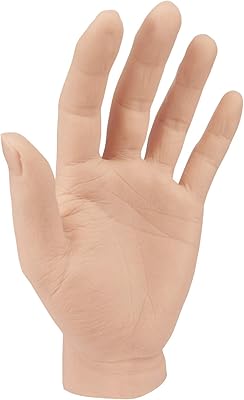
  • Life-size female proportions with visible skin lines make practice conditions feel closer to working on a real hand.
  • At a mid-range price, this nail training hand offers meaningfully more realism than budget plastic alternatives.

Cons

  • Nail tips sit slightly loose in the nail bed without adhesive, which can frustrate beginners expecting a secure fit.
  • The stand lacks sufficient weight and can shift or tip when fingers are bent into sharper angles.
  • Only available as a right hand, leaving left-handed practitioners without a suitable option from this listing.
  • The wire bones inside the fingers can eventually fatigue with very heavy repeated bending over time.
  • No left-hand version means practicing symmetrical nail sets requires purchasing a separate product entirely.
  • Occasional buyers report inconsistency in how snugly nail tips fit, suggesting slight variation between units.
  • The hand may be too small for practitioners accustomed to working on clients with larger hands.
  • Realism, while good for the price, still falls short of the highest-end professional training mannequins.

Ratings

The scores below reflect our AI-driven analysis of verified buyer feedback for the Tiebeauty Silicone Right-Hand Nail Practice Hand, drawn from real purchase reviews worldwide — with spam, bot activity, and incentivized posts actively filtered out before scoring. Each category captures both what users genuinely valued and where frustrations emerged, so you get an honest picture rather than a polished highlight reel. Strengths and shortcomings carry equal weight in every score.

Material Quality
88%
The soft liquid silicone consistently wins praise for its skin-like feel, which buyers say is a noticeable step above the rigid plastic hands they used before. It holds up well through repeated acetone exposure and water washing without cracking, peeling, or developing an unpleasant odor over time.
A small number of users report that the silicone surface can attract lint and dust between sessions, requiring a rinse before each use. A few buyers also noted slight color inconsistency between units, suggesting minor quality control variation in the manufacturing process.
Finger Articulation
84%
The internal wire bones are a genuine differentiator — buyers appreciate being able to set the fingers at a natural client-like angle and have them stay put while they work. Practicing nail techniques at varied hand positions builds more transferable muscle memory than any flat practice surface can offer.
The wire bones are not indestructible; heavy repeated bending in the same joint area can cause fatigue over several weeks of intensive use. Users who push the fingers to extreme angles also report that the stand becomes less reliable as a support base during those sessions.
Nail Tip Fit
67%
33%
The no-glue insertion system is convenient for quick tip swaps between practice sets, and most users find it sufficient for art work that does not require heavy lateral pressure. It genuinely speeds up practice flow once you adjust to how the tips sit.
The slightly loose nail bed fit is the most commonly cited frustration, particularly among beginners who expect a snug, glue-like hold from the start. Without adhesive, tips can shift during detailed work, which affects precision and makes early practice sessions feel less controlled than expected.
Realism & Simulation
86%
Visible knuckle lines, natural skin texture, and life-size proportions together create a practice surface that feels meaningfully closer to working on a real client than flat or rigid alternatives. Salon professionals specifically mention that design testing on this mannequin hand translates well to actual application sessions.
Despite the strong realism for the price tier, the silicone still does not fully replicate the warmth or subtle elasticity of live skin, which experienced technicians can feel. Users with a background on higher-end professional training mannequins may find the simulation falls just short of their benchmark.
Stand Stability
61%
39%
The included stand keeps the hand upright without any additional setup, which is genuinely useful for solo practice sessions where you need both hands free to apply product. For standard straight-finger positions, it performs its basic function reliably.
Several buyers describe the stand shifting or tipping once the fingers are repositioned into bent or angled poses, which interrupts workflow. Its lightweight construction means it lacks the grip and base weight needed to stay put on smooth surfaces during active practice.
Ease of Cleaning
91%
Rinsing under warm water removes most residue in seconds, and the non-porous silicone surface does not absorb pigments or acrylic dust the way fabric or foam alternatives do. Users who practice daily say cleanup adds almost no time to their routine.
Gel residue that has been cured under a lamp can be trickier to remove fully and may require an acetone wipe rather than water alone. A few users note that very fine glitter from nail art can settle into the skin texture lines and take extra effort to clear out completely.
Lamp Compatibility
93%
Full compatibility with both UV and LED curing lamps is a practical strength that buyers highlight, since it means you can run a complete gel workflow without any workarounds or material concerns. No warping, discoloration, or surface degradation has been widely reported even after repeated cure cycles.
While the silicone handles lamp exposure well, there is no official data on maximum safe exposure duration or cumulative heat tolerance over very long-term use. Users running extremely long cure sessions back-to-back may want to monitor the surface condition periodically as a precaution.
Value for Money
78%
22%
At a mid-range price point, this silicone practice hand delivers a level of realism and material durability that clearly justifies the step up from budget plastic alternatives. Buyers who practice regularly find the cost per use drops quickly, making it a practical long-term investment for skill development.
Casual or occasional users who only practice a few times a month may struggle to feel the value matches the asking price, especially given the loose nail tip fit and lighter-than-ideal stand. A minority of buyers felt the overall package — particularly the stand — did not quite match what the price implied.
Versatility
82%
18%
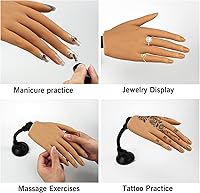
Beyond nail art, buyers have found genuine secondary use in displaying rings, watches, and bracelets for product photography, as well as basic tattoo practice and glove fitting. The life-size proportions make it a functional prop for small business owners who need an affordable hand display.
Its identity as a right-hand-only tool limits symmetrical practice without purchasing a separate left-hand version. Users who need to practice on both hands for a full client nail set will find this a notable restriction rather than a minor inconvenience.
Durability
79%
21%
The silicone construction holds up impressively to acetone, water, and repeated handling, with most buyers reporting no visible degradation after months of consistent use. The material resists tearing at the fingertips even with frequent tip insertion and removal cycles.
The internal wire bones represent the main durability weak point, as metal fatigue from intensive daily bending can shorten their functional lifespan. Users who practice for several hours a day over many months are more likely to encounter loosening or breakage in the finger joints than casual practitioners.
Packaging & Presentation
71%
29%
Most buyers report the hand arrives in reasonable condition with no obvious shipping damage, and the included stand is pre-assembled and ready to use straight out of the box. The presentation is professional enough that some users have gifted it to fellow nail students without any supplemental packaging.
A handful of buyers noted that the packaging itself is fairly minimal, with limited protection around the fingers during transit. There have been isolated reports of fingers arriving slightly bent out of shape from compression, though these typically correct after gentle repositioning.
Odor
89%
Unlike many silicone products that carry a strong chemical smell fresh out of the box, buyers consistently note that this training hand has little to no detectable odor, even immediately after unboxing. This makes it comfortable to use in small home spaces or shared salon environments.
A small number of buyers did report a faint silicone scent upon first use, though the consensus is that it dissipates within a day or two of airing out. This is unlikely to be a dealbreaker for most users but is worth noting for those who are particularly sensitive to chemical smells.
Skin Texture Detail
83%
The visible knuckle joints, finger creases, and subtle surface texture give practicing nail artists a realistic reference point for cuticle work and skin-edge nail application. Buyers who focus on refining clean cuticle lines say the detail level is noticeably better than smoother, featureless practice tools.
The texture detail, while good, is uniform across all fingers and does not replicate the natural variation found across real clients' hands. Advanced technicians may find this consistency slightly limiting when trying to prepare for the full range of cuticle shapes and nail bed sizes they encounter in a salon.

Suitable for:

The Tiebeauty Silicone Right-Hand Nail Practice Hand is the right investment for anyone who practices nail art consistently and needs a realistic surface to work on. Cosmetology students are the clearest fit — having a lifelike hand at home means you can log serious practice hours outside of class, working through acrylics, gel overlays, and nail stamping without the pressure of working on a real person. Salon professionals who want to test a new design, product, or technique before applying it to a paying client will also find genuine value here. Home-based enthusiasts who have outgrown paper tips or rigid plastic practice hands will notice an immediate improvement in how transferable their skills feel. It also works well as a display tool for nail artists building a portfolio or small business owners who want to showcase rings, watches, or jewelry in a lifelike way.

Not suitable for:

The Tiebeauty Silicone Right-Hand Nail Practice Hand is not the right pick for every buyer, and it is worth being clear about where it falls short. If you are a complete beginner expecting a plug-and-play experience with nail tips that lock in firmly without glue, the slightly loose nail bed fit may frustrate you early on before you develop a feel for working with it. Buyers who only plan to practice occasionally or casually may find it hard to justify the mid-range price compared to cheaper flat-tip practice boards. The stand, while functional, lacks the weight and stability needed for aggressive finger-bending work, so if you need a rock-solid setup for heavy-duty repetitive practice, you may want to supplement it. Left-handed practitioners will also find this particular model a poor match, since it is designed as a right hand only and no mirror-image variant is included in this listing.

Specifications

  • Brand: Manufactured by Tiebeauty, a brand focused on nail art training and beauty practice tools.
  • Material: Constructed from soft liquid silicone that is non-toxic, odor-free, and durable through repeated use and washing.
  • Hand Orientation: Designed as a right hand only, modeled after a life-size adult female hand.
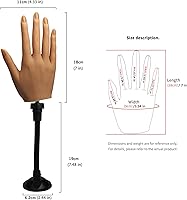
  • Dimensions: Measures 5.91 x 3.94 x 1.97 inches, closely matching the proportions of an average adult female hand.
  • Weight: Weighs 14.89 ounces, giving it a substantive feel without being cumbersome during practice sessions.
  • Finger Articulation: Each finger contains an internal wire bone structure that allows bending and holding at multiple angles without springing back.
  • Nail Tip Fit: Nail tips insert into the nail bed up to 10mm deep and require no adhesive, allowing repeated swaps during practice.
  • Acetone Resistance: The silicone material is fully resistant to acetone, supporting realistic acrylic removal practice without surface degradation.
  • Lamp Compatibility: Compatible with both UV and LED nail curing lamps, enabling a complete gel or acrylic nail workflow from start to finish.
  • Surface Detail: The hand features visible skin lines, knuckle joints, and natural contours to simulate working on a real client's hand.
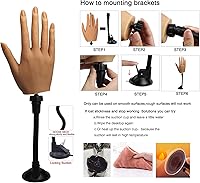
  • Stand Included: Comes with a mounting stand that holds the hand upright during use, keeping it stable for most standard practice angles.
  • Cleaning Method: Reusable and washable with plain water; the non-porous silicone surface resists product buildup and dries quickly.
  • Nail Tip Depth: Accepts nail tips inserted to a maximum depth of 10mm into each nail bed slot without requiring any bonding agent.
  • Use Cases: Suitable for nail art practice, jewelry and watch display, ring sizing demonstrations, glove fitting, and basic tattoo practice.
  • Target User: Designed for nail art students, salon professionals, and home enthusiasts seeking a realistic alternative to flat practice boards.

Related Reviews
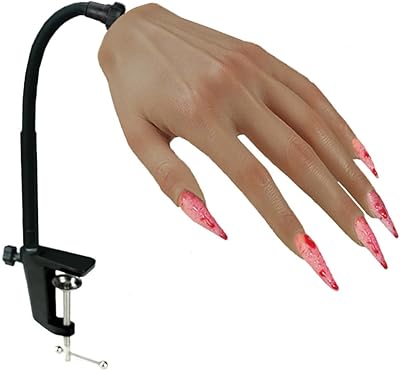
Tiebeauty Silicone Practice Hand for Acrylic Nails - Left Hand with Stand
88%
92%
Realistic Feel & Flexibility
88%
Ease of Use & Positioning
85%
Durability
91%
Value for Money
89%
Cleaning & Maintenance
More
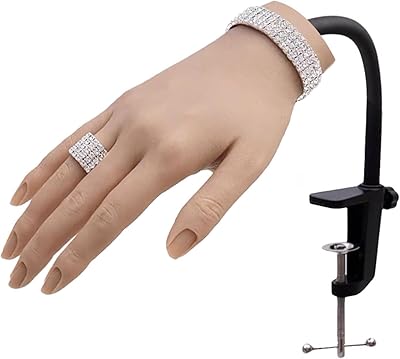
PALPTASN Silicone Practice Hand for Acrylic Nails with Stand Bracket (Right Hand, Ivory White)
86%
88%
Realism of Feel
91%
Flexibility and Adjustability
85%
Ease of Use
87%
Durability and Reusability
90%
Ease of Cleaning
More
KnowU Silicone Nail Art Practice Hand
77%
74%
Silicone Texture & Realism
61%
Nail Tip Fit & Retention
79%
Finger Poseability
86%
Workflow Compatibility
67%
Hand Proportions & Size Accuracy
More
Nail Nobility Professional Silicone Practice Half Hand
85%
91%
Realism and Poseability
87%
Durability and Build Quality
89%
Ease of Cleaning and Maintenance
84%
Value for Money
90%
Ideal for Beginners
More
Essential Nails Nail Trainer Practice Hand
77%
88%
Fingertip Realism
91%
Training Effectiveness
61%
Nail Retention
76%
Value for Money
79%
Online Tuition Quality
More
TGIRL Nail Practice Training Hand for Acrylic Nails
85%
88%
Realistic Design & Feel
92%
Flexibility & Adjustability
85%
Durability Against Acetone & LED Lamps
90%
Ease of Cleaning & Reusability
65%
Stability of Base
More
Medarchitect Silicone Tattoo Practice Hand
77%
78%
Surface Realism
82%
Ink Absorption
71%
Material Feel
74%
Durability
81%
Anatomical Accuracy
More
Rolomanve Nail Practice Hand with 500 Pcs Natural Coffin Nails
86%
90%
Value for Money
85%
Realistic Feel and Flexibility
87%
Durability with Acetone and UV Light
88%
Ease of Use
92%
Customization of Nail Tips
More
Wilfniee Practice Hand for Acrylic Nails
85%
88%
Realism of Hand Design
91%
Flexibility of Finger Joints
85%
Value for Money
83%
Portability and Stability of Stand
90%
Ease of Nail Tip Application
More
LIONVISON Practice Hand for Acrylic Nails
89%
92%
Flexibility and Adjustability
88%
Ease of Use
91%
Realistic Feel and Texture
85%
Durability and Longevity
89%
Stability and Clamp Functionality
More

FAQ

No, glue is not required. The nail tips press directly into the nail bed slots and hold well enough for most practice work. That said, a small number of users find the fit slightly loose, so if you prefer a very secure hold, a tiny amount of nail glue is an option — just know that removal will take a little more effort afterward.

Yes, the silicone material is fully compatible with both UV and LED curing lamps, so you can practice a complete gel or acrylic workflow exactly as you would on a real client. There are no known issues with the material warping or discoloring under standard lamp exposure times.

Absolutely. The silicone is acetone-resistant, which makes it practical for practicing full acrylic removal, not just application. You can soak or wipe the surface with acetone without worrying about the material breaking down over time.

A simple rinse under warm water does the job for most cleanup needs. For heavier product residue like acrylic or gel, you can wipe it down with acetone or a damp cloth. The silicone dries quickly and does not absorb pigments or products the way porous materials would.

Yes, each finger has an internal wire bone that lets you bend it into a natural position and hold it there. This is one of the more useful features for practicing techniques at realistic hand angles. Keep in mind that very heavy repeated bending in the same spot can eventually fatigue the wire, so avoid forcing the fingers to extreme angles unnecessarily.

This specific listing is for the right hand only. If you need a left-hand version for symmetrical practice sets, you would need to search for a separate listing, as both hands are not included together here.

It is noticeably more realistic than rigid plastic or foam practice hands. The silicone compresses slightly under pressure, the surface has visible skin lines and knuckle details, and the fingers move naturally. It is not identical to real skin, but it is close enough that skills developed on it transfer more reliably to real clients than flat practice boards do.

Yes, though beginners should expect a short adjustment period. The nail tip fit without glue can feel unfamiliar at first, and working on a three-dimensional hand is a step up from flat nail tip practice. That said, that learning curve is exactly the point — the added realism is what makes this a useful training tool rather than a shortcut.

Yes, and it works quite well for this purpose. The life-size proportions and realistic skin texture make it a decent display stand for rings, bracelets, watches, or nail art portfolio photography. The included stand keeps it upright and at a natural angle for shooting.

The stand is functional for everyday practice use and keeps the hand stable during most nail work. However, it is on the lighter side, and a few users have noted that it can shift when the fingers are bent into sharper or more extreme positions. If you tend to reposition the fingers frequently during a session, you may want to brace the base against something solid or place it on a non-slip mat.