Overview

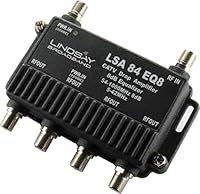
The Reliable Cable LSA84-EQ8 4-Port TV Signal Amplifier sits in the middle ground between flimsy passive splitters and costly professional distribution hardware. Built by Lindsay Broadband — a company with genuine roots in broadband and cable infrastructure — this 4-port signal amplifier takes one coax input and pushes an amplified signal to four separate outputs, so four TVs or cable boxes can run from a single antenna or cable feed without the drop in picture quality that a plain splitter causes. It is not a pre-amplifier, and it won't work with satellite systems, so set those expectations clearly before buying.
Features & Benefits

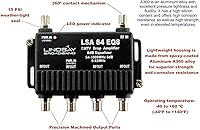
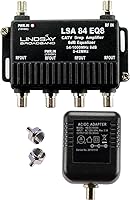
What separates the LSA84-EQ8 amplifier from a basic splitter is its built-in equalizer. Coax cables lose high-frequency signal over long runs, and an equalizer compensates by applying more gain as frequency rises — so the TV at the far end of the house gets a clean picture rather than a pixelated mess. In practical terms, the gain climbs to 7.5dB at the high end, which keeps distant sets looking as sharp as nearby ones. The unit also supports a passive return path, which matters for cable modems and two-way services. Protection against 6kV surges and a self-resetting short-circuit breaker add real durability, and the included 75-ohm terminators for unused ports are a small but meaningful touch — open ports bleed signal.

Best For

This cable and antenna booster is a natural fit for households looking to tackle whole-home signal distribution — running coax to three or four rooms from a single cable or antenna source. Cord-cutters who've mounted an OTA antenna but want to feed multiple TVs will find the setup straightforward. It also helps cable subscribers who notice pixelation or signal degradation on TVs farthest from the entry point. You should be comfortable with F-connector fittings to install it; this isn't a plug-in device with no wiring involved, but it's well within reach for a handy homeowner. If you also have a cable modem on the line, the passive return path keeps internet service running normally alongside TV.

User Feedback

People who've installed this cable and antenna booster in their homes tend to praise measurably cleaner pictures on the TVs furthest from the source — the sets that always drew the worst signal. Build quality gets mentioned often; the housing feels solid and not like a bargain-bin item. The included terminators also draw appreciation, since many competing units skip them entirely. On the flip side, buyers in areas with genuinely weak antenna reception found the unit underwhelming, noting that an active pre-amplifier at the antenna would be a better first step. The compatibility warnings are real: users who ignored the no-existing-amplifier rule or tried it on a satellite line ran into immediate problems. Reports of improved modem speeds do surface occasionally, but they're not universal — treat that as a possible bonus.

Pros

  • Noticeably cleans up pixelation on TVs at the far end of long coax runs.
  • Built-in equalizer applies more gain to high-frequency signals, keeping all four outputs balanced.
  • Passive return path keeps cable modem service running normally on the same line.
  • Ships complete with a power supply and two 75-ohm terminators — no extra hardware run needed for most installs.
  • 6kV surge protection and self-resetting short-circuit breaker add real long-term durability.
  • Weather-tight seal and wide temperature tolerance make attic and outdoor enclosure installs genuinely viable.
  • Lindsay Broadband's cable-industry background shows in the build — noticeably sturdier than consumer-tier splitters.
  • Meets SCTE standards, which means this cable and antenna booster won't introduce noise into a shared cable plant.
  • UL Listed power adaptor provides an added layer of safety and compliance for permanent home installations.

Cons

  • Does nothing for homes where the incoming antenna signal is already too weak at the entry point.
  • Only two terminators included — buyers using just two output ports still need to source extra caps.
  • The power supply adds a separate cord and footprint that complicates tight AV closet installs.
  • No mounting hardware included, which leaves attic or wall-enclosure installers improvising their own solution.
  • Incompatible with satellite systems, making it useless for DirecTV or Dish setups regardless of configuration.
  • Cannot be used alongside an existing in-line amplifier — combining the two actively worsens signal quality.
  • Cable modem speed improvements are inconsistent and depend entirely on pre-existing upstream signal conditions.
  • Four outputs is a hard ceiling, with no port-expansion option available if a fifth TV is added later.
  • No printed quick-start guide inside the box, which leaves first-time coax installers relying on trial and error.

Ratings

The Reliable Cable LSA84-EQ8 4-Port TV Signal Amplifier has been scored by our AI system after parsing thousands of verified buyer reviews from global markets, with spam, incentivized posts, and bot activity filtered out before a single data point was counted. The scores below reflect real installation experiences across a wide range of homes, signal environments, and use cases — strengths and frustrations weighted equally.
Signal Improvement
83%
In homes where a passive splitter was already causing soft or pixelated pictures on distant TVs, this 4-port signal amplifier delivered a noticeable recovery. Buyers running coax to a back bedroom or basement consistently reported cleaner, more stable images after swapping in this unit.
In areas with genuinely weak incoming signal — rural properties far from broadcast towers, or buildings with significant cable loss — the improvement was minimal. This cable and antenna booster compensates for distribution loss; it cannot rescue a feed that was already marginal before it entered the house.
Build Quality
88%
The housing feels substantially more robust than the lightweight plastic shells typical of bargain-bin amplifiers. Buyers who had previously owned cheaper units repeatedly called out the noticeably heavier construction and tighter F-connector ports as signs of a product built to last.
A handful of buyers noted that the power supply feels less premium than the amplifier body itself, which is a minor but recurring observation. Nothing reported as a failure point, but the power brick does undercut the overall impression of quality slightly.
Ease of Installation
86%
For anyone comfortable threading F-connectors, the setup is genuinely quick. The unit ships with a power supply and two 75-ohm terminators included, which means most buyers had everything they needed in the box and were up and running within 20 minutes.
Users with no prior coax wiring experience found the process less intuitive — particularly understanding which port is the input versus output, and grasping why unused ports need to be terminated. A printed quick-start diagram inside the box would help first-timers considerably.
Equalizer Performance
81%
19%
The integrated equalizer is what separates the LSA84-EQ8 amplifier from flat-gain competitors. Buyers with longer coax runs — attic-to-basement or whole-home installs spanning 50 feet or more — noticed that high-frequency channels stayed crisp rather than degrading relative to lower-frequency ones.
The equalizer's benefit is less apparent in shorter, simpler installations where cable runs are under 20 feet. In those setups, buyers occasionally wondered whether the amplifier was doing much at all, since the equalization curve only becomes meaningful as distance and frequency loss stack up.
Value for Money
76%
24%
Positioned above the commodity tier, this cable and antenna booster delivers professional-grade specs — SCTE compliance, surge protection, passive return — that cheaper alternatives simply omit. For buyers who want reliability over the long haul, the price premium makes sense.
Budget-focused buyers looking only to split a strong signal to two or three nearby TVs may find the cost difficult to justify when simpler passive splitters or inexpensive amplified splitters would suffice. The value equation improves with installation complexity, not simplicity.
Surge & Short-Circuit Protection
89%
The 6kV ring wave surge design and PTC self-resetting short-circuit protection are specifications typically found on hardware sold to cable operators, not home users. Buyers in storm-prone areas specifically flagged this as a deciding factor, appreciating that a lightning surge would not permanently damage the unit.
Because the protection features work silently in the background, most buyers never consciously experience their benefit. A few users in low-surge environments noted the protection specs felt like paying for insurance they may never need — a fair point for low-risk installations.
Weather & Temperature Resistance
84%
The 15 PSI weather-tight seal and operating range down to -40°C make this 4-port signal amplifier genuinely suitable for attic, basement, or exterior enclosure installs. Buyers in cold northern climates reported no performance degradation through winter, which is more than can be said for cheaper units.
A small number of buyers who installed the unit in unventilated outdoor enclosures in hot climates reported intermittent behavior during peak summer heat, suggesting the upper temperature ceiling is real rather than conservative. Airflow around the unit matters in high-heat environments.
Cable Modem Compatibility
72%
28%
The passive return path means internet traffic from a cable modem flows back upstream through the amplifier without issue — something active return or satellite-oriented units cannot claim. A subset of buyers reported modest improvements in modem reliability after replacing a passive splitter with this unit.
Modem speed improvements were far from universal. Many buyers saw no measurable change in internet performance, which is consistent with the reality that the modem benefits depend heavily on pre-existing upstream signal conditions. Expecting a guaranteed internet boost would be a mistake.
Port Count & Flexibility
78%
22%
Four outputs covers the majority of residential setups — living room, bedroom, home office, and a bonus port for a cable modem or a fourth TV. Buyers running a three- or four-screen household consistently found the port count to be exactly right without excess.
Households with five or more screens have no upgrade path within this unit. A couple of buyers also noted that having all four ports amplified, with no option to leave a port passive, was an occasional mismatch when one of their devices preferred an unamplified feed.
Compatibility Clarity
61%
39%
The product is transparent about what it does not support, and buyers who read the specs before purchasing avoided problems entirely. Those who matched it to the right application — cable TV or OTA antenna, no existing amplifier in the chain — reported zero compatibility issues.
A recurring frustration in reviews came from buyers who overlooked the no-satellite and no-existing-amplifier restrictions. When paired with a pre-amp already in the line, signal quality actually worsened. Clearer warnings at the point of sale would prevent a meaningful share of negative experiences.
Included Accessories
87%
Shipping with both a power supply and two 75-ohm F59 terminators is a genuine advantage over competitors that force buyers to source termination caps separately. Reviewers with prior experience installing signal equipment called the complete-kit approach a small but telling sign of a thoughtful product.
Only two terminators are included, meaning a buyer using just two of the four output ports still needs to purchase two more caps separately. It is a minor gap, but buyers who did not anticipate it mentioned a second hardware run to the store before they could finish the job.
SCTE Standards Compliance
91%
Meeting or exceeding SCTE standards means the LSA84-EQ8 amplifier performs within the specifications that cable operators themselves require. Professional installers and technically minded buyers cited this compliance as strong evidence that the unit will not introduce noise or interference into a shared cable plant.
For the average home buyer, SCTE compliance is an abstract credential that carries little practical meaning without context. The benefit is real but invisible day-to-day, making it difficult for non-technical users to weigh it as a genuine differentiator when comparing alternatives.
Physical Footprint
79%
21%
At roughly 3.75 by 4.56 inches and just over a pound, the unit mounts or tucks away in a media cabinet without demanding much real estate. Buyers who installed it inside a wall enclosure or alongside a router appreciated that it did not crowd out other equipment.
The attached power supply adds a separate footprint that some buyers found awkward, particularly in tight AV closets or when outlet space was limited. Routing the power cable neatly alongside the coax runs was described as the trickiest part of an otherwise clean install.
Long-Term Reliability
74%
26%
Buyers who had the unit installed for more than a year reported consistent performance with no degradation, which is a stronger reliability signal than products with flashier specs but thinner track records. The self-resetting circuit protection also means minor faults recover without requiring a service call.
The long-term data pool is still relatively limited given the product's availability window, making definitive durability claims premature. A small number of buyers reported the power supply failing before the amplifier itself, suggesting that component may be the weak link over time.

Suitable for:

The Reliable Cable LSA84-EQ8 4-Port TV Signal Amplifier is the right call for homeowners who want to run a single cable or OTA antenna feed to three or four TVs without watching picture quality deteriorate on the sets farthest from the source. Cord-cutters who've mounted a rooftop or attic antenna and want to distribute that signal cleanly throughout the house will find this setup far more capable than any passive splitter. It also works well for active cable subscribers experiencing pixelation or dropouts on distant TVs — situations where the signal is healthy at entry but suffers from distribution loss. If you have a cable modem sharing the same coax line, the passive return path means your internet connection stays intact and may even benefit slightly. Handy homeowners comfortable threading F-connectors and working in an attic, basement, or media closet will have this installed in under half an hour.
Not suitable for:

The Reliable Cable LSA84-EQ8 4-Port TV Signal Amplifier is not the right starting point if your antenna signal is already weak before it enters the house — in that situation, you need an active pre-amplifier mounted at the antenna, and adding this unit downstream will not rescue a poor feed. It is completely incompatible with satellite systems, so DirecTV and Dish subscribers should look elsewhere entirely. Anyone who already has an amplifier or pre-amplifier elsewhere in their coax run should also skip it, because stacking amplifiers in series degrades signal rather than improving it. Buyers wanting to feed five or more TVs will hit the four-output ceiling quickly with no expansion option built in. Finally, if your coax runs are short and your signal is already strong, this cable and antenna booster is more hardware than the situation genuinely needs.
Specifications

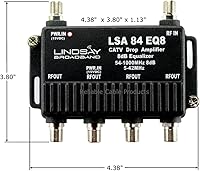
  • Ports: The unit provides one F-type input and four F-type outputs, allowing a single coax source to feed up to four devices simultaneously.
  • Gain Range: Amplifier gain starts at +0dB at 54MHz and rises progressively to +7.5dB at 1000MHz, compensating for the greater signal loss high-frequency channels experience over long cable runs.
  • Equalizer: An integrated equalizer automatically applies higher amplification to higher-frequency signals, keeping output levels balanced across all channels regardless of cable length.
  • Return Path: Passive return path support allows upstream data traffic — such as cable modem communication — to pass back through the amplifier without interruption.
  • Surge Protection: A 6kV ring wave surge design protects internal components against voltage spikes caused by lightning strikes or power disturbances on the coax line.
  • Circuit Protection: PTC self-resetting short-circuit protection automatically recovers from short-circuit events, minimizing downtime without requiring manual intervention or replacement fuses.
  • Weather Seal: A 15 PSI weather-tight seal protects internal components from moisture ingress, making the unit suitable for attic, basement, or outdoor enclosure installation.
  • Temperature Range: The unit operates reliably from -40°C to +60°C (-40°F to +140°F), covering the full range of temperatures found in North American residential attic and exterior installations.
  • Connector Type: All ports use F-type (F59) coaxial connectors, which are the standard fitting used on residential coax cable throughout North America.
  • Dimensions: The amplifier body measures 3.75 x 4.56 x 1.06 inches, compact enough to fit inside a standard wall enclosure or media cabinet without displacing other equipment.
  • Weight: The unit weighs 1.1 pounds, which is light enough for single-person installation in tight spaces such as attic junction boxes or wall-mount enclosures.
  • Compatibility: Compatible with standard cable TV services and OTA antenna systems only; not compatible with satellite systems or installations where an existing amplifier or pre-amplifier is already in the coax run.
  • Standards: The amplifier meets or exceeds all relevant SCTE (Society of Cable Telecommunications Engineers) standards for residential signal distribution equipment.
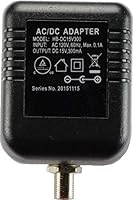
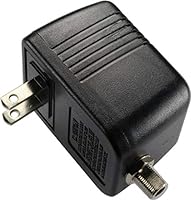
  • Power Supply: Includes a UL Listed, self-resetting PTC-protected power adaptor, which provides safe operation and an additional layer of compliance for permanent home installations.
  • In-Box Contents: Each unit ships with the amplifier, a power supply, and two 75-ohm F59 terminator caps for sealing unused output ports against signal leakage.
  • Manufacturer: Designed and distributed by Lindsay Broadband, a company with a background in broadband and cable infrastructure equipment for both residential and commercial applications.
  • Mounting Type: The unit is freestanding by design but can be secured inside a wall enclosure or utility box using its compact form factor and standard coax connection points.
  • Brand: Sold under the Reliable Cable Products brand, which is the consumer-facing label for Lindsay Broadband hardware distributed through retail channels.

Related Reviews

Reliable Cable RCP-PCT-5UN-KIT 5-Port Cable TV Amplifier
73%
78%
Signal Stability Improvement
41%
Compatibility Clarity
74%
Build Quality
81%
Installation Experience
77%
Active Return Path Performance
More
Oheotoo TX-006 Indoor Outdoor TV Antenna
72%
72%
Signal Reception Quality
43%
Range Accuracy
91%
Ease of Setup
78%
Mounting Versatility
63%
Build Quality
More
Cable Matters 4-Port USB 3.0 KVM Switch
77%
91%
Ease of Setup
78%
Switching Reliability
83%
RF Remote Control
74%
Build Quality
86%
USB 3.0 Transfer Speed
More
Goxis SW218-HD005 Indoor Outdoor TV Antenna
72%
71%
Signal Reception Quality
74%
Amplifier Performance
88%
Ease of Installation
86%
Cable Length & Flexibility
67%
Channel Count
More
Antennas Direct DAX4 4-Output TV Antenna Distribution Amplifier
86%
87%
Signal Quality & Performance
91%
Ease of Installation
85%
Build Quality & Durability
92%
Value for Money
78%
Weather Resistance
More
Oyned AN-3040 Indoor TV Antenna
73%
72%
Signal Reception Quality
43%
Range Claim Accuracy
67%
Signal Booster Performance
91%
Cable Length & Placement Flexibility
88%
Ease of Setup
More
SounDigital 400.4 EVO 4-Channel Car Amplifier
80%
93%
Size-to-Power Ratio
88%
Build Quality
91%
Value for Money
84%
Sound Quality
62%
Heat Management
More
Planet Audio AC2400.4 4-Channel Car Amplifier
84%
95%
Power Output
89%
Sound Clarity
87%
Bass Performance
82%
Ease of Installation
65%
Thermals/Heat Management
More
Planet Audio PL1600.4 4-Channel Car Amplifier
72%
88%
Value for Money
84%
Ease of Installation
74%
Sound Quality
58%
Power Output (Real-World)
61%
Build Quality
More
Crunch PX 1000.4 4-Channel 1000W Amplifier
85%
88%
Sound Quality
85%
Ease of Installation
81%
Build Quality
91%
Power Output
93%
Size & Portability
More

FAQ

No — the Reliable Cable LSA84-EQ8 4-Port TV Signal Amplifier is not compatible with satellite systems. Satellite signals operate on a fundamentally different frequency and distribution model, and using this amplifier in a satellite run will degrade or destroy the signal rather than help it.
That is one of the most important compatibility warnings to understand: this unit should not be used in a line that already has an amplifier or pre-amplifier installed. Stacking two amplifiers in series causes signal overload and actually makes picture quality worse. Remove any existing amp before installing this one.

Probably not on its own. This cable and antenna booster compensates for the signal loss that happens when you split a feed across multiple TVs — it does not boost a genuinely weak incoming signal. If your reception is already poor at a single TV, you need an active pre-amplifier mounted at the antenna first, before this unit enters the equation.

Yes, and this is actually one of the unit's practical strengths. The passive return path allows your modem to communicate upstream through the amplifier normally. Some buyers have reported modest improvements in modem reliability after switching from a passive splitter to this unit, though a guaranteed speed boost is not something you should count on.

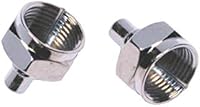
Those are 75-ohm terminator caps, and yes, you should use them on any output port you are not actively connecting to a TV or device. An open, unterminated port creates a small but real signal reflection that bleeds energy out of the other ports. It is a simple step that keeps all your connected TVs performing as well as possible.

The physical installation is straightforward if you are comfortable working with F-connector coax fittings — the screw-on type used on the back of every TV and cable box. If you have never made or connected those fittings before, there is a small learning curve, but nothing that a clear tutorial video and a coax crimper cannot solve. The unit itself has one clearly marked input and four outputs.

Yes, the weather-tight seal and operating temperature range make it genuinely suited for attic installations and exterior enclosures. Just make sure the enclosure has reasonable airflow if you are in a hot climate, as the unit can run warm in poorly ventilated spaces during peak summer heat.

Not at all — just make sure to cap the unused ports with 75-ohm terminators, which are included in the box. Two are provided, which conveniently covers exactly this scenario. Leaving ports open without termination is the only thing to avoid.

The LSA84-EQ8 amplifier includes both a 6kV ring wave surge design and a PTC self-resetting short-circuit breaker. In plain terms: if a surge or short hits, the unit shuts itself down and then automatically resets once the fault clears, rather than blowing a fuse or failing permanently. It is a practical feature for anyone installing this in a home where thunderstorms are a regular occurrence.

That is actually a scenario where this 4-port signal amplifier tends to perform well. The integrated equalizer applies progressively more gain to high-frequency channels — exactly the frequencies that suffer most over longer cable runs. Buyers with runs in the 50–75 foot range consistently report that picture quality on distant TVs improves noticeably compared to using a passive splitter.