Overview

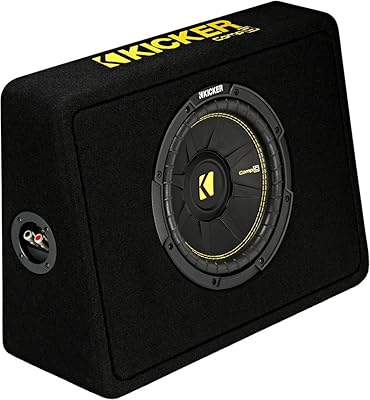
The Kicker CompC 10-inch Dual Voice Coil Subwoofer occupies a smart position in Kicker's CompC lineup — capable enough for serious listeners, yet accessible for anyone taking their first real step away from factory audio. The 10-inch driver is a practical size choice: enough cone area to reproduce bass with conviction, without forcing you into a trunk-consuming enclosure. What sets this Kicker CompC sub apart for a broad audience is its dual 4-ohm voice coil design, which unlocks both 2-ohm and 8-ohm final wiring configurations to suit a wider range of amplifiers. The value proposition here is hard to argue with for a daily-driver upgrade.

Features & Benefits

The dual voice coil is the real story here from an installation standpoint. Wire the two 4-ohm coils in parallel and you present a 2-ohm load to your amp — ideal for squeezing more wattage out of most mono blocks. Wire them in series and you get 8 ohms, which works well with amps that prefer a higher impedance. Either way, the 300W RMS continuous rating means you don't need a massive amp to drive this 10-inch DVC woofer properly. The polypropylene cone stays stiff under pressure, keeping bass tight rather than muddy, and the ribbed Santoprene surround handles long excursions without cracking over time. The vented pole piece is a quiet but important detail — it lets heat escape during longer sessions at volume.

Best For

The CompC 10 shines most for daily commuters and weekend listeners who want real bass without a complicated build. If you already have an amp rated between 300 and 500W RMS, this 10-inch DVC woofer can slot right into your system with minimal friction — the flexible impedance options mean you're unlikely to hit a compatibility wall. It fits well in mid-size sedans, hatchbacks, or SUVs where trunk space matters. Sealed or ported boxes both work, though a ported enclosure tends to pull more output from the driver. First-time Kicker buyers will find this a reasonable entry point that doesn't lock them in — it plays well alongside amplifiers and head units from other brands.

User Feedback

Buyers consistently point to tight, punchy bass as the standout quality — rock tracks stay controlled, hip-hop hits with satisfying weight, and everyday listening gains texture without getting boomy. Build quality earns praise relative to the price, with the surround and cone feeling more substantial than many competitors at this tier. That said, some users note the sub responds differently depending on enclosure type — in a sealed box, output can feel restrained compared to what a ported build unlocks. A handful of installers mention the DVC terminals are clearly labeled and easy to wire, which is a small but appreciated detail. At high sustained volumes, a few reviewers report excursion limits becoming apparent, so matching it with a conservatively tuned amp is the smarter long-term move.

Pros

  • Dual voice coil design gives you genuine wiring flexibility — choose between a 2-ohm or 8-ohm final load to match your amp.
  • 300W RMS power handling pairs naturally with a wide range of affordable mono amplifiers.
  • The 10-inch cone produces tight, punchy bass that suits rock, hip-hop, and everyday listening equally well.
  • Polypropylene cone construction keeps bass response accurate and controlled rather than bloated.
  • Ribbed Santoprene surround holds up well over time without cracking or losing compliance.
  • Works in both sealed and ported enclosures, giving builders more options without buying a second driver.
  • Compact enough for mid-size trunks and hatchback cargo areas where space is at a premium.
  • DVC terminals are clearly labeled, making the wiring process straightforward even for first-time installers.
  • Vented pole piece helps manage heat during longer listening sessions, extending driver lifespan.
  • Strong build quality relative to its price tier — feels more substantial than similarly priced competitors.

Cons

  • Sub-30Hz extension is limited; this 10-inch DVC woofer won't satisfy listeners who prioritize deep, visceral low-end rumble.
  • Output in a sealed enclosure can feel underwhelming compared to a ported build — enclosure choice matters more than it should.
  • A single driver is undersized for large vehicle cabins like full-size SUVs or trucks without adding a second unit.
  • Excursion limits become noticeable when the sub is pushed hard at sustained high volumes over time.
  • Buyers who already own a high-impedance-only amplifier may face compatibility constraints depending on their specific amp model.
  • The limited warranty coverage leaves some buyers wanting more long-term protection for their investment.
  • No grille is included in the package, adding a small but real extra cost if you need to protect the cone.
  • Not a good fit for competition SPL builds where peak output and ultra-low tuning are the primary goals.

Ratings

Our AI rating system analyzed thousands of verified global reviews for the Kicker CompC 10-inch Dual Voice Coil Subwoofer, actively filtering out incentivized, bot-generated, and unverified feedback to surface what real buyers consistently experience. The scores below reflect an honest synthesis of recurring praise and genuine pain points across a wide range of installation types, vehicle sizes, and listening habits. Both the strengths that make this sub a popular entry-level pick and the limitations that frustrate some buyers are transparently represented here.

Bass Quality
83%
For daily commuters and casual enthusiasts, the CompC 10 delivers punchy, well-defined low-end that transforms the listening experience compared to factory speakers. Hip-hop, rock, and pop all benefit noticeably, with bass that feels tight rather than loose or boomy in properly built enclosures.
Listeners who prioritize deep sub-bass below 30Hz will find the output rolls off noticeably at those frequencies, which is a physical limitation of this driver size and tier. It lacks the visceral, chest-thumping depth that larger or higher-grade drivers can achieve at higher volume levels.
Build Quality
81%
19%
Buyers consistently comment that this 10-inch DVC woofer feels more substantial than its price suggests, with a solid basket, well-attached surround, and a polypropylene cone that shows no signs of flex or cheap construction. The Santoprene ribbed surround in particular earns praise for looking and feeling durable right out of the box.
Some users who compared it side-by-side with higher-end drivers noticed the motor structure is less robust than pricier competition, and a handful reported minor quality control inconsistencies across different production batches. It is well-built for its tier, but the materials are not premium.
Value for Money
86%
Most buyers feel the CompC 10 punches above its weight financially, especially when considering it comes from a brand with a genuine reputation in car audio rather than a generic import. Installers frequently recommend it as the most sensible starting point for someone upgrading from factory audio on a realistic budget.
A small subset of buyers who expected competition-level performance were disappointed, feeling the real-world output did not justify the purchase when compared to some aggressively priced alternatives. Value perception drops notably if you end up needing to spend more on a quality enclosure to get the best from it.
Installation Ease
88%
The clearly labeled DVC terminals make wiring straightforward even for first-timers, and the mounting dimensions follow standard sizing that fits most off-the-shelf and custom enclosures without modification. DIYers consistently report a clean, frustration-free install when following Kicker's published box specs.
Buyers who are new to impedance wiring sometimes find the dual voice coil concept confusing before they research it, leading to setup errors that affect amplifier performance. A printed quick-start wiring diagram in the box would prevent most of these problems before they happen.
Wiring Flexibility
89%
The ability to present either a 2-ohm or 8-ohm final load to an amplifier is a genuine practical advantage, allowing this DVC woofer to work with a much broader range of existing amps than a single voice coil sub would. Experienced installers particularly appreciate this when integrating the driver into an existing system without buying a new amplifier.
The flexibility is only useful if the buyer understands how to wire it correctly, and those who connect both coils without understanding series versus parallel wiring risk presenting an incorrect impedance to their amp. The packaging documentation could do a better job of walking beginners through this critical step.
Enclosure Sensitivity
67%
33%
When placed in a well-tuned ported enclosure built to Kicker's published specifications, the CompC 10 produces noticeably more output and a fuller sound that impresses buyers and passengers alike. Users who put the time into building or sourcing a proper box regularly describe the results as exceeding their expectations.
In a sealed box or a poorly designed ported build, the driver sounds noticeably underwhelming — a recurring complaint from buyers who used generic or undersized prefab enclosures. This sub is considerably more sensitive to enclosure quality than some competitors, which adds a hidden variable to the ownership experience.
Thermal Management
77%
23%
The vented pole piece helps dissipate heat during longer listening sessions, and most users who run the sub at moderate to high volumes for extended periods report no issues with overheating or performance degradation during normal daily use.
Buyers who push the driver hard at or near peak power for extended periods have reported the voice coil warming up noticeably, and a few experienced driver failure after sustained aggressive use. Keeping the amplifier gain conservatively set is the best way to protect the driver long-term.
Output at High Volume
69%
31%
At moderate to moderately high volume levels, the CompC 10 handles itself well and maintains composure without audible distortion, which suits the typical daily driving use case this sub is designed for.
When pushed close to its rated limits, excursion becomes visibly large and some buyers report the driver sounding strained or slightly distorted, particularly on bass-heavy tracks with sustained low frequencies. It is not the right choice for listeners who habitually run their system at maximum volume.
Surround Durability
84%
The ribbed Santoprene rubber surround holds up significantly better than foam alternatives in temperature extremes, which matters in vehicles that bake in summer heat or freeze in winter. Buyers in warm climates specifically call this out as a reason they chose the Kicker over cheaper alternatives.
While Santoprene is durable, a small number of long-term owners reported minor surround separation after several years in particularly harsh climates with extreme temperature cycling. It outperforms foam, but it is not indestructible under the most demanding real-world conditions.
Cone Accuracy
78%
22%
The stiff polypropylene cone resists flex under load, which keeps bass notes from sounding mushy or imprecise — a quality that rock and acoustic music listeners particularly appreciate during commutes or longer drives.
At very high excursion levels, some listeners detect a slight loss of definition in the low-mid bass range where the cone begins to flex beyond its optimal operating window. This is most noticeable on complex, layered bass tracks rather than simple single-note tones.
Compatibility
82%
18%
The dual impedance wiring options and standard 10-inch mounting diameter make this driver compatible with a wide variety of amplifiers, head units, and prefabricated enclosures, which reduces the research burden for buyers assembling a system from scratch.
High-impedance-only amplifiers or older factory amplified systems may require additional adapters or signal processors to integrate cleanly, adding cost and complexity that some buyers do not anticipate before purchasing.
Brand Reputation
87%
Kicker carries genuine credibility in the car audio community, and buyers consistently express confidence in the brand's track record for reliability and consistent quality. That reputation translates directly into purchase confidence, especially for first-time buyers choosing between unfamiliar options.
Some forum-savvy buyers point out that Kicker's CompC line sits several rungs below their more respected CVR and Solo-Baric lines, and feel the brand name can create slightly inflated expectations for buyers who assume all Kicker products perform at the same tier.
Warranty & Support
63%
37%
Kicker has an established customer support infrastructure, and buyers who have needed warranty service generally report that the process is more straightforward than dealing with off-brand manufacturers. The brand's longevity in the market provides confidence that support resources will remain available.
The limited warranty terms drew criticism from buyers who felt the coverage period and scope were narrow relative to what they expected from a name-brand product at this price point. A handful of buyers felt the warranty claim process required more documentation than necessary for a straightforward defect.
Low-Frequency Extension
61%
39%
For the majority of mainstream music genres — hip-hop, pop, rock, R&B — the usable frequency range covers everything listeners actually need, and the driver handles those frequencies with enough authority to impress anyone stepping up from factory audio.
Below 30Hz, output falls off sharply, which leaves cinema enthusiasts and dedicated bassheads noticeably unsatisfied. Electronic music with sustained sub-bass content below 35Hz exposes this limitation quickly, and no tuning adjustment or enclosure choice fully compensates for it.
Packaging & Unboxing
72%
28%
The driver arrives well-protected and in good condition for the vast majority of buyers, with adequate padding that survives standard shipping handling without damage to the cone or surround.
Several buyers noted the packaging includes minimal documentation — no grille, no detailed instructions, and sparse guidance on enclosure recommendations — which leaves newer installers doing extra research before they can confidently proceed with the build.

Suitable for:

The Kicker CompC 10-inch Dual Voice Coil Subwoofer is a strong match for everyday drivers who are done tolerating factory audio but aren't ready to commit to a full custom car audio build. If you already own an aftermarket mono amplifier rated somewhere between 300 and 500W RMS, this sub will slot into your setup with minimal friction — the dual 4-ohm voice coil means you can wire it to a 2-ohm or 8-ohm final load depending on what your amp prefers. DIYers building their first enclosure will appreciate the flexibility, as this 10-inch DVC woofer works in both sealed and ported configurations, though a ported box tends to unlock noticeably more output. It's also a practical choice for compact and mid-size vehicles where trunk space is limited, since the 10-inch driver delivers real bass impact without demanding a massive cabinet.
Not suitable for:

Buyers chasing deep, room-shaking sub-bass below 30Hz will likely find the Kicker CompC 10-inch Dual Voice Coil Subwoofer falls short of their expectations — at this tier and driver size, sub-30Hz extension is limited, and no amount of amplifier power fully compensates for that physical reality. Audiophiles building a competition-level SPL setup should look higher up the product ladder, as this sub is tuned for everyday enjoyment rather than maximum pressure output. If you plan to push it at sustained high volume for extended periods, you'll need to be disciplined with your amplifier's gain structure, since excursion limits become apparent when the driver is consistently stressed near its ceiling. This Kicker CompC sub is also not ideal for listeners who want effortless, wall-shaking bass in a large vehicle like a full-size SUV or pickup truck, where a single 10-inch driver is simply undersized for the cabin volume.
Specifications

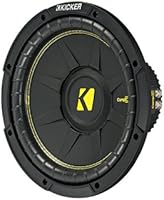
  • Driver Diameter: The cone measures 10 inches across, balancing meaningful bass output with manageable enclosure size requirements.
  • Voice Coil: Dual 4-ohm voice coil configuration allows wiring in parallel for a 2-ohm load or in series for an 8-ohm load.
  • RMS Power: Continuous RMS power handling is rated at 300W, representing the safe, sustained input level for daily use.
  • Peak Power: Peak power handling reaches 600W, reflecting short-burst headroom rather than a recommended continuous operating level.
  • Cone Material: The cone is constructed from stiff polypropylene, which resists flex under load and helps maintain accurate bass reproduction.
  • Surround Material: A ribbed Santoprene rubber surround provides durable, consistent excursion control and resists cracking over time.
  • Pole Piece: The vented pole piece allows heat generated by the voice coil to dissipate more efficiently during extended listening sessions.
  • Impedance Options: Final system impedance options are 2 ohms (parallel) or 8 ohms (series), giving installers flexibility to match a wide range of amplifiers.
  • Dimensions: Overall dimensions are 6.19″ deep by 11.38″ wide by 11.38″ tall, as measured with the mounting flange included.
  • Weight: The driver weighs 9.8 pounds, which is typical for a 10-inch subwoofer with a substantial motor structure at this tier.
  • Mounting Type: Designed exclusively for car mount installation, intended for use inside a custom sealed or ported speaker enclosure.
  • Connectivity: Wired connection only, using standard push-pin or spring-clip terminals on the dual voice coil leads.
  • Audio Driver Type: Dynamic driver technology, which uses a voice coil and magnetic motor to move the cone and generate sound waves.
  • Color: The driver basket and cone are finished in black, which is standard for enclosure-mounted subwoofer installations.
  • Warranty: Kicker provides a limited warranty on this driver; buyers should verify current terms directly with Kicker or their authorized retailer.
  • Manufacturer: Made by Stillwater Designs under the Kicker brand, a US-based company with a long track record in car audio.
  • Model Number: The official model number is 44CWCD104, which can be used to cross-reference compatibility data and enclosure recommendations.
  • Enclosure Type: Compatible with both sealed and ported enclosure builds; Kicker publishes recommended box volumes for each configuration.
  • Frequency Response: Rated frequency response extends to 500Hz on the upper end; a low-pass crossover set between 80–120Hz is recommended in practice.
  • Availability: Listed as not discontinued by the manufacturer as of the most recent product data, indicating ongoing production and parts support.

Related Reviews
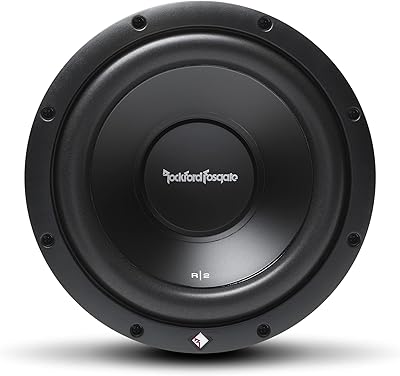
Rockford Fosgate R2D2-10 10-Inch Car Subwoofer
82%
83%
Bass Output Quality
88%
Build Quality
91%
Value for Money
86%
Installation Ease
79%
Amplifier Compatibility
More
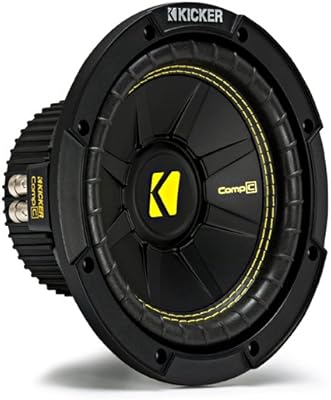
KICKER CWCD84 CompC 8″ Subwoofer Dual Voice Coil 4-Ohm
86%
88%
Bass Performance
91%
Ease of Installation
89%
Wiring Flexibility
86%
Build Quality
84%
Sound Clarity
More
Pyle PLPW6D 6.5-inch Car Subwoofer
73%
88%
Value for Money
74%
Bass Output & Sound Quality
61%
Build Quality
91%
Installation Ease
83%
Amplifier Compatibility & Wiring Flexibility
More
CT Sounds STRATO-10-D2 10 Inch Dual 2 Ohm Car Subwoofer
87%
91%
Bass Performance
89%
Build Quality & Durability
92%
Power Handling
88%
Sound Clarity
83%
Ease of Installation
More
Seventour HR-DTSUB 10″ Car Subwoofer
73%
88%
Value for Money
79%
Bass Output
83%
Install Friendliness
71%
Build Quality
74%
Amplifier Compatibility
More
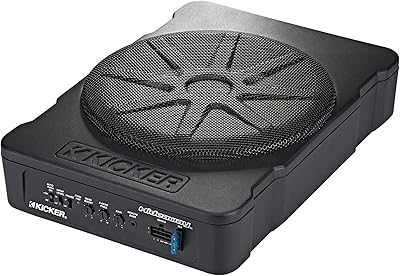
Kicker Hideaway HS10 10-Inch Powered Subwoofer
82%
92%
Build Quality
81%
Bass Output
94%
Installation Ease
88%
Sound Tuning Flexibility
91%
Factory Stereo Compatibility
More
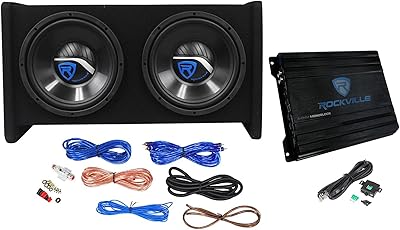
Rockville RV10.2B Dual 10″ Car Subwoofer System
76%
88%
Bass Output
86%
Ease of Installation
84%
Value for Money
71%
Amplifier Performance
67%
Enclosure Build Quality
More
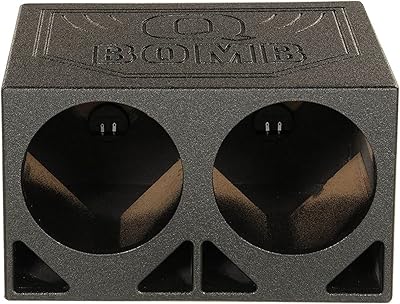
Q Power QBOMB10TB Dual 10-Inch Subwoofer Enclosure
80%
88%
Build Quality
91%
Finish & Appearance
83%
Bass Performance
79%
Ease of Installation
62%
Terminal Quality
More
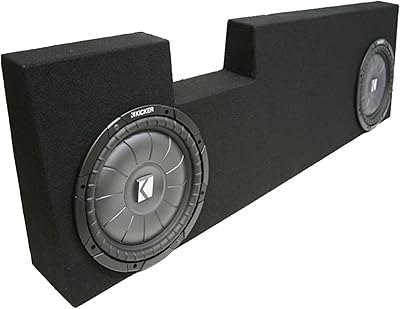
American Sound Connection Kicker Dual 10″ Subwoofer Enclosure for Ford F250
88%
94%
Bass Performance
88%
Ease of Installation
90%
Build Quality
95%
Compatibility with Ford F250
87%
Sound Clarity
More
KICKER 43DC122 Dual 12-Inch Subwoofer Enclosure
76%
88%
Bass Output
71%
Amplifier Compatibility
82%
Installation Experience
54%
Enclosure Size & Fitment
79%
Build Quality
More

FAQ

A dual voice coil subwoofer has two independent coils wound on the same former, each with its own set of terminals. On the Kicker CompC 10-inch Dual Voice Coil Subwoofer, each coil is 4 ohms. Wire them in parallel and your amplifier sees a 2-ohm load, which typically extracts more wattage from a mono amp. Wire them in series and you get 8 ohms, which suits amps that are more stable at higher impedance. It gives you real flexibility rather than locking you into a single wiring option.

A mono block amplifier rated between 250W and 400W RMS into your chosen impedance is the sweet spot for this 10-inch DVC woofer. Matching the amp close to the 300W RMS rating keeps the driver working hard enough to sound its best without pushing it toward thermal stress. Avoid significantly overpowering it — running a 600W RMS amp wide open is a fast way to damage the voice coil.

Both work, but they produce noticeably different results. A sealed enclosure gives you tighter, more controlled bass that works well for rock, metal, and detailed listening. A ported box trades some of that precision for higher overall output, which suits hip-hop and bass-heavy genres where loudness matters more than subtlety. If you want the most volume from a single driver, go ported — just make sure to follow Kicker's recommended tuning specs for the enclosure.

Kicker publishes enclosure specifications on their website under the 44CWCD104 product page. As a general starting point, sealed boxes in the range of 0.65 to 1.0 cubic feet work well, while ported designs typically call for 1.25 to 1.75 cubic feet tuned around 35–40Hz. Always use the manufacturer's published specs rather than guessing, since incorrect box volume noticeably hurts bass quality and can stress the driver.

Honestly, not very well. The CompC 10 is tuned for punchy, impactful bass in the 35–80Hz range, and that is where it sounds its best. Below 30Hz, output drops off, and no amount of amplifier power changes that physical reality. If ultra-deep bass extension is your priority, you'd need to step up to a larger driver or a higher-tier subwoofer with a longer excursion motor.

Yes, and it is a common setup. Two of these 10-inch DVC woofers wired together give you more output and a fuller soundstage in larger vehicles. The most important thing is making sure your amplifier can handle the combined final impedance. Wiring two DVC 4-ohm subs with coils in parallel gives you a 1-ohm final load, which only stable Class D mono amps can handle safely — so check your amp's spec sheet before committing to that configuration.

Kicker typically includes a basic wiring diagram in the packaging, and their website has more detailed resources including box plans and wiring guides. The DVC terminals are clearly labeled, which makes the process straightforward. If this is your first subwoofer install, spending 20 minutes on Kicker's support resources before you start will save you a lot of guesswork.

It is actually one of the better choices for compact vehicles. The 10-inch driver keeps enclosure requirements manageable, and you can build a sealed box that fits neatly in a hatchback cargo area without sacrificing the entire trunk. The bass output from this DVC woofer in a properly built sealed enclosure is more than enough for a smaller cabin.

Kicker uses a ribbed Santoprene surround on this driver, which is a thermoplastic rubber blend known for holding up better than foam in temperature extremes. Cars get extremely hot in summer, and foam surrounds notoriously deteriorate within a few years in those conditions. Santoprene handles heat and UV exposure considerably better, so durability in warm climates is one of the stronger points of this build.

No — this is a passive driver and it requires an external amplifier to function. Head unit preamp outputs cannot power a subwoofer directly; the power levels are far too low and the impedance is incompatible. You will need at minimum a dedicated mono amplifier, a power and ground run to your battery, and a low-pass crossover either built into the amp or set via your head unit.