Overview

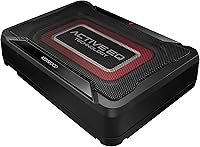
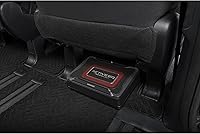
The Kenwood KSC-PSW7EQ Compact Active Subwoofer is Kenwood's answer to a genuine frustration: wanting proper bass in your car without surrendering your boot to a bulky box and a separate amplifier. The die-cast aluminium enclosure measures just 70 mm tall, making genuine under-seat fitment possible in most vehicles. A built-in Class-D amplifier is already inside, so the wiring job is far simpler than a traditional passive setup. It sits in mid-range price territory, meaning buyers reasonably expect it to perform rather than just look good on paper. One thing worth flagging upfront — the listing straddles car audio and home use, but this is fundamentally a 12-volt car subwoofer.
Features & Benefits

The headline figure is 160 watts, but that's peak — real-world continuous output will be noticeably lower, so adjust expectations accordingly. What actually matters is how the 8-inch aluminium cone handles the job, and the answer is: pretty well. The micro-step surround keeps the driver controlled even when you push the volume, meaning bass stays punchy rather than turning woolly. Three Active EQ presets let you shift sonic character between music styles without touching your head unit. The 5-metre wired remote handles volume, crossover frequency, phase, and preset switching — a genuinely useful addition. High-level inputs with auto signal-sensing turn-on make installation straightforward even for complete beginners.

Best For

This Kenwood subwoofer makes the most sense for drivers who want a meaningful bass upgrade but draw the line at ripping out interior panels to fit a traditional box-and-amp combo. If boot space is precious — or you simply dread the wiring hassle — the slim rectangular enclosure and self-contained amplifier solve that problem neatly. The three EQ presets are a genuine advantage for anyone whose playlist jumps between hip-hop and jazz without warning. It could also work beside bookshelf speakers in a secondary audio setup, though you'd need a 12V power supply to pull that off — worth factoring in before committing.

User Feedback

With 65 ratings and a 4.2-out-of-5 average, the KSC-PSW7EQ has a broadly positive early track record — though 65 reviews is a modest sample, so treat the patterns as tentative rather than definitive. Installation ease comes up repeatedly as a highlight, particularly the speaker-level auto turn-on that skips the remote wire step entirely. The wired remote also earns genuine appreciation; adjusting bass from the driver's seat without pulling over is a small but real convenience. On the downside, a handful of buyers flag that the rectangular footprint doesn't fit cleanly under every seat, and a few question whether the actual bass output fully justifies the asking price.

Pros

  • Built-in Class-D amplifier removes the need for a separate amp — one box handles everything.
  • Speaker-level inputs with auto turn-on make installation genuinely beginner-friendly.
  • Slim 70 mm profile fits under most front seats without any interior modification.
  • Wired remote reaches the driver's position and controls volume, crossover, EQ, and phase from one unit.
  • Die-cast aluminium enclosure feels premium and handles cabin heat cycles without flexing or rattling.
  • Three Active EQ presets let you shift bass character quickly to match different music styles.
  • RCA line input ensures compatibility with head units that have dedicated subwoofer pre-outs.
  • The silver aluminium finish looks intentional rather than aftermarket-clunky in most cabin environments.
  • Auto signal-sensing eliminates the need to manually switch the sub on and off with the ignition.

Cons

  • The 160-watt headline figure is peak power — real continuous output is significantly lower and should be the actual benchmark.
  • Rectangular footprint causes genuine fitment problems in smaller cars or seats with uneven undersides.
  • Remote button labelling is small and adjustments feel coarse when trying to fine-tune the crossover frequency precisely.
  • Review count of 65 is too modest to draw confident long-term reliability conclusions.
  • No colour option other than silver, which stands out visually against dark carpeting in many vehicles.
  • The included connection cable is functional but thin — some installers prefer to replace it for a cleaner build.
  • EQ presets are broad and fixed; there is no parametric or app-based fine-tuning for listeners with specific preferences.
  • Bass performance at the lower frequency range can sound slightly strained when pushed near the limits of excursion.

Ratings

The Kenwood KSC-PSW7EQ Compact Active Subwoofer scores below were generated by our AI system after analyzing verified buyer reviews from multiple global markets, with spam, bot-submitted, and incentivized feedback actively filtered out. Based on real ownership experiences, the ratings reflect where this compact active sub genuinely delivers and where it falls short — no gloss applied. Both the recurring praise and the legitimate frustrations are weighted fairly across every category.
Ease of Installation
88%
The speaker-level high inputs with auto signal-sensing turn-on are the standout here — buyers with no prior car audio experience consistently report getting this compact active sub running in under an hour without touching a remote wire. That simplicity is rare at this price point.
A handful of users found the rectangular enclosure awkward to position cleanly under certain bucket seats with uneven undersides. The included mounting brackets help, but they don't solve every vehicle-specific fitment puzzle.
Bass Output & Impact
71%
29%
For a unit this slim, the low-end presence genuinely surprises drivers upgrading from stock speakers. Daily commuters report a satisfying thud on bass-heavy tracks without the muddy, one-note sound that cheaper subs tend to produce at similar volumes.
The 160-watt peak figure is optimistic marketing — real continuous output is considerably more modest, and enthusiasts who expect chest-thumping impact will likely find this sub underwhelming. It adds texture rather than raw power.
Build Quality
83%
The die-cast aluminium enclosure feels genuinely solid and premium in hand — nothing flexes, nothing rattles, and the silver finish holds up well to the heat cycles a car interior regularly throws at electronics. It does not feel like a budget product.
Some buyers note the cable connector points feel slightly less robust than the housing itself, and there are occasional reports of the remote's rubber buttons developing a slightly loose feel after extended daily use.
Remote Control Usability
86%
Five metres of cable gets the remote comfortably to the driver's position in virtually any car. Having crossover frequency, volume, phase reverse, and EQ preset switching all on one controller — without opening the boot — is genuinely convenient on a daily basis.
The remote unit itself is functional rather than refined. The labelling is small, adjustment steps feel slightly coarse when dialling in the crossover precisely, and the cable, while long, is not sleeved or braided so it requires careful routing.
Active EQ Presets
74%
26%
Three genre-tuned presets give listeners a quick way to shift between a punchy setting for hip-hop, a more neutral response for rock, and a lighter touch for acoustic or vocal-heavy music — all without touching the head unit. It is a practical feature for mixed playlists.
The presets are broad strokes, not surgical adjustments. Listeners with specific tuning preferences may find the three options too coarse, and there is no parametric control or app-based fine-tuning to compensate for room or vehicle acoustics.
Value for Money
69%
31%
As an all-in-one solution — subwoofer, amplifier, and remote included — the KSC-PSW7EQ avoids the extra cost of a separate amp and wiring kit that a passive sub would demand. For buyers pricing up a comparable component system, the bundled approach looks reasonably attractive.
Standalone powered subs from competing brands offer comparable or stronger RMS output at a similar or lower price. The Kenwood name and aluminium finish carry some of the cost, which may not matter to buyers purely chasing bass performance per dollar.
Driver & Cone Quality
78%
22%
The aluminium cone resists the flexing that plagues cheaper paper or polypropylene drivers at higher excursion levels, which helps keep bass definition intact when the volume goes up. Kick drum hits and bass guitar lines retain reasonable distinction rather than blending into a single rumble.
At the limits of its excursion the driver can sound slightly strained on very low frequencies below 45 Hz, and some listeners find the aluminium cone character slightly bright or metallic compared to softer composite alternatives at this driver size.
Size & Fitment Versatility
66%
34%
At 280 x 220 x 70 mm the enclosure slides under most front seats without modification, which is the core promise of this category. Drivers of larger vehicles like SUVs and estate cars generally report a straightforward fit with room to spare.
The fixed rectangular shape is a real limitation in smaller cars or vehicles with sculpted seat undersides, seat rail positioning, or significant cable routing channels beneath the floor. A minority of buyers genuinely cannot fit it where intended.
Amplifier Efficiency
81%
19%
The Class-D amplifier runs noticeably cool relative to Class-AB alternatives, which matters in an enclosed under-seat space where heat has nowhere to go. Buyers report no thermal shutdowns even on long summer drives with the system running continuously.
Efficiency gains do not fully offset the gap between the peak wattage claim and real-world output. The amplifier section is competent but not powerful enough to satisfy buyers who later wish they had invested in a more capable separate amplifier.
Signal Input Flexibility
79%
21%
Having both RCA line inputs and high-level speaker inputs on the same unit makes this compact active sub genuinely compatible with almost any head unit on the market, including factory-fitted systems that lack dedicated pre-outs — a meaningful practical advantage.
There is no optical or digital input, and the RCA input is a single stereo pair rather than a dedicated mono sub output on some units. Buyers with more complex source setups may find the input options sufficient but not especially sophisticated.
Noise & Interference Rejection
72%
28%
Most users report a clean, quiet signal with no audible hiss or alternator whine at idle or during driving, which suggests the internal grounding and filtering are reasonably well implemented for a self-contained powered unit.
A smaller number of reviews mention low-level electrical noise becoming audible at higher gain settings, particularly in vehicles with older or more electrically noisy charging systems. Proper grounding of the unit resolves the issue in most cases but requires additional effort.
Packaging & Included Accessories
76%
24%
The box arrives with the remote, a connection cable, and mounting brackets — everything needed to complete a basic installation without an additional shopping trip. The packaging itself is solid enough that transit damage reports are rare.
The connection cable is adequate in length but not particularly heavy-gauge, and some installers prefer to replace it with a thicker run for a cleaner install. A basic instruction sheet is included but a proper illustrated manual would help true beginners.
Aesthetic & Cabin Integration
80%
20%
The brushed silver aluminium finish looks deliberately considered rather than cheap and black like most car audio hardware. In vehicles with lighter or aluminium-trimmed interiors it can actually look intentional rather than bolted-on.
In darker vehicle cabins or against black carpeting the silver housing can stand out visually in a way that undermines the factory-look install some buyers are aiming for. There is no alternative colour option available.
Brand Reliability & Warranty
75%
25%
Kenwood has a long-standing reputation in car audio, and buyers generally trust the brand to deliver on basic reliability. The limited warranty provides a baseline level of purchase confidence for a product that will live in a warm, vibration-prone environment.
The warranty terms are limited in scope and the review pool is still small enough that long-term durability beyond two or three years remains largely untested in the public record. Brand heritage only goes so far as a reliability proxy for a newer model.

Suitable for:

The Kenwood KSC-PSW7EQ Compact Active Subwoofer is built for drivers who want a real bass upgrade over factory speakers without committing to a full car audio overhaul. If your boot is already full, your seat has clearance underneath, and the idea of running separate amplifier wiring sounds like more effort than it is worth, this compact active sub addresses all three frustrations in one box. It is particularly well matched to car audio beginners — the speaker-level inputs with auto signal-sensing turn-on mean you can tap into existing speaker wires and be done, no extra remote wire required. Genre-diverse listeners will also appreciate the three EQ presets on the wired remote, making it easy to dial back the bass for a podcast and push it forward for a bass-heavy playlist without pulling over. Commuters who spend a lot of time in the car and want daily listening to feel noticeably richer than stock audio will likely find the trade-off between output and install simplicity lands squarely in their favour.

Not suitable for:

Buyers chasing serious bass volume or deep sub-30 Hz extension should look elsewhere — the Kenwood KSC-PSW7EQ Compact Active Subwoofer is a convenience-focused product, and its real-world continuous output is considerably more modest than the peak wattage figure implies. Dedicated car audio enthusiasts who already own an amplifier, or who are comfortable building a component system from scratch, will not find value in the all-in-one format and will get more performance per pound from a quality passive sub matched to a proper amp. Drivers with compact cars, heavily sculpted seat undersides, or dense cable routing beneath the floor may also find the fixed rectangular footprint impossible to fit cleanly in the intended under-seat location. Anyone hoping to use this as a permanent home audio subwoofer should be aware it runs on 14.4V DC and requires either a car electrical system or a dedicated 12V power supply — it is not a plug-and-play home audio device despite the dual-market listing. Finally, if long-term durability data matters to your purchasing decision, the review pool is still relatively small and does not yet offer a reliable picture of how this unit ages past the two-year mark.

Specifications

  • Dimensions: The enclosure measures 280 mm wide, 220 mm deep, and 70 mm tall, making genuine under-seat fitment possible in most standard vehicles.
  • Weight: The unit weighs 2.6 kg, which is substantial enough to feel solid but light enough to mount securely with the included brackets.
  • Peak Output: Maximum rated output is 160 watts peak, though real-world continuous RMS output will be considerably lower under typical listening conditions.
  • Driver Size: An 8-inch (200 mm) aluminium cone driver with a micro-step surround handles bass reproduction inside the sealed die-cast aluminium enclosure.
  • Amplifier Class: The built-in amplifier operates in Class-D, which runs efficiently and cool — an important trait for a unit housed in a confined under-seat space.
  • Enclosure Material: The outer housing is die-cast aluminium, providing structural rigidity, effective heat dissipation, and resistance to the vibration a car environment constantly produces.
  • Signal Inputs: Two input types are provided: RCA line-level inputs for head units with pre-outs, and high-level speaker inputs for direct connection to existing speaker wiring.
  • Auto Turn-On: The unit detects an incoming speaker-level signal and powers on automatically, eliminating the need to run a separate remote trigger wire from the head unit.
  • EQ Presets: Three genre-tuned Active EQ presets are selectable directly from the wired remote, allowing quick adjustment between different bass characters without touching the head unit.
  • Remote Cable: The included wired remote connects via a 5-metre cable, long enough to reach the driver's position from under-seat placement in virtually any vehicle.
  • Remote Controls: The remote unit provides independent control over volume level, crossover frequency, EQ preset selection, and a phase reverse switch.
  • Impedance: The unit is rated at 1 ohm impedance, which is specific to the internal amplifier design and is not relevant for external amplifier pairing.
  • Power Supply: The subwoofer runs on 14.4V DC, meaning it is designed to operate directly from a standard 12V vehicle electrical system and requires that supply to function.
  • Finish & Colour: The enclosure has a brushed silver aluminium finish and is available in this single colour only, with no alternative housing options listed.
  • Included Accessories: In the box: one wired cable remote, one connection cable, and a set of mounting brackets for securing the unit beneath a seat.
  • Mounting Type: The subwoofer is designed for under-seat or tabletop placement and ships with brackets to assist in fixed installation within a vehicle.
  • Water Resistance: The unit carries no water resistance rating and should be kept away from moisture; it is designed strictly for indoor or in-vehicle use only.
  • Warranty: Kenwood provides a limited warranty with this unit; buyers should verify the specific duration and terms applicable in their region at point of purchase.

Related Reviews
Pioneer TS-WX140DA
Pioneer TS-WX140DA
78%
88%
Ease of Installation
71%
Bass Output & Performance
91%
EV Compatibility & Power Efficiency
79%
Listening Mode Versatility
83%
Remote Bass Control
More
QSC KS112 Active 12″ Subwoofer
89%
93%
Low-End Impact
96%
Build Durability
84%
Portability
91%
Ease of Load-In
89%
Audio Clarity
More
QSC KS118 Active 18″ Subwoofer
88%
96%
Raw Sound Output
93%
Low-Frequency Extension
94%
Build Durability
67%
Portability & Transport
89%
DSP & Interface Ease
More
Bowers & Wilkins ASW608 8-Inch Subwoofer
81%
91%
Bass Accuracy & Musicality
88%
Build Quality & Finish
93%
Integration with 600 Series Speakers
67%
Output for Room Size
63%
Value for Money
More
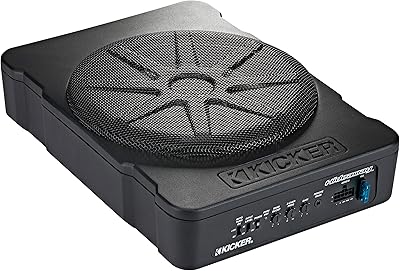
KICKER 46HS10 Hideaway Compact Powered Subwoofer
86%
89%
Bass Performance
92%
Value for Money
94%
Size and Portability
88%
Build Quality
85%
Ease of Setup
More
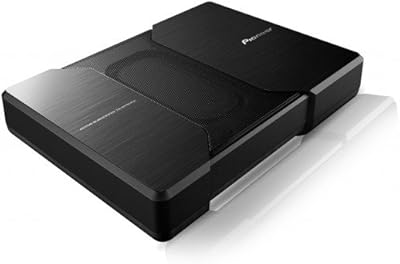
Pioneer TS-WH500A Compact Series Subwoofer
86%
88%
Bass Performance
91%
Ease of Installation
92%
Value for Money
86%
Build Quality
78%
Power Output
More
Rockville APM10D 10″ Active Studio Subwoofer
83%
91%
Bass Performance
89%
Sound Clarity
84%
Build Quality
88%
Connectivity Options
82%
Ease of Setup
More
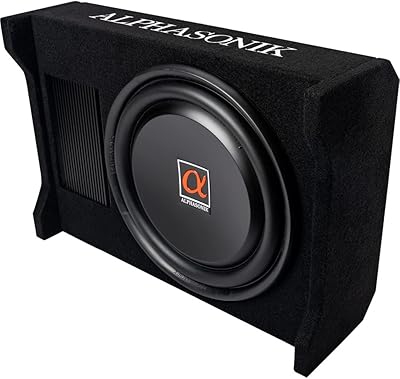
Pioneer TS-WX1010A 10-inch Active Car Subwoofer
78%
88%
Ease of Installation
79%
Bass Quality & Character
83%
Built-in Amplifier Performance
81%
Sound Tuning & Adjustability
76%
Remote Bass Knob Usability
More
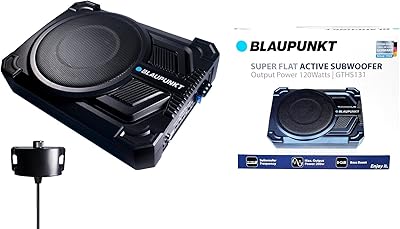
Blaupunkt GTHS131 Under-Seat Active Car Subwoofer
73%
88%
Ease of Installation
93%
Space Efficiency
67%
Bass Output & Depth
74%
Build Quality
71%
Amplifier Performance
More
Cerwin Vega VRAD10 10″ Active Slim Subwoofer
86%
88%
Sound Quality
91%
Bass Performance
85%
Ease of Installation
89%
Build Quality
94%
Compactness/Size
More

FAQ

No, and that is the main point of this unit. The amplifier is built directly into the enclosure, so you connect it to your existing car wiring and you are done. There is nothing extra to buy or mount separately.

You can absolutely connect it to a factory head unit. The high-level speaker inputs let you tap directly into the wires already running to your existing speakers, and the auto signal-sensing will power the sub on and off with your ignition. No aftermarket stereo required.

It fits under most front seats, but the rectangular 280 x 220 x 70 mm footprint is worth measuring against your specific vehicle before buying. Drivers with compact cars, very low seat rails, or heavily sculpted undersides have reported fitment difficulties. Check the clearance carefully — 70 mm of height is the critical figure.

That figure is a peak measurement taken under ideal, momentary conditions — it does not reflect what the unit sustains during normal listening. Real-world continuous output is meaningfully lower. This sub is best understood as a bass enhancement tool rather than a high-power system, and it performs well in that role.

Each preset shapes the bass response to suit a different type of music — one leans toward heavier, more pronounced low-end for bass-heavy genres, one is more neutral and balanced, and one is lighter for acoustic or vocal-led material. You switch between them from the wired remote without needing to touch the head unit.

It is fundamentally a 12V DC product built for vehicle electrical systems. You can use it at home, but you would need a regulated 12V DC power supply capable of handling the current draw — it does not simply plug into a wall socket. For most home audio buyers, a purpose-built home subwoofer is the more practical choice.

Yes, the 5-metre cable is long enough to route from an under-seat position up to the dashboard or centre console area comfortably in almost every car. The controls — volume, crossover, EQ preset, and phase — are all on one small unit, which most users find convenient once it is in place.

The shift is noticeable but not dramatic — think of it as a meaningful nudge in character rather than a complete sound transformation. Going from the heaviest preset to the lightest makes a clear difference in how prominent the sub is in the mix, which is exactly what you want when switching between bass-heavy tracks and something more acoustic.

It is genuinely functional. Aluminium dissipates heat better than plastic housings, which matters for an amplifier running inside a sealed box under a seat. The rigidity also reduces the micro-vibrations that cheaper enclosures can develop over time. The silver finish is a secondary benefit, not the main reason for the material choice.

Measure the clearance height under your target seat — you need at least 70 mm of vertical space. Also check the footprint against the flat area available, since the 280 x 220 mm base requires a reasonably unobstructed surface. If your seat slides on rails that interrupt the floor space, map that out before committing. Taking five minutes to measure properly saves a return shipment.

Where to Buy