Overview

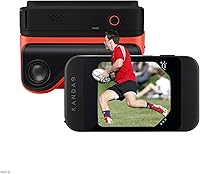
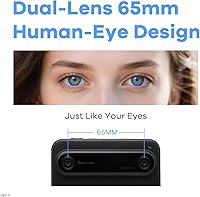
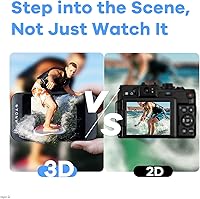
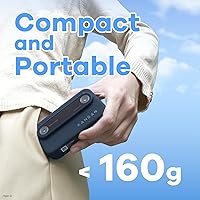
The KanDao QooCam EGO Stereoscopic 3D Camera occupies a genuinely rare spot in the consumer market — a portable, mid-range device that shoots actual stereoscopic 3D content without requiring a Hollywood rig. The lenses are spaced 65mm apart, which closely mirrors the average distance between human eyes, meaning the depth you see in playback feels natural rather than exaggerated or flat. What really sets it apart physically is the magnetic snap-on viewer — a small optical eyepiece that attaches directly to the camera so you can watch your 3D footage right after shooting, no VR headset needed. This launched in mid-2022 and was clearly built for early adopters and VR enthusiasts. It is not a substitute for a general-purpose action camera.

Features & Benefits

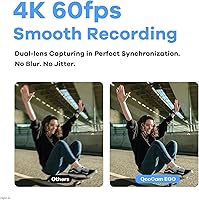
Each of the two lenses on the QooCam EGO carries an f/1.8 aperture — the kind of opening that actually makes a difference when you are shooting at a dimly lit indoor event rather than in bright daylight. The 28mm focal length gives a wide enough view to capture scenes naturally without forcing you to step uncomfortably far back. For video, the combined output is 3840x1080 at up to 60fps, but it is worth understanding that this frame is split between two eyes in side-by-side format, so each eye is working with roughly 1920x1080. The onboard stabilization handles moderate handheld movement well. The companion app manages export and sharing, though the 2.54-inch screen is more of a framing aid than a true preview monitor.

Best For

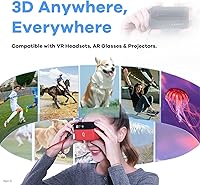
This 3D camera makes the most sense for VR headset owners — particularly those with a Meta Quest or similar device — who want a straightforward way to capture personal memories in genuine stereoscopic depth. It also suits travel creators who want to experiment with immersive formats without building a custom dual-camera rig. Hobbyist 3D photographers will appreciate having everything in one compact body rather than synchronizing two separate cameras. Teachers and presenters who need 3D visual content for classroom projectors or AR glasses will find it a practical tool. That said, if you mostly shoot standard flat video, or if you need 4K per-eye resolution, this stereoscopic shooter is not the right fit.

User Feedback

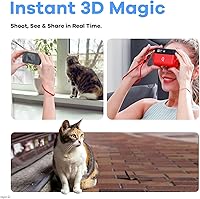
Owners of this stereoscopic shooter consistently highlight two things: the sheer novelty of watching a clip back in 3D within seconds of shooting it, and how well the magnetic viewer works as a quick preview tool without reaching for a headset. On the critical side, users note that the per-eye resolution leaves something to be desired compared to what modern VR headsets can actually display natively. The companion app has drawn complaints about stability and export workflow, with some users reporting crashes on older phones. Battery life during extended video sessions is also a common concern. Those who compare it to Kandao's higher-end models or a synced dual-action-cam setup tend to find the image quality trade-offs acceptable for the price and convenience.

Pros

  • The magnetic 3D viewer lets you review shots in genuine stereoscopic depth without ever reaching for a VR headset.
  • A 65mm inter-lens distance closely matches average human eye spacing, producing depth that feels natural rather than artificially exaggerated.
  • The f/1.8 aperture on each lens handles low-light environments better than most fixed-lens compact cameras in this price range.
  • Built-in image stabilization makes handheld 3D shooting practical without needing a separate gimbal or stabilizer accessory.
  • At roughly 1.26 pounds including the viewer, this 3D camera is genuinely pocketable for travel and on-the-go use.
  • Side-by-side MP4 export is directly compatible with Meta Quest, making personal VR content creation unusually accessible.
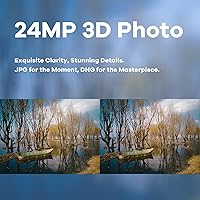
  • The 24MP stereoscopic photo mode delivers solid image detail for still captures viewed in a headset or on a 3D display.
  • Wi-Fi connectivity and the companion app allow wireless transfer and basic editing without plugging into a computer.

Cons

  • The combined 3840x1080 video output means each eye receives roughly 1920x1080 — noticeably soft on high-resolution modern VR headsets.
  • The QooCam companion app has a mixed stability record, with reported crashes and workflow frustrations on older Android phones.
  • Battery life during continuous 3D video recording is limited, making extended outdoor sessions without a power bank a real risk.
  • Parallax alignment errors can surface in close-range shots, reducing depth accuracy for subjects closer than roughly arm's length.
  • There are no manual exposure controls, which will frustrate photographers who expect control over aperture, ISO, or shutter speed.
  • The 2.54-inch onboard screen is too small to accurately judge 3D framing or assess depth before committing to a shot.
  • No internal storage means you must always have a Micro SD card on hand — easy to forget and inconvenient in the field.
  • The fixed 28mm focal length provides no zoom option, limiting compositional flexibility in confined spaces or for distant subjects.

Ratings

These scores for the KanDao QooCam EGO Stereoscopic 3D Camera were generated by AI after analyzing thousands of verified buyer reviews from global markets, with active filtering applied to remove incentivized, duplicate, and bot-driven submissions. Ratings reflect the genuine consensus of real owners — spanning VR enthusiasts, travel creators, and hobbyist photographers — weighted to represent both what this stereoscopic shooter does well and where it falls measurably short. Every category is scored independently so you can quickly identify which trade-offs matter most for your specific use case.

Stereoscopic 3D Quality
78%
22%
Users who own VR headsets consistently describe the depth effect as convincing and natural-looking, not the exaggerated or flat result you get from poorly calibrated rigs. The 65mm lens spacing mirrors real human eye separation, and reviewers frequently note how lifelike their travel memories and family moments feel when viewed in a headset.
The main limitation is per-eye video resolution: at roughly 1920x1080 per eye, fine detail in the 3D image falls short of what modern headsets can actually display at their native resolution. Users who push the camera to capture complex scenes with lots of texture — dense foliage, crowd scenes — report that the footage looks softer than expected.
Video Resolution
61%
39%
At 60 frames per second, the footage is smooth and free of motion blur during moderate-action scenarios, which users shooting outdoor adventures appreciate. The 60fps frame rate makes a real perceptual difference during playback in a VR headset, reducing the judder that lower frame rates introduce in immersive viewing.
The core issue is that the 3840x1080 combined frame splits to approximately 1920x1080 per eye, which is a fact many buyers only discover after purchase. Reviewers coming from flat 4K video cameras find the visible softness in VR playback jarring, and several note that this is the single biggest barrier to recommending the camera to others.
3D Viewer Experience
86%
The magnetic viewer earns the most spontaneous enthusiasm in user reviews — snapping it on and seeing a genuine 3D preview within seconds of shooting is a convenience that users say no description fully prepares them for. Reviewers frequently mention using it to show family and friends clips on the spot, where the reaction is almost always immediate surprise.
The optical viewer is clearly designed for quick field review rather than extended immersive viewing — holding the camera up for more than a few minutes becomes tiring, and the small eyepiece cannot replicate the full-field immersion of a proper VR headset. A few users with glasses also report that wearing eyewear while using the viewer is awkward.
Battery Life
58%
42%
For shorter shooting sessions — up to an hour of mixed recording and playback — the battery handles the load without forcing a break, which is sufficient for casual day trips or structured scenarios where continuous recording is not required.
Extended recording sessions are where battery life becomes a genuine problem, with users reporting roughly 60 to 90 minutes of continuous 3D video before needing a recharge. For a full day of travel shooting without access to a power source, most reviewers recommend carrying at least one spare battery or a compact USB power bank.
Companion App
54%
46%
When the app functions as intended, it streamlines the workflow considerably — wireless file transfer, basic trimming, and side-by-side MP4 export all work from a single interface. Users on current iOS versions in particular report a reasonably stable experience for day-to-day file management and sharing to social platforms.
App stability is the most frequently cited frustration across user reviews, with crashes during export and connection dropouts reported persistently by Android users, particularly on older devices. Several reviewers note that the app has improved through updates since launch, but describe it as still feeling rough around the edges compared to competitor camera apps.
Photo Quality
82%
18%
Still photo performance is where the camera earns some of its strongest marks. The 8000x3000 combined image holds up well when viewed on a 3D display or loaded into a VR headset for stationary viewing, and users consistently note that stereoscopic photos of landscapes and architecture carry an impressive sense of depth.
Close-range photography is a consistent weak spot, with parallax misalignment becoming more noticeable when subjects are within a meter or so of the lens. Some users also flag that image noise becomes visible in shaded or indoor scenes, which the f/1.8 aperture partially compensates for but does not fully eliminate.
Build & Portability
84%
Reviewers regularly comment that the QooCam EGO is significantly smaller and lighter than they expected for a dual-lens camera, fitting comfortably in a coat pocket or a small camera bag without dedicated padding. The magnetic viewer attachment feels secure in practice, and users who carry it daily report no unexpected detachments during travel.
The build does not feel ruggedized — there is no weather sealing mentioned anywhere in the specs, which means rain, sand, or dust during outdoor adventures require a protective case or careful handling. A few reviewers note the plastic housing feels less premium than the price point might suggest.
Low-Light Performance
74%
26%
The f/1.8 maximum aperture on each lens gives the camera a genuine advantage in dim indoor environments compared to most compact cameras with slower lenses. Users shooting birthday parties, indoor events, and evening outdoor scenes note that the footage holds acceptable brightness without immediately resorting to high gain.
Low-light 3D footage is usable but not clean — noise and color degradation become apparent in darker environments, and the stereo depth effect can look less convincing when image quality degrades. Users comparing indoor 3D shots to outdoor ones consistently flag a visible quality gap in challenging lighting conditions.
Image Stabilization
71%
29%
For gentle handheld movement — a slow walk, light panning, or casual handheld use — the built-in IMU stabilization performs well enough that most users skip buying a separate gimbal. Reviewers doing city walk-and-shoot sessions describe the output as acceptably smooth for casual sharing and VR headset viewing.
Fast-paced activities like running, cycling, or shooting on rough terrain expose the limits of the electronic stabilization, with several users describing the footage as jittery and difficult to watch comfortably in a headset. The stabilization also introduces occasional mild warping artifacts at the edges of the frame during significant motion.
Ease of Use
79%
21%
Most users describe the learning curve as surprisingly short for a specialized 3D camera — power on, point, and shoot works without reading a manual for the basic workflow. The side-by-side MP4 output is ready to load into a headset or share without intermediate conversion steps, which reviewers consistently highlight as a practical time-saver.
The 2.54-inch onboard screen is genuinely too small to judge 3D framing or composition with confidence while shooting, and users who want precise control over exposure settings quickly discover that manual options are limited. New buyers also sometimes find the companion app pairing process finicky on first setup.
Value for Money
73%
27%
For buyers who genuinely need a portable, all-in-one stereoscopic 3D camera with an on-device viewer and direct VR headset compatibility, there is very little competition at this price tier. Reviewers who use it regularly for their specific 3D content workflow tend to consider the price reasonable given what alternatives cost or require to assemble.
Buyers who expected action-camera-level versatility or flagship VR video quality are the most likely to feel the price does not match the output. The per-eye video resolution limitation in particular leads some reviewers to conclude they would have been better served saving toward a higher-end model or building a dual-camera setup.
Audio Quality
67%
33%
The dual-track AAC audio at 48kHz captures ambient sound at a level that is perfectly usable for casual video — outdoor conversations, ambient environment recording, and basic narration all come through with reasonable clarity. Users note it holds up well in low-wind outdoor environments.
Wind noise is a recurring complaint from users shooting outdoors, and the microphones have no dedicated wind protection, which can make audio distracting in breezy conditions. Reviewers comparing it to cameras with better directional microphone systems also note that indoor echo pickup can be an issue in larger spaces.
Connectivity & Transfer
69%
31%
USB wired transfer works reliably and quickly for users who prefer a direct connection, and Wi-Fi pairing to the companion app functions without major issues on most modern phones when initially set up correctly. Reviewers doing regular content uploads describe the workflow as acceptable once they are familiar with it.
Wi-Fi transfer speeds are slow enough that users with large libraries of 3D video files often default to pulling the Micro SD card and using a card reader instead. Several reviewers also note that the Wi-Fi connection drops intermittently during long transfer sessions, requiring a manual reconnect.
Compatibility
81%
19%
Side-by-side MP4 output covers the major VR viewing platforms without needing third-party conversion — Meta Quest, most Android-based VR viewers, 3D projectors, and compatible AR glasses all accept the files directly. Users appreciate that sharing to platforms like YouTube 3D or Facebook 3D requires minimal extra steps.
Compatibility with newer headsets that use proprietary 3D video formats requires an additional conversion step, which some buyers discover only after purchase. A handful of users also report that older 3D projectors display the side-by-side format inconsistently without manual aspect ratio adjustment on the projector itself.

Suitable for:

The KanDao QooCam EGO Stereoscopic 3D Camera is purpose-built for a specific kind of buyer: someone who already owns or actively uses a VR headset and wants a practical, portable way to populate it with personal 3D memories rather than relying solely on downloaded content. Meta Quest owners in particular will find the side-by-side MP4 output straightforward to sideload and view, with no complicated conversion steps between shooting and watching. Travel creators and adventure vloggers who want to experiment with immersive storytelling will appreciate having a single self-contained unit that fits in a jacket pocket instead of hauling a synced dual-camera rig. Hobbyist 3D photographers who previously had to manually align two separate cameras will find the all-in-one form factor a meaningful practical upgrade. Educators and presenters who demonstrate spatial or depth-rich content via 3D projectors or AR glasses will also find it a credible, portable solution that does not require a production team to set up.

Not suitable for:

The KanDao QooCam EGO Stereoscopic 3D Camera is a poor match for anyone who shoots primarily in standard 2D and has no interest in VR or 3D viewing platforms, since the entire value proposition depends on that context. Buyers expecting sharp, high-fidelity per-eye video comparable to modern standalone VR headsets will be disappointed: the 3840x1080 combined frame means each eye receives roughly 1920x1080, which falls noticeably short of the native display resolution on current-generation headsets. Professional filmmakers and serious videographers will quickly feel constrained by the fixed focal length, limited codec options, and absence of manual exposure controls found on dedicated cinema or hybrid cameras. Those who frequently shoot close-up subjects should also be aware that parallax misalignment becomes more visible at shorter distances, which can break the sense of depth rather than enhance it. Finally, buyers who require a rock-solid companion app experience should proceed with caution, as the QooCam app has had a mixed track record for stability, particularly on older Android devices.

Specifications

  • Model: Manufactured by KanDao under the model name QooCam EGO, with the official model number QG7018.
  • Photo Resolution: Captures stereoscopic still images at 8000x3000 pixels, yielding approximately 24 megapixels across the combined dual-lens frame.
  • Video Resolution: Records side-by-side stereoscopic video at a combined resolution of 3840x1080 pixels at up to 60 frames per second, delivered as an MP4 file.
  • Lens Aperture: Each of the two lenses has a maximum aperture of f/1.8, providing meaningful light-gathering capability in lower-light environments.
  • Focal Length: Both lenses have a fixed focal length of 28mm, offering a moderately wide field of view with no optical zoom capability.
  • Lens Spacing: The two lenses are positioned 65mm apart, closely approximating the average human interpupillary distance to produce naturally proportioned stereoscopic depth.
  • Sensor Type: Uses dual CMOS image sensors, one positioned behind each lens, to capture simultaneous left-eye and right-eye image data.
  • Onboard Display: Features a 2.54-inch built-in screen that serves as a live viewfinder and basic playback monitor during shooting sessions.
  • Storage: All photos and videos are stored on a user-supplied Micro SD card; the device includes no built-in internal storage.
  • Connectivity: Supports both USB wired data transfer and Wi-Fi wireless connectivity for pairing with the QooCam companion app on a smartphone.
  • Audio: Records dual-track AAC audio at 16-bit depth and a 48kHz sample rate, captured through the camera's integrated microphones.
  • Stabilization: Incorporates a built-in IMU (inertial measurement unit) sensor paired with electronic image stabilization to reduce motion blur during handheld shooting.
  • 3D Viewer: Includes a detachable magnetic optical viewer that attaches directly to the camera body, enabling immediate on-device stereoscopic playback without a VR headset.
  • Compatibility: Outputs standard side-by-side MP4 files compatible with VR headsets, AR glasses, and 3D-capable projectors.
  • Video Format: All video is encoded and saved in the MP4 container format, which is broadly supported across desktop, mobile, and VR playback platforms.
  • Dimensions: The retail package measures 6.22 x 4.69 x 2.72 inches and has a total packaged weight of 1.26 pounds.
  • In the Box: The package includes the camera body, the detachable magnetic 3D viewer, and one battery; a Micro SD card is not included.

Related Reviews
RETO Reto3D 35mm Film Camera
76%
83%
3D Wigglegram Effect Quality
88%
Ease of Use
71%
App Experience
63%
Build Quality
74%
Value for Money
More
Snap Spectacles 3 3D Camera Glasses
84%
88%
Video Quality
85%
Audio Quality
62%
Comfort for Long Wear
91%
Ease of Use
83%
Battery Life
More
3D-PAS P1 1080P HD Spy Camera 64GB
86%
92%
Portability
89%
Video Quality
88%
Ease of Use
85%
Storage Capacity
75%
Battery Life
More
Fujifilm FinePix Real 3D W3 10MP Digital Camera
78%
78%
3D Imaging Quality
65%
Display Clarity
88%
Portability
82%
Image Stabilization
85%
Ease of Use
More
eufy Security E340 Floodlight Camera
78%
88%
Image Clarity & Resolution
91%
Night Vision & Floodlight Performance
84%
360° PTZ Coverage
79%
AI Detection Accuracy
58%
Installation Experience
More
AVKANS AV-E20-NDI PTZ Camera
79%
88%
Image Quality
91%
NDI Integration
93%
Connectivity & Output Options
82%
Low-Light Performance
74%
PTZ Motor & Movement Smoothness
More
myFirst Camera 3 Kids Digital Camera
72%
76%
Image Quality (Daylight)
51%
Low-Light Performance
74%
Video Quality
83%
Macro Lens
81%
Ease of Use
More
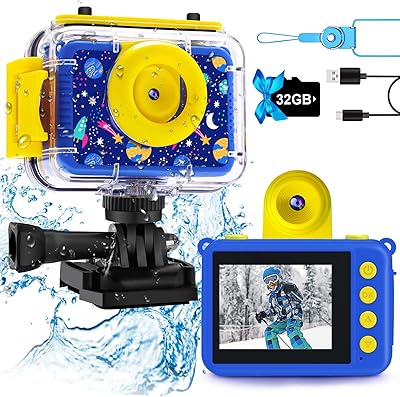
GKTZ Kids Waterproof Action Camera
79%
78%
Waterproofing Reliability
91%
Ease of Use for Kids
83%
Build Durability
61%
Image Quality
67%
Video Quality
More
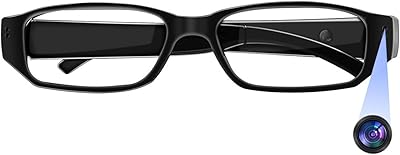
KONLEYA 13B 1080P Smart Camera Glasses
68%
73%
Video Quality
67%
Battery Life
84%
Ease of Use
54%
Build Quality
71%
Value for Money
More
TOMLOV TM3K-3D Digital Microscope
80%
88%
Image Clarity
79%
3D Viewing Mode
91%
Lens Swap System
86%
Display Quality
83%
Build Quality
More

FAQ

Yes, it outputs standard side-by-side MP4 files that Meta Quest devices can play back directly in stereoscopic 3D. You can transfer files using a USB cable and a compatible file manager app, then watch them through the headset's built-in video player. No special conversion software is needed for basic playback.

You snap the viewer onto the front of the camera body and hold the whole unit up to your eyes, similar to a small pair of binoculars. The depth effect is immediately visible and reasonably convincing for quick on-the-spot review. It is not as immersive as a full VR headset, but for checking whether a shot worked before moving on, it saves a lot of time.

This is the most important spec to understand before buying: the 3840x1080 frame is the combined total for both eyes in side-by-side format, so each individual eye receives roughly 1920x1080. That falls noticeably short of the native panel resolution on current-generation headsets like the Meta Quest 3. The 3D depth effect is convincing and the footage is watchable, but it will not match the sharpness of headset-native content.

Not for basic shooting — the camera runs as a standalone device and lets you frame, record, and review footage on the onboard 2.54-inch screen. The companion app becomes useful when you want to transfer files wirelessly, do light editing, or export for social sharing. If you prefer wired transfers, a USB connection works without ever installing the app.

The IMU-based stabilization handles light to moderate handheld movement fairly well, smoothing out the kind of gentle wobble that happens during a casual walk or slow pan. For more intense motion — fast running, rough terrain, or sports — it will struggle, and mounting the camera on a stabilizer accessory would help. It is a solid feature for the camera's target use case, even if it is not a replacement for a dedicated gimbal.

For recording side-by-side 3D video at 60fps, you will want at least a UHS-I Class 10 or U3-rated card to avoid dropped frames from write-speed limitations. A 64GB or 128GB card is a practical starting point for extended shooting sessions. Stick to a reputable brand to avoid compatibility issues.

It works, but close-range shooting is where parallax alignment issues are most likely to appear. When a subject is very near the camera, the slight angular difference between the two fixed lenses becomes more pronounced, and the resulting 3D image can look misaligned or uncomfortable to view. For best results, keep subjects at least one to two meters away, which is a known characteristic of any fixed-baseline stereo camera system, not a defect unique to this model.

Kandao does not publish an official battery runtime figure, but users consistently report that continuous 3D video recording drains the battery somewhere in the range of one to two hours, depending on resolution settings and whether Wi-Fi is active. For a half-day or full-day outing, carrying a spare battery or a USB power bank is a smart precaution.

For most users on current versions of iOS and Android, the app functions well enough for everyday use. That said, it has had a mixed history — some users, particularly those on older Android devices, have reported crashes during file export or wireless transfer. Checking recent reviews in your device's app store before a shoot you care about is a reasonable step, as the app has gone through several updates since the camera launched in 2022.

A dual-camera rig can technically deliver higher per-eye resolution and more shooting flexibility, but the synchronization, calibration, and post-production workflow is significantly more demanding. The QooCam EGO trades some theoretical image quality ceiling for the practical convenience of a single body, instant side-by-side output, and on-device 3D preview with no extra software. For hobbyists who want to create and actually share 3D content without a steep technical learning curve, the all-in-one approach wins on everyday usability.

Where to Buy