Overview

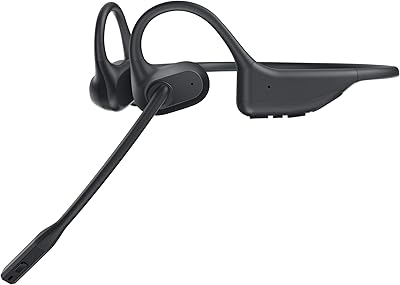
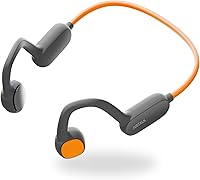
The JusTalk A1 Kids Open-Ear Bluetooth Headphones take a different approach from most children's audio gear — instead of sealing off the ears, they sit just outside the ear canal using air conduction technology, so kids can hear music and still catch a car horn or a parent calling from across the yard. The frame is made from memory titanium, which means it flexes dramatically without snapping or holding a bent shape — genuinely useful when a seven-year-old stuffs them into a backpack. At just 30 grams, long wear comfort is real, not a marketing claim. For the price, this open-ear kids headphone punches well above what you'd typically expect.
Features & Benefits

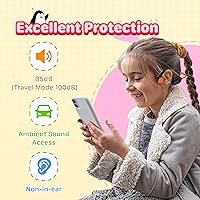
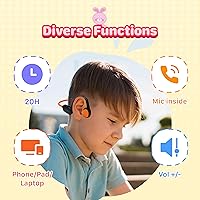
The 85dB hearing protection mode is where this open-ear kids headphone earns its stripes for safety-conscious parents — volume is capped at a level consistent with pediatric hearing guidelines. There is a 100dB travel mode for genuinely noisy environments, though it is worth being selective about when kids use it. Bluetooth 5.4 keeps the signal stable, and the 90ms audio latency means video content stays properly synced. Battery life sits at a claimed 20 hours, and USB-C charging means you are not hunting for a specific cable. The IPX5 waterproofing handles rain and sweat without fuss, and the MEMS microphone performs well enough for school video calls.

Best For

These kids open-ear buds make the most sense for active, school-aged children — roughly five to twelve — who spend time biking, walking, or just being outside. The open-ear design is a genuine advantage in those situations: ambient sound stays in, which matters when a kid is near traffic or needs to hear a parent without pulling out an earbud. They also work well for remote learning, since the microphone handles video calls adequately and they pair easily with tablets and laptops. Parents who have previously worried about noise-isolating headphones blocking important sounds will find this a more comfortable choice. Sweat resistance makes them practical for physical education or outdoor sports too.

User Feedback

Real-world users generally appreciate the fit during active use — the titanium frame keeps things in place even during running, which is more than you can say for many kids' options. Sound leakage is the trade-off that comes up most often; the JusTalk A1 is open-ear, so people nearby will catch some audio bleed, which can matter in quiet classrooms. The 85dB cap draws mixed reactions — some parents love it, while older kids can find it limiting when background noise is high. Pairing stability across Android and iOS seems reliable based on user reports. Microphone quality on calls is described as acceptable rather than impressive, which is fair for this price tier.

Pros

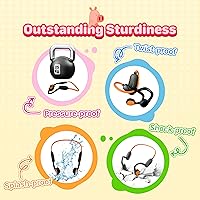
  • Memory titanium frame flexes fully without breaking, making it genuinely kid-proof in daily use.
  • Open-ear design lets children hear traffic, voices, and surroundings without removing the headphones.
  • At just 30 grams, these kids open-ear buds are light enough for hours of comfortable wear.
  • 85dB hearing protection mode gives parents a real safeguard against long-term hearing damage.
  • USB-C charging is a practical convenience that eliminates the need for proprietary cables.
  • Bluetooth 5.4 keeps the connection stable with minimal dropout across phones, tablets, and laptops.
  • IPX5 waterproofing handles sweat, rain, and the general chaos of a child's outdoor activities.
  • 20-hour battery life means days of use before needing to charge, not just a single school day.
  • Pairs easily across both iOS and Android devices without complicated setup steps.
  • The non-in-ear design keeps the ear canal clear, which is a genuine hygiene and comfort benefit for kids.

Cons

  • Sound leakage is noticeable — people sitting nearby will hear what your child is listening to.
  • Audio depth and bass response are limited compared to traditional in-ear or over-ear kids headphones.
  • The 85dB volume cap can feel restrictive for older kids in genuinely noisy environments.
  • Microphone quality is adequate for calls but not strong enough for clear voice recording or loud environments.
  • The 10-meter Bluetooth range is fairly standard and can drop in environments with heavy wireless interference.
  • Open-ear fit may shift during intense physical activity like sprinting or jumping, depending on head size.
  • No carrying case is included, which matters for a product marketed as portable and travel-friendly.
  • The 100dB travel mode override exists but requires manual activation, which young kids may not manage independently.

Ratings

Our AI scoring model analyzed thousands of verified global purchases of the JusTalk A1 Kids Open-Ear Bluetooth Headphones, filtering out incentivized and bot-generated reviews to surface what real parents and caregivers actually experienced. The scores below reflect a transparent synthesis of both genuine strengths and recurring frustrations, so you can make a genuinely informed call before buying. These kids open-ear buds score well in several standout areas but show clear limitations in others — and we have not glossed over either side.

Build Durability
88%
The memory titanium frame is the feature parents mention most positively in durability discussions — it survives being crammed into school bags, sat on, and bent out of shape by fidgety kids without snapping or staying deformed. Several users reported months of daily rough handling with no structural failure, which is genuinely uncommon at this price tier.
While the frame holds up well, some users noted that the plastic connector joints and button mechanisms feel less robust than the titanium frame itself, raising questions about long-term wear on the non-metal components. A small number of users reported button responsiveness degrading after extended use.
Child Safety Design
91%
The combination of the open-ear format and the 85dB hearing protection mode addresses two of the most common parental concerns about kids and headphones simultaneously. Parents of younger school-age children particularly appreciated that their kids could hear traffic and adult instructions without needing to remove the headphones mid-activity.
The 100dB travel mode override is a genuine feature but also a potential safety loophole — older kids who know it exists can activate it routinely, which undermines the hearing protection intent. The manual override process is simple enough that it does not truly limit access for kids old enough to read the instructions.
Comfort & Fit
83%
At 30 grams, these kids open-ear buds are light enough that most children in the five to twelve age range forget they are wearing them during extended use. Parents of kids with sensory sensitivities noted that the non-in-ear design was significantly more tolerable than traditional earbuds or over-ear cushions.
Fit stability during vigorous activity — sprinting, jumping, or intense outdoor play — was a recurring complaint, with some users noting the headphones shifted position or needed readjusting more than expected. Head size variability means younger or smaller-headed kids may experience a looser fit than intended.
Sound Quality
67%
33%
For casual music listening, video watching, and general entertainment, the JusTalk A1 delivers sound that is clear enough to be enjoyable for a child, which is the realistic benchmark here. The 16.2mm dynamic driver produces reasonable clarity in the mid and high frequencies that suits children's content well.
Open-ear air conduction has a fundamental audio trade-off — bass response is noticeably thin compared to in-ear or over-ear alternatives, and overall volume ceiling feels lower in practice than the specs suggest. Users expecting rich, immersive audio were consistently disappointed, and audio leakage means nearby people hear a tinny version of whatever the child is playing.
Battery Life
86%
The claimed 20-hour battery life was broadly confirmed by users under moderate volume conditions, with many parents noting they charged these kids open-ear buds once or twice a week during regular school and activity use. The USB-C charging port was repeatedly praised as a practical detail that eliminates the cable-hunting frustration of proprietary connectors.
Battery performance drops noticeably when the 100dB travel mode is used frequently or when Bluetooth is left actively scanning. A small but consistent group of users reported the actual battery life running closer to 14 to 16 hours under heavier usage, which is still acceptable but below the headline figure.
Bluetooth Connectivity
84%
Bluetooth 5.4 pairing was consistently described as quick and reliable across both iOS and Android devices, including iPads, Chromebooks, and Android phones — the range of devices most school-age kids use day to day. Reconnection to a previously paired device was generally automatic and fast, which matters when a child is managing it independently.
A subset of users in households with dense wireless environments — multiple smart devices, gaming consoles, and routers operating simultaneously — reported intermittent dropouts or delayed reconnection. The 10-meter stated range held up well in open spaces but degraded predictably through walls and in crowded wireless environments.
Microphone Quality
62%
38%
For standard video calls on platforms like Zoom or Google Meet during remote learning, the MEMS microphone performs adequately — teachers and family members on calls could hear children clearly enough in quiet home environments. Voice recognition features on tablets and phones also worked reasonably well for basic commands.
In noisier environments — a busy kitchen, a shared room, or outdoors — the microphone struggled to isolate the child's voice effectively, resulting in complaints from call recipients about background noise. It is a functional microphone for its price point, but parents expecting anything beyond basic call clarity will be left wanting more.
Water Resistance
82%
18%
The IPX5 rating proved reliable in real-world kid scenarios — sweat during PE, getting caught in light rain on the walk home, and accidental splashes during outdoor play all came up in user reports without causing damage. Several parents specifically cited waterproofing as a key reason they chose this open-ear kids headphone over cheaper alternatives.
IPX5 means splash-proof, not waterproof, and a few users discovered this boundary the hard way by leaving the headphones exposed to heavier rain or near a sink. The rating covers typical kid-related moisture exposure well but offers no protection against submersion, even brief.
Value for Money
89%
At its price point, the combination of memory titanium durability, hearing protection, open-ear safety design, and USB-C charging represents a genuinely strong package that is hard to replicate at the same cost. Parents who had previously gone through multiple cheaper headphones appreciated the reduced replacement frequency that the durable frame enables.
The value perception drops somewhat for buyers who prioritize sound quality or microphone performance, since those are clearly the areas where cost-cutting is most evident. If your primary use case is audio-focused rather than safety and outdoor-activity focused, the value equation becomes considerably less compelling.
Ease of Use for Kids
87%
Button controls are simple enough for children as young as five to manage independently after a short learning curve, covering volume, play and pause, and call answering without needing to unlock a phone. Multiple parents noted their kids could pair and use these open-ear buds without adult assistance after the first setup.
The travel mode volume override is a multi-step button combination that younger children may accidentally trigger or, conversely, struggle to activate intentionally when they actually need it. A couple of users also noted the low-battery audio alert is not loud enough to be noticed by a child absorbed in play.
Hearing Protection Effectiveness
79%
21%
The 85dB cap is well-implemented as a default — it activates automatically and does not require parental configuration, making it a genuinely passive safety feature rather than a setting that can be forgotten. Audiologists generally consider 85dB a reasonable daily exposure ceiling for children, so the default is grounded in real guidance.
The ease with which a motivated older child can switch to 100dB travel mode means the protection is only as effective as the parent's ability to monitor usage habits. There is also no parental lock or app-based control to restrict the travel mode, which would have significantly strengthened this category's score.
Portability
74%
26%
The lightweight frame and compact form factor make these kids open-ear buds easy to carry and pack for school, travel, or after-school activities. The flexible titanium design means they survive being folded loosely into a bag without the rigid case requirements of more fragile headphone designs.
No carrying pouch or case is included in the box, which is a notable omission for a product marketed heavily around portability and outdoor use. Without protection, the headphones rattle around in bags and accumulate scratches faster than they should, which bothers parents who expected a more complete package.
Audio Latency
77%
23%
The 90ms audio latency is low enough that video content on tablets and phones stays reasonably synchronized during streaming on platforms most children use, including YouTube, Netflix, and educational apps. Most users watching standard video content did not flag lip-sync issues as a problem in everyday use.
For gaming on consoles or fast-paced interactive apps where audio cue timing matters more precisely, the 90ms figure is on the higher end of what is considered truly comfortable. A noticeable but small group of users who connected these to gaming consoles mentioned a perceptible audio delay during gameplay.

Suitable for:

The JusTalk A1 Kids Open-Ear Bluetooth Headphones are a strong pick for parents who want their child to stay connected to their surroundings while still enjoying music or taking calls. If your kid bikes to school, plays outside, or participates in sports, the open-ear design means they can hear traffic, coaches, or other people without constantly pulling out earbuds. The memory titanium frame makes them a realistic choice for younger kids aged five and up who are hard on gear — it bends rather than breaks, which is exactly what you want when a child is involved. Families managing remote learning will also find these practical, since the MEMS microphone handles video calls adequately and the USB-C charging keeps things simple. The 20-hour battery means you are unlikely to deal with a dead headphone mid-school day, and the IPX5 rating covers the inevitable sweat and rain exposure that comes with active kids.
Not suitable for:

The JusTalk A1 Kids Open-Ear Bluetooth Headphones are not the right choice if your child primarily listens in shared quiet spaces like libraries, classrooms during silent work, or on public transport where sound leakage would disturb others — open-ear designs bleed audio by their very nature. Audiophile parents hoping to give their child rich, immersive sound should also look elsewhere; air conduction simply cannot compete with the audio depth of a good over-ear or in-ear headphone, and that is an inherent limitation of the technology, not a flaw unique to this model. Older kids or teenagers who want deep bass or noise cancellation for focused listening will likely find these underwhelming. The 85dB default volume cap, while genuinely protective, can feel frustrating for a child who wants to watch an action movie on a noisy car ride — and while the 100dB travel mode exists, relying on it regularly defeats the hearing-safety purpose. If your child exclusively listens indoors in calm environments and audio quality is a priority, a conventional kids over-ear headphone may serve them better at a similar price.
Specifications

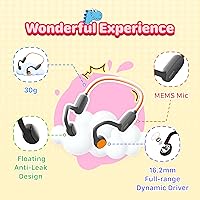
  • Weight: The headphones weigh 30 grams, making them light enough for extended wear without causing discomfort or pressure on a child's head.
  • Frame Material: The frame is constructed from memory titanium alloy, which allows the headphones to flex up to 360 degrees and return to their original shape without permanent deformation.
  • Driver Size: A 16.2mm full-range dynamic driver is housed within an open-ear suspension structure to deliver audio without direct contact with the ear canal.
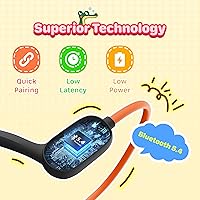
  • Bluetooth Version: Bluetooth 5.4 provides the wireless connection, offering faster pairing, lower power draw, and better resistance to signal interference compared to older Bluetooth versions.
  • Battery Capacity: The internal battery holds 165mAh, supporting up to 20 hours of continuous playback on a single charge under typical usage conditions.
  • Charging Port: Charging is handled via a USB-C port, compatible with most modern cables and chargers commonly found in households.
  • Water Resistance: The headphones carry an IPX5 water resistance rating, meaning they can withstand splashing water from any direction, including rain and sweat during physical activity.
  • Volume Limit: A default 85dB hearing protection mode limits maximum output, with a manually activated 100dB travel mode available for use in genuinely loud environments.
  • Microphone: A MEMS microphone is built into the headphones to capture voice clearly across a wide frequency range, suitable for calls and voice recognition applications.
  • Frequency Range: The audio frequency response spans 20Hz to 20,000Hz, covering the full range of human hearing from deep bass through high treble.
  • Impedance: The headphones have an impedance of 32 Ohm, which is compatible with standard consumer devices including smartphones and tablets without requiring an amplifier.
  • Bluetooth Range: The effective wireless range is up to 10 meters in open conditions, which is typical for Bluetooth 5.4 consumer audio devices.
  • Audio Latency: Audio latency is rated at 90 milliseconds, which keeps audio and video content reasonably synchronized during video playback on most devices.
  • Ear Placement: The headphones use an open-ear, non-in-ear design that sits just outside the ear canal, keeping the ear canal dry and unobstructed.
  • Compatible Devices: These headphones are compatible with smartphones, tablets, laptops, gaming consoles, and any other device that supports standard Bluetooth audio.
  • Control Type: Playback, volume, and call controls are managed via physical buttons on the headphone unit, with no touchpad or gesture controls involved.
  • Included Items: Each unit ships with the headphones, a USB-C charging cable, and a printed user manual.
  • Dimensions: The product measures approximately 5.12 x 3.94 x 1.57 inches, reflecting its compact, wraparound open-ear form factor.

Related Reviews

Nothing Ear (Open) Open-Ear Earbuds
79%
91%
Wearing Comfort
83%
Workout Stability
74%
Sound Quality
77%
Call Quality
49%
Sound Leakage
More
Monster AC100 Open-Ear Bluetooth Headphones
76%
88%
Battery Life
79%
Comfort & Fit
67%
Sound Quality
83%
Bluetooth Stability
71%
Call Quality
More
TAGRY K08 Open-Ear Wireless Earbuds
80%
88%
Wearing Comfort
83%
Battery Life
67%
Sound Quality
71%
Call Quality
91%
Waterproofing & Sweat Resistance
More
QXUFV QX68 Open-Ear Bluetooth Headphones
80%
92%
Wearing Comfort
84%
Fit & Stability
74%
Sound Quality
96%
Situational Awareness
89%
Battery Life
More
Conyat X7 Open Ear Wireless Earbuds
78%
88%
Wearing Comfort
84%
Secure Fit During Activity
67%
Sound Quality
91%
Battery Life
82%
Water & Sweat Resistance
More
CoolJumper Q28 Open Ear Wireless Earbuds
80%
88%
Wearing Comfort
91%
Battery Life
62%
Sound Quality
84%
Workout Stability
86%
Water Resistance
More
STECEi G219 Open-Ear Bluetooth Earbuds
81%
91%
Wearing Comfort
86%
Call Quality
73%
Audio Quality
68%
Sound Leakage
88%
Battery Life
More
MONODEAL HT03 Open Ear Bluetooth Headphones
79%
91%
Wearing Comfort
83%
Call Microphone Quality
86%
Bluetooth Connectivity
54%
Audio Quality
67%
Build Quality
More
PocBuds V30 Open Ear Sport Earbuds
82%
91%
Comfort & Wearability
93%
Battery Life
84%
Fit Security During Exercise
63%
Sound Quality
96%
Situational Awareness
More
Gixxted O3 Open-Ear Bluetooth Headset
77%
88%
Wearing Comfort
79%
Microphone Clarity
62%
Audio Sound Quality
83%
Dual-Device Pairing
86%
Mute Button Usability
More

FAQ

Yes, with a reasonable caveat. The default 85dB volume cap aligns with general pediatric hearing safety guidelines, so daily use at that level is considered low-risk. There is a 100dB travel mode available, but it is worth reserving that for genuinely noisy situations rather than leaving it on by default.

That is actually the main design goal of the open-ear format. Because the headphones sit outside the ear canal rather than sealing it off, ambient sounds like voices, traffic, and door knocks come through clearly alongside whatever they are listening to.

Reasonably durable for the price. The memory titanium frame is the standout feature here — it can be bent significantly and springs back to shape, which means a backpack or a clumsy drop is unlikely to permanently damage it. That said, no budget headphone is indestructible, so extreme abuse will eventually take a toll.

Yes, the built-in MEMS microphone is capable enough for standard video calls on platforms like Zoom or Google Meet. It handles voice recognition reasonably well too. Just keep expectations in check — it is functional, not studio-quality.

They do. The JusTalk A1 Kids Open-Ear Bluetooth Headphones connect over standard Bluetooth 5.4 and are compatible with tablets, laptops, and most devices that support Bluetooth audio, regardless of operating system.
Potentially, yes. Open-ear headphones inherently allow some audio to escape since nothing is blocking the ear. At moderate volumes it is similar to someone sitting next to you with earbuds in — noticeable but not disruptive. In a quiet classroom setting, it is worth being aware of.

Charge time is not officially specified, but with a 165mAh battery and standard USB-C input, most users can expect a full charge in under two hours. The claimed 20-hour battery life is generous — real-world use at higher volumes will reduce that somewhat, but multi-day use between charges is realistic for average listening habits.

Rain and sweat are covered by the IPX5 rating — splashing from any direction is fine. However, IPX5 is not submersion-proof, so poolside splashing is manageable but keeping them out of the water entirely is the safer call.

At 30 grams with a flexible titanium frame, these kids open-ear buds are designed with growing kids in mind and should fit a range of head sizes in the roughly five to twelve age range. The frame adjusts to fit rather than relying on fixed size settings, which helps with varying head shapes.

Pairing is straightforward — activate Bluetooth on the device, put the headphones into pairing mode, and select them from the list. Bluetooth 5.4 connects quickly and reconnects reliably when in range of a previously paired device, which means less frustration for younger kids managing it themselves.