
Overview

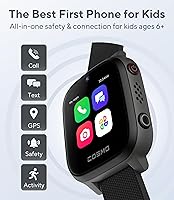
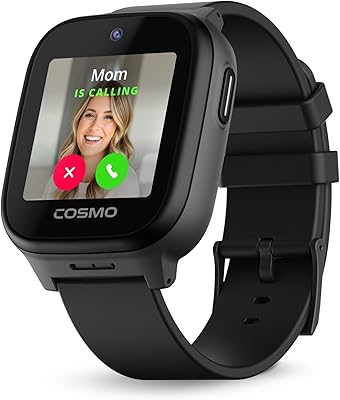
The Cosmo JrTrack 4 Kids GPS Smart Watch is Cosmo's fourth-generation take on giving younger kids a real communication device without handing them a smartphone. It covers calling, texting, GPS tracking, and basic entertainment in a single wrist-worn device — a meaningful combination for parents who've been putting off that conversation. A pre-installed SIM card tied to Cosmo's proprietary Mobile service sets it apart from cheaper alternatives that still require you to source a plan separately. Worth noting: this runs Cosmo OS, a purpose-built operating system, not Android or Wear OS. That means the app library is intentionally narrow — a deliberate choice for safety, but one worth understanding before you buy.

Features & Benefits

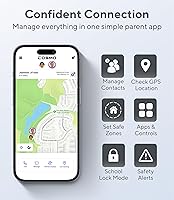
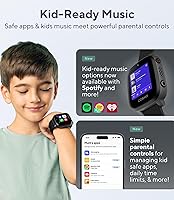
The parent-controlled contact list is the heart of what this GPS watch for kids actually does well. No open browser, no social media, no random strangers — your child can only reach the people you've approved. GPS location updates with customizable SafeZone alerts let you set boundaries around home, school, or grandma's house, and the built-in SafeCore SOS system gives kids a quick way to call for help in four different ways. Two-way calling and True Texting — including photo and audio messages — make staying in touch feel natural rather than limiting. School Lock mode and daily time limits round out the control set. Spotify Kids is a nice addition, though it requires a separate Spotify Family subscription many buyers may not anticipate.

Best For

This kids smart watch is the right call for parents who need their child reachable but aren't ready to hand over a full smartphone — and probably won't be for a few more years. It's particularly well-suited to the school-age transition window, roughly ages 6 to 10, when kids are gaining independence but still need close oversight. If GPS check-ins during school drop-offs, sports practice, or neighborhood time are your main concern, this fits that need well. Just go in knowing it's a carrier-locked ecosystem — Cosmo Mobile is the only compatible service, so there's an ongoing monthly cost layered on top of the device itself. Older kids approaching middle school may start finding the restrictions frustrating.

User Feedback

Across buyer patterns, parents tend to praise the GPS accuracy and how straightforward the companion app is to configure — getting location visibility working on day one rarely seems to be a struggle. Call quality earns generally positive marks, though a handful of users note it can sound tinny in noisier environments. The recurring friction point is battery endurance: a full school day with regular GPS pings can push the 680 mAh cell pretty hard, and some parents report needing to charge it every night. A few buyers also mention being caught off guard by the subscription requirement — the included SIM is a starter, not a permanent free plan. Build quality impressions are mixed; most kids handle it fine, but it isn't marketed as rugged.

Pros

  • Pre-installed SIM card means setup is straightforward — no carrier shopping required before your child can make a call.
  • Parent-approved contacts only, with no open internet or social media access, makes this one of the more locked-down kids devices available.
  • SafeZone geofencing alerts notify parents the moment a child leaves a designated area.
  • The four-part SafeCore SOS system gives kids a fast, accessible way to call for help in an emergency.
  • School Lock mode and time limits let parents control when and how the watch is used throughout the day.
  • True Texting supports photos, audio, and short video messages — richer than basic SMS for staying in touch.
  • Spotify Kids integration adds a genuinely useful entertainment layer for music and podcasts during commutes or downtime.
  • Coverage extends across the US, Canada, and Mexico, which is useful for families who travel.
  • The parent companion app earns consistent praise for being easy to configure without a steep learning curve.
  • Includes screen protectors and a wrist band in the box — small extras that reflect practical product thinking.

Cons

  • Battery life under active GPS use can struggle to last a full school day, requiring nightly charging.
  • Carrier lock-in to Cosmo Mobile adds an ongoing monthly subscription cost on top of the device price.
  • Call audio can sound tinny in loud environments, which affects how reliably kids and parents can hear each other.
  • Spotify Kids requires a separate Spotify Family subscription that many buyers do not expect at checkout.
  • GPS accuracy drops noticeably indoors and in densely built areas, limiting reliability in those specific settings.
  • Build quality is not marketed as rugged, and real-world durability reports from younger, more active kids are mixed.
  • The JrTrack 4 is incompatible with any carrier other than Cosmo Mobile, removing all flexibility if service quality is an issue in your area.
  • Kids approaching middle school age are likely to outgrow the content restrictions faster than the hardware itself.
  • The 1.4-inch round screen is compact — functional, but fine motor navigation can be tricky for younger children.
  • No compatibility with third-party app stores means parents cannot add tools or games beyond what Cosmo officially supports.

Ratings

The scores below reflect our AI-driven analysis of verified buyer reviews for the Cosmo JrTrack 4 Kids GPS Smart Watch, collected globally and filtered to remove spam, bot submissions, and incentivized feedback. Each category is scored independently, pulling from patterns across thousands of real parent and family experiences — not cherry-picked highlights. Both the strengths that parents rave about and the friction points that quietly frustrate them are reflected here with equal honesty.

GPS Accuracy
78%
22%
Parents consistently report that outdoor GPS performance is reliable enough for the core use case — knowing whether a child arrived at school or is still at the park after practice. SafeZone alerts trigger promptly in open environments, and location history gives families a useful log of daily movement patterns.
Accuracy takes a real hit indoors and in dense urban areas with tall buildings, which is a meaningful limitation for city-dwelling families. A handful of parents note occasional lag between a child's actual position and what the app displays, which can cause brief moments of unnecessary worry.
Parental Controls
91%
The contact approval system is tight and reliable — parents feel genuinely confident that no unexpected caller or message can reach their child. School Lock mode and time-limit scheduling give families a level of daily structure that is difficult to replicate with off-the-shelf alternatives, and the parent app interface makes adjustments quick.
A small number of parents find the control granularity maxes out faster than they'd like — for example, there is no per-app time allocation, just a broader daily limit. A few users also report that School Lock occasionally requires a manual reset if the schedule shifts unexpectedly.
Call Quality
69%
31%
Under normal, quiet conditions — like a child calling from a school pickup line or a quiet house — voice clarity is adequate and calls connect reliably across Cosmo Mobile coverage areas. Most parents report that everyday check-in calls feel natural enough for a kids device in this category.
In noisy environments like playgrounds, gyms, or busy streets, call audio becomes noticeably tinny and hard to follow on both ends. Several buyers mention that their child has to walk away from the group or cover one ear just to hold a basic conversation, which undermines the hands-free convenience the watch is supposed to offer.
Battery Life
61%
39%
For lighter use days — a few GPS pings, one or two calls, and some step tracking — the 680 mAh battery can carry a child through most of a school day without issue. Parents who charge the watch every night report fewer mid-day anxieties about it going dark.
Active GPS polling combined with regular messaging is enough to stress the battery into the afternoon, and a meaningful number of buyers report the watch dying before after-school pickup. There is no low-power mode to extend usage, which is a noticeable gap given how central location tracking is to the device's value.
Ease of Setup
88%
The pre-installed SIM and the step-by-step Cosmo parent app make the out-of-box experience smoother than most connected kids devices. Parents who are not particularly tech-savvy report having calls working and GPS active within 20 to 30 minutes of unboxing, which is a genuinely low barrier for a cellular wearable.
Occasional hiccups during SIM activation have been reported — mostly related to network provisioning delays rather than user error — which can stall setup for an hour or two. The app also requires account creation before anything functions, which adds a step some buyers find unexpectedly lengthy.
Build Quality
66%
34%
For kids in the 6 to 9 age range who handle their belongings reasonably well, the JrTrack 4 holds up acceptably through typical daily wear. The included screen protectors are a thoughtful addition that most parents apply immediately and credit with preventing early scratches.
The watch is not rated as rugged or water-resistant, and feedback from parents of more active or younger children paints a mixed picture on long-term durability. The plastic construction feels lightweight in a way that reads as fragile rather than designed for real-world kid use.
Value for Money
72%
28%
As a standalone device that combines calling, GPS, parental controls, and basic entertainment without requiring a smartphone, the JrTrack 4 occupies a useful niche at its price point. Parents who come from no device at all tend to feel the investment is justified when weighed against the peace of mind it provides.
The mandatory Cosmo Mobile subscription changes the total cost calculation significantly — buyers who factor in 12 months of service find the actual year-one spend considerably higher than the device price suggests. The carrier lock-in also means there is no way to reduce costs by switching to a cheaper plan or a family bundle you already pay for.
Messaging Features
83%
True Texting that supports photos, audio clips, and short video messages genuinely raises the bar compared to SMS-only alternatives, and kids respond well to the richer communication format. Group messaging capability means siblings and family members can stay in a shared thread, which parents find surprisingly useful for coordination.
Message delivery speed can feel inconsistent — particularly with audio and video content — and some parents note that media messages occasionally fail to send without an obvious error message. The closed contact system, while a safety feature, means kids cannot participate in broader friend group chats the way peers with smartphones can.
App & Content Library
58%
42%
The curated nature of the Cosmo OS app library is precisely what many parents are paying for — a defined, manageable set of tools with no surprise downloads or in-app purchases lurking around the corner. For younger kids who are not yet pushing for independence, the selection covers the basics comfortably.
By the time a child reaches 10 or 11, the app library starts to feel noticeably thin compared to what peers are using, and there is no path to expanding it beyond what Cosmo officially approves. Parents of older kids in the target range frequently cite this limitation as the primary reason they expect to replace the device sooner than they hoped.
Spotify Kids Integration
74%
26%
When it works, Spotify Kids on the wrist is a legitimately useful feature for kids who listen to music or podcasts during commutes, quiet time, or homework — and the age-appropriate content filtering aligns well with what parents want to allow. Families already on a Spotify Family plan get real added value here at no extra setup friction.
The requirement for a separate Spotify Family subscription catches a meaningful portion of buyers off guard, since the product listing implies music is included rather than dependent on an additional paid service. Parents who do not already subscribe to Spotify may find the feature less compelling once the added cost is factored in.
Comfort & Wearability
77%
23%
Kids in the primary target age range generally wear the JrTrack 4 without complaint, and the round watch face gives it enough visual appeal that children are not embarrassed to have it on at school. The included wrist band fits a reasonable range of wrist sizes for elementary-age kids.
At 7.4 ounces packaged — and with a watch body sized for a 1.4-inch display — younger children on the smaller end of the age range occasionally find it bulky for extended wear. A few parents note that the band clasp loosens over time, which creates mild worry about the watch slipping off during active play.
Safety Features
89%
The SafeCore system's four-layer emergency approach — combining SOS alerts, emergency calling, SafeZone notifications, and location history — gives parents a notably comprehensive safety net for a wearable in this category. The SOS function is accessible enough that kids can trigger it quickly in a real scenario without fumbling through menus.
SafeZone alerts rely on GPS accuracy, which means in environments where location data is unreliable — indoors, certain school buildings — geofence triggers can fire late or inconsistently. A small number of parents also report that the SOS button is sensitive enough to be activated accidentally, generating false alerts that dilute trust in the feature over time.
Parent App Experience
84%
The companion parent app is consistently cited as one of the more polished aspects of the overall experience — contact management, scheduling, and location checks are laid out clearly without requiring a tutorial. Remote updates and control changes apply to the watch quickly, which parents appreciate when they need to make an in-the-moment adjustment.
The app occasionally requires a force-close and relaunch to reflect updated location data, which is a minor but recurring annoyance. A subset of parents on older Android devices report compatibility quirks, though iOS users tend to encounter fewer issues overall.
Carrier & Plan Flexibility
43%
57%
The included SIM and pre-configured Cosmo Mobile integration do reduce the friction of initial activation, and the family-safe network is genuinely built around the needs of this specific use case rather than bolted onto a general consumer carrier.
Carrier exclusivity is the single most polarizing aspect of this GPS watch for kids — there is no workaround, no BYOC option, and no way to leverage an existing family plan. For parents who already pay for a multi-line family plan elsewhere, the mandatory Cosmo Mobile subscription feels like paying twice, and the lack of flexibility is a dealbreaker for a vocal portion of potential buyers.

Suitable for:

The Cosmo JrTrack 4 Kids GPS Smart Watch was built for a very specific parenting moment: your child is gaining independence, you need a reliable way to stay in touch, but you're not ready to hand them a smartphone with unrestricted internet access. It's a strong fit for families with kids in the 6–10 age range who are navigating school commutes, after-school activities, or neighborhood time on their own for the first time. Parents who prioritize location visibility above everything else will appreciate the SafeZone geofencing and location history — knowing your child arrived at practice without having to call around is genuinely useful. The closed-contact model is also a real selling point for households where social media exposure is a hard no. If you're comfortable committing to the Cosmo Mobile ecosystem and want a device that keeps kids connected without opening a digital rabbit hole, this GPS watch for kids delivers on its core promise.

Not suitable for:

The Cosmo JrTrack 4 Kids GPS Smart Watch is a poor fit for buyers who expect a flexible, open-platform wearable — it runs a proprietary OS, locks you into Cosmo Mobile as the sole carrier, and keeps the app library intentionally small. If your child is 11 or older, there's a real chance they'll find the restrictions more frustrating than reassuring within a few months, especially compared to what their peers are using. The ongoing monthly service cost is also a meaningful consideration: the device price is just the entry point, and some families find the total cost of ownership higher than they anticipated. GPS accuracy, while generally solid outdoors, can be inconsistent indoors or in dense urban areas — so if you need precise real-time location in those environments, expect some limitations. Buyers hoping to use an existing carrier SIM or a family plan they already pay for will need to look elsewhere.

Specifications

  • Age Range: Designed for children ages 6 to 12 years old.
  • Display: 1.4-inch round touchscreen display.
  • Operating System: Runs Cosmo OS, a proprietary closed operating system built specifically for kids' use.
  • Storage: 8 GB of onboard memory storage.
  • Battery: 680 mAh lithium-ion rechargeable battery, included and pre-installed.
  • Connectivity: Supports Bluetooth, Wi-Fi (802.11ac), and cellular connectivity.
  • GPS: Built-in GPS with SafeZone geofencing and location history tracking.
  • SIM Card: Pre-installed SIM card compatible exclusively with the Cosmo Mobile family-safe cellular service.
  • Coverage Area: Cellular service coverage spans the United States, Canada, and Mexico.
  • Safety System: Includes the SafeCore four-part safety system with SOS alerts and emergency calling.
  • Parental Controls: Parents can manage approved contacts, set app access, activate School Lock mode, and configure daily time limits.
  • Music: Supports Spotify Kids for age-appropriate music and podcasts; requires a separate Spotify Family subscription.
  • Messaging: Supports two-way calling and True Texting including text, photos, audio messages, and short video messages.
  • Weight: The watch weighs 7.4 ounces as packaged.
  • Package Dimensions: Retail package measures approximately 3.86 x 3.82 x 2.52 inches.
  • Warranty: Backed by a 1-year manufacturer warranty from Cosmo Technologies.
  • In the Box: Includes the smartwatch, wrist band, charging cable, and screen protectors.
  • Shape: Round watch case with a modern style suited to everyday kids' wear.
  • Brand: Manufactured and supported by Cosmo Technologies under the JrTrack product line.
  • Availability Date: First made available for purchase in September 2024.

Related Reviews
Cosmo JrTrack 5 Kids Smartwatch
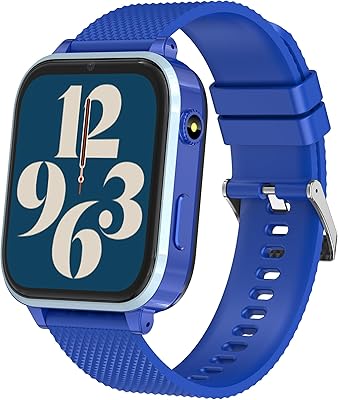
77%
83%
GPS Accuracy
91%
Parental Controls
89%
Safety Features
86%
Ease of Setup
58%
Battery Life
More
Spodus G50002 Kids GPS Tracker Smart Watch
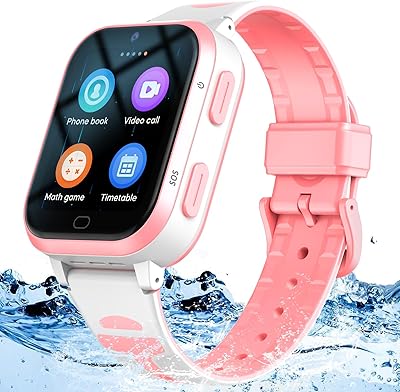
69%
78%
GPS Accuracy
54%
Battery Life
82%
SOS Reliability
61%
App Experience
76%
Value for Money
More
MJVV TB0073 4G GPS Kids Smartwatch
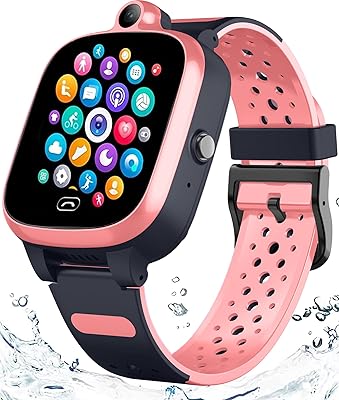
63%
71%
GPS Tracking Accuracy
78%
Call Quality
83%
SOS Emergency Feature
54%
Battery Life
49%
SIM Compatibility
More
TOPUSER TB0081 4G GPS Kids Smartwatch
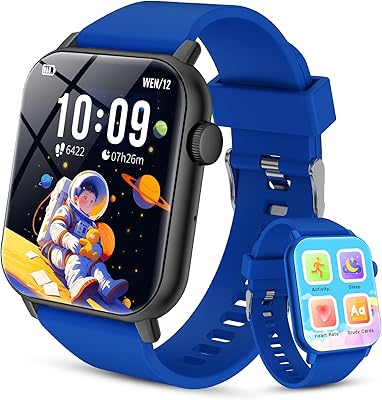
71%
72%
GPS Accuracy
83%
4G Connectivity
67%
Battery Life
81%
Voice & Video Calling
88%
SOS & Safety
More
JOYELE Kids Smart Watch
74%
88%
Value for Money
86%
Ease of Setup
54%
Battery Life
67%
Fitness Tracking Accuracy
71%
Build Quality
More
Taopodo Kids Smart Watch
73%
84%
Value for Money
87%
Battery Life
76%
Waterproofing
81%
Educational Content
89%
Ease of Setup
More
Phyulls S16 Kids Smart Watch
79%
88%
Ease of Use
93%
Battery Life
85%
Educational Value
72%
Build Quality
63%
Durability
More
MOFGDNI S16G Kids Smart Watch
84%
89%
Value for Money
84%
Build Quality
91%
Ease of Use
87%
Entertainment Features
78%
Battery Life
More
Tykjszgs LT31 Kids GPS Smartwatch
69%
71%
GPS Tracking Accuracy
84%
Parental Controls
62%
App Experience
47%
Carrier Compatibility
78%
Value for Money
More
ZURURU H39plus Kids Smart Watch
86%
88%
Fitness Tracking Accuracy
91%
Battery Life
84%
Ease of Use
87%
Build Quality
80%
Display Quality
More

FAQ

No, a SIM card comes pre-installed. However, you will need to activate a Cosmo Mobile service plan to use cellular features like calling, texting, and GPS. Plans start at roughly $9.99 per month with prepaid options. Just be aware that the JrTrack 4 is only compatible with Cosmo Mobile — you cannot use a SIM from another carrier.

No, and that is intentional. The watch does not allow open internet browsing or access to any social media platforms. All connectivity is routed through a parent-approved contact list and a curated app library, which is the core of the watch's safety design.

Outdoors and in open areas, GPS performance is generally reliable for setting SafeZone alerts and checking location history. Accuracy can drop when the child is indoors, inside a building with thick walls, or moving through a dense urban area with tall structures. It works well for most everyday scenarios like school and sports, but don't expect pinpoint precision in all conditions.

It depends on how heavily the GPS and cellular features are being used. Under moderate use, most parents report getting through a school day, but it can be tight. If GPS is pinging frequently or the child is making multiple calls, the 680 mAh battery may need a charge by late afternoon. Charging it overnight is the safest habit to build.

It can work well for a mature 10-year-old, but by age 11, some kids start finding the restrictions frustrating compared to what their peers are using. The locked app ecosystem and contact-only communication model are designed for younger children. If your child is approaching middle school, it is worth considering whether they will be satisfied with these limitations in six to twelve months.

Everything is managed through the Cosmo parent app, which most buyers find straightforward to configure. You can add approved contacts, enable or disable apps, activate School Lock during class hours, and set daily time limits — all from your phone. The initial setup generally takes under 30 minutes.

Yes. While the watch supports Spotify Kids, accessing it requires an active Spotify Family plan, which is a separate subscription not included with the device or the Cosmo Mobile service. If you already pay for a Spotify Family plan, enabling it on the watch is straightforward. If you don't, factor that cost into your decision.

The watch holds up reasonably well for typical everyday activity, but it is not marketed or rated as a rugged or waterproof device. Most kids use it without issues, but feedback from parents of more active or younger children is mixed. Applying the included screen protector from day one is a good idea, and you may want to consider a protective case if your child tends to be hard on gear.

No. The watch is engineered so that only contacts explicitly approved by a parent can reach the child. Any attempt from an unknown number or unapproved contact is blocked at the system level. This is one of the key reasons many parents choose this device over a basic prepaid phone.

Cosmo Mobile cellular service covers the United States, Canada, and Mexico. If you travel within those three countries, the watch should function normally for calls, texts, and GPS. Coverage outside of North America is not supported, so for international travel beyond those borders, the cellular and GPS features would not be available.