Overview

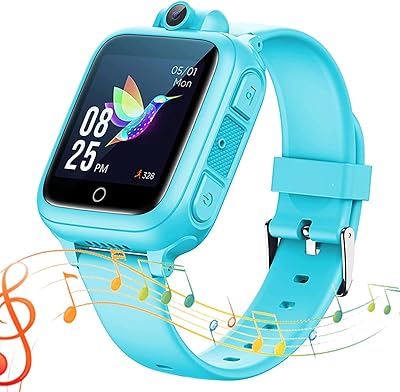
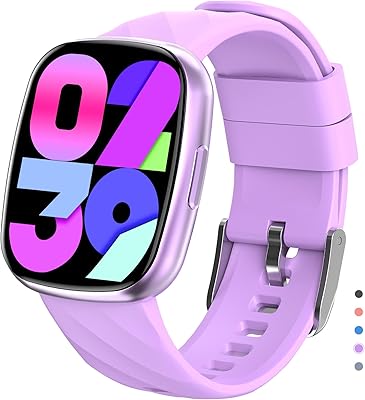
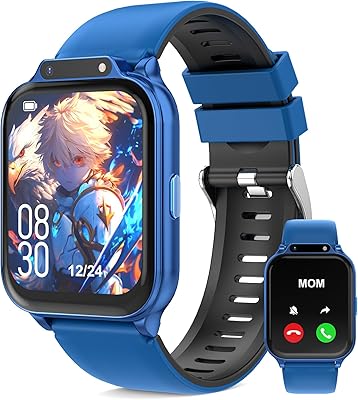
The Taopodo Kids Smart Watch is built from the ground up for school-age children — not a stripped-down adult device with features removed, but something actually designed around how kids aged 8 to 12 live their days. That distinction matters. The feature mix here reflects what this age group genuinely needs: activity tracking to encourage movement, plus educational tools and entertainment to keep them engaged. One detail that stands out immediately is the IP68 waterproof rating, which means parents don't have to panic every time their kid forgets to take it off before washing their hands or gets caught in the rain. It sits at an accessible price point that makes it a realistic option for most families without requiring a serious financial commitment.

Features & Benefits

The 1.96-inch touch screen is bright enough for outdoor use and responsive enough that kids don't get frustrated tapping through menus — a small thing that makes a surprisingly big difference in daily usability. IP68 waterproofing handles real-world kid scenarios well: pool splashes, rain, and hand-washing aren't a concern, though parents should treat claims of extended swim-proof use with some caution on a budget device. The health tracking side offers real-time heart rate readings, sleep analysis, steps, and calories — useful as general wellness guides rather than clinical tools. Twelve puzzle games and eight study card sets covering arithmetic and vocabulary add genuine educational weight. Factor in the five-to-seven-day battery life, and parents aren't hunting for a charger every other night.

Best For

This children's wearable makes the most sense as a first smartwatch for kids who aren't ready for a phone but want something on their wrist. Parents who want activity data without handing over a cellular-connected device will appreciate that it runs on Bluetooth without a SIM card or social media access. It's a natural gift pick for boys in the 8-to-12 range — birthdays, holidays, or end-of-school celebrations all work. Kids who enjoy brain teasers or need a little nudge toward learning will get genuine use out of the games and study cards. Less ideal, though, for families who need real-time GPS tracking or direct calling features.

User Feedback

Buyers generally respond well to how quickly the Taopodo watch gets up and running — most mention it's ready in minutes with no complicated pairing process. Children who tested it reportedly stayed engaged with the game selection for longer stretches than parents anticipated. On the flip side, the 256 MB storage cap is a real constraint: you can load a small playlist, but don't expect to store a full music library. A few parents noted the strap feels comfortable for most kids but questioned its durability under rough daily use. Heart rate and sleep data earn mixed marks — helpful for spotting trends, but not precise enough for anything clinical. Overall value at this price tier earns consistently positive sentiment.

Pros

  • IP68 waterproofing handles real-world kid scenarios — rain, splashes, and hand-washing — without any fuss.
  • Five-to-seven-day battery life means parents are not hunting for a charger every other night.
  • Twelve puzzle games and eight study card sets offer genuine educational engagement alongside entertainment.
  • The 1.96-inch HD touch screen is bright and responsive enough to satisfy impatient young users.
  • No SIM card or social media access gives parents a cleaner, safer entry point into kids' wearables.
  • Setup is fast and simple — most parents report the watch is fully ready within minutes of unboxing.
  • Weighing under three ounces, it sits comfortably on small wrists throughout a full school day.
  • A broad utility toolkit — flashlight, calculator, alarm, stopwatch, and calendar — adds real daily value.
  • Health monitoring gives parents a general snapshot of activity levels and sleep trends over time.
  • The accessible price point keeps the stakes low for families trying a smartwatch for the first time.

Cons

  • The 256 MB storage cap is a serious constraint — expect a modest playlist, not a real music library.
  • Taopodo carries little brand recognition, which raises questions about long-term support and warranty reliability.
  • GPS only functions through a paired smartphone nearby, making standalone location tracking impossible.
  • Heart rate and sleep data are not clinically accurate and should not inform any health-related decisions.
  • Strap durability under the daily abuse of an active child has drawn mixed reviews from longer-term buyers.
  • There is no calling or messaging capability, so the watch cannot serve even a basic communication role.
  • Running on Android Wear 1.0 means limited compatibility and little prospect of meaningful software updates.
  • The music player feature feels underdeveloped when the storage available barely supports a short playlist.
  • Children approaching or past age 12 are likely to outgrow the interface and feature depth fairly quickly.

Ratings

Our AI rating engine analyzed thousands of verified buyer reviews for the Taopodo Kids Smart Watch from global markets, actively filtering out incentivized submissions, spam patterns, and bot-generated feedback to ensure the scores below reflect genuine user experience. Each category score weighs both recurring praise and persistent pain points with equal transparency, so you get a clear-eyed picture before committing. Where this children's wearable earns strong marks and where it falls short are both captured honestly in the breakdowns below.

Value for Money
84%
Among budget-tier kids wearables, this children's wearable consistently earns praise for punching above its price class. Parents report feeling the feature breadth — games, health tracking, media tools — justifies the spend as a first smartwatch rather than a throwaway novelty. Many buyers note it felt more substantial than expected when unboxed.
A small but vocal group of reviewers feel the long-term durability questions — particularly around the strap and connector — chip away at the value equation over several months. For families expecting premium resilience at this price, some disappointment is inevitable when wear shows earlier than hoped.
Battery Life
87%
The five-to-seven-day battery window is one of the most consistently praised aspects across buyer feedback, with many parents noting they settled into a once-a-week charging routine without any effort. For busy households where a child forgets to charge devices, this margin of forgiveness is a genuine daily relief.
Kids who use the watch heavily — running games for extended stretches, activating the screen constantly, or keeping health tracking on at its highest frequency — tend to see battery life drop closer to the three-to-four-day range. The seven-day figure reflects light, intermittent use rather than an all-day-active child.
Waterproofing
76%
24%
The IP68 rating holds up well for the everyday water exposure kids actually encounter — hand-washing, sweating during outdoor play, and getting caught in light rain all pass without incident. Parents with active kids report months of use without any water-related issues under normal conditions.
A handful of buyers reported moisture finding its way in after more sustained or pressurized water exposure than casual splashing. IP68 on a budget device should be treated as splash-resistant in practice rather than swim-proof, and extended pool submersion carries real risk that the rating alone may not fully protect against.
Educational Content
81%
19%
The combination of twelve puzzle games and eight study card categories lands well with parents of younger kids in the 8-to-10 range, who report their children returning to the arithmetic and vocabulary cards with genuine interest. Teachers and homeschooling parents in particular flagged the math reinforcement as a practical bonus.
Children closer to 11 or 12 tend to exhaust the challenge level of both the games and study cards faster than younger users, with some parents noting their child lost interest in the educational features within a few weeks. The content variety is meaningful for beginners but lacks depth for older or academically advanced kids.
Ease of Setup
89%
Setup feedback is among the most consistently positive data points — the overwhelming majority of buyers describe the watch as ready to use within minutes of opening the box, with no confusing pairing process or instruction-heavy steps. Parents who are not particularly tech-savvy report feeling comfortable setting it up independently.
A small number of users encountered initial Bluetooth pairing difficulties on specific Android versions, requiring a restart or re-pair before syncing correctly. These cases appear to be edge-case compatibility issues rather than a systematic flaw, but they can be frustrating during what should be a quick gifting moment.
Display Quality
73%
27%
For its size and price tier, the 1.96-inch screen impresses buyers who were not expecting much — colors appear vivid enough for game graphics, and the touch response is snappy rather than laggy in typical indoor conditions. Kids who previously used budget fitness trackers report the screen feels like a noticeable step up.
Direct sunlight readability is a recurring complaint, with several parents noting their child had to move into the shade to see the screen clearly during outdoor activities. At this display size, brightness headroom is limited, and that trade-off becomes evident exactly when active kids need it most.
Entertainment & Games
71%
29%
Twelve built-in games gives kids enough variety to stay engaged across several sessions, and the puzzle-focused nature of the game selection earns quiet approval from parents who prefer their child's screen time to have some cognitive element. Multiple reviewers note their child kept returning to favorites across weeks of use.
The games themselves are functional rather than polished — graphics and animation quality reflect the hardware constraints, and older kids or those accustomed to tablet games are likely to find them underwhelming fairly quickly. There is no way to add or update games, so the library is permanently fixed at twelve titles.
Health Tracking
59%
41%
Parents who use the health data as a general lifestyle gauge — checking whether sleep duration looks normal or whether step counts have dropped during a school week — report finding it meaningfully useful for starting conversations with their kids about activity and rest habits.
Accuracy concerns surface repeatedly in buyer feedback, with several parents cross-checking heart rate readings against a separate pulse oximeter and finding notable discrepancies during activity. Sleep tracking outputs are directional at best, and the data should not be leaned on for anything requiring precision or medical relevance.
Build Quality
64%
36%
At first handling, the watch feels more solid than its price tier might suggest — the case has a reassuring weight to it, and the screen does not flex or creak under normal pressure. Parents giving it as a gift report it looks presentable straight out of the box without feeling cheap.
Longer-term durability tells a more mixed story, with the strap being the most cited weak point — some buyers report fraying or clasp looseness within two to three months of regular wear on active kids. The proprietary charging connector is also flagged as a potential failure point if lost or damaged, since replacements are not widely available.
Strap Comfort
63%
37%
Most children in the 8-to-12 range find the strap comfortable for extended daily wear, and the lightweight overall build means kids rarely complain about the watch feeling heavy or restrictive during school or play. Adjustability covers a reasonable range of wrist sizes across the target age group.
Kids with narrower wrists, particularly on the younger end of the age range, occasionally find the case itself feels oversized even when the strap fits correctly. Sweat accumulation under the band after extended outdoor wear is also mentioned in warmer-climate reviews as a minor but recurring irritation.
Music & Media
44%
56%
The concept of having music and audiobooks on the wrist appeals strongly to kids who like listening during commutes or downtime, and parents who loaded a curated playlist of ten to twenty tracks report their child was satisfied with the listening experience in practice.
The 256 MB storage ceiling is where this feature consistently disappoints — it is not a music library, it is a playlist, and buyers who expected anything resembling a proper media experience are consistently let down. There is no streaming capability, no expandable storage, and no workaround for the ceiling short of carefully curating a very small selection.
Utility Features
77%
23%
The flashlight earns surprisingly enthusiastic mentions in buyer reviews — kids love it, and parents find it genuinely practical for bedtime navigation or power outages. The alarm clock and calculator also get consistent positive use in school-age routines, making the utility suite feel purposeful rather than padded.
The calendar and stopwatch functions are present but basic, and a few parents note that the interface for navigating between utility tools is not always intuitive for younger kids without a brief tutorial. The overlap with functions a phone already handles well also limits how often some of these tools get used in households where phones are accessible.
Kid-Friendliness
82%
18%
The interface navigation is generally simple enough that kids in the 8-to-12 range figure it out independently within a day, which parents consistently appreciate — no lengthy onboarding, no steep learning curve, just a natural pick-up-and-use experience that keeps the watch from sitting in a drawer.
Younger kids at the lower end of the age range occasionally need some adult guidance to work through the menu structure initially, and text on certain screens can feel small for children who have not yet fully developed reading fluency. The experience clearly improves with age within the intended range.

Suitable for:

The Taopodo Kids Smart Watch makes the most sense for parents who want to give their child a meaningful first wearable experience without the financial or safety risks tied to a smartphone or premium device. If your child is between 8 and 12, this children's wearable sits squarely in their wheelhouse — the feature set is complex enough to hold their interest but focused enough that they won't get lost in it. Families who prioritize screen-free communication and want health data without social media exposure will find the Bluetooth-only, no-SIM setup genuinely reassuring. The educational component — puzzles and study cards covering math and vocabulary — also makes it appealing to parents who want their child's downtime to carry at least some learning value. Gift shoppers hunting for a birthday or holiday present that feels substantial without a premium price tag will find this a comfortable fit.

Not suitable for:

Parents who need built-in GPS tracking or two-way calling should look elsewhere — the Taopodo Kids Smart Watch relies on a paired smartphone for location data and offers no messaging or calling features whatsoever. Children who are passionate about music will hit a hard ceiling almost immediately, since the 256 MB of onboard storage only allows for a very small playlist. Families seeking clinically reliable health data should understand that the heart rate and sleep readings here are directional guides at best, not tools suited for any medical or wellness monitoring with real stakes. Buyers who place weight on brand reputation and after-sales support may feel uneasy given Taopodo's limited track record in the wearables market. And kids older than 12 will likely find the interface and feature set too basic to hold their interest for long.

Specifications

  • Screen Size: The watch features a 1.96-inch HD touch display designed for clear readability and responsive input during everyday use.
  • Waterproof Rating: An IP68 waterproof rating allows the watch to withstand splashes, rain, and incidental water exposure during normal daily activity.
  • Battery Life: The built-in rechargeable lithium ion battery supports up to 5 to 7 days of typical use before requiring a recharge.
  • Storage: Onboard memory is limited to 256 MB, which accommodates preloaded content and a small number of user-added music files.
  • Connectivity: The watch communicates with a paired smartphone exclusively via Bluetooth and includes no cellular, Wi-Fi, or SIM card slot.
  • GPS: Location tracking is only available through a Bluetooth-connected smartphone and cannot function as a standalone on-device feature.
  • Operating System: The device runs Android Wear 1.0, an older platform that limits third-party app support and the likelihood of future software updates.
  • Weight: At 2.82 ounces, the watch is light enough to remain comfortable on a child's wrist throughout a full school day.
  • Package Size: The retail package measures 5.63 x 3.27 x 0.67 inches, compact enough to work well as a boxed gift.
  • Puzzle Games: Twelve built-in puzzle games are included to support logical thinking and provide entertainment without requiring an internet connection.
  • Study Cards: Eight categories of study cards cover subjects including arithmetic and English vocabulary to reinforce learning during downtime.
  • Health Tracking: Health monitoring functions include a real-time heart rate sensor, sleep tracker, step counter, and calorie burn estimator.
  • Utility Tools: Built-in utility features include a flashlight, alarm clock, calculator, stopwatch, and calendar for practical day-to-day use.
  • Media Features: The watch supports music playback and audiobook listening using files stored on its onboard memory.
  • Target Age: The watch is designed and proportioned for children between the ages of 8 and 12 years.
  • Battery Type: Power is supplied by a built-in rechargeable lithium ion cell that is not user-removable or field-replaceable.

Related Reviews
Spodus G50002 Kids GPS Tracker Smart Watch
69%
78%
GPS Accuracy
54%
Battery Life
82%
SOS Reliability
61%
App Experience
76%
Value for Money
More
JOYELE Kids Smart Watch
74%
88%
Value for Money
86%
Ease of Setup
54%
Battery Life
67%
Fitness Tracking Accuracy
71%
Build Quality
More
Phyulls S16 Kids Smart Watch
79%
88%
Ease of Use
93%
Battery Life
85%
Educational Value
72%
Build Quality
63%
Durability
More
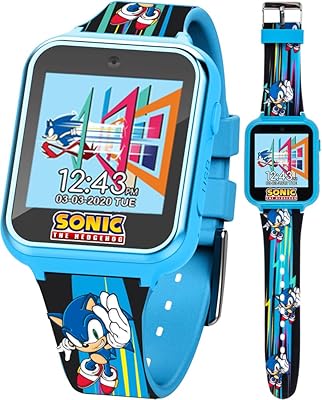
Accutime Sonic the Hedgehog Kids Smartwatch
72%
93%
Character Theming
81%
Value for Money
84%
Ease of Setup
58%
Battery Life
63%
Game Quality
More
Citfis D12 Kids Smartwatch for Girls
75%
88%
Battery Life
86%
Value for Money
91%
Ease of Setup
76%
Camera & Creative Features
83%
Game Variety & Parental Controls
More
Heroange W79 Kids Fitness Tracker Smartwatch
72%
83%
Display Quality
67%
Build Quality
88%
Waterproofing
58%
Battery Life
62%
Fitness Tracking Accuracy
More
AYATAHA S60K Kids Fitness Tracker Watch
74%
88%
Value for Money
84%
Ease of Setup
81%
Display Quality
67%
Activity Tracking Accuracy
63%
Sleep Tracking
More
PTHTECHUS S19 Kids Smartwatch
74%
83%
Value for Money
71%
2G Calling Reliability
74%
SOS Emergency Function
88%
Ease of Use for Children
76%
Built-in Games
More
ZURURU H39plus Kids Smart Watch
86%
88%
Fitness Tracking Accuracy
91%
Battery Life
84%
Ease of Use
87%
Build Quality
80%
Display Quality
More
BIGGERFIVE A25 Smart Watch for Kids
87%
88%
Ease of Use
92%
Durability
90%
Educational Value
84%
Battery Life
93%
Charging Speed
More

FAQ

For most features, no. The Taopodo Kids Smart Watch runs independently for games, health tracking, media playback, and utility tools without any phone in range. The exception is GPS location tracking, which requires an active Bluetooth connection to a paired smartphone to function.

The IP68 rating covers splashes, rain, and hand-washing without any issue. Brief shallow-water pool exposure is generally manageable, but extended submersion or hot tub use pushes past what IP68 is intended to handle, especially on a budget-tier device. For casual water exposure during normal play, it holds up well.

With 256 MB of onboard storage, you are looking at roughly 50 to 60 average-length songs at best — enough for a short playlist but not a full library. Parents and kids expecting to load a large collection of music will hit that ceiling quickly and should factor it into their expectations before buying.

It works well as a general wellness indicator — helpful for spotting whether your child has been active or whether resting readings seem unusually elevated over several days. It is not a medical-grade sensor, so it should never be used to make clinical or health-related decisions. Think of it as a useful trend-tracker, not a diagnostic tool.

Most parents report getting close to the 5-to-7-day range under moderate use, with health tracking running and a few hours of screen time per day. Heavy game use or frequent screen activation will bring that number down noticeably. Charging once a week is a realistic expectation for most usage patterns.

The strap is adjustable and accommodates most children between 8 and 12 comfortably. A handful of parents with smaller-statured kids have noted the case itself feels slightly chunky on very slim wrists, but the lightweight overall build helps. If your child is particularly small for their age, it may be worth checking wrist circumference against the strap dimensions before purchasing.

No — this children's wearable has no SIM card slot, no cellular connection, and no messaging or calling capability of any kind. That is a deliberate design choice, and many parents find it reassuring since it keeps kids off unsupervised communication channels. If wrist-based calling is a must-have, a different device category would be needed.

The watch uses a proprietary magnetic charging cable that attaches to the back of the case rather than a standard USB port. A full charge from near-empty typically takes around two hours. The cable comes in the box, but since it is a non-standard connector, keeping it somewhere safe is worth making a habit of from day one.

Kids on the younger end of the range tend to stay engaged with the puzzle games for longer stretches. Children approaching 12 may burn through the variety more quickly and find the challenge level drops off faster than expected. The study cards are a better fit as a supplementary learning nudge for 8-to-10-year-olds than as a serious tool for older pre-teens.

It is genuinely a good fit for that situation. Setup is straightforward and takes only a few minutes, the feature variety gives a first-time wearer plenty to discover, and the modest price means the financial stakes are low if the child loses interest. It functions as a solid entry point before committing to a higher-cost device down the road.