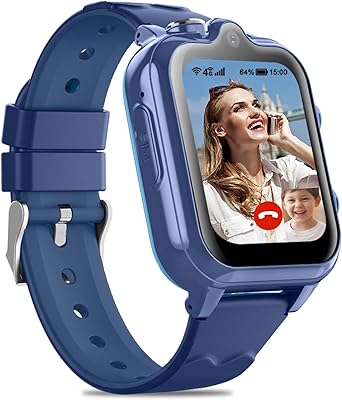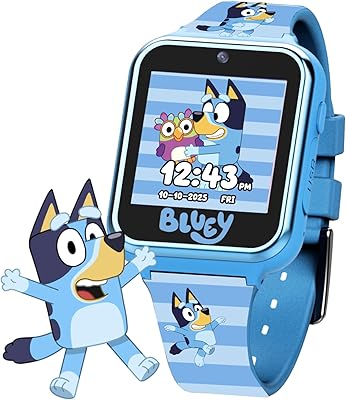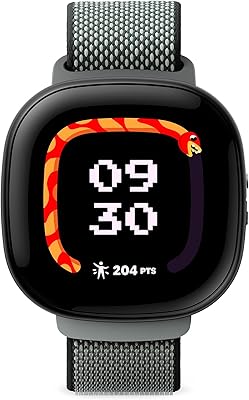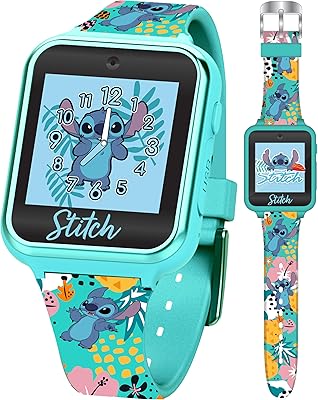
Overview

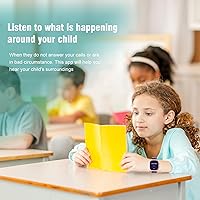
The Tykjszgs LT31 Kids GPS Smartwatch sits in an interesting middle ground — more capable than a basic kids' phone but deliberately restrained compared to a full smartphone, which is exactly what a lot of parents are looking for. This 4G children's tracker watch connects entirely through the SeTracker 2 app on your phone, giving you a centralized dashboard for location tracking, call management, and parental controls. Before you buy, be aware: it requires a Nano-SIM card purchased separately, and it only operates on networks in North and South America. At its price point, it competes in a crowded field, so think of it as a capable entry-level wearable rather than a polished premium device.

Features & Benefits

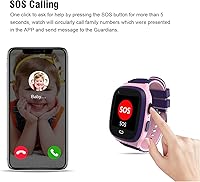
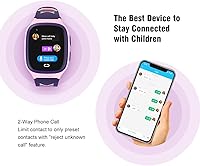
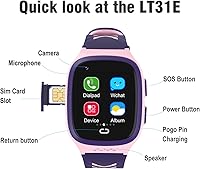
What sets this kids' GPS watch apart from simpler alternatives is how it combines GPS, WiFi, and cell tower data to build a more complete location picture — single-source GPS alone tends to lose accuracy indoors or in dense areas. Call access is locked to a parent-approved list, so your child can only reach people you've approved. The SOS button is genuinely well-designed: hold it for three seconds and it automatically cycles through up to three emergency contacts until one answers. School mode mutes games and non-essential features on a schedule you set, and you can also trigger a remote shutdown from the app if the situation calls for it.

Best For

This 4G children's tracker watch is best suited to parents of kids roughly between five and twelve years old who want a real communication link without giving a child unrestricted internet access. If you've been holding off on handing over a phone but still find yourself worrying during the school day or after-school activities, this sits squarely in that gap. Families who want geo-fence boundary alerts around home and school — rather than checking an app every hour — will find that feature especially useful. One firm prerequisite: you need to be in North or South America and able to source a compatible Nano-SIM from a local carrier before the watch functions at all.

User Feedback

Parents who've used the LT31 smartwatch most often praise GPS location tracking for giving them genuine reassurance during school hours, and video calling gets solid marks for helping kids stay connected without a full phone. On the critical side, the SeTracker 2 app has a noticeable setup learning curve — pairing and configuring everything for the first time takes patience, and some buyers report occasional sync issues after app updates. Call audio quality is another variable; it works well in quiet settings but reportedly drops off in noisy outdoor spots like playgrounds. Battery life is adequate under normal use, though heavy GPS and calling activity will likely mean a nightly recharge.

Pros

  • Combines GPS, WiFi, and cell tower signals for more reliable location accuracy than single-source GPS alone.
  • SOS button auto-dials up to three emergency contacts in rotation until someone actually picks up.
  • Call access is locked to parent-approved numbers, so strangers simply cannot reach your child.
  • School mode disables games and non-essential features on a schedule you set and control remotely.
  • Geo-fence alerts notify you immediately when a child steps outside a designated safe zone.
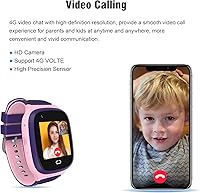
  • Video calling lets kids connect face-to-face with family without needing a smartphone.
  • Remote shutdown and remote photography give parents meaningful real-time oversight through the app.
  • Built-in pedometer and seven puzzle games add genuine daily utility beyond safety-focused features.
  • Battery and charging cable are both included, so no additional accessories are needed to get started.

Cons

  • Nano-SIM card is not included and must be researched and purchased separately before the watch is functional.
  • Only compatible with 4G networks in North and South America — buyers elsewhere cannot use it.
  • SeTracker 2 app setup has a real learning curve and can frustrate first-time users during initial configuration.
  • Call audio quality degrades noticeably in noisy outdoor environments like busy playgrounds or crowded areas.
  • GPS accuracy is inconsistent indoors or in locations with weak cellular and WiFi signal coverage.
  • Heavy GPS tracking and frequent calling drain the battery quickly, making nightly charging a practical necessity.
  • Some users report intermittent app sync issues following software updates that temporarily disrupt location tracking.
  • Build quality reflects the entry-level price point and does not offer meaningful ruggedness or water resistance.

Ratings

Our scores for the Tykjszgs LT31 Kids GPS Smartwatch were generated by an AI system trained to analyze verified global buyer feedback, actively filtering out incentivized reviews, bot submissions, and duplicate accounts to surface what real parents actually experienced. Each category score reflects the full spectrum of reported outcomes — not just the positive ones — so genuine strengths and recurring frustrations are both represented transparently. The result is a rating profile that gives prospective buyers an honest, ground-level picture of how this 4G children's tracker watch performs across the dimensions that matter most.

GPS Tracking Accuracy
71%
29%
Parents tracking their child between home and school generally find location updates timely and directionally accurate, especially in open suburban areas. The combination of GPS, WiFi, and cell tower data performs noticeably better than GPS-only trackers when kids move between buildings or ride through neighborhoods in vehicles.
In dense urban environments, shopping malls, or schools with thick concrete construction, location drift becomes a real issue — the pin can land a block or two off. A number of parents noted the watch occasionally freezes on the last known position rather than updating in real time when signal weakens.
Parental Controls
84%
The call and SMS whitelists, combined with remote shutdown and geo-fence alerts, give parents a genuinely comprehensive oversight toolkit that goes well beyond what most competitors offer at this price level. Being able to schedule school mode remotely and trigger a location check without the child knowing adds real practical value to daily routines.
All controls route exclusively through the SeTracker 2 app, so if the app experiences downtime or a sync failure, parental oversight drops to zero temporarily. A portion of users also reported that certain setting changes take longer than expected to register on the watch, creating a lag that can feel unsettling.
App Experience
62%
38%
Once the SeTracker 2 app is fully configured — contacts loaded, zones defined, school schedule saved — day-to-day use settles into a reasonably smooth routine for most parents. The app consolidates a wide range of functions into a single interface, reducing the need to navigate multiple settings screens constantly.
Getting to that stable state is where most friction lives. Initial pairing trips up a meaningful number of first-time users, and the interface feels dated compared to mainstream alternatives. Occasional sync failures following app updates have also disrupted location tracking without surfacing clear error messages to explain the problem.
Carrier Compatibility
47%
53%
For buyers already on a compatible 4G LTE network in the Americas, inserting a Nano-SIM and getting the watch online is a relatively quick step once app setup is complete. Carriers like T-Mobile and compatible MVNOs have worked reliably for buyers who researched compatibility before purchasing a plan.
The mandatory Nano-SIM purchase — sold separately and not included in the box — is the most consistently cited frustration across buyer feedback. Network support is strictly limited to North and South America, and Verizon-based plans frequently cause compatibility problems, leaving some buyers with a device that cannot place a single call.
Value for Money
78%
22%
The breadth of features packed into this kids' GPS watch at its price point is genuinely hard to match in this segment — GPS tracking, video calling, SOS, geo-fencing, and school mode together represent a substantial feature set for what parents spend. For families with clear safety priorities and modest budgets, the value equation is strong.
That value calculation depends heavily on a smooth setup experience and compatible carrier access, and buyers who hit friction on either front tend to feel shortchanged. The hidden ongoing cost of a separately purchased Nano-SIM plan should be factored into any budget comparison before committing to this device.
Call Quality
67%
33%
Voice calls work reliably for straightforward check-ins — a quick after-school confirmation or a brief reassurance call is handled without notable issues under normal conditions. Video calls, while not high-definition, are clear enough for a face-to-face moment that holds genuine emotional value for both parent and child.
Background noise from playgrounds, school hallways, or sports fields significantly muddies audio on both ends, making conversations frustrating during the exact moments parents care most about. Some users also noted a slight delay on voice calls that disrupts the natural conversational rhythm after prolonged use.
Battery Life
69%
31%
Under typical daily use — school-day GPS tracking, a few short calls, and periodic screen interactions — the battery holds comfortably through afternoon hours for most users. The included charging cable and pre-installed battery mean no additional purchase is needed to get started, which is a small but practical convenience.
Push GPS tracking, video calls, and active games simultaneously and the battery begins to struggle noticeably by mid-to-late afternoon. Parents who want continuous overnight or round-the-clock location monitoring should treat nightly charging as a firm daily requirement rather than an occasional safety top-up.
Ease of Setup
54%
46%
Parents comfortable with smartphone apps and willing to invest 30 to 45 minutes on initial configuration generally find the process manageable and ultimately rewarding. The SeTracker 2 app does walk users through the basic pairing steps, and the watch arrives with enough charge to begin setup immediately out of the box.
For less tech-savvy buyers, the initial experience is a genuine barrier — multiple users describe confusion during SIM insertion, account creation, and app pairing. Unclear in-box instructions compound the frustration, and customer support responsiveness has drawn consistent criticism in published buyer feedback across platforms.
SOS Reliability
83%
The three-second hold activation prevents accidental emergency calls during normal play, which was a real concern parents had raised about competing devices. The rotating auto-dial loop is a practical and well-considered mechanism that meaningfully increases the odds of someone picking up in a time-sensitive situation.
The SOS function depends entirely on active cellular coverage, so in areas with weak or no signal — a school basement, a rural setting, or an underground space — it may fail to connect precisely when it matters most. Parents should verify local carrier coverage before treating this as the household's sole emergency fallback.
School Mode
81%
19%
Schedulable school mode is one of the more practically useful features on the LT31 smartwatch, allowing parents to enforce focused learning time without physically taking the device each morning. Once saved in the app, the schedule runs automatically every school day without requiring any further action from the parent or child.
Any time-zone discrepancy between the app settings and the watch itself can cause the mode to activate at the wrong local time, which defeats the purpose. A subset of users also noted that a forced watch restart can occasionally clear the school mode schedule, requiring it to be reconfigured from scratch.
Build Quality
58%
42%
The watch is light enough for a child aged 5 to 12 to wear through an entire school day without repeated complaints, and the strap design is simple to adjust for smaller wrists. Touch screen responsiveness holds up to everyday handling by younger kids reasonably well under normal daily conditions.
There is no official water resistance or rugged rating, which is a notable gap for a device designed for active children. The plastic construction feels distinctly entry-level, and several buyers reported cosmetic wear — scuffs and strap stress — appearing faster than expected under regular daily use.
Display Quality
73%
27%
The color touch screen is vibrant enough for a child to navigate independently and bright enough for comfortable indoor and moderate outdoor use. Icons and text are sized appropriately for small fingers, and touch registration is consistent enough that kids rarely need to repeat a tap to get a response.
Direct midday sunlight causes noticeable glare that makes the screen hard to read from certain angles — a common limitation at this price tier. Fingerprint smudging accumulates quickly on the display surface, which can require frequent wiping to keep it fully readable throughout an active school day.
Kids Engagement
74%
26%
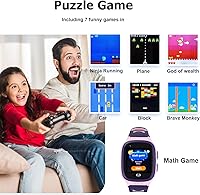
Seven built-in puzzle games give children a reason to actively want to wear the watch rather than resist it, which indirectly supports consistent GPS coverage from a parent's perspective. The pedometer and love reward feature add small but meaningful daily touchpoints that keep younger kids curious about the device.
The games are basic by contemporary standards, and children accustomed to tablets or smartphones tend to lose interest within a few weeks. There is no mechanism to add new apps or games after purchase, so the entertainment value is essentially fixed from the moment the box is opened.

Suitable for:

The Tykjszgs LT31 Kids GPS Smartwatch is the right call for parents of children aged roughly 5 to 12 who want a real communication link without surrendering full internet access to a young kid. If you spend your workday quietly wondering whether your child made it to school, arrived at practice, or is still inside the expected neighborhood radius, the combination of real-time location tracking and geo-fence boundary alerts addresses that anxiety in a practical, low-effort way. Families who want their child to have genuine emergency contact capability — rather than hoping a school staff member handles it — will find the SOS auto-dial feature alone worth serious consideration. It also suits parents who want active, remote oversight from their own phone: the ability to schedule when games are available, block unrecognized callers, and even shut the device down remotely puts control firmly in the parent's hands. One hard prerequisite is that you are based in North or South America and are willing to research and purchase a compatible Nano-SIM card before the watch becomes functional.

Not suitable for:

Buyers outside of North and South America should stop here — the Tykjszgs LT31 Kids GPS Smartwatch is region-locked to those networks, and there is no practical workaround. Anyone expecting premium hardware, a polished companion app out of the box, or pinpoint-accurate GPS under all conditions should recalibrate their expectations before purchasing; this is an entry-level device with real-world trade-offs on each of those fronts. The SIM card is not included, and if you are not prepared to separately research carrier compatibility and purchase a Nano-SIM, the watch will arrive essentially non-functional for its core features. Parents looking for a truly hands-off, plug-and-play tracker will likely find the initial SeTracker 2 app setup process more involved than they bargained for. Older kids and preteens will probably find the feature restrictions and overall experience too limiting, making this better suited to the younger end of the target age range.

Specifications

  • Model: This watch carries the model number LT31, produced by the manufacturer Tykjszgs.
  • Connectivity: The device operates on 4G LTE cellular networks for calls, messaging, and real-time data.
  • Positioning: Location tracking draws simultaneously from GPS satellite signals, WiFi network data, and LBS cell tower information to improve overall accuracy.
  • Display: The watch uses a color touch screen as its primary interface for navigation and interaction.
  • Dimensions: The overall device, including strap, measures 9 x 1.9 x 1.5 inches.
  • Weight: The complete watch weighs 5.3 ounces, which is relatively substantial for a child's wearable.
  • Battery: A Lithium Polymer rechargeable battery is built in and included; no additional battery purchase is required.
  • SIM Card: A standard Nano-SIM card is required for cellular functionality and must be purchased separately from a compatible carrier.
  • Calling: The watch supports two-way voice calls and video calls restricted entirely to parent-approved contacts.
  • SOS Function: Holding the SOS button for three seconds initiates an automatic rotating call to up to three pre-programmed emergency contacts until one answers.
  • Parental Controls: Parents manage call and SMS whitelists, remote shutdown, and remote photography through the SeTracker 2 companion app.
  • School Mode: A schedulable school mode disables games and non-essential watch functions automatically during designated class hours.
  • Geo-fence: Custom geographic safety zones can be defined in the app, triggering alerts when the watch exits the set boundary.
  • Companion App: The watch pairs with the SeTracker 2 app, available for both iOS and Android devices.
  • Regional Use: This device is designed exclusively for 4G networks operating in North America and South America.
  • Built-in Games: Seven puzzle-style educational games come pre-installed on the device.
  • Activity Tracking: A built-in pedometer records the child's daily step count and displays it on the watch face.
  • Extras: Additional features include an alarm clock, an on-device photo album, and a love reward function for parent-child interaction.

Related Reviews
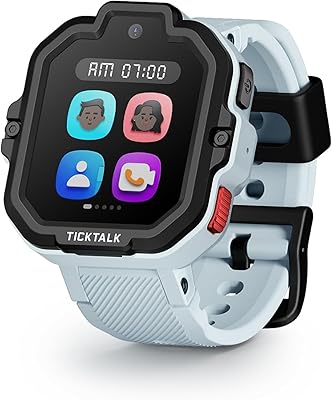
TickTalk 5 Kids Smartwatch with GPS, Video Calling, and Parental Controls
84%
92%
Safety Features
88%
Ease of Use
90%
GPS Accuracy
82%
Battery Life
70%
Build Quality
More
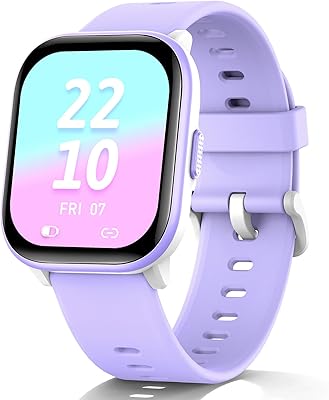
DDIOYIUR 4G Kids Smartwatch
69%
78%
GPS Accuracy
54%
Battery Life
61%
Call & Audio Quality
57%
Setup Experience
74%
Build Quality
More
HENGTO W99 Kids Smartwatch
73%
83%
Ease of Setup
78%
Display Quality
62%
Build Quality
54%
App Experience
74%
Activity Tracking
More
Accutime Bluey Kids Smartwatch
73%
93%
Bluey Theming & Character Appeal
82%
Value for Money
71%
Ease of Use for Young Children
78%
Battery Life
67%
Durability & Build Quality
More
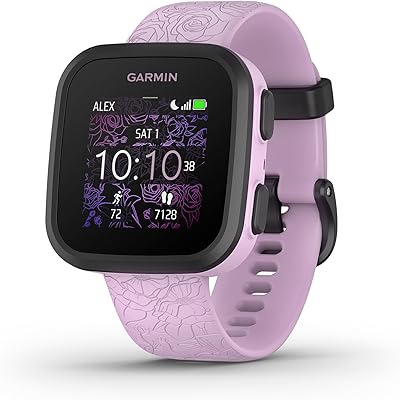
Garmin Bounce Kids Smartwatch
76%
88%
GPS Accuracy
82%
Two-Way Messaging
61%
Battery Life
91%
Durability
53%
Subscription Value
More
Seculife Kids GPS Tracker
73%
88%
Ease of Setup
67%
GPS Tracking Accuracy
91%
SOS Button & Emergency Alerts
74%
Two-Way Calling Quality
82%
Geofencing & Zone Alerts
More
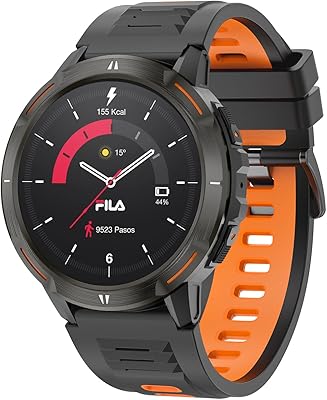
Fila SW52 GPS Smartwatch
74%
83%
Display Quality
67%
GPS Accuracy
61%
Bluetooth Calling
69%
Battery Life
74%
Heart Rate Monitoring
More
BoT Talk GPS Tracker for Kids
67%
67%
GPS Tracking Accuracy
78%
Two-Way Voice Messaging
61%
AI Routine Alerts
54%
Subscription Value & Pricing
74%
Setup & App Experience
More
Garmin Instinct Solar Rugged Smartwatch
78%
88%
Battery Life
93%
Build Quality
91%
GPS Accuracy
89%
Navigation Features
74%
Solar Charging
More
Garmin tactix Delta Tactical GPS Smartwatch
78%
93%
Battery Life
91%
Durability & Build
89%
GPS & Navigation Accuracy
88%
Tactical Features
84%
Sports & Fitness Tracking
More
cjc HD Touchscreen Smartwatch for Kids
83%
90%
Educational Value
88%
Battery Life
85%
Ease of Use
80%
Build Quality
75%
Camera Performance
More

FAQ

No — the Tykjszgs LT31 Kids GPS Smartwatch does not include a SIM card. You will need to purchase a Nano-SIM separately from a carrier that supports 4G LTE in North or South America. In the US, T-Mobile and AT&T prepaid plans are popular choices among buyers of this watch.

Any carrier running a 4G LTE network in North or South America should work in principle. In the US, T-Mobile and AT&T-based networks, including MVNOs that use those towers, tend to perform reliably. Verizon uses a different network architecture that can cause compatibility issues, so it is worth confirming with the carrier before committing to a plan.

Most parents spend between 20 and 45 minutes on the first-time setup, which involves downloading the SeTracker 2 app, creating an account, pairing the watch, and configuring contacts, school mode, and geo-fence zones. The process is manageable but the app interface is not particularly intuitive on the first pass, so set aside some unhurried time rather than trying to rush through it.

In open outdoor environments where GPS, WiFi, and cell signals are all available at once, location accuracy is generally reliable for confirming a child's general whereabouts. Indoors, in dense urban areas, or where signal is weak, accuracy can degrade noticeably. This is a common limitation across kids' watches in this price range, not a flaw unique to this device.

No, and that is intentional. The watch can only place and receive calls from numbers you add to an approved contact list through the SeTracker 2 app. Any number not on that list is automatically blocked, which prevents strangers from reaching your child through the device.

When the SOS button is held for three seconds, the watch immediately begins calling the first emergency contact you have pre-set. If that person does not answer within a set window, it automatically moves to the second contact, then the third, and loops through all three repeatedly until someone picks up. The child does not need to do anything further after holding the button down.

Once you configure it in the SeTracker 2 app, school mode runs on a recurring schedule — you set the days and time windows, and the watch handles the rest automatically. Games and non-essential features switch off at the start of each scheduled period and return on their own when it ends, with no daily input needed from you or your child.

Under moderate use — a handful of location checks, some calls, and typical screen interactions — most parents report getting through a full school day on a single charge. If GPS is pinging frequently and video calls are happening regularly, expect the battery to run noticeably lower by mid-to-late afternoon. Building a habit of nightly charging is the safest approach.

This kids' GPS watch carries no official waterproof or water-resistance rating, so it should be treated with the same caution you would extend to an entry-level phone. Brief hand-washing splashes are unlikely to cause immediate damage, but rain exposure, poolside use, or submersion are all genuine risks that could shorten the device's lifespan.

The manufacturer includes a choking hazard warning for children under 3, but in practical terms, this 4G children's tracker watch is best suited to kids aged 5 and older. A 4-year-old can physically wear it, but the real value of features like two-way calling, the SOS button, and school mode only comes when the child is old enough to understand how and when to use them. For very young children, a simpler GPS-only tracker may be a more appropriate starting point.