Overview

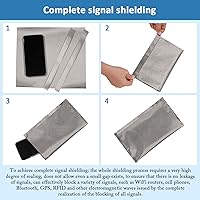
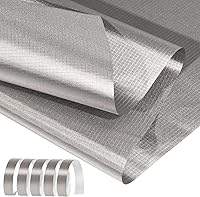
The JRADM 43″ x 130″ Faraday Shielding Fabric is a large-format signal-blocking cloth built for privacy-focused buyers, preppers, and anyone curious about protecting their electronics from EMF, EMP, or RF interference. Faraday shielding works by encasing devices or spaces in a conductive barrier that prevents electromagnetic signals from passing through — think of it as a cage made of fabric. This shielding fabric ships with a generous roll of conductive tape, making it a functional kit rather than just raw material. One thing worth stating upfront: sealing technique matters enormously. Even a small gap in the fabric layers can compromise the entire shielding effect, so results vary based on how carefully you construct your enclosure.
Features & Benefits

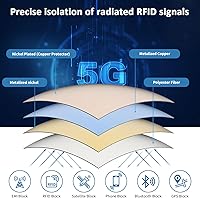
The construction here is more layered than it looks. Beneath the soft textile surface, the Faraday cloth combines a polyester base with metalized nickel and copper layers — a tri-layer design that handles broadband attenuation across a tested range of 0.2 GHz to 14 GHz, with shielding effectiveness landing between 80 and 94.5 dB depending on frequency. That is a wide coverage window for a fabric at this price. The included 236″ of conductive tape is genuinely useful — seam integrity is where most DIY shielding projects fail, and having tape matched to the fabric is a practical advantage. You can cut, sew, or tape this cloth to almost any surface, and a corrosion-resistant coating helps it hold up when stored properly.

Best For

This signal-blocking fabric draws a pretty specific crowd. Preppers and survivalists are the obvious audience — those building EMP-protective storage for hard drives, radios, or cameras will find the large dimensions particularly practical. Privacy advocates use it to line wallets, card holders, or key fob pouches to block RFID skimming without buying a ready-made product. Makers and electronics hobbyists building custom Faraday enclosures for RF testing will appreciate being able to sew or cut it to exact sizes. It also works for people exploring EMF-sensitive sleeping areas or wall lining projects in a server room or secure space. Tech professionals running hardware isolation tests are a natural fit too, though they will need to invest extra care in proper seam sealing.

User Feedback

Buyer reactions to this shielding fabric are mixed in the way you would expect for a DIY-oriented product. Ease of cutting and flexibility come up frequently as positives — people consistently prefer it over rigid metal enclosures for small projects. Dimensional accuracy also seems solid, with most buyers reporting the cloth arrived close to the stated measurements. On the downside, a recurring complaint involves the tape adhesion over time — some users report peeling after a few weeks, particularly in warmer conditions. Worth noting: handle it with gloves. The metallic surface picks up oils from skin quickly, and bare-handed use can leave permanent watermarks. Value-wise, most buyers seem satisfied compared to pricier branded alternatives, though signal performance varies noticeably depending on how carefully seams are sealed.

Pros

  • Large 43″ × 130″ sheet gives buyers plenty of material for multiple DIY projects without ordering extra stock.
  • Tri-layer metalized construction covers a wide tested frequency range, handling cell, WiFi, Bluetooth, and GPS signals in one fabric.
  • Flexibility and soft texture make this signal-blocking fabric far easier to work with than rigid metal alternatives.
  • Comes with 236″ of matching conductive tape, which addresses the most common failure point in DIY Faraday builds.
  • Can be cut, sewn, or taped without special tools, keeping the barrier to entry low for most hobbyists.
  • Corrosion-resistant coating helps the fabric hold up with proper storage, avoiding degradation over time.
  • Dimensional accuracy appears consistent with stated measurements based on buyer reports.
  • Works across a surprisingly wide range of use cases, from tiny key fob pouches to wall panel projects.
  • Mid-range pricing makes it accessible compared to branded shielding solutions that charge significantly more for similar materials.
  • Lightweight at just over 11 ounces, making it easy to transport or reposition during a project.

Cons

  • Real-world shielding performance varies widely depending on sealing quality, so results are never guaranteed out of the box.
  • The included tape has shown adhesion issues over time, particularly in warmer or more humid storage conditions.
  • Handling without gloves leaves permanent sweat marks on the metallic surface, which is an easy mistake to make the first time.
  • No independent third-party attenuation test data is published, so the stated 80–94.5 dB figures cannot be externally verified.
  • A single roll does not cover enough area for whole-room shielding without purchasing additional material.
  • The fabric requires air drying away from sunlight, which limits care options if it gets wet during a project.
  • JRADM is a relatively new brand with limited long-term track record, making durability claims harder to assess confidently.
  • No instructional guide or clear construction tips are included, leaving first-time builders to figure out sealing technique on their own.

Ratings

Our AI rating engine analyzed verified global buyer reviews for the JRADM 43″ x 130″ Faraday Shielding Fabric, actively filtering out incentivized, duplicate, and bot-generated submissions to surface what real users actually experienced. Scores reflect a transparent synthesis of both the genuine strengths that earned repeat purchases and the recurring frustrations that tempered overall satisfaction. Nothing has been softened or inflated — what you see is what the data showed.

Shielding Effectiveness
72%
28%
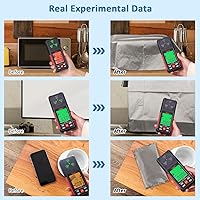
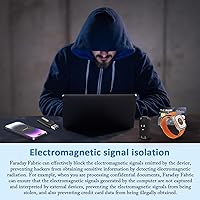
When seams are sealed carefully with the included conductive tape, buyers report solid signal attenuation for everyday use cases like RFID-blocking wallets, key fob pouches, and device storage. The tested range of 0.2 GHz to 14 GHz covers the most common civilian threat frequencies including WiFi, Bluetooth, and GPS.
Real-world attenuation varies enormously based on construction quality — buyers who skipped thorough seam sealing reported disappointing results. There is also no independent third-party lab verification published, which makes it harder to trust the stated 80–94.5 dB figures at face value.
Material Quality
81%
19%
The tri-layer construction — polyester base with metalized nickel and copper — feels substantial compared to flimsy single-layer alternatives in the same price range. The corrosion-resistant coating gives the fabric a professional finish that holds up well in controlled storage conditions.
The metallic surface is noticeably sensitive to handling without gloves, picking up skin oils quickly and leaving marks that are difficult or impossible to reverse. A few buyers also noted that repeated folding along the same crease lines eventually showed surface stress.
Ease of Use
78%
22%
The fabric cuts cleanly with standard scissors and layers without bunching, which makes basic DIY projects like wallet liners or small device pouches genuinely accessible even for people with no prior shielding experience. Being able to sew it on a regular machine for custom shapes is a meaningful advantage over rigid alternatives.
There is no instruction guide in the box, and achieving true signal isolation requires a level of construction precision that first-time builders often underestimate. The learning curve around seam sealing is real, and buyers who expected simple results were frequently let down.
Included Tape Quality
63%
37%
Having 236″ of conductive tape bundled with the fabric is a practical inclusion that saves buyers a separate purchase and ensures material compatibility at the seams. For short-term projects and initial builds, the tape adheres reliably and makes clean seam contact.
Long-term tape adhesion is a recurring complaint — several buyers reported peeling within weeks, particularly in warmer storage environments or when the fabric was handled and repositioned repeatedly. This is a meaningful reliability concern for anyone building a permanent enclosure.
Dimensional Accuracy
84%
Most buyers confirmed the fabric arrived close to the stated 43″ × 130″ dimensions, which builds baseline trust in the product listing. Having accurate dimensions matters especially for room shielding or panel projects where shortfall would require an additional order.
A small number of buyers noted minor discrepancies of an inch or two, which is not unusual for fabric goods but can be frustrating when working to precise measurements for a fitted enclosure or a wall panel layout.
Value for Money
77%
23%
Relative to branded shielding fabric options that charge a significant premium, this signal-blocking fabric offers a solid combination of sheet size, included tape, and material specification at a mid-range price that feels proportionate for what you get. Buyers who used it across multiple projects felt the per-project cost was reasonable.
Budget-focused buyers expecting bargain-tier pricing may find it stretches their budget, while those used to professional-grade shielding products may feel the unverified performance claims do not fully justify the cost. Value perception is closely tied to how successfully buyers execute their builds.
Versatility
88%
The range of viable use cases here is genuinely broad — from RFID-blocking card sleeves to partial room lining to RF isolation enclosures for electronics testing. Being cuttable, sewable, and tape-compatible means the same roll can serve wildly different project types without waste.
While the fabric handles small and mid-scale applications well, it is not a realistic single-roll solution for large room shielding, which requires multiple sheets and a level of sealing complexity that goes beyond what most DIY buyers are set up for.
Handling & Safety
69%
31%
Aside from the glove requirement, the fabric is physically safe and easy to work with — no sharp edges, no chemical odors, and no structural rigidity that would make cutting or sewing awkward. The soft textile base makes it comfortable to handle during extended project sessions.
The glove requirement is a genuine inconvenience that the product does not make obvious upfront — buyers who touched the fabric bare-handed discovered the watermark problem only after the damage was done. The care instructions also limit how you can clean or restore the surface once it is marked.
Storage & Durability
74%
26%
The corrosion-resistant coating and the narrow recommended storage temperature window of 6°C to 34°C suggest the manufacturer has thought about long-term material preservation. Buyers who stored the fabric properly report no degradation in appearance or flexibility after several months.
The storage requirements are more demanding than average fabric goods — no direct sunlight, no moisture exposure, and a specific temperature range — which limits where you can realistically keep unused portions between projects without risk of degradation.
Packaging & Presentation
71%
29%
The fabric arrives rolled rather than folded, which reduces crease lines that could interfere with flat panel projects. Including the tape in the same package avoids the frustration of receiving an incomplete kit and needing to source a compatible conductive tape separately.
There is no protective outer sleeve or moisture barrier on the packaging, meaning the fabric could be exposed to humidity during shipping in adverse weather conditions. Some buyers also noted the roll was not labeled with any usage or care guidance, leaving them to research independently.
Brand Credibility
58%
42%
JRADM enters the market with a product that is at least physically consistent with its specifications, and dimensional accuracy reports suggest the listing is not misleading about what you physically receive. For a newer brand, that basic trustworthiness is a meaningful starting point.
The brand has limited track record — launched in mid-2024 — which means long-term durability data simply does not exist yet. The absence of published independent attenuation testing is a credibility gap that more established shielding manufacturers have already addressed.
DIY Adaptability
86%
Makers and hobbyists consistently highlight how well this shielding fabric lends itself to custom construction — sewing it into pouches, taping it into box liners, or layering it across irregular surfaces is all practical with standard tools. The large sheet size also means you have enough material to prototype and iterate without immediately running out.
Adaptability has limits when the project moves beyond small enclosures. Complex geometries like multi-panel Faraday rooms demand precise overlapping and corner sealing that requires experience the fabric alone cannot provide, and there are no templates or guides to bridge that gap for beginners.

Suitable for:

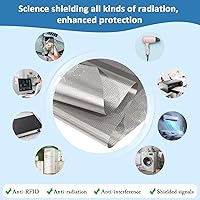
The JRADM 43″ x 130″ Faraday Shielding Fabric makes the most sense for buyers who are comfortable doing some hands-on work and understand that the fabric is a component, not a finished solution. Preppers and survivalists building EMP-protective storage for hard drives, two-way radios, or cameras will find the large sheet size genuinely practical — there is enough material to construct meaningful enclosures without piecing together multiple smaller rolls. Privacy-minded individuals who want to block RFID skimming on wallets, key fobs, or building access cards will appreciate how easily the cloth cuts and shapes around small objects. Makers and electronics hobbyists building RF isolation enclosures for hardware testing are a natural fit, as the fabric is sewable and compatible with the included conductive tape for precise, custom builds. Those exploring EMF-reduction projects around a bedroom wall, sleeping area, or compact server nook will also find the dimensions workable for lining a focused space.
Not suitable for:

The JRADM 43″ x 130″ Faraday Shielding Fabric is not the right choice for buyers expecting a plug-and-play shielding solution. Signal isolation depends almost entirely on how well the fabric is sealed — even a pinhole gap can allow RF signals to leak through, which means buyers without patience for careful, methodical construction are likely to be disappointed with real-world results. It is also not well-suited for large-scale room shielding projects, since a single bolt covers limited square footage and achieving professional-grade attenuation across an entire room requires multiple layers, precise overlapping, and expert sealing. Buyers who expect the tape included in the kit to maintain strong adhesion indefinitely in warm or humid environments may encounter peeling over time, requiring maintenance. Anyone looking for a lab-certified shielding solution for professional or regulatory compliance purposes should look toward purpose-built, independently tested enclosures rather than DIY fabric kits.
Specifications

  • Brand: This product is manufactured and sold under the JRADM brand.
  • Model Number: The official model number for this item is RTWCAA.
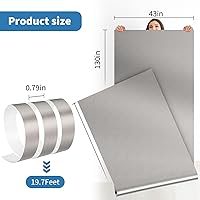
  • Dimensions: The fabric sheet measures 43″ wide by 130″ long, arriving as a single bolt of material.
  • Tape Length: A roll of conductive Faraday seam-sealing tape measuring 236″ in length is included with the fabric.
  • Weight: The complete package weighs approximately 11.36 ounces.
  • Material: The fabric uses a tri-layer construction consisting of a polyester fiber base with metalized nickel and metalized copper layers bonded to the surface.
  • Surface Coating: An additional corrosion-resistant coating is applied over the metalized layers to protect the fabric from oxidation and environmental degradation.
  • Frequency Range: The fabric has been tested for shielding effectiveness across a frequency range spanning 0.2 GHz to 14 GHz.
  • Shielding Rating: Attenuation performance is rated between 80 and 94.5 dB depending on frequency, with higher attenuation achieved at lower frequencies within the tested range.
  • Item Form: The product is sold as a bolt of fabric that can be cut, sewn, folded, or taped into custom shielding shapes and enclosures.
  • Compatible Uses: Intended applications include DIY Faraday cages, RF isolation enclosures, wallet and key fob liners, wall panel shielding, device pouches, and room lining projects.
  • Storage Temp: The manufacturer recommends storing this fabric within a temperature range of 6°C to 34°C to preserve material integrity.
  • Care Instructions: If the fabric becomes wet, it should be air dried in a cool, shaded location away from direct sunlight; machine washing is not recommended.
  • Handling Note: Gloves should be worn during handling, as skin oils and sweat can leave permanent watermarks on the metalized surface.
  • First Available: This product was first listed for sale in July 2024, making it a relatively recent entry in the consumer Faraday fabric market.

Related Reviews
PARTISKY 28″x19Ft Sheer Chiffon Arch Draping Fabric
83%
89%
Drape & Flow
91%
Color Accuracy
88%
Dimensions Accuracy
86%
Value for Money
83%
Fabric Quality & Feel
More
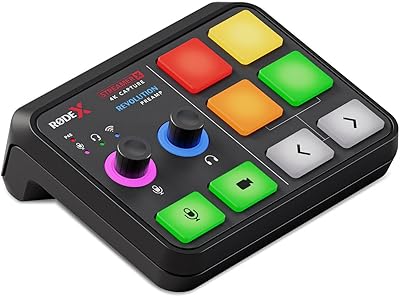
RØDE Streamer X Audio Interface Capture Card

73%
91%
Audio Quality
74%
Video Capture Quality
88%
Build Quality
52%
Driver & Software Stability
86%
Ecosystem Integration
More
Ling's Moment 32Ft Wedding Arch Draping Fabric
80%
88%
Fabric Quality
91%
Wrinkle Resistance
93%
Coverage & Length
86%
Ease of Installation
89%
Visual Appearance
More
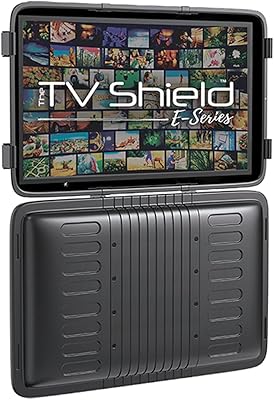
The TV Shield E-Series 43″ Outdoor Enclosure

80%
88%
Build Quality
91%
UV & Weather Resistance
63%
TV Compatibility
84%
Installation Experience
74%
Anti-Theft Security
More
LINXTAR 30x18FT 2-Panel Chiffon Arch Drape
81%
88%
Fabric Quality
84%
Color Accuracy
91%
Panel Dimensions
57%
Opacity & Sheerness
83%
Wrinkle Resistance
More
EggSun Peach Pink Fabric Bulletin Board Paper Roll 14.8FT x 47IN
88%
91%
Durability
88%
Ease of Use
94%
Color Vibrancy
89%
Water Resistance
93%
Reusability
More
Recovery Aftercare Derm Shield 5.9″x8yd Tattoo Bandage
81%
86%
Adhesion Strength
89%
Waterproof Performance
84%
Breathability
78%
Skin Compatibility
88%
Flexibility & Conformity
More
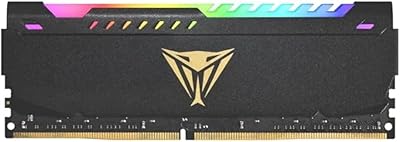
Patriot Viper Steel RGB DDR4 64GB (2 x 32GB) 3600MHz CL 19-19-19-43 UDIMM
87%
88%
Performance for Gaming
85%
Multitasking Efficiency
91%
Ease of Installation
92%
RGB Lighting Customization
87%
Overclocking Capability (XMP 2.0)
More
GDSTIME 200mm 120V AC Axial Fan
82%
93%
Build Quality
91%
Bearing Longevity
88%
Airflow Performance
41%
Noise Level
84%
Ease of Installation
More
Amazon Basics 25x30 Photo Studio Light Box
81%
88%
Lighting Quality
93%
Setup & Ease of Use
86%
Image Quality Output
67%
Build Quality & Durability
71%
Interior Size & Capacity
More

FAQ

It can do both, but the distinction matters. The fabric is tested to attenuate signals across a range that includes cellular frequencies, WiFi, Bluetooth, and GPS. That said, completely blocking a cell signal requires airtight enclosure construction — if there is any gap where two fabric layers meet without proper tape sealing, signals will find a way through. Used correctly, yes, it can block cell signals. Used loosely, you will mostly get partial attenuation rather than full isolation.

The basic concept is straightforward: wrap or enclose your device with overlapping layers of the fabric, then seal every seam with the included conductive tape to eliminate gaps. Where people run into trouble is underestimating how critical those seams are. A loosely folded pouch will not cut it for true signal isolation. Think of it like wrapping a package where the tape has to make continuous electrical contact all the way around — no air gaps, no loose flaps.

For a single wall or a compact space like a server nook or small closet, the 43″ × 130″ sheet gives you a reasonable starting point. For full room coverage across multiple walls, ceiling, and floor, you will almost certainly need more than one roll. Room shielding is also significantly more complex than device pouches — you need to account for every penetration point including outlets, vents, and door frames.

Machine washing is not recommended and will likely damage the metalized surface layers. If the fabric gets wet or dirty, the safest approach is to air dry it in a cool, shaded spot and gently wipe the surface if needed. Avoid direct sunlight during drying, as UV exposure can degrade the coating over time.

Technically yes, but it works. A small cut of the Faraday cloth layered inside a wallet or card holder will block RFID readers effectively if the edges are folded over properly. You do not need the tape for something this small — just enough overlap to prevent signal leakage around the card edges. It is a perfectly reasonable use case, and the large sheet means you will have plenty of material left over for other projects.

The metallic surface is sensitive to skin oils. Bare-handed handling can leave visible watermarks that do not come off easily once they set into the metalized layer. It is not a safety issue, but it can affect the appearance and potentially the surface coating integrity over time. Wearing thin latex or nitrile gloves during handling and installation is the simplest way to avoid this entirely.

Rigid enclosures generally offer more consistent attenuation because the shielding geometry is fixed — there is no risk of gaps from improper folding or tape failure. This fabric trades some of that consistency for flexibility and adaptability. You can shape it around irregular objects, sew it into custom pouches, or line irregular spaces that a rigid box simply cannot fit. For serious EMP protection of high-value electronics, a well-constructed fabric enclosure with careful seam sealing can perform comparably, but it requires more skill and attention than just placing a device in a metal box.

The included tape is adequate for most initial builds, but some buyers have reported adhesion weakening over time — particularly in warmer storage conditions. If you are building something meant to be a long-term protective enclosure rather than a one-time project, it is worth having a backup roll of compatible conductive tape on hand. For short-term or frequently reassembled projects, the included tape should hold up fine.

Yes, it can be sewn with a standard sewing machine using a needle appropriate for medium-weight fabrics. Keep in mind that sewn seams alone do not provide electrical continuity — you still need to seal seams with conductive tape if your goal is signal isolation rather than just physical construction. Sewing is great for shaping the fabric into pouches or liners, but the tape step cannot be skipped for actual shielding performance.

The shielding mechanism is the same for both — the conductive layers attenuate electromagnetic fields regardless of whether the source is a nearby router or a theoretical EMP pulse. The key difference is that an EMP involves a much broader and more intense burst of energy, so construction quality becomes even more critical. A well-sealed enclosure built from this signal-blocking fabric offers meaningful EMP protection for stored electronics, which is exactly why it is popular with the prepper community. But no fabric-based solution should be considered a guaranteed shield against every possible EMP scenario.