Overview

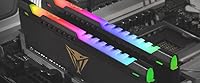
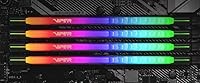
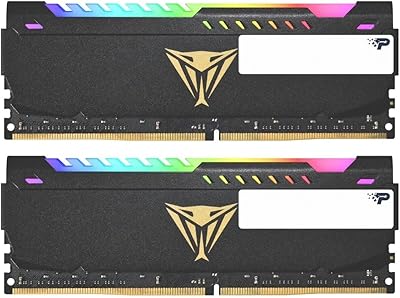
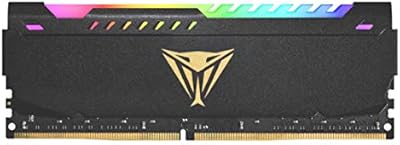
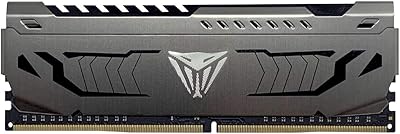
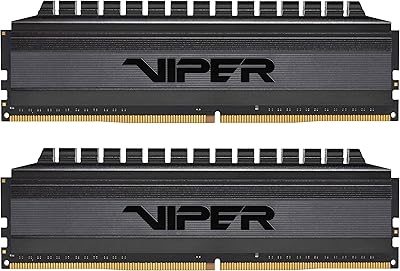
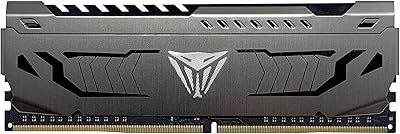
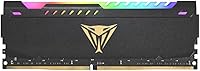
The Patriot Viper Steel RGB DDR4 64GB Memory Kit is a high-capacity DDR4 option built for desktop enthusiasts and power users who genuinely need the headroom that 64GB provides. Patriot Memory doesn’t get the same spotlight as Corsair or G.Skill, but that’s more about marketing than merit. Running at 3600MHz, this 64GB DDR4 memory kit lands at a frequency that still holds real relevance — particularly on AMD Ryzen systems — even as DDR5 platforms slowly become the mainstream choice. Expectations should be set accordingly: this is a stable, well-rounded performer with RGB lighting that’s tasteful rather than flashy, and a heatspreader profile that won’t fight most mid-tower cases for clearance.
Features & Benefits

The 3600MHz frequency is genuinely meaningful here, especially on AMD Ryzen builds where the Infinity Fabric runs most efficiently when memory is clocked at or near that speed. The CL19-19-19-43 timings are worth understanding clearly — they’re not the tightest available at 3600MHz, and sharper-timed kits do exist, but real-world gaming and productivity workloads rarely expose that gap. XMP 2.0 support lets you enable the rated speed with a single BIOS toggle, no manual tuning required. Running in dual-channel across two 32GB modules ensures full memory bandwidth for multitasking and demanding applications. A lifetime warranty backs the kit, which matters when you’re spending this kind of money on memory.

Best For

This Viper Steel RGB kit makes the most sense for content creators, video editors, and streamers who regularly max out 32GB and need room to grow. AMD Ryzen users building on a DDR4 platform will get the most out of it, since 3600MHz hits the sweet spot for Ryzen’s memory controller without pushing instability risks. It’s also worth considering for anyone still on a DDR4 motherboard who wants to upgrade capacity without replacing the entire platform for DDR5. The RGB heatspreader is a bonus feature, not a reason to choose this over competing kits — but it does sync with major motherboard ecosystems cleanly if your build already uses addressable RGB.

User Feedback

Across a substantial pool of reviews, buyers consistently highlight plug-and-play stability as the standout strength — most report enabling XMP in BIOS and never looking back. The build quality also draws praise; the heatspreader feels solid and substantial rather than hollow or flimsy. On the critical side, some users have flagged that the Patriot Viper RGB software can be finicky, particularly on systems where multiple RGB ecosystems compete for control. A handful of compatibility reports around older motherboards appear in the feedback, so cross-checking your board’s QVL is a smart move before purchasing. Value perception is generally positive, though a few buyers note that G.Skill and Corsair offer tighter timings at comparable prices. Overall, the consensus leans positive for those who prioritize capacity and hassle-free setup.

Pros

  • 3600MHz hits the well-documented sweet spot for AMD Ryzen memory controller efficiency, making it genuinely useful rather than just a spec sheet number.
  • Dual-channel 2x32GB configuration maximizes memory bandwidth compared to a single 64GB stick.
  • XMP 2.0 support means you enable the rated speed in BIOS with one toggle — no manual tuning needed.
  • The heatspreader feels solid and substantial, with a build quality that matches kits from more prominent brands.
  • 64GB of headroom is a real advantage for video editors, 3D artists, and heavy multitaskers.
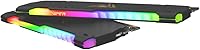
  • RGB lighting syncs with major motherboard ecosystems and adds visual appeal without dominating the build.
  • A lifetime warranty provides genuine long-term reassurance on a meaningful hardware investment.
  • Compatible across both Intel and AMD platforms, making it a flexible choice for mixed-use households or future upgrades.
  • The low-profile heatspreader design avoids clearance conflicts with large CPU coolers in most mid-tower cases.
  • Patriot Memory’s track record for stability is well-regarded among users who have moved past the brand’s lower profile.

Cons

  • CL19 primary timings are not the sharpest available at 3600MHz — competing kits offer tighter latency at similar prices.
  • Patriot’s RGB software has received mixed reviews for reliability, particularly when coexisting with other lighting applications.
  • Investing in a DDR4 64GB kit today carries a risk if you anticipate switching to a DDR5 platform within the next year or two.
  • A small number of users have reported compatibility hiccups with certain motherboards, so checking your board’s QVL list before buying is strongly recommended.
  • The Viper RGB software ecosystem is less mature and polished than what Corsair iCUE or ASUS Aura offer.
  • At 64GB capacity, this 64GB DDR4 memory kit represents a higher upfront cost that only makes sense for users with specific high-memory workloads.
  • No CL18 variant is available in this specific Viper Steel RGB lineup, limiting options for buyers who want tighter timings under the same aesthetic.
  • Patriot’s brand recognition is lower than Corsair or G.Skill, which can make resale value slightly weaker on the secondary market.

Ratings

The scores below reflect AI-driven analysis of thousands of verified global buyer reviews for the Patriot Viper Steel RGB DDR4 64GB Memory Kit, with spam, bot submissions, and incentivized feedback actively filtered out to preserve accuracy. Each category score is calibrated against real user experiences — not manufacturer claims — so both the strengths and the genuine frustrations are represented transparently. Where buyers consistently agreed, the scores reflect that consensus; where opinions diverged or pain points surfaced repeatedly, those nuances are captured in full.

System Stability
91%
The overwhelming majority of buyers report rock-solid day-to-day stability across both Ryzen and Intel platforms, with very few instances of random crashes or memory errors after XMP was enabled. Users running demanding creative software and multitasking workloads consistently note that this 64GB DDR4 memory kit simply stays out of the way and does its job reliably over months of use.
A small subset of users on certain B450 and older X470 motherboards encountered initial instability at rated XMP speeds, requiring either a BIOS update or minor voltage adjustment to resolve. These cases are not widespread, but they do highlight that board compatibility homework is worthwhile before purchasing.
XMP Setup Experience
88%
Buyers who had never manually configured memory settings appreciated that enabling XMP in BIOS was all it took to reach 3600MHz — no secondary voltage tweaking, no manual timing entry. For builders who just want the rated performance without diving into overclocking menus, this kit delivers exactly that experience with minimal friction.
Some users noted that XMP profiles occasionally required a second reboot to fully stabilize, and a handful reported that their system initially posted at default JEDEC speeds before XMP took hold. These are minor inconveniences rather than serious flaws, but first-time builders may find the behavior confusing without prior BIOS experience.
Memory Performance
78%
22%
At 3600MHz, the Patriot Viper Steel RGB delivers competitive bandwidth for Ryzen builds, where hitting that Infinity Fabric frequency alignment translates into real responsiveness gains in bandwidth-heavy workloads like video rendering and large file operations. Synthetic benchmark results are consistent with what buyers expect from a kit in this speed class.
The CL19-19-19-43 timings are the honest limitation here — competing kits at CL16 or CL18 will score measurably better in latency benchmarks, and that gap does show up in tests that isolate memory access times. For users who specifically chased 3600MHz because they read it was a Ryzen sweet spot, the looser timings mean they are not extracting every bit of potential from that frequency.
Latency Timings
67%
33%
In real-world gaming and productivity use, the CL19 primary timing rarely causes perceptible slowdowns, and the vast majority of buyers report no tangible experience difference compared to tighter kits running the same tasks. For workloads that are capacity-bound rather than latency-sensitive, this kit performs well above what the timing numbers alone might suggest.
Enthusiasts and benchmark-focused buyers who specifically sought a low-latency 3600MHz configuration were disappointed to find CL16 and CL18 options from other brands available at similar or only marginally higher price points. The CL19 rating is not a dealbreaker for most users, but it does represent a genuine compromise that informed buyers should factor into their decision.
Build Quality
86%
Users consistently describe the heatspreader as feeling solid and premium to the touch, with no flex or hollow sensation that cheaper modules can exhibit. The fit and finish across both modules is reported as consistent, which matters for buyers who care about visual symmetry in a windowed case build.
A few buyers noted that the heatspreader edges have slightly sharp corners that can catch fingertips during installation, particularly when slots are tight. This is a minor ergonomic complaint rather than a durability concern, but it came up frequently enough in feedback to mention.
RGB Lighting Quality
74%
26%
The RGB diffusion across the heatspreader top bar is even and smooth, producing a clean glow effect rather than the hotspot banding that cheaper RGB memory tends to show. Buyers who run AMD Ryzen builds with Gigabyte or MSI motherboards reported particularly clean sync results with their existing lighting setups.
The brightness ceiling is moderate compared to higher-end RGB memory from G.Skill or Corsair, and some users found the color rendering slightly cooler than expected on white profiles. For buyers who use their build as a centerpiece display, the RGB output here is attractive but not a showstopper.
RGB Software
58%
42%
Patriot’s Viper RGB application does cover the core use case adequately — static colors, breathing effects, and basic color cycling all function as described. Users who set a preferred effect once and leave it rarely revisit the software, which minimizes their exposure to its shortcomings.
The software attracted some of the most consistent negative feedback in the entire review pool, with complaints about instability, slow update cycles, and conflicts when other RGB applications like ASUS Aura or MSI Mystic Light are present. Multiple buyers recommended simply using the motherboard’s native lighting software to control the modules and ignoring the Patriot app entirely.
Motherboard Compatibility
76%
24%
Across recent AMD AM4 and Intel LGA1700 motherboards, this Viper Steel RGB kit posts and runs at rated XMP speeds without issue for the large majority of users. Buyers on Ryzen 5000 builds with X570 and B550 boards specifically noted smooth compatibility with no BIOS workarounds needed.
Older AMD chipsets including B450 and X370 boards generated a disproportionate share of compatibility reports, with some users needing to flash a newer BIOS version before the kit would post reliably at 3600MHz. Checking the QVL list for your specific motherboard is genuinely recommended rather than assumed for this kit.
Value for Money
72%
28%
For buyers whose primary goal is securing 64GB of DDR4 capacity at a reliable 3600MHz speed with a lifetime warranty, the Patriot Viper Steel RGB represents a reasonable outlay relative to the total value delivered. The warranty coverage in particular adds long-term peace of mind that cheaper no-name kits cannot match.
The value calculus gets complicated when buyers compare it directly against G.Skill Trident Z and Corsair Vengeance kits that offer tighter CL16 or CL18 timings at overlapping price points. Several reviewers expressed post-purchase regret upon discovering that sharper-timed alternatives were available at the same or marginally higher cost.
Installation Experience
84%
The physical installation process is smooth and standard, with modules seating firmly and latch mechanisms engaging positively on the boards tested. Buyers building their first high-capacity system commented that the kit installed without drama and booted first try on most modern motherboards.
The module height — while standard for DDR4 — prompted clearance concerns from a handful of users with particularly large air coolers installed in compact mid-tower cases. No permanent clearance issues were widely reported, but it is a consideration worth checking before purchasing if your cooler is on the larger side.
Thermal Performance
81%
19%
The heatspreader does its job effectively under sustained workloads, with buyers reporting that modules stay comfortably within safe thermal margins even during extended video rendering sessions or long gaming sessions without additional airflow directed at the memory.
In cases with poor airflow or aggressive ambient temperatures, a small number of users noticed that the heatspreaders became notably warm to the touch during sustained all-core CPU workloads that also heavily stress memory bandwidth. This is unlikely to cause issues for most users but is worth noting in poorly ventilated enclosures.
Brand Reputation
69%
31%
Patriot Memory has been in the market long enough to have earned genuine trust among enthusiasts who have used their products across multiple build generations. Buyers who specifically chose Patriot after previously owning their SSDs or other memory products tended to arrive with calibrated, realistic expectations and reported satisfaction.
For first-time Patriot buyers, the brand’s lower visibility compared to Corsair and G.Skill can create quiet doubt about after-sales support and long-term parts availability. A few buyers also noted that resale value on the secondary market is softer than equivalent-spec kits from more prominent brands.
Warranty & Support
83%
A limited lifetime warranty is a meaningful commitment at this product tier, and buyers who actually initiated RMA claims with Patriot generally reported a functional, if not especially fast, support process. The warranty coverage was cited as a confidence factor that separated this kit from value-tier alternatives without any warranty protection.
Support response times drew mild criticism from buyers who needed assistance during peak periods, with some waiting longer than expected for a resolution. The support experience is adequate rather than exceptional, and users accustomed to Corsair’s or G.Skill’s support infrastructure may notice the gap.
Dual-Channel Bandwidth
87%
Running both modules in the correct dual-channel slots delivers the full memory bandwidth the platform supports, which users noticed in content creation benchmarks and in large asset loading scenarios in games and creative applications. The 2x32GB configuration is genuinely the right way to deploy this capacity for any performance-oriented build.
A small number of buyers installed only one module initially and were confused when performance felt underwhelming, not realizing they had bypassed dual-channel operation entirely. This is a user education issue rather than a product flaw, but it did generate a handful of unfair negative reviews that skewed early rating data for this kit.
Future-Proofing
61%
39%
For builders committed to DDR4 platforms for another two to three years, 64GB represents genuine headroom that eliminates memory as a bottleneck across virtually any foreseeable DDR4 workload. Content creation workflows in particular will continue to benefit from this capacity ceiling well into the medium term.
The DDR5 transition, while still ongoing, makes any high-investment DDR4 purchase a platform-specific bet rather than a long-term transferable asset. Buyers planning a full platform upgrade within 18 months may find that money better applied toward a DDR5-capable build from the outset.

Suitable for:

The Patriot Viper Steel RGB DDR4 64GB Memory Kit is a strong fit for desktop builders who have outgrown 32GB and need reliable headroom without rebuilding their entire platform around DDR5. Content creators juggling large Premiere Pro timelines, open virtual machines, and browser-heavy workflows will feel the difference that 64GB provides almost immediately. AMD Ryzen users in particular get a tangible benefit from the 3600MHz speed, since it aligns closely with the Infinity Fabric frequency that Ryzen’s memory controller handles most efficiently. Streamers running encoding software alongside a game and a browser full of tabs will also appreciate having that memory buffer rather than constantly watching Task Manager. For anyone on a mature DDR4 platform who wants a capacity upgrade without the cost of a full platform migration, this kit offers a practical, low-friction path forward.
Not suitable for:

Buyers who prioritize the tightest possible memory timings at 3600MHz will want to look elsewhere — CL16 and CL18 kits from G.Skill and Corsair are available at comparable price points and will edge this kit out in latency-sensitive benchmarks. Anyone building a brand-new high-end system from scratch today should seriously weigh whether a DDR5 platform makes more long-term sense before committing to a DDR4 64GB investment. The Patriot Viper Steel RGB DDR4 64GB Memory Kit is also not the right choice for users on tight budgets who only run everyday tasks like web browsing and document editing, since 64GB is simply overkill for those workloads. If RGB lighting control is a priority and your build uses a specific ecosystem like iCUE or Armory Crate, be aware that Patriot’s own software has received mixed feedback regarding stability and integration smoothness.
Specifications

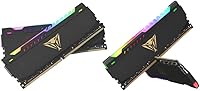
  • Capacity: This kit provides 64GB of total memory across two 32GB UDIMM modules configured for dual-channel operation.
  • Memory Type: Both modules use DDR4 SDRAM technology, which is compatible with a wide range of current and previous-generation desktop motherboards.
  • Speed: The kit is rated at 3600MHz, a frequency widely recognized as the practical performance sweet spot for AMD Ryzen-based desktop platforms.
  • Primary Timings: Factory-rated primary latency timings are CL19-19-19-43, which represent a moderate latency profile at the 3600MHz speed class.
  • Voltage: The modules operate at 1.35V when running at the rated XMP speed, which is within the standard DDR4 low-voltage specification.
  • XMP Support: XMP 2.0 is supported, allowing the motherboard BIOS to automatically apply the rated 3600MHz speed and timings without manual configuration.
  • Form Factor: Both modules are standard UDIMM form factor, designed for use in desktop motherboards with DDR4 DIMM slots.
  • RGB Lighting: Each module features an addressable RGB heatspreader that is compatible with major motherboard lighting ecosystems including ASUS Aura, MSI Mystic Light, and Gigabyte RGB Fusion.
  • RGB Software: Patriot’s Viper RGB software provides standalone lighting control for users who prefer not to use their motherboard’s native RGB application.
  • Compatibility: The kit has been tested across current Intel and AMD desktop platforms, including Ryzen 5000 and Intel 12th and 13th generation systems.
  • Dimensions: Each module measures 8.66 x 3.15 x 1.18 inches, which is a standard full-height DDR4 profile suitable for most mid-tower and full-tower cases.
  • Weight: The complete two-module kit weighs approximately 5.3 ounces in total.
  • Warranty: Patriot Memory covers this kit with a limited lifetime warranty, providing long-term protection against manufacturing defects.
  • Brand: This kit is manufactured by Patriot Memory, a US-founded memory and storage brand with over two decades of industry presence.
  • Series: This kit belongs to the Viper Steel RGB product line, which sits within Patriot’s performance-oriented Viper gaming memory family.
  • Release Date: This specific kit configuration was first made available in September 2022.

Related Reviews

Patriot Viper Steel RGB 16GB DDR4 RAM
80%
88%
Value for Money
81%
Performance
74%
XMP Reliability
79%
RGB Quality
77%
Compatibility
More
Patriot Viper Steel RGB 16GB DDR4 RAM
80%
93%
Setup & Installation
91%
Stability & Reliability
78%
Value for Money
74%
Memory Performance
82%
RGB Lighting Quality
More
Patriot Viper Steel DDR4 RAM 64GB (2x32GB) 3200MHz CL16
87%
92%
Gaming Performance
89%
System Stability
88%
Compatibility
84%
Ease of Installation
90%
Overclocking Potential
More
Patriot Viper Elite II 64GB DDR4 RAM
82%
91%
XMP Setup Experience
88%
Daily Stability
84%
Platform Compatibility
73%
Value for Money
79%
Thermal Performance
More
Kingston FURY Renegade RGB 64GB (2x32GB) 3200MT/s DDR4 Memory Kit
84%
88%
Performance
93%
Ease of Installation
75%
RGB Customization
81%
Heat Dissipation
89%
Build Quality
More
Kingston FURY Beast 64GB (2x32GB) 3600MT/s DDR4 RGB Memory Kit
85%
91%
Performance
87%
RGB Aesthetics
92%
Ease of Installation
89%
Compatibility with Intel and AMD Systems
85%
Overclocking Stability
More
Patriot Viper 4 Blackout 64GB DDR4 Kit
78%
91%
System Stability
88%
XMP Setup Ease
78%
Memory Capacity Value
84%
Platform Compatibility
82%
Thermal Performance
More
Corsair Vengeance RGB PRO SL 64GB RAM
86%
88%
Performance
91%
RGB Lighting
93%
Build Quality
94%
Cooler Compatibility
67%
Software Experience
More
Timetec 64GB DDR4 3200MHz Memory Kit (2x32GB)
84%
88%
Performance
92%
Value for Money
94%
Ease of Installation
90%
Compatibility
85%
Power Efficiency
More
Patriot Viper Steel DDR4 32GB (2x16GB) 3600MHz
88%
90%
Performance
88%
Ease of Installation
91%
Overclocking Performance
89%
Gaming Performance
85%
Build Quality
More

FAQ

You will need to enable XMP in your motherboard BIOS to hit the rated 3600MHz speed. By default, DDR4 memory always starts at the JEDEC baseline speed of 2133MHz regardless of the kit’s rating. Enabling XMP is typically a one-setting change in your BIOS memory or overclocking section, and it takes about 30 seconds to do.

Yes, and it’s actually where this Viper Steel RGB kit performs most meaningfully. Ryzen processors benefit specifically from memory in the 3600MHz range because that speed aligns with the Infinity Fabric clock, which affects how efficiently the CPU communicates internally. It’s not a marketing coincidence — there’s a measurable real-world reason Ryzen users target this frequency.

For everyday computing, gaming alone, or standard office tasks, 64GB is genuinely more than most users will ever saturate. Where it earns its place is in workloads like 4K video editing, large Photoshop or After Effects projects, running virtual machines, or heavy multitasking where multiple memory-intensive applications are open simultaneously. If that describes your workflow, 64GB is practical rather than excessive.

Technically yes, but you should install both sticks from the start to run in dual-channel mode, which delivers noticeably better memory bandwidth than a single module. Running one 32GB stick puts you in single-channel mode, which measurably reduces performance in bandwidth-sensitive tasks. The kit is designed and optimized to be used as a matched pair.

CL19 is on the looser end of what’s available at 3600MHz — you can find CL16 and CL18 kits from competitors at similar price points. In practical day-to-day and gaming use, most people won’t notice the difference, but in synthetic benchmarks or extremely latency-sensitive workloads, tighter-timed kits will pull ahead. It’s a real trade-off worth knowing about, even if it rarely matters in actual use.

Yes, the Patriot Viper Steel RGB DDR4 64GB Memory Kit is designed to sync with major motherboard RGB ecosystems, including ASUS Aura Sync, MSI Mystic Light, and Gigabyte RGB Fusion. That said, some users have reported occasional hiccups when multiple RGB applications are running simultaneously, so sticking to one lighting controller — either your motherboard software or Patriot’s own Viper RGB app — tends to give the cleanest experience.
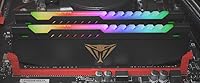
In most cases, yes. The module height sits at the standard full-height DDR4 profile, and the vast majority of mid-tower builds with tower-style CPU coolers will have adequate clearance. That said, if you’re using an exceptionally large air cooler like the Noctua NH-D15, it’s always worth checking the clearance specs for your specific cooler before purchasing any full-height DDR4 kit.

It depends entirely on your current platform. If you already have a DDR4 motherboard and processor, upgrading your memory capacity with this 64GB DDR4 memory kit is a cost-effective move that doesn’t require replacing your CPU or board. If you’re building a brand-new system from scratch, it’s worth at least pricing out a DDR5 platform, since the price premium for DDR5 has dropped considerably. For existing DDR4 users, this kit makes practical sense.

Patriot covers the Viper Steel RGB lineup with a limited lifetime warranty. In practice, this means if a module develops a manufacturing defect, you can contact Patriot’s support team for a replacement. The process is straightforward for most users, though as with any brand, response times can vary. Keeping your original packaging and purchase receipt makes any warranty claim significantly easier.

The Patriot Viper Steel RGB holds its own in terms of stability and real-world performance at 3600MHz. Where competitors like G.Skill Trident Z and Corsair Vengeance have an edge is in RGB software polish, tighter timing options at the same speed, and broader brand recognition that may matter if you plan to resell. Performance-wise in everyday use, the gap is small — but if tighter timings or ecosystem integration are priorities, it’s worth comparing side-by-side before committing.