Overview

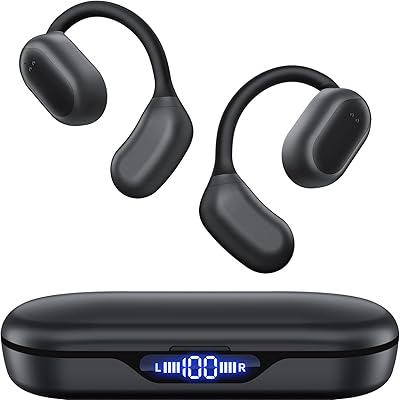
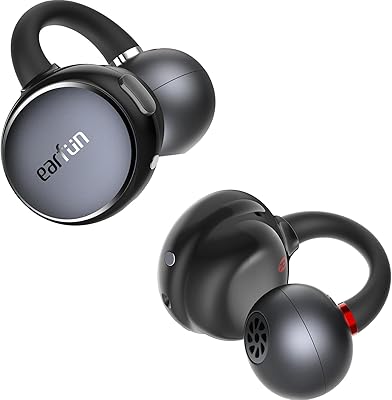
The JLab Flex Open-Ear Wireless Earbuds enter a crowded but still affordable corner of the audio market — one typically dominated by pricier clip-on and bone conduction options. Rather than sitting inside your ear canal, these clip onto the ear like a cuff, which is a genuinely different physical approach worth noting. JLab has built a reputation for delivering functional wireless audio at accessible price points, and the Flex follows that pattern. Don't expect audiophile-grade sound. What you get is a practical, comfortable open-ear option aimed at commuters, office workers, and anyone who needs to remain aware of their surroundings while listening.

Features & Benefits

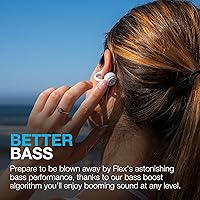
The clip-on cuff fit is the defining characteristic here. Instead of pressing a tip into your ear canal, the earbud wraps around the outer ear and sits just in front of it — no silicone tips, no seal, no pressure-related fatigue after long sessions. A 12mm dynamic driver covers the full frequency range, and the bass boost algorithm does give the low end some punch, though it can feel overdone at times. Bluetooth 5.4 with multipoint handles simultaneous connections to two devices at once, which suits anyone bouncing between a phone and laptop. Battery life reaches 21+ hours total with the case, the earbuds carry an IPX4 rating for sweat resistance, and the JLab app lets you tweak EQ and touch controls.

Best For

These clip-on earbuds make the most sense for people who genuinely dislike in-ear audio. If foam tips and silicone sleeves have always felt invasive or caused soreness after an hour, this is a real alternative. They're a natural fit for cyclists and runners who need to hear approaching traffic, or commuters who don't want to completely cut off from their environment. Office workers who spend most of the day on calls — but still need to catch a colleague walking in — will find the open design practical. The JLab Flex also works well for anyone regularly jumping between a phone and a computer, and for buyers who want to try open-ear audio without spending a lot.

User Feedback

With over 600 ratings and a 4.1-star average, the response to the JLab Flex is largely positive — but not without real reservations. Most buyers highlight the lightweight fit and how intuitive the cuff design is to put on compared to traditional in-ear options. Battery life consistently earns praise. The recurring friction points are more structural than fixable: sound leakage at volume is noticeable in quiet spaces, and the bass can strike some listeners as overprocessed rather than natural. Call quality draws mixed reactions — the dual MEMS microphones are functional but unremarkable. A handful of users with smaller ears note the clip can feel loose or shift during movement, which is a fair thing to check before committing.

Pros

  • The clip-on cuff design eliminates ear canal pressure entirely, making all-day wear far more comfortable than traditional in-ear buds.
  • Open-ear format lets you stay genuinely aware of your surroundings without removing the earbuds or adjusting any settings.
  • Seven-plus hours per earbud, with a case extending total playtime past 21 hours, covers most users through a full workday and then some.
  • Bluetooth multipoint connects to two devices at once, so switching from a laptop call to a phone notification happens without manual re-pairing.
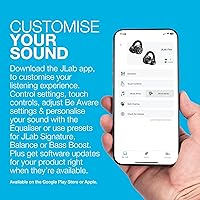
  • The JLab app adds real flexibility — EQ presets and customizable touch controls are not always included at this price point.
  • IPX4 sweat resistance means the JLab Flex holds up through workouts and light rain without special care.
  • Setup is quick and pairing is stable — most users report a reliable Bluetooth connection without frequent drop-outs.
  • The clip-on form factor is lightweight enough that some users forget they are wearing them during extended sessions.
  • Charging time under two hours for both the earbuds and the case keeps downtime short.

Cons

  • Sound leakage is noticeable at moderate to high volumes — anyone nearby in a quiet room will hear what you are listening to.
  • The bass boost algorithm can make low-end frequencies feel punchy but processed, which gets fatiguing on certain music genres.
  • SBC is the only supported codec, which limits audio quality compared to earbuds offering AAC or aptX at a similar price.
  • The clip fit can feel insecure on smaller ears, with some users reporting shifting or slippage during physical activity.
  • Call microphone performance is average at best — background noise bleeds through noticeably in less-than-quiet settings.
  • No active noise cancellation and no passive isolation means these are a poor choice for loud environments like planes or busy transit.
  • Touch controls can be oversensitive, leading to accidental skips or pauses when adjusting the earbud's position on the ear.
  • The open-ear placement means audio volume at the ear is lower than sealed designs, which may feel insufficient in noisy spaces.

Ratings

The scores below for the JLab Flex Open-Ear Wireless Earbuds were generated by our AI after analyzing verified global buyer reviews, with spam, bot-submitted, and incentivized feedback actively filtered out. Each category reflects the honest distribution of real user sentiment — strengths and frustrations alike — so you can make a genuinely informed decision rather than one shaped by cherry-picked praise.

Comfort & Fit
83%
The clip-on cuff design earns consistent praise from buyers who have long struggled with in-ear fatigue. Many users report wearing these for four to six hours straight without any soreness or canal pressure — something virtually impossible with silicone-tipped earbuds.
Buyers with smaller ears flag that the cuff can feel loose and shift position during physical movement, occasionally requiring readjustment mid-activity. The fit is not universally secure, and ear shape variation affects the experience more than with standard earbuds.
Sound Quality
67%
33%
For casual everyday listening — podcasts, playlists, background music during a commute — the audio output is more than adequate. The 12mm driver delivers enough presence across the mid and high range to keep most non-critical listeners satisfied.
The default bass-boosted tuning strikes many users as processed and heavy-handed, particularly on acoustic or vocal-led music. SBC-only codec support places a ceiling on audio resolution that listeners accustomed to better wireless earbuds will notice immediately.
Battery Life
88%
Seven-plus hours per earbud is a meaningful real-world number for this format — more than enough to cover a full workday without touching the case. The 21-plus total hours with the case means most buyers only need to recharge every two to three days.
A small number of users report that real-world battery life comes in slightly below the stated figures, particularly at higher volumes. The case itself does not support wireless charging, which is a minor but notable omission at this price tier.
Bluetooth Stability
81%
19%
Most buyers report a stable, consistent connection throughout regular daily use — walking between rooms, commuting on transit, or working at a desk. The Bluetooth 5.4 implementation pairs quickly and reconnects reliably when earbuds are removed from the case.
A portion of users have noted occasional audio dropouts in environments with high wireless interference, such as busy office floors or crowded transit stations. The 30-foot range claim holds well in open space but degrades predictably through walls.
Multipoint Connection
79%
21%
The ability to stay paired to a phone and laptop simultaneously is a practical win for hybrid workers. Audio routing between devices works without manual intervention in most cases, which users describe as genuinely useful rather than a novelty feature.
Switching priority between devices is not always instant, and some users report a brief audio gap when the active source changes. A few buyers found the multipoint behavior inconsistent when one device wakes from sleep while the other is actively streaming.
Call Quality
61%
39%
In quiet indoor environments, the dual MEMS microphone setup captures voice clearly enough for routine calls and video meetings. Callers on the other end generally report the voice coming through without major distortion or clipping.
Background noise rejection is weak — in open offices, outdoor settings, or anywhere with ambient sound, callers frequently notice bleed-through. This is a consistent pain point in user reviews and limits the earbuds as a reliable hands-free call solution in noisy contexts.
Open-Ear Awareness
91%
This is the core use-case strength and it delivers exactly as expected. Cyclists and commuters specifically highlight how natural it feels to maintain full situational awareness — hearing traffic, announcements, and conversations — without removing the earbuds at all.
The open design inherently means no noise isolation whatsoever, so louder environments reduce perceived audio quality noticeably. Users expecting to use these in loud spaces like planes or construction zones will find them impractical for anything requiring concentration.
Sound Leakage
54%
46%
At low listening volumes, the leakage is relatively contained and unlikely to disturb someone sitting a seat away. Users who keep volumes modest find the open-ear format acceptable in shared workspaces.
At moderate to high volumes, leakage becomes clearly audible to people nearby — multiple reviewers mention colleagues or fellow commuters reacting to it. This is a structural limitation of the open-ear format, but it does restrict comfortable listening volume in public or quiet shared spaces.
App Experience
74%
26%
The JLab app is a genuine value-add at this price point. Buyers appreciate being able to dial back the bass via the Balance or Signature EQ preset, and touch control remapping gives more control than most budget earbuds offer.
The app interface feels utilitarian rather than polished, and a handful of users report occasional sync issues between app settings and the earbuds — particularly after firmware updates. It works, but it lacks the refinement found in apps paired with higher-end earbuds.
Build Quality
71%
29%
The plastic and silicone construction feels reasonably solid for a budget product and does not come across as flimsy or cheaply assembled in hand. Most buyers report no structural issues after months of regular daily use.
The materials clearly communicate the price tier — there is no premium feel to the finish or hinge points. A small number of users have raised concerns about the ear cushion material showing early wear signs with heavy daily use.
Water Resistance
76%
24%
The IPX4 rating holds up well in real-world conditions — users regularly report using these clip-on earbuds through sweaty workouts and unexpected light rain without any issues. The protection level is appropriate for the intended active daily-use audience.
IPX4 is a modest standard and clearly does not cover submersion or heavy rain. The case itself carries no water resistance rating, so storing wet earbuds in it without drying them first is a risk buyers should be aware of.
Ease of Use
84%
Pairing is straightforward on first setup, and most users report the earbuds reconnect automatically and quickly on subsequent uses. The touch controls are intuitive enough to use without consulting a manual for core functions.
The touch controls can register accidental inputs when adjusting the earbud's position on the ear, which causes unintended skips or pauses. A small number of users find the touch zones less responsive in cold weather or with damp fingers.
Value for Money
82%
18%
Relative to other clip-on open-ear earbuds on the market, the JLab Flex delivers a compelling package — multipoint Bluetooth, app support, solid battery life, and IPX4 protection at a price well below most competitors in the same format. For first-time open-ear buyers, the value proposition is strong.
Buyers upgrading from better wireless earbuds may feel the audio quality and microphone performance gap is noticeable enough to temper enthusiasm. The value reads differently depending on expectations — it over-delivers for comfort-seekers and under-delivers for audio quality purists.

Suitable for:

The JLab Flex Open-Ear Wireless Earbuds are a strong match for anyone who has grown frustrated with traditional in-ear designs — particularly people who experience ear canal fatigue, pressure discomfort, or irritation after wearing silicone-tipped earbuds for more than an hour. Commuters, cyclists, and runners who need a reliable audio feed without tuning out road noise or ambient sound will find the open-ear format genuinely useful rather than a compromise. Office workers who split their day between calls and open-plan conversations will appreciate being able to hear colleagues without yanking a bud out every few minutes. The dual-device multipoint connection is a real practical win for hybrid workers bouncing between a phone and a laptop throughout the day. Battery life is generous enough to cover a full workday without needing a mid-session recharge, making these clip-on earbuds a credible daily-carry option for budget-conscious buyers who want open-ear audio without spending significantly more.
Not suitable for:

The JLab Flex Open-Ear Wireless Earbuds are not the right pick for anyone who prioritizes audio isolation or wants to block out a noisy environment — that is simply not what this format does, and expecting it to work like a sealed in-ear earbud will lead to disappointment. Listeners who care deeply about sound accuracy and tonal balance will likely find the bass-boosted tuning overdone and the overall audio profile too colored for critical listening. The SBC-only codec support means audio quality has a ceiling that more demanding listeners will notice, especially if they are used to aptX or AAC. People with smaller ears have flagged that the clip can feel loose or shift during more vigorous physical activity, so those planning intense gym sessions may want a more secure fit option. If microphone quality is a top priority for calls — say, for frequent video meetings or voice-recorded work — the dual MEMS setup here is functional but not impressive enough to rely on in noisy environments.

Specifications

  • Driver: Each earbud uses a 12mm dynamic driver covering a frequency range of 20Hz to 20kHz.
  • Fit Type: The earbuds use a clip-on ear cuff design that wraps around the outer ear without entering the ear canal.
  • Microphone: Two MEMS microphones are built into the earbuds, with a sensitivity rating of -38dB plus or minus 1dB.
  • Bluetooth: Bluetooth 5.4 is supported with a stated wireless range of 30 or more feet and SBC as the audio codec.
  • Multipoint: The earbuds can maintain simultaneous Bluetooth connections to two devices, such as a smartphone and a laptop.
  • Protocols: Supported Bluetooth profiles include HSP, HFP, A2DP, and AVRCP for call handling, audio streaming, and playback control.
  • Battery Life: Each earbud holds 7 or more hours of playback, with the charging case adding 14 or more additional hours for a total of 21 or more hours.
  • Earbud Battery: Each earbud contains a 70mAh lithium polymer battery that charges in under two hours.
  • Case Battery: The charging case holds a 400mAh lithium polymer battery and also charges to full in under two hours.
  • IP Rating: The earbuds carry an IPX4 rating for water resistance, protecting against sweat and light rain but not submersion.
  • Controls: Playback and call functions are managed via touch controls on each earbud, which can be remapped through the JLab app.
  • App Support: The JLab app is available on iOS and Android and offers EQ presets (Signature, Balance, Bass Boost) plus firmware update delivery.
  • Impedance: The earbuds have an impedance of 12 ohms, which is well-suited to direct connection with standard mobile devices.
  • Material: The earbuds and ear cuff components are constructed from plastic with silicone contact points for comfort.
  • Package Weight: The full package — earbuds, case, and accessories — weighs 4.2 ounces.
  • Package Dimensions: The retail box measures 5.2 by 3.66 by 1.54 inches.
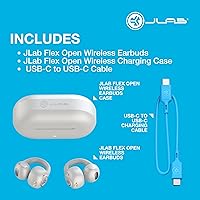
  • In-Box Contents: The package includes the two earbuds, a charging case, ear cushions, and a user manual.
  • Compatibility: These earbuds are compatible with any Bluetooth-enabled device including smartphones, laptops, and desktop computers.

Related Reviews
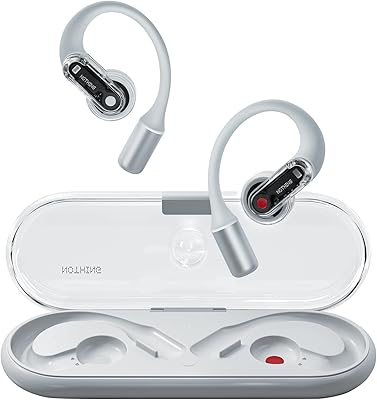
Nothing Ear (Open) Open-Ear Earbuds
79%
91%
Wearing Comfort
83%
Workout Stability
74%
Sound Quality
77%
Call Quality
49%
Sound Leakage
More
JLab JBuds Open Sport Open-Ear Earbuds
76%
88%
Fit & Stability
67%
Sound Quality
83%
Battery Life
62%
Call Quality
74%
Comfort Over Time
More
Sennheiser ACCENTUM Open Wireless Earbuds
82%
88%
Comfort & Fit
80%
Sound Quality
93%
Battery Life
84%
Water Resistance
82%
Connectivity (Bluetooth)
More
Haowolf SP05 Open-Ear Bluetooth Sports Earbuds
80%
88%
Comfort & Wearability
83%
Fit & Stability
92%
Battery Life
67%
Sound Quality
71%
Call Quality
More
JLab Studio Wireless
77%
91%
Battery Life
88%
Value for Money
72%
Sound Quality
81%
EQ Customization
69%
Comfort & Fit
More
Sony LinkBuds Open True Wireless Earbuds
76%
67%
Sound Quality
91%
Ambient Awareness
73%
Comfort & Fit
82%
Call Quality
61%
Value for Money
More
EarFun Clip Open-Ear Earbuds
75%
88%
Wearing Comfort
83%
Audio Quality
71%
Call Quality
74%
Fit Stability
91%
Battery Life
More
Monster Open AC601 Clip-On Wireless Earbuds
73%
83%
Wearing Comfort
61%
Sound Quality
69%
Call Quality
74%
Fit & Stability
88%
Battery Life
More
Htcmf O8 Open-Ear Wireless Earbuds
74%
88%
Wearing Comfort
83%
Earhook Stability
91%
Battery Life
67%
Sound Quality
93%
Ambient Awareness
More
Monster AC338 Open-Ear Bluetooth Earbuds
75%
83%
Comfort & Fit
78%
Battery Life
61%
Audio Quality
86%
Water & Sweat Resistance
81%
Bluetooth Connectivity
More

FAQ

For most users, the clip-on cuff holds reasonably well during moderate activity like running or cycling. That said, a number of buyers with smaller ears have noted the clip can feel less secure and may shift during more intense movement. It is worth keeping that in mind if your ears are on the smaller side.

You can wear either earbud independently, which is handy if you want to keep one ear completely free during a meeting or conversation. Each earbud operates on its own charge, so using a single one at a time also extends how long you can go before needing the case.

The earbud hooks over and around the outer ear like a soft cuff rather than inserting into the canal, so there is no pressure or seal inside the ear. Most users find it noticeably more comfortable over long periods than silicone-tipped earbuds. The learning curve for getting the positioning right is minimal — most people figure it out within a few tries.

Yes, to a degree — that is an inherent characteristic of any open-ear design. At low to moderate volumes the leakage is minimal, but if you push the volume higher in a quiet space, people nearby will likely hear it. This is not a defect; it is simply the trade-off that comes with keeping your ears open to the environment.

It is functional for calls in reasonably quiet conditions, but the dual MEMS microphone setup is not exceptional. In louder environments — open offices, streets, coffee shops — background noise tends to bleed through to the caller. If call clarity in noisy spaces is your primary concern, you may want to consider a headset with a more directional or noise-isolating microphone.

The multipoint feature handles this automatically once both devices are paired. You pair each device separately on first setup, and after that the earbuds can hold both connections at once. Audio will route to whichever device is actively playing, and incoming calls on either device will interrupt playback as expected.

The app is entirely optional. Out of the box, the touch controls handle standard functions like play, pause, skip, and call management without any setup. The app just unlocks additional customization — EQ tuning, touch control remapping, and firmware updates. If you are happy with the default behavior, you can skip it entirely.

The IPX4 rating means these clip-on earbuds can handle sweat and light rain without issue, but they are not waterproof and should not be submerged. Swimming or wearing them in a heavy downpour is not something they are built for.

Both the earbuds and the charging case are rated to charge in under two hours from flat. In practice, the earbuds often reach full charge faster than that. The case charges via USB, and you can top up the earbuds inside the case without needing a separate cable.

Yes. The default tuning leans toward boosted bass, which some listeners enjoy and others find overdone. Through the JLab app you can switch to the Balance or Signature EQ preset, both of which pull back the low-end emphasis for a flatter, more natural sound profile. If you listen to podcasts, vocals, or acoustic music, the Balance preset is generally worth trying first.

Where to Buy

SHI International
In stock $48.00
SF State Campus Store
In stock $49.99
Chapman University Bookstore
In stock $49.99
Quinnipiac University Bookstore
In stock $49.99
bkstr.com/centralnewmexicoccstore/home
In stock $49.99