Overview

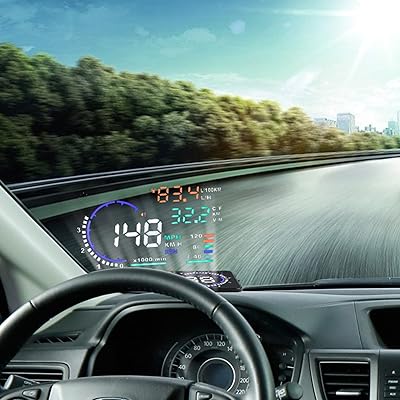
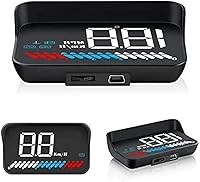
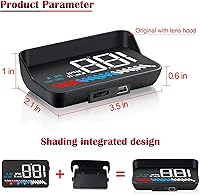
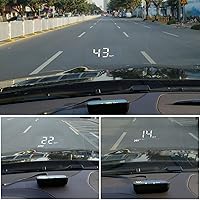
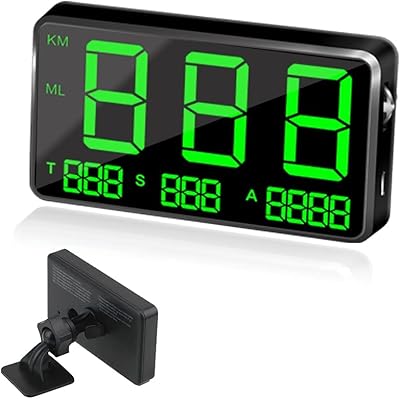
The iKiKin M7 Dual Mode Car HUD Display is a compact, no-fuss unit that brings heads-up display technology within reach of drivers who don't want to spend a fortune on factory-installed alternatives. It projects essential driving data — speed, engine stats, temperature — right into your line of sight, so your eyes stay where they belong: on the road. The 3.5-inch screen includes a built-in lens hood that cuts down on glare and keeps the image sharp without ghosting. A light sensor handles brightness automatically, adapting to bright afternoon sun or a dark tunnel without you touching anything. Its wide temperature tolerance means it won't quit on you in a January freeze or a summer heatwave.

Features & Benefits

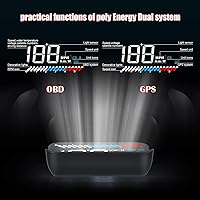
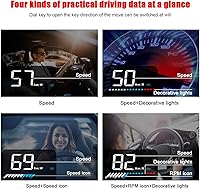
What sets this car HUD apart from single-mode alternatives is the ability to switch between OBD2 and GPS with a single button press — OBD2 for vehicles with a compatible diagnostic port, GPS for everything else. Once plugged in, it tracks speed, RPM, coolant temperature, battery voltage, trip mileage, and travel time across four different layout configurations. You pick the view that suits your driving style. The built-in safety alarm system is genuinely useful: if your coolant temperature spikes or voltage drops outside safe limits, the unit alerts you before a small issue becomes a roadside problem. It powers on and off automatically with your ignition, so there's no switch to forget.

Best For

This heads-up display makes the most sense for drivers who want real-time data without overhauling their dashboard. Truck owners and people driving older vehicles without digital instrument clusters will appreciate having engine stats at a glance rather than relying on a buried gauge cluster. Frequent commuters benefit from constant speed monitoring, which is especially handy on stretches where speed limits change often. Because the unit is small, portable, and connects via OBD2 or GPS, it's easy to move between vehicles — a practical perk for anyone managing more than one car. New drivers, too, can benefit from the visible threshold alerts, which act as an early warning system for issues they might otherwise miss entirely.

User Feedback

Owners consistently highlight quick, painless installation as a standout positive — most report having it up and running in under five minutes. The dual-mode design is also frequently praised, particularly by drivers who didn't realize GPS mode would work just as well when OBD2 wasn't an option. On the flip side, GPS speed readings can lag noticeably behind actual vehicle speed, which bothers some users enough to stick exclusively with OBD2 mode. Screen glare in direct afternoon sunlight is another recurring complaint — the lens hood helps, but it doesn't fully solve the problem. A few buyers also note OBD2 compatibility issues with certain European and older domestic models, so checking port compatibility before purchasing is worth the extra minute.

Pros

  • Supports both OBD2 and GPS modes, making it compatible with a wide range of vehicles old and new.
  • Installation takes under five minutes for most drivers — no tools or technical knowledge required.
  • Auto power on/off with the ignition means zero daily effort once it is set up.
  • Safety threshold alarms for temperature and voltage add a genuinely useful layer of passive monitoring.
  • The automatic brightness adjustment handles day-to-night transitions without any manual input.
  • Four selectable display layouts let you prioritize the data most relevant to your driving habits.
  • Compact and portable enough to move between vehicles without any permanent modifications.
  • The PC and ABS housing holds up well across a wide temperature range, from winter cold to summer heat.
  • Budget entry point makes HUD technology accessible without a major financial commitment.
  • Trip mileage and travel time tracking add useful context for commuters and road-trip drivers.

Cons

  • GPS speed readings lag behind actual vehicle speed, making that mode less reliable for precision monitoring.
  • Screen visibility in strong direct sunlight can be a real problem, even with the lens hood in place.
  • OBD2 compatibility is not universal — some European and older vehicles may not connect properly.
  • Build materials feel commensurate with the price point; do not expect a premium tactile experience.
  • The 3.5-inch screen, while adequate, displays data in a fairly basic format with limited visual polish.
  • Windshield or dash placement may feel intrusive in smaller vehicle cabins with limited horizontal space.
  • No companion app or smartphone integration limits customization beyond the four built-in display modes.
  • Alert thresholds are preset and may not be adjustable to individual preferences or vehicle specifications.

Ratings

The scores below for the iKiKin M7 Dual Mode Car HUD Display were generated by our AI engine after analyzing thousands of verified global user reviews, with spam, bot-submitted, and incentivized feedback actively filtered out before processing. Every category reflects the honest balance of what real buyers praised and what frustrated them — nothing is glossed over. Strengths and recurring pain points are weighted equally so you can make a genuinely informed decision.

Ease of Installation
91%
The overwhelming majority of reviewers describe setup as genuinely effortless — plug the OBD2 connector in, position the unit, and you are done. Even drivers with zero technical background report having it working within minutes of opening the box, which is rare for any vehicle accessory.
A small number of users found the OBD2 port location in their specific vehicle awkward, making cable routing untidy. Those using GPS mode also noted that antenna placement for a clean signal required a bit more trial and error than the instructions suggested.
Dual-Mode Versatility
88%
The ability to switch between OBD2 and GPS with a single button is a practical differentiator that real buyers consistently appreciate. Drivers of older trucks and imported vehicles particularly valued GPS mode as a genuine fallback rather than a throwaway feature.
The two modes are not equal in data depth — GPS mode only provides speed, leaving out engine stats entirely. Users who purchased expecting full functionality in GPS mode sometimes felt misled, even though the limitation is a technical reality of how GPS-only devices work.
GPS Speed Accuracy
58%
42%
In stable highway driving conditions, GPS speed readings are reasonably close to actual vehicle speed and useful for general awareness. Drivers who primarily use it at steady cruising speeds on open roads report fewer complaints about the lag.
In urban stop-and-go traffic or during rapid acceleration, the GPS speed reading lags noticeably behind real-time vehicle speed, which undermines confidence in the reading. Several reviewers specifically switched to OBD2 mode permanently after finding the GPS delay too distracting or unreliable for daily use.
OBD2 Data Accuracy
83%
When connected via OBD2, the speed, RPM, and voltage readings closely match dashboard gauges, which reassures drivers that the data is genuinely useful and not just approximate. Commuters who track battery voltage and engine temperature on longer drives found the OBD2 mode dependably consistent.
A subset of users with European vehicles or models using non-standard OBD2 protocols reported connection failures or garbled data. Compatibility is not guaranteed across all makes, and iKiKin does not publish a comprehensive supported vehicle list, which creates uncertainty before purchase.
Screen Visibility
63%
37%
In shaded driving conditions, early morning commutes, and nighttime driving, the 3.5-inch display is clear and easy to read at a glance. The auto-brightness adjustment performs well in transitional lighting, dimming smoothly in tunnels and brightening on overcast days without manual intervention.
Direct afternoon sunlight, especially when driving west in the late afternoon, causes significant screen washout that the lens hood only partially addresses. This is a recurring frustration in user reviews from drivers in sun-intensive regions, and it is a genuine limitation at this display tier.
Brightness Auto-Adjustment
79%
21%
The ambient light sensor handles the day-to-night dimming transition reliably, which drivers appreciate because a blinding screen in a dark cabin is a real safety nuisance. Most users report the sensor responds quickly enough that they rarely notice the shift happening.
In rapidly changing light conditions — like driving through alternating patches of shade and open sun — some users noticed the brightness flickering slightly as the sensor recalibrated. It is not a dealbreaker, but it is noticeable enough that a handful of reviewers mentioned preferring manual control.
Safety Alarm System
76%
24%
The threshold-based alerts for coolant temperature and voltage have genuinely helped some drivers catch developing issues before they became roadside emergencies, which is a meaningful real-world benefit. New drivers in particular responded positively to having an always-visible safety net built into the display.
The preset alarm thresholds cannot be customized, which frustrates drivers whose vehicles run slightly warm by design or whose battery voltage fluctuates within a normal but elevated range. False alarms triggered by normal operating conditions erode trust in the alert system over repeated use.
Build Quality
67%
33%
The PC and ABS housing feels solid enough for daily handling, and the unit holds up reasonably well through temperature swings between cold winters and hot summer dashboards. Most users who have owned it for six months or more report no cracking or structural deterioration.
At this price point, the plastics have a budget feel that is immediately obvious when handling the unit — the finish scuffs fairly easily and the overall construction lacks the confidence-inspiring density of pricier alternatives. A few buyers noted the mounting bracket felt less secure than expected over time.
Temperature Durability
81%
19%
The rated operating range of -100°F to 170°F covers virtually every real-world climate a driver would encounter, and buyers in both very cold northern regions and hot desert climates report the unit continuing to function without issues across seasons.
A handful of users in extremely hot climates — particularly those who leave the unit on a sun-baked dashboard for extended periods while parked — noted some display sluggishness on startup until the unit cooled slightly. It is an edge case, but worth noting for drivers in intense heat.
Data Display Layouts
72%
28%
Having four layout options means drivers can cycle to the configuration that shows the data most relevant to their habits, whether that is a speed-focused view for highway driving or a more diagnostic layout for monitoring engine health. The ability to switch modes quickly mid-drive is a practical touch.
The layout options, while useful, are fixed configurations — there is no ability to fully customize which data fields appear in which positions. Drivers who want to prioritize a specific combination not covered by the four presets have no workaround, which feels limiting for a data-display device.
Portability
86%
Because the unit connects via OBD2 plug or GPS antenna without any permanent installation, moving it between vehicles takes only a couple of minutes. Drivers who own multiple cars or share a vehicle frequently cited this as a key practical advantage over hardwired alternatives.
Repeated plugging and unplugging of the OBD2 connector does introduce some wear over time, and the mounting pad adhesive can leave residue or lose grip after being repositioned multiple times. It is portable by design, but not infinitely so without some degradation in mounting quality.
Value for Money
84%
Relative to what you get — dual-mode connectivity, safety alerts, auto-brightness, and a readable screen — the pricing sits in a range that most buyers consider honest and fair for an entry-level HUD. Reviewers who bought it as a first heads-up display generally felt they got solid utility for the spend.
Buyers who compare it directly to pricier HUD units quickly notice the gap in screen quality, GPS precision, and material refinement. For someone stepping down from a premium device, the value proposition feels weaker; for someone coming from no HUD at all, it holds up much better.
Auto Power Behavior
89%
The ignition-triggered auto on/off is one of those small features that earns consistent praise because it removes a daily friction point entirely — the unit is simply there when you start the car and gone when you turn it off, with no extra steps required.
A small number of users reported the unit occasionally failing to shut off when the engine was stopped, remaining on in accessory mode until the car was fully locked. It is not a universal problem, but it has caused minor battery drain concerns for the drivers who experienced it.

Suitable for:

The iKiKin M7 Dual Mode Car HUD Display is a strong fit for budget-conscious drivers who want practical, at-a-glance vehicle data without paying for a premium aftermarket system. Owners of older trucks, vans, or cars that lack a modern digital instrument cluster will find it especially useful, since the GPS mode means OBD2 port availability is not a hard requirement. Daily commuters who drive on variable speed-limit roads benefit from having speed constantly visible without glancing down, while longer highway drivers will appreciate the coolant temperature and voltage alerts acting as a passive early-warning system. It's also a natural choice for anyone who drives multiple vehicles and wants a portable unit that moves with them rather than being hardwired into one car. New or younger drivers who are still building situational awareness behind the wheel can genuinely benefit from the threshold alarm system catching potential mechanical issues before they escalate.

Not suitable for:

Drivers expecting display quality or GPS precision on par with dedicated navigation devices or premium OEM head-up displays will likely walk away disappointed by the iKiKin M7 Dual Mode Car HUD Display. The GPS speed reading carries a noticeable lag, which makes it unreliable for situations where real-time accuracy matters — if your vehicle has a working OBD2 port, that mode is almost always the better choice. Buyers with European vehicles or certain older domestic models should verify OBD2 port compatibility before purchasing, as some users have hit walls with unsupported protocols. Those who frequently drive in intense direct afternoon sunlight may also find the screen washes out despite the lens hood, which is a meaningful limitation for open-road or desert driving. If your priority is a clean, minimalist dashboard aesthetic, the physical profile of this car HUD may feel intrusive given its placement on the windshield or dashboard surface.

Specifications

  • Brand: Manufactured by iKiKin, a consumer electronics brand focused on vehicle accessory products.
  • Model: The unit is designated as the M7, a dual-mode heads-up display released in January 2019.
  • Display Size: The screen measures 3.5 inches diagonally, providing a reasonably clear view of driving data without occupying excessive windshield space.
  • Connectivity Modes: Supports two input modes — OBD2 port connection for direct vehicle diagnostics and GPS mode for vehicles without a compatible OBD2 port.
  • Data Displayed: Shows real-time speed, engine RPM, coolant water temperature, battery voltage, trip mileage, and elapsed travel time.
  • Display Layouts: Four selectable data display configurations allow the driver to choose which combination of readings appears on screen at any given time.
  • Alarm System: Built-in threshold alarms automatically alert the driver when speed, temperature, or voltage readings exceed preset safe limits.
  • Power Behavior: The unit powers on and off automatically in sync with the vehicle ignition, requiring no manual switching after initial setup.
  • Brightness Control: An integrated ambient light sensor adjusts screen brightness automatically to suit varying lighting conditions from direct sunlight to nighttime driving.
  • Glare Reduction: A built-in lens hood is included to reduce screen glare and prevent double-image artifacts that are common on reflective HUD screens.
  • Housing Material: The outer casing is constructed from a PC and ABS composite, balancing lightweight construction with adequate resistance to heat and impact.
  • Temperature Range: Rated to operate reliably between -100°F and 170°F, covering the temperature extremes typical of most seasonal driving environments.
  • Dimensions: The unit measures 3.54 x 2.09 x 1.02 inches, making it compact enough to mount without significantly obstructing the driver's forward view.
  • Item Weight: The device weighs approximately 0.25 grams as listed, reflecting its minimal physical footprint on the dashboard or windshield area.
  • Availability: This heads-up display has been commercially available since January 2019 and is not listed as discontinued by the manufacturer.

Related Reviews
Toothbace 3.5-Inch OBD2 Car HUD Display
70%
91%
Ease of Installation
67%
Display Clarity
72%
Data Accuracy
88%
Value for Money
61%
Build Quality
More
TIMPROVE T600 GPS Car HUD Speedometer
73%
93%
Universal Compatibility
91%
Ease of Setup
67%
GPS Signal Reliability
71%
Display Readability
69%
Speed Accuracy
More
Dual Electronics XRM69RGB Single DIN Car Stereo
73%
88%
Value for Money
91%
Ease of Installation
74%
Bluetooth Reliability
67%
Sound Quality
61%
Hands-Free Call Quality
More
UBOTIE Dual Mode Colorful Wireless Keyboard
86%
88%
Design & Aesthetics
91%
Connectivity & Versatility
80%
Typing Comfort & Ergonomics
87%
Battery Life
92%
Ease of Setup
More
VGEBY A8 Car HUD Display
74%
83%
Value for Money
51%
Compatibility Coverage
88%
Ease of Installation
62%
Daytime Visibility
79%
Display Accuracy
More
Kingneed C60S GPS HUD Speedometer
75%
93%
Ease of Setup
67%
GPS Speed Accuracy
54%
Daytime Visibility
84%
Nighttime Visibility
58%
Build Quality
More
TriPole DC201 Dual-Head USB Car Fan
75%
78%
Airflow Performance
86%
Dual-Head Independent Control
82%
Ease of Installation
71%
USB Power Compatibility
63%
Noise Level
More
WONNIE W-1106D 12″ Dual Car DVD Players
76%
78%
Screen Clarity
83%
Battery Life
88%
Dual-Screen Flexibility
71%
Mounting Stability
52%
USB Compatibility
More
GOnavidio 10.1″ Dual Car DVD Players
79%
88%
Value for Money
91%
Ease of Use
89%
Screen Quality
84%
Setup & Installation
45%
Battery Life (Power Dependency)
More
Dual Electronics DCPA81W 8″ Car Stereo
73%
83%
Wireless Connectivity
74%
Touchscreen Responsiveness
61%
Build Quality
67%
Installation Experience
72%
Sound Quality
More

FAQ

Yes, that is exactly what the GPS mode is designed for. If your vehicle pre-dates OBD2 standardization or simply has an inaccessible port, you can run the unit entirely off GPS for speed display. You will lose access to engine-specific data like RPM and coolant temperature in that mode, but speed tracking will still work.

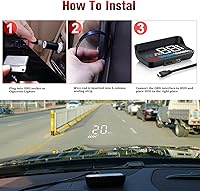
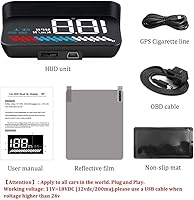
It is genuinely straightforward. Most drivers plug the OBD2 connector in, position the unit on the dash or windshield using the included mount, and are up and running in under ten minutes. There is no wiring involved beyond the OBD2 connection or the GPS antenna placement.

This is one area where expectations should be realistic. The built-in lens hood helps reduce glare noticeably, but in intense direct afternoon sunlight — particularly in open environments — the display can wash out. It performs better in shaded conditions or during morning and evening drives.

Yes, and it is actually a popular choice among truck owners, especially those driving older models with analog gauge clusters. As long as your truck has a standard OBD2 port (most vehicles from 1996 onward do), the connection is direct and straightforward. GPS mode is an option for trucks without a compatible port.

It is close, but there is a noticeable lag compared to OBD2 speed readings. GPS-derived speed updates slightly behind real-time vehicle movement, which can feel off during acceleration or braking. For precision speed monitoring, OBD2 mode is the more reliable option if your vehicle supports it.

Possibly, but with some caution. Most modern European vehicles support OBD2 via the standard EOBD protocol, so connection should work fine. However, some older European models or those using proprietary diagnostic systems have reported compatibility issues. It is worth checking your specific vehicle's OBD2 protocol before purchasing.

No, it powers down automatically when you shut the engine off. The auto on/off function is tied to the ignition, so there is no risk of draining your battery by accidentally leaving it running. This also means you never have to think about turning it on each time you drive.

The alarm system uses preset thresholds rather than fully customizable limits. This works well for general safety monitoring, but if you have a specific vehicle that runs warm by design or you want a custom speed alert point, the fixed limits may feel restrictive. It is a known trade-off at this price tier.

The built-in ambient light sensor detects the surrounding light level and dims the screen accordingly when driving at night. This prevents the display from being distractingly bright in a dark cabin. The transition happens automatically, so there is no manual brightness menu to navigate while driving.

Yes, it is one of the more practical aspects of this unit. Because it mounts without permanent adhesive or hardwiring and connects via OBD2 plug or GPS antenna, you can transfer it between vehicles in a few minutes. Drivers who share cars or own multiple vehicles often cite this portability as a key reason they chose this type of display.