Overview

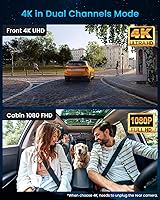
The iiwey N7 3-Channel Dash Cam arrived in April 2025, carving out a niche in the crowded sub-$100 dash cam space — particularly for rideshare drivers and safety-minded commuters. What sets it apart early on is the included 128GB industrial SD card, which competing brands at this price often leave out. It records across three channels simultaneously — front at 3K, inside at 1080P, and rear at 1080P — though switching to 4K dual-channel mode means physically removing the rear camera. Two modes, one body, but not both at the same time.

Features & Benefits

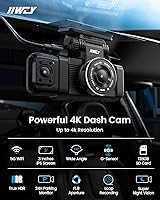
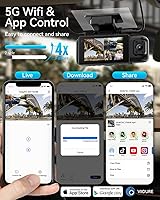
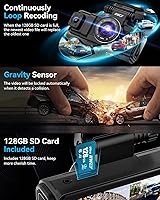
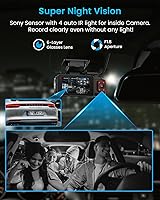
The front camera runs on a Sony STARVIS sensor with HDR and WDR support, which genuinely improves low-light footage compared to cheaper sensors — useful for early morning commutes or nighttime driving. The 5GHz WiFi connection pulls clips to your phone quickly, and the companion app is free with no subscription required. Inside the cabin, the rotatable lens swings 180° and pairs with four IR LEDs for black-and-white night vision — practical for documenting passenger interactions. Loop recording handles storage automatically, the built-in G-sensor locks footage during hard impacts, and the supercapacitor design means no battery swelling over time.

Best For

This cabin-and-road recorder is most obviously suited for rideshare and gig drivers — Uber, Lyft, and similar platforms — who need documented interior coverage alongside front and rear road footage. It also makes sense for anyone upgrading from a basic single- or dual-channel setup who wants complete coverage without hunting down a compatible SD card separately. The free app and no subscription model will appeal to users who want to share clips to social platforms without ongoing costs. Budget-conscious buyers who want a Sony sensor up front without crossing into premium dash cam pricing will find this 3-channel dash cam fits that brief well.

User Feedback

Since the iiwey N7 only launched in April 2025, the review pool is still building — so treat early patterns with appropriate caution. Buyers tend to praise front camera clarity and the convenience of finding a 128GB card already in the box, with app setup drawing positive notes for being straightforward. On the critical side, several buyers flag that parking mode requires a separately purchased hardwire kit, which can feel like a hidden cost after unboxing. The rotatable interior lens draws mixed feedback — some find it adjusts easily, others find it stiff. Mount durability and occasional app stability issues are worth monitoring as the review base matures.

Pros

  • 128GB industrial SD card is included in the box — no extra purchase needed to get started.
  • Sony STARVIS sensor on the front camera delivers noticeably better low-light footage than generic sensors at this price.
  • 5GHz WiFi transfers clips to your phone quickly, and the companion app is completely free with no recurring fees.
  • The 180° rotatable interior lens adapts easily to cabin-monitoring or side-camera positions for rideshare setups.
  • Four IR LEDs give the inside camera usable night vision — handy for late-night passenger documentation.
  • Three-axis G-sensor automatically locks impact footage, protecting evidence before you even know you need it.
  • Built-in supercapacitor eliminates battery swelling risk in hot parked cars — a genuine long-term reliability advantage.
  • Wide 170° front and rear fields of view minimize blind spots without requiring additional cameras.
  • Loop recording manages storage automatically so you never need to manually clear old footage.
  • Collision-triggered parking mode provides a basic level of parked-car protection without any extra configuration.

Cons

  • Parking mode requires a separately sold hardwire kit — continuous overnight protection is not possible straight from the box.
  • You cannot run all three channels at 4K simultaneously; getting the highest front resolution means losing rear coverage entirely.
  • The rotatable interior lens has drawn mixed feedback — some owners find it stiff and awkward to reposition after initial setup.
  • Review volume is thin given the April 2025 launch date, making it hard to assess long-term reliability with confidence.
  • No built-in GPS means no speed or location logging — a drawback for fleet managers or insurance documentation purposes.
  • App stability complaints have surfaced in early feedback, which could affect clip access when you need it most.
  • Adhesive mount durability in high-heat environments remains untested over extended ownership periods.
  • The 3K resolution label is a marketing term for 2880x1620 — meaningfully sharper than 1080P, but not true 4K.
  • iiwey is a relatively young brand without the established support track record of more established dash cam manufacturers.
  • At 12 ounces with a rear camera cable run, the full installation is more involved than a simple plug-and-play front cam.

Ratings

The scores below reflect our AI-driven analysis of verified global buyer reviews for the iiwey N7 3-Channel Dash Cam, with spam, bot activity, and incentivized feedback actively filtered out before scoring. Each category is weighted against real-world usage patterns reported by owners — rideshare drivers, daily commuters, and fleet operators — giving equal weight to what works and what genuinely frustrates. Strengths are credited where earned, and recurring pain points are scored without softening.

Video Clarity
84%
Daytime front footage at 3K resolves license plates and road signs at reasonable distances, which is exactly what matters most during an insurance dispute. Buyers who upgraded from 1080P single-channel cams consistently note the jump in detail is visible and meaningful for evidence purposes.
The 3K label is a marketing resolution sitting between true 1080P and full 4K — do not expect the same sharpness you would get from a dedicated 4K single-channel cam. Interior and rear cameras record at standard 1080P, which is functional but unremarkable compared to front-facing quality.
Night Vision
78%
22%
The Sony STARVIS sensor with HDR and WDR handles nighttime road recording better than most sensors at this price, keeping headlights from blowing out the surrounding frame. The four IR LEDs on the interior camera give rideshare drivers usable black-and-white cabin footage even on completely unlit streets.
IR night vision on the interior camera produces monochrome footage only, meaning color detail on passenger clothing or faces is lost after dark. In heavy rain or fog, front-camera low-light performance can still struggle with oncoming glare, which is a common complaint among night-shift drivers.
Value for Money
88%
Getting a 3-channel setup with a Sony STARVIS front sensor and a pre-installed 128GB industrial SD card in a single purchase under $100 is genuinely difficult to match from competing brands. Buyers frequently call out the included SD card specifically as what pushed them to choose this over similarly priced rivals.
The value calculation shifts if you factor in the separately sold hardwire kit needed for parking mode, which adds meaningful cost to the full setup. At that combined price, the gap between this cabin-and-road recorder and lower-end premium brands begins to narrow.
Ease of Setup
82%
18%
Most owners describe getting the main unit mounted, the app connected, and recording started within 20 to 30 minutes — notably faster than 3-channel rivals that require more complex cable routing. Having the SD card pre-installed removes one of the most common first-time frustrations with dash cams.
Routing the rear camera cable neatly through a vehicle interior takes patience, and the included cable clips are minimal for longer runs in SUVs or larger vehicles. A handful of owners noted that the initial WiFi pairing required a couple of attempts before the app recognized the camera reliably.
App Experience
67%
33%
The 5GHz WiFi connection transfers clips to your phone fast enough that pulling a specific incident clip feels practical rather than tedious — a real improvement over older 2.4GHz dash cam apps. The interface covers the key functions: live preview, settings adjustment, and clip download, all without requiring a paid subscription.
App stability complaints appear consistently in early reviews, with some users reporting disconnections mid-transfer or the live preview freezing after the phone screen locks. The app interface itself is functional but dated compared to what polished rivals offer, which matters more as owners use it regularly over months.
Interior Camera
81%
19%
The 180° rotatable lens is genuinely useful for rideshare drivers who want to position it as a side-facing camera rather than a traditional cabin-overhead view. At 150° field of view with IR support, the inside camera covers the full rear passenger area without needing a second dedicated device.
Some owners report that the rotatable mechanism feels stiff once the unit is adhesively mounted on the windshield, making post-install repositioning more awkward than the spec suggests. For non-rideshare drivers the interior camera is less of a selling point, and the fixed 1080P resolution will not impress anyone coming from a dedicated interior camera.
Parking Mode
59%
41%
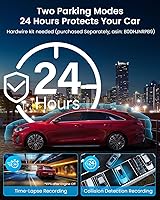
When properly connected via the hardwire kit, the collision-triggered parking mode does its job — recording a buffer of footage around a detected impact without draining the vehicle battery. Low-bitrate continuous recording also helps preserve storage during overnight periods when nothing significant occurs.
The need for a separate hardwire kit purchase is a recurring frustration among buyers who assumed parking protection was ready to go out of the box — it is the single most common complaint in early reviews. Until that kit is installed, the camera has no parking capability at all, which is a meaningful limitation for anyone buying this specifically for parked-car security.
Build Quality
72%
28%
The supercapacitor design is a practical long-term advantage over battery-based rivals, particularly in climates where a parked car regularly reaches high interior temperatures. The overall construction feels solid for the price tier, without obvious flex or rattling in early ownership.
Adhesive mount durability in sustained heat has not been widely tested given the camera only launched in April 2025, and some owners in warmer regions have flagged concerns about long-term adhesion. The plastic housing quality is adequate but does not feel as premium as Vantrue units in the same price bracket.
Wide-Angle Coverage
86%
The 170° front and rear fields of view capture full lane width plus adjacent lanes on most road types, which directly reduces the footage gaps that cause problems during multi-vehicle incidents. Buyers upgrading from narrower single-channel cams notice the expanded perspective immediately in the first playback.
Wide-angle lenses introduce edge distortion, and at 170° some owners note that objects at the extreme corners of the frame appear bent — relevant if you need to read a plate near the edge of the frame. The 150° interior angle, while wide, occasionally misses activity in the far corners of a full-size SUV rear seat.
Loop & Storage Management
89%
Automatic loop recording combined with G-sensor-protected clip locking works reliably in day-to-day use — owners consistently report that important clips are preserved after incidents without any manual intervention needed. The 128GB card provides substantially longer recording windows before footage cycles compared to the 64GB cards typically bundled by competitors.
The loop recording system does not notify the driver when storage is nearly full or when a clip is locked, which can lead to confusion when trying to locate specific footage after the fact. Power users who record in 4K dual-channel mode will find the 128GB card fills faster than expected and may need to budget for additional storage.
WiFi Transfer Speed
83%
Transferring a short incident clip over 5GHz WiFi takes seconds rather than the minute-plus slog that frustrated owners of older 2.4GHz dash cams. For rideshare drivers wanting to pull footage quickly after a difficult passenger interaction, this speed difference is practically significant.
WiFi range between the camera and phone is short — moving more than a few feet from the vehicle during transfer can cause the connection to drop. A few early owners also noted that the 8MB/s peak speed is not always consistently achieved, with real-world transfers sometimes running closer to 5MB/s depending on phone hardware.
Recording Mode Flexibility
63%
37%
The ability to switch between a 3-channel configuration and a higher-resolution 4K dual-channel mode from a single unit offers real adaptability — most competitors lock you into one approach entirely. Drivers who occasionally need sharper front footage for professional or legal documentation will appreciate having that 4K option available.
Switching to 4K mode requires physically removing the rear camera, which is not a quick toggle and effectively means choosing your setup each time rather than having both capabilities simultaneously. The spec sheet presents both modes in a way that many buyers initially misread as simultaneous, leading to disappointment after purchase.
Brand Reliability
61%
39%
iiwey has been steadily expanding its dash cam lineup and the N7 shows clear improvements in sensor choice and feature depth over their earlier models. Customer service response times in early reviews are generally described as acceptable, with replacement units dispatched for confirmed defects.
As a mid-tier brand without the long support track record of Vantrue or Thinkware, long-term firmware update support and warranty follow-through remain unknowns. The April 2025 launch means there is simply not enough ownership history yet to assess how these cameras hold up after a year or more of daily use.
Installation Experience
74%
26%
The included crowbar tool, cable clips, and adhesive pads cover the basics of a clean windshield-mounted installation without requiring a trip to the hardware store. For a 3-channel system, the rear camera cable is reasonably thin and manageable to tuck along headliner trim in most sedans and compact SUVs.
Larger vehicles with longer headliner runs or complex A-pillar trim will find the included cable clips insufficient for a fully clean install. The adhesive mounting system offers no adjustability after the pad sets, meaning a slightly off-angle placement on install day becomes a permanent compromise.

Suitable for:

The iiwey N7 3-Channel Dash Cam is most compelling for rideshare and gig economy drivers — Uber, Lyft, and similar platforms — who need simultaneous front-road, cabin interior, and rear documentation in a single unit without spending premium prices. Having the 128GB industrial SD card included at the time of purchase removes one of the most common setup headaches, making it genuinely ready to use out of the box. The rotatable interior lens and built-in IR night vision make it particularly practical for drivers working late shifts who need verifiable cabin footage. Safety-conscious daily commuters upgrading from a basic front-only cam will also appreciate getting three angles of coverage and a Sony STARVIS sensor up front without crossing into the $150-plus tier. Anyone who values a free, no-subscription app for quick clip sharing will find the 5GHz WiFi transfer speeds make that workflow fast enough to actually use.

Not suitable for:

Buyers who want true 4K three-channel coverage will need to look elsewhere — the iiwey N7 3-Channel Dash Cam forces a real trade-off: you either get 3K front with all three cameras active, or 4K front with only the interior camera and no rear coverage. Drivers who rely heavily on parking surveillance should factor in the added cost of a hardwire kit, which is sold separately, before assuming overnight protection is included. The product only launched in April 2025, so anyone who weighs long-term brand reliability or wants a deep pool of owner reviews to consult before buying may find the track record too short to be reassuring. Users in very hot climates should also note that adhesive mounts can fail in extreme heat, and the long-term durability of this specific mount has not been widely tested yet. If you need GPS logging built in for insurance or fleet management purposes, this cabin-and-road recorder does not offer that feature.

Specifications

  • Front Resolution: Records at 3K (2880x1620) in 3-channel mode or 4K (2160P) in dual-channel mode with the rear camera removed.
  • Interior Resolution: The inside cabin camera captures footage at 1080P (1920x1080) in both recording modes.
  • Rear Resolution: The rear camera records at 1080P (1920x1080) and is only active during 3-channel mode.
  • Field of View: Front and rear cameras each cover 170 degrees; the interior camera covers 150 degrees.
  • Front Sensor: The front camera uses a Sony STARVIS sensor with HDR and WDR support for improved low-light and high-contrast performance.
  • Night Vision: The interior camera features 4 built-in IR LEDs that produce black-and-white night vision footage in low-light cabin conditions.
  • WiFi: 5GHz WiFi supports transfer speeds up to 8MB/s to the companion smartphone app, with no subscription fee required.
  • Interior Lens: The inside camera lens rotates 180° and can be repositioned to function as a side-facing or cabin-monitoring camera.
  • Storage Included: A 128GB Industrial U3 SD card is pre-installed in the unit, rated for the sustained write demands of continuous high-resolution recording.
  • G-Sensor: A 3-axis gravity sensor detects significant impacts and automatically locks the relevant footage to prevent it from being overwritten.
  • Loop Recording: The camera continuously overwrites the oldest unlocked footage when the SD card is full, ensuring uninterrupted recording without manual management.
  • Parking Mode: Supports both low-bitrate continuous parking recording and collision-triggered recording, but requires a separately purchased hardwire kit (ASIN B0DHJNRPB9) for power.
  • Power Supply: Uses a built-in supercapacitor instead of a lithium battery, reducing the risk of heat-related swelling or degradation in parked vehicles.
  • Mounting: Attaches to the windshield via adhesive pads included in the box; no suction cup mount is provided.
  • Dimensions: The main unit measures 1.75 x 5 x 3 inches and weighs 12 ounces with cables and the rear camera included.
  • App: The free companion app enables live video preview, settings adjustment, clip download, and sharing to platforms such as Instagram and YouTube.
  • Connectivity: Connects to smartphones via 5GHz WiFi; no Bluetooth pairing is required.
  • In the Box: Package includes the main unit, rear camera, car charger, adhesive pads, cable clips, a crowbar tool, quick guide, user manual, and the pre-installed 128GB SD card.

Related Reviews
Zengest 3 Channel Dash Cam
86%
88%
Video Quality
85%
Ease of Installation
92%
Night Vision Performance
72%
App Control Experience
90%
Parking Mode Reliability
More
Kussla X30 3-Channel Dash Camera
67%
83%
Night Vision
81%
Front Camera Quality
62%
Rear & Interior Quality
74%
Ease of Installation
86%
Value for Money
More
AZDOME M580 3-Channel Dash Cam
85%
93%
Video Quality
88%
Ease of Setup
85%
GPS Tracking Accuracy
90%
Night Vision Performance
82%
Build Quality
More
Veqotya S16 3-Channel Dash Cam
69%
89%
Value for Money
74%
Video Clarity
67%
Night Vision
61%
App & WiFi Experience
81%
Interior Cabin Camera
More
BAEASU J07 3-Channel Dash Cam
73%
83%
Video Clarity (Front Camera)
71%
Night Vision Performance
88%
Interior Cabin Recording
74%
Rear Camera Quality
86%
Ease of Installation
More
Vantrue N4 3-Channel Dash Cam
70%
88%
Video Quality
92%
Interior Night Vision
86%
Build & Durability
89%
Heat & Cold Resistance
74%
Parking Mode
More
ZKCAMSPY Triple Channel 1080P Dash Cam
72%
86%
Value for Money
88%
Multi-Channel Coverage
79%
Night Vision Performance
61%
Build Quality
57%
Parking Monitor
More
Icesky M4 Three-Channel Dash Cam
71%
83%
Daytime Video Clarity
67%
Night and Low-Light Performance
61%
App Experience
69%
Installation Process
72%
Build Quality
More
iZEEKER iD230 3-Channel Dash Cam
75%
83%
Front Camera Quality
88%
Cabin Night Vision
61%
Rear Camera Quality
79%
Ease of Installation
67%
G-Sensor Reliability
More
Rexing M3 3-Channel Mirror Dash Cam
75%
83%
Video Clarity (Daytime)
61%
Night Vision Performance
88%
Screen Quality
58%
GPS Accuracy
86%
Cabin Camera Utility
More

FAQ

No — that is one of the more confusing aspects of this camera. You have to choose between two modes: either run all three channels simultaneously with the front at 3K (2880x1620), or remove the rear camera and switch to dual-channel mode to get 4K up front. You cannot have both the rear camera active and 4K front resolution at the same time.

Not on its own. The iiwey N7 3-Channel Dash Cam supports parking mode, but it requires a continuous power source that the standard car charger cable cannot provide when the engine is off. You will need to purchase a compatible hardwire kit separately (iiwey lists ASIN B0DHJNRPB9) and connect it to your vehicle's fuse box to enable 24/7 parking recording.

It is listed as an Industrial U3 grade card, which is a meaningful spec for dash cams — it is rated for the kind of sustained, repeated write cycles that continuous loop recording demands. Generic SD cards not designed for this use can fail prematurely in dash cams, so including a purpose-built card at this price point is a genuine value add rather than just a marketing extra.

The four IR LEDs produce black-and-white footage inside the cabin, which is functional rather than cinematic. In complete darkness it will clearly capture faces and movement in the passenger area, which is the main use case for rideshare drivers. Do not expect color detail at night — the IR mode trades color for visibility, which is the standard trade-off with infrared cameras at this price.

It is adjustable, but early owner feedback suggests it can feel stiff, particularly once the adhesive mount has set and the camera is fixed in place. Spending a few minutes positioning the interior lens carefully during initial installation is worthwhile, since repositioning it later while mounted on the windshield is more awkward.

No. The companion app is free and iiwey explicitly states that a subscription is not recommended or required. You can connect via 5GHz WiFi, stream live footage, adjust settings, and download clips to your phone at no ongoing cost.

Yes — that is actually one of the design intentions behind the 180° rotatable interior lens. Instead of pointing it at the rear passenger area, you can rotate it to face out a side window, making it adaptable for drivers who prefer a side-angle view or who need to document activity outside the passenger window.

The 5GHz WiFi is rated up to 8MB/s, which is noticeably faster than 2.4GHz connections found on older or cheaper dash cams. For a typical short incident clip this means transfers of a few seconds rather than a minute or more. Full-length loop files will still take time, but for pulling a specific recent clip quickly it is practical.

iiwey lists compatibility with cars, buses, and SUVs. The main practical considerations are cable routing for the rear camera and whether the adhesive mount will adhere properly to your specific windshield. Larger vehicles with longer rear-camera cable runs may need additional cable clips, though a small supply is included in the box.

That is a fair concern. The review pool is still growing as of mid-2025, which makes it harder to assess long-term durability with confidence. Early feedback covers image quality and setup positively, but issues like app stability and mount longevity are things that tend to surface only after months of daily use. If a well-established track record is important to you, waiting for more owner reviews to accumulate or considering a more established brand would be a reasonable approach.