

Overview

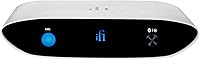
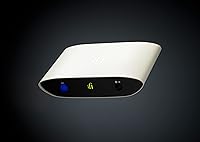
The iFi Zen Air Blue is a compact Bluetooth receiver built for one specific job: adding wireless streaming to wired hi-fi systems that were never designed for it. Rather than replacing your amplifier or speakers, this hi-fi wireless adapter connects via RCA line-in, letting your phone or tablet feed music directly into equipment you already own. iFi Audio — the consumer arm of Abbingdon Music Research — has a genuine track record in affordable high-performance audio, so there is real engineering behind the name. Launched in early 2022, it sits in a mid-range bracket and remains in active production.

Features & Benefits

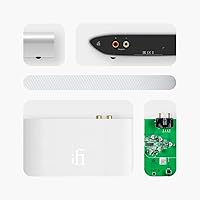
The codec list here is genuinely impressive. This Bluetooth streamer supports aptX Adaptive, aptX HD, LDAC, HWA/LHDC, and more — covering every high-res wireless codec your phone is likely to offer. That matters in practice: when you stream Apple Music lossless or Tidal Hi-Fi, the audio reaching your amplifier is preserved at a much higher quality than with a cheap adapter. The stereo RCA output keeps it broadly compatible with traditional amplifiers and receivers. At 6 x 4 x 1.4 inches, it tucks easily onto a shelf or rack, and the internal circuitry is designed to minimize the signal degradation that plagues lower-end Bluetooth devices.

Best For

This hi-fi wireless adapter makes the most sense if you already own a solid amplifier or receiver and simply want to add wireless capability without rebuilding your setup. It is particularly well-matched to Android users with LDAC-capable phones, where the codec unlocks genuinely higher-resolution audio. Tidal and Apple Music subscribers will also find real value here — the codec support means your stream arrives at the amplifier with minimal quality loss. Compact enough for desktop listening rooms too. One important check: the RCA-only output won't work with systems that only have digital inputs like optical or HDMI ARC, so verify your connections before ordering.

User Feedback

Across roughly 400 ratings, the Zen Air Blue holds a 4.2 out of 5. Most positive feedback centers on a noticeable improvement over cheap adapters — people hear a real difference, especially when running through quality speakers. LDAC performance on Android is mentioned frequently as a standout. On the flip side, some users report occasional pairing issues, particularly with older Bluetooth devices or when switching sources repeatedly. The RCA-only output also catches a few buyers off guard who assumed digital connections were included. Long-term reliability has not surfaced as a widespread complaint, though the review pool is still relatively modest — worth scanning recent entries if durability is a priority.

Pros

  • Supports every major high-res Bluetooth codec, including LDAC, aptX Adaptive, and aptX HD.
  • Android users get a genuine step up in wireless audio quality over budget adapters.
  • Stereo RCA output works with virtually any amplifier or receiver built in the last four decades.
  • Setup takes under five minutes — no app, no network, no configuration screens to navigate.
  • Compact enough to tuck into a tight shelf or rack without rearranging your system.
  • iFi Audio has a credible track record, so this is not a no-name product hoping on spec claims.
  • Tidal and Qobuz subscribers get a receiver that can actually keep pace with their streaming tier.
  • USB-powered operation keeps the desk or rack clutter-free without a dedicated power brick.
  • Sound quality improvement over cheap Bluetooth adapters is consistently reported by real buyers.
  • Works just as well in a desktop listening setup as in a dedicated listening room.

Cons

  • iPhone users are capped at AAC, which significantly narrows the audio quality advantage.
  • Pairing with older or non-aptX Bluetooth devices can be unreliable and occasionally requires a restart.
  • No display or indicator to confirm which codec is active during playback.
  • RCA-only output excludes any system with purely digital inputs, a fact easy to overlook before buying.
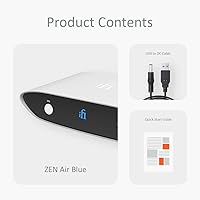
  • No USB power adapter is included in the box, which feels like an oversight at this price.
  • Codec switching between paired devices sometimes defaults to a lower-quality codec until the unit is power-cycled.
  • No app, EQ, or any form of software control for users who want more than a passive receiver.
  • Wireless range degrades noticeably in RF-congested urban environments compared to Wi-Fi streamers.
  • Long-term reliability data is still limited given the relatively small and young review pool.
  • Newer competitors are closing the value gap, making the price harder to justify without a direct comparison.

Ratings

The iFi Zen Air Blue earns a well-deserved place in the conversation around affordable high-resolution wireless audio, and these scores reflect exactly that — no more, no less. Our AI has analyzed verified buyer reviews from global sources, actively filtering out incentivized and bot-driven feedback, to surface what real users consistently praise and where friction genuinely exists. Both strengths and frustrations are reflected here with equal honesty.

Audio Quality
88%
Users consistently report that this hi-fi wireless adapter sounds noticeably cleaner and more detailed than generic Bluetooth dongles in the same price bracket. When paired with a quality amplifier and a high-res stream via LDAC or aptX Adaptive, the difference is audible — music feels more open and less compressed.
A small subset of users note that the improvement over mid-tier alternatives narrows when falling back to AAC or SBC, which matters for iPhone users stuck at AAC. The gap is real but not transformative for every listener or every source combination.
Codec Support
93%
The breadth of codec support is the single biggest reason buyers choose this over competitors. LDAC, aptX Adaptive, aptX HD, HWA/LHDC — it covers virtually every high-res Bluetooth standard a modern Android phone or DAP can output, which is rare in this price range.
iOS users are limited to AAC, which is a platform constraint rather than a product flaw, but it is worth acknowledging. Codec switching when swapping between sources can occasionally be unreliable, with a handful of users reporting the unit locking to a lower codec until restarted.
Connectivity & Pairing
67%
33%
Initial pairing with modern smartphones is generally fast and straightforward. Android flagship users in particular report stable, consistent connections that hold well across a room without dropout during typical home listening sessions.
This is the most common friction point in user reviews. Older Bluetooth devices and non-aptX sources sometimes trigger pairing loops or fail to reconnect automatically after standby. A small but vocal group of reviewers experienced repeated drops when switching between two paired devices.
Build Quality
79%
21%
The unit feels solid and purposeful — not flimsy plastic, but a compact metal-accented chassis that sits comfortably on a shelf or rack without looking out of place next to proper hi-fi gear. iFi Audio's attention to physical finish is evident.
At this price point, a few buyers expected more premium tactile feedback from the buttons and ports. The RCA connectors feel adequate rather than exceptional, and one or two long-term owners have noted slight loosening of the rear jacks after extended use.
Compatibility
63%
37%
The stereo RCA output covers an enormous range of amplifiers, integrated amps, and receivers — basically anything with an analog line-in, which includes most traditional hi-fi setups built over the past 40 years. Setup is genuinely plug-and-play for that audience.
Modern AV receivers and soundbars that rely primarily on HDMI ARC, optical, or USB inputs are simply not compatible. This catches a meaningful number of buyers off guard, and several reviews reflect frustration at discovering the mismatch only after purchase.
Value for Money
82%
18%
Relative to what you get — a full high-res codec stack, clean analog output, and reliable brand support — the pricing sits in a fair spot. Buyers who came from budget adapters and heard a genuine improvement tend to rate value highly without hesitation.
Against newer competitors like the WiiM Nano or Cambridge Audio BT100, the price-to-feature ratio feels tighter. Those alternatives are closing the gap, and a buyer doing careful research may find it harder to justify the premium without demoing both.
Setup & Ease of Use
84%
There is no app, no firmware configuration screen, and no network setup required — you plug in the RCA cables, power it on, pair your phone, and you're done. For users who just want wireless audio without tech overhead, this simplicity is genuinely appreciated.
That simplicity cuts both ways. There are no EQ options, no input switching controls, and no status display to confirm which codec is active. Users who want visibility into connection quality or the ability to fine-tune behavior will find the feature set sparse.
Design & Form Factor
86%
The compact footprint — roughly the size of a small paperback — means it disappears easily into an existing rack or sits neatly on a desktop shelf. The blue accent color is subtle enough to not clash with most audio equipment aesthetics.
There is no included rack mount or cable management solution, which can make rear-panel cable routing a little untidy in a tightly packed setup. A few users also wished for a front-panel indicator light showing connection status more clearly.
Streaming App Performance
87%
Users streaming from Tidal Hi-Fi, Qobuz, and Apple Music Lossless consistently report that the adapter keeps up with the source material when a compatible codec is active. The listening experience from a premium streaming app feels genuinely lifted compared to budget receivers.
Performance is entirely codec-dependent, and not all streaming apps make it transparent which codec is active during playback. When the connection defaults to SBC due to a source limitation, the audio quality advantage largely disappears, which can feel inconsistent.
Wireless Range & Stability
74%
26%
Within a standard living room or home office — roughly 20 to 30 feet with one wall in between — the connection holds reliably for most users. Short listening sessions at a desk or in a dedicated audio room rarely produce complaints about dropouts.
Range noticeably degrades through thick walls or in RF-congested environments like apartments with many competing Wi-Fi and Bluetooth devices. A handful of users in urban settings reported more frequent dropouts than they experienced with Wi-Fi-based alternatives like WiiM.
Long-Term Reliability
76%
24%
The majority of buyers who left follow-up reviews after six or more months report no hardware failures. iFi Audio's reputation for building products that last, combined with a modest component count, works in the device's favor here.
The review pool is still relatively modest for a multi-year assessment, so long-term data is thinner than for more established products. A small number of units have developed intermittent connectivity issues after extended use, though it is unclear if this is a firmware or hardware pattern.
Power & Setup Requirements
81%
19%
USB-powered operation keeps the setup clean and flexible — most users simply tap a spare USB port on their amplifier or a nearby wall adapter. There are no proprietary power bricks or unusual voltage requirements to navigate.
The unit does not include a USB power adapter in the box, which is a minor but recurring gripe in reviews. Users without a spare USB-A power source nearby need to factor in an additional purchase, which feels slightly at odds with an otherwise complete package.
Brand & Support
78%
22%
iFi Audio carries genuine credibility in the audiophile community, and buyers reference that trust when explaining their purchase decision. The brand has a track record of firmware support and responsive customer service for its wider product range.
Support for the Zen Air Blue specifically appears to be limited to basic troubleshooting documentation. Users who encountered pairing edge cases report that resolution paths were not well-documented, and firmware update history for this model is sparse compared to iFi's pricier offerings.

Suitable for:

The iFi Zen Air Blue is purpose-built for a specific but very common situation: you have a decent wired hi-fi system — an integrated amplifier, a stereo receiver, or even a quality powered bookshelf setup — and you want to stream music from your phone without running cables across the room. Android users with LDAC-capable devices get the most out of this hi-fi wireless adapter, since that codec combination genuinely pushes audio quality closer to wired performance than most wireless solutions in this price range. Tidal Hi-Fi and Qobuz subscribers will appreciate that the codec support is broad enough to keep up with their streaming tier, meaning the bottleneck is rarely the adapter itself. It also suits vinyl and CD enthusiasts who want to add a modern input to a classic amplifier without touching the rest of their setup — just plug into a spare line-in, pair your phone, and done. Desktop listeners with limited space will find the compact form factor a practical bonus rather than a compromise.

Not suitable for:

The iFi Zen Air Blue is the wrong tool if your amplifier or AV receiver relies exclusively on digital inputs — HDMI ARC, optical, or USB-A audio — because the only output here is stereo RCA analog, and no adapter is included to bridge that gap. iPhone-first households should also temper expectations: iOS limits Bluetooth audio to AAC, so the high-res codec advantage that makes this adapter compelling on Android simply does not apply, and at that point cheaper alternatives close the gap considerably. If you frequently switch between multiple paired source devices — say, a phone and a laptop — the occasionally inconsistent reconnection behavior will wear on you over time. Anyone looking for a network streamer with app control, multi-room capability, or Wi-Fi connectivity should look at platforms like WiiM instead, as this Bluetooth streamer has no network features whatsoever. It is also not the right choice if you want visibility into your signal chain — there is no display, no companion app, and no way to confirm which codec is active without third-party tools.

Specifications

  • Dimensions: The unit measures 6 x 4 x 1.4 inches, making it compact enough to fit on a standard equipment shelf without displacing other components.
  • Weight: The device weighs 1.21 pounds (approximately 550 grams), giving it a solid feel without being cumbersome to position or reposition.
  • Bluetooth Codecs: Supported codecs include aptX Adaptive, aptX HD, aptX LL, LDAC, HWA/LHDC, AAC, and SBC, covering the full spectrum of current high-resolution wireless audio standards.
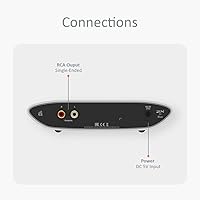
  • Audio Output: Output is via a pair of stereo RCA connectors, delivering a 2-channel analog signal compatible with any amplifier or receiver with a standard line-in input.
  • Output Channels: The device operates in stereo, providing two discrete audio channels for full left-right separation through a connected amplifier or powered speaker system.
  • Power Input: The unit is powered via USB, operating at 50W, and does not require a proprietary power supply — a standard USB-A adapter or port is sufficient.
  • Connectivity: Connection to source devices is exclusively via Bluetooth; there are no Wi-Fi, Ethernet, optical, or digital input options on this device.
  • Compatibility: Compatible source devices include smartphones, tablets, and digital audio players running iOS or Android, as well as any Bluetooth-enabled device capable of outputting audio.
  • iOS Codec Limit: When paired with Apple iOS devices, Bluetooth audio is limited to AAC due to platform restrictions imposed by Apple, regardless of the adapter's broader codec support.
  • LDAC Support: LDAC, Sony's high-resolution Bluetooth codec capable of transmitting up to 990 kbps, is fully supported for use with compatible Android devices and DAPs.
  • aptX Adaptive: aptX Adaptive support enables variable bitrate transmission up to 24-bit/96kHz, adjusting dynamically to maintain audio quality under varying wireless conditions.
  • Model Number: The official model designation is ZNAIRB, as listed by manufacturer Abbingdon Music Research (iFi Audio) for retail and service identification purposes.
  • Manufacturer: The device is manufactured by Abbingdon Music Research, trading as iFi Audio, a UK-based company with a dedicated product line targeting the consumer audiophile market.
  • Release Date: The product was first made available in February 2022 and remains in active production with no discontinuation announced as of the latest available information.
  • Color: The standard retail version is finished in blue, consistent with iFi Audio's Zen Air product line aesthetic, with metal-accented casing details.
  • Streaming App Support: The device is compatible with high-resolution streaming services including Apple Music, Tidal Hi-Fi, and Qobuz when the source device supports an appropriate high-res codec.
  • ASIN: The Amazon Standard Identification Number for this product is B09T6XMZ15, used for retail listing identification on the Amazon platform.
  • Warranty: iFi Audio typically provides a standard manufacturer warranty on Zen series products; buyers should confirm regional warranty terms directly with the retailer or iFi Audio's support team.

Related Reviews
iFi Audio Zen Air Phono
86%
88%
Sound Quality
92%
Noise Reduction
91%
Ease of Setup
80%
Build Quality
85%
Compatibility with Turntables
More
iFi Zen DAC V2
iFi Zen DAC V2
87%
93%
Sound Quality
89%
Build Quality
91%
Value for Money
88%
Connectivity Options
72%
Low Volume Imbalance
More
Thermalabs Air Spray Tan Tent Blue
86%
92%
Ease of Setup
88%
Portability
91%
Size & Space
85%
Waterproof Effectiveness
60%
Lighting Options
More
iFi Zen Phono 3 MM/MC Phono Pre-Amplifier

87%
94%
Sound Quality
91%
Adjustability & Features
87%
Build Quality
95%
Noise Reduction
83%
Ease of Use
More
Dynamic Color Co Oceans Color Set - 1oz Bottles (Electric Blue, Sky Blue, Teal, Turquoise, Dynamic Blue)
86%
94%
Color Vibrancy
90%
Ease of Use
89%
Longevity of Color
88%
Smoothness of Flow
70%
Blendability for Gradients
More
YUHUO Compressed Air Duster 360000 RPM Electric Air Duster
86%
88%
Performance & Power
91%
Ease of Use
85%
Battery Life
93%
Portability & Size
67%
Noise Level
More
Bumble and bumble Don't Blow It Fine (H)air Styler Air Dry Cream, 5 Fl Oz

84%
88%
Effectiveness for Fine Hair
90%
Lightweight Feel
85%
Volume and Body
92%
Ease of Use
80%
Scent/Fragrance
More
Blue Kiwi Microphone
85%
92%
Sound Clarity
88%
Build Quality
91%
Versatility of Polar Patterns
77%
Ease of Setup
94%
XLR Connection Quality
More
NEBULA Capsule Air Projector
86%
94%
Portability
88%
Battery Life
91%
Ease of Setup
85%
Brightness in Low Light
80%
Audio Quality
More
Meudeen Air Duster AD08A
85%
91%
Cleaning Performance
85%
Ease of Use
93%
Eco-Friendliness
75%
Noise Level
88%
Accessories Included
More

FAQ

It does pair with iPhones without any issues, but Apple restricts Bluetooth audio output to AAC regardless of the receiver you connect to. AAC is decent quality, but you will not unlock the LDAC or aptX Adaptive performance that Android users get. If you are an iPhone-only household and high-res Bluetooth is the main reason you are buying, the advantage here is narrower than the spec sheet implies.

Anything with a standard RCA line-in input will work — integrated amplifiers, stereo receivers, AV receivers with analog inputs, and powered monitors with RCA inputs. If your system only has digital inputs like HDMI ARC, optical, or USB audio, this hi-fi wireless adapter will not connect without an additional converter, which somewhat defeats the purpose.

Honestly, the device itself gives you no feedback on this — there is no display or indicator light that confirms the active codec. On Android, you can check via Developer Options in the Bluetooth audio codec settings, which shows the negotiated codec in real time. On iOS, you are always on AAC and there is nothing to check.

You can store multiple paired devices, but switching between them is not always smooth. Several users have reported that when swapping from one source to another, the unit sometimes defaults to a lower codec like SBC rather than renegotiating the best available option. A quick power cycle usually resolves it, but it is a minor recurring frustration worth knowing about before you buy.

No, a USB power adapter is not included. The device is USB-powered, so you will need a USB-A wall adapter or a free USB port on your amplifier or a nearby hub. It is a minor omission but one that comes up repeatedly in buyer reviews, especially for first-time iFi Audio customers.

The WiiM Nano adds Wi-Fi streaming and app control, which makes it a fundamentally different category of device — more flexible but also more complex to set up. The Cambridge Audio BT100 is a more direct competitor in terms of simplicity, though its codec support is narrower. The Zen Air Blue sits in a sweet spot for codec breadth and analog output quality, but the WiiM platform is worth considering if you want multi-room audio or prefer app-based control.

Absolutely, and it is actually a great fit for that use case. As long as your powered speakers have RCA inputs, you connect the cables, pair your phone, and you have a wireless desktop audio setup in minutes. The compact size works in its favor on a desk where space is limited.

In a typical living room or bedroom — say up to 25 to 30 feet with clear line of sight — most users report stable performance. Range drops off more noticeably through walls or in apartments with heavy wireless congestion from neighboring networks. If your listening room is large or on a different floor from where you typically use your phone, a Wi-Fi-based streamer would give you more reliable range.

No app is required and none is available. Setup is entirely hardware-based: connect the RCA cables, plug in the USB power, and pair via your phone's Bluetooth settings like any other device. This is a genuine plus for users who do not want another app on their phone, though it also means there are no settings to adjust after the fact.

It remains a competitive choice specifically for Android users who want the broadest high-res codec support in a simple, no-frills analog output device. The codec list has not been meaningfully beaten at this price point. That said, the broader streaming device market has moved quickly, and Wi-Fi streamers now offer more features for similar money. If pure Bluetooth audio quality into a classic hi-fi setup is your goal, this hi-fi wireless adapter still earns its place — but it is worth comparing against current alternatives before committing.