Overview

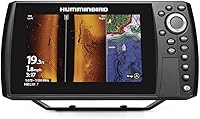
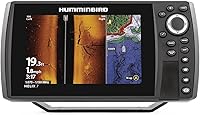
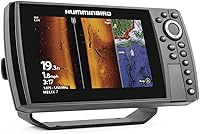
The Humminbird Helix 7 MEGA SI G4N Fishfinder sits at a serious mid-to-premium price point, built for anglers who want professional-grade sonar without stepping into full commercial complexity. The 7-inch color TFT display is bright and readable on the water, and the softkey keypad keeps navigation manageable once you get your bearings. What sets this unit apart from older HELIX generations is the MEGA imaging technology — it delivers a substantial leap in underwater detail. The G4N designation also signals networking capability, so it plays well with other compatible Humminbird units on the same boat. This is a feature-dense unit; you'll get the most from it by investing real time in the menu system.
Features & Benefits

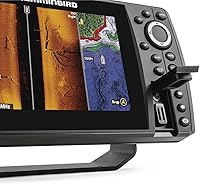
The headline here is MEGA Side Imaging — the clarity it delivers at distance is noticeably sharper than what you'd get from a standard side-scan unit. You can spot submerged timber, rock piles, and drop-offs clearly enough to make confident casting decisions. MEGA Down Imaging handles the view directly beneath the hull with similar sharpness, and the Dual Spectrum CHIRP sonar adds flexibility with Wide and Narrow scan modes for different fishing conditions. The built-in GPS comes loaded with charts covering a large number of lakes plus U.S. coastal waters. AutoChart Live is a genuine highlight — you can map your own spots in real time, recording depth and bottom composition as you run the water. Eight hours of onboard recording comes standard; expanded capacity requires an optional SD card.

Best For

This fish finder is most at home in the hands of structure-focused anglers — bass fishermen and walleye hunters who use side-scan imagery to dissect a lake before they ever drop a line. If you're running a mid-size boat and want chart navigation without bolting on a separate chartplotter, the built-in mapping covers a lot of ground right out of the box. Anglers stepping up from a budget unit will find the jump in sonar quality significant. The AutoChart Live feature especially rewards those who fish the same waters repeatedly and want to build a detailed, personal map over time. Anyone already running Humminbird gear will appreciate how naturally this sonar unit integrates into an existing networked setup.

User Feedback

With a 4.4-star average across a relatively modest number of ratings, the feedback patterns here carry real weight. The most consistent praise centers on image clarity — buyers who upgraded from older or lower-tier units consistently note how much more detail the MEGA imaging reveals. That said, the menu system draws some criticism. Several users mention that despite the softkey layout, navigating the full feature set takes real time to learn, particularly for anglers who aren't comfortable with tech-heavy electronics. A few reviewers also flag transducer installation as more involved than expected. On balance, buyers seem satisfied with what they get for the investment, but going in with realistic expectations about setup complexity will save real frustration on day one.

Pros

  • MEGA Side Imaging delivers a visible, meaningful clarity upgrade over standard side-scan units in real fishing conditions.
  • The CHIRP sonar Wide and Narrow modes give anglers flexible scanning options without switching hardware.
  • Built-in GPS with extensive preloaded lake and coastal charts eliminates the need for a separate chartplotter on most boats.
  • AutoChart Live lets you build a custom, evolving map of your personal fishing spots across multiple trips.
  • The 7-inch color display is bright and readable in direct sunlight, which matters during long days on the water.
  • One-Boat Network compatibility makes this sonar unit a practical addition to an existing Humminbird multi-unit setup.
  • The included transom-mount transducer covers all core sonar functions competently straight out of the box.
  • Chart compatibility with Navionics, LakeMaster, and CoastMaster gives buyers flexibility in choosing their preferred mapping ecosystem.
  • The gimbal mounting bracket holds position reliably even in choppy conditions over extended use.
  • Buyers upgrading from entry-level units consistently report a substantial jump in situational awareness on the water.

Cons

  • The menu system has a steep learning curve that frustrates users even with prior fish finder experience.
  • Premium lake charts and coastal detail require separate purchases on top of the base unit cost.
  • AutoChart Live onboard recording time runs out faster than many buyers expect during active mapping sessions.
  • Expanding AutoChart storage capacity requires purchasing an optional Zero Line SD card not included in the box.
  • Transducer installation is more involved than the packaging implies, especially for buyers new to marine electronics wiring.
  • Signal dropout at higher boat speeds has been reported by some users, suggesting transducer placement is sensitive on certain hull types.
  • Occasional software lockups when rapidly switching between display modes have been noted by a subset of long-term users.
  • The physical button feel becomes less crisp with heavy use over time, which affects confidence in daily operation.
  • Buyers who only use basic depth and fish detection features will struggle to justify the cost relative to simpler alternatives.
  • Glare management can be an issue when the gimbal is mounted in a fixed position that cannot be easily adjusted mid-session.

Ratings

The Humminbird Helix 7 MEGA SI G4N Fishfinder earned its scores through AI-driven analysis of verified buyer reviews sourced globally, with spam, bot-generated, and incentivized feedback actively filtered out before scoring. Across categories ranging from sonar clarity to long-term usability, both the genuine strengths and the friction points buyers actually encounter on the water are reflected without sugarcoating. The result is a transparent, balanced picture of what this sonar unit delivers — and where it still asks something of the angler using it.
Sonar Image Clarity
91%
The MEGA Side Imaging is where this fish finder earns the most consistent praise. Anglers fishing rocky structure or submerged timber report being able to distinguish individual logs and ledge edges at distances that would appear as blurry smears on older or budget-tier units. The detail improvement over standard side-scan is tangible in real use, not just on paper.
At greater depths or in turbid water conditions, the clarity advantage narrows noticeably. A handful of users fishing murky southern reservoirs noted that the imaging lost its edge past mid-range depths, making the unit perform closer to standard SI in those specific environments.
MEGA Down Imaging Performance
87%
Bottom composition clarity gets strong marks from buyers who target structure-oriented species. Bass anglers in particular appreciate being able to distinguish hard bottom from soft, and to see fish suspending just off a ledge rather than guessing based on a 2D arch. It reads as a meaningful upgrade from standard down imaging in real fishing scenarios.
Some users found that the down imaging and side imaging views can feel redundant when fishing shallower water, where both modes tell a similar story. A few noted minor interference between the two channels when running simultaneously, though this appears to be manageable with settings adjustments.
CHIRP 2D Sonar Accuracy
84%
The Dual Spectrum CHIRP with Wide and Narrow mode options gives this sonar unit real versatility across different water types. Deep-water walleye anglers running narrow mode have commented on the clean fish arch separation it produces even in dense schools, which helps distinguish individual fish from baitball clutter.
Switching between Wide and Narrow modes mid-session requires navigating a few menu layers, which some users found disruptive when actively fishing. The distinction between the two modes is also less dramatic in shallower freshwater scenarios, where the wide mode alone would often suffice.
Built-in GPS & Mapping
82%
18%
Having a functioning chartplotter built into the unit without needing a separate device is a genuine practical advantage for anglers on mid-size boats. The preloaded coverage across a large inventory of lakes and U.S. coastal waters means most buyers can get on the water navigating confidently from day one without purchasing additional charts.
The base Humminbird Basemap, while broad, lacks the depth contour detail that serious structure fishermen want for precision work. To get that level of detail, buyers need to invest in optional LakeMaster or Navionics charts — a cost that some reviewers felt should have been factored into their initial purchase budget.
AutoChart Live Functionality
79%
21%
Anglers who fish the same body of water repeatedly consistently call this one of the most valuable features on the unit. Building a custom contour map of a personal honey hole over multiple trips — including bottom hardness and vegetation data — delivers a level of localized intelligence no factory chart can replicate.
The eight hours of onboard recording time goes faster than many buyers expect, especially for those mapping large areas across multiple sessions. Expanding that capacity means buying an optional AutoChart Zero Line SD card, which some users felt was an unnecessary extra cost not clearly communicated at point of purchase.
Menu System & Ease of Use
63%
37%
Buyers who committed time to learning the interface describe the softkey layout as logical and reasonably responsive once it becomes familiar. The ability to access frequently used views quickly after a learning period is well-regarded among anglers who regularly use feature-heavy electronics.
The initial learning curve is a recurring complaint that cuts across experience levels. Even users with prior fish finder experience report spending significant time with the manual before feeling confident navigating the deeper settings. Less tech-comfortable anglers describe real frustration in the early weeks, which noticeably affects the overall experience score for this category.
Display Quality & Readability
86%
The 7-inch color TFT screen draws consistent praise for its brightness and color separation, particularly when split-screening multiple sonar views simultaneously. Anglers fishing in bright midday sun report that the display remains legible without needing to lean in, which matters when you are also managing a rod or steering.
A small number of users noted that glare can become an issue at certain sun angles, particularly when the unit is mounted in a fixed gimbal position that cannot be easily adjusted on the fly. The screen size, while functional, also feels compact when trying to read fine detail on AutoChart Live maps.
Transducer Performance
78%
22%
The included XNT 9 HW MSI 150 T transom-mount transducer performs well for the majority of buyers and covers the core sonar functions capably right out of the box. Most anglers report a clean signal in typical freshwater conditions without needing an aftermarket upgrade to get usable results.
Installation is more involved than some buyers anticipated, with mounting angle and placement sensitivity coming up repeatedly in feedback. A few users in higher-speed boats also reported signal dropout at speed, suggesting the included transducer may not be optimal for all hull types without careful positioning.
Build Quality & Durability
81%
19%
The unit feels solid and well-constructed for its class, and buyers who have run it through full seasons report no significant wear issues with the housing, keypad, or display. The gimbal bracket holds its position reliably, which matters when dealing with rough water and vibration over extended time on the water.
The physical controls, while functional, do not feel premium relative to the unit's price positioning. A few long-term users noted that button feedback becomes slightly less crisp after extended heavy use, though this appears to be a cosmetic-feel issue rather than a functional failure.
Installation & Setup Experience
61%
39%
Buyers with prior marine electronics experience generally describe the installation process as straightforward and well-documented. The included mounting hardware and power cable cover the basics, and the gimbal bracket system makes repositioning the head unit relatively simple once the main mount is set.
For first-time fish finder buyers, the full installation — including transducer placement, power wiring, and initial software configuration — can be a multi-hour process with a real potential for mistakes. Several reviewers wished for a more guided setup process or a clearer quick-start guide tailored to beginners.
Networking & Connectivity
76%
24%
The Ethernet and One-Boat Network compatibility is a meaningful feature for anglers who run multiple Humminbird units and want them sharing data across the console. Buyers who use it this way describe the integration as reliable and note it adds real operational value for more complex setups.
For buyers who own only this single unit, the networking capability offers no immediate benefit and adds cost to the product without a practical payoff. Some users also noted that fully leveraging the network features requires additional compatible hardware, which is an extra investment not covered at purchase.
Chart Compatibility & Options
74%
26%
The flexibility to run Navionics, LakeMaster, and CoastMaster charts gives this sonar unit broad appeal across different fishing environments and preferences. Anglers who have tested multiple chart options appreciate being able to choose the format that best matches their primary waters rather than being locked into a single ecosystem.
Premium chart options are sold separately, and the costs add up depending on how many regions an angler covers. Some buyers expressed frustration that the base Humminbird Basemap, while wide in coverage, required an upgrade investment to be genuinely useful for detailed structure fishing on their specific lakes.
Value for Money
72%
28%
Buyers who take full advantage of the MEGA imaging and AutoChart Live features generally feel the unit justifies its price tier relative to what competing brands offer at a similar level. The combination of sonar quality, mapping, and networking in one package is difficult to replicate from a single competitor product at this price point.
Buyers who primarily use the unit as a basic depth finder or fish locator without engaging the advanced features tend to question the value proposition. Add-on costs for premium charts and expanded AutoChart storage can push the real-world total notably above the base unit price, which catches some buyers off guard.
Software & Firmware Stability
71%
29%
Most users report the unit running stably through regular use without major software issues. Firmware update availability through Humminbird is appreciated by buyers who want the unit to improve over time, and several noted that updates have addressed minor bugs reported early in the product lifecycle.
A handful of users have reported occasional lockups or screen freeze events, particularly when switching between multiple display modes rapidly. These incidents appear infrequent but are worth noting for anglers who depend on uninterrupted sonar performance during tournament or tide-dependent fishing situations.

Suitable for:

The Humminbird Helix 7 MEGA SI G4N Fishfinder is built for serious anglers who treat fishing as a craft, not just a pastime. Bass fishermen who dissect structure before making a cast will find the MEGA Side Imaging clarity genuinely changes how they read a lake — spotting submerged timber, rock transitions, and channel edges with a level of detail that older side-scan units simply cannot match. Walleye and crappie anglers who work deeper water structures will also get strong value from the MEGA Down Imaging and CHIRP sonar combination. Boaters who want consolidated electronics — sonar, GPS, and mapping on a single screen without adding a separate chartplotter — will appreciate how much ground the built-in mapping covers right out of the box. Anglers who repeatedly fish the same bodies of water and want to build a personalized, evolving map of their best spots will find AutoChart Live one of the most practical tools on the market. Those already running other Humminbird units on the same boat will benefit from the networking capability, which allows data sharing across the console without redundant hardware.
Not suitable for:

The Humminbird Helix 7 MEGA SI G4N Fishfinder is not the right pick for every buyer, and being clear about that upfront saves real money and frustration. Casual or occasional anglers who mainly want a basic depth reading and a rough fish indicator will find this unit overcomplicated and overpriced for their actual needs — a simpler, more affordable fish finder would serve them better without the setup overhead. Buyers who are not prepared to spend time with a manual and work through a legitimate learning curve should also think twice; this is not a unit you power on and master in an afternoon. Anglers who fish primarily in murky or stained water conditions may also find that the MEGA imaging advantage diminishes in those environments, reducing the practical return on the investment. Budget-conscious buyers should be aware that the base unit price does not include the premium lake charts, expanded AutoChart storage, or additional chart subscriptions that unlock the full potential of the mapping features — the real-world cost of ownership runs higher than the sticker price suggests. Finally, anglers running small kayaks or ultralight setups may find the physical footprint and DC power requirement impractical for their platform.
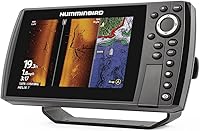
Specifications

  • Screen Size: The unit features a 7-inch color TFT display designed for clear viewing across split-screen sonar and mapping views simultaneously.
  • Sonar Type: Dual Spectrum CHIRP 2D sonar is included, offering both Wide Mode for broad coverage and Narrow Mode for focused, high-detail scanning.
  • Side Imaging: MEGA Side Imaging scans the water column on both sides of the boat, covering a wide lateral range with significantly higher detail than standard side-scan sonar.
  • Down Imaging: MEGA Down Imaging provides high-resolution coverage directly beneath the hull, capable of reading bottom composition and structure at substantial depths.
  • Max Depth: Both MEGA Side and Down Imaging channels are rated to a maximum operational depth of 125 feet under ideal water conditions.
  • GPS: An internal GPS receiver is built in, paired with the Humminbird Basemap covering more than 10,000 lakes and U.S. coastal waters including buoys, hazards, and marinas.
  • AutoChart Live: AutoChart Live records real-time custom maps of depth contours, bottom hardness, and vegetation, with eight hours of onboard storage included at purchase.
  • Chart Compatibility: The unit is compatible with optional premium charts from Humminbird LakeMaster, CoastMaster, and Navionics, each sold separately.
  • Connectivity: Ethernet connectivity and One-Boat Network compatibility allow the unit to share data and integrate with other compatible Humminbird devices on the same vessel.
  • SD Card Slot: One Micro SD card slot is included, used for firmware updates, optional chart loading, and expanding AutoChart Live recording capacity via a Zero Line SD card.
  • Transducer: The package includes an XNT 9 HW MSI 150 T transom-mount transducer, which supports MEGA Side Imaging, MEGA Down Imaging, and CHIRP 2D sonar functions.
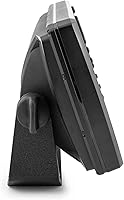
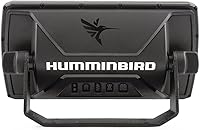
  • Mounting Type: The control head mounts via a gimbal bracket system, which is included in the box along with all necessary mounting hardware.
  • Dimensions: The control head measures 10.54″ in length, 3.08″ in width, and 5.44″ in height, making it a compact but substantial unit for its screen class.
  • Weight: The complete unit weighs 5.92 pounds, which is a practical consideration for smaller boat consoles and transom mounting setups.
  • Power Source: The unit operates on a DC power supply and connects to the boat's onboard electrical system using the included power cable.
  • Display Type: The screen uses Color TFT panel technology, which provides reliable color separation and readability across different lighting conditions on the water.
  • In the Box: The package includes the fish finder control head, a power cable, the XNT 9 HW MSI 150 T transom-mount transducer, a gimbal mounting bracket, and associated mounting hardware.
  • Model Number: The official Humminbird model number for this unit is 411650-1, which distinguishes it from other HELIX 7 variants in the current product lineup.

Related Reviews
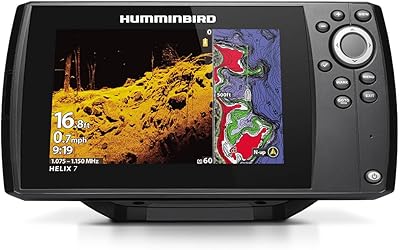
Humminbird Helix 7 CHIRP MDI GPS G4
83%
92%
Sonar Performance
90%
Image Clarity (MEGA Down Imaging)
88%
GPS & Mapping Accuracy
85%
Ease of Use (Interface)
80%
Build Quality & Durability
More
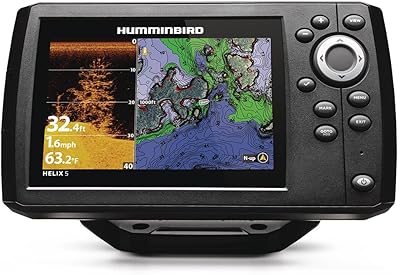
Humminbird Helix 5 Sonar G2 Fish Finder
75%
88%
Sonar Performance
91%
Display Clarity
86%
Ease of Setup
74%
SwitchFire Usability
83%
Build Quality & Durability
More
Origins Mega-Mushroom Micellar Cleanser 6.7 oz
90%
94%
Cleansing Effectiveness
92%
Skin Soothing & Calming
95%
Suitability for Sensitive Skin
89%
Texture and Spreadability
90%
Rinse-off Ease
More
Humminbird Helix 5 CHIRP DI GPS G3 Fish Finder
79%
88%
Sonar Image Clarity
86%
GPS Accuracy
79%
AutoChart Live
67%
Display Visibility
83%
Ease of Use
More
Geimrsy GY-S75-1 7.7-inch Portable Teleprompter
73%
81%
Value for Money
88%
Portability & Form Factor
84%
Ease of Setup
67%
Beam Splitter Glass Quality
63%
Remote Control Functionality
More
Atomos Shogun 7
Atomos Shogun 7
77%
93%
Display Brightness & Visibility
89%
HDR Monitoring Accuracy
91%
ProRes RAW Recording
84%
Dolby Vision Output
78%
Build Quality & Durability
More
CAD Pro-7 7-Piece Drum Microphone Pack
82%
86%
Sound Quality
92%
Value for Money
80%
Build Quality
72%
Setup & Installation
88%
Portability
More
Ubiquiti UniFi U7 Pro
82%
91%
Wireless Performance
88%
Build Quality
83%
Range & Coverage
67%
Ease of Setup
78%
Value for Money
More
Olay Total Effects 7 in One Anti-Aging Daily Moisturizer with SPF 30, 1.7 Fl Oz

88%
89%
Effectiveness in Reducing Fine Lines
92%
Hydration & Moisture
80%
Sun Protection (SPF 30)
94%
Non-Greasy Texture
93%
Absorption Speed
More
Evereden Happy Hair Duo for Kids 2x 6.7 fl. oz. Shampoo & 4.7 fl. oz. Conditioner
91%
96%
Ease of Detangling
94%
Gentleness on Sensitive Scalp
91%
Moisturizing Effect
93%
Hair Smoothness & Manageability
88%
Fragrance Appeal
More

FAQ

It comes preloaded with the Humminbird Basemap, which covers a large inventory of U.S. lakes and coastal waters — enough to navigate and orient yourself on most common fishing destinations. That said, the base map lacks the detailed depth contours that serious structure fishermen want. For that level of precision, you would need to purchase LakeMaster, CoastMaster, or Navionics charts separately and load them via the Micro SD slot.

Honest answer: it is more involved than the packaging suggests. Mounting the control head is straightforward, but running the power cable to your boat's electrical system and positioning the transducer correctly on the transom both require some care and patience. First-time installers should set aside a few hours, read the manual thoroughly, and pay close attention to transducer angle — placement directly affects sonar performance. If you are not comfortable working with basic marine wiring, having it professionally installed is a reasonable option.

The main generational jump is the MEGA imaging technology, which delivers noticeably sharper side and down imaging compared to the standard SI and DI sonar on earlier HELIX generations. The G4N designation also signals networking capability through One-Boat Network, which older G2 and G3 models either lacked or handled less capably. If you are coming from a HELIX 7 G2 or G3, the imaging quality difference alone is meaningful for structure fishing.

Yes, Navionics charts are compatible and can be loaded onto the unit via a Micro SD card. This gives you flexibility to use the chart ecosystem you are already familiar with rather than being locked into Humminbird's own chart products. Keep in mind that Navionics charts are purchased separately and are not included with the unit.

Out of the box, the unit includes eight hours of onboard AutoChart Live recording time. That sounds like a lot, but if you are actively mapping a new lake across multiple trips it goes faster than expected. You can expand that capacity significantly by purchasing an AutoChart Zero Line SD card and inserting it into the Micro SD slot — that card effectively removes the recording limit for practical purposes.

Technically yes, but there are practical considerations. The unit requires a DC power source, so you would need a compatible battery setup on the boat. The control head is also a reasonably sized piece of hardware at just under ten and a half inches wide, so smaller kayak console setups may feel cramped. Many kayak anglers do run HELIX units successfully, but it takes some planning around power and mounting to make it work comfortably.

Side imaging is generally more useful in mid-to-deeper water where the beam has room to travel laterally and resolve structure detail. In very shallow water — say, under six feet — you will not get the same spread or clarity that you see when fishing a ten- to thirty-foot flat or ledge. Most structure-focused anglers find the sweet spot for MEGA SI starts around eight to ten feet of depth and improves from there.

Yes, that is exactly what the One-Boat Network and Ethernet connectivity are designed for. If you have another compatible Humminbird unit mounted at a second station, you can network them together to share sonar data, GPS position, and chart views across both screens. This is particularly useful on larger boats where you want full sonar visibility from both the bow and the console.

The color TFT display performs well in most outdoor conditions and is bright enough to remain readable in direct sunlight during typical fishing hours. Glare can become an issue at certain sun angles, particularly if the gimbal bracket position is fixed and cannot be adjusted easily mid-session. Most users find it readable without issue, but mounting position and angle matter — a slight tilt adjustment can make a significant difference on glare-heavy days.

It is not complicated in the sense of being poorly designed — it is complex because the unit has a lot of features, and the menu depth reflects that. Anglers with prior experience on other Humminbird models will adapt fairly quickly. Those coming from simpler or older units should expect a real learning period before they feel comfortable navigating the full settings without consulting the manual. The softkey layout is logical once learned, but do not expect to be fully comfortable on the first day out.

Where to Buy