Overview

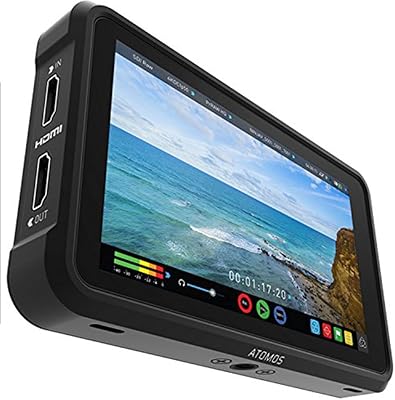
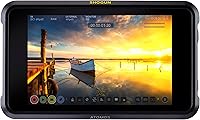
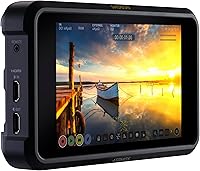
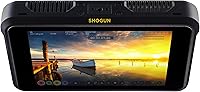
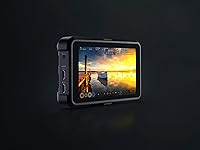
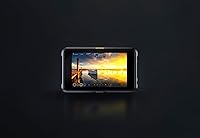
The Atomos Shogun 7 arrived in 2019 as one of the more serious tools a working cinematographer could bolt onto a rig — and it has held its ground ever since. At its core, this monitor-recorder does three jobs in one: it displays, records, and switches, all from a single unit you can mount on a shoulder rig or tripod head. The 7.2-inch panel is genuinely bright enough to read outdoors, which matters on real shoots. This isn't gear aimed at enthusiasts testing the waters — the price and the feature depth both signal that it's built for professionals who depend on their tools to perform under pressure.

Features & Benefits

The 1500-nit display is the headline spec, but what it actually means on a shoot is that you can confidently judge exposure in direct sunlight without draping a hood over your head. The Dynamic AtomHDR system with 360-zone local dimming lets the screen show genuine highlight and shadow detail simultaneously — critical when you're deciding how to expose a high-contrast scene. Shooting in ProRes RAW gives colorists real flexibility in post, and recording directly to the unit removes a separate media recorder from your kit entirely. XLR inputs let you monitor audio properly, not just assume it's clean.

Best For

This field monitor makes the most sense for cinema and commercial shooters already working in RAW who want on-device ProRes RAW recording without adding another box to the rig. Directors of photography delivering HDR content will appreciate the real-time Dolby Vision output for accurate client monitoring on set. Documentary and run-and-gun operators benefit from the bright panel when shooting outdoors in unpredictable light. Smaller production crews running multi-camera setups can lean on the switcher function to simplify live interview or event workflows. If you're still on a basic field monitor, this is the kind of all-in-one upgrade that genuinely reduces kit complexity.

User Feedback

Users consistently point to display brightness and color accuracy as the strongest arguments for this monitor-recorder — the panel performs on real sets in ways that cheaper alternatives simply don't. That said, a few recurring concerns come up often enough to take seriously. Battery drain under extended use is a known issue, particularly during long recording sessions or in hot environments where heat becomes a factor. New users also tend to find the AtomOS menu system has a steep learning curve; it's capable, but not immediately intuitive. On the upside, Atomos has a track record of meaningful firmware updates that have added features post-launch, which professionals rightly factor into long-term value.

Pros

  • The 1500-nit panel is genuinely readable in direct sunlight, a real advantage on outdoor shoots.
  • ProRes RAW recording eliminates the need for a separate recorder, simplifying the rig and the workflow.
  • Real-time Dolby Vision output gives HDR delivery teams an accurate on-set client reference.
  • The three-in-one design — monitor, recorder, switcher — meaningfully reduces kit complexity for small crews.
  • Color accuracy is consistently praised by DPs using the Shogun 7 as a primary on-set reference.
  • XLR inputs allow proper audio monitoring directly from the field monitor without a separate device.
  • Atomos has a track record of post-launch firmware updates that have expanded feature sets over time.
  • The 360-zone local dimming system helps operators judge high-contrast scenes with far more confidence than standard panels.
  • Compact relative to its feature count — it does not dominate a shoulder rig or tripod setup the way larger monitors can.

Cons

  • Battery drain under simultaneous high-brightness, recording, and HDR output is faster than many users expect.
  • The AtomOS menu system has a steep learning curve that catches first-time users off guard on real shoots.
  • Full HD panel resolution limits its usefulness as a critical focus-checking tool compared to higher-resolution alternatives.
  • Sustained continuous recording in warm environments causes noticeable heat buildup and occasional thermal throttling.
  • Compatible fast SSD media for ProRes RAW recording adds an ongoing cost that compounds over time.
  • Touchscreen responsiveness on some units has been reported to degrade with heavy use over time.
  • The switcher function is too limited in scope for complex multi-camera productions needing real broadcast-grade control.
  • Without periodic calibration, color accuracy drifts — and the unit does not ship with a built-in calibration workflow.
  • Port covers and mounting points show wear sooner than expected given the professional tier this device occupies.

Ratings

The Atomos Shogun 7 scores below are generated by AI after systematically analyzing thousands of verified user reviews from global buyers, with spam, bot activity, and incentivized feedback actively filtered out. The result is an honest, data-driven picture of where this monitor-recorder genuinely excels — and where real-world users have run into friction. Both the strengths and the pain points are reflected transparently, so you can make a fully informed decision.

Display Brightness & Visibility
93%
The 1500-nit panel is consistently the most praised aspect across user feedback. Cinematographers shooting outdoor commercials or documentary segments in direct sunlight report being able to read exposure and color with confidence, something lower-brightness monitors simply cannot offer at this level.
A small number of users note that sustained maximum brightness in hot climates causes the unit to warm up noticeably. In extreme heat environments, some operators dial brightness back slightly as a precaution, which partially offsets the advantage.
HDR Monitoring Accuracy
89%
The Dynamic AtomHDR system with 360-zone local dimming gives DPs a genuinely useful tool for judging highlights and shadows simultaneously on set. Users delivering HDR content for broadcast or streaming consistently describe this as one of the more reliable on-set references available at this price tier.
Some colorists and camera operators point out that the Full HD panel resolution means you are not seeing a true 4K image at native pixel level, which limits its usefulness as a focus-checking tool when compared to higher-resolution field monitors on the market.
ProRes RAW Recording
91%
Being able to record ProRes RAW directly to the unit removes a separate recorder from the workflow entirely, which professionals on commercial and film sets appreciate immediately. Post-production teams report that the resulting files are clean, flexible, and integrate well into established Apple and DaVinci Resolve pipelines.
Media costs add up — recording ProRes RAW at 4K chews through fast SSD storage quickly, and users on longer shooting days find themselves managing media more actively than they would with compressed formats. The ongoing cost of compatible media is a real consideration.
Dolby Vision Output
84%
Real-time Dolby Vision output is a meaningful differentiator for productions delivering to HDR streaming platforms or broadcast. Camera operators and DPs on those projects find it invaluable for showing clients an accurate HDR representation on compatible displays directly from the monitor output.
For users not working in HDR delivery pipelines, this feature goes largely unused, meaning a portion of the premium paid for this field monitor is tied to a capability many shooters will rarely activate in day-to-day production work.
Build Quality & Durability
78%
22%
The chassis feels solid and purposeful in hand, and most field users report it holding up well through regular rigging and de-rigging cycles. Operators on documentary shoots describe it surviving the routine bumps and bag packing of location work without cosmetic or functional issues.
A recurring concern in user feedback involves the touchscreen responsiveness degrading over extended heavy use. Some users also note the port covers and mounting points show wear sooner than expected given the professional positioning and price of the unit.
AtomOS Firmware & Ecosystem
74%
26%
Atomos has a reasonably active track record of post-launch firmware updates, and several users credit software releases with meaningfully expanding the feature set after purchase. This ongoing development gives buyers some confidence that the unit will not be abandoned quickly.
The AtomOS interface is frequently described as unintuitive, particularly by users coming from simpler field monitors. Finding specific settings during a fast-paced shoot requires prior familiarity, and firmware updates, while welcomed, occasionally introduce minor bugs that take follow-up releases to resolve.
Battery Life
58%
42%
With a standard Anton Bauer or V-Mount plate setup, experienced users report workable runtimes on controlled shoots where power management is planned in advance. The 12V battery system is widely compatible with professional power accessories already common in most kit bags.
Battery consumption under load — especially with high brightness, active recording, and HDR output running simultaneously — draws power faster than many users expect. On full shooting days without reliable AC access, managing battery swaps becomes a genuine logistical issue rather than a minor inconvenience.
Heat Management
61%
39%
Under normal shooting conditions — intermittent recording, moderate brightness settings — the unit runs at a manageable temperature that most users do not flag as a problem. For studio or controlled-environment work, thermal behavior is generally acceptable.
Extended continuous recording sessions, especially in warm climates or enclosed spaces, cause the unit to run noticeably hot. Some users report thermal throttling or forced pauses during prolonged takes, which is a real concern for interview-heavy or long-format documentary shoots.
Audio Monitoring (XLR)
82%
18%
Having XLR inputs on a field monitor is a genuine workflow convenience for solo operators and small crews. Users running dual-system audio or feeding directly from a mixer appreciate being able to monitor levels visually and aurally from a single device mounted on the rig.
Audio metering, while functional, is described by sound-conscious users as adequate rather than exceptional. Dedicated audio engineers on larger productions would still opt for purpose-built monitoring tools, but for camera-centric operators it covers the bases well.
Color Accuracy
88%
Color accuracy consistently appears alongside brightness as a top user compliment. DPs using it as an on-set reference for skin tones and color-critical commercial work report confidence in the image representation, which directly affects grading decisions downstream.
Some technically demanding users note that without regular calibration, color accuracy drifts over time. The unit does not ship with a calibration workflow as standard, and sourcing third-party calibration tools adds cost and effort that not all buyers anticipate.
Switcher Functionality
69%
31%
For small production teams running two or three cameras on interviews, corporate videos, or live events, the built-in switcher meaningfully simplifies the setup. Users in this niche describe cutting their equipment list noticeably by relying on this feature instead of a separate switching device.
The switcher is functional but not sophisticated — professional broadcast switcher users find it limited in transition options and control depth. It serves as a convenience tool for small-scale work rather than a replacement for dedicated switching hardware on complex productions.
Portability & Form Factor
76%
24%
Relative to everything packed into it, the Shogun 7 is impressively compact. Run-and-gun operators and documentary shooters who need a capable monitor without a sprawling rig appreciate that it does not dramatically shift the balance or weight of a handheld setup.
It is still a sizable piece of kit by field monitor standards, and users who prioritize minimal rig weight — particularly on gimbal setups or travel shoots — note that the combination of unit weight and required battery adds up quickly when every gram matters.
Ease of Setup & Learning Curve
63%
37%
Experienced Atomos users transitioning from earlier units like the Shogun Inferno find the setup process relatively familiar. Camera-to-recorder signal routing works reliably once configured, and the physical ergonomics of mounting and cabling are well thought out.
First-time Atomos users face a real learning curve. The menu depth and the number of options within AtomOS mean that arriving on set without prior hands-on practice is a genuine risk. Multiple users recommend dedicated time with the unit before deploying it on a paid shoot.
Value for Money
72%
28%
For working professionals who will fully use the RAW recording, HDR monitoring, and switcher capabilities together, the value case is strong. Consolidating three separate tools into one unit at this price point is a legitimate cost and logistics saving for the right buyer.
For users who only need one or two of its capabilities, the cost is harder to justify when purpose-built alternatives exist at lower price points. The value equation depends almost entirely on how many of the core features a buyer will actually activate in regular production work.

Suitable for:

The Atomos Shogun 7 is built for working professionals who need a reliable, capable tool on paid shoots — not a device to experiment with on weekends. Cinema and commercial cinematographers shooting in RAW formats will get the most out of it, particularly those who want to record ProRes RAW directly without adding a separate recorder to their kit. Directors of photography delivering HDR content for streaming platforms or broadcast will find the real-time Dolby Vision output genuinely useful for showing clients an accurate on-set reference. Documentary operators and run-and-gun shooters who frequently work outdoors will appreciate a panel bright enough to actually read in sunlight, which is rarer than it should be in this category. Small production teams handling multi-camera interviews or live event coverage can also lean on the built-in switcher to simplify their setup without bringing extra hardware. If you are upgrading from a basic field monitor and want one unit that monitors, records, and switches, this monitor-recorder makes a compelling case.

Not suitable for:

If you are a hobbyist, a student filmmaker, or someone shooting casually on weekends, the Atomos Shogun 7 is genuinely not aimed at you — the price demands regular professional use to justify itself. Gimbal operators and travel shooters who obsess over rig weight will find that the unit, combined with the battery it requires, adds meaningful mass that affects balance and portability. Users who only need a clean monitoring display and have no interest in on-device recording or HDR delivery pipelines are paying for capabilities they will never activate. Anyone expecting a straightforward plug-and-play experience should be cautious — AtomOS has a learning curve, and arriving on a paid shoot without prior hands-on time is a real risk. Shooters working in compressed formats who have no post-production need for ProRes RAW will find the storage demands and associated media costs hard to rationalize. Finally, buyers in very hot climates who shoot long uninterrupted takes should research thermal behavior carefully before committing, as heat management under sustained load has been a documented concern among field users.

Specifications

  • Screen Size: The display measures 7.2 inches diagonally with a 16:9 native aspect ratio.
  • Resolution: The panel runs at 1920x1080 (Full HD), delivering a sharp and detailed image for on-set monitoring.
  • Brightness: Maximum panel brightness reaches 1500 nits, making the display usable in bright outdoor conditions.
  • HDR System: Dynamic AtomHDR with 360-zone local dimming enables precise highlight and shadow rendering across the full frame.
  • Dynamic Range: The monitor is capable of displaying 15 or more stops of dynamic range for accurate exposure evaluation.
  • HDR Output: Real-time Dolby Vision HDR output is supported for on-set client monitoring and broadcast-ready delivery workflows.
  • Recording Format: Supports real-time 4K recording in ProRes RAW and other professional formats directly to attached SSD media.
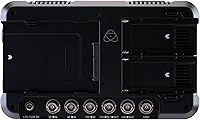
  • Connectivity: Input and output options include HDMI and XLR, supporting both video signal routing and balanced professional audio monitoring.
  • Functions: Operates as a three-in-one device combining a field monitor, video recorder, and multi-camera switcher in a single unit.
  • Dimensions: The unit measures 1.77 x 8.43 x 5 inches, keeping it compact relative to its feature set for rig mounting.
  • Power: Requires one 12V battery; compatible with standard Anton Bauer and V-Mount professional battery systems via appropriate plate.
  • Color: Available in black with a matte finish designed to minimize reflections and glare during outdoor or studio use.
  • Model Number: The official Atomos model identifier for this unit is ATOMSHG7.
  • Manufacturer: Designed and manufactured by Atomos, an Australian company specializing in professional video recording and monitoring equipment.
  • Operating System: Runs on AtomOS, Atomos proprietary firmware that receives periodic updates adding features and compatibility improvements post-launch.
  • Audio Inputs: Dual XLR inputs support balanced professional audio monitoring, allowing camera operators to check sound levels directly from the field monitor.
  • Availability: First made available in April 2019 and remains in active production with no discontinuation announced by the manufacturer.

Related Reviews
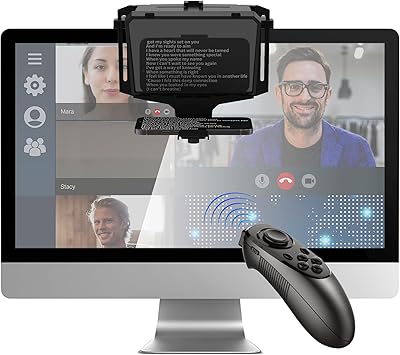
Geimrsy GY-S75-1 7.7-inch Portable Teleprompter
73%
81%
Value for Money
88%
Portability & Form Factor
84%
Ease of Setup
67%
Beam Splitter Glass Quality
63%
Remote Control Functionality
More
Ubiquiti UniFi U7 Pro
82%
91%
Wireless Performance
88%
Build Quality
83%
Range & Coverage
67%
Ease of Setup
78%
Value for Money
More
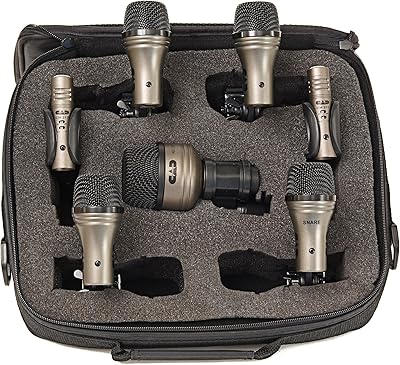
CAD Pro-7 7-Piece Drum Microphone Pack
82%
86%
Sound Quality
92%
Value for Money
80%
Build Quality
72%
Setup & Installation
88%
Portability
More
Olay Total Effects 7 in One Anti-Aging Daily Moisturizer with SPF 30, 1.7 Fl Oz

88%
89%
Effectiveness in Reducing Fine Lines
92%
Hydration & Moisture
80%
Sun Protection (SPF 30)
94%
Non-Greasy Texture
93%
Absorption Speed
More
Evereden Happy Hair Duo for Kids 2x 6.7 fl. oz. Shampoo & 4.7 fl. oz. Conditioner
91%
96%
Ease of Detangling
94%
Gentleness on Sensitive Scalp
91%
Moisturizing Effect
93%
Hair Smoothness & Manageability
88%
Fragrance Appeal
More
Aeotec MultiSensor 7
85%
91%
Ease of Setup
85%
Sensor Accuracy
93%
Battery Life
87%
Value for Money
89%
Connectivity and Compatibility
More
Atomos Ninja V ATOMNJAV01
88%
96%
Display Brightness & Clarity
94%
Recording Format Support
91%
Build Quality & Durability
88%
Portability & Weight
82%
Battery & Power Management
More
realme Buds Air 7
realme Buds Air 7
85%
88%
Sound Quality
94%
Battery Life
85%
Noise Cancellation
80%
Build Quality
90%
Comfort & Fit
More
Tyler 7″ Portable TV
82%
94%
Portability
86%
Battery Life
63%
Screen Size
89%
Input Options
78%
Display Quality
More
SiriusXM Stratus 7 Satellite Radio
81%
85%
Sound Quality
75%
Ease of Setup
90%
Portability & Size
80%
Connectivity Options
88%
User Interface & Navigation
More

FAQ

You will need a fast, compatible SSD — specifically one that meets the sustained write speeds required for 4K ProRes RAW. Atomos maintains a list of approved drives on their website, and it is worth checking it before buying media, as not every off-the-shelf SSD will perform reliably under continuous 4K recording conditions.

It works with a wide range of cameras via HDMI, but ProRes RAW recording specifically requires a compatible camera that outputs a RAW signal — Sony, Nikon, and Canon mirrorless bodies with RAW output support are among the commonly used pairings. Standard monitoring over HDMI works with virtually any camera that has an HDMI output, regardless of brand.

Honestly, it takes some time. The AtomOS interface has a lot of depth, and users who arrive on a shoot without prior hands-on experience often find themselves hunting through menus at the wrong moment. Setting aside a few hours to configure and test the unit before a paid job is genuinely good advice, not just cautious overcommunication.

At 1500 nits, the Shogun 7 is one of the brighter field monitors available and performs well in most outdoor conditions without a hood. In extreme direct sunlight at midday, a shade can still help, but for typical outdoor shooting scenarios — overcast skies, shade, or angled sunlight — most users find they can work without one.

The unit requires a 12V battery, compatible with standard V-Mount or Anton Bauer plates sold separately. Runtime varies significantly depending on brightness settings, whether you are actively recording, and whether HDR output is enabled — running all functions simultaneously drains power faster than monitoring alone, so having spare batteries on longer shooting days is strongly recommended.

For small-scale work — two or three cameras on a corporate interview or a simple live event — it handles the job and removes the need for a separate switching device. If you are running a complex broadcast production with multiple transitions, graphics, or more than a handful of inputs, a dedicated hardware switcher will serve you far better.

Yes, Atomos has continued to release AtomOS firmware updates that have added camera compatibility, format support, and bug fixes since the unit launched. It is worth checking the Atomos website periodically, as updates have meaningfully expanded what the unit can do — though it is also fair to say that occasional updates have introduced minor issues requiring follow-up patches.

Under typical shooting conditions with normal rest periods, heat is manageable. The concern arises during extended continuous recording — particularly in warm climates or enclosed spaces — where the unit can run noticeably hot and may throttle performance to protect itself. If your work involves long uninterrupted takes in hot environments, this is worth researching before committing.

Absolutely — monitoring only mode works independently of the recording function, and many operators use it purely as a high-brightness, color-accurate field monitor without engaging the recorder at all. This can also help manage heat and battery consumption on shoots where on-device recording is not needed.

The 1920x1080 panel is sharp and detailed for general monitoring, but it means you are viewing a downscaled representation of 4K footage rather than native pixels. For critical focus pulling, particularly on high-resolution cameras, some operators prefer monitors with higher native panel resolutions — though the Shogun 7 does include focus-assist tools like peaking to help compensate.