Overview

The Hisense 50-inch R6 4K Smart Roku TV is Hisense's answer for budget-conscious shoppers who want a genuine 4K picture without spending a fortune. Launched in late 2021, it sits in the middle of Hisense's R-series lineup — a step up from bare-bones entry models but well below flagship territory. Worth knowing upfront: the actual screen measures 49.5 inches, not a full 50, though you'd be hard-pressed to notice in practice. What really sets this budget 4K set apart from similarly priced rivals is Roku's smart platform, which remains one of the most intuitive and well-organized interfaces available at any price. Just don't expect OLED-level blacks or class-leading brightness.
Features & Benefits

The R6 packs a full-array LED backlight, which distributes light more evenly across the panel than edge-lit alternatives — a meaningful advantage at this price tier. The 4K resolution is genuinely sharp for streaming, and Dolby Vision plus HDR10 support means compatible content looks noticeably richer in contrast and color. One thing to get straight, though: the Motion Rate 120 marketing refers to image processing, not a native 120Hz panel. The actual refresh rate is 60Hz, so serious sports fans or console gamers should factor that in. Roku's channel library is extensive, with thousands of free and paid options built right in, and Alexa and Google Assistant work too — though you'll need your own smart speaker to use them.

Best For

This Hisense Roku TV makes the most sense for people moving up from a dated 1080p set who don't want to overspend on the upgrade. It's a natural pick for cord-cutters who lean heavily on free, ad-supported streaming — Roku's built-in access to channels like Pluto TV and Tubi is genuinely useful here. Bedroom and guest room setups are where this TV thrives; the size is comfortable without being overwhelming in a smaller space. Casual gamers will appreciate the dedicated Game Mode, which cuts input lag for a noticeably more responsive feel during play. If you're building a serious home theater or need true high-refresh gaming performance, look elsewhere — but for everyday use, the value holds up well.

User Feedback

Owners of this budget 4K set tend to land somewhere between pleasantly surprised and mildly frustrated, depending on their expectations. Picture quality comes up consistently in positive reviews — most buyers feel the image punches above its weight for everyday streaming. The friction points are predictable: the remote feels cheap, stand assembly can be fiddly, and the built-in speakers lack real depth, prompting many to add a soundbar fairly quickly. The Motion Rate 120 labeling trips up buyers who assumed they were getting a true high-refresh display, and that disappointment shows. Long-term reliability feedback is generally decent, with few reports of early failures. Overall, the R6 earns solid marks as a capable starter TV — just go in with clear expectations.

Pros

  • Roku TV OS is one of the cleanest, easiest smart TV platforms available at this price point.
  • Dolby Vision and HDR10 support is a genuine perk that most rivals in this price range skip entirely.
  • The full-array LED backlight produces noticeably more even lighting than edge-lit budget panels.
  • 4K sharpness on streaming content is a real, visible upgrade for anyone coming from a 1080p screen.
  • Game Mode reduces input lag enough for casual console gaming to feel responsive and enjoyable.
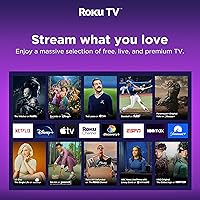
  • Free streaming channel access through Roku means useful content is available immediately, no subscriptions required.
  • Setup is fast and intuitive — most buyers are streaming within ten minutes of unboxing.
  • The R6 holds up well as a secondary-room TV, delivering solid value for the space it occupies.
  • Alexa and Google Assistant compatibility adds smart home convenience for users already in those ecosystems.
  • Long-term reliability reports are generally positive, with few hardware failures reported by multi-year owners.

Cons

  • Motion Rate 120 is a processing label — the actual panel refresh rate is 60Hz, full stop.
  • Fast sports and action sequences show noticeable blur that a true high-refresh display would not produce.
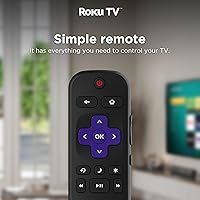
  • The included remote feels cheap, lacks a backlight, and becomes frustrating to use in dark rooms.
  • Built-in audio is thin at higher volumes — most owners eventually budget for a separate soundbar.
  • Viewing angles are limited; color and contrast shift noticeably when seated more than 20 degrees off-center.
  • Voice control requires a separate smart speaker — the TV has no built-in microphone whatsoever.
  • Backlight uniformity can develop subtle issues over extended ownership, based on longer-term user reports.
  • Bright, sunlit rooms expose the panel's modest peak brightness, washing out the picture during daytime.
  • Stand assembly is fiddlier than it should be, with unclear instructions and undersized hardware.
  • Home screen ads within Roku are a persistent minor annoyance that does not go away over time.

Ratings

The Hisense 50-inch R6 4K Smart Roku TV scores below are generated by AI after analyzing thousands of verified global user reviews, with spam, bot submissions, and incentivized feedback actively filtered out. Our model weighs real purchase experiences across streaming quality, daily usability, and long-term ownership — not just first-impression reactions. Both where this budget 4K set genuinely delivers and where it falls short are reflected transparently in every score.
Picture Quality
78%
22%
For the price bracket, the 4K resolution and full-array LED backlight impress most buyers coming from older 1080p sets. Streaming HDR content on Netflix or Disney+ shows a clear step up in color vibrancy, and Dolby Vision support makes a visible difference on compatible titles.
Black levels are underwhelming compared to even mid-range QLED panels, and the backlight can produce a faint halo effect in dark scenes. Users who sit close or have a dedicated viewing room tend to notice these limitations faster than casual watchers.
HDR Performance
74%
26%
Dolby Vision and HDR10 support are rare at this price, and buyers who stream from Dolby Vision-enabled apps notice richer highlights and more saturated colors. Skin tones and natural landscapes in nature documentaries especially benefit.
Peak brightness caps out at a level that limits how dramatic HDR content actually looks, particularly in bright rooms. The TV struggles to create the high-contrast punch that makes HDR truly impactful, leaving some users wondering if HDR is doing much at all.
Refresh Rate & Motion Handling
51%
49%
For everyday streaming — sitcoms, dramas, slower-paced movies — motion is clean and acceptable. Game Mode does reduce input lag noticeably, which casual console players appreciate during lighter gaming sessions.
The native 60Hz panel is consistently the R6's most criticized spec, especially after buyers see Motion Rate 120 on the box and assume it means something it does not. Fast sports, action sequences, and competitive gaming reveal obvious motion blur that a true high-refresh display would not produce.
Smart Platform (Roku TV)
91%
Roku's interface is the strongest argument for choosing this TV over comparably priced competitors running custom or Android-based platforms. The home screen is clean, channels load quickly, and free streaming options like Pluto TV and Tubi are front and center — genuinely useful for cord-cutters.
Roku does display sponsored content and ads on the home screen, which some buyers find intrusive over time. A small subset of users also report occasional app crashes or slow channel loading after prolonged use, though these appear to be software issues rather than hardware failures.
Audio Performance
57%
43%
DTS Studio Sound processing adds a sense of width to the audio that goes beyond what plain stereo speakers typically deliver. For casual TV watching at moderate volumes in smaller rooms, most buyers find the built-in sound passable.
At higher volumes or during action-heavy content, the speakers sound thin and lack real low-end presence. The consensus across user reviews is consistent: a soundbar is almost a requirement if audio matters to you, which represents an additional investment on top of the TV price.
Value for Money
88%
As a starting point for 4K streaming with a polished smart platform, the R6 delivers a lot of capability per dollar. Buyers upgrading from aging 1080p sets routinely call it one of the better budget decisions they have made, especially for secondary rooms.
The value calculation changes if you factor in that most owners eventually buy a soundbar and possibly a streaming device for specific apps. When total spend creeps up, the gap between this budget 4K set and a step-up model narrows more than expected.
Build Quality & Design
67%
33%
The slim profile and relatively clean bezel look more expensive than the price suggests. Setup is straightforward, and buyers report the TV feeling sturdy enough once mounted or set on a stand.
The plastic chassis feels lightweight and flexes slightly when handled during setup — not alarming, but noticeable. The included stand requires careful assembly and has drawn some complaints about wobbly stabilization on uneven surfaces.
Remote Control
59%
41%
The remote is simple, which means there is almost no learning curve. Shortcut buttons for popular streaming services save a few clicks, and the layout is intuitive enough for all age groups.
The remote feels noticeably cheap in hand — the buttons have a hollow, rattling click that undermines the overall experience. There is no backlight, which becomes genuinely frustrating in darker viewing environments when you are hunting for a specific button.
Input Lag & Gaming
72%
28%
With Game Mode enabled, input lag drops to a range that makes casual gaming on PS4, Xbox One, or Nintendo Switch feel responsive. Platformers, RPGs, and slower-paced titles play without noticeable delay.
Competitive gamers or anyone on a PS5 or Xbox Series X expecting a capable 4K 120Hz gaming display will be let down quickly. The 60Hz native panel creates a hard ceiling that no software mode can work around.
Connectivity & Ports
81%
19%
HDMI, USB, Ethernet, and Wi-Fi cover the bases well for most setups. Ethernet support is a practical plus for households where Wi-Fi signal in the TV room is inconsistent and wired stability matters for streaming.
The exact HDMI port count and version details were not prominently disclosed at the time of purchase for many buyers, leading to mild frustration when connecting multiple devices. Power users with a full home theater setup may find port availability limiting.
Brightness & Viewing Angles
63%
37%
In a moderately lit bedroom or living room with controlled ambient light, the panel holds up fine. Most buyers using it as a primary room TV in average lighting conditions report no real complaints about daytime visibility.
Direct sunlight or bright rooms wash out the picture noticeably, and viewing angles are typical of budget LCD panels — colors and contrast shift when you move more than about 20 to 25 degrees off-center. Not ideal for wide-room setups where viewers sit at varied positions.
Setup & Out-of-Box Experience
83%
Initial setup through the Roku onboarding flow is one of the smoothest in this category — connecting to Wi-Fi, linking accounts, and starting to stream takes under ten minutes. Packaging is generally reported as secure, with very few buyers reporting transit damage.
Stand assembly trips up some users, with instructions that could be clearer and screws that feel undersized for the panel weight. A small number of buyers report that the out-of-box picture settings lean toward overly vivid, requiring a manual calibration pass to look natural.
Long-Term Reliability
73%
27%
The bulk of longer-term reviews — those from buyers who have owned the R6 for a year or more — describe no major hardware failures. The Roku platform also receives periodic software updates, which keeps the interface from going stale.
There are scattered reports of backlight unevenness developing over time, and a subset of buyers note that Wi-Fi connectivity becomes less stable after extended ownership. Sample sizes on multi-year feedback are still limited given the TV launched in late 2021.
Voice Control Integration
69%
31%
Alexa and Google Assistant compatibility works as expected once connected to a supported smart speaker. Changing inputs, adjusting volume, and launching channels via voice all function reliably in tested configurations.
The TV has no built-in microphone, so voice control is entirely dependent on owning a separate smart speaker — something not every buyer realizes until after purchase. Without that additional hardware, the voice features advertised on the box are simply inaccessible.
Color Accuracy
71%
29%
Out of the box, colors on streaming content are punchy and generally pleasing for casual viewers. Vivid scenes — animated films, nature content, sports highlights — tend to look lively without obvious oversaturation on default settings.
Purists and buyers who have calibrated displays before will quickly identify that default color settings skew warmer and oversaturate some tones. Getting accurate, cinema-like color requires manual adjustment, and even then the panel's color volume has a ceiling.

Suitable for:

The Hisense 50-inch R6 4K Smart Roku TV is a strong pick for anyone making their first move from an older 1080p set who wants a meaningful picture upgrade without a painful price tag. It fits naturally into bedrooms, guest rooms, and smaller living spaces where it serves as the primary screen without needing to fill a large wall. Cord-cutters will feel right at home — Roku's built-in access to free ad-supported channels like Pluto TV and Tubi makes this Hisense Roku TV genuinely useful right out of the box, no extra hardware required. Casual gamers will appreciate Game Mode, which cuts input lag enough to make lighter console gaming feel responsive. Households already using Alexa or Google Assistant will find the voice control integration a convenient bonus, provided they already own a compatible smart speaker.

Not suitable for:

Buyers who care deeply about motion clarity, high-refresh gaming, or cinematic picture quality should think carefully before choosing the Hisense 50-inch R6 4K Smart Roku TV, because several of its headline specs do not hold up under scrutiny. The native 60Hz panel is the most significant limitation — Motion Rate 120 is a processing label, not a hardware spec, and that distinction matters enormously for sports viewers and anyone on a current-gen gaming console. The built-in speakers are mediocre enough that audio-conscious buyers will almost certainly need a soundbar, which adds to the real-world cost. Those planning to install this budget 4K set as the centerpiece of a proper home theater will find the black levels and peak brightness fall well short of what even a mid-range QLED delivers. Bright living rooms with large windows also expose the panel's modest brightness ceiling, making daytime viewing less satisfying than it could be.

Specifications

  • Screen Size: The panel measures 49.5″ diagonally, marketed as a 50-inch display — a common industry rounding practice that rarely affects real-world placement decisions.
  • Resolution: Native 4K UHD resolution of 3840 x 2160 pixels delivers over 8.3 million pixels across the full panel.
  • Display Type: Full-array LED LCD backlighting illuminates the panel, providing more uniform brightness distribution compared to edge-lit alternatives in the same price range.
  • Refresh Rate: The native panel refresh rate is 60Hz; Motion Rate 120 refers to image processing only and does not indicate a 120Hz hardware panel.
  • HDR Support: Compatible with both Dolby Vision and HDR10 formats, allowing richer contrast and expanded color on supported streaming content.
  • Smart Platform: Runs Roku TV OS natively, offering access to thousands of free and paid streaming channels without any additional streaming device required.
  • Audio System: Built-in stereo speakers with DTS Studio Sound processing provide virtual surround audio expansion for everyday TV and movie watching.
  • Voice Assistants: Compatible with Amazon Alexa and Google Assistant via external smart speakers or displays — the TV itself has no built-in microphone.
  • Game Mode: A dedicated Game Mode reduces input lag for console gaming, making this R6 more responsive during casual play sessions.
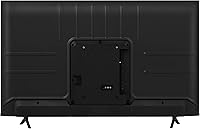
  • Connectivity: Port and wireless options include HDMI, USB, Ethernet, and dual-band Wi-Fi for flexible wired and wireless device connections.
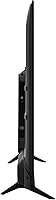
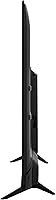
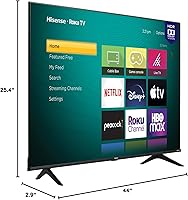
  • Dimensions (no stand): Without the stand attached, the unit measures 44.0″ wide x 25.4″ tall x 2.9″ deep.
  • Dimensions (with stand): With the stand fitted, overall height increases to 27.9″ and depth extends to 8.9″, matching a standard TV console footprint.
  • Weight: The panel weighs 21.6 lbs without the stand and approximately 22.0 lbs with it attached, making solo wall-mounting manageable for most adults.
  • Model Number: The official model designation is 50R6G, part of Hisense's R6 series lineup introduced in late 2021.
  • Power: Rated at 500 watts maximum wattage with an operating voltage of 165 volts, in line with standard North American home electronics.
  • Aspect Ratio: Standard 16:9 widescreen aspect ratio, matching the native format of virtually all modern streaming, broadcast, and gaming content.
  • Included Items: The box includes the TV panel, stand hardware, a power cable, Roku remote control, and a quick start guide.
  • ASIN: The Amazon Standard Identification Number for this unit is B09JHSVTSD, useful for verifying the correct listing when purchasing.

Related Reviews
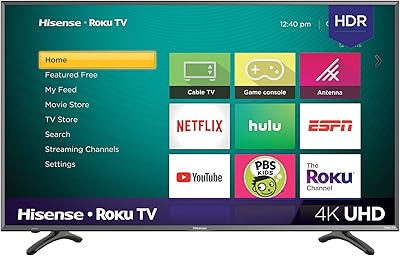
Hisense 50R7E 50-Inch 4K Roku Smart LED TV
84%
87%
Picture Quality
92%
Roku Streaming Performance
90%
Value for Money
65%
Sound Quality
70%
Brightness in Well-lit Rooms
More
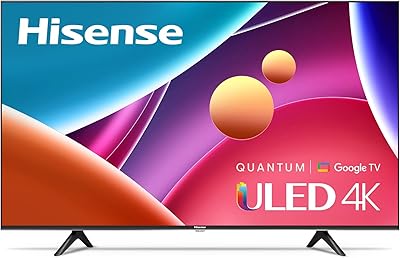
Hisense 50U6G1 50-Inch ULED 4K Smart TV
82%
89%
Picture Quality
84%
Sound Quality
92%
Value for Money
91%
Setup and Installation
75%
Usability and Interface
More
Hisense 65-Inch R6090G 4K UHD Roku Smart TV
83%
87%
Picture Quality
91%
Ease of Use (Roku Interface)
88%
Alexa Voice Control Integration
85%
Connectivity Options
72%
Sound Quality
More
Hisense 43R7E 43-inch 4K Roku Smart LED TV
81%
87%
Picture Quality
92%
Value for Money
91%
Ease of Setup
85%
Streaming Performance
61%
Sound Quality
More
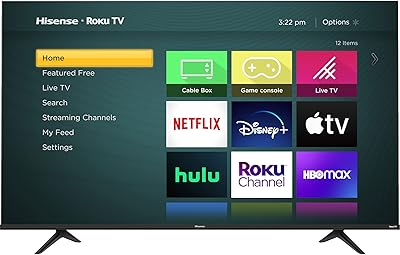
Roku Select Series 50-inch 4K Smart TV 50R4A5R
85%
88%
Picture Quality
85%
HDR Performance
91%
Smart Platform Usability
90%
App Availability
86%
Connectivity Options
More
TCL 50S455 50-Inch 4K UHD HDR Smart Roku TV
85%
88%
Picture Quality
92%
Value for Money
90%
Smart Features & Streaming
65%
Audio Quality
91%
Ease of Setup
More
Hisense 85-inch A6 4K Smart Roku TV
73%
73%
Picture Quality
91%
Screen Size & Presence
88%
Value for Money
86%
Smart TV Platform (Roku OS)
54%
Motion Handling
More
Roku Select Series 55-Inch 4K Smart TV
79%
93%
Smart TV Interface
91%
Setup Experience
74%
Picture Quality
88%
Remote Control
86%
Value for Money
More
Hisense 43R6G 4K UHD Smart Roku TV
74%
73%
Picture Quality
88%
Smart Platform
81%
Value for Money
61%
Motion Handling
66%
Gaming Performance
More
Westinghouse 50-inch Xumo 4K Smart TV
69%
74%
Picture Quality
61%
Smart Platform (Xumo TV)
83%
Value for Money
52%
Audio Quality
88%
Setup & Ease of Use
More

FAQ

No — and this is worth clarifying before you buy. The native panel refresh rate is 60Hz. Motion Rate 120 is a marketing label for the TV's image processing technology, not the hardware panel speed. If smooth motion during fast sports or competitive gaming is a priority, you should factor this in carefully.

You will need a free Roku account to complete the initial setup and access the full channel library, but creating one takes just a couple of minutes. Once set up, you can use thousands of free channels without any paid subscription. A handful of premium apps like Netflix or Hulu require their own subscriptions separately.

Yes, but not directly through the TV itself — it has no built-in microphone. You will need a separate Alexa device like an Echo, or a Google Nest speaker, already set up in your home. Once linked, you can control basic TV functions like power, volume, and channel switching using voice commands.

For casual gaming on older consoles or Nintendo Switch, it holds up reasonably well thanks to Game Mode, which lowers input lag to an acceptable level. However, the 60Hz native panel means it is not a great fit for competitive gaming or current-gen consoles where 120Hz output makes a real difference. RPGs, platformers, and story-driven games will feel fine; fast-paced shooters at high frame rates will not.

It is acceptable in rooms with moderate, controlled lighting, but direct sunlight or a very bright room will wash out the image noticeably. The peak brightness is not high enough to fight strong ambient light effectively. If your living room gets a lot of natural light, you may want to consider a higher-brightness panel or invest in some light-blocking curtains.

They are passable for casual daytime TV watching at moderate volumes, but most owners end up wanting more. During action movies or at higher volumes, the audio sounds thin and lacks any real bass. A soundbar is not technically required, but if you care about sound quality at all, budgeting for one will make a meaningful difference to your overall experience.

Yes on both counts. The R6 has a built-in ATSC tuner, so you can connect a standard over-the-air antenna and receive free broadcast channels without any subscription. A cable or satellite box connects via HDMI the same way as any external device. Roku also integrates live TV input directly into its channel guide for a more unified experience.

The Roku onboarding process is one of the smoothest out there — connecting to Wi-Fi and starting to stream takes about ten minutes from power-on. Stand assembly is where some buyers hit friction; the instructions could be clearer and the screws are on the smaller side. Taking your time and having a second person hold the panel steady makes the process much easier.

The R6 includes an HDMI port with ARC (Audio Return Channel) support, which allows a compatible soundbar to receive audio through the same HDMI cable used for the TV connection. Full eARC support is not confirmed on this model, so if you have a high-end soundbar relying on eARC for lossless audio formats, verify compatibility with your specific soundbar before purchasing.

All three brands compete closely at this price tier, and the honest answer is that the right choice depends on your priorities. The R6 edges out many rivals specifically because of Roku's cleaner, more intuitive smart platform. Vizio's SmartCast and TCL's own Roku-based models are also worth comparing on panel specs, but if the smart TV experience matters to you day-to-day, this Hisense Roku TV holds its own well.

Where to Buy