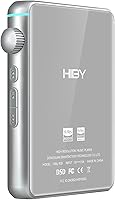
Overview

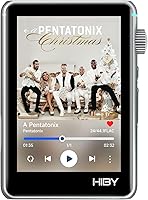
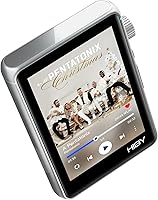
The HiBy R3 II Portable Audio Player is HiBy's 2025 refresh of an already-popular compact DAP, and the updates go beyond a sticker change — tightened oscillators and refined hardware tuning are the headline improvements. The dual ES9219C DAC setup and HiBy OS remain central to its identity, giving it a clear technical foundation at this price level. Picking it up, the aluminum alloy body feels reassuringly solid, and the 3.2-inch touchscreen handles navigation without much fuss. That said, this HiBy DAP is not a reference-grade source aimed at obsessive audiophiles — it is a feature-packed streaming and hi-res player built to fit in a jacket pocket.

Features & Benefits

Two ES9219C chips working in tandem handle everything from DSD256 native decoding to PCM at 384kHz/32-bit and MQA unfolding up to 16X — MQA being a format that reconstructs high-resolution audio detail from compressed files. The balanced 4.4mm output pushes 340mW into 32-ohm loads, which is real headroom for harder-to-drive IEMs. HiBy OS ships with Tidal and Qobuz pre-installed, so there is no sideloading required. Bluetooth 5.1 supports LDAC for high-quality wireless, the microSD slot handles up to 2TB, and a USB DAC input lets the R3 II pull double duty as a desktop audio upgrade without needing a separate adapter.

Best For

The R3 II is an easy recommendation for anyone upgrading from smartphone audio — especially those who already subscribe to Tidal or Qobuz and want a dedicated device that keeps those apps running natively. IEM users benefit most from the low noise floor, sitting at just 2 microvolts on the single-ended output, which keeps sensitive earphones free of background hiss. At 118 grams and just over 14mm thick, commuters and frequent travelers will find it genuinely pocketable. It also works well for anyone who wants USB DAC functionality on a budget, plugging into a laptop to improve desktop audio without adding another dedicated device to the pile.

User Feedback

With 129 ratings averaging 3.6 out of 5, this pocket audio player lands in genuinely mixed territory, and it is worth understanding why. Sound quality and value earn consistent praise — buyers frequently highlight how well the balanced output performs relative to competing devices at this price point. The frustrations tend to cluster around software: Wi-Fi dropping, sluggish app responses within HiBy OS, and shorter battery life during active streaming sessions. Build quality reactions are split, with some finding the aluminum frame confidence-inspiring and others calling it underwhelming. Nearly all criticisms point to firmware behavior rather than physical defects, which leaves room for improvement through future updates.

Pros

  • Native Tidal and Qobuz apps run out of the box with no sideloading or workarounds needed.
  • The balanced 4.4mm output delivers 340mW at 32 ohms, giving IEMs and easy-to-drive headphones plenty of power.
  • DSD256 native playback and MQA 16X decoding cover virtually every hi-res format serious listeners care about.
  • At 118 grams and under 15mm thick, it genuinely fits in a jacket pocket without noticeable bulk.
  • Two-way Bluetooth 5.1 with LDAC means it works as both a high-quality wireless source and a receiver.
  • The single-ended noise floor of 2 microvolts keeps even the most sensitive IEMs completely free of background hiss.
  • MicroSD expansion up to 2TB means even large local libraries have plenty of room to grow.
  • USB DAC functionality adds real desktop audio value, removing the need for a separate dongle.
  • A protective case and screen protectors arrive in the box, which is a genuinely useful inclusion at this price.

Cons

  • HiBy OS can feel sluggish and unstable, with app responsiveness issues flagged by multiple buyers.
  • Wi-Fi connectivity is unreliable for some users, with dropped connections interrupting active streaming sessions.
  • Battery life takes a noticeable hit during streaming, falling well short of what offline playback delivers.
  • Build quality impressions are divided — several buyers find the frame underwhelming despite the aluminum construction.
  • The output stage cannot confidently drive high-impedance or planar magnetic headphones that demand serious current.
  • A 3.6-star average across 129 ratings signals a recurring pattern of real-world frustrations, not just isolated incidents.
  • Only 2.4GHz Wi-Fi is supported, which can lead to congestion problems in crowded wireless environments.
  • The closed HiBy OS ecosystem limits streaming options to whatever the platform natively supports, with no Android app flexibility.

Ratings

The scores below for the HiBy R3 II Portable Audio Player were generated by our AI system after analyzing verified buyer reviews collected from global sources, with automated filtering applied to remove suspected spam, bot submissions, and incentivized feedback. Every category reflects actual ownership patterns — both the hardware strengths that genuinely resonate with buyers and the recurring software frustrations that have pulled the overall rating below what the spec sheet alone might suggest. Our goal is a transparent, complete picture so you can make a confident decision based on how this device actually performs in real-world use.

Sound Quality
83%
Listeners consistently praise how much detail and clarity the dual ES9219C setup extracts from well-recorded files, particularly through the balanced 4.4mm output. On a morning commute with a good pair of IEMs, the low distortion and silent background produce an engaging, spacious listen that punches above the device's price bracket.
The sound profile is tuned for broad appeal rather than analytical precision, meaning dedicated audiophiles comparing it against reference-tier DAPs at twice the price will notice a ceiling. DSD and hi-res playback sounds excellent in isolation but does not dramatically distinguish itself from a well-implemented FLAC setup to most ears.
Build Quality
72%
28%
The aluminum alloy chassis gives the device a purposeful, pocketable feel, and the reinforced glass on both faces provides real-world scratch resistance in daily bag carry. Buyers who use the included protective case report the unit holding up well cosmetically through months of regular commuting use.
Opinions diverge noticeably — some buyers find the construction feels thin compared to competitors in the same price range, with a handful describing seam alignment inconsistencies or a slightly hollow quality to the frame edges. At this price point, the expectation is a premium in-hand feel that the R3 II does not always deliver.
Value for Money
81%
19%
Getting MQA 16X decoding, DSD256 native playback, a 4.4mm balanced output, and built-in Tidal and Qobuz access in one pocketable device at this price tier is a genuinely compelling hardware package. For buyers stepping up from a phone DAC dongle, the jump in perceived audio quality and feature depth is immediate and noticeable.
Software instability undercuts the value argument — buyers who pay for a dedicated streaming DAP expect smooth daily usability, and recurring HiBy OS issues mean you are sometimes troubleshooting rather than listening. The absence of 5GHz Wi-Fi support is also a gap that direct competitors at similar prices have already closed.
Streaming Experience
77%
23%
Having Tidal and Qobuz run as first-class apps on HiBy OS — rather than being sideloaded or browser-wrapped — makes the streaming side feel genuinely purpose-built. Users who commute and cycle between playlists and offline files appreciate not having to switch interfaces or reboot anything between sources.
The experience lives and dies by Wi-Fi stability, and that is where cracks appear — multiple buyers report Tidal dropping mid-album or Qobuz buffering unpredictably, particularly in environments with 2.4GHz congestion. App loading times within HiBy OS also run slower than most users expect from a dedicated music device.
Battery Life
58%
42%
For offline local playback — playing FLAC or DSD files from a microSD card with the screen dimmed — battery performance is reasonable and keeps up with a full day of moderate listening without requiring a mid-day charge. Users who primarily listen to stored music on short commutes report adequate endurance for their needs.
Switch to active Tidal or Qobuz streaming with the Wi-Fi radio on and screen lit, and battery life drops to a level that frustrates buyers on longer travel days. This is one of the most consistently negative themes in real user reports, and firmware updates have not yet meaningfully addressed the drain.
Software & UI
61%
39%
The HiBy OS interface is cleanly organized at first glance, with a physical scroll wheel that makes volume adjustment intuitive without unlocking the touchscreen. For straightforward playback tasks — queuing albums, adjusting EQ, or browsing by folder — most users find the basic workflow manageable after a short learning period.
Beyond basic playback, HiBy OS draws repeated criticism for sluggish app loading, occasional mid-stream freezes, and a UI responsiveness that does not feel proportionate to the hardware inside. Several buyers describe having to force-restart the device to recover from a frozen state, which is a frustrating pattern for a daily-driver product.
Bluetooth Performance
84%
Two-way Bluetooth 5.1 with LDAC is a genuine strength, and the connection stays stable with audio quality that clearly outpaces standard SBC in daily use. Whether pairing to LDAC-compatible headphones or using the R3 II as a Bluetooth receiver for a phone, the two-way flexibility adds real value beyond what most DAPs at this price offer.
LDAC at its highest quality setting still compresses audio, meaning true lossless local files are better served through the wired outputs for critical listening sessions. UAT support is a niche addition mainly relevant to users with compatible HiBy ecosystem hardware, so its practical value depends entirely on what else is in your audio chain.
Output Power & Drive
79%
21%
The 4.4mm balanced output delivering 340mW into 32-ohm loads gives this pocket player genuine utility beyond IEMs — listeners pairing it with moderately efficient full-size headphones during work-from-home sessions report clean, controlled sound with enough volume headroom to push dynamics comfortably. The 3.5mm output handles sensitive IEMs with excellent composure.
Listeners who own high-impedance dynamics above 150 ohms, or low-sensitivity planar magnetics, will run into the ceiling of what the output stage can deliver, with dynamics compressing before reaching a satisfying listening level. This pocket audio player is not a headphone amplifier by design, and the hardware confirms that boundary clearly.
Wi-Fi Connectivity
54%
46%
When the connection holds, OTA firmware updates download and install cleanly, and streaming sessions through Tidal or Qobuz maintain adequate bitrate for lossless playback under favorable home network conditions. Users with a strong, uncongested 2.4GHz router positioned nearby generally report acceptable performance for casual daily streaming.
A significant share of negative reviews centers on Wi-Fi dropping mid-stream, slow reconnections after standby, and general instability in apartments or offices with multiple competing networks — all aggravated by the 2.4GHz-only hardware limitation. For a device whose core appeal is wireless streaming, this is a structural weakness that measurably hurts the ownership experience.
Portability & Design
86%
At 118 grams and 14.5mm thin, this HiBy DAP slides into a jeans pocket without creating an uncomfortable bulge — a genuinely pocketable size that many comparable DAPs sacrifice for larger screens or bigger battery capacity. The scroll wheel adds tactile volume control that commuters can use without looking at the screen.
The 3.2-inch touchscreen is adequate for navigation but relatively small for browsing large libraries or reading streaming metadata comfortably, with some users noting inconsistent responsiveness at the screen edges. The glass back, while visually clean, becomes a fingerprint magnet in daily bare-handed use and benefits noticeably from the included case.
Format Support
91%
The codec and format coverage here is genuinely comprehensive for the price. DSD256 native decoding, PCM up to 384kHz/32-bit, and full MQA 16X hardware unfolding means virtually every hi-res format a serious collector would encounter is handled correctly in hardware, not approximated by software conversion.
For buyers who only listen to MP3 or AAC files from casual rips or standard streaming tiers, this level of format depth is entirely wasted and the added processing overhead may contribute to shorter battery life without any audible benefit. The breadth of format support is a genuine strength, but only for listeners whose libraries and subscriptions actually justify it.
Connectivity & Versatility
88%
Having 3.5mm, 4.4mm balanced, USB DAC in and out, and SPDIF over USB in a 118-gram device is a genuine differentiator at this price. Users who switch between desktop DAC duty at a desk and portable IEM listening during a commute do not need to carry multiple devices or adapters to cover both scenarios.
USB DAC mode works reliably but requires manual activation each time, which adds a mildly repetitive step for users who frequently switch between portable and desktop modes throughout the day. SPDIF output via USB is useful for connecting to a home receiver or external DAC, but it is too niche for most buyers to factor into their purchase decision.
Noise Floor
89%
A 2uV noise floor on the single-ended output means sensitive multi-driver IEMs get a completely silent, black background between notes — a real and immediately perceptible improvement over most smartphone outputs. Users who previously heard faint hiss from their IEMs before and between tracks tend to notice the difference immediately when switching to this HiBy DAP.
For users who do not own highly sensitive IEMs, the measurable noise floor advantage is largely academic — the practical audible difference against other well-designed DAPs in the same bracket is small enough to be negligible in everyday listening. The spec is a genuine strength, but it rewards a specific listener profile more than a general audience.

Suitable for:

The HiBy R3 II Portable Audio Player is an excellent fit for listeners who are ready to step away from phone-based audio but refuse to abandon their Tidal or Qobuz subscriptions — both services run natively on HiBy OS, so streaming feels like a built-in experience rather than a workaround. IEM owners and users of easy-to-drive headphones will particularly appreciate the near-silent noise floor, which sits at just 2 microvolts on the single-ended output, keeping sensitive earphones completely quiet between tracks. Buyers who occasionally want more headroom can tap the 4.4mm balanced output, which pushes up to 340mW at 32 ohms — meaningful power for moderately demanding cans without stepping into heavy DAP territory. Commuters, travelers, and anyone maintaining a large local hi-res library will find the 118-gram chassis and up to 2TB of microSD support genuinely practical day to day. It also doubles as a USB DAC when plugged into a laptop, which gives budget-minded buyers a versatile two-in-one value proposition that is difficult to find at this price tier.

Not suitable for:

The HiBy R3 II Portable Audio Player is not the right choice for anyone who needs a rock-solid, frustration-free software experience above all else — its 3.6-star average across 129 ratings reflects real recurring issues with HiBy OS responsiveness and Wi-Fi stability that go beyond a handful of bad-luck units. If your primary use case is constant online streaming and consistent wireless performance is non-negotiable, there are competing DAPs with more mature software platforms worth the extra consideration. Listeners with high-impedance or planar magnetic headphones should also look elsewhere, as the output stage, while capable for IEMs, does not have the raw current delivery to drive demanding cans with confidence. Anyone expecting an analytical reference-grade sound or planning to pit this against flagship-tier DAPs costing significantly more will likely find the tuning falls short of those benchmarks. Finally, if you depend on long streaming sessions on a single charge, battery drain during online playback is a known complaint — it is a more noticeable limitation than local-file playback figures might suggest.

Specifications

  • DAC Chips: Equipped with two ES9219C chips working in tandem to handle hi-res audio decoding at the hardware level.
  • Supported Formats: Handles DSD256 native playback, PCM up to 384kHz/32-bit, and MQA up to full 16X unfolding.
  • Display: Features a 3.2″ touchscreen used for playback control, library navigation, and settings.
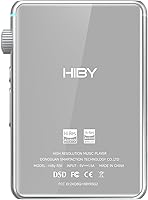
  • Chassis: Constructed from aluminum alloy with reinforced glass panels covering both the front and back faces.
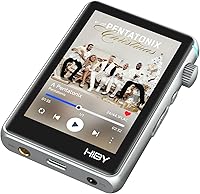
  • Audio Outputs: Provides a 3.5mm single-ended headphone output and a 4.4mm balanced output for wired listening.
  • Output Power: Delivers up to 112mW via the 3.5mm output and up to 340mW via the 4.4mm balanced output, both rated at 32 ohms.
  • Signal-to-Noise: Rated at 119dB SNR on the 3.5mm output and 120dB SNR on the 4.4mm balanced output.
  • Distortion: THD measures 0.0007% on the 3.5mm output and 0.0005% on the 4.4mm balanced output.
  • Noise Floor: Noise floor sits at 2uV on the 3.5mm single-ended output and 2.9uV on the 4.4mm balanced output.
  • Bluetooth: Bluetooth 5.1 with two-way support across LDAC, UAT, aptX, AAC, and SBC codecs.
  • Connectivity: Includes 2.4GHz Wi-Fi, USB DAC input and output, and SPDIF digital output via USB.
  • Storage: Ships with onboard internal storage and a microSD card slot that accepts cards up to 2TB.
  • Dimensions: Measures 86.9mm x 60.6mm x 14.5mm, roughly equivalent to 3.42″ x 2.39″ x 0.57″.
  • Weight: Weighs 118g (approximately 4.2 oz), light enough for comfortable daily pocket carry.
  • Operating System: Runs HiBy OS with Tidal and Qobuz apps pre-installed, plus internet radio streaming support.
  • In the Box: Includes the player, a protective case, screen protectors, a USB data cable, a user manual, and a warranty card.

Related Reviews
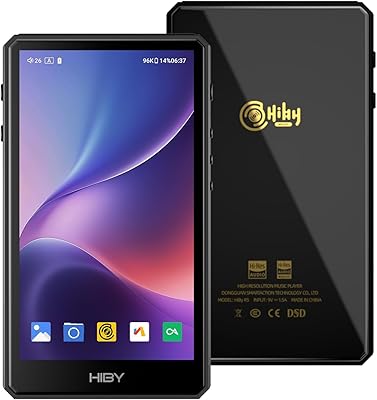
HiBy R5 Gen 2 Digital Audio Player
72%
88%
Sound Quality
91%
Hi-Res & Format Support
84%
Balanced Output Performance
47%
Software & App Compatibility
69%
Battery Life
More
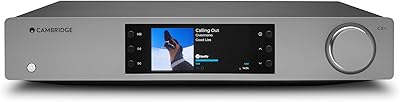
Cambridge Audio CXN100 Network Audio Streamer
78%
93%
Sound Quality
88%
Build Quality
91%
Streaming Integration
62%
App Experience
89%
Connectivity Options
More
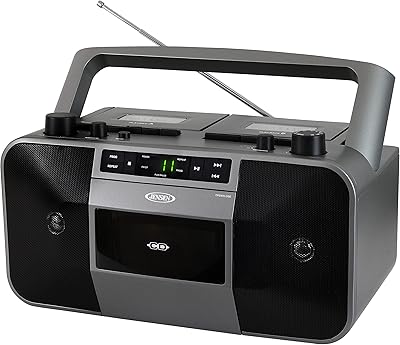
Jensen MCR-1500 CD Dual-Deck Cassette Boombox
63%
67%
Value for Money
48%
Build Quality
52%
Cassette Mechanism
61%
CD Performance
54%
Audio Quality
More
Arafuna Portable CD Player
72%
81%
Value for Money
88%
Ease of Use
84%
Portability & Size
41%
Power & Battery
67%
Audio Quality
More
Monodeal CW605 Portable CD Player
76%
91%
Ease of Use
74%
Anti-Skip Performance
58%
Battery Life
61%
Build Quality
77%
Sound Quality
More
SEMIER SM-226 Portable Cassette Player
70%
84%
Value for Money
81%
Radio Reception
88%
Ease of Use
86%
Portability
63%
Recording Quality
More
Philips Portable CD Cassette MP3 Boombox
72%
88%
Multi-Format Versatility
83%
Ease of Use
67%
Sound Quality
81%
Portability
62%
Bass Boost Performance
More
Cambridge Audio AXC35
80%
93%
Sound Quality
91%
Build Quality
89%
DAC Performance
78%
Value for Money
61%
Connectivity & Outputs
More
MONODEAL MD102FM Portable CD Player
84%
88%
FM Transmitter Performance
91%
Battery Life
85%
Ease of Use
79%
Audio Quality
82%
Build Quality
More
Ezcap Ezcap234 AM/FM Cassette Player
70%
88%
Ease of Setup
79%
Tape-to-MP3 Conversion
73%
AM/FM Reception
61%
Audio Quality
63%
Built-in Speaker
More

FAQ

Both apps come pre-installed on HiBy OS and are ready to use straight out of the box. You just connect to Wi-Fi, sign into your existing account, and you are streaming — no sideloading or manual APK installation required. It is one of the more convenient aspects of this player compared to generic Android DAPs that require more hands-on setup.

The 4.4mm balanced output delivers 340mW at 32 ohms, which handles easy-to-drive full-size headphones well enough. That said, if your headphones are high-impedance dynamics or planar magnetics — anything that genuinely needs strong current delivery — the output stage will likely leave them sounding underpowered. For IEMs and sensitive cans, it is an excellent match; for demanding full-size headphones, you would be better served by a more powerful dedicated DAP or a separate amplifier.

MQA, short for Master Quality Authenticated, is an audio format used by Tidal's HiFi Plus subscription tier that encodes and reconstructs studio master recordings from a relatively compact file. The R3 II performs full hardware MQA decoding up to 16X, which means the process happens in the DAC chips themselves rather than being approximated in software. If you do not subscribe to Tidal HiFi Plus, or if you are streaming from Qobuz and playing FLAC files locally, MQA support simply will not factor into your day-to-day listening.

This is honestly one of the more variable aspects of the device, and real-world reports from buyers are mixed. Local hi-res playback tends to get noticeably better battery endurance than active Wi-Fi streaming, which simultaneously runs the wireless radio, the screen, and the DAC processing. HiBy does not publish a single verified streaming battery figure, so treat marketing estimates with caution and plan for shorter sessions if streaming is your primary use case.

The 2025 refresh is an iterative improvement rather than a ground-up redesign. The main technical change is the addition of dual low phase noise crystal oscillators, which reduce timing jitter in the digital signal path and can contribute to a cleaner, more stable sound. The core hardware identity — dual ES9219C DACs, the same compact form factor, and HiBy OS — carries over from the prior version, so if you already own an older R3 II, the case for upgrading is real but modest.

Yes, and it works quite well in that role. You connect it to a computer via the included USB cable, activate USB DAC mode on the player, and your computer automatically routes audio output through the R3 II rather than its own onboard sound hardware. Both the 3.5mm and 4.4mm outputs remain active in this mode, so you get a meaningful audio quality improvement for desktop listening without buying a separate dedicated dongle.

It transmits via LDAC, UAT, aptX, AAC, and SBC, covering essentially every wireless headphone on the market. It also works as a Bluetooth receiver, which means you can feed audio from your phone into the pocket audio player and use it as a portable DAC and amplifier for wired headphones — a genuinely useful secondary function. LDAC gives the highest quality wireless transmission if your headphones support it.

It is worth being upfront here: Wi-Fi reliability is one of the recurring criticisms in buyer reviews, not just an isolated complaint. A number of users report dropped connections, slow reconnection, and occasional buffering during streams. The player only supports 2.4GHz Wi-Fi, which is more susceptible to interference in congested network environments. If you are on a stable home network with a clear signal, you may have no issues at all — but if your Wi-Fi environment is crowded or unreliable, this is a genuine risk factor to consider before buying.

The HiBy R3 II Portable Audio Player supports a wide range of local formats including DSD up to DSD256, PCM up to 384kHz/32-bit, MQA, FLAC, WAV, AIFF, ALAC, MP3, AAC, and OGG. DSD is decoded natively rather than being converted to PCM, which matters to listeners who prefer that original signal path. The microSD slot accepts cards up to 2TB, so even a large hi-res library has room to grow.

A protective case and a set of screen protectors are both included in the box, which is a genuinely practical inclusion at this price level. You also get a USB data cable, a printed user manual, and a warranty card. The bundled case is functional rather than premium, but it offers solid everyday scratch and impact protection right from the start without any extra spending.

Where to Buy