Overview

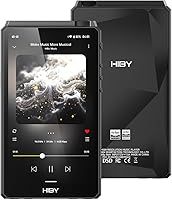
The HiBy R6 III 2025 Digital Audio Player is HiBy's most considered refresh of their mid-tier DAP lineup, built for listeners who want real audiophile performance without giving up Android's everyday flexibility. Where most dedicated players trap you in proprietary software, this DAP runs Android 12 on a responsive 5-inch touchscreen — a combination that puts Spotify, Tidal, and your local FLAC library all within reach from one device. The aluminium alloy chassis feels premium and keeps the unit solid without being cumbersome at 250g. Against competitors like the FiiO M23 and Shanling M6 Ultra, the R6 III positions itself with a genuine hardware differentiator: a dual amplifier topology that neither of those rivals offers in quite the same configuration.
Features & Benefits

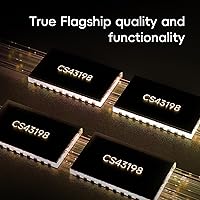
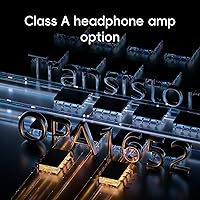
At the heart of the R6 III sit four Cirrus Logic CS43198 DAC chips wired in an 8-channel monoblock configuration — each channel gets its own dedicated chip path, which translates to noticeably better channel separation and a wider, more precise soundstage than you'd get from a single or dual-chip design. The switchable amplifier matters in practice: Class A mode runs warmer and more powerful, making it the right choice for planar magnetic or high-impedance headphones, while Class AB conserves battery for casual sessions. Native DSD512 and PCM 768kHz support means high-res files play back without conversion artifacts. Dual-band WiFi, Bluetooth 5.0 with LDAC, and the 4.4mm balanced output complete a connectivity suite that covers nearly every listening scenario.

Best For

This DAP is a strong match for headphone listeners who've outgrown smartphone audio but aren't ready to carry a separate amp and DAC. If you own planar magnetic headphones or high-impedance dynamic drivers, the Class A output gives you the headroom to actually drive them properly. Streamers benefit from the full Android app ecosystem — no sideloading tricks needed — while local library listeners can stack up to 2TB on a single MicroSD card. The under-two-hour charge time makes it practical for daily commuting, and the self-contained design means one device replaces what used to require a transport, DAC, and amp. It's less suited for listeners who prioritize all-day Class A endurance above everything else.

User Feedback

Early adopters consistently highlight soundstage and separation as standout qualities, with Class A mode drawing praise for its organic, slightly warm presentation on orchestral and acoustic recordings. The bundled case and three screen protectors are viewed as thoughtful inclusions, and the Type-C cable handles fast charging reliably. On the critical side, battery life in Class A runs noticeably shorter than rated under real-world conditions — a genuine frustration for listeners who want that mode throughout an entire commute or workday. Some buyers upgrading from the previous R6 Pro also report occasional UI lag during app switching. The overall consensus treats the upgrade as meaningful, but managing Class A battery expectations is something most candid reviewers raise early.

Pros

  • The quad CS43198 DAC setup delivers noticeably wide soundstaging and clean channel separation that outperforms most single-chip rivals.
  • Switchable Class A and Class AB amplifier modes offer real flexibility depending on your headphones and how long you need to listen.
  • Android 12 means streaming apps install natively — no sideloading workarounds or compatibility headaches.
  • The 4.4mm balanced output pairs well with high-end IEMs and full-size headphones that benefit from lower noise floor.
  • MicroSD expansion up to 2TB means even obsessive local-library collectors are unlikely to run out of space.
  • LDAC and aptX HD Bluetooth support makes wireless listening genuinely high-quality, not just a fallback option.
  • The bundled protective case and three screen protectors add immediate real-world value straight out of the box.
  • Charging from flat to full in under two hours is genuinely useful for people with unpredictable schedules.
  • Coaxial and USB digital outputs give this DAP a long useful life as a transport paired with future desktop gear.
  • Build quality from the aluminium alloy chassis feels durable and appropriately premium for the price tier.

Cons

  • Class A battery life under real-world listening conditions falls noticeably short of what the 4500mAh capacity might suggest.
  • The Snapdragon 665 chipset can produce occasional UI lag when switching between apps or loading large libraries.
  • At 250g, this DAP is on the heavier end for all-day pocket carry, especially compared to slimmer rivals like the FiiO M11S.
  • The 720x1280 screen resolution feels behind the curve compared to higher-end DAPs now shipping with sharper displays.
  • 64GB of internal storage is modest for a device targeting serious local-library listeners, making MicroSD almost mandatory from day one.
  • App compatibility is not guaranteed for every Android streaming service, and some may require manual updates or workarounds over time.
  • Buyers upgrading specifically from the R6 Pro may find the sonic jump less dramatic than the hardware revision implies.
  • The Class A versus Class AB tradeoff is not always intuitive for new DAP users, and the manual provides limited guidance on when to switch.
  • No wireless charging support is a minor but real omission given the price point and the fast-charge capable battery.
  • Coaxial output requires an adapter for most modern setups, which adds a small but inconvenient extra purchase for desktop users.

Ratings

The scores below were generated by AI after analyzing verified buyer reviews worldwide for the HiBy R6 III 2025 Digital Audio Player, with spam, bot-submitted, and incentivized feedback actively filtered out before scoring. Each category reflects the full spectrum of real ownership experiences — not just the highlights — so both the genuine strengths and the honest frustrations are accounted for in every number you see here.

Sound Quality
93%
The quad CS43198 monoblock configuration consistently earns high praise for its soundstage width and instrument separation, particularly on orchestral and acoustic recordings. Listeners switching from smartphone audio describe it as a clear and immediate improvement, not a subtle one, with Class A mode adding a warmth that works especially well for vocals and strings.
A small number of highly experienced listeners feel the tuning leans slightly warm in Class A rather than being fully neutral, which may not suit those who prefer an analytical or reference-grade presentation. At extreme volume on very sensitive IEMs, a faint noise floor has been noted in single-ended mode.
Amplifier Performance
91%
The switchable Class A and Class AB topology gives the R6 III a meaningful real-world advantage over rivals that offer only a single amp mode. High-impedance headphone users report that Class A handles demanding loads with authority — planars and 300-ohm dynamics both drive cleanly without distortion at listening volumes.
The tradeoff for Class A power is battery drain, and users who forget to switch back to Class AB during longer sessions find themselves reaching for a charger sooner than expected. The transition between modes requires a manual selection in settings rather than an automatic or smart-switching option.
Battery Life
61%
39%
In Class AB mode, the 4500mAh battery holds up well for a full workday of mixed streaming and local playback, and the under-two-hour full charge is genuinely appreciated by commuters who top up overnight or during a lunch break.
Class A mode is where battery expectations regularly fall short of what buyers hope for — real-world playback time in this mode runs significantly lower than rated figures, and some users describe it as unsuitable for anything beyond a short listening session without a charger nearby. This is the most consistently mentioned frustration across reviews.
App Ecosystem & Streaming
88%
Full Android 12 support means Spotify, Tidal, Apple Music, and YouTube Music all install and operate exactly as they would on an Android smartphone, with no sideloading or compatibility workarounds required. Buyers who wanted a DAP that also functions as a genuine streaming device report that this aspect met or exceeded their expectations.
A subset of users has reported that certain app updates occasionally require manual intervention or cache clearing to maintain stable playback, which is a known limitation of the Snapdragon 665 platform rather than a HiBy-specific issue. Google Play certification status should be confirmed before purchase if app compatibility is a primary concern.
Build Quality
89%
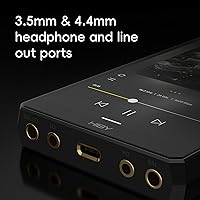
The aluminium alloy chassis draws consistent praise for feeling substantial and well-finished without the plasticky flex that cheaper DAPs exhibit. The physical port layout — with each output given its own dedicated socket — also signals a level of engineering care that buyers notice when comparing it to rivals in the same price tier.
At 250g, a small but vocal group of buyers finds the device heavier than comfortable for extended pocket carry, particularly during workouts or longer walks. Some users have noted that the buttons, while clicky, sit slightly flush and can require deliberate pressure to register.
UI & Software Experience
72%
28%
HiBy's own music app integrates well with the Android layer, and the combination of a 5-inch touchscreen and familiar Android navigation makes initial setup and daily use far more intuitive than proprietary-OS DAPs. Most mainstream tasks — browsing libraries, adjusting EQ, launching streaming apps — feel straightforward.
The Snapdragon 665 chipset shows its age during heavier tasks: switching between a streaming app and the local player, or loading very large library folders, can produce perceptible pauses. Users upgrading from flagship smartphones will notice the performance gap more acutely than those coming from older devices.
Connectivity Options
92%
The combination of 3.5mm and 4.4mm balanced headphone outputs, USB digital I/O, coaxial out, LDAC Bluetooth, and dual-band WiFi is unusually comprehensive for this price tier, and buyers appreciate not having to choose between wired and wireless use cases. The 4.4mm balanced output in particular receives praise for its lower noise floor with sensitive IEMs.
The coaxial digital output requires a dedicated adapter or cable for most modern setups, which is an extra purchase that a few buyers did not anticipate. Bluetooth range, while functionally adequate, has been described as slightly below average in environments with heavy interference.
Storage & Expandability
86%
The 2TB MicroSD ceiling is a practical reassurance for serious local-library collectors, and most users find that a quality 512GB or 1TB card slots in without any formatting or recognition issues. The combination of streaming capability and expandable local storage makes it genuinely versatile for different listening habits.
The 64GB internal baseline fills up faster than many buyers anticipate once lossless FLAC and DSD files are loaded, making a large MicroSD card feel less optional and more mandatory from day one. The device does not support dual card slots, which some competing DAPs at similar price points do offer.
Hi-Res Format Support
94%
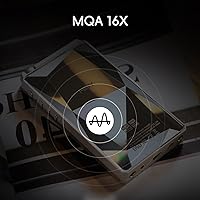
Native DSD512 and PCM 768kHz playback without software conversion is a genuine hardware capability that resonates with listeners who have invested in high-resolution libraries. MQA 16x unfolding is handled in hardware, covering the full range of MQA content available on Tidal without reliance on software decoding.
The practical benefit of DSD512 or PCM 768kHz support is limited by the relatively small amount of commercially available content at those resolutions, meaning casual listeners may never encounter the upper ceiling of the R6 III's format capability in their day-to-day use.
Wireless Audio Quality
84%
LDAC support at its highest bitrate setting delivers noticeably better wireless audio quality than standard Bluetooth codecs, and users pairing the R6 III with LDAC-capable wireless headphones report that the gap between wired and wireless narrows considerably compared to typical DAP or smartphone Bluetooth output.
LDAC at full bitrate can be finicky in environments with wireless congestion, occasionally dropping to a lower adaptive bitrate, which undermines the quality advantage. aptX HD performs more consistently under those conditions but does not reach quite the same ceiling.
Portability
67%
33%
The footprint is comparable to a mid-sized Android smartphone, and most jacket or bag pockets accommodate it without difficulty. The protective case included in the box is functional and well-fitted, adding grip without meaningfully increasing bulk.
At 250g, this DAP is noticeably heavier than many listeners expect from a portable device, and users who planned to use it during exercise or long walks frequently describe it as tiring to carry. Thinner, lighter rivals from FiiO and Shanling are a genuine alternative for buyers who prioritize on-body comfort.
Value for Money
78%
22%
The hardware specification — quad flagship DACs, switchable Class A amplification, full Android 12, balanced outputs, and LDAC — represents a strong feature density for the price, particularly for buyers who compare it against similarly priced single-amp DAPs that lack the Class A option.
Some buyers feel the Snapdragon 665 chipset is a weak link for a device at this price point in 2025, where competitors are increasingly shipping with more capable processors. If performance smoothness matters as much as audio hardware to a buyer, the value calculation becomes less straightforward.
Bundled Accessories
81%
19%
Three screen protectors and a fitted protective case being included from day one is appreciated and seen as a practical, no-nonsense addition — most DAP brands include far less. The Type-C to Type-C cable handles charging reliably and is of adequate quality for everyday use.
The included cable does not support the highest USB 3.2 data transfer speeds for library management, which means buyers who transfer large local libraries frequently may want to source a higher-spec cable separately. The manual covers only the basics and leaves some advanced features underdocumented.
Upgrade Value from Previous Gen
74%
26%
Buyers coming from the original R6 or older R6 Pro models report a clear improvement in DAC hardware, amplifier flexibility, and software modernity — the Android 12 jump alone makes a meaningful day-to-day difference in app availability and interface responsiveness compared to older HiBy firmware.
Those upgrading specifically from the R6 Pro II find the sonic jump less dramatic than the hardware revision and price premium might suggest. If the primary motivation for upgrading is incremental sound quality improvement rather than the Class A amplifier or streaming usability, the value case is harder to justify.

Suitable for:

The HiBy R6 III 2025 Digital Audio Player is a strong fit for serious listeners who have grown frustrated with smartphone audio but don't want the complexity of a separate DAC and amplifier stack. If you own demanding headphones — planars like the Hifiman Sundara, or high-impedance dynamics like the Sennheiser HD 600 series — the switchable Class A amplifier gives you genuine driving power rather than the polite compromise you get from most portable players. It also works well for people who still rely on streaming services daily, since Android 12 means Spotify, Tidal, and Apple Music all install and run as they would on any Android phone. Local library enthusiasts with large FLAC or DSD collections will appreciate the MicroSD slot supporting up to 2TB, effectively making this a self-contained archive. Commuters and travelers who hate carrying multiple devices will find the fast-charging battery and all-in-one connectivity — balanced output, LDAC Bluetooth, coaxial out — covers nearly every listening scenario from a single pocket-sized unit.
Not suitable for:

The HiBy R6 III 2025 Digital Audio Player is not the right choice for buyers who want maximum battery endurance above everything else, because running in Class A mode significantly cuts into real-world playback time. If your listening sessions regularly stretch beyond six or seven hours without a charge opportunity, you will likely find Class A mode impractical for daily use and spend most of your time in Class AB anyway — which raises the question of whether the premium hardware is being fully utilized. Casual listeners who primarily use wired earbuds at moderate volumes and don't own high-impedance or planar headphones won't extract much benefit from the amplifier topology that defines this device's core value proposition. Budget-conscious buyers should also weigh this against the broader Android DAP market carefully, since the Snapdragon 665 chipset, while capable, can show occasional lag during heavy multitasking that some competitors at similar price points handle more smoothly. Finally, anyone hoping for a compact, shirt-pocket-sized device should note that at 250g and roughly 130mm tall, this DAP is closer in footprint to a mid-sized smartphone than a discreet carry.

Specifications

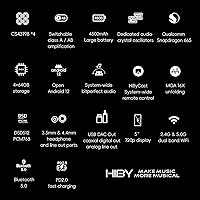
  • DAC Configuration: Four Cirrus Logic CS43198 chips are wired in an 8-channel monoblock layout, giving each audio channel a dedicated signal path for improved separation and dynamic range.
  • Amplifier Modes: The amplifier switches between Class A and Class AB operation, allowing users to choose between warmer, more powerful output and efficient everyday playback.
  • Supported Formats: Native playback covers DSD64 through DSD512, PCM up to 768kHz, and MQA up to 16x unfolding without software conversion.
  • Operating System: Android 12 runs on a Qualcomm Snapdragon 665 processor with 4GB of RAM, enabling full Google Play access and third-party app installation.
  • Internal Storage: 64GB of onboard ROM is included, with a MicroSD card slot supporting cards up to 2TB for expanded local library storage.
  • Display: A 5″ LCD or LED touchscreen at 720×1280 resolution provides the primary interface for navigation, app use, and settings management.
  • Battery: The 4500mAh lithium-ion battery charges from 0% to 100% in under two hours and supports OTA firmware updates without requiring a PC.
  • Headphone Outputs: Dedicated physical ports include a 3.5mm single-ended output and a 4.4mm balanced output, each with its own analog signal path.
  • Digital Outputs: A USB 3.2 Type-C port supports digital audio input and output, and a coaxial digital output allows connection to external DACs or amplifiers.
  • Bluetooth: Bluetooth 5.0 supports LDAC, aptX HD, aptX, AAC, and SBC codecs for high-quality wireless transmission to compatible headphones and speakers.
  • WiFi: Dual-band WiFi covers both 2.4GHz and 5GHz bands with a maximum connection rate of 433Mbps, supporting streaming and OTA updates.
  • Chassis Material: The body is machined from aluminium alloy, contributing to its structural rigidity and premium tactile feel while keeping the weight at 250g.
  • Dimensions: The unit measures 129.4 × 73.1 × 15.6mm, placing it roughly in line with a mid-sized Android smartphone in terms of footprint and thickness.
  • Weight: At 250g, the R6 III is on the heavier side for a portable DAP, though the weight is consistent with its full-metal construction and internal hardware.
  • USB Standard: The Type-C port operates at USB 3.2 speeds, supporting both fast data transfer for library management and digital audio streaming to external devices.
  • Line Output: An analog line output is provided as a dedicated port for connecting the device to external amplifiers or recording equipment without signal processing.
  • In-Box Contents: The package includes the unit, a protective case, a Type-C to Type-C charging cable, three screen protectors, and a printed user manual.
  • Firmware Updates: OTA update support allows the device to receive new firmware wirelessly, without needing to connect to a computer or use proprietary software.

Related Reviews
HiBy R3 II Portable Audio Player
77%
83%
Sound Quality
72%
Build Quality
81%
Value for Money
77%
Streaming Experience
58%
Battery Life
More
Image Audio SXP Music On Hold Player
79%
89%
Build Quality & Long-Term Reliability
86%
Audio Clarity for Cell Phone Callers
71%
Setup & Installation Ease
83%
Phone System Compatibility
78%
Value for Money
More
HiBy R5 Gen 2 Digital Audio Player
72%
88%
Sound Quality
91%
Hi-Res & Format Support
84%
Balanced Output Performance
47%
Software & App Compatibility
69%
Battery Life
More
Cambridge Audio CXN100 Network Audio Streamer

78%
93%
Sound Quality
88%
Build Quality
91%
Streaming Integration
62%
App Experience
89%
Connectivity Options
More
Cambridge Audio AXC35
80%
93%
Sound Quality
91%
Build Quality
89%
DAC Performance
78%
Value for Money
61%
Connectivity & Outputs
More
Wonder Bible NIV Audio Player
86%
94%
Ease of Use
92%
Portability
85%
Sound Quality
90%
Battery Life
88%
Build Quality
More
DTVSMARTSHOW DT013 Indoor TV Antenna
79%
93%
Ease of Setup
71%
Signal Reception Quality
66%
Channel Count
88%
Value for Money
69%
Build Quality
More
Planet Audio P9630B Double Din DVD Receiver
66%
83%
Value for Money
76%
Bluetooth Performance
74%
Touchscreen Usability
62%
Sound Quality
44%
Preamp Output Quality
More
Yirkais BJ001 Indoor Outdoor TV Antenna
73%
71%
Signal Reception Quality
63%
Amplifier Performance
93%
Ease of Setup
84%
Placement Flexibility
78%
4K and HD Signal Clarity
More
Healvaluefit B85007 KJV Audio Bible Player
78%
91%
Ease of Use
88%
Audio Clarity
93%
Battery Life
72%
Navigation & Chapter Access
74%
Build Quality
More

FAQ

Both Spotify and Tidal install normally through the Google Play Store since the R6 III runs full Android 12. There are no sideloading tricks required — it works the same way a standard Android phone would, including automatic app updates.

Class AB is the more efficient mode and will get you through a full workday of listening without much concern. Class A, which delivers the warmer and more powerful output, draws considerably more current — most users report it roughly halving the playback time compared to Class AB, though exact figures depend on volume levels and the headphones you are driving. If you commute for long stretches, you will likely want to use Class A selectively rather than as a default.

Yes, the Class A amplifier mode is specifically well-suited for high-impedance headphones like the HD 650. The quad-DAC monoblock setup and Class A output provide enough headroom to drive demanding loads cleanly, which is something most smartphone outputs simply cannot do.

On a device like this, the balanced output is more than cosmetic. The separate signal paths for the 4.4mm port mean lower crosstalk and a reduced noise floor compared to the 3.5mm single-ended output. If your headphones or IEMs have a 4.4mm cable or adapter, it is worth using — especially with sensitive in-ear monitors that might reveal background hiss on single-ended outputs.

The slot supports standard SDXC cards up to 2TB, so any modern MicroSD card from a reputable brand should work. If you are using a card larger than 32GB — which almost everyone is — it will be formatted as exFAT, which Android 12 handles natively without any extra steps.

All three are solid Android DAPs, but the R6 III stands out specifically for its switchable Class A amplifier, which neither the M11S nor the M6 Ultra offers in quite the same form. For pure streaming convenience and slightly snappier performance, the FiiO M11S with its more recent chipset has an edge. If raw amplifier character and output power for demanding headphones matter more to you than processor smoothness, the R6 III is the stronger choice.

The Snapdragon 665 handles everyday navigation and most streaming apps without issue, but it is not the newest chipset in this category. Users with large libraries or multiple apps open simultaneously have noted occasional brief pauses when switching between heavy applications. It is not a dealbreaker, but if silky-smooth multitasking is a priority, this is worth factoring into your decision.

Yes, the USB 3.2 Type-C port supports USB digital audio input, so you can connect the R6 III to a PC or Mac and route audio through its DAC and amplifier hardware. It is a genuinely useful feature for desk listening without buying a separate DAC unit.

The R6 III supports MQA playback up to 16x unfolding natively, which covers every MQA-encoded track currently in Tidal's catalog. You do not need to rely on software unfolding — the hardware handles the full decoding process, which is relevant if you care about technically correct MQA reproduction.

The box includes the unit, a protective case, three screen protectors, a Type-C to Type-C charging cable, and a manual. Most buyers find the bundled case adequate for day-to-day use. The one accessory worth considering early is a quality MicroSD card if you plan to store a local library, since the internal 64GB fills up faster than you might expect for lossless formats.