
Overview

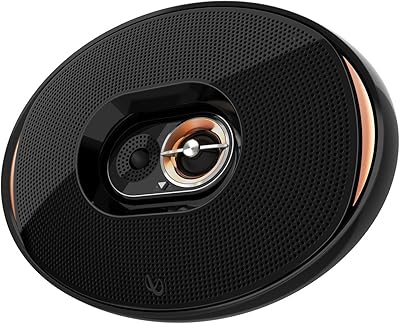
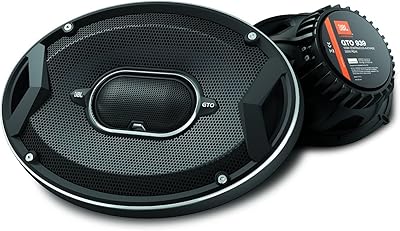
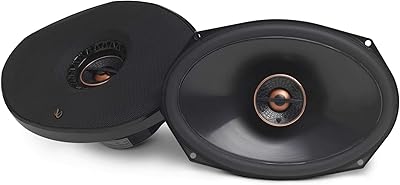
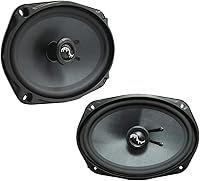
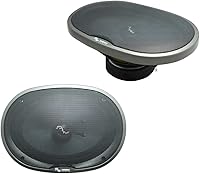
The Harmony Audio HA-C69 6x9 Car Speakers are a practical upgrade for anyone fed up with the flat, lifeless sound of factory-installed speakers. These fit the standard 6x9-inch openings common in rear decks of sedans, SUVs, and pickup trucks, so installation rarely requires cutting or custom brackets. The carbon composite branding is worth contextualizing — for the average driver, it simply means a cone that is lighter and stiffer than typical polypropylene, which can improve responsiveness. One important caveat upfront: the 500W peak rating is a ceiling figure under optimal conditions, not continuous output. Your head unit will work with a considerably lower RMS figure. The included grills are a practical bonus many competing pairs skip at this price.

Features & Benefits

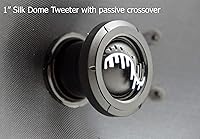
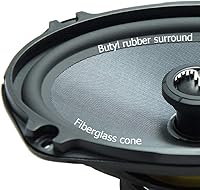
The silk dome tweeter is one of the more thoughtful inclusions here. Silk tends to roll off more gently at high frequencies than mylar or aluminum, which translates to less ear fatigue on long drives — a real consideration if you push the volume on highways. The carbon composite cone helps the woofer move quickly without distorting as much as heavier cone materials at mid-bass frequencies. Butyl rubber surrounds also deserve a mention: unlike foam surrounds, which crack and deteriorate in hot parked cars, butyl holds up far better over time. The 4-ohm impedance is standard and plugs directly into most factory or aftermarket head units without needing a separate amplifier. The frequency range reaching down to 35Hz means you will feel some actual bass presence without a dedicated subwoofer.

Best For

These 6x9 carbon series speakers are a strong match for drivers who just want their car to sound better without committing to a full system overhaul. If your factory speakers are blown, rattling at moderate volume, or simply lacking any bass presence, the HA-C69 pair will deliver a clear, noticeable improvement. They are also well-suited to DIY installers — the standard form factor means most people can swap them in with basic tools and a wiring harness adapter. No external amplifier is needed, which keeps the project simple and affordable. That said, critical listeners chasing precise imaging or clean output at high volume will likely hit the ceiling here and should budget for dedicated component speakers instead.

User Feedback

Across 115 ratings, these Harmony Audio speakers hold a 4.0-star average — respectable, but not a sign of universal satisfaction. The most common praise centers on improved bass response over stock speakers and how straightforward the installation process tends to be, which lines up with what the specs suggest. Where buyers push back is largely on midrange performance: at higher volumes, some report that clarity gets muddier than expected and the overall sound can feel unbalanced. A handful mention fitment inconsistencies in certain vehicle models, so confirming your exact speaker dimensions before ordering is a smart move. Most tellingly, buyers who understood they were getting a budget coaxial pair came away satisfied; those expecting near-competition performance were not.

Pros

  • Delivers a clear, noticeable improvement over tired factory speakers without needing a separate amplifier.
  • Butyl rubber surrounds resist cracking in heat and humidity, outlasting foam-surround alternatives over time.
  • The silk dome tweeter keeps high frequencies smooth and easy on the ears during long drives.
  • Fits standard 6x9-inch locations in most sedans, trucks, and SUVs with minimal modification required.
  • Included speaker grills protect rear deck installations and reduce the total parts needed for a clean install.
  • Carbon composite cone construction is lighter and stiffer than typical polypropylene, aiding mid-bass responsiveness.
  • At 4-ohm impedance, the HA-C69 pair works cleanly with most factory and aftermarket head units out of the box.
  • The 35Hz to 21kHz frequency range covers genuine bass presence and crisp treble extension in a single pair.
  • Straightforward drop-in installation is manageable for most DIYers with basic hand tools and patience.
  • Sold as a complete pair with grills included, offering a full solution without extra purchases.

Cons

  • Harmony Audio lacks the brand recognition and support track record of established names like Pioneer or Kenwood.
  • Midrange clarity softens noticeably at higher volumes, making complex mixes sound muddled when pushed.
  • The advertised 500W is a peak figure, not RMS — real continuous power output is considerably and practically lower.
  • Some buyers have reported fitment problems with specific vehicle models, making pre-purchase depth measurement essential.
  • Sound staging is narrow compared to component speaker setups, with limited separation between frequency ranges.
  • Only around 115 customer ratings make it difficult to judge unit-to-unit manufacturing consistency with confidence.
  • The peak wattage marketing can mislead shoppers who compare speaker specs without knowing the peak-versus-RMS distinction.
  • Bass improvement over stock is real but modest — a dedicated subwoofer is still necessary for meaningful low-end.
  • Limited long-term durability data available given the brand's shorter market history and smaller owner community.
  • These 6x9 carbon series speakers are not a practical match for anyone planning to power them with a high-output aftermarket amplifier.

Ratings

The Harmony Audio HA-C69 6x9 Car Speakers were evaluated using our AI-driven review analysis system, which processed verified global buyer feedback while actively filtering out incentivized, bot-generated, and duplicate submissions to surface authentic user experiences. The scores below reflect both what these speakers genuinely do well and where they fall short — including recurring criticisms about midrange performance and brand trust that any informed buyer deserves to see. Our goal is a transparent picture of real-world ownership, not a curated highlight reel.

Sound Quality
73%
27%
Most users coming from blown or aging factory speakers describe the improvement as immediately satisfying — fuller bass, more present highs, and a general sense that music fills the cabin rather than just competing with road noise. For everyday commutes and casual listening, that transformation is more than enough.
Listeners who pay close attention to tonal balance — particularly during vocal performances or acoustic recordings — will notice the sound lacks the nuance that higher-tier component systems offer. The overall presentation works well at moderate volumes but starts to feel flat and undifferentiated when tracks get busy or complex.
Bass Response
78%
22%
The most consistently praised aspect across buyer feedback is how much low-end presence these add compared to a typical factory paper cone driver. Even without a dedicated subwoofer, daily drivers reported feeling genuine warmth and punch in bass lines — something most stock car speakers simply cannot deliver.
Despite the 35Hz low-end rating, the bass remains tight and controlled rather than deep and impactful — satisfying for pop and rock but noticeably thin for bass-heavy genres like hip-hop or EDM at higher volumes. Buyers expecting subwoofer-level output from this pair will be disappointed by the real-world ceiling.
High-Frequency Clarity
76%
24%
The 1-inch silk dome tweeter earns consistent credit from users who note that high frequencies — cymbal strikes, string detail, and vocal air — come through without the harshness or fatigue that cheaper mylar tweeters can introduce. Drivers who commute long distances particularly appreciate the smoother treble rolloff, which makes extended listening at moderate volumes noticeably more comfortable.
The tweeter output becomes slightly sharp when high-frequency material peaks — some users report a subtle edge creeping in during sustained treble passages at higher volumes. Compared to component tweeters with dedicated crossover control, the integrated design offers no way to adjust the blend if the highs feel too prominent for a given vehicle's cabin acoustics.
Midrange Performance
61%
39%
For casual genres like pop, classic rock, and podcasts played at moderate volume, the midrange holds its own reasonably well — vocals stay intelligible and guitars carry enough body that the listening experience feels genuinely engaging rather than hollow. Buyers who use their car mainly for background music during city driving reported few complaints in this area.
This is where the product draws the most recurring criticism. When volume climbs or musical arrangements become complex — dense electronic mixes, multiple overlapping instruments — the midrange starts to congeal, losing the separation and definition that helps distinguish individual elements in a mix. Users switching from name-brand coaxials found this performance gap most noticeable.
Build Quality
74%
26%
The material choices punch above what you typically encounter in this price bracket. Carbon composite cones and butyl rubber surrounds are genuine upgrades over the paper cones and foam surrounds used by cheaper competitors, and buyers who have previously dealt with crumbling foam on old speakers will immediately recognize the practical value of those decisions.
The overall assembly finish feels appropriate for a value-tier product but not for one competing with established mid-range brands. A few buyers noticed that the basket and mounting hardware feel lighter and less substantial than comparably priced options from Pioneer or Kenwood, raising questions about how well the overall construction holds up beyond the first two or three years.
Installation Ease
83%
One of the clearest strengths consistently called out in buyer reviews is how straightforward the swap is. The standard 6×9-inch form factor drops into most factory openings without any cutting or bracket fabrication, and the included grills eliminate a separate shopping trip — first-time installers report completing the full job in under an hour.
A subset of buyers — particularly those with less common vehicle models — ran into unexpected fitment depth issues where the speaker basket sat too proud of the door panel or rear deck surface. No detailed mounting depth specifications are provided upfront, which means buyers in non-standard setups have to rely on community forums to troubleshoot compatibility before committing.
Value for Money
81%
19%
For the price tier, the HA-C69 pair offers a combination of materials — carbon composite cones, silk dome tweeter, butyl rubber surrounds, and included grills — that brands with bigger marketing budgets would charge significantly more to deliver. Drivers who simply want to move past crackling stock speakers and get a real upgrade for a modest outlay consistently rate the value proposition positively.
Buyers who factor in the limited brand history, mixed high-volume performance, and uncertain long-term durability data may find that a similarly priced pair from a more established name offers better long-term confidence. The value story is at its strongest for buyers who calibrate their expectations clearly from the start and are not planning to grow into a more capable system.
Durability
69%
31%
The use of butyl rubber surrounds is the standout long-term advantage for these Harmony Audio speakers. Butyl resists the cracking and deterioration that foam experiences in cars subjected to extreme summer temperatures, giving this pair a meaningful practical edge over comparably priced competitors that cut costs with foam surrounds.
Harmony Audio's limited market history means there is simply not enough long-term ownership data to make confident claims about multi-year reliability. The review pool — around 115 ratings — is modest enough that early failures or gradual degradation beyond two or three years of daily use are not yet well-documented, introducing real uncertainty for buyers thinking past the first year of ownership.
Compatibility
79%
21%
The 4-ohm impedance rating makes these an unusually plug-and-play upgrade for drivers who do not want to involve a separate amplifier. They draw efficiently from most factory and aftermarket head units across mainstream vehicle brands without any additional wiring or equipment changes required.
Physical fitment is where compatibility becomes less predictable. Some buyers reported that speaker basket depth caused clearance problems in certain door panel configurations, and the product documentation does not include mounting depth measurements that would allow buyers to pre-verify fit without ordering and attempting the full install first.
Volume Headroom
58%
42%
At the typical listening volumes most drivers use during daily commutes — roughly half to two-thirds of head unit output — these 6x9 carbon series speakers maintain a reasonably clean and balanced presentation across mixed-genre playlists. Buyers who keep volume in that moderate range consistently report a satisfying experience that clearly exceeds what their stock speakers delivered.
Push the volume beyond that comfortable range and the limitations become apparent fairly quickly. Buyers who regularly listen loud — long highway drives or simply preferring high-volume music — report that clarity breaks down, with bass turning boomy, highs going harsh, and the overall mix losing coherence in a way that becomes difficult to ignore.
Brand Reputation
47%
53%
For shoppers who do their research and approach the purchase without brand bias, Harmony Audio's value-oriented positioning can work in their favor — spec-for-spec, the HA-C69 pair offers materials that brands with larger marketing budgets would charge notably more to provide. The 4.0-star average suggests that expectations-aligned buyers generally leave satisfied.
Harmony Audio is not stocked at major car audio retailers and carries none of the community trust that comes with decades of market presence. Buyers who later need warranty support, replacement parts, or detailed compatibility guidance often find there is no meaningful support infrastructure behind the brand — a practical concern the average star rating alone does not reflect.
Packaging & Accessories
77%
23%
The inclusion of speaker grills is a genuinely useful addition that competitors at this price bracket routinely omit, forcing buyers to source them separately. Users installing in rear deck positions especially appreciated having grills ready from the start, since exposed speakers in those locations are vulnerable to items shifting around during daily driving.
The packaging is functional but minimal — no installation guide, wiring diagram, or fitment chart is included, leaving first-time installers entirely reliant on online tutorials and community forums. A handful of buyers also noted that the grill mounting hardware felt flimsy and required more patience to align correctly than the speaker swap itself.
Power Handling Accuracy
54%
46%
From a pure hardware standpoint, the speakers are robust enough to handle occasional short bursts at elevated input levels without immediate damage, which at least demonstrates some engineering margin in the design. Buyers who run them conservatively within sensible head unit output limits report no issues with the speakers overheating or failing catastrophically.
The 500W peak figure is one of the most misleading elements of the product's marketing — informed buyers understand that peak wattage tells you very little about real-world performance. Continuous RMS output is the relevant specification, and its absence from the documentation has frustrated buyers trying to make honest comparisons against competing speakers in the same price bracket.

Suitable for:

The Harmony Audio HA-C69 6x9 Car Speakers are purpose-built for the driver who wants a meaningful improvement over factory audio without committing to a full custom install. If your current speakers are blown, rattling, or simply thin-sounding at any volume, this pair delivers a noticeable and immediate step up. They drop into standard 6x9-inch mounting locations found in the rear decks of countless sedans, trucks, and SUVs, so most owners can handle the swap in an afternoon with basic tools and a wiring harness adapter. The 4-ohm impedance means they run cleanly off a factory or aftermarket head unit without requiring an external amplifier, keeping both cost and complexity low. Casual everyday listeners — commuters, road-trippers, and anyone who simply wants their music to sound fuller and more present — will find these hit a practical sweet spot for the investment.

Not suitable for:

The Harmony Audio HA-C69 6x9 Car Speakers will disappoint buyers whose expectations are calibrated to established brands like Pioneer, Kenwood, or JBL. Harmony Audio is a lesser-known name, and that matters in the car audio space — not just as a status consideration but as a signal of parts consistency, long-term support, and reliability data backed by a large buyer community. Listeners who prioritize clean, detailed midrange at higher volumes will likely hit a frustrating performance ceiling; these speakers handle moderate listening levels well but can lose clarity and balance when pushed hard. Drivers planning to run an external amplifier or build a properly staged system should allocate their budget toward dedicated component speakers, which separate the tweeter and woofer for better imaging and output headroom. Anyone whose vehicle has unusual mounting depths or non-standard cutout dimensions should verify fitment carefully before purchasing, as a subset of real buyers have reported compatibility issues with specific models.

Specifications

  • Speaker Size: The woofer cone measures 6×9 inches, designed to fit standard car speaker openings commonly found in rear decks and door panels.
  • Configuration: Sold as a 2-way coaxial pair, with two full-range speakers — each housing an integrated tweeter — included per package.
  • Peak Power: Maximum peak power handling is rated at 500W for the pair, a burst-condition ceiling figure rather than a continuous output measurement.
  • Impedance: Each speaker operates at 4 ohms, the standard impedance level compatible with most factory and aftermarket head units.
  • Frequency Response: Rated frequency response spans 35Hz to 21kHz, covering low bass through upper treble within a single coaxial driver assembly.
  • Tweeter Type: Each speaker integrates a silk dome tweeter, which produces smoother high-frequency output than harder mylar or aluminum dome alternatives.
  • Tweeter Size: The integrated silk dome tweeter measures 1″ in diameter.
  • Cone Material: The woofer cone is constructed from carbon composite, offering a lighter and stiffer structure than standard polypropylene cones.
  • Surround Material: The woofer surround is made from butyl rubber, which resists cracking in heat and humidity far better than foam surrounds.
  • Driver Type: The woofer element uses a dynamic driver design, which is the standard configuration for coaxial car speakers in this category.
  • Accessories: Each package includes a matching pair of speaker grills suited for rear deck or door panel installations.
  • Mounting Type: These speakers use a standard car mount installation method, fitting existing 6×9 openings without requiring custom fabrication.
  • Package Dimensions: The retail package measures 16 inches deep by 11 inches wide by 6 inches tall.
  • Package Weight: The complete package, including both speakers and all accessories, weighs 9.45 pounds.
  • Connectivity: The speakers connect via standard auxiliary audio wiring, compatible with typical car stereo wiring harnesses.

Related Reviews
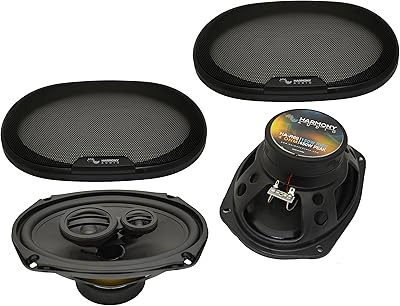
Harmony Audio HA-R69 6x9 Car Speakers
73%
88%
Value for Money
76%
Sound Quality
61%
Bass Performance
73%
Treble & Tweeter Performance
79%
Build Quality
More
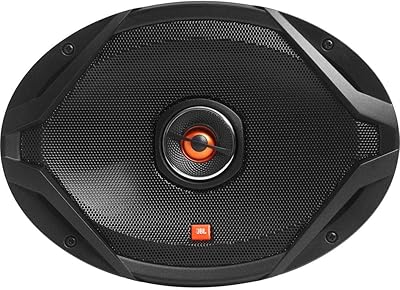
JBL GX9628 6x9 Coaxial Car Speakers
79%
83%
Sound Quality
88%
Power Handling
61%
Impedance Compatibility
91%
Ease of Installation
79%
Build Quality
More
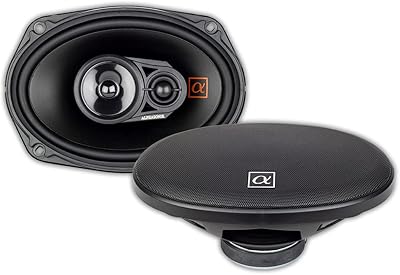
Alphasonik NS693 6x9 3-Way Car Speakers
76%
88%
Value for Money
76%
Sound Clarity
61%
Bass Response
91%
Ease of Installation
79%
High-Frequency Performance
More
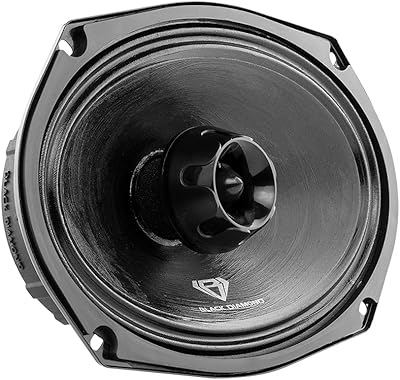
Black Diamond DIA-XT69 6x9 Car Coaxial Speaker
76%
83%
Sound Clarity
61%
Bass Performance
86%
Treble Extension
91%
Volume Output
79%
Installation Ease
More
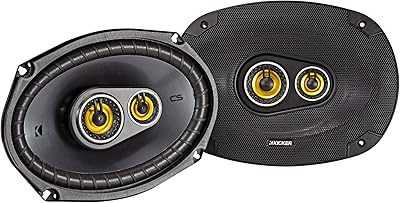
Kicker CS Series 6x9 Coaxial Car Speakers
80%
86%
Sound Clarity
74%
Bass Performance
78%
Treble & High-Frequency Response
83%
Build Quality
81%
Ease of Installation
More
Infinity KAPPA-93iX 6x9 Three-Way Car Speakers
78%
88%
Sound Quality
91%
Midrange Definition
72%
Bass Performance
83%
Value for Money
69%
Installation Ease
More
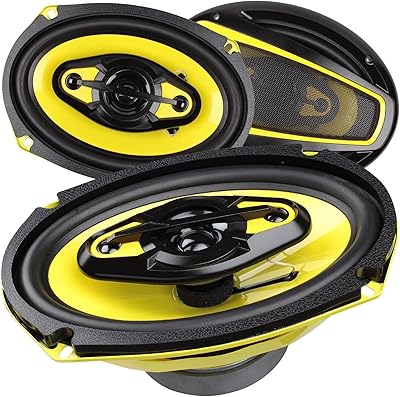
AUDIOTEK AT694 6×9-Inch 4-Way Car Speakers
72%
73%
Sound Quality
58%
Bass Performance
67%
Build Quality
88%
Ease of Installation
79%
Value for Money
More
Infinity REF-9632IX Reference 6x9 Inch Two-Way Car Audio Speakers
81%
88%
Sound Quality
91%
Ease of Installation
92%
Value for Money
85%
Bass Performance
83%
Clarity at High Volumes
More
JBL GTO939 GTO Series 6x9″ 300W 3-Way Car Audio Speakers
85%
89%
Sound Clarity
91%
Bass Response
85%
Installation Ease
88%
Power Handling
87%
Build Quality
More
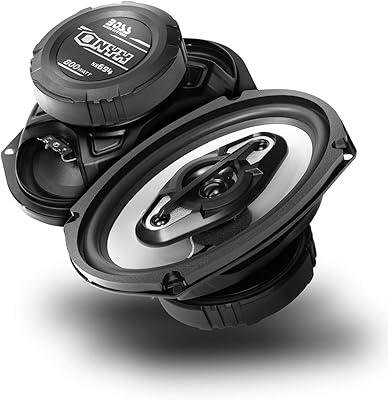
BOSS Audio NX694 6x9 Inch Car Speakers
71%
83%
Value for Money
71%
Sound Quality
67%
Bass Response
91%
Installation Ease
58%
Build Quality
More

FAQ

No amplifier is required. These 6x9 carbon series speakers are rated at 4 ohms, which is the standard impedance that factory and most aftermarket head units are designed to drive. You can connect them directly and they will perform fine off your stock stereo, though adding an amp later will give you more volume headroom if you decide to upgrade down the road.

The key measurements to verify are the cutout size (6×9 inches), the mounting depth of the opening, and the top mount diameter for your specific door or rear deck location. Most sedans, pickup trucks, and SUVs with factory 6×9 locations will fit the HA-C69 pair without issue, but a small number of buyers have flagged fitment surprises with certain models. Cross-referencing your car's speaker specs using an online fitment guide before purchasing is a smart precaution.

No, and this distinction matters. The 500W figure is a peak power rating, describing the absolute maximum the speaker can handle in a brief burst under ideal conditions — not a number that reflects normal listening. Real-world continuous (RMS) power handling is considerably lower, and that RMS figure is what you should compare against your head unit or amplifier's output when deciding compatibility.

For most vehicles with a standard 6×9 opening, this is a beginner-friendly job. You will typically need a panel removal tool, a screwdriver, and a wiring harness adapter matched to your vehicle make so you can avoid cutting factory connectors. Budget about an hour if it is your first time, and the included grills save you from having to track those down separately.

That is a fair question to raise. The Harmony Audio HA-C69 6x9 Car Speakers come from a brand that is considerably less established than names like Pioneer, Kenwood, or JBL, and it is worth acknowledging that honestly rather than glossing over it. The product holds a 4.0-star average across around 115 ratings, which is a reasonable signal for a value-tier option — but if long-term brand support and a well-documented reliability history are priorities for you, a more established name will offer greater peace of mind.

Compared to standard polypropylene cones, carbon composite is lighter and stiffer, which helps the woofer accelerate and stop more quickly. In practice, that can translate to tighter mid-bass response and slightly less distortion at moderate listening volumes. The difference is real but subtle — you are unlikely to isolate it by ear, but it is one of several design choices that cumulatively improve performance over a basic polypropylene alternative.

Foam surrounds are prone to cracking and crumbling in hot car environments — an interior can reach extreme temperatures when parked in direct sun for extended periods. Butyl rubber handles that kind of heat stress far better and tends to stay flexible over a longer service life. For a car speaker that will go through years of seasonal temperature swings, the surround material is a more meaningful spec than it might initially seem.

For most drivers, yes — particularly if the factory speakers have been in the car for several years or are already rattling and distorting at moderate volumes. The improvement tends to be most noticeable in bass presence and overall clarity at everyday listening levels. Do not expect a dramatic transformation, but the step up from a tired factory pair is typically satisfying for casual listeners who just want their music to sound fuller and cleaner.

Absolutely. The 4-ohm impedance is the universal standard that virtually all aftermarket head units are designed to work with, regardless of manufacturer. Pick up a wiring harness adapter specific to your vehicle make and model and the connection will be clean, reversible, and fully compatible without any splicing needed.

Most buyers find the grills straightforward to attach during installation — they snap or screw into position depending on the mounting setup. They are particularly useful for rear deck placements where the speakers sit in the open and are more exposed to objects shifting around in the cabin. A handful of buyers have noted the grill hardware feels fairly basic, but for everyday protection they do what they are supposed to do.

Where to Buy