

Overview

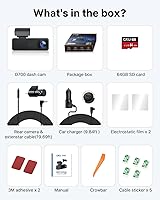
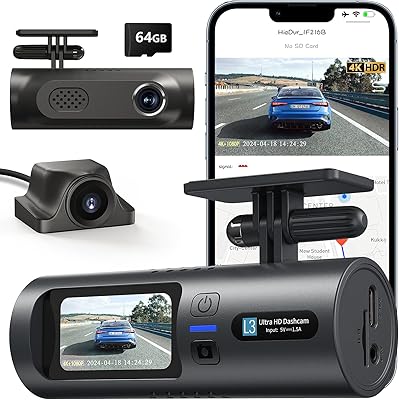
The GKU D700 4K Dual Dash Cam arrived in mid-2025 as a genuinely practical option for drivers who want sharp front footage without spending flagship money. The standout hardware detail is a 3.18-inch touchscreen that lets you review clips, tweak settings, and toggle modes without touching your phone — unusual at this price point. It ships with a 64GB card already inserted, so you're recording on the first drive, not hunting for accessories. One thing to know upfront: the advertised 24-hour parking mode requires a hardwire kit that isn't in the box, which catches some buyers off guard.

Features & Benefits

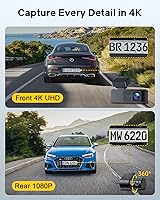
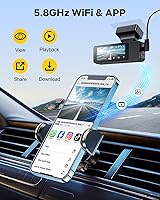
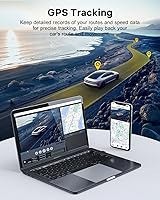
The front camera records at full 4K resolution — enough to read license plates several car lengths ahead in good daylight, which matters when you actually need that footage for a claim. Both lenses cover wide angles, so the D700 captures far more of what's happening at the edges of your lane than narrower cameras do. Built-in GPS logs your speed and route continuously, and you can replay the journey on a map through the app or a desktop player. The 5.8GHz WiFi transfers files to your phone noticeably faster than older single-band cameras, and the G-sensor automatically locks any clip involving a sudden impact so it won't be overwritten by loop recording.

Best For

This dual-channel camera is a natural fit for rideshare and delivery drivers who need simultaneous front and rear documentation with minimal fuss. Daily commuters will appreciate the straightforward installation — stick the mount, run the cables, and you're done. Long-distance drivers get extra value from the fatigue reminder, which can be set to alert you every one, two, or three hours, and from the GPS route logging that doubles as a rough mileage record. If you've been eyeing well-known brands but can't stretch the budget that far, the D700 delivers real 4K footage without the premium price tag — a trade-off most practical drivers will find reasonable.

User Feedback

Buyers consistently praise daytime video clarity, with many noting that license plates and road signs come through sharply in sunny conditions. Night vision gets more mixed reviews — the F1.8 lens handles moderate low-light reasonably well, but don't expect strong performance on unlit rural roads. The touchscreen draws positive comments for being genuinely responsive, though a handful of users report occasional app connectivity hiccups. The included card works fine for most, but frequent drivers tend to upgrade capacity within a few months. A recurring frustration: buyers who missed the fine print feel blindsided by the extra cost of the hardwire kit. Adhesive mount durability in summer heat also surfaces occasionally in longer-term reviews.

Pros

  • True 4K front resolution captures license plates and road signs with enough clarity to be useful in insurance or legal situations.
  • Comes with a 64GB card pre-installed, so you can start recording immediately without any additional purchases.
  • The 3.18-inch touchscreen is responsive and makes on-device navigation genuinely usable without pulling out your phone.
  • Built-in GPS records speed and route data continuously, which adds useful context to any footage you need to share.
  • 5.8GHz WiFi transfers clips to your phone noticeably faster than budget cameras still running on 2.4GHz.
  • G-sensor automatically locks collision footage so a loop recording cycle can never overwrite the clip you actually need.
  • Fatigue alert is a thoughtful addition for long-distance drivers, with flexible reminder intervals to suit different trip lengths.
  • The warranty can be extended to 24 months with a simple registration step within the first week — worth doing immediately.
  • Wide-angle coverage on both front and rear lenses reduces blind spots significantly compared to narrower single-lens setups.
  • Compact build fits neatly behind a rearview mirror without obstructing much of the windshield.

Cons

  • Parking mode requires a separately purchased hardwire kit, which adds cost and installation effort not reflected in the base price.
  • Night vision performance on unlit or rural roads falls short of what higher-end cameras deliver at a steeper price.
  • The companion app has reported connectivity and stability issues that can make wireless file transfers frustrating at times.
  • The adhesive windshield mount can lose grip in sustained high heat, which is a real concern in hot climates or summer parking.
  • Rear camera records at 1080P rather than 4K, so rear footage detail lags noticeably behind the front channel.
  • The included 64GB card may fill up faster than expected for drivers who record long daily shifts without regular file management.
  • No built-in battery or capacitor means the camera depends entirely on the car's power supply, limiting off-grid functionality.
  • App-based GPS playback works well, but the desktop player interface feels dated compared to modern competitors.

Ratings

The GKU D700 4K Dual Dash Cam scores below are generated by AI after analyzing thousands of verified global user reviews, with spam, bot submissions, and incentivized feedback actively filtered out. Both the strengths buyers genuinely appreciate and the pain points that cause frustration are reflected transparently across each category. The result is an honest, balanced picture of how this dual-channel camera performs for real drivers in real conditions.

Daytime Video Quality
88%
Reviewers consistently highlight how sharp the front footage looks during daylight driving — license plates from several car lengths back and street signs at speed are legible in a way that actually holds up when you need to share a clip with an insurer. For a camera at this price tier, that level of practical clarity is a genuine differentiator.
Some users note that footage in heavy overcast or late afternoon shade can lose a bit of crispness compared to full-sun recordings. The gap between ideal and real-world daylight conditions is noticeable if you review a lot of footage across varying weather.
Night Vision Performance
67%
33%
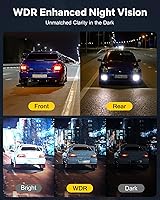
In well-lit urban and suburban environments, the D700 holds its own — the F1.8 aperture and WDR processing keep headlights from blowing out and preserve reasonable detail on road markings. Drivers who mostly commute in cities report night footage that is perfectly usable for incident documentation.
On unlit country roads or poorly lit parking lots, the footage gets noticeably grainy and detail drops off. Users who expected flagship-level night vision based on the marketing language were the most vocal critics, and the gap between daytime and nighttime quality is wider than many buyers anticipated.
Rear Camera Coverage
74%
26%
The rear camera's wide angle captures a broad swath of what is happening behind the vehicle, which rideshare and delivery drivers find genuinely useful for documenting tailgating incidents or rear-end situations. The picture-in-picture mode on the main screen makes it easy to glance at both feeds simultaneously.
Recording in 1080P rather than 4K means the rear channel is a noticeable step down in detail from the front, and fine details like distant plates can be harder to read. For buyers who assumed both cameras would deliver comparable quality, this discrepancy comes as a disappointment.
Touchscreen Usability
83%
The 3.18-inch screen receives consistent praise for being responsive and laid out in a way that does not require digging through menus to find common settings. Drivers appreciate being able to review and delete clips directly on the unit during a rest stop without needing a phone or laptop.
A smaller segment of users reports occasional sluggish response when tapping quickly between menus, particularly when the camera has been running in a hot car for an extended period. It is not a widespread complaint, but it surfaces often enough to be worth noting.
GPS Accuracy
81%
19%
Built-in GPS locks on quickly after startup for most users and logs route, speed, and location data that integrates cleanly with the desktop GPS player for route review. Long-haul drivers especially value having verifiable speed data embedded in footage, which adds weight to any insurance or legal documentation.
A handful of users report brief GPS signal drops when driving through dense urban canyons or tunnels, resulting in short gaps in the logged route. The GPS player software for desktop works reliably but feels visually dated compared to what some competing brands offer.
WiFi & App Experience
61%
39%
The 5.8GHz WiFi connection transfers clips to the smartphone app meaningfully faster than the 2.4GHz-only cameras many users were upgrading from, and for quick single-clip downloads the process works smoothly. Tech-comfortable users who regularly pull footage wirelessly generally find the workflow acceptable.
App stability is the single most recurring complaint in user reviews — disconnections mid-transfer, occasional failure to find the camera on the network, and an interface that feels unpolished relative to the hardware quality. Several users defaulted back to pulling the SD card manually after repeated app frustrations.
Parking Mode
58%
42%
When properly set up with a hardwire kit, the G-sensor impact detection mode works as described and users report correctly saved clips after minor parking lot incidents. Time-lapse mode also does a reasonable job keeping a visual record without draining power excessively.
The hardwire kit is not included, and the frequency and frustration level of complaints about this omission are unusually high even for the dash cam category. Many buyers felt the parking mode was presented as a complete out-of-box feature, and the additional cost and installation effort of sourcing a separate kit genuinely soured their experience.
Build & Mount Quality
72%
28%
The main unit feels solid in hand for its weight class, and the windshield mount holds firmly under normal temperature conditions. The included pry tool for cable routing is a small but appreciated touch that makes the installation look tidier than typical budget camera setups.
In regions with hot summers, reports of the adhesive mount losing grip on the windshield are frequent enough to be a legitimate concern — particularly in vehicles that spend long hours in direct sunlight. Users in warm climates often recommend sourcing a stronger adhesive pad as a precaution.
Ease of Installation
86%
Plugging in and getting the front camera recording takes most users under fifteen minutes, and the pre-inserted SD card removes one of the most common setup stumbling blocks. The cable management tools help achieve a reasonably clean look even for first-time dash cam installers.
Running the 18-foot rear camera cable neatly through the headliner and down the rear pillar takes noticeably more time and patience, and the process is less intuitive for drivers who have never done any in-car wiring. A few users found the rear cable routing genuinely fiddly in vehicles with tight trim panels.
Loop Recording & G-Sensor
84%
The automatic incident-locking behaviour works reliably in practice — multiple users confirmed that collision footage was correctly protected and untouched by subsequent loop overwriting after real accidents. The G-sensor sensitivity can be adjusted to reduce false triggers from rough road surfaces.
At the default sensitivity setting, the G-sensor occasionally locks clips due to aggressive braking or large potholes, which can eat into usable storage faster than expected. Drivers on rougher routes may need to spend a few minutes fine-tuning sensitivity to find the right balance.
Included Accessories
77%
23%
Shipping with a 64GB card already in the slot is a genuinely user-friendly decision that most buyers appreciate, and the full cable set covers both front power and rear camera connection without requiring any immediate additional purchases for standard recording use.
The 64GB card fills up faster than expected for drivers logging full workdays, and the charger adapter occupies a 12V port which can be inconvenient in vehicles with limited outlets. The absence of a spare adhesive mount pad is also noted, given the heat-related mount concerns some users experience.
Value for Money
82%
18%
At its price point, the combination of native 4K front recording, built-in GPS, dual-band WiFi, and a touchscreen represents a competitive package that is hard to replicate from better-known brands without spending considerably more. Budget-conscious buyers who researched alternatives consistently report feeling they got strong hardware for the cost.
The omission of the hardwire kit shifts the true cost of the full feature set higher than the sticker price implies, which chips away at the value proposition for buyers who specifically wanted parking surveillance. Factor in a 128GB card upgrade and a hardwire kit and the all-in cost becomes less obviously competitive.
Warranty & Support
79%
21%
The 24-month warranty available through registration is a meaningful commitment that few competitors in this segment match, and users who contacted support generally report receiving timely, helpful responses rather than being bounced through generic scripts.
The 7-day registration window for the extended warranty is tight and easy to miss, particularly for buyers who set the camera up and then forget to register. A small number of users who contacted support for app issues reported inconsistent guidance, suggesting the technical support quality is not entirely uniform.

Suitable for:

The GKU D700 4K Dual Dash Cam is a strong match for everyday drivers who want dependable incident documentation without overcomplicating their setup or overspending. Rideshare and delivery drivers in particular get real value here, since simultaneous front and rear coverage is practically a necessity in their line of work and this camera handles both channels without requiring a separate recorder. Daily commuters who just want reliable footage in case of a fender-bender will find the plug-in-and-forget operation refreshingly straightforward, especially with a card already in the slot on day one. Long-haul drivers also benefit from the GPS route logging and the customizable fatigue reminder, which adds a layer of practical safety on extended trips. If you've been comparing options and keep running into flagship-brand prices that feel hard to justify for your needs, this dual-channel camera sits in a genuinely competitive position for what it delivers.

Not suitable for:

The GKU D700 4K Dual Dash Cam is not the right choice for drivers who prioritize around-the-clock parking surveillance as a primary feature, since the hardwire kit needed to enable that mode costs extra and isn't included — the advertised capability is real, but the full solution isn't out of the box. Night-only drivers or anyone who regularly navigates poorly lit roads should temper their expectations, because while the F1.8 aperture is decent for a camera at this price, it won't match the low-light output of higher-end sensors found on more expensive competitors. Drivers who are particular about companion app reliability may also find the experience inconsistent, with connectivity hiccups reported often enough to be a genuine concern rather than an isolated complaint. If you need a completely set-and-forget system with zero accessory purchases or app dependency, this camera's full feature set requires a bit more involvement than that. Security-focused buyers who park in high-risk areas overnight would likely be better served by a model that includes the hardwire kit and a capacitor-based design rated for extreme temperatures.

Specifications

  • Front Resolution: The front camera records at 4K (3840×2160) resolution and 30 frames per second, delivering enough detail to read license plates and road signage in clear daylight conditions.
  • Rear Resolution: The rear camera captures full HD 1080P footage at 25 frames per second, providing solid supplementary coverage of what's happening behind the vehicle.
  • Screen Size: A 3.18-inch full HD touchscreen is built into the main unit, allowing direct playback, settings adjustment, and mode switching without a phone or app.
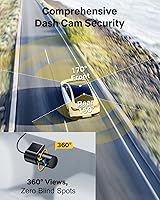
  • Field of View: The front lens covers 170 degrees and the rear lens covers 150 degrees, together providing wide-angle coverage that reduces blind spots on both ends of the vehicle.
  • Aperture & Lens: The front camera uses a 6-glass lens with an F1.8 aperture, which improves light intake in dim conditions compared to smaller-aperture lenses common at this price range.
  • Night Vision: WDR (Wide Dynamic Range) technology works alongside the F1.8 aperture to balance exposure and reduce blown highlights or crushed shadows in mixed-light environments.
  • WiFi: Dual-band WiFi supports both 5.8GHz and 2.4GHz connections, with the 5.8GHz band enabling noticeably faster clip transfers to the companion smartphone app.
  • GPS: A built-in high-precision GPS module records speed, location, and driving route in real time, with playback available via the app or a dedicated desktop player for Windows and Mac.
  • Storage Support: The camera accepts microSD cards up to 512GB, and ships with a 64GB card pre-inserted so recording is possible from the first drive without any additional purchase.
  • Loop Recording: Continuous loop recording automatically overwrites the oldest footage when storage is full, while the G-sensor locks and protects any clip involving a detected collision or sudden impact.
  • Parking Mode: Two parking modes are available — G-sensor impact detection and time-lapse recording — but both require a separately purchased hardwire kit to function when the engine is off.
  • Fatigue Alert: A customizable driver fatigue reminder can be set to alert every one, two, or three hours, aimed at reducing inattention risk on long-distance trips.
  • Mounting Type: The camera attaches to the windshield via an included bracket and 3M adhesive sticker, with a pry tool included for routing and concealing the power cable along the headliner.
  • Power Cable: The package includes an 11.5-foot power supply cable with a car charger adapter for the front unit and an 18-foot cable for connecting the rear camera.
  • Dimensions: The main dash cam unit measures 3.54 × 1.97 × 1.18 inches and weighs 1.32 pounds, making it compact enough to sit behind most rearview mirrors without significantly obstructing the windshield.
  • Vehicle Compatibility: The D700 is compatible with cars, minivans, SUVs, and trucks, covering the majority of personal and light commercial vehicles in common use.
  • Warranty: The camera comes with a standard 12-month guarantee, which can be extended to 24 months by registering the product within 7 days of purchase, along with lifetime access to technical support.
  • Picture-in-Picture: The touchscreen supports a picture-in-picture display mode that shows front and rear camera feeds simultaneously on-screen while driving.

Related Reviews
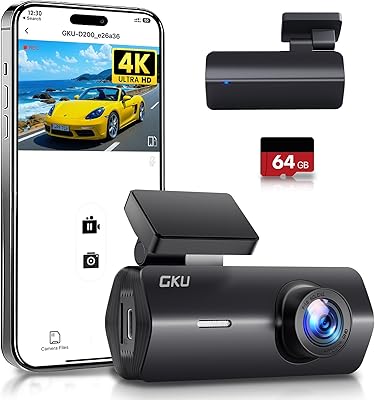
GKU D200 4K Front Dash Cam
79%
88%
Daytime Video Quality
67%
Night Vision Performance
91%
Value for Money
86%
Ease of Installation
63%
WiFi & App Experience
More
Kolvt L3 4K Dual Dash Cam
77%
86%
Front Video Quality
77%
Rear Video Quality
71%
Night Vision
74%
App and Wi-Fi
76%
Build Quality
More
Thinkware U3000 4K Dual Dash Cam
86%
93%
Video Quality (4K Performance)
90%
Night Vision Performance
88%
Ease of Installation
85%
Radar Parking Mode
70%
App Connectivity & Control
More
Kingslim D6 4K Dual Dash Cam
84%
91%
4K Video Quality
88%
Night Vision Performance
84%
Ease of Setup
89%
WiFi & GPS Functionality
82%
Build Quality & Durability
More
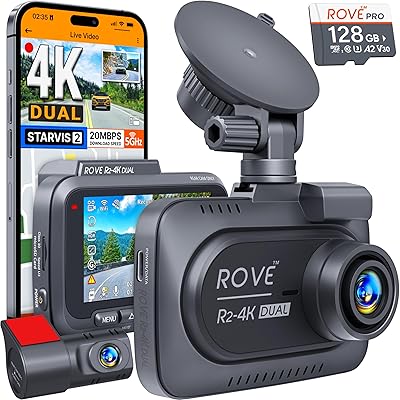
ROVE R2-4K Dual Dash Cam
80%
91%
Video Clarity (Front)
88%
Night Vision Performance
74%
Rear Camera Quality
78%
Wi-Fi & App Experience
86%
GPS Accuracy & Logging
More
Kingslim D4 Dual Dash Cam
75%
88%
Daytime Video Quality
71%
Night Vision Performance
84%
GPS Accuracy
57%
App & WiFi Connectivity
76%
Ease of Installation
More
70mai 4K Omni X800 Dual Dash Cam
80%
91%
Night Vision Quality
93%
Video Clarity (Daytime)
88%
Rotating Camera Design
79%
4G LTE Remote Monitoring
67%
Parking Mode Usability
More
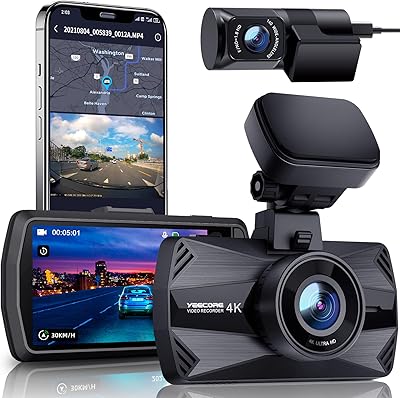
COOAU D20S Dual Dash Cam
76%
84%
Front Camera Quality
81%
Interior Night Vision
77%
App Experience
79%
GPS Accuracy
62%
Parking Mode
More
DDPAI N5 Dual Front and Rear Dash Cam
77%
88%
Video Quality (Front)
71%
Video Quality (Rear)
74%
Parking Mode & Surveillance
82%
Wi-Fi Speed & App Experience
83%
GPS Accuracy & Logging
More
SUVCON M02 4K/1080P Dual Dash Cam
77%
88%
Video Clarity (Daytime)
71%
Night & Low-Light Performance
74%
Rear Camera Quality
66%
App Experience (Viidure)
91%
Ease of Installation
More

FAQ

The front camera on the GKU D700 4K Dual Dash Cam records natively at 3840×2160 resolution — it is not an upscaled signal. That said, 4K performance is most evident in good daylight. Low-light and nighttime footage quality is more modest, as it is with most cameras in this category.

For standard driving recording, no — the camera ships with a 64GB card already inserted and all the cables you need. The one exception is parking mode: if you want the camera to keep monitoring your vehicle after the engine is off, you will need to purchase a hardwire kit separately, as it is not included.

Not at all. You can review, play back, and manage clips directly on the 3.18-inch touchscreen without touching your phone. The app is there if you prefer wireless transfers to your device, and there is also a desktop GPS player for Windows and Mac if you want to review route data on a larger screen.

The 5.8GHz band handles transfers reasonably well for short to medium clips, and it is noticeably quicker than cameras limited to 2.4GHz. That said, some users have reported occasional connectivity drops with the companion app, so if you regularly need to transfer large batches of footage, pulling the SD card may sometimes be the more reliable option.

It performs adequately in suburban or urban environments with ambient streetlighting — the F1.8 aperture and WDR processing do a decent job balancing exposure in mixed-light conditions. On completely unlit rural roads, though, the footage will be noticeably grainier. This is a mid-range camera, and its night performance reflects that positioning rather than matching higher-end sensors.

Parking mode requires a hardwire kit wired directly to the vehicle's fuse box, and a quality kit will include a low-voltage cutoff to prevent battery drain. Without that protection, extended monitoring sessions could draw the battery down. Make sure any hardwire kit you buy includes a voltage cutoff feature before leaving it running overnight.

Yes, the rear camera connects to the main unit via an 18-foot cable that runs along the vehicle's headliner and down the rear pillar. An included pry tool helps tuck the cable cleanly out of sight. It takes a bit of patience to route it neatly, but most users manage a clean install in under an hour.

Yes, the D700 supports microSD cards up to 512GB. The included 64GB card is fine for casual daily use, but rideshare drivers or anyone logging eight-plus-hour days will likely want to upgrade to a 128GB or 256GB card fairly quickly to avoid constant loop overwriting.

Yes. The built-in G-sensor detects sudden impacts and immediately locks the clip containing that event, flagging it so the loop recording cycle cannot overwrite it. Those protected files stay on the card until you manually delete them, which is exactly the kind of protection you need when dealing with an insurance claim.

Definitely — it only takes a few minutes and bumps your coverage from 12 months to 24 months at no cost. Given that electronics mounted in a hot car endure more thermal stress than most devices, having that extra year of coverage is a practical safeguard worth the small effort of registering within the first week of ownership.