Overview

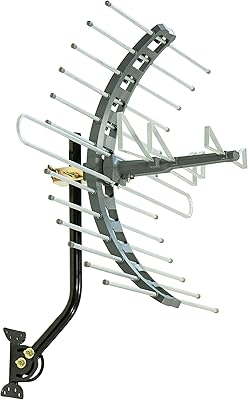
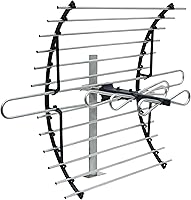
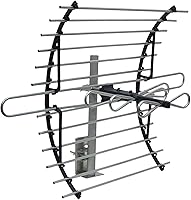
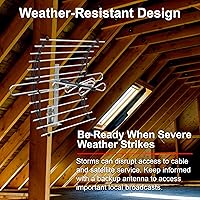
The GE 33692 Attic Mount TV Antenna has been a quiet staple in the cord-cutting market since 2011, and its continued ranking among the top OTA antennas in its category says something real about its staying power. Designed to tuck away in your attic or mount outdoors, it keeps things visually clean — no hardware cluttering your roofline or stuck to a window frame. For households tired of paying for channels they barely watch, this attic antenna offers a genuine path to free local programming in full HD. GE backs it with a lifetime replacement pledge and US-based phone support, which adds real peace of mind. Just know that actual performance depends heavily on your distance from broadcast towers and the terrain between you and them.

Features & Benefits

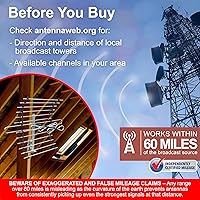
The GE attic mount antenna is rated for reception up to 60 miles from the nearest broadcast tower, which realistically covers most suburban households — though dense woods, hills, or sheer distance can chip away at that number noticeably. It picks up VHF and UHF signals alongside 4K content without requiring any adapters, so it connects straight out of the box with virtually any modern TV. The 75 Ohm coaxial connection is universal, and all mounting hardware ships in the package. What stands out for long-term value is its ATSC 3.0 compatibility — as NextGen TV broadcasting expands across more markets, this antenna is already positioned to receive it without needing a separate upgrade.

Best For

This hidden-install OTA antenna is a natural fit for homeowners within roughly 30 to 60 miles of a broadcast tower who want their antenna completely out of sight. If you have open attic space and prefer nothing hanging on your roof or stuck to a window, this is a practical, low-profile solution. It works especially well for cord-cutters pairing OTA with a streaming service — you cover live local news, sports, and network TV for free, then fill the gaps with a subscription. It also suits anyone who wants a set-and-forget install rather than something they need to reposition or re-aim on a regular basis.

User Feedback

With over 3,600 ratings and a 4.2-star average, the GE attic mount antenna earns its reputation for solid suburban performance. Buyers close to broadcast towers consistently report picking up a healthy lineup of local channels without much hassle, and many highlight the easy installation process as a genuine standout — the included hardware and clear instructions make the job approachable for most people. The more candid complaints center on range: users further than 40 miles, or those in areas dense with hills and trees, frequently find the signal inconsistent without a separate amplifier. Durability in attic conditions appears reliable based on long-term owners, but budget for an amplifier if you sit near the edge of the coverage zone.

Pros

  • Picks up free HD local channels from major networks with no monthly fees attached.
  • Attic installation keeps the exterior of your home completely free of visible hardware.
  • Includes all mounting hardware in the box — no separate trip to the hardware store needed.
  • Compatible with virtually every modern TV thanks to its standard 75 Ohm coaxial connection.
  • ATSC 3.0 support means it is positioned to receive NextGen TV broadcasts as they expand.
  • GE backs this attic antenna with a lifetime replacement pledge and accessible US-based phone support.
  • Handles both VHF and UHF signals, covering the full spectrum of over-the-air broadcast channels.
  • More than a decade on the market with a top-100 category ranking signals proven, consistent performance.
  • At its price point, the antenna pays for itself quickly compared to even one month of a cable bill.

Cons

  • Real-world range often falls short of 60 miles in hilly, wooded, or densely built environments.
  • No signal amplifier is included, which fringe-area users will likely need to purchase separately.
  • Performance is highly dependent on factors outside your control, like local tower placement and terrain.
  • Not practical for renters or anyone without attic or exterior mounting access.
  • Single fixed install means repositioning for better signal requires more effort than with indoor antennas.
  • Channel count is entirely dictated by what local towers broadcast — the antenna cannot change that ceiling.
  • Coaxial cable is not included, so longer runs to your TV require a separate purchase.
  • May underperform in markets with limited local broadcast infrastructure regardless of distance from towers.

Ratings

Our AI-driven scoring for the GE 33692 Attic Mount TV Antenna was built by processing thousands of verified global buyer reviews, actively filtering out incentivized, bot-generated, and outlier feedback to surface what real households actually experience day to day. Every category below reflects a transparent, unvarnished synthesis of both what works well and where genuine frustrations surface. The scores are intentionally precise — not rounded — because real-world performance rarely lands on a clean number.

Signal Reception
76%
24%
In suburban areas with reasonable proximity to broadcast towers, most buyers report picking up all major network affiliates cleanly and consistently without any manual adjustment after the initial install. Households within 35 to 45 miles of towers tend to get the strongest results, often pulling in more channels than expected.
Signal quality drops noticeably for users past the 45-mile mark or in terrain with hills, heavy tree cover, or dense housing. A meaningful portion of reviewers in those conditions report dropped channels or pixelation, particularly on VHF signals which this type of antenna can struggle with compared to UHF.
Range Accuracy
61%
39%
The 60-mile advertised range does hold up for a subset of buyers in genuinely flat, open terrain with unobstructed attic space and favorable tower placement. When conditions align, some users report pulling in distant stations they did not expect to receive.
For most buyers, the real-world effective range lands closer to 35 to 45 miles rather than 60. The gap between the spec and lived experience is the single most common frustration cited in negative reviews, and it catches buyers off guard when they are near the outer edge of coverage zones.
Ease of Installation
88%
The included mounting hardware and clear printed instructions make this a genuinely approachable install for most homeowners with basic DIY confidence. The antenna is light enough at just over two pounds to handle solo in a cramped attic, and most buyers report completing the full install in under an hour.
The antenna itself is easy to mount, but running coaxial cable from the attic down to a TV can require drilling and wall fishing, which is where some less experienced installers hit a wall. No coax cable is included, which adds an extra errand that not all buyers anticipate upfront.
Build Quality
79%
21%
Long-term owners consistently describe the physical construction as solid and appropriate for permanent attic conditions, including temperature swings and humidity exposure. The weather-resistant design holds up well in outdoor-adjacent installs without showing early signs of corrosion or material fatigue.
A small segment of buyers finds the plastic housing feels lightweight relative to expectations for a permanent install, though this has not translated into widespread failure reports. The coaxial connector on some units has drawn isolated complaints about fit tightness with certain cable brands.
Channel Count
72%
28%
In well-positioned suburban homes, buyers consistently report channel scans returning 40 or more channels including major network affiliates and a solid selection of subchannels covering news, weather, and niche content. For cord-cutters primarily targeting the main networks, the count routinely exceeds expectations.
Channel count is entirely dependent on local broadcast infrastructure, and buyers in smaller markets or rural areas sometimes find the available lineup disappointingly thin regardless of signal strength. The antenna has no ability to change what towers in a given area are broadcasting.
Value for Money
84%
At its price point, this attic antenna pays for itself within the first month of replacing even a basic cable package, making it a financially compelling decision for most cord-cutters. The lifetime replacement warranty adds meaningful long-term value that budget alternatives rarely offer.
Buyers who end up needing a separate signal amplifier to get usable reception in fringe areas will see the effective total cost rise by a noticeable margin. Those additional purchases feel frustrating when the out-of-box experience does not match the range claims on the packaging.
Compatibility
91%
The standard 75 Ohm coaxial output connects cleanly to virtually every TV, converter box, or DVR tuner sold in the US, regardless of brand or age. ATSC 3.0 support adds a layer of forward compatibility that most competing antennas in this price range do not offer.
Buyers with older TVs that lack a built-in ATSC tuner will need a separate converter box to use this antenna, which is an additional cost some overlook. The ATSC 3.0 benefit is also purely theoretical in most US markets today, meaning that selling point will not add immediate value for the majority of buyers.
Discreetness of Design
93%
Hiding an antenna in the attic is the cleanest possible OTA install — no hardware visible from the street, no window clutter, and no roof mounting required. Buyers upgrading from window-mounted or outdoor pole antennas overwhelmingly cite this as a major quality-of-life improvement.
The discreet attic location, while aesthetically ideal, does introduce a practical trade-off: re-aiming or adjusting the antenna after the initial install requires another trip into the attic, which is less convenient than a repositionable indoor unit.
Durability Over Time
81%
19%
Reviewers who have used the GE attic mount antenna for multiple years report minimal degradation in reception quality, and the hardware resists corrosion well in the temperature-variable conditions of a typical residential attic. The brand backing and lifetime pledge reinforce confidence in its longevity.
Some buyers in extremely hot climates note concern about prolonged heat exposure in poorly ventilated attics, though hardware failures directly attributable to heat have not emerged as a widespread pattern in the review data.
Setup Documentation
77%
23%
The included instruction manual is written clearly enough that most buyers complete the install without needing outside help or video tutorials. Diagrams are practical and the mounting steps are described in a logical sequence that maps well to an actual attic install.
The documentation does not address signal troubleshooting in much depth, leaving buyers who get poor initial results without clear next steps. There is no guidance on using a compass or signal finder app to optimize antenna direction, which would meaningfully improve first-time success rates.
Amplifier Necessity
57%
43%
For buyers within a comfortable range of strong towers, the passive antenna performs capably without any amplifier, keeping the install simple and the cost contained. Strong-signal suburban households often find they have no need for any additional hardware at all.
A notable share of buyers — particularly those beyond 40 miles or in challenging terrain — find the antenna essentially requires a powered amplifier to perform reliably, turning what looks like a simple purchase into a multi-component setup. This dependency is not clearly communicated in the product marketing.
Brand Trust & Support
86%
GE is a recognized and trusted consumer electronics brand in the US, and the availability of free phone-based technical support staffed by real people is a differentiator that cheaper no-name antennas simply cannot match. The lifetime replacement pledge is not a common offering at this price tier.
Some buyers report that reaching phone support involves hold times, and the support team's ability to resolve installation-specific issues varies by agent. The warranty, while generous in name, requires buyers to navigate a replacement process that a handful of reviewers describe as slower than expected.
Multi-TV Use
63%
37%
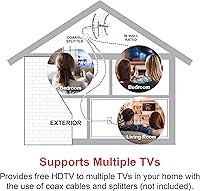
Using a splitter to feed two or three TVs from a single attic install is entirely possible and works well when the incoming signal is strong, making this a practical whole-home solution for households with multiple televisions.
Signal splitting without amplification noticeably degrades reception quality in average or weak signal environments, and the antenna packaging gives no guidance on multi-TV setups. Buyers attempting to run four or more TVs from a single antenna almost universally report frustrating signal loss.
NextGen TV Readiness
68%
32%
ATSC 3.0 compatibility is a genuine forward-looking feature that most antennas in this category do not include, giving buyers some assurance that their hardware will not need replacing as broadcasting standards evolve over the next several years.
NextGen TV rollout in the US remains slow and uneven, meaning most buyers will see zero practical benefit from this feature for the foreseeable future. It is a sensible inclusion but should not be a primary purchase driver for anyone making a decision today.

Suitable for:

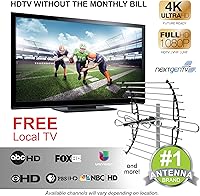
The GE 33692 Attic Mount TV Antenna is built for homeowners who want a clean, discreet OTA setup without visible hardware on their roof or windows. It works best for households sitting within 30 to 50 miles of major broadcast towers in relatively open suburban terrain — the kind of situation where an attic install gets unobstructed signal without extra effort. Cord-cutters pairing it with a streaming subscription will find it covers the live local programming gap well, pulling in network channels like ABC, NBC, CBS, FOX, and PBS for free in full HD. People who strongly dislike fussing with equipment after setup will appreciate the one-time install nature — once it is mounted and aimed, there is very little reason to touch it again. Its ATSC 3.0 readiness also makes it a reasonable long-term buy for anyone in a market where NextGen TV broadcasting is expected to roll out in the near future.

Not suitable for:

The GE 33692 Attic Mount TV Antenna is a poor match for anyone living more than 50 miles from the nearest broadcast tower, especially if hills, dense tree coverage, or tall buildings stand between them and the signal source. In those fringe zones, the advertised 60-mile range becomes aspirational rather than reliable, and a powered amplifier becomes almost mandatory — an added cost and complication the product does not include. Renters or apartment dwellers without attic access will find no practical use case here, as the design is squarely intended for permanent installation in a home with a usable attic or exterior mounting surface. Those expecting to receive distant or niche channels beyond the major networks may also come away frustrated, since OTA reception in general — not just this antenna — is constrained by whatever your local towers are actually broadcasting. If your primary goal is pulling in channels from multiple directions or across long distances in challenging terrain, a more powerful directional or amplified antenna would be a more honest fit.

Specifications

  • Brand: Manufactured by Jasco Products Company, LLC and sold under the GE brand name.
  • Model Number: This antenna carries the model designation 33692.
  • Antenna Type: Directional OTA antenna designed for attic or outdoor installation.
  • Claimed Range: Rated for reception of broadcast signals from sources up to 60 miles away.
  • Signal Support: Receives VHF and UHF signals and supports HD resolutions including 1080p and 4K Ultra HD.
  • NextGen TV: Compatible with the ATSC 3.0 broadcast standard for future NextGen TV reception.
  • Impedance: Operates at 75 Ohm impedance, which is the universal standard for TV coaxial connections.
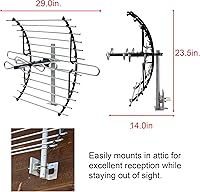
  • Dimensions: The antenna measures 3.5 x 17 x 10.5 inches in its installed configuration.
  • Weight: The unit weighs 2.05 pounds, making it straightforward to handle during attic installation.
  • Mounting Hardware: All hardware required for mounting is included in the package — no separate purchase needed.
  • Weather Resistance: Built to withstand outdoor-adjacent and attic conditions with weather-resistant construction.
  • Install Location: Intended for permanent installation inside an attic or in an outdoor mounting position.
  • Coax Connector: Uses a standard 75 Ohm coaxial output port compatible with virtually all TV and converter box inputs.
  • Warranty: Backed by a limited lifetime replacement pledge from the manufacturer.
  • Customer Support: Free US-based technical support is available by phone, Monday through Friday, 7AM to 8PM Central Time.
  • BSR Ranking: Ranks at number 123 in the TV Antennas category on Amazon based on recent sales data.
  • User Rating: Holds a 4.2 out of 5 star average rating drawn from over 3,600 verified customer reviews.
  • Availability Date: This product has been available on the market since November 2011.
  • Manufacturer: Jasco Products Company, LLC is the manufacturer and is responsible for warranty and support services.
  • Items Included: The package contains one antenna unit along with all necessary mounting hardware and installation instructions.

Related Reviews
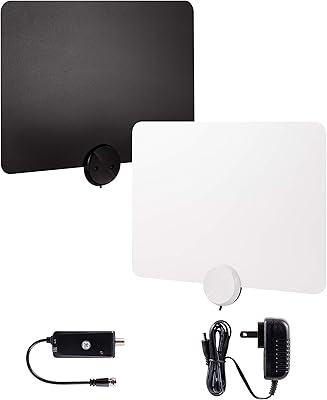
GE 48732 Indoor HD TV Antenna
80%
78%
Signal Reception Quality
93%
Ease of Setup
74%
Amplifier Performance
76%
Build Quality & Durability
84%
Design & Aesthetics
More
GE Pro Bar Indoor TV Antenna 33683
83%
85%
Reception Performance
92%
Ease of Installation
88%
Value for Money
90%
Design & Aesthetics
87%
Mounting Options
More
GE Ultra-Thin Amplified TV Antenna 48862
84%
88%
Signal Reception
83%
Build Quality
91%
Ease of Setup
89%
Design Flexibility
85%
Signal Amplification
More
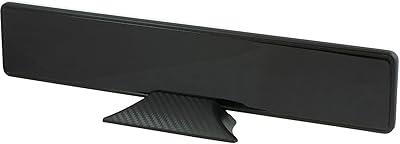
GE 29884 Outdoor Long-Range TV Antenna
79%
83%
Signal Reception Strength
88%
Ease of Installation
86%
Build Quality & Durability
79%
Channel Count & Variety
84%
Value for Money
More
GE Hover Amplified HD Digital TV Antenna 37075
85%
88%
Reception Performance
91%
Picture Quality
85%
Ease of Installation
87%
Value for Money
83%
Build Quality
More
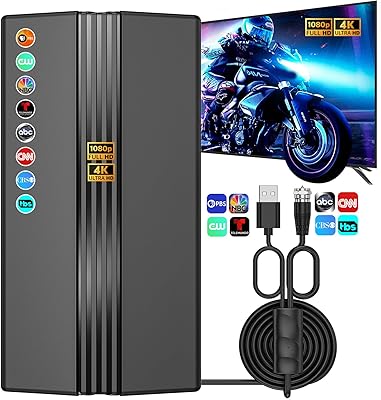
GE Ultra Edge 50-Mile Indoor TV Antenna
75%
72%
Signal Reception
93%
Ease of Setup
66%
Amplifier Performance
88%
Design & Aesthetics
81%
Value for Money
More
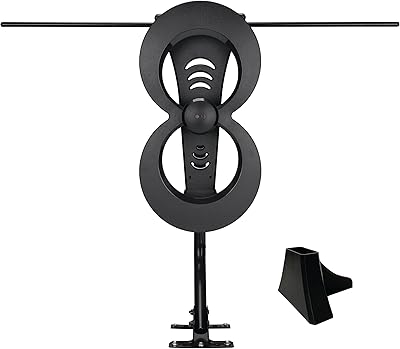
Bahouloer Indoor Outdoor TV Antenna
71%
72%
Signal Reception Quality
41%
Range Accuracy
91%
Ease of Installation
88%
Cable Length & Flexibility
63%
Build Quality & Durability
More
Antennas Direct ClearStream 4V TV Antenna
74%
88%
Signal Reception
84%
Build Quality
81%
Multi-Directional Performance
67%
Ease of Installation
74%
Value for Money
More
Antennas Direct ClearStream 2V TV Antenna
83%
88%
Signal Reception
91%
VHF Channel Coverage
84%
Build Quality
82%
Ease of Installation
79%
Value for Money
More
Antennas Direct ClearStream 4MAX TV Antenna
86%
88%
Performance in Rural Areas
93%
Ease of Installation
85%
Signal Strength
91%
Build Quality
89%
Indoor/Outdoor Versatility
More

FAQ

Honestly, 60 miles is the ceiling under ideal conditions — flat terrain, clear line of sight, and no major obstructions between you and the tower. In the real world, hills, dense trees, or tall buildings can bring that effective range down to 35 or 40 miles. Before buying, it is worth checking a free site like AntennaWeb or TVFool to see how far your local towers actually are and what signal strength to expect at your address.

Yes, you will need to supply your own coaxial cable to run from the antenna down to your TV or splitter. The package includes mounting hardware but not the cable itself, so measure the distance from your attic to your TV ahead of time and pick up an appropriate length RG6 coax cable.

You can, but you will need a coaxial splitter to do it. Keep in mind that splitting the signal reduces its strength, so if your reception is already borderline, adding a second or third TV without a signal amplifier can cause problems. An amplified splitter is a practical solution in that scenario.

Yes, it connects via a standard 75 Ohm coaxial port, which is found on essentially every TV sold in the US regardless of brand. If your TV does not have a built-in tuner — which is rare but possible on some older or commercial display models — you would need a separate digital converter box.

That depends entirely on what your local broadcast towers are transmitting, not on the antenna itself. Typically, you can expect the major network affiliates — ABC, NBC, CBS, FOX, and PBS — along with several subchannels. The specific lineup varies by market, so a quick scan on AntennaWeb with your zip code will give you a realistic preview.

Most buyers with basic DIY comfort find it straightforward. The included hardware and printed instructions cover the mounting process clearly, and the antenna itself is light enough to handle solo in an attic space. The trickier part is usually running the coax cable from the attic down to your TV, which may involve some drilling or fishing wire through walls depending on your home layout.

Yes, this is a directional antenna, so pointing it toward your local broadcast towers makes a meaningful difference. Most people aim toward the cluster of towers closest to them. After mounting, run a channel scan on your TV, then try rotating the antenna slightly if the count seems low — sometimes a small adjustment picks up additional channels.

The antenna is built with weather resistance in mind, and long-term owners generally report it holds up well in attic conditions. That said, attics in very hot climates can get extremely warm in summer, so making sure the coax connections are tight and protected from moisture ingress is a good practice regardless of which antenna you install.

In most US markets, ATSC 3.0 — also called NextGen TV — is still in the early rollout phase, so most viewers will not notice an immediate difference today. What it means is that when your local stations do upgrade their transmitters to the new standard, this attic antenna is already capable of receiving those signals. You would still need a TV or tuner that supports ATSC 3.0 decoding to take full advantage of the improved picture and audio quality.

Start by double-checking the antenna direction and making sure all coaxial connections are secure and fully tightened. If that does not resolve it, a signal amplifier placed inline between the antenna and your TV is the most common and effective fix for fringe-zone installations. GE also offers free US-based phone support if you want to troubleshoot with a live person — the number is listed in the product documentation.

Where to Buy

Jasco Products Company
In stock $49.99