Overview

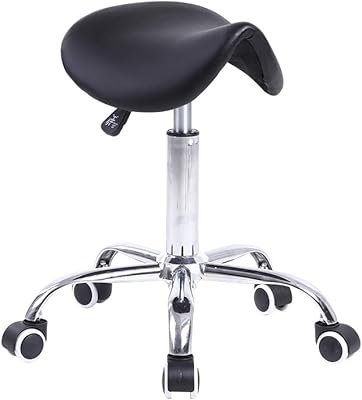
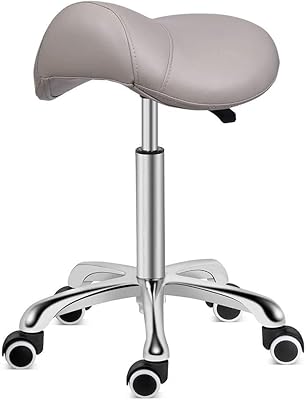
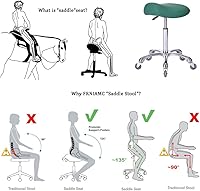
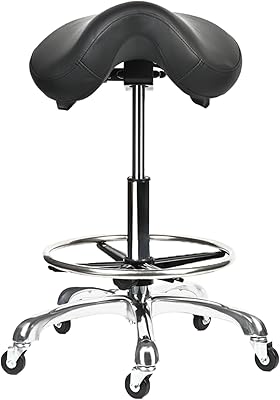
The FRNIAMC Ergonomic Rolling Saddle Stool enters a category that working professionals — tattoo artists, salon stylists, dental hygienists — have quietly depended on for years. Standard chairs punish the lower back during long stationary sessions; the saddle shape addresses that by tilting the pelvis slightly forward, encouraging a more upright spinal position. That's the theory, at least, and many users report it holds up in practice. This rolling ergonomic stool sits squarely in the mid-range bracket, built for people who want real ergonomic benefits without spending clinic-equipment money. Sensible expectations matter here — it's a practical workhorse, not a luxury piece.

Features & Benefits

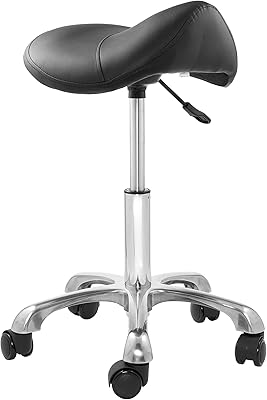
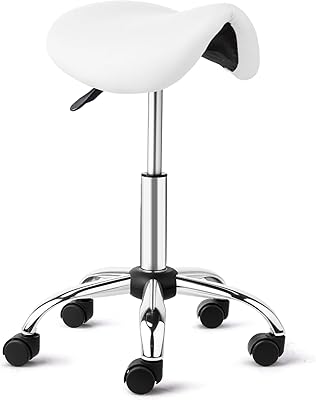
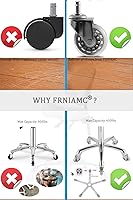
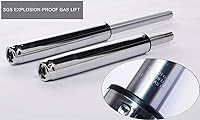
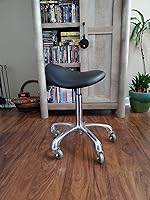
The saddle seat's forward tilt is the headline feature, but the practical details support it well. Height adjusts smoothly from 20 to 29.5 inches via a pneumatic gas lift — no tools, no fuss, just a quick pull or push to match your workstation. The aluminum base handles up to 400 lbs and feels genuinely stable underfoot, not hollow or wobbly. Rolling casters move quietly across tile and hardwood, which matters when you're working around clients. The PVC leather wipes clean in seconds, and the dense foam underneath holds its shape through a full workday. Assembly takes maybe ten minutes, which is a small but welcome detail.

Best For

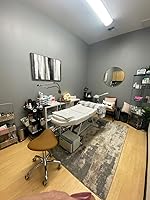
This rolling ergonomic stool makes the most sense for people whose work keeps them bending, reaching, and repositioning throughout the day. Tattoo artists and estheticians will appreciate the fluid rolling mobility — being able to slide from one side of a client to the other without standing up adds up over a full shift. Dental and clinic staff who work in a forward lean will find the pelvic tilt genuinely helpful. It's also a solid pick for home office workers dealing with persistent lower-back fatigue from a conventional flat chair. Budget-conscious buyers especially benefit, since this saddle stool delivers real ergonomic function without the steep price of professional-grade therapy seating.

User Feedback

Buyers consistently mention two things right away: it goes together quickly, and the back relief is real — several users note their lower-back discomfort dropped noticeably after making the switch from a flat seat. The casters get praise across the board for quiet, smooth gliding on hard floors. That said, seat width draws the most criticism; people with a broader frame may find the 21-inch saddle feels snug after a few hours. Opinions on cushion firmness are genuinely split — some prefer the dense support, others wish there were a bit more give. The leather seams are a longer-term watch point, though most short-term reviews report no issues.

Pros

  • Saddle seat shape encourages a forward pelvic tilt that many users report reduces lower-back strain.
  • Height range of 20 to 29.5 inches suits a wide variety of users and workstations.
  • Rolling casters glide quietly on tile and hardwood without scratching or dragging.
  • The aluminum base and 400 lb capacity make the frame feel solid and dependable.
  • PVC leather surface wipes down in seconds — a real advantage in salon or clinic settings.
  • Assembly is minimal and straightforward; most buyers have it ready to use within minutes.
  • The pneumatic gas lift lets you change seat height instantly without tools.
  • 360-degree swivel allows smooth repositioning around a client or workspace without standing.
  • One-year warranty provides reasonable peace of mind for a mid-range purchase.
  • At this price point, this saddle stool delivers ergonomic functionality that typically costs significantly more.

Cons

  • The saddle shape has a real adjustment curve — expect discomfort for the first week or two.
  • Seat width of 21 inches may feel narrow for users with a broader frame during extended sessions.
  • No armrests, which rules it out for anyone who relies on arm support during work.
  • Leather seam durability under heavy daily use remains a legitimate long-term question mark.
  • Casters can struggle on thick carpet, limiting usefulness in fully carpeted rooms.
  • Cushion firmness divides users — those who prefer a plush feel may find the seat too firm.
  • No lumbar or back support whatsoever, which takes meaningful adjustment for most first-time users.
  • Color and variant availability may be limited depending on retailer stock at the time of purchase.

Ratings

Our AI-generated scores for the FRNIAMC Ergonomic Rolling Saddle Stool were produced by systematically analyzing verified buyer reviews from global markets, with automated filters applied to remove incentivized, duplicate, and bot-generated feedback. Ratings reflect the full picture — not just the praise, but the honest frustrations real users encountered after weeks of daily use. Both the standout strengths and the recurring pain points are transparently baked into every score you see below.

Ergonomic Design
83%
The forward-tilting saddle shape is the reason most people buy this stool, and users who stick with it past the initial adjustment period consistently report a meaningful reduction in lower-back tension during long work sessions. Tattoo artists and salon professionals in particular praise how the seat naturally positions their body closer to the work surface without forcing a hunch.
The saddle design is genuinely not for everyone — buyers coming from conventional flat chairs frequently describe hip and inner thigh soreness during the first one to two weeks. A few users who expected instant comfort gave up before the adjustment window closed, which skews some lower-end feedback in ways that do not fully reflect the design's intended use.
Seat Comfort
71%
29%
Users who land in the right size range consistently find the dense foam strikes a solid balance — firm enough to support the pelvis without bottoming out mid-session, yet soft enough to sit on through a full working shift. Home office users transitioning from worn-out flat chairs often describe the first few weeks as genuinely relieving once the initial soreness subsides.
Firmness is genuinely polarizing: users who prefer a softer, more cushioned seat find this one uncomfortably hard, particularly after the two-hour mark. There is no way to adjust the padding density, so if the stock firmness does not work for you, adding an aftermarket cushion is the only fix — and that somewhat undermines the saddle shape's intended posture mechanics.
Mobility & Casters
88%
The casters are one of the most consistently praised elements across all user feedback — they glide quietly on tile, laminate, and hardwood with noticeably less resistance than the cheaper nylon wheels found on budget stools. Tattoo artists working around a client frequently single out the fluid lateral movement as a genuine productivity gain across a full shift.
Performance drops noticeably on medium to thick-pile carpet, where the casters drag rather than roll freely, requiring considerably more effort to move and occasionally catching on rug fibers. Home office users with area rugs have flagged this as a frustrating limitation that is not immediately obvious from the product listing before purchase.
Value for Money
84%
For a mid-range saddle stool, the combination of an aluminum base, pneumatic lift, and 400 lb capacity at this price point represents solid value compared to clinical-grade alternatives that can cost three to four times as much. Users who were skeptical before buying frequently express surprise at how well it holds up in daily professional environments.
The value equation weakens if the leather surface begins to degrade within the first year or two, which some heavy users do report — at that point, replacement or repair costs can quietly erode the original savings. Buyers who need premium longevity comparable to professional-grade clinical seating will likely find this stool undershoots their expectations over a multi-year horizon.
Seat Width & Fit
63%
37%
For users with an average or slim build, the 21-inch saddle width provides enough surface area to sit comfortably without feeling perched, and the forward-sloping shape distributes weight in a way that reduces pressure points compared to a flat seat of the same width. Many users with average proportions report zero fit issues even during extended full-day workloads.
This is the most polarizing dimension of the stool — buyers with a broader hip or thigh profile consistently report feeling squeezed or unsupported at the sides, with discomfort compounding over sessions longer than two hours. Unlike seat height, width cannot be adjusted, making this a hard dealbreaker for larger-framed buyers rather than something that can be worked around with time.
Build Quality
78%
22%
The aluminum base feels noticeably rigid under load, and the gas lift mechanism sits snugly with no wobble or side-to-side play that tends to creep into cheaper stools over time. The 400 lb structural rating also reassures heavier users who have previously dealt with flex or creaking from lesser-quality frames in this price category.
The main durability concern that surfaces in longer-term reviews is the leather seaming, which some users report beginning to separate or peel after several months of heavy professional use. The PVC material is functional but does not hold up to the same standard as genuine leather or the reinforced vinyl used on higher-end clinical stools.
Height Adjustability
86%
The 20 to 29.5-inch range covers a broad spectrum of user heights and workstation types, from standard sit-down desks to slightly elevated counter setups. The pneumatic gas lift responds quickly and holds the selected height reliably without slow sinking, which is a common failure point on cheaper lift mechanisms in this category.
The upper limit of 29.5 inches may fall just short for very tall users or those with countertop-height workstations above 30 inches. There is no height-lock mechanism, which is a minor but occasionally noted inconvenience in workplaces where the stool is shared between staff members of different heights throughout the day.
Ease of Assembly
91%
Assembly is one of this stool's clearest wins — parts connect in a logical sequence with no ambiguous steps, and most users are fully set up and sitting on it within ten to fifteen minutes of opening the box. No tools are required, which removes the usual barrier for buyers who genuinely dread furniture assembly.
The included instruction sheet is described as minimal by a handful of buyers, and while assembly itself is straightforward, the documentation could be clearer about the correct orientation of the gas lift cylinder. This is a minor point — virtually everyone gets it right regardless — but a more detailed guide would eliminate even the occasional moment of hesitation.
Upholstery & Cleaning
81%
19%
The PVC leather surface is genuinely practical for professional settings — a single wipe with a damp cloth or disinfectant wipe removes most residue, which salon and clinic users particularly appreciate at the end of a busy shift. The material does not absorb odors readily and stays presentable with minimal daily maintenance under normal working conditions.
PVC leather is notably less durable than genuine leather or high-grade synthetic vinyl — over time, especially in high-humidity environments or under frequent chemical cleaning, the surface can begin to crack or peel along seam edges. A number of longer-term users mention visible wear appearing earlier than they expected given the price paid.
Stability
85%
The five-point aluminum base distributes weight evenly and sits firmly on hard surfaces without rocking, even when users shift their weight laterally while leaning into close work. The 400 lb load rating provides real confidence to heavier users who have previously dealt with flex or audible creaking from lesser-quality stool frames.
On carpet, the base can shift slightly more than on hard floors, reducing the feeling of planted stability when users push off or reposition quickly. There is also a small subset of reports about minor squeaking developing in the gas lift column after extended months of use, though this appears to be an exception rather than a consistent pattern.
Posture Support
77%
23%
Users who commit to the adjustment process report meaningful improvements in how their lower back feels after a full workday — the forward pelvic tilt reduces the tendency to slump in ways that conventional flat seats simply do not address. Clinic and dental staff in particular note that the hip angle feels more natural during precision, close-focus work.
Posture benefits are entirely user-reported, not clinically validated — buyers with diagnosed spinal conditions should not treat this as a therapeutic device without medical guidance. A smaller segment of users finds no improvement at all, particularly those who struggle to maintain the correct upright position without any back support to lean against during longer sessions.
Long-term Durability
67%
33%
The structural components — the aluminum base, gas lift cylinder, and caster assembly — hold up well over time based on available medium-term user feedback. Most users reporting six to twelve months of regular use describe the mechanical parts as still functioning reliably, with no loosening or gradual performance loss in the lift.
The leather upholstery is the weakest link in the durability picture — PVC surfaces in high-use professional environments show cracking and seam separation more readily than the structural frame beneath them. Professional buyers expecting three or more years of intensive daily use may need to factor in potential resurfacing or early seat replacement costs.
Floor Compatibility
74%
26%
On hard surfaces — tile, hardwood, laminate, and vinyl plank — the rolling ergonomic stool performs very well, with casters that move smoothly in any direction without catching or visibly marking the floor. Users on these surfaces consistently report a quieter, more controlled glide compared to stools fitted with basic nylon wheels.
Carpet — even low-pile office carpet — introduces meaningful rolling resistance, and medium to thick-pile rugs can make movement genuinely laborious over the course of a shift. Home office users who primarily work on carpet may find that the stool's core mobility advantage largely disappears, making a chair mat a near-essential accessory rather than an optional extra.

Suitable for:

The FRNIAMC Ergonomic Rolling Saddle Stool is genuinely well-matched to professionals who spend their workday in a sustained forward lean — tattoo artists, dental hygienists, estheticians, and salon stylists will likely get the most out of it. The saddle shape encourages a forward pelvic tilt that many users in these fields report as noticeably more comfortable than a conventional flat chair during multi-hour sessions. The rolling casters and 360-degree swivel make lateral movement effortless, which is a real practical gain when you need to shift position around a client repeatedly without standing up. Home office workers dealing with persistent lower-back tension are also a strong fit, particularly those who have already tried lumbar cushions and back pillows without lasting relief. The wide height range — 20 to 29.5 inches — means it pairs reasonably well with a variety of desk and workstation setups, which broadens its practical appeal further.

Not suitable for:

If you are expecting the FRNIAMC Ergonomic Rolling Saddle Stool to feel instantly comfortable right out of the box, you may be in for a rough first week — saddle-style seating requires a genuine adjustment period as your hips, pelvis, and core muscles adapt to an unfamiliar sitting angle. People with a broader frame may find the 21-inch seat width feels cramped during long sessions, and that discomfort is unlikely to resolve with time. Anyone who needs armrests for support or prefers a high-back chair with lumbar contouring should look elsewhere, as this stool provides neither. It is also not the right choice for rooms with thick-pile carpet, where the casters tend to drag rather than glide smoothly. Finally, if you need seating that endures punishing daily use across several years in a high-traffic clinical environment, a purpose-built professional therapy stool at a higher investment will likely outlast this one — particularly in terms of leather seam longevity.

Specifications

  • Brand: Manufactured and sold under the FRNIAMC brand.
  • Seat Shape: Ergonomic saddle profile designed to tilt the pelvis forward and encourage a more natural spinal curvature during seated work.
  • Seat Dimensions: The seat surface measures approximately 15.74″ deep by 21″ wide.
  • Height Range: Seat height is adjustable from 20 to 29.5 inches via a pneumatic gas lift mechanism.
  • Overall Size: Full assembled stool dimensions are 15.74″ deep by 21″ wide by 29″ tall.
  • Stool Weight: The assembled stool weighs 12 pounds, light enough to move between rooms without difficulty.
  • Load Capacity: Rated for a maximum user weight of 400 lbs, which is above average for stools in this category.
  • Base Material: The five-point base is constructed from aluminum, providing a balance of structural rigidity and relatively low overall weight.
  • Upholstery: Seat surface is covered in PVC leather, which resists moisture and wipes clean with a damp cloth or mild disinfectant.
  • Cushion Fill: Dense sponge foam padding sits beneath the PVC leather surface to provide cushioning support through extended sitting sessions.
  • Casters: Five rolling casters enable smooth movement across hard flooring surfaces and low-pile carpet in any direction.
  • Swivel: Full 360-degree swivel rotation allows the user to turn freely in any direction without repositioning the base.
  • Height Adjustment: A pneumatic gas lift allows tool-free seat height changes via a lever, with no special equipment required.
  • Assembly: Minimal assembly is required; most users report completing the full setup in under fifteen minutes.
  • Warranty: Covered by a one-year manufacturer warranty against quality-related defects from the date of purchase.
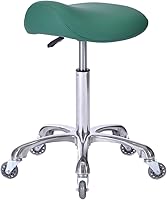
  • Color Options: Available in green; additional color variants may be offered depending on retailer and current inventory levels.
  • Market Rank: Ranked #11 in the Salon and Spa Stools category on Amazon at the time of product evaluation.

Related Reviews
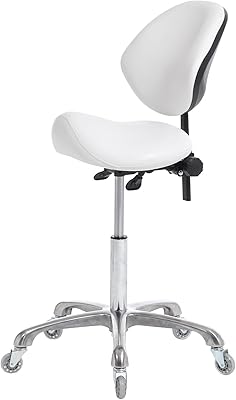
FRNIAMC Ergonomic Rolling Saddle Stool with Backrest
77%
78%
Ergonomic Support
66%
Seat Comfort
83%
Build Quality
86%
Height Adjustability
81%
Caster Performance
More
BEWISHOME Rolling Saddle Stool
89%
92%
Comfort and Ergonomics
85%
Ease of Assembly
91%
Mobility and Casters
88%
Material Durability
87%
Height Adjustment Range
More
KKTONER Rolling Saddle Stool Black
85%
88%
Comfort for Long Sitting
91%
Mobility and Ease of Movement
93%
Assembly and Setup
85%
Build Quality and Durability
89%
Adjustability and Customization
More
FRNIAMC AM-ST108 Rolling Salon Stool
81%
88%
Seat Comfort
71%
Cushion Durability
84%
Build Quality
62%
Height Adjustability
83%
Caster Performance
More
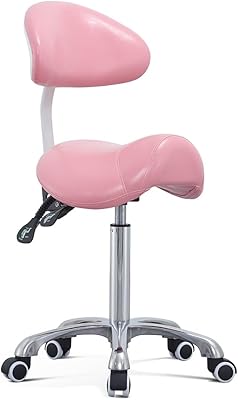
Saloniture Professional Ergonomic Saddle Stool
81%
83%
Ergonomic Design
79%
Build Quality
71%
Seat Comfort
67%
Height Adjustability
86%
Mobility & Casters
More
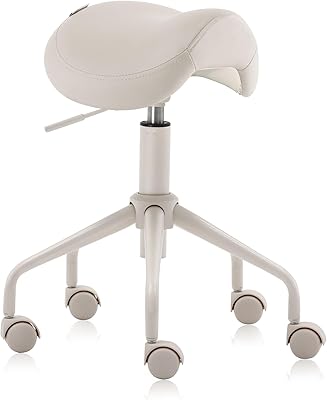
OmySalon Ergonomic Saddle Rolling Stool
73%
71%
Comfort
74%
Ergonomic Support
86%
Mobility & Casters
67%
Height Adjustability
81%
Value for Money
More
Antlu Saddle Stool Rolling Chair (Pink)
85%
88%
Comfort for Long Hours
91%
Ease of Movement (Swivel Functionality)
85%
Adjustability (Height Range)
90%
Durability (Metal Base & Support)
79%
Aesthetic Appeal (Pink Color)
More
Kaleurrier Saddle Stool Rolling Swivel Chair (Grey)
85%
88%
Comfort for Extended Sitting
91%
Ease of Assembly
85%
Adjustability & Flexibility
90%
Durability & Build Quality
89%
Portability & Maneuverability
More
DR.LOMILOMI 503 Kai Ergonomic Saddle Stool
74%
83%
Ergonomic Support
71%
Seat Comfort
93%
Hygiene & Cleanability
67%
Height Adjustability
81%
Build Quality
More
Antlu Rolling Saddle Stool with Backrest
81%
83%
Ergonomic Comfort
76%
Lumbar Support
61%
Cushion Longevity
89%
Wheel Performance
84%
Height Adjustability
More

FAQ

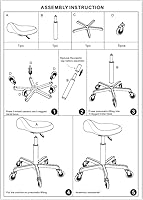
It is genuinely straightforward — most people finish in ten to fifteen minutes. The main steps are attaching the caster base, inserting the gas lift cylinder, and seating the saddle top. No tools are needed, and the parts fit together intuitively. If you can put together flat-pack furniture, this will feel simple by comparison.

Most users report smooth, scratch-free rolling on hardwood and tile. The wheels are designed for hard surfaces and move quietly with minimal resistance. If you have a particularly delicate or high-gloss floor finish, placing a chair mat underneath is a reasonable precaution, but the majority of buyers do not seem to need one.

Be honest with yourself: there is a real adjustment period, usually one to two weeks. The forward pelvic tilt engages hip flexors and core muscles that conventional chairs do not, so mild soreness in the inner thighs or hips is normal at first. The practical advice is to start with shorter sessions — an hour or two at a time — and build up gradually rather than committing to a full workday immediately.

The seat adjusts between 20 and 29.5 inches, which comfortably covers most standard and slightly elevated desk heights. If your workstation surface is above 30 inches — for example, a countertop-height setup or a raised standing desk used at mid position — you may find the maximum height falls just short of ideal.

The PVC leather wipes down easily with a damp cloth or a standard disinfectant wipe, which makes it practical for salons, clinics, and tattoo studios where messes happen. The main thing to avoid is using harsh solvents, bleach-based sprays, or abrasive pads, as these can gradually dry out and crack the surface over time. A quick wipe-down after each session is all it really needs.

Many users do report meaningful relief after switching to this style of seat, since the forward pelvic tilt encourages a more natural spinal position compared to a flat-seat chair. That said, it is not a medical device, and results vary from person to person. If your back pain stems from a diagnosed condition, it is worth talking to a healthcare professional before changing your seating setup — but for general posture-related fatigue, the feedback from users is largely positive.

The FRNIAMC Ergonomic Rolling Saddle Stool is rated for a maximum load of 400 lbs, which is well above what most stools in this price range offer. The aluminum base and gas lift mechanism are also reported by users to feel solid underfoot, with no wobbling or instability under normal daily use.

This is worth thinking about carefully. The saddle seat is around 21 inches wide, and it is the most frequently cited limitation in user feedback from buyers with a larger frame. Some people find it perfectly fine for their build; others with wider hips report it feels snug after an hour or two. If seat width is a concern for you, comparing this against wider saddle stool options before purchasing would be a smart move.

Green is the primary listed color, but other variants may be available depending on the retailer and what is in stock at the time you are buying. It is worth checking the live product listing directly, as inventory and color options can change.

The warranty covers quality-related defects that arise within the first year of purchase — things like a faulty gas lift mechanism or manufacturing issues with the base or seams. To make a claim, you would typically contact the seller or brand through the platform where you bought it. Keeping your order confirmation on hand will speed things along considerably, as it establishes your purchase date right away.