Overview

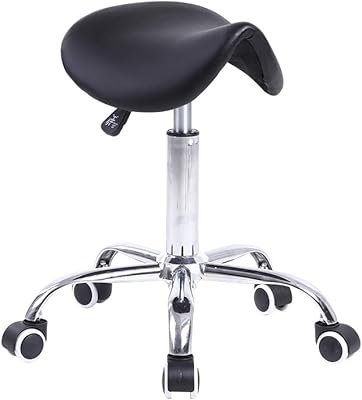
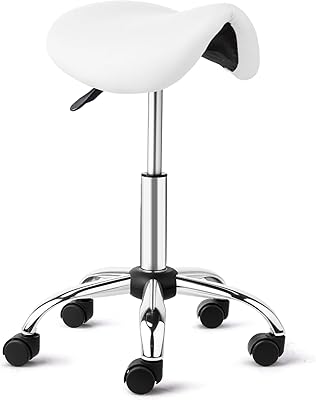
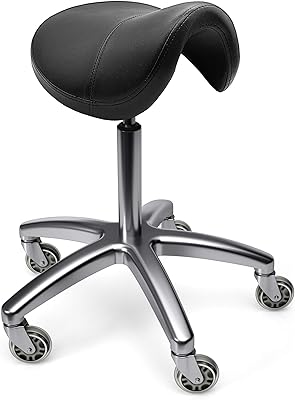
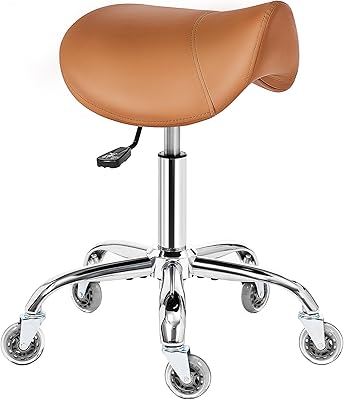
The Cadiario Saddle Tilting Rolling Stool sits in a practical middle ground between cheap no-frills salon stools and the kind of high-end ergonomic seating that costs several times as much. What sets this ergonomic work stool apart is its tiltable saddle seat, which lets you angle the cushion forward or backward depending on your posture needs — something most basic stools simply don’t offer. It’s designed with a broad range of work environments in mind: beauty salons, dental offices, tattoo studios, and home office setups. If you spend long hours seated and want something more supportive than a flat stool, this is worth a closer look.

Features & Benefits

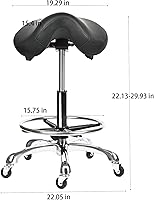
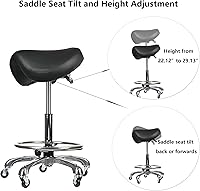
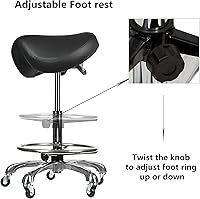
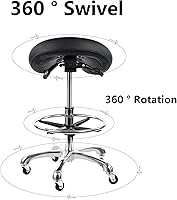
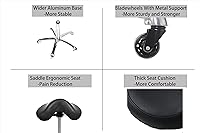
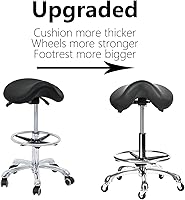
The seat height adjusts from 22.13″ to 29.93″, covering a wide range of workstation heights without much hassle. The forward-tilting saddle design shifts your hips into a more open angle, which can ease lower back pressure during extended sessions — though saddle seats genuinely take getting used to if you’re new to the style. Rolling casters and full 360-degree swivel let you reposition around a client without standing up. The removable footrest is a thoughtful touch, letting taller users skip it entirely, though some report the attachment process requires patience. The faux leather cushion is thicker than budget alternatives, though breathability during long shifts may be a factor worth considering.

Best For

This saddle stool makes the most sense for professionals who stay seated for hours at a stretch. Nail technicians, estheticians, and salon stylists will appreciate rolling directly to a client without breaking their workflow. Dental hygienists and clinical staff benefit from the generous height range and the posture support a flat stool simply doesn’t offer. Tattoo artists and lash techs who work at close range will find the mobility genuinely practical. It also suits home office users seeking a non-traditional seating option, especially those with lower back discomfort who’ve had trouble with conventional desk chairs. That said, first-timers should expect a real adjustment period before saddle seating feels natural.

User Feedback

Sitting at 3.9 stars across 66 reviews, the rolling salon stool earns cautiously positive marks — not glowing praise, but respectable. Buyers frequently highlight that assembly is manageable and that the cushion is noticeably more padded than competing stools at this price point. On the critical side, some users have reported wobble over time, and a handful found the footrest fiddly to attach and secure properly. There are also scattered mentions of the faux leather showing wear sooner than expected under daily professional use. Buyers already familiar with saddle-style seating tend to rate it higher, while those new to the format report a steeper comfort curve than the product description implies.

Pros

  • The tilting saddle seat encourages an open hip angle that can noticeably reduce lower back strain during long work sessions.
  • A height range spanning over six inches makes this ergonomic work stool adaptable to a wide variety of workstations and user builds.
  • Rolling casters and 360-degree swivel let you reposition around a client fluidly without standing up or scooting.
  • The removable footrest adds real flexibility, especially for taller users who simply don’t need it.
  • A 400-lb weight capacity points to a sturdier build than many comparably priced salon stools.
  • The cushion is noticeably thicker than what you typically find at this price tier, which buyers consistently call out as a welcome difference.
  • Assembly is generally described as straightforward, with most buyers getting it together without frustration.
  • The compact footprint works well in tighter studio or clinic spaces where a bulky chair base would be impractical.

Cons

  • Faux leather upholstery may crack or show surface wear sooner than expected under daily professional use.
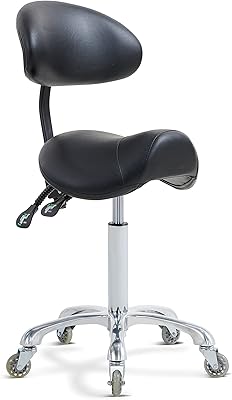
  • No backrest means core muscles do real work, which can cause fatigue for users not yet adapted to saddle-style seating.
  • Some buyers have reported minor wobble developing over time, particularly around the footrest attachment points.
  • The footrest can be fiddly to attach and adjust securely, which is frustrating given it’s marketed as a key selling point.
  • First-time saddle seat users often find the adjustment period longer and less comfortable than the product description suggests.
  • The faux leather surface traps heat, making breathability a genuine concern during back-to-back client sessions.
  • At a 3.9-star average, overall buyer satisfaction sits a notch below what you’d hope for from a stool at this price point.
  • The lack of lumbar support makes this a poor fit for anyone who already relies on back support to get through a workday comfortably.

Ratings

The scores below for the Cadiario Saddle Tilting Rolling Stool were generated by our AI review engine after analyzing verified buyer feedback from multiple global marketplaces, with spam, incentivized reviews, and bot activity actively filtered out. Each category reflects both the genuine strengths users appreciated and the recurring pain points that surfaced across real-world professional and home settings. Nothing has been smoothed over — the ratings tell the full story.

Ergonomic Support
71%
29%
Professionals who already understood saddle-seat mechanics reported genuine relief from lower back tension after switching from flat stools, particularly during back-to-back client sessions. The forward-tilt function makes a real difference for anyone who tends to hunch over a workstation for hours.
For first-time saddle seat users, the ergonomic payoff is far from immediate. Several buyers reported increased hip and lower back discomfort during the first few weeks, and a handful felt the design never clicked for their body type at all.
Seat Comfort
74%
26%
The cushion is noticeably thicker than what most competing stools in this range offer, and buyers regularly call it out as a standout feature. For sessions lasting two to three hours, the extra padding makes a tangible difference compared to the thin foam found on basic salon stools.
The faux leather surface traps body heat during longer shifts, which becomes uncomfortable in warm salon or clinic environments. Some users also noted that the saddle shape itself creates pressure on the inner thighs during extended sitting, which no amount of cushion thickness fully resolves.
Build Quality
66%
34%
Out of the box, the stool feels solid and the base has a reassuring heft to it. The gas lift mechanism operates smoothly, and the overall construction gives a reasonable first impression for a mid-range price point in a professional-use category.
Some buyers reported developing a subtle wobble after a few months of daily use, particularly around the seat connection point and footrest hardware. It holds up well for occasional use, but under the demands of a full-time salon or clinic schedule, the durability story becomes less convincing over time.
Mobility & Rolling
87%
The casters roll smoothly across tile and hardwood surfaces, and the 360-degree swivel is one of the aspects buyers praise most consistently. Being able to rotate and reposition around a client without standing up is exactly the kind of practical benefit that makes a real difference in a busy salon or treatment room.
There are no locking wheels, which is a genuine limitation if your workflow involves holding a fixed position for precision tasks. On softer flooring or uneven surfaces, the rolling performance is noticeably less fluid than on smooth commercial tile.
Material Durability
57%
43%
The faux leather is easy to disinfect quickly between clients, which is a practical plus in any professional hygiene-sensitive environment. When treated gently and kept away from sharp edges or abrasive contact, the surface holds its appearance reasonably well in lighter-use settings.
Under the demands of daily professional use, the faux leather shows its limitations faster than buyers expect. Multiple reviewers flagged surface cracking, edge peeling, and visible wear appearing within the first year, which is a notable concern for anyone investing in this stool for a working salon or clinic.
Height Adjustability
83%
The nearly 8-inch adjustment range covers a solid spread of user heights and workstation types, from standard desk height all the way up to taller treatment tables. Nail technicians and dental hygienists in particular noted that the range matched their setup without compromise.
The upper limit of just under 30 inches falls short for anyone working at a true counter-height or bar-height surface. Taller users may find themselves at the very top of the range with little margin left, which limits long-term flexibility if the workstation setup changes.
Footrest Usability
62%
38%
Having the option to remove or reattach the footrest is a genuinely useful feature that most competing stools at this price point don’t offer. Users who found their feet reached the floor comfortably appreciated being able to remove it entirely for a cleaner look and feel.
The footrest attachment process is more involved than the product description implies, and several buyers found it fiddly to get fully secure on the first attempt. A few users also reported that the footrest developed minor play or movement after repeated adjustment cycles, which undermines its practical reliability.
Assembly Experience
76%
24%
Most buyers completed assembly without needing outside help, and the general consensus is that the instructions, while detailed, are followable with basic tools and a bit of patience. First-time assemblers typically reported finishing within 30 minutes.
The assembly is notably more involved than a typical flat stool, with multiple components requiring precise alignment to avoid instability later. A few buyers noted that the instructions could be clearer around the tilt mechanism setup, leading to minor frustration before getting it right.
Ease of Cleaning
82%
18%
A quick wipe with a damp cloth or standard disinfectant removes most surface residue in seconds, which is a meaningful convenience in back-to-back salon or clinical environments. The smooth faux leather surface doesn’t trap hair or product buildup the way fabric seats would.
Cleaning around the seat seams and the base of the saddle contour requires more attention, as product or moisture can collect there if not addressed regularly. Over time, repeated cleaning with harsh disinfectants may also accelerate surface wear on the faux leather finish.
Stability
63%
37%
When properly assembled on a flat, smooth surface, the stool feels stable under everyday use and handles shifting body weight during routine seated tasks without issue. The five-point caster base provides a reasonably wide footprint relative to the seat size.
Stability concerns cropped up repeatedly in longer-term reviews, with users reporting a gradual loosening of the connection between the seat and the gas lift column after months of daily professional use. The stool is less reassuring on uneven or slightly sloped floors than a fixed-leg alternative would be.
Cushion Quality
77%
23%
Compared to the thin, firm saddle cushions that dominate budget options in this category, the padding here is a meaningful step up. Buyers who had previously used basic salon stools mentioned the difference was noticeable from the first session.
Over extended use, there are early signs that the cushion compresses and loses some of its initial give, particularly for heavier users. The faux leather cover also limits breathability in a way that can make the cushion feel less comfortable during warm-weather or high-activity shifts.
Weight Capacity
88%
A 400-lb weight rating is well above what most comparable saddle stools in this price range advertise, and it signals a structural confidence that broader buyers will find reassuring. Professional users who have struggled with lower-rated stools flexing or creaking underfoot appreciated this spec.
While the rated capacity is high, some heavier users noted that the stool’s overall feel — particularly the seat-to-base connection — did not inspire full confidence at the upper end of that range during dynamic movement or leaning. The rating is likely accurate for static seated use rather than active shifting.
Value for Money
67%
33%
For buyers who are new to saddle-style seating and want a capable entry point without committing to premium pricing, this ergonomic work stool offers a reasonable feature set relative to its cost. The tilt function and removable footrest are features you typically pay more for elsewhere.
Given the durability concerns that emerge after six to twelve months of heavy professional use, the long-term value proposition weakens considerably. For salon or clinic owners expecting years of daily use from a single stool, the math may favor a higher-tier option from the outset.

Suitable for:

The Cadiario Saddle Tilting Rolling Stool is a strong fit for working professionals who spend the bulk of their day seated at client-level height and need to move around freely without constantly standing up. Nail technicians, estheticians, and salon stylists in particular will find the rolling base and swivel genuinely useful day-to-day, since repositioning around a client becomes almost effortless. Dental hygienists and clinical staff who work at varying table heights will appreciate the generous 22.13″ to 29.93″ adjustment range, which covers most operatory setups. Tattoo artists and lash techs who need to hold precise angles for extended periods may also benefit from the forward-tilting seat, which encourages a more open hip posture and can reduce the slouching that builds up over long sessions. Home office users who have already tried and disliked traditional desk chairs — especially those with chronic lower back tension — are also reasonable candidates, provided they understand that saddle seating requires a genuine adaptation period.

Not suitable for:

The Cadiario Saddle Tilting Rolling Stool is not the right choice for anyone expecting the immediate comfort of a padded office chair with lumbar support, since the backrest-free saddle design demands active core engagement that can feel fatiguing at first. If you’ve never used a saddle-style stool before, don’t assume the ergonomic benefits will kick in right away — it can take weeks before the posture shift starts to feel natural rather than awkward. Buyers who prioritize long-term material durability in a high-traffic professional environment should also weigh the faux leather finish carefully, as several users have noted it can show wear faster than expected under daily salon or clinic conditions. Those who need a stool for tasks requiring a very high seat position will want to note the maximum height caps at just under 30 inches, which may fall short for taller users at elevated workstations. Finally, anyone looking for a truly set-and-forget setup should be aware that the footrest adjustment and overall assembly involve enough steps that a few buyers found the process more involved than anticipated.

Specifications

  • Seat Height: The seat adjusts pneumatically from 22.13″ to 29.93″, providing approximately 7.8 inches of vertical range to suit different users and workstation heights.
  • Seat Width: The saddle-shaped seat measures 19.69″ wide, offering a broad enough surface to support a range of body types comfortably.
  • Dimensions: Overall product dimensions are 22.09″ deep by 22.09″ wide by 29.93″ tall at maximum height extension.
  • Weight Capacity: The stool is rated to support up to 400 lbs, making it suitable for sustained professional use across a wide range of users.
  • Item Weight: The assembled stool weighs approximately 12 lbs, keeping it light enough to relocate between rooms or workstations with minimal effort.
  • Seat Style: The seat uses a saddle-shaped, split or contoured design with no backrest, intended to promote an open hip angle and upright posture.
  • Seat Material: The seat surface is finished in faux leather, which offers easy surface cleaning but may reduce breathability during extended sessions.
  • Cushion Density: The cushion padding is thicker than what is typically found on comparable saddle stools in this category, according to product specifications.
  • Tilt Function: The seat can be manually tilted both forward and backward to adjust postural angle based on individual comfort preferences and task demands.
  • Footrest: A footrest is included and is designed to be removable and height-adjustable, accommodating users who prefer support or those who work without it.
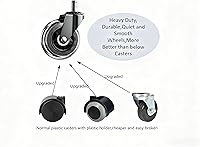
  • Base & Casters: The stool sits on a five-point caster base that rolls on smooth surfaces and rotates a full 360 degrees for hands-free repositioning.
  • Color: Available in black, with the faux leather seat and base finish matched for a uniform, professional appearance.
  • Brand: Manufactured by Cadiario, also listed under the seller name Cadiariobeauty, a brand focused on professional beauty and salon seating.
  • Assembly: Assembly is required and involves attaching the base, casters, footrest, and adjusting the seat tilt mechanism according to the included instructions.
  • Date Available: The product was first listed on Amazon in October 2022, giving it a limited but growing review history at the time of this writing.

Related Reviews
BEWISHOME Rolling Saddle Stool
89%
92%
Comfort and Ergonomics
85%
Ease of Assembly
91%
Mobility and Casters
88%
Material Durability
87%
Height Adjustment Range
More
KKTONER Rolling Saddle Stool Black
85%
88%
Comfort for Long Sitting
91%
Mobility and Ease of Movement
93%
Assembly and Setup
85%
Build Quality and Durability
89%
Adjustability and Customization
More
Antlu Saddle Stool Rolling Chair (Pink)
85%
88%
Comfort for Long Hours
91%
Ease of Movement (Swivel Functionality)
85%
Adjustability (Height Range)
90%
Durability (Metal Base & Support)
79%
Aesthetic Appeal (Pink Color)
More
OmySalon Ergonomic Saddle Rolling Stool
73%
71%
Comfort
74%
Ergonomic Support
86%
Mobility & Casters
67%
Height Adjustability
81%
Value for Money
More
Kaleurrier Saddle Stool Rolling Swivel Chair (Grey)
85%
88%
Comfort for Extended Sitting
91%
Ease of Assembly
85%
Adjustability & Flexibility
90%
Durability & Build Quality
89%
Portability & Maneuverability
More
Antlu Rolling Saddle Stool with Backrest
81%
83%
Ergonomic Comfort
76%
Lumbar Support
61%
Cushion Longevity
89%
Wheel Performance
84%
Height Adjustability
More
Leopard Adjustable Rolling Medical Work Stool
77%
84%
Mobility & Rolling Performance
79%
Height Adjustability
62%
Seat Comfort
71%
Build Quality & Durability
83%
Value for Money
More
A&A T-06A2 Compact Rolling Stool
78%
96%
Ease of Setup
74%
Build Quality
51%
Comfort & Cushioning
88%
Swivel Performance
67%
Caster Quality
More
YEEZEE Ergonomic Rolling Saddle Stool
75%
83%
Seat Comfort
79%
Ergonomic Design
76%
Build Quality
67%
Height Adjustability
82%
Mobility & Swivel
More
TASALON Ergonomic Saddle Stool with Wheels
78%
83%
Ergonomic Comfort
79%
Build Quality
76%
Wheel Performance
88%
Height Adjustability
81%
Value for Money
More

FAQ

The Cadiario Saddle Tilting Rolling Stool requires assembly, but most buyers report the process is manageable if you follow the included instructions carefully. The main steps involve attaching the caster base, securing the gas lift cylinder, and connecting the footrest. Budget around 20 to 30 minutes and keep a basic toolkit nearby.

Honest answer: it takes time. Saddle-style seats shift your hip angle in a way that engages muscles most people don’t typically use while sitting. Expect anywhere from one to three weeks before it starts feeling natural, and ease into it by alternating with your regular chair during the adjustment period.

The tilt is adjustable and can be set to your preferred angle, but it is not a continuous free-float mechanism. You position the seat at the angle that suits your task and secure it there, so it stays stable during use rather than rocking underneath you.

Yes, the footrest is fully removable, which is actually a selling point for taller users whose feet reach the floor easily without any support. Removing it is straightforward once you know the steps, though the process involves more than a simple pull-off, so refer to the assembly guide the first time.

The casters are standard rolling wheels designed for smooth surfaces, and most buyers use this saddle stool on salon-grade tile or hardwood without reporting scratch damage. That said, if your floors are especially sensitive, checking whether the casters are soft-roll or hard-roll before purchase is a reasonable precaution.

A damp cloth or standard surface disinfectant wipe handles most routine cleaning well, which is one of the practical advantages of a faux leather finish in a salon or clinical setting. Just avoid soaking the seams, as prolonged moisture exposure can accelerate edge wear over time.

At a maximum of just under 30 inches, this stool is well-suited for standard desk or table heights but falls short for true counter-height or bar-height surfaces, which typically start around 34 to 36 inches. If your workstation is on the taller side, you may want to check a taller-range saddle stool before buying.

This is one area where buyer feedback is mixed. Some professionals report the surface holding up fine over several months, while others note visible wear or surface cracking sooner than expected, particularly around the edges of the saddle. If you’re putting this in a high-traffic salon or clinic environment, it’s worth factoring that into your long-term expectations.

The product listing does not specify locking casters, and based on available information, the wheels do not include a built-in lock mechanism. If staying stationary is important for your workflow, this is worth confirming with the seller before purchasing.

It can be, but only if you go in with realistic expectations. The forward-tilting saddle design is genuinely intended to reduce lower back strain by encouraging a more upright pelvic posture. However, the lack of any lumbar support means your core does more work, which can actually increase discomfort early on if your back muscles aren’t conditioned for it. Anyone managing a serious back condition should check with a healthcare provider before making the switch.