Overview

The Fodsports FX7 Motorcycle Bluetooth Headset arrived in late 2024 as a genuinely compelling option for riders who want group communication without stretching to flagship pricing. It sits between basic single-rider units and premium intercoms, occupying a sweet spot that most brands ignore. What sets the FX7 apart at this price is its dual Qualcomm chipset — a hardware choice more commonly found in pricier devices. Pair that with IP67 waterproofing and a Type-C charging port, and this mesh intercom headset starts looking like a practical all-conditions companion rather than a fair-weather accessory. Its early Amazon ranking confirms the market is paying attention.
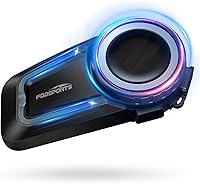
Features & Benefits

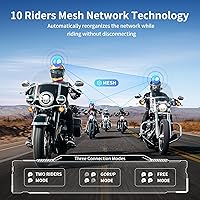
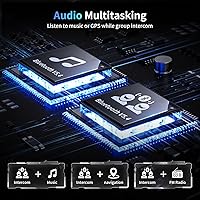
The mesh network architecture is the standout capability here — connect up to ten riders and the group stays linked even if one member temporarily drops out, with the connection resuming automatically when they return. The FX7 handles audio multitasking impressively: hold an intercom conversation while your GPS continues feeding directions, with navigation prompts automatically taking priority over music. The dual-chip noise cancellation performs well at town speeds, though at full highway pace it reduces rather than eliminates wind noise — a realistic expectation for any helmet headset. Music sharing between two riders is a nice touch, though it only works within about ten meters, so it is genuinely suited to tandem riding rather than a loose group.

Best For

This helmet communication unit makes the most sense for group riders who organize regular runs and want reliable all-member communication without spending top-dollar on a Cardo or Sena system. Touring couples are another natural fit — the combination of shared music and intercom in a single device removes the need for separate gadgets. Commuters who ride year-round will appreciate the IP67 build, which handles rain without drama. If you rely on GPS navigation daily, the automatic audio switching is a practical convenience rather than a marketing add-on. It also suits riders transitioning from entry-level headsets who want cross-brand intercom compatibility, though results with specific third-party devices can vary by model and firmware version.

User Feedback

Buyers consistently praise the audio clarity and the ease of the mesh setup, with most describing the initial pairing process as far less fiddly than older chain-based systems. The glove-friendly controls — a large dial plus two raised buttons — draw repeated positive mentions from cold-weather riders. On the critical side, several users note that the advertised battery figure reflects ideal conditions; real-world touring use, especially with intercom active throughout, lands somewhat shorter. Cross-brand pairing comes up as a mixed experience: some users report clean connections with rival systems, others run into compatibility quirks that require extra steps. Build quality feedback is generally positive, though a handful of reviewers mention that speaker volume could push higher at top settings.

Pros

  • Mesh network keeps the whole group connected even when individual riders temporarily drop out and rejoin.
  • Dual Qualcomm chips deliver noticeably better audio stability than single-chip alternatives in the same price range.
  • Talking on intercom while simultaneously receiving GPS directions works reliably without manual switching.
  • IP67 waterproofing holds up in genuine rain without needing any additional protection or workarounds.
  • The large tactile dial and raised buttons are genuinely usable with thick winter gloves on.
  • Pass-through Type-C charging means a long riding day does not require stopping to manage battery.
  • Built-in FM radio adds a useful fallback when phone connectivity is unreliable or unwanted.
  • Supports up to ten riders on a single mesh network, which covers most real-world group ride sizes.
  • Cross-brand pairing works cleanly with a range of Bluetooth devices and many third-party intercoms.
  • Battery life holds up well across a full day of mixed intercom and music use under normal conditions.

Cons

  • Cross-brand intercom pairing is inconsistent and may require troubleshooting depending on the other device.
  • Music sharing is limited to a very short range, making it useful only for riders directly alongside each other.
  • Actual battery endurance under continuous heavy intercom use falls noticeably short of the rated figure.
  • Speaker volume at maximum output may feel insufficient for riders on louder bikes or open-face helmets.
  • Noise cancellation at sustained highway speeds reduces wind intrusion but does not eliminate it.
  • Some users report that fitting the unit cleanly across different helmet types requires extra adjustment effort.
  • No dedicated companion app means firmware updates and advanced configuration options are limited.
  • The headset carries slightly more weight than ultra-compact rivals, which may matter on long touring days.

Ratings

The scores below reflect an AI-driven analysis of verified global buyer reviews for the Fodsports FX7 Motorcycle Bluetooth Headset, with spam, bot submissions, and incentivized feedback actively filtered out before scoring. Each category captures the honest spread of rider experiences — from genuine praise to recurring frustrations — so the numbers reflect reality rather than marketing. Both the strengths that make this headset stand out and the trade-offs that give some buyers pause are transparently represented.

Mesh Intercom Reliability
88%
Riders consistently report that the mesh network holds together well on open roads, with the automatic reconnect behavior earning specific praise from group riders who regularly pass through tunnels or temporary dead zones. The one-click group setup is noticeably faster than older chain-pairing systems, especially appreciated during pre-ride prep in cold parking lots.
Urban environments with dense signal interference can cause more frequent dropouts than open highway riding, and a small number of users note that very large groups occasionally take longer than expected to fully stabilize after a member rejoins.
Audio Quality
83%
The dual-diaphragm speaker design delivers noticeably richer audio than what most riders expect at this price tier, with enough mid-range clarity to make music enjoyable rather than just audible. GPS navigation voices come through cleanly, and intercom conversations at moderate speeds feel natural rather than tinny or compressed.
At maximum volume, some riders on louder bikes or wearing open-face helmets feel the output ceiling is not quite high enough to cut through ambient noise convincingly. Bass response is adequate but not deep, which matters more to music-focused riders than to those primarily using the intercom.
Noise Cancellation
74%
26%
The CVC and ENC combination handles wind buffeting and engine drone effectively at town and suburban riding speeds, making conversations noticeably clearer than single-mic budget alternatives. Riders who commute on urban routes at moderate speeds report that background noise is suppressed well enough to hold relaxed intercom conversations without shouting.
At sustained highway speeds — particularly above 80 mph — wind intrusion becomes more pronounced and the cancellation system reduces rather than eliminates the noise floor. Riders who regularly cruise at high speed for extended periods should temper expectations, as this is a known limitation across most headsets in this price bracket.
Battery Performance
71%
29%
For typical day rides involving a mix of intercom use, music streaming, and some quiet stretches, the battery holds up well enough to cover most riders without needing a top-up. The pass-through Type-C charging is a practical backstop for touring riders who carry a small power bank, effectively removing hard range anxiety on longer trips.
The manufacturer-rated endurance figure assumes relatively light use, and riders running the intercom continuously for a full touring day consistently report falling short of that number in real conditions. Heavy intercom users on multi-day trips should plan for a mid-day charge rather than treating the rating as a reliable guarantee.
Glove-Friendly Controls
89%
The oversized dial and raised tactile buttons are one of the most frequently praised aspects across reviews, with cold-weather commuters specifically calling out how easy it is to adjust volume or accept calls without removing gloves. The physical feedback from each button press is confident enough to use by feel alone at speed.
Riders wearing very thick insulated mitts rather than standard gauntlets occasionally report needing a more deliberate press to register input reliably. The control layout takes a short learning curve to memorize by touch, which is normal but worth noting for riders switching from a different brand.
Cross-Brand Compatibility
66%
34%
Many users successfully pair the FX7 with intercoms from well-known competing brands and report functional basic communication once the initial pairing is complete. For riders who want to occasionally connect with a friend on a different brand, the universal Bluetooth approach works in a majority of reported cases.
Compatibility results vary considerably depending on the third-party device model and its firmware version, and some users experience limited feature access or pairing instability with certain Cardo and Sena units. This is not a plug-and-play guarantee, and mixed-brand groups should test pairing before depending on it for a planned group ride.
Waterproofing & Durability
86%
The IP67 rating translates reliably to real-world rain riding, with commuters reporting consistent performance through heavy downpours without any noted degradation in audio or connectivity. The build feels solid rather than lightweight and cheap, and the port covers and seals show no signs of early wear in medium-term use reports.
A handful of users note that the exterior plastic shows minor cosmetic scratching after sustained daily use, though no structural failures are reported. The IP67 certification covers rain and brief submersion but does not extend to pressure washing or prolonged water exposure, which a small number of buyers appeared to misunderstand.
Music Sharing
61%
39%
For couples or riding partners who frequently travel side by side, the music sharing feature adds a genuinely enjoyable social dimension to a ride, letting both riders share the same audio feed without needing a separate app or workaround. The audio quality during sharing is comparable to standard streaming playback.
The effective range is short enough that it only works reliably when two riders are directly alongside each other, making it impractical in staggered group formations or when any distance opens up between partners. Buyers expecting this to work across a wider group or at normal following distances will be disappointed.
FM Radio
72%
28%
The built-in FM tuner provides a genuinely useful backup when riders want audio without draining their phone battery or relying on data connectivity in areas with poor signal. Commuters who monitor traffic and weather broadcasts find it a practical daily feature rather than a novelty.
FM reception quality is dependent on local signal strength and antenna positioning inside the helmet, and users in areas with weaker broadcast infrastructure report inconsistent tuning. There is no RDS display or station memory accessible without a connected phone screen, which limits usability for some.
Helmet Fitment
76%
24%
The mounting hardware covers the most common full-face, modular, and open-face helmet types without requiring third-party adapters, and most riders complete installation without significant difficulty. Speaker thickness is manageable enough to fit into the ear pockets of most mid-range helmets without creating pressure points.
Riders with unusually snug-fitting helmets or non-standard speaker pocket depths may need additional adjustment time to find a comfortable and stable speaker position. A small but consistent group of reviewers mention that the mic boom arm requires careful positioning to achieve the optimal distance from the mouth.
Setup & Pairing Ease
81%
19%
First-time setup for a two or three rider group is straightforward, and the pairing process is considerably less frustrating than older Bluetooth intercom systems that required sequential device-to-device connections. Most users report being fully operational within a few minutes of opening the box.
First-time mesh group setup with five or more riders simultaneously can require a couple of attempts before all units register correctly, particularly if riders are spread over a wider area during pairing. The manual could be clearer on troubleshooting steps for partial group connection failures.
Voice Assistant Integration
78%
22%
Single-button Siri and Google Assistant activation works reliably across both iOS and Android devices, and riders who use voice commands for navigation or messaging find it reduces the temptation to reach for their phone at speed. Activation latency is low enough to feel responsive rather than sluggish.
Voice recognition accuracy in high-wind conditions is limited by the same environmental factors that affect all helmet-mounted mics, so complex commands or dictation are less reliable at speed. The integration is essentially standard Bluetooth handoff rather than a deep native implementation, so advanced assistant features may not respond as expected.
Value for Money
87%
Relative to what riders get — dual-chip hardware, mesh networking, IP67 waterproofing, and audio multitasking — the price sits at a level that most reviewers consider fair to genuinely strong. Buyers upgrading from basic single-channel Bluetooth headsets consistently express that the step up in capability feels proportionate to the cost difference.
Buyers comparing this directly to flagship Cardo or Sena units will note gaps in software ecosystem depth, long-term firmware support history, and cross-brand integration polish that the price difference does not fully account for. For those who prioritize ecosystem longevity over upfront hardware value, the calculus shifts.
Weight & Comfort
69%
31%
Shorter commutes and half-day rides generate very few comfort complaints, and the physical controls do not create any notable pressure points when worn under a standard full-face helmet. Most riders report forgetting the unit is mounted after the first few minutes of riding.
The headset sits on the heavier side compared to stripped-down single-rider alternatives, and a small group of riders on very long touring days mention that cumulative helmet weight becomes noticeable by late afternoon. Those prone to neck fatigue on extended rides may want to factor this into the decision.

Suitable for:

The Fodsports FX7 Motorcycle Bluetooth Headset is a strong fit for riders who regularly travel in groups and want a communication system that handles real-world chaos — members splitting off, rejoining, losing signal in tunnels — without the group needing to manually re-pair every time. Touring couples will find particular value in the combination of shared music and active intercom, since it reduces the need to carry two separate devices for two different jobs. Daily commuters who ride through rain, cold, and unpredictable weather will appreciate the IP67-rated build, which handles wet conditions without special care or protective covers. Riders who depend on GPS navigation throughout a ride also benefit meaningfully, since the headset automatically prioritizes direction prompts over music without requiring manual input. If you are upgrading from a basic single-rider Bluetooth headset and want to step into group communication without committing to a premium-brand price tag, this mesh intercom headset offers a practical entry point with legitimate hardware backing it.
Not suitable for:

The Fodsports FX7 Motorcycle Bluetooth Headset is unlikely to satisfy riders who demand flawless cross-brand intercom compatibility, since pairing behavior with third-party systems varies noticeably depending on the other device's brand and firmware version — something worth investigating before assuming it will drop straight into an existing mixed-brand group setup. Riders who primarily ride solo and have no interest in group communication are paying for features they will never use, and a simpler single-channel headset would serve them better at lower cost. The music-sharing feature, while appealing on paper, works only within a very short distance between two riders, making it impractical for anything other than side-by-side tandem riding. Buyers expecting noise cancellation to deliver near-silence at sustained highway speeds should temper those expectations — the dual-mic system reduces background noise noticeably at moderate speeds, but high-speed wind intrusion is reduced, not eliminated. Those already invested in a premium ecosystem like Cardo or Sena, where firmware integration and long-term software support are more established, may find the FX7 feels less mature by comparison.
Specifications

  • Bluetooth Version: The headset uses Bluetooth 5.4, which offers lower latency and more stable connections compared to older Bluetooth 4.x standards common in competing units.
  • Chipset: Two dedicated Qualcomm processors handle audio and communication separately, enabling simultaneous intercom and music streaming without performance compromise.
  • Max Riders: The mesh network supports up to 10 riders connected at once, with automatic topology adjustment when members join or leave the group.
  • Battery Capacity: An internal 750mAh cell powers the unit, with a manufacturer-rated continuous use time of approximately 15 hours under standard conditions.
  • Charging Port: A Type-C port handles both charging and headset audio input, and the unit can be used while charging via a compatible power bank.
  • Waterproofing: The unit carries an IP67 rating, meaning it is fully dustproof and can withstand submersion in up to 1 meter of water for up to 30 minutes.
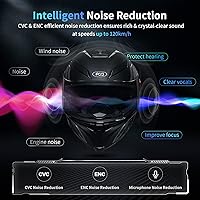
  • Noise Cancellation: Dual-stage noise reduction combines CVC (Clear Voice Capture) and ENC (Environmental Noise Cancellation) to suppress wind, engine, and echo interference during calls and intercom use.
  • Wireless Range: Standard Bluetooth device pairing operates at an effective range of up to 30 meters under open, unobstructed conditions.
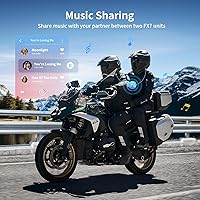
  • Music Sharing: Two-rider music sharing is supported at a maximum distance of approximately 10 meters, suitable for side-by-side riding only.
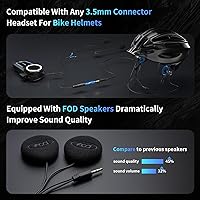
  • Speaker Specs: Speakers use a dynamic driver design with silk and bio-composite diaphragms and a rated impedance of 32 Ohm for balanced audio reproduction.
  • FM Radio: A built-in FM tuner operates independently of any paired phone, providing access to local broadcast stations without data connectivity.
  • Voice Assistants: A single button press activates either Siri or Google Assistant, depending on the paired smartphone, without requiring any additional voice command to initiate.
  • Controls: Physical controls consist of one large rotary dial and two raised tactile buttons, all sized and shaped to be operated while wearing standard riding gloves.
  • Intercom Compatibility: The unit supports universal Bluetooth pairing with intercoms from other brands, though successful integration depends on the third-party device model and its current firmware version.
  • Weight: The complete headset unit weighs approximately 13.6 ounces (around 0.39 kg), which is on the heavier side compared to ultra-compact single-rider alternatives.
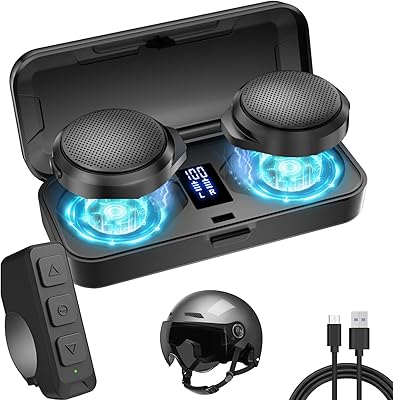
  • Package Size: The retail package measures 7.87 x 4.21 x 2.44 inches and includes the headset, mounting hardware, and a Type-C charging cable.
  • Audio Priority: When navigation prompts are active, the system automatically reduces music volume to foreground the GPS instruction, then restores music playback without manual input.
  • Battery Alerts: The unit announces its battery level aloud when powered on and issues a repeated low-battery audio alert at regular intervals once charge drops to a critical level.

Related Reviews
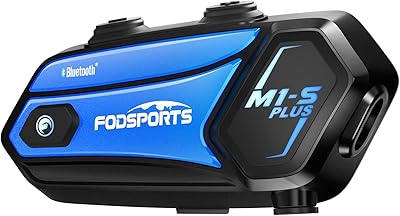
Fodsports M1-S Plus Motorcycle Bluetooth Headset
75%
88%
Ease of Setup
82%
Audio Clarity
61%
Intercom Range
91%
Battery Life
67%
Noise Cancellation
More
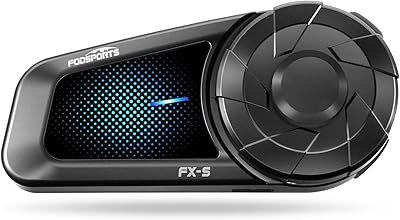
Fodsports FX-S Motorcycle Bluetooth Headset
78%
91%
Value for Money
78%
Sound Quality
72%
Noise Cancellation
69%
Intercom Range
88%
Waterproofing & Weather Resistance
More
OBEST H360 Motorcycle Helmet Bluetooth Headset
74%
83%
Bluetooth Stability
61%
Wind Noise Reduction
78%
Battery Life
67%
Helmet Compatibility
86%
Glove Usability
More
LEXIN G1 Motorcycle Bluetooth Headset
76%
78%
Sound Quality
71%
Wind Noise Rejection
91%
Battery Life
88%
Waterproofing
62%
Helmet Fitment
More
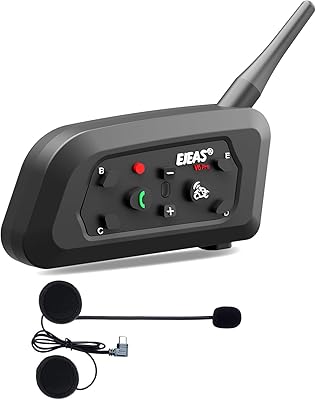
EJEAS V6 Motorcycle Bluetooth Intercom Headset
76%
91%
Value for Money
88%
Battery Life
86%
Ease of Setup
63%
Intercom Range
71%
Noise Cancellation
More
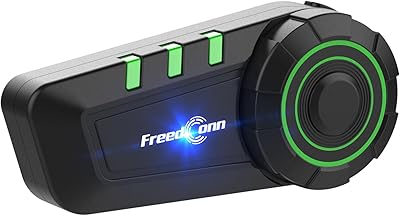
FreedConn KY Motorcycle Bluetooth Headset
77%
83%
Value for Money
61%
Noise Cancellation Performance
88%
Battery Life
84%
Water Resistance
72%
Sound Quality
More
EuroFone S2 Motorcycle Bluetooth Headset
74%
88%
Value for Money
91%
Waterproofing
74%
Sound Quality
86%
Battery Life
63%
Intercom Performance
More
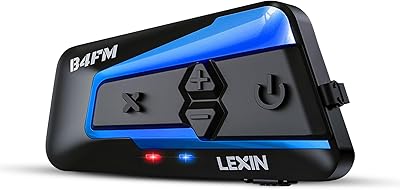
LEXIN B4FM Motorcycle Bluetooth Intercom Headset
77%
83%
Sound Quality
74%
Intercom Reliability
88%
Battery Life
67%
Noise Cancellation
71%
Build Quality
More
Sena 30K Motorcycle Bluetooth Communication Headset
76%
88%
Mesh Intercom Reliability
84%
Audio & Speaker Quality
79%
Active Noise Cancellation
86%
Battery Life
61%
Ease of Setup & Pairing
More
FreedConn TCOM-VB Motorcycle Bluetooth Headset
86%
88%
Sound Quality
91%
Ease of Use
82%
Connectivity Stability
90%
Battery Life
93%
Water Resistance
More

FAQ

Fairly straightforward once everyone has the unit. The mesh network uses a one-click pairing approach rather than the old chain-style setup where each rider had to pair with the next. In practice, you bring everyone into range, initiate the group connection, and the headsets negotiate the network automatically. Large groups on their first attempt may need a couple of minutes to confirm everyone is linked, but subsequent rides are quicker.

Yes, that is one of the features that genuinely separates the FX7 from simpler headsets. The dual-chip design means music and intercom run on separate processing paths, so a conversation does not cut your audio feed entirely — it just ducks the music while someone speaks, then brings it back. Navigation prompts from your GPS app work the same way and take automatic priority.

It can pair with many third-party intercoms via standard Bluetooth, but the experience is not guaranteed to be identical to pairing two FX7 units together. Some riders report clean connections with Sena and Cardo devices, while others run into quirks that require extra pairing steps or result in limited feature access. If your group runs mixed brands, test the pairing before relying on it for a long trip.

The IP67 rating covers sustained rain riding without issue. It is designed for real-world wet conditions, not just light drizzle. That said, IP67 does not mean indefinitely submerged, so avoid dunking it or pressure washing it. For normal commuting and touring in rain, it holds up well.

The rated figure reflects lighter or intermittent use. Riders who run the intercom actively for the majority of a long touring day typically report something shorter in practice. For a full-day ride with consistent group communication, it is worth carrying a small power bank and using the pass-through charging feature as insurance rather than assuming the rated figure will cover you.

Not really, no. Music sharing is a two-rider function and only works when the two riders are very close to each other — think side-by-side lane riding, not staggered formation. For a larger group it is not practical, but for a couple riding together it works as advertised.

Better than most. The large dial and raised buttons were clearly designed with gloved hands in mind, and riders who frequently ride in cold weather consistently call this out as a strength. Very thick mitts might still require a more deliberate press, but standard winter gauntlets should pose no real problem.

Yes, and this is one of the more practical features for touring riders. You plug in via the Type-C port and the unit continues operating normally. The only thing to note is that the charging cable and headset audio socket are separate ports, so you are not sacrificing audio connectivity to charge.

The mounting hardware is designed to work across most full-face, modular, and open-face helmets. That said, fit can depend on the specific internal shape of your helmet and how much space is available in the speaker pockets. Most users find a workable fit without modification, but unusually tight-fitting helmets may need some adjustment to position the speakers and mic correctly.

No, that is one of the practical advantages of mesh over the older chain topology. If one rider drops out — whether due to range, signal interference, or a tunnel — the remaining riders stay connected to each other. When the dropped rider comes back into range, the headset automatically rejoins the group without anyone needing to manually re-establish the connection.

Where to Buy