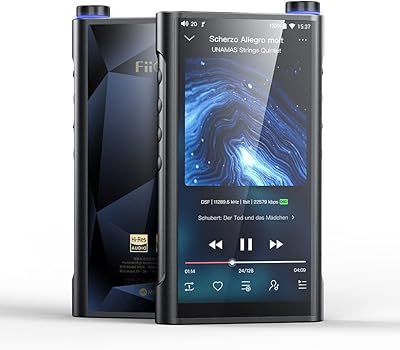
FiiO M17 Portable Digital Audio Player
FiiO M17 Portable Digital Audio Player — image 1
FiiO M17 Portable Digital Audio Player — image 2
FiiO M17 Portable Digital Audio Player — image 3
FiiO M17 Portable Digital Audio Player — image 4
FiiO M17 Portable Digital Audio Player — image 5
FiiO M17 Portable Digital Audio Player — image 6
79%
21%

Overview

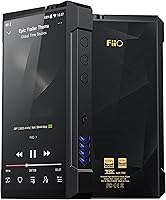
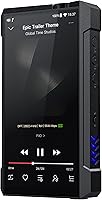
The FiiO M17 Portable Digital Audio Player is one of those rare devices that genuinely refuses to choose between desk and bag. FiiO has spent years quietly pushing what a DAP can do, and the M17 represents that philosophy taken to its logical extreme. At the heart of the design is a dual-DAC architecture paired with two independent power supplies — a decision that shapes every listening experience this machine delivers. Be honest upfront: this flagship DAP is not something you slip into a jeans pocket. It is substantial, deliberate hardware built for people who treat listening as a serious pursuit, not background noise. The Android 10 open ecosystem means you are not locked into a manufacturer's app — you run what you want.

Features & Benefits

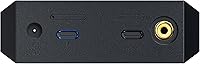
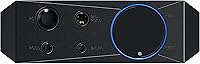
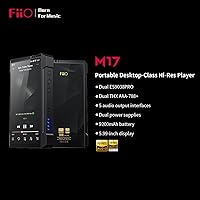
Each audio channel in the M17 gets its own ES9038PRO flagship DAC, with 8 parallel outputs summed per side — a configuration you normally only see inside dedicated desktop units. Paired with the THX AAA-788+ amplifier, which FiiO co-developed with THX, output reaches up to 3000mW per channel. That number matters most when you are running demanding planar magnetic headphones that most portable devices simply cannot handle. The connectivity options are genuinely comprehensive: five headphone outputs including balanced 2.5mm and 4.4mm jacks, plus RCA coaxial in/out for integrating with a wider audio chain. Flip the device to DC power mode and the analog voltage jumps 35% — it is almost a different machine at that point. DSD512, MQA 8x unfolding, and aptX Adaptive Bluetooth round out a very complete feature set.

Best For

FiiO's desktop-portable hybrid makes the most sense for two kinds of buyers: those with headphones that most DAPs simply cannot drive, and those who want a single device capable of functioning as both a travel companion and a proper home listening station. If you own planar magnetics or high-impedance dynamics and have been frustrated by portable players running out of headroom, the M17 is built specifically for you. It also suits Android power users who prefer sideloading apps like Tidal or Qobuz rather than relying on a closed firmware ecosystem. The versatile connectivity hub — coaxial output, USB host mode, balanced line out — appeals to enthusiasts who want to plug into a wider chain rather than treating it as a standalone device.

User Feedback

Across roughly 56 ratings — a small but notably informed pool of buyers — this flagship DAP sits at a 4-out-of-5-star average. Praise centers on the soundstage and imaging, the sheer driving power, and the solidity of the aluminum build. Criticisms, though, are worth taking seriously: the device runs warm under sustained use, and at roughly 680g with its included stand, calling it portable in the traditional sense requires a generous definition. A number of reviews also note that the Android skin can feel sluggish compared to a phone of similar vintage. Importantly, many of the most critical reviews come from buyers who expected conventional DAP portability and were surprised by the size. Those who use it in DC mode regularly tend to rate it considerably higher.

Pros

  • Dual ES9038PRO DACs deliver a noise floor and resolution level rarely found outside dedicated desktop gear.
  • The THX AAA-788+ amplifier drives even demanding planar magnetics with authority and zero strain.
  • DC power mode meaningfully unlocks higher analog voltage and gain, pushing performance into true desktop territory.
  • Five output options — including dual balanced jacks — give serious flexibility for matching different headphones and chains.
  • Open Android 10 OS lets you sideload any streaming app rather than being locked into proprietary software.
  • RCA coaxial in/out and USB host support make the M17 a credible hub in a wider audio system, not just a standalone player.
  • Build quality is genuinely premium — the aluminum unibody feels tank-like and justifies the device's positioning.
  • DSD512, MQA 8x, and 32-bit/768kHz PCM support covers every high-resolution format a serious library might contain.
  • Bluetooth 5.0 with aptX Adaptive adds a modern wireless option without feeling like a concession to lesser hardware.

Cons

  • At roughly 680g, this flagship DAP is impractical for true on-the-go, hands-free portable listening.
  • The device runs noticeably warm under sustained high-power use, which some users find uncomfortable on a lap.
  • Battery-only mode, while functional, is a performance step down — getting the best out of it requires a power outlet nearby.
  • The Android skin can feel sluggish compared to modern smartphones, which is a daily friction point for interface-sensitive users.
  • Internal storage is only 4GB, making a large Micro-SD card an essential additional purchase rather than a nice-to-have.
  • The active cooling fan stand, while effective, adds bulk to an already large travel footprint.
  • A relatively small pool of user reviews means long-term reliability data is still limited compared to more mainstream devices.
  • The steep price of entry means any software bugs or firmware issues carry more frustration than they would on a budget device.
  • New DAP buyers or casual listeners are likely to find the learning curve and setup complexity disproportionate to their needs.

Ratings

Our AI-generated scores for the FiiO M17 Portable Digital Audio Player are built by analyzing verified purchase reviews from buyers worldwide, with spam, bot activity, and incentivized feedback actively filtered out before any scoring takes place. The result is an honest picture of where this flagship DAP genuinely excels and where real-world trade-offs surface — no category has been softened to protect the overall impression.

Sound Quality
94%
Buyers with demanding headphone collections consistently single out the M17's soundstage width and resolving power as the main reason they made the purchase. The dual ES9038PRO configuration produces a noise floor that lets subtle details — reverb tails, low-level instrument separation — come through clearly in a way that surprises even experienced listeners upgrading from capable mid-tier DAPs.
A small number of listeners feel the tuning leans slightly analytical, which can work against warmer headphone pairings. At very high gain in battery mode, a trace of background hiss has been noted with sensitive in-ear monitors, though this largely disappears in DC mode.
Driving Power
96%
This is where the M17 earns its most passionate endorsements. Owners of notoriously hard-to-drive planars — headphones that limp along on most portable gear — describe a genuine transformation: fuller dynamics, tighter bass control, and the sense that the headphone is finally being used as intended. The 3000mW per channel figure is not just a spec; buyers can hear the headroom.
For listeners who own exclusively easy-to-drive in-ears, this amplification capability is largely irrelevant and represents significant spending on overhead they will never use. A few users also note that the highest gain settings on sensitive IEMs require careful volume management to avoid accidental over-driving.
Build Quality
91%
The unibody aluminum chassis earns frequent praise for feeling genuinely premium in hand — not just visually but structurally. Users who travel with it report no flex, no creaking, and no surface wear after extended use, which builds confidence in the investment.
The device's mass — a direct consequence of the metal construction and internal hardware — is a constant point of tension. A handful of buyers mention that the weight, while expected for a desktop-class device, still catches them off guard in day-to-day handling.
Portability
48%
52%
Battery mode does make the M17 technically portable, and some users do take it on extended trips where a bag is involved anyway — a long-haul flight or a hotel room setup being the most commonly cited scenarios where the portability argument holds up.
At roughly 680g, this device is not portable in any conventional sense of the word, and buyers who purchased it expecting phone-sized convenience have been the source of the sharpest negative reviews. The active cooling stand adds further bulk, making packing it a deliberate logistical exercise rather than a casual toss-in-the-bag decision.
Value for Money
72%
28%
For buyers who are genuinely cross-shopping against a separate desktop DAC and amplifier stack, the M17 represents a credible consolidation play — one device replacing two, with the added flexibility of battery operation. The feature density at this price tier is difficult to match with individual components.
At this price point, expectations are high and any software or UI roughness feels more costly than it would on a budget device. Casual listeners or those whose headphones do not demand this level of amplification will struggle to rationalize the expenditure against simpler, far less expensive alternatives.
Software & UI
63%
37%
Android 10 openness is a genuine advantage that locked-firmware competitors cannot offer — the ability to sideload Tidal, Qobuz, or any other streaming app natively is a recurring highlight among buyers who prioritize streaming over local files.
The Android skin itself is a persistent point of friction. Response latency during app switching and navigation is noticeably behind what a current smartphone delivers, and this is a daily-use frustration that does not fade with time. Several reviewers mention that the UI responsiveness feels mismatched with the hardware ambition of the rest of the device.
Connectivity
93%
Five headphone output jacks, dual USB ports, RCA coaxial in and out, Wi-Fi, Bluetooth, and AirPlay — the M17 covers more connection scenarios than almost any other portable device in this category. Buyers who use it as a hub in a wider listening room setup consistently rate this aspect highly.
The sheer number of ports means the device is physically dense and the port layout can feel cramped when multiple connections are in use simultaneously. A small number of users have also flagged that the USB implementation, while functional, occasionally requires a restart to recognize certain DAC configurations.
Thermal Management
74%
26%
The combination of VC liquid cooling, H-type heat channels, and the active fan stand does its job — buyers who push the device hard in DC mode at maximum gain report that it stays within a manageable temperature range for extended sessions, which is a real engineering achievement at these power levels.
The device runs noticeably warm to the touch after extended high-power use even with the fan active, and in a quiet room the fan stand is audible. Users who prefer a completely silent listening environment will find this a difficult compromise.
High-Res Format Support
92%
DSD512, 32-bit/768kHz PCM, and MQA 8x unfolding together mean the M17 can handle any file format a serious listener is likely to throw at it. Buyers with large DSD libraries specifically call out the native DSD playback as a standout benefit.
MQA support, while present and technically impressive, has become a somewhat contested feature given the format's uncertain commercial future. Buyers investing heavily in MQA libraries should be aware of the broader industry context around the format.
Battery Performance
61%
39%
Battery mode gives the M17 genuine off-grid capability that a desktop stack cannot offer, and for moderate listening sessions at medium gain it performs adequately. Buyers who use it as an occasional travel piece rather than a daily portable find the battery life sufficient for their needs.
Under demanding conditions — high gain, DSD playback, maximum output — battery life compresses significantly. More critically, battery mode does not unlock the full performance ceiling of the device, which means buyers who rely heavily on battery power are essentially using a more expensive, heavier version of a less capable device.
Display
77%
23%
The 5.99″ screen is generously sized for a DAP and makes album art browsing and app navigation comfortable without squinting. Buyers who use streaming apps appreciate having enough screen real estate to navigate Tidal or Qobuz interfaces without frustration.
Brightness and outdoor visibility under direct sunlight have been flagged as underwhelming for a device at this price tier. The pre-applied screen protector, while a practical inclusion, draws minor complaints about reducing touch sensitivity slightly out of the box.
Included Accessories
83%
The package is notably complete for a premium audio device: a leather case, active fan stand, DC adapter, USB cable, and pre-applied screen protector all arrive in the box. Buyers note that most of the accessories feel like considered inclusions rather than afterthoughts.
The leather case, while protective, adds further bulk to an already large device, and some users find it impractical to use both the case and the cooling stand simultaneously. A higher-quality USB cable would have been a fitting inclusion given the device's tier.
Wireless Audio
79%
21%
Bluetooth 5.0 with aptX Adaptive delivers a noticeably cleaner wireless signal than standard SBC or AAC, and buyers who pair it with compatible wireless headphones report minimal compression artifacts compared to other DAPs they have owned.
AirPlay integration, while useful, occasionally requires a reconnect after the device idles, which a few users find disruptive. Wireless performance, while strong for a DAP, still trails what a dedicated wireless audio streamer would deliver to listeners whose primary use case is wire-free.

Suitable for:

The FiiO M17 Portable Digital Audio Player is built for a specific kind of listener: someone who owns headphones that most portable gear cannot properly drive, and who refuses to accept a meaningful quality compromise when stepping away from a desk setup. If you have invested in planar magnetic headphones or high-impedance dynamics, this is one of the few devices outside a dedicated desktop stack that can actually deliver the current they demand. It also makes real sense for audiophiles who travel for work or leisure and want to bring a serious listening station with them — a hotel desk setup or a quiet corner at a conference is a genuinely viable use case here. Android power users who want to run Tidal, Qobuz, or other streaming apps natively, without a manufacturer gating what software you can install, will appreciate the open ecosystem in a way that locked-down DAP buyers never could. Those cross-shopping between a mid-range portable player and a dedicated desktop DAC/amp combo will find that the M17, especially in DC mode, competes credibly with the latter while retaining the option to unplug and move.

Not suitable for:

The FiiO M17 Portable Digital Audio Player is not the right tool for listeners who picture a portable player as something that rides in a coat pocket during a commute. At roughly 680g with its cooling stand, and with a form factor closer to a small hardback book than a media player, this device demands a bag and a flat surface to truly shine. Casual listeners or those who are new to the audiophile space will likely find the feature depth overwhelming and the investment difficult to justify against simpler, lighter, and far more affordable alternatives. If your headphone collection tops out at easy-to-drive in-ear monitors, you will be paying a steep premium for amplification headroom you will never touch. The Android skin, while functional, is not as fluid as a current-generation smartphone, so buyers expecting a snappy, phone-like interface may find the software experience a source of friction. Anyone prioritizing all-day battery-powered portable use should also be cautious — battery mode, while capable, does not unlock the full performance ceiling that makes this device compelling.

Specifications

  • DAC Chips: Each audio channel is handled by a dedicated ES9038PRO DAC with 8 parallel outputs summed per side, delivering exceptionally low noise and high resolution.
  • Amplifier: The THX AAA-788+ amplifier, co-developed by FiiO and THX, delivers up to 3000mW per channel for driving power-hungry headphones.
  • Operating System: Runs Android 10 with an open ecosystem, allowing installation of third-party audio and streaming applications.
  • Display: Features a 5.99″ touchscreen for navigation, app use, and playback control.
  • Headphone Outputs: Equipped with five output jacks: 3.5mm single-ended, 6.3mm single-ended, 2.5mm balanced, and 4.4mm balanced headphone outputs, plus a 4.4mm balanced line out.
  • Digital I/O: Includes RCA coaxial input and output ports for integration with external amplifiers or DAC chains.
  • USB Connectivity: Offers a USB 3.0 port supporting both Host and Device modes for data transfer and fast charging, plus a USB 2.0 port for connecting external DACs or storage drives.
  • Wireless: Supports Bluetooth 5.0 with aptX Adaptive, Wi-Fi on both 2.4GHz and 5GHz bands, and AirPlay for wireless audio streaming.
  • High-Res Audio: Supports playback up to 32-bit/768kHz PCM, DSD512 native, and MQA with 8x unfolding for master-quality streaming.
  • Internal Storage: Includes 4GB of onboard storage, expandable via Micro-SD card for a larger local music library.
  • Power Supply: Operates on dual power modes: an internal lithium-ion battery for portable use and an external DC adapter that unlocks enhanced gain and 35% higher analog circuit voltage.
  • Chassis Material: Built around a 151g unibody aluminum alloy frame that doubles as a passive heat sink for thermal management.
  • Cooling System: Uses a combination of H-type heat dissipation channels, VC liquid cooling technology, and an included active fan cooling stand for sustained high-power operation.
  • Device Weight: The unit weighs approximately 680g with its included stand and accessories, making it a desk-oriented portable rather than a true carry-everywhere device.
  • Included Accessories: Package includes an external DC adapter, active fan cooling stand, pre-applied PET screen protector, leather case, Micro-SD ejector pin, USB 3.0 cable, and an aluminum dust plug.
  • Bluetooth Codecs: Bluetooth implementation supports aptX Adaptive alongside standard codecs, enabling high-quality wireless transmission to compatible headphones.
  • Gain Levels: Offers four gain levels under battery power (low, medium, high, and headphone mode), with an additional enhanced desktop-level gain mode unlocked when running on DC power.
  • Color: Available in Black with a matte aluminum finish.

Related Reviews
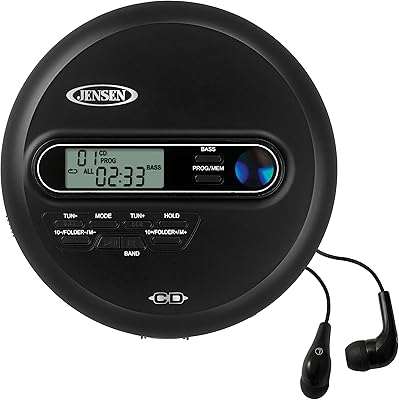
FiiO DM13 Portable CD Player
77%
93%
Sound Quality
91%
Balanced Output
89%
Output Versatility
74%
USB Ripping Feature
88%
Volume Control
More
Image Audio SXP Message and Music On Hold Digital Player
86%
92%
Value for Money
88%
Sound Quality for Cell Phones
90%
Setup & Installation
85%
Reliability & Durability
80%
Preloaded Audio Files
More
Jensen CD-65 Portable CD/MP3 Player
73%
83%
Value for Money
67%
Anti-Skip Performance
58%
Build Quality
91%
Ease of Use
76%
FM Radio Quality
More
Sony NW-A306 Walkman Portable Music Player
77%
93%
Sound Quality
91%
Battery Life
88%
Build Quality
61%
UI Responsiveness
67%
Value for Money
More
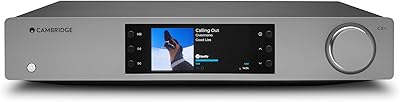
Cambridge Audio CXN100 Network Audio Streamer
78%
93%
Sound Quality
88%
Build Quality
91%
Streaming Integration
62%
App Experience
89%
Connectivity Options
More
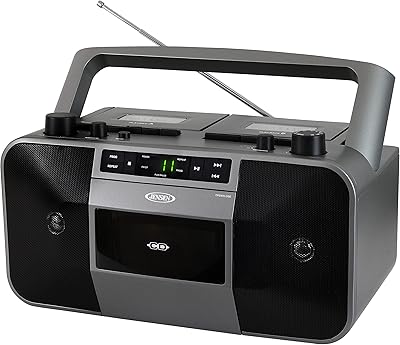
Jensen MCR-1500 CD Dual-Deck Cassette Boombox
63%
67%
Value for Money
48%
Build Quality
52%
Cassette Mechanism
61%
CD Performance
54%
Audio Quality
More
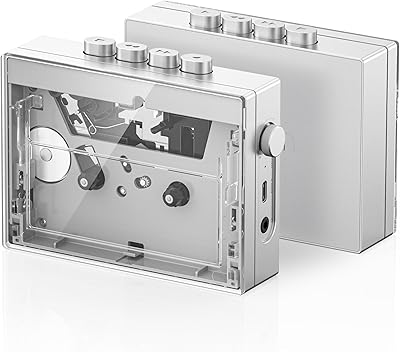
FiiO CP13 Cassette Player
82%
93%
Build Quality
88%
Sound Quality
91%
Battery Life
74%
Value for Money
89%
Design & Aesthetics
More
FiiO M15S Digital Audio Player
76%
93%
Sound Quality
91%
Driving Power & Amplification
84%
Build Quality & Design
62%
Battery Life
78%
Android & Software Experience
More
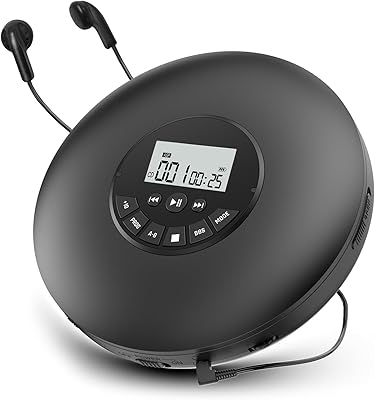
Arafuna Portable CD Player
72%
81%
Value for Money
88%
Ease of Use
84%
Portability & Size
41%
Power & Battery
67%
Audio Quality
More
Cambridge Audio AXC35
80%
93%
Sound Quality
91%
Build Quality
89%
DAC Performance
78%
Value for Money
61%
Connectivity & Outputs
More

FAQ

Realistically, the M17 is not a commute device. At around 680g with its stand and accessories, it is closer to a portable desktop station than something you would carry in a jacket pocket. Most buyers use it at a desk, on a bedside table, or packed into a bag for travel — not clipped to a belt or pulled out on a train platform.

Yes, and the difference is more than marginal. Under DC power, the analog circuit voltage increases by around 35% and an additional enhanced gain mode is unlocked. Users who have tried both consistently describe DC mode as the more resolving and authoritative of the two. If your listening setup is near a power outlet, DC mode should be your default.

This is genuinely one of the strongest use cases for the M17. With up to 3000mW per channel from the THX AAA-788+ amplifier, it handles demanding planars and high-impedance dynamics that most portable players struggle with. If your headphones have a reputation for being difficult to drive, this device was essentially designed with that problem in mind.

Yes. Because it runs Android 10 with an open app ecosystem, you can sideload streaming apps including Tidal, Qobuz, Spotify, and others. This is a meaningful advantage over DAPs that run locked firmware and restrict you to a manufacturer-approved app list.

The fan on the included cooling stand is audible in a quiet room but is generally described as a low, unobtrusive hum rather than a disruptive noise. For most listening sessions with headphones on, you will not notice it. If you are in a very quiet environment and sensitive to ambient sound, it is worth being aware of.

Not quite. The Android skin on the FiiO M17 Portable Digital Audio Player is functional and navigable, but it does not match the fluidity of a current-generation phone. App switching and UI animations can feel slightly sluggish by smartphone standards. For pure audio playback and library management it works well, but if a polished, phone-like interface is a priority, you may notice the gap.

The RCA coaxial output is the most straightforward path for feeding an external amplifier or powered speaker setup. You can also use the 4.4mm balanced line out for a cleaner signal path to a balanced amp. The USB Device mode lets you use the M17 as an external DAC for a computer, which is a useful secondary function some buyers overlook.

FiiO has supported high-capacity Micro-SD cards across their product line, with compatibility typically extending to 2TB cards depending on the format. Standard exFAT-formatted cards work reliably. Given that the internal 4GB is modest for a serious music library, budgeting for a large Micro-SD card is effectively part of the purchase.

It does run warm, particularly at high output levels or during extended DSD playback. The combination of the internal VC liquid cooling and the active fan stand manages temperatures well enough that it does not become a safety concern, but you will notice the warmth if you pick it up after a long session. Using the fan stand during extended listening is the right call.

It depends on what you want from it. If you have a capable desktop setup already and rarely move it, the M17 may be redundant. Where it earns its place is for listeners who want to replicate that desktop performance in other rooms or while traveling — or who want a single device that can serve both roles rather than maintaining two separate setups. The connectivity overlap with desktop gear is intentional, not incidental.