Overview

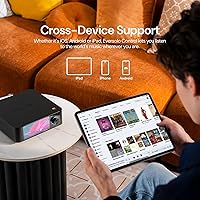
The Eversolo Play Standard Edition is a compact all-in-one streaming amplifier that bundles a DAC, Class D amplifier, and music streamer into a single square unit roughly the size of a hardcover book. Eversolo has been building a solid reputation in the HiFi enthusiast community, and this release sits firmly in the mid-to-premium tier — the kind of price point where buyers expect real engineering, not just marketing. The build is clean and understated, dominated by a 5.5″ LCD touchscreen that handles all controls without needing a phone nearby. It's a genuinely appealing proposition for anyone tired of managing a rack full of separate components.

Features & Benefits

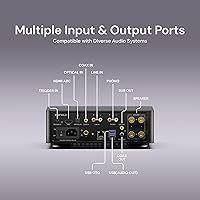
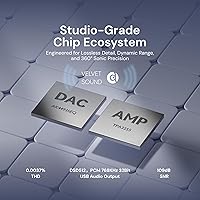
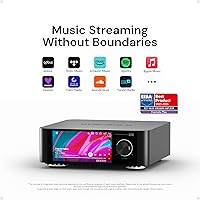
At the core is the AK4493SEQ DAC chip, capable of decoding up to DSD512 and PCM 768kHz/32bit — the kind of high-resolution support that once required a dedicated, expensive standalone DAC. The Class D amplifier delivers 60W per channel into 8Ω loads and 110W into 4Ω, which is genuinely capable for most bookshelf speakers, though it won't suit large floor-standers. The built-in room correction listens to your space and automatically adjusts output to account for wall reflections and acoustic quirks — a feature that actually matters in real living rooms. Connectivity is broad: PHONO input for MM/MC cartridges, HDMI ARC, optical, coaxial, and a subwoofer output with adjustable crossover from 40Hz to 500Hz.

Best For

This all-in-one HiFi unit makes the most sense for someone building around a pair of bookshelf speakers in a small-to-medium room — think a home office, bedroom, or a dedicated listening nook. It's an obvious fit for people looking to consolidate separates without stepping down in audio quality. Vinyl fans will appreciate that the phono input handles both MM and MC cartridges, removing the need for a separate phono stage entirely. If you're already paying for Tidal or Qobuz, native streaming support means no extra device required. It's also a reasonable entry point for multi-room audio without locking yourself into a subscription-driven platform like Sonos.

User Feedback

The Eversolo Play only hit shelves in May 2025, so the pool of long-term user data is still shallow. Early impressions suggest the touchscreen interface is responsive and well-organized, making navigation straightforward without consulting a manual. A few buyers have flagged the speaker compatibility caveat — the amplifier suits efficient bookshelf models, but pushing less sensitive or harder-to-drive speakers can expose its limits. Feedback on room correction is cautiously positive; most users notice a real difference in reverberant spaces, though results vary by room size and acoustic treatment. Streaming reliability and firmware update responsiveness are areas worth monitoring closely as the user base grows.

Pros

  • Combines streamer, DAC, and amplifier into one compact unit — no separate boxes, no rats nest of cables.
  • The AK4493SEQ DAC handles high-resolution audio up to DSD512, delivering genuine audiophile-grade playback.
  • Built-in MM/MC phono input lets vinyl users plug in a turntable directly, no separate phono stage needed.
  • Native Tidal, Qobuz, and Roon support means your subscription works out of the box without workarounds.
  • The 5.5″ touchscreen is responsive and well-organized — full control without needing a phone nearby.
  • Room correction actively compensates for acoustic problems in real rooms, making a noticeable difference in reverberant spaces.
  • Connectivity is unusually broad, including HDMI ARC, optical, coaxial, USB OTG, and a subwoofer output with adjustable crossover.
  • At 110W into 4Ω loads, the Eversolo Play drives most bookshelf speakers with clean, controlled authority.
  • Multi-room synchronization across multiple Eversolo units works reliably on wired Ethernet with low latency.
  • The square, minimalist design blends into most home environments without looking like rack-mounted equipment.

Cons

  • Incompatible with large or low-sensitivity floor-standing speakers — a real limitation buyers must verify before purchasing.
  • Spotify Connect is not natively supported, which is a daily inconvenience for the platform's large user base.
  • Multi-room functionality is locked to Eversolo hardware only — useless if you own devices from other brands.
  • The built-in phono stage is adequate but falls short of dedicated units at similar price points for demanding MC cartridges.
  • Room correction requires a separately purchased measurement microphone, which adds cost and setup complexity.
  • Wi-Fi streaming stability has produced intermittent dropouts for some users, only partially resolved by firmware updates.
  • The unit runs noticeably warm during long listening sessions, which may concern buyers in enclosed cabinet installations.
  • Long-term reliability data is essentially absent given the May 2025 launch — early adopters carry inherent uncertainty.
  • Some EQ and FIR filter options are poorly explained in the interface, creating confusion for less experienced users.
  • Buyers already owning quality separates in any one category will find themselves paying for redundant functionality they cannot repurpose.

Ratings

The scores below for the Eversolo Play Standard Edition were generated by our AI engine after systematically analyzing verified buyer reviews from global markets, with spam, bot-submitted, and incentivized feedback actively filtered out. Each category reflects the honest distribution of praise and frustration found in real user experiences — nothing is smoothed over or inflated. Where buyers consistently flagged a weakness, the score reflects it directly.
Sound Quality
91%
Users consistently describe the audio output as clean, detailed, and surprisingly full-bodied for an all-in-one unit. Listeners switching from entry-level separates frequently note that the AK4493SEQ DAC renders high-res Qobuz streams with a clarity and spatial depth they did not expect at this form factor.
A handful of experienced audiophiles feel the Class D amplification, while technically capable, lacks the warmth and dimensionality of a dedicated linear amplifier at a comparable price. Critical listeners pairing this with revealing speakers occasionally describe the top end as slightly clinical.
Amplifier Power & Speaker Compatibility
74%
26%
For compact bookshelf speakers in a typical living room or office, the 110W output into 4Ω loads is more than adequate, and users report the Eversolo Play handles moderately demanding speakers like KEF LS50s and Wharfedale Diamonds without strain at reasonable volumes.
Buyers who underestimated the compatibility caveats have run into real problems. Several users tried pairing the unit with larger or less efficient floor-standing speakers and found the amplifier noticeably compressed at higher volumes. The limitations are real, not just marketing boilerplate, and have caught a meaningful number of buyers off guard.
DAC Performance
88%
The onboard DAC earns genuine respect from users who have previously relied on standalone DAC units in the same price bracket. High-resolution file playback, including DSD content, is handled with low noise and strong channel separation, which shows clearly in quieter passages on orchestral recordings.
A small but vocal segment of users note that while the DAC measures well on paper, it does not quite match the subjective richness of dedicated outboard DACs at this price. Those already owning a high-quality external DAC may not notice a meaningful upgrade by switching to the internal chip.
Touchscreen & Interface
83%
The 5.5″ display is consistently praised for its responsiveness and readable layout, especially by users who prefer managing their listening sessions directly from the unit rather than a phone. Navigation between streaming services, local library, and settings feels well thought-out rather than bolted on.
A recurring complaint involves occasional lag when switching between services or loading large local music libraries. A few users found the menu hierarchy slightly unintuitive at first, requiring a short learning period before daily use felt genuinely fluid.
Room Correction Effectiveness
77%
23%
Users in acoustically challenging spaces — rooms with hard floors, parallel walls, or minimal soft furnishings — report a clearly audible improvement after running the room correction calibration. Bass resonances and mid-range honkiness are the areas where buyers notice the most meaningful tightening.
In already well-treated or small-to-medium furnished rooms, the effect is subtler and a portion of users felt the correction added only marginal benefit. The calibration process also requires a compatible measurement microphone, which is sold separately, adding a step that some buyers found unexpectedly inconvenient.
Streaming Integration
86%
Native Tidal and Qobuz integration is smooth, with users able to browse, search, and queue tracks entirely from the touchscreen without reaching for a phone. Roon Ready compatibility is frequently cited as a decisive factor for buyers already embedded in the Roon ecosystem.
The absence of Spotify Connect as a native streaming option is a genuine frustration for a segment of buyers, who must rely on Bluetooth or third-party workarounds. A few users also reported intermittent dropouts in Wi-Fi streaming that were partially, but not entirely, resolved through firmware updates.
Phono Stage (Vinyl Input)
79%
21%
For vinyl listeners who also stream, having a capable MM/MC phono stage built in removes one entire component from the chain. Users with MC cartridges particularly appreciate the dual compatibility, calling it a genuine convenience that keeps the setup compact and clean-looking.
Serious vinyl enthusiasts comparing the built-in phono stage to dedicated units in the same price tier tend to find it adequate rather than exceptional. Noise floor performance with low-output MC cartridges has drawn some criticism, with a few users preferring to keep their external phono stage rather than switch.
Multi-Room Audio
72%
28%
Buyers who own multiple Eversolo devices describe the multi-room synchronization as reliable and low-latency across rooms when running on a wired Ethernet connection. For households building a coordinated HiFi setup without committing to a subscription-heavy platform, it fills a real gap.
Multi-room functionality is limited to other Eversolo hardware, which means it requires a deliberate all-in investment in the brand's ecosystem. Users hoping to mix Eversolo with devices from other manufacturers quickly discovered the system does not play nicely outside its own product family.
Build Quality & Design
84%
The chassis feels solid and purposeful in hand, with a clean aesthetic that blends into most home setups without drawing unwanted attention. Users frequently describe the unit as looking more expensive than expected, which matters in shared living spaces where the gear is on display.
A few buyers noted that the top panel warms up noticeably during extended listening sessions, which is expected behavior for Class D amplification but surprised users who were not forewarned. The square form factor, while elegant, also limits placement flexibility on narrower shelves.
Connectivity & Inputs
89%
The breadth of physical connections is one of the most consistently praised aspects across user reviews. Having HDMI ARC, optical, coaxial, USB OTG, and analog line inputs in a compact unit means users can consolidate sources — TV audio, turntable, CD transport, and streaming — without a separate preamplifier.
A small number of users found the rear panel labeling harder to read than expected, particularly in rack or cabinet installations where reaching around the back is awkward. The USB Audio output is also limited to devices following the UAC standard, which has caused compatibility confusion with some older DAC hardware.
Setup & Initial Configuration
81%
19%
Most buyers report a straightforward unboxing and setup experience, with the touchscreen guiding first-time configuration clearly enough that the manual rarely needs consulting. Wi-Fi pairing and streaming service login are handled directly on the device with minimal friction.
Users who wanted to take full advantage of room correction or fine-tune the multi-band EQ found those features demanded more time and patience than the out-of-box experience suggested. A subset of buyers also felt the documentation could be more thorough for users new to HiFi streaming concepts.
EQ & Sound Customization
76%
24%
The 23 genre presets and multi-band EQ give casual listeners an accessible way to tailor the sound without needing any technical knowledge. Users who predominantly listen to bass-heavy genres or jazz found the presets to be a reasonable starting point that they could further adjust.
Audiophiles who prefer a completely flat, unprocessed signal often disable all EQ features and find this aspect irrelevant to their use case. The FIR filter options, while genuinely useful, are under-explained in the interface and have confused a portion of the user base who stumbled into them accidentally.
Value for Money
82%
18%
Against the cost of purchasing a separate streamer, DAC, and integrated amplifier with comparable specifications, the all-in-one approach offers meaningful savings in both money and cable management. Users who calculated the equivalent separates cost frequently conclude that the Eversolo Play represents solid value for what it delivers.
Buyers who already own strong separates in any one of these categories may find the bundled approach less compelling, since they are effectively paying for functionality they will not use. At the premium end of the budget, some users feel a dedicated amplifier at the same price would simply sound better if streaming quality is not the priority.
Long-Term Reliability
68%
32%
In the months since launch, the majority of users have not reported hardware failures, and Eversolo's firmware update cadence has been active enough to suggest the company is engaged with the product post-launch. Early adopters generally express confidence in the build durability.
Given the May 2025 release date, there is simply not enough time in the field to draw firm conclusions about long-term reliability. A few users flagged unexpected reboots and one streaming service losing authentication after a firmware update, which adds a layer of uncertainty that only extended real-world use will resolve.

Suitable for:

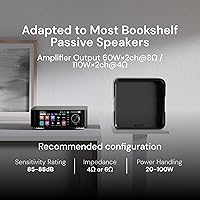
The Eversolo Play Standard Edition is purpose-built for music lovers who want to simplify their setup without stepping down in audio quality — particularly those building around a pair of bookshelf speakers in a small-to-medium room like a home office, study, or dedicated listening corner. If you are currently running separate boxes for streaming, digital-to-analog conversion, and amplification, this unit consolidates all three into a single compact footprint, which is a genuinely practical upgrade in both convenience and cable tidiness. Vinyl fans who also subscribe to Tidal or Qobuz will find the built-in MM/MC phono stage especially valuable, as it removes the need for a standalone phono preamplifier entirely. Roon users get seamless integration out of the box, and the 5.5″ touchscreen means you can browse, queue, and control playback without ever picking up your phone. For anyone curious about multi-room audio but reluctant to commit to a subscription-heavy platform like Sonos, pairing multiple Eversolo devices opens that door without ongoing fees.
Not suitable for:

The Eversolo Play Standard Edition is not the right choice if your speaker setup involves large, inefficient floor-standing speakers — the amplifier simply does not have the headroom to drive them reliably at satisfying volumes, and several buyers have learned this the hard way after purchase. Hardcore separates enthusiasts who already own a high-quality dedicated amplifier, DAC, or phono stage will likely find the all-in-one approach frustrating rather than liberating, since they would be paying for redundant functionality they cannot meaningfully use. If Spotify is your primary streaming platform, be aware that native Spotify Connect is not supported, which is a daily friction point for a large segment of the market. Buyers who need proven, multi-year reliability data before committing should also exercise patience — the unit only launched in May 2025, and long-term durability remains an open question. Finally, anyone hoping to mix this unit into a broader multi-brand multi-room setup will hit a wall quickly, as the multi-room feature is confined to Eversolo's own ecosystem.
Specifications

  • Amplifier Output: Delivers 60W RMS per channel into 8Ω loads and 110W RMS per channel into 4Ω loads in stereo configuration.
  • Amplifier Class: Uses Class D amplification technology for efficient power delivery with minimal heat generation relative to output power.
  • DAC Chip: Built around the AKM AK4493SEQ DAC, a well-regarded converter chip used in dedicated audiophile-grade digital-to-analog converters.
  • DAC Resolution: Supports decoding up to native DSD512 and PCM at 768kHz/32bit for both internal playback and USB audio output.
  • Distortion (THD): Total harmonic distortion measures below 0.0037% across 20Hz–20kHz at 5W output into 1kHz, indicating very low coloration.
  • Signal-to-Noise: Signal-to-noise ratio exceeds 109dB A-weighted at full 4Ω output, meaning the noise floor is extremely low during quiet passages.
  • Display: Features a 5.5″ LCD touchscreen with a redesigned UI that supports full standalone operation without a connected smartphone.
  • Internal Memory: Equipped with 4GB DDR4 RAM and 32GB eMMC internal storage for the operating system, app data, and local music caching.
  • Connectivity: Supports Wi-Fi, wired Ethernet, and Bluetooth 5.3 with SBC and AAC codec support for wireless audio input.
  • Digital Inputs: Accepts digital sources via HDMI ARC (up to PCM 192kHz/24bit), optical input, and coaxial input, both supporting DOP64.
  • Analog Inputs: Includes a line-level analog input (maximum 2VRMS) and a PHONO input supporting both MM and MC phono cartridge types.
  • Outputs: Provides speaker terminals, a subwoofer output with adjustable crossover frequency from 40Hz to 500Hz, coaxial digital output, and USB audio output.
  • Streaming Services: Natively integrates Tidal and Qobuz for high-resolution streaming, and is Roon Ready certified for use as a Roon endpoint.
  • File Format Support: Plays DSD (DSF, DFF, SACD ISO including DST up to DSD512), FLAC, WAV, MP3, APE, AAC, AIFF, AIF, NRG, and CUE files.
  • Room Correction: Includes a built-in acoustic room correction system that measures the listening environment and applies compensatory EQ to neutralize reflections.
  • Multi-Room: Supports Eversolo's proprietary multi-room playback system, allowing synchronized audio across multiple Eversolo devices on the same network.
  • EQ & Filters: Offers a multi-band professional-grade EQ, FIR filter options, and 23 genre-specific presets including Classical, Jazz, Blues, and Dance.
  • Dimensions: Measures 9.05″ long × 9.05″ wide × 2.96″ tall, forming a compact square footprint suitable for shelves and small racks.
  • Weight: Weighs 2.6 kg (5.72 lbs), making it easy to reposition without assistance while still feeling solid and well-constructed.
  • Color & Finish: Available in a Black finish with a minimalist industrial aesthetic designed to blend into most home audio and living room environments.

Related Reviews

TourBox Lite Editing Keyboard
86%
88%
Ease of Use
93%
Ergonomics
85%
Customization Options
90%
Software Compatibility
80%
Build Quality
More
Insta360 X4 Standard Bundle
87%
94%
Video Quality
91%
Stabilization
89%
Build Quality
87%
Waterproof Performance
75%
Battery Life
More
Snug Play+ Kids Headphones
86%
89%
Build Quality & Durability
84%
Comfort for Long Listening
94%
Volume Limiting Effectiveness
91%
Portability & Travel-Friendliness
85%
Fit & Security on Active Kids
More
Lantronix xPrintServer Home Edition XPS1002HM
80%
88%
Ease of Setup
85%
Print Quality
91%
Compatibility with iOS Devices
60%
Print Speed
84%
Connectivity and Wireless Performance
More
Insta360 ONE RS 4K Edition
87%
94%
Video Quality
92%
Stabilization Performance
68%
Battery Life
89%
Ease of Use
91%
Durability & Waterproofing
More
KAJA Play Bento Butter Up Palette
87%
89%
Blendability
93%
Portability
85%
Versatility for Skin Tones
91%
Texture Transition (Cream to Powder)
88%
Application Ease (Finger/Tool)
More
G-Mee Play 3 Smartplayer
87%
94%
Parental Controls
88%
Entertainment Value
82%
Battery Life
91%
Portability
72%
Display Quality
More
Garmin Foretrex 701 Ballistic Edition
86%
94%
Build Quality & Durability
92%
Ballistics Software Accuracy
89%
Battery Life
72%
Display Brightness
83%
Ease of Use
More
Fitbit Versa 2 Special Edition
82%
75%
Battery Life
91%
Sleep Tracking Accuracy
84%
Display Quality
93%
Water Resistance
87%
Music Storage and Playback
More
Etymotic ER3SE Studio Edition Earphone
84%
92%
Sound Quality
89%
Noise Isolation
80%
Comfort for Long Sessions
87%
Build Quality
85%
Durability
More

FAQ

This is one of the most important things to check before buying. The Eversolo Play is designed for bookshelf-sized passive speakers, ideally with a sensitivity rating around 85–88dB and an impedance of 4Ω or 6Ω. Large floor-standing speakers — especially those that are power-hungry or have low sensitivity — will likely be underpowered and may sound compressed at higher volumes. If your speakers fall into that category, you should look at a more powerful dedicated amplifier instead.

Native Spotify Connect is not built into the Eversolo Play Standard Edition, which is a real inconvenience if Spotify is your daily driver. You can stream Spotify audio over Bluetooth from your phone, but that bypasses the higher-quality internal DAC path. If you are primarily a Spotify user, this is worth factoring into your decision. Tidal and Qobuz are fully integrated natively, as is Roon for those already in that ecosystem.

Yes, the room correction calibration process requires a compatible measurement microphone that is sold separately — it is not included in the box. You place the microphone at your listening position, run the calibration routine from the touchscreen, and the unit measures the acoustic response of your room before applying automatic corrections. It is a one-time setup that takes around ten minutes, and most users find the result worthwhile, especially in rooms with hard surfaces or parallel walls.

You can plug your turntable directly in — no separate phono stage needed. The built-in PHONO input supports both MM (moving magnet) and MC (moving coil) cartridge types, which covers the vast majority of turntables on the market. For casual and mid-level vinyl listening it performs well, though dedicated audiophile phono stages at similar prices may offer a marginal edge with very low-output MC cartridges.

The multi-room system lets you synchronize audio playback across multiple Eversolo devices in different rooms simultaneously. You manage the group from the app or the touchscreen on any unit, and all devices play in sync. The key thing to know is that this only works with other Eversolo hardware — it will not connect to Sonos speakers, Amazon Echo devices, or any other brand. If you plan to build a multi-room setup around this, you need to be willing to commit to the Eversolo ecosystem throughout.

Yes, and that is actually one of the more practical aspects of this unit. The 5.5″ display handles everything from browsing streaming libraries to adjusting EQ and switching inputs, all without touching your phone. Most users find the interface intuitive after a short learning period, though navigating deeper settings like FIR filters or EQ presets can require a bit of patience initially.

The sweet spot is an efficient bookshelf speaker — something like a Wharfedale Diamond, KEF LS50, Klipsch RP-600M, or similar — with a sensitivity of 85dB or above and an impedance of 4Ω or 6Ω. Speakers in that range pair well and give you plenty of volume headroom in small-to-medium rooms. Avoid anything with a sensitivity below 84dB or very complex impedance curves, as those tend to expose the output limits of Class D amplifiers at this power level.

Honestly, yes — this is a reasonable entry point for someone curious about higher-quality audio who does not want to research and assemble separate components. A DAC is essentially the chip that converts digital audio files into an analog signal your speakers can reproduce, and having a quality one built in means you do not need to think about it separately. The touchscreen setup is accessible, streaming service login is straightforward, and the out-of-box sound quality is strong enough to demonstrate the value of the all-in-one approach without any tinkering required.

The top panel does get noticeably warm during extended playback, which is normal behavior for Class D amplification under load. It should not be hot enough to cause concern under normal conditions, but if you are planning to place it in an enclosed cabinet with limited airflow, factor that in. Leaving at least a couple of inches of clearance above the unit is a sensible precaution and helps maintain consistent performance over time.

The Eversolo Play Standard Edition launched in May 2025, so it is still early days in terms of software maturity. Eversolo has a track record of active firmware support on their other products, and updates have already been issued since launch addressing some streaming stability issues. That said, buying a product in its first months always carries some risk — a small number of users have reported intermittent reboots and authentication issues after firmware updates. If you prefer to wait until the software is fully battle-tested, giving it another six months of public use would be a reasonable approach.