Overview

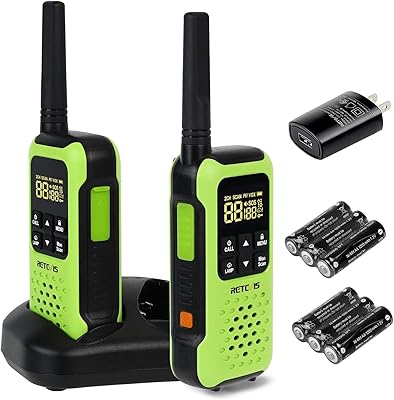
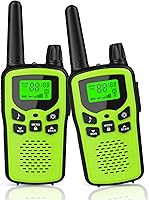
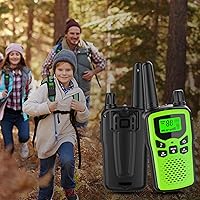
The Erelis 22-Channel FRS Walkie Talkies are a solid, no-frills option for anyone who wants reliable short-range communication without spending much. You get two radios right out of the box — worth noting if you assumed the set included more — along with belt clips and a user manual. Each unit weighs just 7.4 oz, so carrying them on a long hike is never a burden. With 22 FRS channels and 99 CTCSS privacy codes, there is enough flexibility to find a clear channel at busy campsites or outdoor events. The green colorway fits naturally in outdoor settings, and the overall package punches reasonably well for its price tier.

Features & Benefits

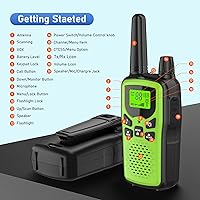
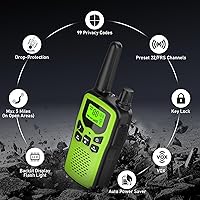
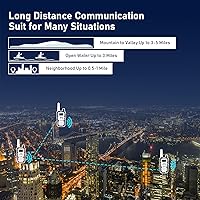
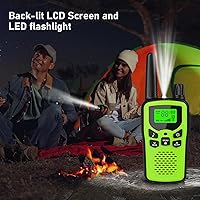
The advertised 5-mile range sounds impressive, but be realistic: that figure applies to wide-open spaces like a mountain valley with no obstructions. In a neighborhood or wooded trail, expect closer to half a mile. That said, the VOX hands-free mode is genuinely useful — three sensitivity settings let you fine-tune how easily the mic triggers, so you can keep chatting while your hands stay busy with trekking poles or tent stakes. The backlit LCD display makes it easy to check your channel at dusk, and the built-in LED flashlight is a practical bonus for emergencies. The 2,178 channel-and-code combinations also help cut down on interference when other groups are nearby.

Best For

These walkie talkies hit a sweet spot for casual outdoor users — families at a campsite, groups navigating a festival, or volunteers coordinating a community event. Since FRS radios do not require a license, anyone can pick them up and start using them right away, which makes the Erelis radios a natural fit for first-time buyers. The built-in flashlight adds genuine value if you are often out after dark or want a backup light on a trail. One thing to keep in mind: no water resistance means these are not suited for rain-heavy hikes or water-based activities. Keep them dry, and they will serve you well for relaxed, low-pressure outdoor use.

User Feedback

With over 830 ratings averaging 4.3 out of 5 stars, the general reception is positive. Buyers frequently mention that the radios are easy to set up and that audio is clear enough at close quarters — a short camping loop or a sprawling parking lot, for instance. The most common criticism mirrors what you would expect: real-world range falls short of the maximum spec, especially in areas with tree cover or buildings. A handful of users also flag that the VOX sensitivity can be a bit erratic at the lowest setting, occasionally triggering without clear cause. Battery life gets mixed reviews; some find it sufficient for a day out, others wish the radios lasted longer under heavy use.

Pros

  • No license required — anyone can start using these radios right away without any registration.
  • At roughly 7.4 oz per unit, these walkie talkies are light enough to carry all day without fatigue.
  • 22 FRS channels plus 99 CTCSS codes give you 2,178 combinations to find a clear, interference-free channel.
  • The backlit LCD display is genuinely useful when you need to check your channel setting in low light.
  • VOX hands-free mode with three sensitivity levels lets you communicate while keeping both hands free.
  • The built-in LED flashlight adds real practical value for night hikes or unexpected power outages.
  • Setup is straightforward — unbox, sync channels, and you are ready to go with minimal learning curve.
  • Belt clips are included, making it easy to keep the radios accessible without holding them constantly.
  • Compatible with standard 2.5mm earpieces for discreet or private listening when needed.
  • Solid value for a casual-use pair of radios, with a strong overall rating across hundreds of buyer reviews.

Cons

  • Real-world range in wooded or urban areas is often well under one mile, far short of the five-mile claim.
  • No water resistance whatsoever — even light rain could put these radios at risk.
  • Only two units are included; outfitting a larger group means purchasing multiple sets at added cost.
  • VOX sensitivity can be inconsistent at lower settings, occasionally triggering without a clear audio input.
  • Battery life gets mixed reviews — heavy daily use may require recharging or replacing batteries sooner than expected.
  • Plastic construction feels lightweight in a way that raises questions about long-term durability under regular use.
  • No weather alert channels, which limits usefulness for users who want safety-oriented radio features.
  • The Erelis radios lack any belt clip locking mechanism, so the clip can loosen and detach during active movement.
  • No charging dock or USB charging option included — battery management requires more planning than modern alternatives.
  • Audio quality at the edge of the effective range can become noticeably choppy or distorted.

Ratings

The scores below were generated by our AI review engine after analyzing verified buyer feedback for the Erelis 22-Channel FRS Walkie Talkies from thousands of real-world users globally, with spam, bot-driven, and incentivized reviews actively filtered out. The analysis surfaces both genuine strengths and recurring frustrations to give you an honest, balanced picture before you buy. No category has been glossed over — where buyers struggled, the scores reflect it.

Ease of Use
91%
Buyers consistently highlight how quickly they got these radios working straight out of the box — no manual-diving required for basic operation. Families on camping trips in particular appreciated that even younger members could operate them confidently within minutes of unboxing.
A small number of users found navigating the CTCSS code selection slightly fiddly, especially when trying to sync multiple sets at a crowded event. The button layout, while simple, can feel cramped for users with larger hands during extended use.
Communication Range
54%
46%
In genuinely open terrain — a flat beach, an open campground with no tree cover — users report clean, clear communication at distances that hold up reasonably well for casual outdoor use. For short-range tasks like coordinating across a festival field, the radios perform adequately.
The five-mile claim causes real frustration for buyers who test it in forests, hills, or neighborhoods and find the usable range closer to a quarter to half a mile. This is the single most cited complaint in verified reviews, and it reflects a meaningful gap between marketing and realistic performance.
Audio Clarity
76%
24%
At close to mid-range distances, the audio comes through clearly enough for straightforward conversation without straining to understand the other person. Users hiking together or coordinating across a campsite generally found the sound quality acceptable and free of distracting static under normal conditions.
As distance increases or obstructions enter the picture, audio quality degrades noticeably — voices become fragmented and hard to follow. Wind noise also bleeds into transmissions more than users would like during outdoor activities.
VOX Performance
63%
37%
When set to the middle sensitivity level, the hands-free VOX function works well enough to keep conversations flowing during activities like hiking where pressing a button would be inconvenient. Users who calibrate it carefully report a noticeably more comfortable outdoor communication experience.
At the lower sensitivity setting, the VOX triggers unpredictably — wind, background noise, or even rustling clothing can activate the mic and interrupt the channel. Several buyers noted that finding the right sensitivity balance required trial and error, and the highest setting sometimes misses softer speech entirely.
Build Quality
58%
42%
The radios feel reasonably solid for their weight class and price point, and most casual users report no issues during typical weekend camping or hiking use. The buttons have a consistent, responsive click that gives a decent tactile impression on first handling.
The lightweight plastic construction raises durability concerns for buyers who use these radios frequently or in rough conditions. A subset of reviewers reported casing cracks or button issues after moderate use, suggesting these are best treated as occasional-use rather than daily-wear tools.
Battery Life
61%
39%
For a casual day trip or a single camping weekend, most users find that a fresh set of batteries carries them through without needing a mid-day swap. Light to moderate use — occasional bursts of communication rather than constant chatter — is where battery performance holds up best.
With heavy use or active VOX mode running throughout the day, battery drain accelerates faster than many buyers expect. The lack of a USB charging option or rechargeable battery pack means you need to carry spares, which adds friction for longer multi-day trips.
Value for Money
82%
18%
Priced firmly in budget territory, these walkie talkies deliver a feature set — VOX, backlit LCD, LED flashlight, 22 channels — that would have cost significantly more just a few years ago. For buyers who need a functional pair of radios for occasional outdoor use, the value proposition is hard to argue with.
Buyers who push the radios harder or compare them against mid-range alternatives quickly notice where corners were cut, particularly in build quality and range performance. If you need radios for regular or demanding use, spending more upfront tends to pay off in durability and reliability.
LED Flashlight
78%
22%
The integrated flashlight earns genuine praise as a practical backup feature — users have found it useful for navigating a dark campsite, locating gear in a tent, or acting as an emergency signal. The fact that it is built in rather than bolted on as an afterthought makes it a surprisingly appreciated addition.
Brightness is modest compared to a dedicated flashlight, so it works best for close-range tasks rather than illuminating a trail ahead. Prolonged flashlight use also draws down the battery shared with the radio functions, which becomes a trade-off on longer outings.
LCD Display
80%
20%
The backlit display is one of the more functional elements of the design — users find it easy to confirm channel and code settings at a glance, including in dim light or at dusk. For a radio in this price bracket, the display is cleaner and more readable than many buyers expected.
The display is small, and users with less sharp vision occasionally struggle to read the finer details without squinting. Bright direct sunlight can also wash out the screen, making it harder to check settings quickly mid-activity.
Channel & Code Flexibility
83%
Having 2,178 channel-and-code combinations gives users a practical way to find a clean frequency even at busy outdoor venues or campgrounds where other groups are using similar radios. Buyers at festivals or large family reunion events specifically noted that cycling through options usually turned up a clear channel without much hassle.
The process of manually cycling through channels and codes to find a clear pair can feel tedious, especially if you are doing it in the field. There is no automatic channel-scan feature to speed this up, which puts the burden entirely on the user.
Portability & Form Factor
87%
At 7.4 oz each, these radios are light enough that most users forget they are carrying them after a few minutes on the trail. The included belt clips add to the convenience, keeping the radios accessible without requiring a hand to hold them.
The clip attachment point feels less secure than users would prefer during active movement — jogging, scrambling over rocks, or vigorous hiking can cause the clip to shift or detach. A locking clip design would address this without adding meaningful weight or cost.
Setup & Pairing
88%
Getting both radios synchronized takes just a couple of minutes — set the same channel and CTCSS code on each unit and you are communicating immediately. Buyers consistently describe the initial setup as one of the most satisfying aspects of the purchase, with zero technical frustration.
Pairing additional sets or reconfiguring codes in the field is slightly more involved, and the user manual could do a better job of walking through multi-set coordination. A few buyers also noted that settings occasionally reset after battery changes, requiring a quick re-sync.
Weather & Water Resistance
31%
69%
For use in completely dry conditions, the absence of any water protection is a non-issue, and most casual fair-weather users will never encounter a problem. The green colorway is at least cosmetically well-suited to outdoor environments.
With zero water resistance, even a light rain shower poses a real risk to these radios, which is a significant limitation for a product marketed specifically at outdoor activities. Buyers who have used them in wet conditions report damage, and this is a hard dealbreaker for anyone planning use near water or in unpredictable weather.
Interference Rejection
72%
28%
The CTCSS code system does a reasonable job of filtering out chatter from other groups on the same channel, and most buyers found they could hold a clean conversation even at moderately busy outdoor venues. The wide range of available code combinations helps reduce the odds of overlap.
In very crowded RF environments — like large campsites during holiday weekends — some bleed-through from other users on nearby combinations still occurs. The CTCSS system suppresses rather than eliminates interference, so truly high-traffic situations can still produce unwanted audio.

Suitable for:

The Erelis 22-Channel FRS Walkie Talkies are a practical pick for anyone who needs simple, reliable short-range communication without the hassle of licensing or complicated setup. Families heading out on a camping weekend will appreciate how lightweight and easy to operate these radios are — no technical background required. They work well for groups navigating a large outdoor festival, parents keeping tabs on kids across a campsite, or volunteers coordinating at a community event where everyone stays within a mile or so of each other. The built-in flashlight is a thoughtful touch for night hikes or situations where a backup light source genuinely matters. If you are new to two-way radios and just want something affordable that works straight out of the box, this two-way radio set is a reasonable starting point.

Not suitable for:

The Erelis 22-Channel FRS Walkie Talkies are not the right tool if you need dependable communication across significant distances, particularly in forests, urban neighborhoods, or hilly terrain where the real-world range drops well below the advertised five-mile maximum. Anyone planning to use radios in wet conditions should also look elsewhere — these units carry no water resistance rating at all, which is a meaningful gap for serious outdoor activities like trail running, kayaking, or hiking in unpredictable weather. Professionals or semi-serious users who need rugged construction, strong battery endurance, or tightly calibrated VOX performance will likely find the build quality underwhelming over time. If your group needs more than two radios, keep in mind that this set ships with only one pair, so equipping a larger team gets costly fast. Users with demanding or safety-critical communication needs should invest in a more capable, purpose-built radio system.

Specifications

  • FRS Channels: These walkie talkies operate across 22 standard FRS channels, covering a frequency range of 462.55–467.7125 MHz.
  • Privacy Codes: 99 CTCSS privacy codes combine with the 22 channels to create 2,178 unique channel-code combinations, reducing unwanted crosstalk.
  • Max Range: The manufacturer claims a maximum range of 5 miles in ideal open terrain, such as flat valleys with no obstructions.
  • Urban Range: In cities or wooded areas with buildings and natural obstacles, realistic usable range drops to approximately 0.5–1 mile.
  • VOX Function: Hands-free VOX mode is included with 3 selectable sensitivity levels to control how easily the microphone activates.
  • Display: Each unit features a backlit LCD display that remains readable in low-light and nighttime conditions.
  • Flashlight: A built-in LED flashlight is integrated into each radio and can serve as a practical emergency or utility light.
  • Weight: Each radio weighs approximately 7.4 oz, making the set easy to carry during hikes or extended outdoor activities.
  • Dimensions: The package measures 6.54 x 3.43 x 2.64 inches, reflecting the compact form factor of each individual unit.
  • Voltage: The radios operate at 4.5V DC, which corresponds to standard AAA battery configurations commonly used in entry-level FRS radios.
  • Water Resistance: These radios carry no water resistance rating and should be kept away from rain, splashes, and wet conditions.
  • Audio Accessory: Each radio includes a 2.5mm earpiece jack, compatible with standard 2.5mm mono earpieces for private or discreet listening.
  • Included Items: Each set ships with 2 walkie talkies, 2 belt clips, and 1 user manual — no earpieces or batteries are included.
  • License Required: FRS radios in this frequency range do not require an FCC license for personal or recreational use in the United States.
  • Compatibility: These radios are compatible with other FRS two-way radios operating on the same channels and CTCSS codes, regardless of brand.
  • Color Option: The reviewed variant is offered in a muted green colorway designed to blend naturally into outdoor and camping environments.
  • Units Per Set: Each purchase includes exactly 2 radios; additional units must be purchased separately if a larger group needs coverage.
  • Brand: Manufactured and sold under the Erelis brand, with customer support available via direct contact within a 24-hour response window.

Related Reviews
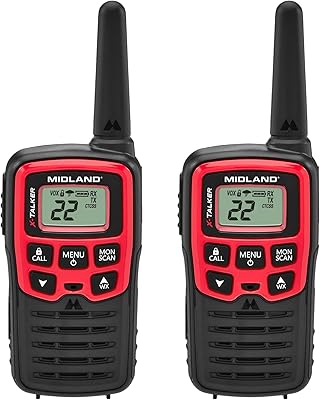
Midland T31VP 22-Channel FRS Walkie-Talkies
79%
93%
Ease of Setup
81%
Audio Clarity
52%
Range Performance
71%
Battery Life
88%
NOAA Weather Alerts
More
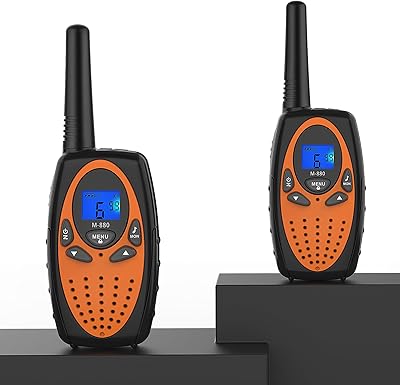
Topsung M880 FRS Walkie-Talkies 2-Pack
74%
93%
Ease of Setup
78%
Audio Clarity
54%
Real-World Range
76%
Battery Performance
62%
VOX Performance
More
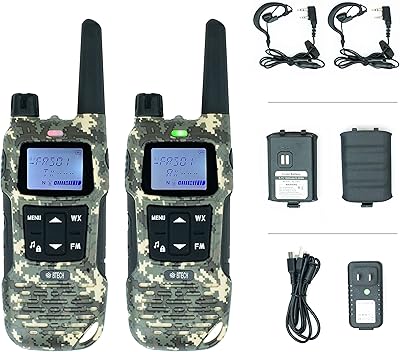
BTECH FRS-A1 2-Pack Walkie Talkies
78%
84%
Audio Clarity
58%
Real-World Range
81%
Build Quality
67%
Battery Life
88%
Ease of Setup
More
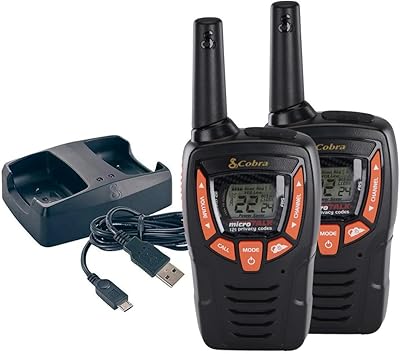
Cobra ACXT345 Rechargeable Two-Way Radio 2-Pack
76%
83%
Audio Clarity
54%
Range Performance
78%
Battery Life
81%
Build Quality & Durability
67%
Water Resistance
More
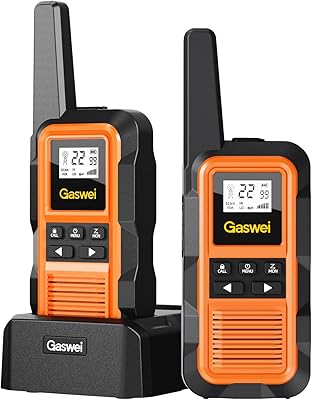
Gaswei G2pro Two-Way Radios 2-Pack
76%
83%
Build Quality
78%
Waterproofing
58%
Communication Range
76%
Audio Clarity
61%
VOX Performance
More
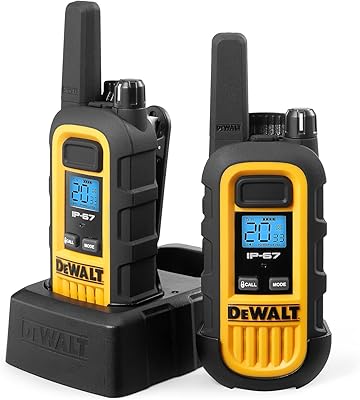
DEWALT DXFRS300 Walkie Talkies
85%
94%
Build Quality & Durability
88%
Battery Life
82%
Range & Signal Strength
91%
Waterproof & Weather Resistance
84%
Ease of Use & Setup
More
Cobra ACXT390 Walkie Talkies 2-Pack
75%
58%
Real-World Range
83%
Build Quality & Durability
67%
VOX Hands-Free Performance
79%
Battery Life
88%
Ease of Setup & Use
More
Quansheng UV-K5(8) Dual-Band Walkie-Talkie
72%
93%
Value for Money
91%
Frequency Coverage
88%
Firmware & Software Support
44%
Ease of Setup
77%
Audio Quality
More
Retevis RT49P Waterproof Walkie Talkies 2-Pack
76%
83%
Waterproof Performance
88%
Floating & Buoyancy
58%
Range & Signal
76%
Battery Life
79%
Charging Convenience
More
QNIGLO Q668 Rechargeable Walkie-Talkie Weather Radio
70%
83%
NOAA Weather Reception
54%
Walkie-Talkie Range
78%
Multi-Function Value
71%
Charging Versatility
51%
Power Bank Usefulness
More

FAQ

No, you do not. These operate on FRS frequencies, which are designated for unlicensed personal use in the United States. Anyone can pick them up and start using them right away without registering with the FCC.

Yes, as long as the other radio supports the same FRS channel and matching CTCSS code, the two devices can communicate with each other. Most consumer-grade FRS radios sold in the US share this standard, so cross-brand compatibility is generally reliable.

The advertised 5-mile range is only possible in ideal conditions — think wide-open flat terrain with no trees, buildings, or hills in the way. In practice, most users will get somewhere between half a mile and one mile of reliable range in typical outdoor settings like forests or suburban areas. Manage your expectations accordingly, especially if you plan to use them in the woods.

No, they are not. There is no water resistance rating on these radios, which means even moderate rain exposure could cause damage. If you are planning to use them in wet weather or near water, you would want to store them in a dry bag or look for a radio with an IPX rating.

VOX stands for voice-activated transmission — when enabled, the radio automatically starts transmitting whenever it detects your voice, so you never have to press a button. There are three sensitivity settings, which control how loud or soft a sound needs to be before the mic triggers. The middle setting tends to work best for most users, as the lowest can be overly sensitive and the highest may miss quieter speech.

These walkie talkies run on standard AAA batteries at 4.5V DC, which typically means three AAA batteries per unit. Battery life varies quite a bit depending on how frequently you transmit and whether VOX mode is active, but most users report getting through a full day of casual use on a fresh set. Keeping a spare set of batteries in your pack is a smart habit for longer trips.

Yes, you can buy additional sets and sync them all to the same channel and privacy code. Just keep in mind that each purchase only includes two units, so equipping a group of six people, for example, would require three separate purchases.

Switch to a less commonly used channel and set a specific CTCSS privacy code on both radios. With 2,178 possible channel-and-code combinations available, you have a good chance of finding a quiet pairing even at a busy campsite or festival. It does not block other signals entirely, but it filters out transmissions that do not match your selected code.

It is a legitimate feature, though it is not a replacement for a dedicated flashlight. The built-in LED is handy for short-range tasks like finding something in your tent, reading a trail map, or signaling your location at night. Think of it as a useful backup rather than a primary light source.

Very easy. Once you have batteries installed, you just turn both radios on, set them to the same channel and CTCSS code, and you are ready to go. The backlit LCD makes it straightforward to navigate settings even in dim conditions, and the included manual walks through the basic setup clearly. Most users are up and running in just a few minutes.