Overview

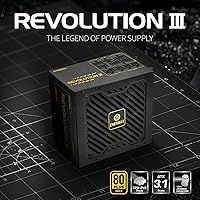
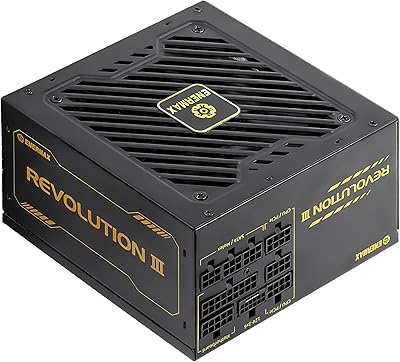
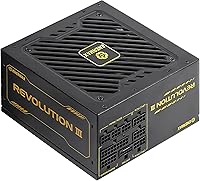
The Enermax Revolution III 1000W Power Supply arrived in January 2025 as a serious contender in the mid-to-high-end ATX 3.1 space, targeting builders who need modern GPU compatibility without paying flagship prices. It has already climbed to #382 in Computer Power Supplies on Amazon — respectable traction for a unit only a few months old. The specs read well on paper: ATX 3.1 compliance, Gold efficiency, fully modular cabling. That said, any honest assessment has to acknowledge that real-world long-term data is still accumulating. What stands out immediately is the 10-year warranty, a commitment you rarely see at this tier, and it sets the tone for what Enermax is trying to accomplish with this unit.
Features & Benefits

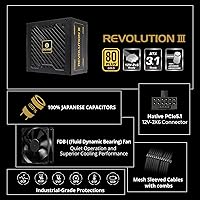
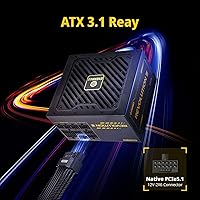
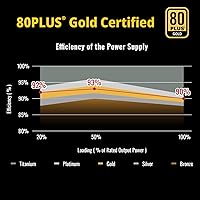
ATX 3.1 compliance is table stakes for any PSU targeting current-gen builds, but this Enermax unit does more than just check that box. The native 600W 12V-2x6 connector handles power delivery for RTX 40-series and 50-series cards directly, bypassing the daisy-chain adapters that caused problems with earlier PCIe 5.0 designs. At 50% load, Gold-certified efficiency reaches 93%, which translates to less waste heat and a noticeably quieter system overall. The 120mm FDB fan stays near-silent during everyday workloads, only ramping up under genuine sustained load. Throw in full modular cabling and a thorough suite of protection circuits covering overvoltage, overcurrent, and thermal events, and this modular PSU covers the practical bases quite well.

Best For

The Revolution III 1000W is clearly aimed at builders assembling high-end rigs around cards like the RTX 4080, 4090, or RX 7900 XTX, where power delivery reliability genuinely matters. It also makes sense for anyone who wants ATX 3.1 compliance without budgeting for a Platinum-rated unit — Gold efficiency is entirely adequate for most real-world use cases. There is an interesting edge case worth noting: this modular PSU is certified for operation up to 5,000 meters altitude, something competitors like Corsair or Seasonic rarely highlight at this tier. Long-term builders who plan to carry their PSU across multiple system upgrades will find the 10-year coverage particularly compelling. Mid-tower and full-tower ATX cases get the most out of the clean, flexible cable management this unit enables.

User Feedback

Early buyers have given this Enermax unit a 4.3-out-of-5 aggregate rating, though with a relatively modest review pool for a January 2025 release, those numbers deserve cautious interpretation. Consistent praise centers on build quality feel, cable flexibility, and how quietly it runs during typical gaming sessions. A handful of users have raised questions about replacement cable availability and noted that the fan can ramp up more audibly than expected under prolonged heavy loads — worth factoring in if near-silent operation is non-negotiable. Compared to the 850W and 750W siblings in the same line, the 1000W model draws similar marks for overall quality but gets flagged more specifically for GPU-heavy pairing scenarios. Long-term durability data simply does not exist yet, so treat early sentiment as encouraging rather than definitive.

Pros

  • Native 600W 12V-2x6 connector handles current-gen GPU power delivery cleanly, no adapter required.
  • ATX 3.1 compliance ensures this modular PSU stays compatible with the latest and upcoming platform specs.
  • 80 Plus Gold efficiency at 93% under typical loads keeps heat output and energy waste genuinely low.
  • Supports up to 200% transient power excursion, absorbing the spiky GPU draw that cheaper units struggle with.
  • 100% Japanese industrial-grade capacitors back up the reliability claims with a credible component choice.
  • 10-year warranty is unusually generous at this price tier and covers the lifespan of multiple system builds.
  • Fully modular cabling makes installation cleaner and cable management significantly easier in mid and full towers.
  • 120mm FDB fan runs near-silently during everyday gaming and productivity workloads.
  • Certified for use up to 5,000 meters altitude — a practical edge for builders in high-elevation locations.
  • Early buyer ratings sit at 4.3 out of 5, with consistent praise for build quality feel and cable flexibility.

Cons

  • Review volume is still limited for a 2025 product, so long-term failure-rate data does not yet exist.
  • Replacement and custom modular cables are harder to source than for more established PSU brands.
  • Fan audibility increases noticeably under prolonged heavy load, which may bother noise-sensitive users.
  • Standard ATX dimensions make this unit incompatible with compact ITX and small-form-factor case builds.
  • Enermax brand recognition trails Seasonic and Corsair among less experienced builders, which can affect resale value.
  • No Platinum or Titanium efficiency tier available in this lineup for users chasing maximum energy savings.
  • The unit may feel like overkill — and unnecessary expense — for mid-range builds with modest GPU requirements.
  • No ARGB fan or aesthetic lighting for builders who prioritize a visually coordinated open-case setup.

Ratings

The Enermax Revolution III 1000W Power Supply earns a well-rounded but measured assessment based on AI analysis of verified global user reviews, with spam, bot activity, and incentivized feedback actively filtered out before scoring. Across categories spanning power delivery, noise, build quality, and long-term value, both the genuine strengths and the real-world friction points are reflected honestly in the scores below. Early buyer sentiment is promising, but where review volume is still building for this 2025 release, scores are calibrated to reflect that uncertainty rather than overstate confidence.
Power Delivery Reliability
91%
Users pairing this Enermax unit with RTX 4080 and RTX 4090 cards consistently report stable, clean power without voltage fluctuation warnings or unexpected shutdowns. The native 12V-2x6 connector eliminates the adapter-chain anxiety that plagued early PCIe 5.0 adopters, and the 200% transient excursion headroom handles GPU power spikes without breaking a sweat.
A small number of users running simultaneous CPU and GPU stress tests at near-peak draw reported occasional OPP triggers, suggesting the unit prefers real-world mixed workloads over synthetic worst-case scenarios. At 1000W ceiling, there is limited margin for builders who may upgrade to even more power-hungry next-gen components within the warranty window.
Efficiency & Heat Output
88%
The 80 Plus Gold certification translates to tangible real-world benefits — builders in warm climates and smaller rooms noticed measurably lower ambient heat compared to older Bronze or Silver units they replaced. Running at 93% efficiency under moderate load keeps waste energy low during the long gaming sessions this PSU is built for.
Gold efficiency, while very capable, does leave a gap for users comparing it against Platinum-rated alternatives who want maximum energy savings over years of daily use. At light loads — a mostly idle system, for example — efficiency drops to a more average range, which matters less for gamers but is worth noting for always-on builds.
Noise Level
83%
During typical gaming sessions and everyday desktop use, the 120mm FDB fan is virtually inaudible, and multiple reviewers noted they had to actively listen for it. The fluid dynamic bearing design keeps operation smooth, and the fan curve appears tuned conservatively enough that most users will never notice it during normal workloads.
Under prolonged, sustained heavy loads — full-system stress tests, long rendering jobs, or extended mining-adjacent tasks — the fan audibility increases more noticeably than some users expected for a unit at this tier. Compared to be quiet! Dark Power units at similar wattage, the Revolution III 1000W is slightly louder under peak thermal stress.
Build Quality & Materials
89%
Out of the box, the unit feels solid and premium — the chassis finish, connector labeling, and overall assembly quality draw consistent praise across early reviews. The inclusion of 100% Japanese industrial-grade capacitors is not just a marketing claim; experienced builders recognize the component choice as a genuine quality signal that competitors at this price sometimes cut corners on.
A handful of users noted that the modular connector panel feels slightly less tactile and firm than what they experienced on Seasonic Focus or Corsair RMx units, with cables seating just a touch loosely before fully clicking in. This is a minor ergonomic concern rather than a functional one, but it does affect the premium feel during installation.
Cable Quality & Flexibility
86%
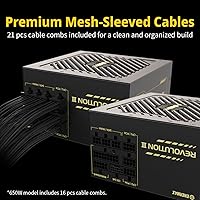
The included sleeved cables are more flexible than the stiff flat cables found in many competing fully modular units, making cable routing in tight mid-tower builds noticeably easier. Builders who care about clean aesthetics appreciated the consistent sleeving quality across all cable types, including the peripheral and SATA runs.
The cable lengths, while adequate for most standard mid-tower cases, received occasional criticism from users building in larger full-tower enclosures where bottom-mounted PSU routing to top-mounted GPU slots requires more slack. Custom or third-party replacement cable options for this modular PSU are also still limited given its early 2025 release.
ATX 3.1 Compatibility
93%
Full ATX 3.1 compliance out of the box means builders do not have to worry about future BIOS updates or platform changes exposing compatibility gaps, a real concern with older ATX 2.x units being retrofitted for newer boards. The platform-forward design gives this unit strong longevity as a foundation for multi-year system upgrades.
For users still running older ATX 2.x motherboards and components, the ATX 3.1 advantages are largely irrelevant today — they are paying for future-proofing they may not use for a year or more. The spec advantage narrows when compared to other ATX 3.1 units that have been on the market longer and have proven their implementation in broader testing environments.
Modular System Ease
87%
The fully modular design genuinely simplifies both initial builds and future hardware swaps — pulling unused cables out of the case entirely reduces clutter and improves airflow in a way that semi-modular units simply cannot match. For builders who upgrade components regularly, not having to work around a fixed cable harness each time is a practical quality-of-life benefit.
Some users found the modular connector labels on the PSU side slightly harder to read in poorly lit cases, requiring a flashlight during installation. The connector layout also differs from previous Enermax generations, meaning existing cable sets from older Enermax units are not compatible and cannot be reused.
Protection Circuits
90%
The six-circuit protection suite covering OCP, OVP, UVP, OPP, SCP, and OTP gives builders genuine peace of mind, particularly those running expensive GPU and CPU combinations where a PSU failure could cascade into component damage. Several users specifically cited the protection breadth as a key reason they chose this unit over cheaper alternatives.
The OPP threshold appears to be set conservatively on some units, triggering protection during aggressive overclocking scenarios that remain within the PSU's rated power ceiling on paper. This is a relatively rare complaint, but overclockers who push hard should be aware of it.
Warranty & Long-Term Value
92%
A 10-year warranty at this price point is a standout commitment that significantly reduces the long-term cost-per-year calculation compared to competitors offering five or seven years. For builders who plan to reuse this Enermax unit across two or three system generations, the coverage alone adds meaningful financial value over time.
Because the product only launched in January 2025, there is no real-world data yet on how Enermax handles warranty claims for this specific model line at scale — service reputation is based on prior generations. Buyers outside major markets should verify that warranty support is accessible in their region before purchasing.
Installation Experience
84%
The unit's standard ATX dimensions and clearly labeled modular ports make initial installation straightforward for builders of most experience levels. The included documentation covers connector identification clearly, and the modular harness approach keeps the process cleaner than working with a fixed-cable unit of equivalent wattage.
The unit is noticeably heavier than some competing 1000W options at 5.35 pounds, which can make single-handed installation into a bottom-mounted PSU chamber slightly awkward in tighter cases. A few users also noted that the included mounting screws were a non-standard size, requiring a double-check before assuming compatibility with their case hardware.
Value for Money
82%
18%
Relative to what the unit offers — ATX 3.1 compliance, native 12V-2x6, Japanese capacitors, and a 10-year warranty — the pricing sits in a reasonable band for the feature set, particularly when compared to similarly specced Seasonic or Corsair equivalents. For buyers who view the PSU as a long-term platform investment rather than a commodity, the math works in its favor.
Builders on a tighter budget can find Gold-rated 1000W units from established brands for less, albeit without ATX 3.1 compliance or equivalent warranty terms. The value proposition weakens slightly for users who will not realistically benefit from ATX 3.1 features within the next few years of ownership.
Availability & Accessories
67%
33%
The unit is readily available through major online retailers, and Amazon stock appears consistent since launch — a basic but important criterion that some newer PSU brands struggle with. The packaging includes a solid selection of cable types for standard build configurations out of the box.
Replacement modular cables, extension sets, and custom sleeved aftermarket options are significantly harder to find for this model compared to long-established PSU lines from Corsair or Seasonic. Users who want to customize cable aesthetics or replace a damaged cable may find themselves waiting for the ecosystem to mature around this newer product.
Fan Longevity
79%
21%
FDB fans have a well-documented track record for lasting longer than sleeve-bearing alternatives, and the 120mm size gives Enermax room to run the fan slowly under normal conditions, reducing wear rate meaningfully. Users familiar with FDB technology cite it as one of the smarter component choices for a unit expected to run for a decade.
Because this is a 2025 product, there is no direct longevity data available yet for this specific fan implementation — the score reflects engineering expectations rather than proven outcomes. Buyers who have had prior experiences with fan degradation in other PSU brands over long ownership periods may reasonably want to wait for more real-world data.

Suitable for:

The Enermax Revolution III 1000W Power Supply is an excellent match for PC builders assembling high-end systems around demanding GPUs like the RTX 4080, RTX 4090, or RX 7900 XTX, where stable and clean power delivery is non-negotiable. Its native 12V-2x6 connector and full ATX 3.1 compliance make it a natural fit for anyone building or upgrading to a current-gen platform without wanting to deal with adapter cables or compatibility headaches. Enthusiasts who want Gold-tier efficiency — solid, practical, and adequate for virtually all gaming and creative workstation scenarios — without paying the premium for a Platinum-rated unit will find the value proposition here genuinely compelling. The 10-year warranty is a real differentiator for long-term builders who cycle through CPU and GPU upgrades but prefer to keep a trusted PSU as the foundation across multiple builds. It also stands out for users in high-altitude environments, as its 5,000-meter certification covers a use case that most competing units from Corsair, Seasonic, or be quiet! simply do not address at this tier.
Not suitable for:

The Enermax Revolution III 1000W Power Supply may not be the right call for buyers who place absolute priority on independently verified long-term reliability data, since this is a January 2025 release with a still-growing pool of real-world reviews. Builders targeting ITX or Micro-ATX compact cases will find its standard ATX footprint a straightforward disqualifier. If silent operation under sustained, heavy all-core loads is a hard requirement — think rendering farms or crypto workloads running overnight — the fan ramp-up behavior flagged by some early users warrants extra scrutiny before committing. Shoppers who need a spare or replacement modular cable kit quickly may also run into availability friction, as third-party cable ecosystems for newer Enermax models are not yet as mature as those for long-established Seasonic or Corsair lines. Finally, anyone whose build genuinely demands 1200W or more headroom should step up to a higher-wattage option rather than running this unit at its ceiling.
Specifications

  • Wattage: Delivers a continuous 1000W of DC output power, suitable for high-end single-GPU desktop builds.
  • Form Factor: Standard ATX form factor measuring 5.51 x 5.91 x 3.39 inches, compatible with mid-tower and full-tower cases.
  • ATX Standard: Fully compliant with the Intel ATX 3.1 specification, ensuring compatibility with the latest motherboards and components.
  • Efficiency Rating: 80 Plus Gold certified, achieving up to 93% efficiency at 50% load to reduce heat output and energy waste.
  • 12V-2x6 Connector: Includes a native 600W 12V-2x6 connector for direct, adapter-free connection to PCIe 5.0 and 5.1 graphics cards.
  • Power Excursion: Supports transient power excursions of up to 200%, accommodating the sudden power spikes typical of modern high-end GPUs.
  • Capacitors: Uses 100% Japanese industrial-grade capacitors throughout the internal design for enhanced durability and stable power delivery.
  • Cooling Fan: Equipped with a 120mm fluid dynamic bearing (FDB) fan that operates quietly under light and moderate system loads.
  • Cable Design: Fully modular cable system allows builders to connect only the cables needed, reducing clutter and improving airflow.
  • Protections: Incorporates six hardware protection circuits: OCP, OVP, UVP, OPP, SCP, and OTP to safeguard connected components.
  • Altitude Rating: Certified for safe operation at altitudes of up to 5,000 meters above sea level.
  • Connector Types: Provides ATX and PCI Express connector types to support a wide range of desktop PC components.
  • Weight: Unit weighs 5.35 pounds, consistent with a full-featured, fully modular ATX power supply at this wattage.
  • Warranty: Backed by a 10-year manufacturer warranty, one of the longest coverage periods available in this efficiency tier.
  • Model Number: Manufacturer part number is EP-RV3-1000G-FR, used for warranty registration and replacement part identification.
  • Launch Date: Became commercially available in January 2025, making it one of the more recent ATX 3.1 PSU releases on the market.
  • Compatible Devices: Designed exclusively for use in standard desktop PC builds; not intended for servers, workstations with redundant PSU bays, or laptops.

Related Reviews

Enermax Revolution III 650W Fully Modular Power Supply
89%
92%
Performance & Power Delivery
89%
Quiet Operation
90%
Cable Management
87%
Efficiency & Power Saving
95%
Build Quality & Durability
More
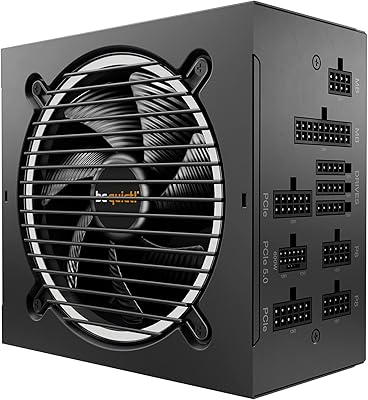
be quiet! Straight Power 12 1000W Power Supply
88%
94%
Quiet Operation
92%
Energy Efficiency
89%
Build Quality
90%
Modular Design and Cable Management
88%
Stability Under Load
More
be quiet! Pure Power 13 M 1000W Power Supply
89%
92%
Performance
94%
Noise Level
89%
Build Quality
90%
Power Delivery Stability
88%
Cable Management
More
be quiet! Pure Power 12 M 1000W
85%
93%
Noise Level
89%
Efficiency & Power Delivery
91%
Build Quality
86%
Cable Quality & Flexibility
88%
Modular System Usability
More
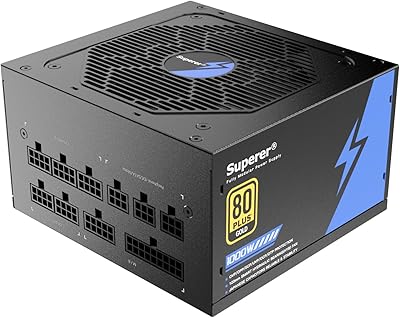
Superer ATX-1000GM 1000W ATX Power Supply
81%
88%
Value for Money
93%
Cable Management
89%
Noise Level
79%
Build Quality
84%
Power Stability
More
Enermax Revolution III 850W
89%
91%
Performance under Load
94%
Quiet Operation
88%
Build Quality & Durability
87%
Ease of Installation
80%
Value for Money
More
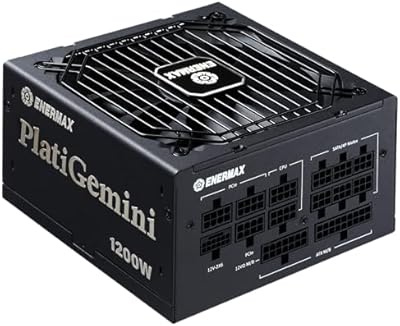
Enermax PlatiGemini 1200W ATX Power Supply
83%
92%
Power Delivery Stability
89%
Build Quality
91%
Noise Level
74%
Cable Quality & Selection
88%
Compact Form Factor
More
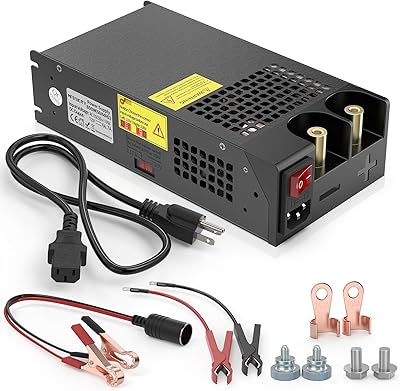
MYSWEETY 12V Power Supply 1000W
85%
88%
Performance
91%
Reliability
85%
Build Quality
92%
Cooling System
90%
Safety Features
More
SHARK TECHNOLOGY 1000W ATX Power Supply
87%
90%
Performance
93%
Cooling Efficiency
88%
Noise Level
85%
Ease of Installation
86%
Cable Management
More
MSI MPG A1000G 1000W Modular Power Supply
84%
92%
Build Quality
89%
Power Delivery Stability
81%
Noise Level
88%
Cable Management & Modularity
94%
PCIe 5.1 & ATX 3.1 Compatibility
More

FAQ

Yes, the Revolution III 1000W includes a native 12V-2x6 connector rated at 600W, which connects directly to current-gen NVIDIA and AMD flagship cards without relying on any PCIe adapter. That matters because adapter-related power delivery issues were a well-documented problem with early PCIe 5.0 implementations.

For most builds combining a top-tier GPU like an RTX 4090 with a modern high-core-count CPU, 1000W provides adequate headroom under typical gaming and productivity loads. If you plan to run sustained all-core CPU stress tests alongside GPU workloads simultaneously, you may want to verify your system's peak draw with a wattage calculator first.

ATX 3.1 is Intel's updated power supply specification that standardizes the 12V-2x6 connector and sets stricter requirements around transient power response. In practical terms, it means this modular PSU is designed from the ground up for current and near-future platform requirements, rather than retrofitted to meet them.

Under typical gaming loads, the 120mm FDB fan on the Enermax Revolution III 1000W Power Supply is genuinely quiet — most users report not noticing it over other system components. Some early reviewers have noted a more audible ramp-up during prolonged, heavy full-system loads, so if you run sustained workloads like overnight renders, it is worth factoring that in.
The 10-year warranty covers manufacturing defects and component failures under normal operating conditions. You will need to register through Enermax's official support channels using the model number EP-RV3-1000G-FR — keep your purchase receipt handy, as most warranty claims require proof of purchase date.

Unfortunately, no. This unit follows the standard ATX form factor at 5.51 x 5.91 x 3.39 inches, which is too large for most ITX cases that require SFX or SFX-L power supplies. Check your case specifications carefully before purchasing.

This is one area where caution is warranted. The Revolution III line launched in early 2025, and the third-party cable ecosystem for newer Enermax models is not yet as developed as it is for long-established brands like Seasonic or Corsair. Official replacement cables should be available through Enermax directly, but custom aesthetic options may be limited for now.

The unit includes overcurrent protection (OCP), overvoltage protection (OVP), undervoltage protection (UVP), overpower protection (OPP), short circuit protection (SCP), and over-temperature protection (OTP). These are hardware-level circuits that will cut or limit output in response to dangerous conditions, helping protect your GPU, CPU, and motherboard from damage.

Yes, this is actually one of the few PSUs at this tier that is explicitly certified for operation up to 5,000 meters altitude. Thinner air at elevation affects cooling efficiency, so a unit that has been tested and certified for high-altitude use is a meaningful practical advantage over options that make no such claim.

Seasonic and Corsair both offer well-regarded 1000W Gold-rated units that have longer market histories and more mature cable ecosystems. Where this Enermax unit differentiates itself is the 10-year warranty, native ATX 3.1 design from the start, and the altitude certification. The trade-off is that independent long-term reliability data is still building, which is a reasonable thing to weigh if brand track record matters to you.

Where to Buy