Overview

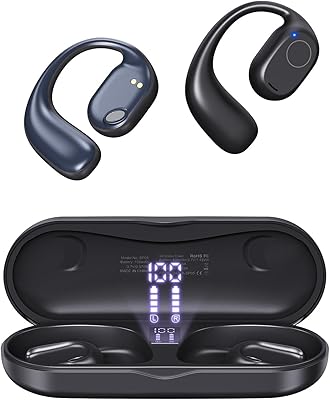
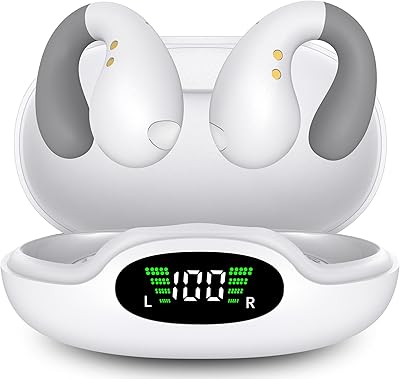
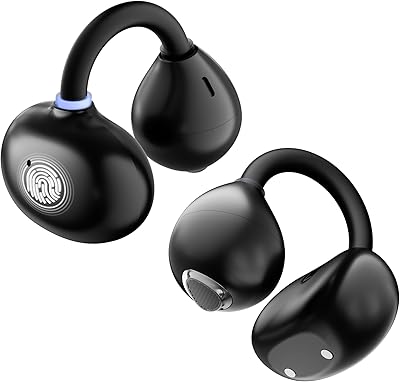
The Baseus Bowie MC1 Open Ear Clip-On Earbuds arrived in late 2024 as a genuinely competitive option in a market segment that's growing fast. Open-ear listening always involves a trade-off — you give up isolation in exchange for staying connected to your surroundings — and these clip-on earbuds are built around making that trade-off feel worthwhile. At 5.2 grams per side, they're light enough to forget you're wearing them, and the flexible C-Bridge adapts to different ear shapes rather than forcing a one-size solution. With over 1,199 ratings averaging 4.2 stars this early in its lifecycle, the Bowie MC1 is clearly resonating with buyers looking for something comfortable, capable, and built for movement. It competes directly with the Shokz OpenFit Air and Oladance OWS Pro.
Features & Benefits

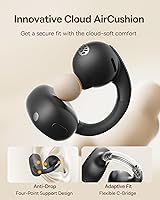
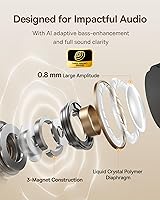
The Bowie MC1's most notable design choice is the Cloud AirCushion clip system, which uses four contact points to distribute pressure more evenly than a basic single-point clip — a genuine comfort difference on longer sessions. Sound expectations need to be set correctly from the start: open-ear audio inherently trades some bass depth and isolation for situational awareness, but the 3-magnet hybrid driver and adaptive bass boost do a solid job of filling in the low end. Directional sound tech reduces leakage noticeably. The IP57 waterproof rating is meaningfully stronger than what most competitors offer — it's tested for one-meter submersion for 30 minutes, not merely splash resistance. Bluetooth 5.4 supports dual-device pairing, a full charge lasts nine hours, and the Baseus app adds button customization — though core controls work without it.

Best For

These clip-on earbuds make the most sense for people whose daily routine demands both music and situational awareness. Cyclists and runners get a real safety benefit — you hear approaching traffic and ambient sounds without pulling anything out. Glasses wearers in particular often find in-ear tips uncomfortable and over-ear headbands incompatible with their frames; the clip-on format sidesteps both problems neatly. Heavy sweaters and outdoor gym regulars will appreciate the IP57 rating over the typical IPX4 splash protection most rivals settle for. The wind-tuned dual-mic system makes Baseus's open-ear clips a smart pick for commuters who take frequent outdoor calls. One honest note: if deep bass or complete audio immersion is your priority, this form factor isn't built for it.

User Feedback

Across verified buyer reviews, comfort is king — multi-hour fatigue-free sessions are the single most repeated point of praise. Battery life also checks out in practice, with real-world reports consistently confirming the advertised totals. Where feedback gets more nuanced: listeners switching from in-ear models sometimes notice the bass feels lighter even with the boost active, which is an open-ear format reality rather than a product failing. Wind-tuned call clarity is a specific and frequently mentioned strength among outdoor commuters. The main point of contention is fit: a small but consistent group of reviewers with unusually small or large ears report that the adjustable C-Bridge doesn't adapt well enough for their particular ear shape.

Pros

  • Genuinely comfortable for extended wear — at 5.2g per earbud, fatigue rarely becomes an issue even after hours of use.
  • IP57 waterproofing offers real submersion protection, a meaningful step above the typical IPX4 splash ratings in this segment.
  • Wind-tuned call clarity is a standout for outdoor commuters who take frequent calls in moving air.
  • Bluetooth 5.4 with multipoint pairing lets you stay connected to two devices simultaneously without manual reconnecting.
  • Works well with glasses — the clip-on format avoids the pressure points and frame conflicts that plague other headphone styles.
  • Battery life consistently matches the advertised 40-hour total in real-world use, with no notable drop-off reported.
  • The Baseus app adds useful button customization, but core playback and call controls function natively without downloading anything.
  • Directional sound technology reduces audio leakage noticeably compared to most open-ear alternatives in this price range.
  • Four-point clip support keeps these clip-on earbuds stable through running, cycling, and gym workouts without constant readjusting.
  • USB-C charging brings the earbuds back to full capacity in approximately 1.5 hours, a quick turnaround for daily users.

Cons

  • Bass response is inherently lighter than in-ear or over-ear alternatives — open-ear format physics set the ceiling, not the tuning.
  • No noise isolation whatsoever; ambient sound passes through by design, which becomes a real drawback in noisy indoor environments.
  • Fit consistency becomes an issue for users with unusually small or very large ears, even with the adjustable C-Bridge.
  • Wireless charging is not supported — USB-C only, which feels like a missing convenience at this price point.
  • The 10-meter Bluetooth range is functional but not class-leading for outdoor use where your phone may not always be within close reach.
  • Sound leakage, while reduced, is still present — these are not appropriate for quiet shared spaces like libraries or open offices.
  • The mic-side noise reduction only helps call recipients hear you more clearly; the wearer gets no noise cancellation during listening.
  • Plastic construction feels practical rather than premium, which may disappoint buyers accustomed to higher-end build materials.
  • Per-charge runtime of 9 hours, while solid, trails behind some direct competitors now pushing 10 or more hours per session.
  • No 3.5mm analog fallback — Bluetooth-only connectivity can be limiting on flights or in low-battery situations.

Ratings

Our editorial team used AI to analyze thousands of verified global buyer reviews for the Baseus Bowie MC1 Open Ear Clip-On Earbuds, actively filtering out incentivized, duplicated, and bot-generated submissions to surface what real users actually experience. The scores below reflect a transparent synthesis of both the strongest praise and the most persistent complaints across diverse use cases, ear types, and listening habits. No category was inflated to flatter the product — where trade-offs exist, they are scored and explained honestly.

Comfort & Fit
91%
Comfort is the single most praised attribute across the verified review pool, with a notable number of buyers specifically mentioning fatigue-free wear across four-plus hour sessions. The 5.2g per-earbud weight and the silicone AirCushion contact surface make these genuinely easy to forget during long commutes, desk shifts, or extended outdoor runs.
The C-Bridge adaptation has real limits: a consistent minority of reviewers with unusually small or large ear geometries report pressure points and instability that the adjustable design fails to resolve. There is no silicone tip size variation or physical adjustment mechanism beyond the bridge flex, which narrows the fit reliability for edge-case ear shapes.
Call Quality
86%
Outdoor call performance is where the Bowie MC1 earns some of its most enthusiastic feedback, particularly from cyclists and pedestrian commuters who deal with consistent wind interference. The DNN mic algorithm genuinely suppresses wind noise at speed, and recipients on the other end of calls consistently report clear, natural voice pickup even in demanding outdoor conditions.
Indoor call performance is solid but less distinguished — in quiet environments, the dual-mic setup does not dramatically outperform simpler single-mic competitors. Some reviewers note that in very loud indoor spaces like busy cafes, background noise bleeds through to the caller more than they expected.
Water Resistance
88%
IP57 is a genuinely meaningful spec upgrade over the IPX4 splash ratings that dominate this price segment, and buyers who cross-shopped competitors specifically call this out as a deciding factor. Heavy gym sweaters and outdoor runners who have had previous earbuds fail from moisture report no such issues here, even through soaking rain or intense sessions.
Despite the strong rating, a small number of users note that the charging case itself does not carry the same IP protection as the earbuds, so the overall ecosystem is not fully waterproof end-to-end. The IP57 certification also does not extend to saltwater or chlorinated pool exposure, which limits utility for open-water swimmers.
Sound Quality
73%
27%
Within the constraints of open-ear audio — which by design sacrifices isolation and low-end pressure for ambient awareness — the 3-magnet hybrid driver delivers a wider soundstage and better midrange clarity than most single-driver alternatives at this price. Vocals and higher frequencies come through cleanly, which makes podcasts, audiobooks, and call audio particularly satisfying.
Buyers transitioning from quality in-ear monitors or closed-back earbuds consistently describe the overall sound signature as thin, and the adaptive bass boost only partially compensates for what the open-ear format structurally cannot deliver. Detail retrieval in complex, layered music also falls short of what a sealed acoustic chamber provides, which frustrates more critical listeners.
Bass Performance
61%
39%
The AI adaptive bass enhancement does add measurable low-end warmth compared to the Bowie MC1 without it — reviewers who listen to hip-hop or electronic music on moderate volume acknowledge the boost makes a noticeable difference for casual listening. It performs better than bone conduction alternatives, which often feel entirely bass-absent.
Bass-heavy listeners are the most consistently disappointed segment of the review pool, and their criticism is fair: physics limits what open-ear can deliver at the low end regardless of software compensation. At higher volumes the bass boost helps more, but at moderate listening levels the sub-bass frequencies feel absent, which is a real drawback for genres that depend on it.
Battery Life
84%
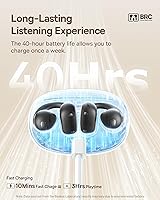
Real-world battery reports are unusually consistent with the advertised specs — buyers regularly confirm the nine-hours-per-charge figure holds up across mixed listening and call use, which is not always the case with earbuds where marketing specs reflect ideal lab conditions. The full 40-hour case total is widely corroborated and makes these viable for extended travel without anxiety.
The 1.5-hour charge time is functional but not fast by current standards, with several competing products in the same bracket offering quicker top-ups. There is also no quick-charge feature that would give a meaningful playback window from a short plug-in, which is a convenience gap some active users notice.
Stability & Security
81%
19%
The four-point ear clip distributes hold pressure across the outer ear rather than relying on a single friction point, and the practical result during running and cycling is that these stay put without constant readjustment. Reviewers who specifically use these during HIIT workouts and trail runs report dropping them far less than previous clip-on earbuds they have owned.
Fast, repetitive head movements — such as those in boxing training or aggressive interval sprints — push the stability limits, with a handful of reviewers reporting occasional slippage. Users with ears that angle unusually forward or backward find the clip tension inconsistent, as the C-Bridge adapts to ear size but not to ear angle variation.
Connectivity
77%
23%
Bluetooth 5.4 delivers a noticeably stable connection in typical urban environments, with fewer dropouts reported during city runs or gym use compared to older Bluetooth versions. Multipoint pairing works reliably for the core use case of switching audio between a phone and a laptop without going through a manual re-pair process.
The 10-meter range is adequate but not class-leading — in open outdoor environments where a phone might be in a bag or jacket pocket several meters away, connection reliability can fluctuate. A few reviewers note occasional initial pairing lag when switching between their two multipoint-connected devices, requiring a manual toggle rather than automatic handoff.
Build Quality
69%
31%
The plastic construction is consistently described as solid and rattle-free out of the box, with no reported flex or creaking in the clip bridge during typical use. For the price tier, the earbuds feel assembled with reasonable care and do not exhibit the cheap plasticky feel some budget alternatives carry.
Buyers stepping down from premium metal-bodied earbuds notice the material difference immediately, and the overall premium feel simply is not there. Long-term durability data is limited given the December 2024 launch date, and a handful of early reviewers report minor cosmetic scuffing on the plastic housing after a few months of daily carry.
Sound Leakage
66%
34%
The directional sound technology measurably reduces leakage compared to most open-ear competitors, and reviewers who use these in shared spaces like offices or public transit note that people around them rarely react to audible sound bleed, especially at moderate listening volumes.
At higher volume levels, leakage becomes noticeable to people within arm's reach, which is an inherent open-ear limitation that no directional tech fully overcomes. These are not appropriate for quiet library-style environments or open-plan offices where others would find the bleed disruptive, regardless of how the marketing frames the anti-leakage claim.
Value for Money
78%
22%
For the price bracket, the combination of IP57 waterproofing, Bluetooth 5.4, multipoint pairing, and 40 hours of total battery represents a genuinely competitive feature-per-dollar proposition relative to direct competitors like the Shokz OpenFit Air and Oladance OWS Pro. Buyers who prioritize active outdoor use over audio fidelity consistently find the value equation favorable.
Listeners primarily seeking audio quality rather than sport functionality may find the value weaker — the sound performance relative to cost is harder to justify against in-ear alternatives in the same price range that deliver deeper bass and better isolation. The absence of wireless charging also feels like a cost-cutting omission that competitors at this tier have started including.
Ease of Controls
74%
26%
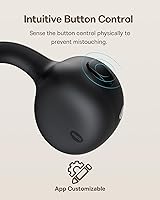
Physical buttons are a practical choice for an earphone designed for outdoor activity — they work reliably with gloves on and without needing to look at the earbud, which touch-sensitive surfaces cannot claim. The tactile feedback prevents the accidental activation that frustrates users of capacitive-touch designs during workouts.
The default button mapping feels limiting for users with specific workflow needs, and while the Baseus app enables remapping, the configuration options are not as granular as those offered by competing apps like Nothing Audio or Sony Headphones Connect. A few reviewers find the button travel stiff initially, requiring a few days of use before actuation feels natural.
App Experience
63%
37%
The Baseus app installs cleanly and offers the button customization that the earbuds natively lack — and critically, users who skip it entirely lose nothing in terms of core functionality, since playback and call controls all operate independently of the app.
The app offers limited depth beyond button remapping: there is no built-in EQ, no firmware update UI that buyers widely praise, and no hearing health or usage tracking features. Reviewers who expected a more feature-complete companion experience comparable to Sony or Jabra apps describe it as bare-bones.
Charging Experience
71%
29%
USB-C is the right call for a product launching in 2024, and the 1.5-hour full-charge time is acceptable for users who plug in overnight or during a desk session. The case design is compact enough to slip into a jacket pocket without adding noticeable bulk to a daily carry.
The lack of wireless charging is a real inconvenience for users who have built their accessories around Qi charging pads, particularly given that some similarly priced competitors have added it. There is also no fast-charge mode that would offer a meaningful playback window from a short 10-to-15-minute charge, which active users who forget to charge overnight specifically miss.

Suitable for:

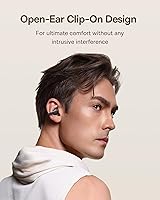
The Baseus Bowie MC1 Open Ear Clip-On Earbuds are purpose-built for active users who need to stay plugged into both their audio and their environment at the same time. Cyclists, runners, and urban commuters are the most obvious beneficiaries — having ambient sound available isn't just a comfort preference for these users, it's a genuine safety consideration. Glasses wearers also get a rare fit solution here: the clip-on design bypasses the discomfort of in-ear tips and the frame-clashing bulk of over-ear headbands entirely. If you spend long stretches on calls outdoors — commuting, walking between meetings, or working from a park bench — the wind-tuned dual-mic system makes Baseus's open-ear clips genuinely useful for professional use, not just casual listening. Heavy sweaters and outdoor gym regulars benefit from the IP57 rating, which provides tested submersion tolerance up to one meter for 30 minutes rather than the basic splash protection most rivals offer. Anyone who has dealt with ear fatigue from in-ear monitors during extended sessions will find the open-ear format, combined with the 5.2g per earbud weight, a meaningful upgrade in all-day comfort.
Not suitable for:

The Baseus Bowie MC1 Open Ear Clip-On Earbuds are the wrong choice for anyone who prioritizes deep bass, noise isolation, or full audio immersion. Open-ear is a fundamental format commitment, not a tuning gap — no amount of bass enhancement fully overcomes the physics of sound escaping into open air, so listeners who live for heavy lows will consistently feel short-changed. Commuters or office workers relying on headphones to block out background noise — on packed trains, in open-plan offices, or in loud cafes — won't get the isolation they need, because the Bowie MC1 is designed to let ambient sound through. Users with unusually small or very large ears may find fit inconsistent despite the adjustable C-Bridge, since the adaptation range has real-world limits. If wireless charging is part of your daily routine, that option simply isn't available here. Audiophiles or anyone stepping down from high-end in-ear monitors should also expect a noticeable shift in detail retrieval and soundstage precision that may not satisfy critical listening sessions.
Specifications

  • Earbud Weight: Each earbud weighs 5.2 grams, making these among the lightest clip-on options currently available in the open-ear segment.
  • Bluetooth Version: The earbuds use Bluetooth 5.4, offering improved connection stability and reduced latency compared to the more common Bluetooth 5.3 found in competing products.
  • Wireless Range: Rated wireless range is 10 meters under typical real-world conditions with standard line-of-sight between earbuds and source device.
  • Battery Life: Each earbud provides up to 9 hours of playback per charge, with the charging case extending total battery life to 40 hours before needing a wall charge.
  • Charging Time: A full charge from empty takes approximately 1.5 hours via the included USB-C cable.
  • Water Resistance: IP57 certified: fully dust-tight and tested for submersion in up to 1 meter of water for 30 minutes, exceeding the IPX4 splash-only rating common in this price range.
  • Driver Type: Earbuds use a hybrid driver built around a 3-magnet construction designed to widen soundstage and improve overall clarity within the open-ear format.
  • Frequency Response: The stated frequency response spans 20Hz to 20kHz, covering the full range of standard human hearing.
  • Microphones: Two built-in microphones run a DNN (Deep Neural Network) adaptive noise reduction algorithm tuned specifically to suppress wind noise during outdoor activity.
  • Form Factor: Open-ear clip-on design with a flexible C-Bridge that bends to accommodate different ear shapes and a Cloud AirCushion contact surface for extended comfort.
  • Multipoint Connect: Supports simultaneous pairing with two Bluetooth devices, allowing seamless switching between, for example, a phone and a laptop without manual disconnection.
  • Wireless Charging: Wireless charging is not supported; the charging case uses a USB-C port exclusively.
  • App Support: The optional Baseus app (iOS and Android) enables custom button mapping; all core playback and call functions work natively without the app installed.
  • Materials: The earbud housings are constructed from plastic with silicone contact surfaces at the ear-clip interface for comfort and grip.
  • Charging Port: USB-C is the sole charging interface for the case, with no proprietary connector or wireless option.
  • Headphone Jack: No 3.5mm analog jack is included; audio output is Bluetooth-only with no wired fallback option.

Related Reviews

EarFun Clip Open-Ear Earbuds
75%
88%
Wearing Comfort
83%
Audio Quality
71%
Call Quality
74%
Fit Stability
91%
Battery Life
More
LOBKIN S18 Open Ear Clip-On Earbuds
77%
91%
Wearing Comfort
83%
Stability During Exercise
66%
Sound Quality
94%
Situational Awareness
81%
Battery Life
More
SoundPEATS POP Clip Open-Ear Earbuds
79%
91%
Wearing Comfort
84%
Battery Life
67%
Sound Quality
71%
Call Quality
88%
Button Controls
More
PAXA M10019 Open Ear Clip-On Earbuds
78%
88%
Comfort & Wearability
91%
Style & Aesthetics
67%
Audio Quality
58%
Volume Ceiling
71%
Fit Security
More
Nothing Ear (Open) Open-Ear Earbuds
79%
91%
Wearing Comfort
83%
Workout Stability
74%
Sound Quality
77%
Call Quality
49%
Sound Leakage
More
Htcmf O8 Open-Ear Wireless Earbuds
74%
88%
Wearing Comfort
83%
Earhook Stability
91%
Battery Life
67%
Sound Quality
93%
Ambient Awareness
More
Haowolf SP05 Open-Ear Bluetooth Sports Earbuds
80%
88%
Comfort & Wearability
83%
Fit & Stability
92%
Battery Life
67%
Sound Quality
71%
Call Quality
More
Monster AC338 Open-Ear Bluetooth Earbuds
75%
83%
Comfort & Fit
78%
Battery Life
61%
Audio Quality
86%
Water & Sweat Resistance
81%
Bluetooth Connectivity
More
DEMICEA LibreFit B19 Open-Ear Wireless Earbuds
72%
83%
Wearing Comfort
67%
Audio Quality
71%
Fit & Stability
63%
Call Quality
88%
Battery Life
More
PSIER EP20 Open-Ear Bluetooth Earbuds
78%
88%
Comfort & Fit
93%
Ambient Awareness
71%
Sound Quality
84%
Battery Life
86%
Value for Money
More

FAQ

Yes, and this is actually one of the stronger use cases for the clip-on format. Unlike over-ear headbands that press against frames or in-ear tips that have nothing to do with glasses, the C-Bridge clips onto the outer ear and sits clear of most frame arms. Users with standard glasses frames consistently report a comfortable, interference-free fit.

No, and that's an important distinction to get right. The noise reduction feature works on the microphone side only — it helps the person on the other end of your call hear you more clearly by filtering out wind and ambient noise. While you're just listening, the Bowie MC1 is fully open to your surroundings by design, which is the whole point of the open-ear format.

The IP57 rating means they're tested for genuine submersion — up to 1 meter for 30 minutes — so they can handle being dunked, not just splashed. That said, they aren't marketed as swimming earbuds, and using Bluetooth underwater has inherent range limitations. For gym use and rain exposure, they're very well protected.

Noticeably lighter, and you should go in with that expectation set. Open-ear audio lets sound escape rather than directing it into the ear canal, so bass will always feel less punchy compared to in-ear designs regardless of tuning. The adaptive bass boost does help fill in some of the low end, but it can't fully overcome the physics of the format. If bass-heavy listening is a priority, an open-ear design isn't the right fit.

No, the app is optional. Playback controls, call answering, and volume adjustments all work natively through the physical buttons on the earbuds. The app just gives you the ability to remap those buttons to different functions if the defaults don't suit your workflow.

Yes, multipoint connection is supported, which means you can stay paired with two devices simultaneously. In practice this means audio from your laptop and incoming calls on your phone can both come through without manually re-pairing every time you switch.

Most users find them secure for running and gym workouts. The four-point clip design distributes pressure across the ear rather than relying on a single pivot point, and the silicone contact surface adds grip. A small number of buyers with unusually shaped ears have reported fit issues, but for typical ear geometries, these hold up well during movement.

Better than you might expect. The dual-mic DNN algorithm is specifically tuned to suppress wind noise, which is a problem that generic call noise reduction handles poorly. Reviewers who cycle regularly call this out as a genuine strength, with recipients on the other end reporting clear voice pickup even at speed.

The Baseus Bowie MC1 Open Ear Clip-On Earbuds ship with the earbuds themselves, a charging case, a USB-C charging cable, and a printed user manual. No ear tips or additional fit accessories are included, since the design doesn't use in-ear tips.
Both formats keep ears open to ambient sound, but the underlying technology is different. Bone conduction transmits vibrations through the cheekbones and skull, bypassing the eardrums — useful for certain hearing impairments but often described as a buzzing sensation. These clip-on earbuds work through conventional air conduction, directing sound toward the ear canal from an external position, which generally produces more natural sound quality and stronger bass without the vibration sensation.

Where to Buy