Overview

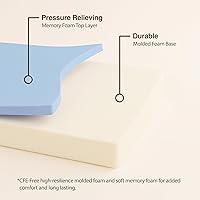
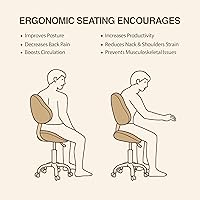
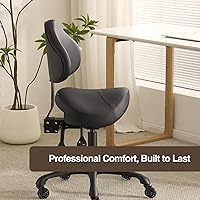
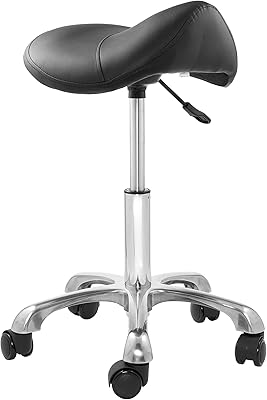
The DR.LOMILOMI KOA 510 Ergonomic Saddle Chair enters a niche where most buyers are professionals who spend the bulk of their workday seated — and it shows in the design priorities. The saddle-shaped seat encourages a forward pelvic tilt that takes pressure off the lower spine in a way flat stools simply cannot replicate. Built with an aluminum leg base and a hydraulic lift system, this saddle stool is clearly engineered for daily professional wear rather than occasional use. A layered foam construction — molded base underneath, memory foam on top — adds sustained comfort during long shifts. Assembly is required, but all components ship together and the process is straightforward.

Features & Benefits

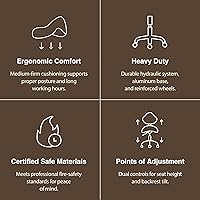
The pneumatic height adjustment runs from 21 to 26 inches, covering a solid range for most adults whether they are perched at a dental chair or a styling station. The tiltable backrest — 22.5 inches wide with 12.5 inches of interior height — provides lumbar contact that most armless stools skip entirely. Vinyl upholstery keeps the KOA 510 practical: it wipes clean in seconds, which matters in clinical and spa settings where sanitation is non-negotiable. The polyurethane casters move quietly across hard floors without leaving marks, and the 23-inch aluminum base supports up to 500 lbs while keeping the overall chair weight at a manageable 23 lbs.

Best For

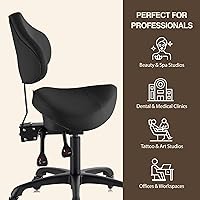
This saddle stool makes the most sense for people who stay seated for hours in positions that demand both reach and precision. Dental hygienists and dentists will appreciate how the saddle shape lets them get close to a patient without hunching their shoulders. Hair stylists and estheticians who shift between standing and sitting throughout the day will find the height range and mobility genuinely practical. Massage therapists benefit from the leg freedom the saddle design opens up. Home office users dealing with persistent lower-back fatigue are also solid candidates, as are taller professionals who have struggled to find a stool with a sufficient seat height range.

User Feedback

Buyers who switched to this ergonomic clinic chair from flat stools frequently mention noticeable back relief and improved posture, especially those in clinical roles. Build quality generally earns positive marks, with the aluminum base and gas lift drawing particular praise for their solidity. That said, saddle seating takes adjustment — multiple reviewers note a real break-in period of a week or two, and users with wider hips have flagged that the 15-inch seat width feels snug. A handful of buyers have reported minor assembly hiccups, though missing hardware appears rare. Long-term durability feedback is mostly encouraging, with several owners reporting consistent performance well past the one-year mark.

Pros

  • The saddle contour reduces lower-back compression in a way flat stools cannot replicate for long-shift workers.
  • Vinyl upholstery wipes clean in seconds, making sanitation between clients genuinely fast and effortless.
  • The pneumatic gas lift covers a 21 to 26-inch seat height range, accommodating a wide spread of user heights.
  • At 23 lbs, this saddle stool is light enough to reposition easily across a clinic or salon floor.
  • The aluminum five-star base feels solid underfoot and handles daily professional use without wobble.
  • Polyurethane casters roll quietly on hard floors without leaving scuff marks or squeaking mid-session.
  • The tiltable backrest adds lumbar contact that most comparable armless stools omit entirely.
  • Memory foam layered over a molded base holds up better over long shifts than single-density foam alone.
  • A 500 lb weight capacity means the KOA 510 is built with structural margin well beyond most users need.
  • The one-year limited warranty provides reasonable coverage for a mid-to-premium professional stool.

Cons

  • New saddle-seat users should expect a break-in period of one to two weeks before comfort fully settles in.
  • The 15-inch seat width is limiting for users with wider hips who need more lateral support.
  • No armrests means this ergonomic clinic chair is a poor match for extended keyboard or mouse-heavy desk work.
  • Casters are optimized for hard floors; thick carpet significantly reduces rolling ease and mobility.
  • Assembly is required, and a small number of buyers have reported minor fitment issues or loose hardware on arrival.
  • The backrest, while tiltable, offers only one reclining position, limiting fine-tuned support adjustments.
  • Taller users at the upper end of the height range may find the seat still sits lower than ideal for some workstations.
  • The saddle shape actively engages the core and hips, which can feel fatiguing for users not accustomed to active seating.

Ratings

Our AI-driven scoring for the DR.LOMILOMI KOA 510 Ergonomic Saddle Chair was built by analyzing verified buyer reviews from multiple global markets, with spam, bot-generated, and incentivized feedback actively filtered out before scoring. The result is a balanced picture that reflects both the genuine strengths professionals appreciate after months of daily use and the real friction points that have frustrated a meaningful subset of buyers. Every score below — high or low — is grounded in patterns from actual user experiences, not marketing claims.

Lumbar & Posture Support
83%
Dental hygienists and stylists who switched from flat stools consistently report reduced lower-back tension after the adjustment period, crediting the forward pelvic tilt the saddle geometry creates. The tiltable backrest adds lumbar contact that most armless clinic stools skip, making a noticeable difference during shifts that run four hours or longer.
The single tilt-lock position on the backrest limits fine-tuned adjustment for users with specific lumbar needs. A small portion of buyers note that the support benefit is only fully felt once the body adapts to saddle seating, which can take one to two weeks of consistent use.
Seat Comfort Over Time
76%
24%
The two-layer foam construction — molded base beneath a memory foam top — holds up better through long shifts than the single-density foam found in cheaper stools. Professionals in clinical settings who sit for five or more hours daily generally rate comfort positively once the break-in period passes.
Initial comfort is a common sticking point, with many buyers describing the first week as genuinely uncomfortable before the memory foam conforms. Users with wider hips flag that the 15-inch seat width creates pressure points on the outer thighs, which no amount of foam quality compensates for.
Build Quality
88%
The aluminum five-star base and industry-grade gas lift cylinder draw consistent praise from professionals who have previously dealt with wobbling or sinking on cheaper stools. Most long-term reviewers report the hydraulic mechanism holds its height reliably well past the one-year mark, which is the real test for daily clinical use.
A small number of buyers have reported minor fitment inconsistencies during assembly, including bolts that required extra force to seat properly. These cases appear to be isolated rather than systematic, but they are worth noting for buyers who expect a completely smooth out-of-box experience.
Mobility & Caster Performance
81%
19%
The polyurethane casters roll quietly and cleanly across tile and hardwood, which professionals in salon and clinic environments particularly appreciate during continuous side-to-side movement around a chair or table. At 23 lbs the stool is light enough to reposition by hand when needed.
Performance drops noticeably on carpet, where rolling resistance makes fluid movement difficult. Buyers who did not realize the casters were optimized for hard floors have been visibly disappointed, and a hard floor mat is effectively a required add-on for anyone working on low-pile carpet.
Height Adjustability
84%
The 21 to 26-inch pneumatic range covers a genuinely useful spread for most adult professionals, and taller users in particular praise the upper end of that range after struggling with stools that max out too low. The gas lift engages smoothly and holds the chosen height without gradual sinking.
The lower end of the range — 21 inches — may feel too high for shorter users who prefer a more grounded seated position. A handful of very tall professionals note they still wish the ceiling extended a few inches higher for optimal workstation alignment.
Ease of Cleaning
91%
The waterproof polyurethane vinyl wipes down in seconds with a damp cloth or standard disinfectant wipe, making it genuinely practical for high-turnover clinic and spa environments. Buyers in dental and esthetic settings specifically highlight sanitation ease as one of the top reasons they chose this stool over fabric-upholstered alternatives.
The vinyl finish can show scuff marks or surface dulling over time with heavy-duty disinfectant use if harsh solvents are applied repeatedly. There is no removable or replaceable seat cover, so any permanent staining or surface cracking after extended use would require full replacement.
Assembly Experience
71%
29%
All components ship together in a single box, and most buyers report a clean 20 to 30-minute assembly with no specialist tools required. The step-by-step instructions are clear enough for the majority of users to complete without frustration.
A recurring minority of reviewers mention receiving units with slightly misaligned bolt holes or hardware that required significant effort to tighten flush. Missing hardware, while not widespread, has appeared in enough reviews to be a legitimate concern rather than a one-off incident.
Seat Width Fit
62%
38%
For buyers with average to slim builds, the 15-inch saddle width distributes weight evenly across the sit bones in the way saddle seating is designed to work, and those users tend to rate comfort positively after adaptation.
This is one of the most consistently flagged limitations in user feedback. Buyers with wider hips or larger frames report meaningful discomfort along the outer thighs, and the saddle shape offers no lateral adjustment to accommodate different body widths. It is a structural constraint that buyers should evaluate carefully before purchasing.
Value for Money
74%
26%
Professionals who use this ergonomic clinic chair daily and compare it against similarly priced saddle stools generally feel the aluminum base, memory foam layering, and included backrest justify the mid-to-premium price point. The build holds up over time, which improves the long-term cost-per-use calculation.
Buyers who expected the comfort and adjustability of a full ergonomic office chair at this price point have felt let down, particularly given the limited backrest adjustment and the absence of armrests. Value perception drops sharply for users who abandon saddle seating during the adaptation period.
Backrest Functionality
69%
31%
The 22.5-inch wide backrest adds a layer of support that most saddle stools at any price point do not include, and clinical professionals who lean back during brief rest moments between patients appreciate having that option at all.
The single reclining position limits how precisely a user can dial in their lumbar angle, and the backrest height of 12.5 inches provides mid-back rather than full back coverage. Users who expected more adjustability are frequently vocal about this constraint in their reviews.
Stability & Base Safety
89%
The 23-inch diameter aluminum base sits wide enough to prevent tipping during lateral leaning, which matters for professionals who shift their weight constantly while working. The 500 lb capacity provides a structural buffer that inspires confidence in daily heavy-duty use.
On smooth hard floors with a slight incline, a few users report the chair creeping slightly without a brake mechanism. There is no wheel lock, which is a non-issue for most flat clinical floors but can be mildly inconvenient in certain setups.
Adaptation & Learning Curve
58%
42%
Buyers who committed to the adjustment period — typically one to two weeks of consistent daily use — report that saddle seating eventually felt intuitive and that they would not go back to a flat stool for clinical work. The payoff is real for those who push through.
The learning curve is one of the most polarizing aspects of this stool. Buyers who expected immediate comfort and abandoned the chair within the first few days account for a disproportionate share of the negative reviews. Without upfront expectation-setting, the adaptation experience can feel like a product defect rather than a feature.
Noise & Floor Impact
86%
The polyurethane casters are notably quiet during movement, which professionals in shared clinical spaces or quiet spa environments specifically appreciate. No squeaking from the gas lift or base has been reported as a recurring issue.
Some users on older or uneven hard floors have noted occasional minor rolling resistance from imperfections in the floor surface, though this is a floor condition issue rather than a caster defect. No significant noise complaints are tied to the lift mechanism itself.

Suitable for:

The DR.LOMILOMI KOA 510 Ergonomic Saddle Chair is purpose-built for professionals who spend the majority of their workday seated in positions that demand both reach and physical precision. Dental hygienists and dentists are perhaps the most natural fit, since the saddle geometry lets them lean forward and access a patient without collapsing their posture or rounding their shoulders over hours. Hair stylists, estheticians, and massage therapists will also find real value here — the rolling casters move quietly across hard salon and clinic floors, and the seat height range covers most working positions without awkward repositioning. The waterproof vinyl upholstery is a genuine practical asset in any environment where surfaces need to be wiped down between clients. Home office users who have tried conventional chairs and keep running into chronic lower-back fatigue are reasonable candidates too, especially taller individuals who struggle to find stools that actually reach a comfortable working height.
Not suitable for:

Buyers who have never used saddle-style seating before should understand upfront that the KOA 510 is not a drop-in replacement for a standard office chair — there is a real adjustment period, often lasting one to two weeks, as the body adapts to the forward pelvic tilt and the changed weight distribution. Users with wider hips may find the 15-inch seat width on the snug side, and no amount of foam quality compensates for a seat that does not fit your frame comfortably. The chair has no armrests, which is intentional for clinical mobility but is a dealbreaker for anyone who relies on arm support during desk work. Carpet users should also be aware that the casters are optimized for hard floors, so rolling resistance on thick carpet may be frustrating. Finally, anyone expecting a fully passive seating experience — where the chair does all the postural work — will likely be disappointed, since saddle seating inherently asks the core and hips to stay mildly engaged.

Specifications

  • Seat Material: The seating surface is upholstered in 100% polyurethane vinyl, which is waterproof, abrasion-resistant, and easy to wipe clean between uses.
  • Seat Fill: The seat uses a two-layer construction: a molded foam base for structural support topped with a memory foam layer for sustained comfort during long shifts.
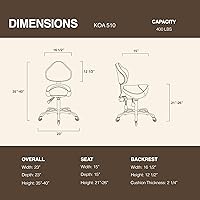
  • Seat Dimensions: The saddle seat measures 15″ wide by 15″ deep, providing a compact working surface suited to professional clinical and salon postures.
  • Seat Height Range: Seat height adjusts from 21 to 26 inches via a pneumatic gas lift, measured from the floor to the front tip of the saddle seat.
  • Overall Height: The fully assembled chair stands between 35 and 40 inches tall depending on the chosen seat height setting.
  • Leg Base: The five-star base is constructed from aluminum and spans 23 inches in diameter, providing a stable, lightweight foundation rated for daily professional use.
  • Weight Capacity: The chair supports a maximum user weight of 500 lbs, backed by the aluminum base and industry-grade hydraulic cylinder.
  • Item Weight: The assembled chair weighs approximately 23 lbs, making it practical to reposition across a clinic or salon floor without difficulty.
  • Backrest Width: The solid tiltable backrest measures 22.5 inches wide with an interior seat back height of 12.5 inches, offering meaningful lumbar contact for professionals during extended sessions.
  • Caster Type: The chair rolls on elastic polyurethane wheels designed for quiet, scratch-free movement across hard floor surfaces.
  • Armrests: This stool is armless by design, which supports unrestricted lateral movement and close patient or client access.
  • Backrest Tilt: The backrest tilts and can be adjusted to a single reclined position, allowing users to customize lumbar angle to their working preference.
  • Upholstery Care: The vinyl surface can be cleaned with a damp cloth or standard non-abrasive disinfectant wipe, making sanitation between clients straightforward.
  • Floor Compatibility: The casters are optimized for hard floor surfaces such as tile, hardwood, and laminate; use on thick carpet may reduce rolling performance.
  • Indoor Use: This chair is rated for indoor use only and is not designed for outdoor or high-humidity environments.
  • Assembly: The chair ships with all components included — backrest, hydraulic cylinder, leg base, stool body, and wheels — and requires self-assembly following the included step-by-step instructions.
  • Warranty: DR.LOMILOMI provides a 1-year limited warranty covering manufacturing defects from the date of purchase.
  • Model Name: This chair is sold under the model name KOA, item number 510, within DR.LOMILOMI's professional seating line.

Related Reviews
DR.LOMILOMI 503 Kai Ergonomic Saddle Stool
74%
83%
Ergonomic Support
71%
Seat Comfort
93%
Hygiene & Cleanability
67%
Height Adjustability
81%
Build Quality
More
Nazalus C13KB Saddle Stool Chair with Footrest
80%
83%
Build Quality
76%
Ergonomic Support
68%
Seat Comfort
88%
Height Adjustability
71%
Footrest Design
More
Nolasalon Saddle Stool Chair with Wheels
86%
88%
Comfort for Long Sitting Sessions
92%
Ease of Assembly
90%
Height Adjustability
85%
Swivel Functionality
89%
Rolling Wheels Performance
More
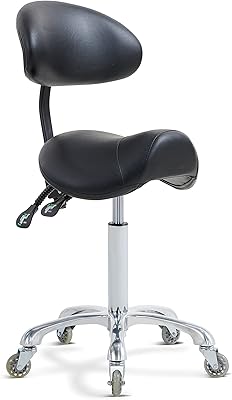
FRNIAMC Ergonomic Rolling Saddle Stool with Backrest
77%
78%
Ergonomic Support
66%
Seat Comfort
83%
Build Quality
86%
Height Adjustability
81%
Caster Performance
More
Saloniture Professional Ergonomic Saddle Stool
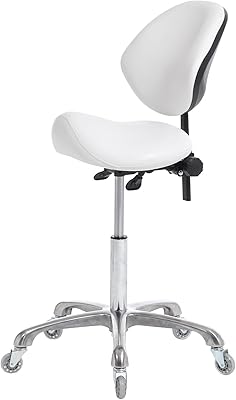
81%
83%
Ergonomic Design
79%
Build Quality
71%
Seat Comfort
67%
Height Adjustability
86%
Mobility & Casters
More
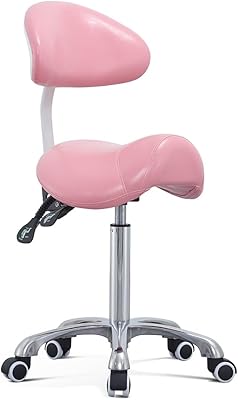
Antlu Saddle Stool Rolling Chair (Pink)
85%
88%
Comfort for Long Hours
91%
Ease of Movement (Swivel Functionality)
85%
Adjustability (Height Range)
90%
Durability (Metal Base & Support)
79%
Aesthetic Appeal (Pink Color)
More
OmySalon Ergonomic Saddle Rolling Stool
73%
71%
Comfort
74%
Ergonomic Support
86%
Mobility & Casters
67%
Height Adjustability
81%
Value for Money
More
Cadiario Saddle Tilting Rolling Stool
73%
71%
Ergonomic Support
74%
Seat Comfort
66%
Build Quality
87%
Mobility & Rolling
57%
Material Durability
More
DR.LOMILOMI RB611 Full-Round Massage Bolster Pillow
80%
88%
Foam Firmness
91%
Hygiene & Cleanability
79%
Build Quality
86%
Value for Money
77%
Professional Suitability
More
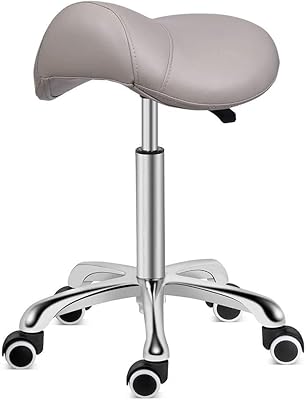
Kaleurrier Saddle Stool Rolling Swivel Chair (Grey)
85%
88%
Comfort for Extended Sitting
91%
Ease of Assembly
85%
Adjustability & Flexibility
90%
Durability & Build Quality
89%
Portability & Maneuverability
More

FAQ

Assembly is straightforward and typically takes 15 to 30 minutes. All the components ship together — base, cylinder, seat body, backrest, and wheels — and the instructions walk you through each step. Just make sure to tighten all bolts securely before sitting down.

Honestly, probably not on day one. Saddle seating changes how your pelvis tilts and redistributes weight differently than a flat seat, so your hips and core need time to adapt. Most people find it takes about one to two weeks before it starts feeling natural. Stick with it through the adjustment period before making a final call.

The saddle seat on the KOA 510 measures 15 inches wide, which fits average to slim builds well. If you have broader hips, it may feel snug. That is one of the more consistent pieces of feedback from buyers, so it is worth factoring in before purchasing.

Technically yes, but the polyurethane casters are designed primarily for hard floors like tile, hardwood, or laminate. On thick carpet, rolling resistance increases noticeably and the smooth glide you would get on hard flooring largely disappears. If your workspace is carpeted, you may want to use a hard floor mat underneath.

The vinyl upholstery wipes down easily with a damp cloth or a standard disinfectant wipe. It is waterproof and abrasion-resistant, so regular cleaning will not degrade the surface. Just avoid harsh solvents or abrasive scrubbers to keep the finish intact.

It genuinely helps. The tiltable backrest is 22.5 inches wide with 12.5 inches of interior height, which provides real lumbar contact when you lean back slightly. It is not the same as a full ergonomic office chair backrest, but for a saddle stool it adds meaningful support that most comparable stools skip entirely.

The seat height adjusts up to 26 inches at the front tip of the saddle, with the overall chair height reaching up to 40 inches at maximum extension. That range works well for taller professionals who often find standard stools too low for comfortable working positions.

It can be, especially if you spend long hours seated and have been dealing with lower-back fatigue from a standard chair. That said, keep in mind it has no armrests, so if you rely on arm support during keyboard work it may not be the right fit. For desk tasks that involve leaning forward or moving around frequently, it works well.

The hydraulic cylinder is described as industry-grade, and longer-term buyer feedback has been generally positive on this front. Most users report the lift mechanism holds its position reliably well past the first year. Like any pneumatic cylinder, it can eventually weaken with heavy daily use, but premature failure appears uncommon based on available feedback.

Yes, DR.LOMILOMI covers this saddle stool with a 1-year limited warranty against manufacturing defects. If you run into a hardware issue within that window, reach out to the brand directly. It is a reasonable coverage period for a professional-grade stool in this price range.