Overview

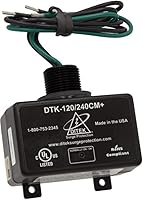
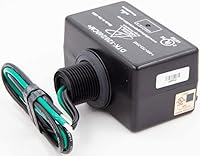
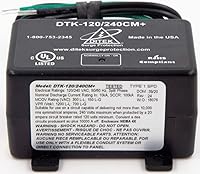
The DITEK DTK-120/240CM+ Surge Arrestor is a hardwired, panel-mounted device built to protect an entire home or light commercial property from damaging voltage spikes. Unlike plug-in power strips, this hardwired surge arrestor installs directly at the electrical panel or service entrance, putting it in position to catch surges before they reach any downstream equipment. It carries a Type 1 SPD classification, which means it can sit ahead of or right after the main breaker — a meaningful advantage over most consumer-grade options. Available since 2010 and still actively sold, it has a track record that carries real weight.
Features & Benefits

What sets this whole-home SPD apart on a technical level is its parallel shunt topology, which diverts excess surge energy away from connected loads without interrupting the normal flow of power — nothing turns off, nothing resets. The unit handles 120/240VAC split-phase systems, covering the full scope of a standard North American residential electrical setup. Its NEMA 4X enclosure makes it genuinely weatherproof, suitable for utility rooms, garages, or exterior meter bases where moisture and dust are real concerns. The UL1449 listing adds a layer of third-party credibility that matters when you are trusting a device to guard your appliances.

Best For

The panel-mounted surge protector makes the most sense for homeowners who want protection beyond what a power strip can realistically offer. Large appliances like HVAC systems, refrigerators, and washing machines have no plug-in surge option, so a service entrance installation is the only practical way to cover them. Properties in storm-prone areas or regions with unstable utility grids benefit most. It also suits light commercial settings needing a weatherproof hardwired solution without a large industrial footprint. That said, this is not a project for everyone — panel wiring carries real risk, and many jurisdictions require a licensed electrician for this type of work.

User Feedback

Owner sentiment across close to 300 ratings skews strongly positive, with many buyers citing years of reliable service and an installation process that even intermediate DIYers found manageable. A number of reviewers specifically mention surviving nearby lightning strikes without losing any equipment — about as real-world a test as you can get. The most consistent criticism is the lack of a status LED; without one, there is no easy visual confirmation the unit is still functional after a surge event. A handful of buyers also stress the importance of professional installation for anyone unfamiliar with working inside a live electrical panel.

Pros

  • Type 1 SPD classification allows installation before the main breaker, catching surges earlier than most residential options.
  • UL1449 listing provides independently verified safety credentials — not just a manufacturer claim.
  • NEMA 4X enclosure makes this hardwired surge arrestor genuinely weatherproof for outdoor or damp-location installs.
  • Parallel shunt design diverts surge energy without cutting power, so nothing in your home resets during an event.
  • Covers 120/240VAC split-phase systems, protecting both sides of a standard North American residential panel.
  • Compact and lightweight enough to fit in tight panel enclosures where space is always at a premium.
  • Owners report years of trouble-free service, suggesting strong long-term durability in real-world conditions.
  • Protects large appliances like HVAC systems and refrigerators that plug-in strips simply cannot cover.
  • Has been on the market since 2010 with a strong average rating across a substantial number of verified buyers.

Cons

  • No built-in status LED means you have no easy way to confirm the unit is still functional after a surge event.
  • Professional installation is often required by local electrical codes, adding cost beyond the unit price itself.
  • Renters or anyone without panel access cannot use this device at all — the installation path simply does not exist.
  • Provides no protection for sensitive electronics on its own; point-of-use strips are still needed alongside it.
  • No audible alarm or remote monitoring capability to alert you when the device absorbs a significant surge.
  • The absence of replaceable MOV components means the whole unit may need replacement after a large surge.
  • Buyers unfamiliar with split-phase systems or SPD classifications may find the specifications confusing to evaluate.
  • No visible surge-event logging or joule rating published makes it harder to compare directly against competing units.

Ratings

The scores below for the DITEK DTK-120/240CM+ Surge Arrestor were generated by AI after analyzing verified buyer reviews from multiple global sources, with spam, bot-driven, and incentivized feedback actively filtered out. The result is an honest, balanced picture of where this hardwired surge arrestor genuinely delivers and where real owners have run into friction. Both the standout strengths and the legitimate pain points are reflected transparently in every category score.
Surge Protection Effectiveness
93%
Owners living in lightning-prone regions consistently report surviving direct strikes on or near their property without losing a single connected appliance. The Type 1 SPD classification puts it ahead of consumer strips in terms of the energy levels it can intercept, and that real-world track record across nearly 300 reviews is hard to argue with.
Because there is no status indicator, buyers cannot easily verify the unit is still fully functional after absorbing a major surge event. A small number of reviewers expressed uncertainty about whether the device had degraded silently following a storm, which is an understandable concern for a safety-critical device.
Build Quality
88%
The NEMA 4X enclosure feels solid and purpose-built for environments where moisture, dust, and temperature swings are routine — think garages, utility rooms, and exterior meter bases. Owners who have had it installed for several years note no visible degradation, corrosion, or mechanical issues.
The compact plastic enclosure, while rated appropriately, does not inspire the same confidence as heavier-gauge metal units at higher price points. A handful of buyers noted the casing feels utilitarian rather than robust, though none reported actual structural failures.
Ease of Installation
79%
21%
For a hardwired panel device, the installation process is notably straightforward — the compact form factor and clear 2W(+G) wiring configuration help experienced DIYers and electricians get it mounted and connected without fighting for space inside a crowded panel.
This is unequivocally not a plug-in-and-go device, and buyers who underestimated the complexity of panel wiring have flagged frustration in reviews. In many jurisdictions, local code requires a licensed electrician for service entrance work, which adds time and cost that some buyers did not anticipate.
Value for Money
86%
Compared to the replacement cost of a single HVAC unit, refrigerator, or washer, the investment in this panel-mounted surge protector is modest and widely viewed as justified by buyers. Long-term owners in particular emphasize how much peace of mind it delivers relative to what they spent.
Once you factor in a professional installation fee — which many buyers ultimately paid — the total outlay climbs meaningfully above the unit price alone. Buyers who assumed installation would be a quick DIY job felt the value proposition was less clear after budgeting for an electrician.
Compatibility
91%
Designed specifically for 120/240VAC split-phase systems, this whole-home SPD covers virtually every standard North American residential panel without special adapters or modifications. Electricians note it drops into common setups without compatibility headaches.
Its design is specifically scoped to North American split-phase systems, making it irrelevant for buyers outside that infrastructure or for anyone on a 3-phase commercial service. This is an intentional design boundary rather than a flaw, but it does limit the audience.
Status Indication
41%
59%
The absence of any indicator is consistent with many panel-level SPDs in this class, and some electricians argue that a light alone gives false confidence since it may not reflect actual clamping capacity remaining after surge events.
This is the most cited frustration among real owners — without any LED or audible alert, there is simply no way to confirm the unit is still protecting your home after a lightning storm without calling an electrician. For a device whose entire purpose is silent, invisible protection, that blind spot feels like a meaningful design gap.
Weather & Environment Resistance
89%
The NEMA 4X rating is a genuine industrial-grade standard, not a marketing claim, and owners who have installed this in exposed exterior enclosures or humid crawl spaces report zero corrosion or weather-related failures over multiple years.
While NEMA 4X covers rain, splashing, and corrosion, it is not rated for submersion, so installations in flood-prone areas or locations where standing water is a realistic risk require additional consideration. This is a niche concern but worth noting for certain installation environments.
Longevity & Reliability
87%
A product that has remained actively sold and positively reviewed since 2010 has effectively been field-tested across a wide range of environments and electrical conditions. Multiple long-term owners specifically mention units running without incident for five or more years.
Like all MOV-based surge devices, this unit has a finite lifespan that shortens with each absorbed surge — there is no way to know how much protective capacity remains after years of smaller events. Without replacement indicators, buyers must rely on scheduled professional inspection rather than any on-device feedback.
Footprint & Form Factor
84%
At 4 x 3 x 2 inches and just over 3 ounces, it is compact enough to fit in panel boxes and enclosures where space is genuinely scarce. Electricians appreciate not having to rearrange existing wiring runs to accommodate a bulky housing.
The small physical size, while practical, also means there is no room for added features like a display, replaceable modules, or an integrated disconnect. Buyers comparing it to larger, feature-rich whole-home units may feel they are trading capability for compactness.
Documentation & Support
67%
33%
The unit comes with adequate installation documentation for qualified installers, and DITEK as a brand has a track record in the professional electrical market that gives buyers reasonable confidence in post-sale support if issues arise.
Several consumer buyers found the technical documentation more suited to electricians than homeowners, leaving them reliant on third-party guides or forum advice. Customer support responsiveness from DITEK was not a consistent topic in reviews, making it hard to assess for buyers who may need help post-installation.
Appliance Protection Coverage
92%
Because it sits at the panel, this hardwired surge arrestor covers every circuit in the home simultaneously — including large loads like HVAC systems, electric ranges, and water heaters that are completely unreachable by plug-in strips. This breadth of coverage is one of the core reasons buyers choose it.
Panel-level protection is a first layer, not a complete solution — high-frequency noise and smaller transients can still pass through to sensitive electronics, meaning plug-in strips with noise filtering remain necessary for computers and audio equipment. A few buyers assumed total protection and were disappointed to learn otherwise.
Third-Party Certification
94%
UL1449 is the recognized North American standard for surge protective devices, and having it independently listed — rather than self-certified — carries meaningful weight for both homeowners and insurance providers. This is not a checkbox; it reflects genuine compliance testing.
While UL1449 listing is important, it does not specify the suppressed voltage rating or energy absorption capacity on its own, so buyers still need to look deeper into spec sheets to understand how this unit compares numerically to alternatives. The listing is a floor, not a full performance summary.

Suitable for:

The DITEK DTK-120/240CM+ Surge Arrestor is the right choice for homeowners who want a meaningful first layer of defense against voltage surges at the source — the electrical panel or service entrance — rather than relying solely on point-of-use strips. It is especially well-suited to anyone living in a region prone to lightning storms or areas where the utility grid is known to fluctuate, since those environments put appliances and electronics at the highest risk. Owners of large household systems like central HVAC units, refrigerators, or electric dryers will find this hardwired approach particularly valuable, as those appliances have no plug-in protection option. Licensed electricians and experienced DIYers handling panel work will appreciate the compact form and straightforward 2W(+G) wiring configuration. Light commercial property owners looking for a weatherproof, panel-mounted solution that meets UL1449 standards without requiring a large industrial unit will also find it a practical fit.
Not suitable for:

The DITEK DTK-120/240CM+ Surge Arrestor is not the right purchase for anyone expecting a plug-and-play solution they can install themselves in a few minutes. Panel-level wiring carries serious safety risks, and in many jurisdictions this type of work legally requires a licensed electrician — a cost that needs to be factored into the total investment. Renters, apartment dwellers, or anyone without access to their own electrical panel will find this unit simply has no practical installation path available to them. Buyers who want a visual confirmation that their surge protection is still active after a strike will be frustrated, as this unit has no status indicator light — you cannot tell by looking at it whether it has been compromised. It also does not replace point-of-use surge strips for sensitive electronics like computers or televisions; it works best as one layer in a broader protection strategy, not as a standalone solution for every device in the home.

Specifications

  • Brand: Manufactured by DITEK, a company specializing in surge protective devices for residential and commercial applications.
  • Model: The specific model number is DTK-120/240CM+, designed for split-phase North American electrical systems.
  • SPD Type: Classified as a Type 1 Surge Protective Device, allowing installation at or ahead of the main service entrance breaker.
  • Voltage: Compatible with 120/240VAC split-phase electrical systems standard in North American residential and light commercial buildings.
  • Wiring Config: Uses a 2W(+G) wiring configuration, supporting two-wire plus ground connections common in residential electrical panels.
  • Topology: Employs a parallel (shunt) installation topology, diverting surge energy away from loads without interrupting normal power flow.
  • Enclosure Rating: Rated NEMA 4X, providing protection against dust, windblown debris, rain, splashing water, and corrosion for indoor or outdoor use.
  • Safety Listing: UL1449 listed, meaning the device has been independently tested and verified to meet current surge protective device safety standards.
  • Dimensions: Measures 4 x 3 x 2 inches, providing a compact footprint suitable for installation in tight panel or enclosure spaces.
  • Weight: Weighs approximately 3.04 ounces, making it easy to handle and position during panel installation.
  • Color: Finished in black, consistent with standard electrical enclosure and panel hardware aesthetics.
  • Installation Type: Requires hardwired installation directly at the electrical panel, meter base, or service entrance enclosure.
  • Application: Designed for use in residential homes and light commercial properties requiring whole-facility surge protection.
  • Compatibility: Compatible with standard North American split-phase 120/240VAC electrical distribution systems.
  • Availability: Currently active and not discontinued by the manufacturer, with continuous availability since July 2010.
  • First Available: Has been commercially available since July 31, 2010, indicating a long-established product with a verified field history.

Related Reviews
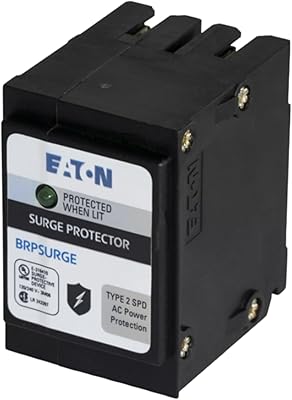
Eaton BRPSURGE Whole Home Surge Protector
83%
88%
Installation Ease
74%
Panel Compatibility
91%
Surge Protection Performance
83%
Build Quality
77%
LED Status Indicator
More
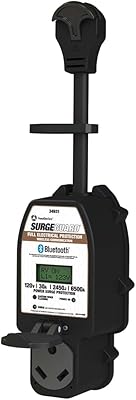
Southwire Surge Guard 30A Wireless Surge Protector
87%
89%
Surge Protection Performance
92%
Ease of Use
85%
Build Quality
87%
Reliability
93%
Setup and Installation
More
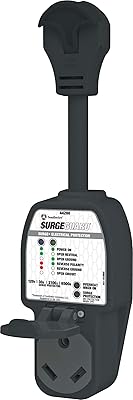
Southwire Surge Guard 50A Portable RV Surge Protector
85%
91%
Surge Protection Performance
88%
Ease of Use
87%
Build Quality and Durability
84%
Diagnostic Features
70%
Portability
More
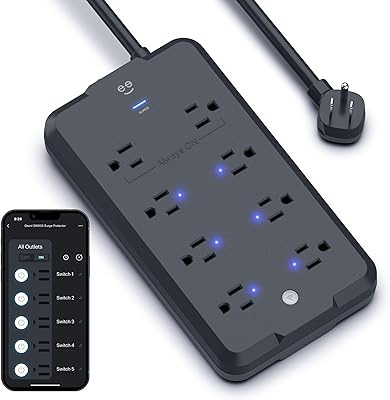
Geeni Surge Ultra 8-Outlet Smart Surge Protector
80%
88%
Ease of Setup
71%
App Performance
91%
Smart Outlet Control
84%
Voice Control
78%
Surge Protection
More
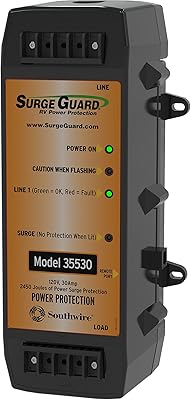
Southwire Surge Guard 35530 30 Amp Hardwire Surge Protector
88%
94%
Ease of Installation
89%
Surge Protection Effectiveness
91%
Build Quality
87%
Reliability
88%
A/C Compressor Protection
More
AWOL VISION MW-120 120″ Projector Screen
80%
88%
Image Surface Quality
91%
Screen Flatness & Tension
83%
Assembly & Setup Experience
79%
Compatibility with Non-AWOL Projectors
86%
Viewing Angle Performance
More
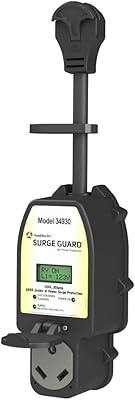
Surge Guard Southwire 34930 30A Portable RV Surge Protector
85%
91%
Surge Protection Performance
89%
Ease of Use
92%
Real-Time Monitoring
85%
Build Quality
88%
Setup & Installation
More
Southwire Surge Guard 30 Amp Portable RV Surge Protector 44280
85%
88%
Ease of Use
91%
Surge Protection Performance
85%
Durability
90%
Portability
83%
Build Quality
More
Intermatic IG1200RC3 Surge Protector
86%
89%
Surge Protection Performance
84%
Ease of Use
91%
Durability
88%
Build Quality
85%
Indoor/Outdoor Versatility
More
Motorola Moto Watch 120 Smartwatch
74%
88%
Display Quality
86%
Battery Life
79%
Build Quality
71%
Health Tracking Accuracy
82%
Bluetooth Calling
More

FAQ

It does not replace them — it works as a first line of defense at the panel, catching large surges before they travel through your wiring. For sensitive electronics like computers and televisions, you should still use quality point-of-use strips. Think of the two as complementary layers rather than alternatives.

Technically, an experienced DIYer who is comfortable working inside a live electrical panel can handle the installation, but it carries real risk. Many local electrical codes also require panel-level work to be performed or inspected by a licensed electrician, so check your jurisdiction before proceeding. When in doubt, the cost of a professional install is well worth the safety margin.

That is one of the genuine limitations of this device — there is no built-in status LED or indicator light. After a significant surge event, the only reliable way to confirm it is still functional is to have an electrician inspect it or contact DITEK directly. This is a known pain point among owners, and it is worth factoring into your decision.

Yes, it is designed specifically for 120/240VAC split-phase systems, which is the standard configuration in virtually all North American residential homes. As long as your panel uses this configuration and has space for the wiring connections, it should be compatible.

Yes, the NEMA 4X enclosure rating makes it suitable for outdoor installations, including exterior meter bases or utility enclosures exposed to rain and moisture. It is also resistant to dust and corrosion, so it holds up well in garages, crawl spaces, and similar environments.

That is exactly where this type of whole-home SPD earns its keep. Large appliances like central air conditioning units, heat pumps, refrigerators, and washers cannot use plug-in surge strips, so a panel-mounted protector is the only practical way to cover them. Protecting those systems alone can justify the investment many times over.

It is designed to handle both external surges — like those caused by nearby lightning strikes or utility switching events — and internal surges generated by motors and compressors cycling on and off inside your home. The Type 1 classification means it can absorb the higher-energy transients that typically originate from outside the building.

Owner feedback consistently mentions years of trouble-free service, and the product has been on the market since 2010 without being discontinued — both good indicators of durability. That said, the service life depends on how many surge events it absorbs over time. A very large strike could degrade or end the unit's protective capability, which is why periodic inspection is recommended.

Yes, the panel-mounted surge protector is well-suited for light commercial settings, especially where outdoor or weatherproof installation is needed. The NEMA 4X rating handles the harsher environments typical of workshops, outbuildings, or small business utility rooms.

Some insurance providers and appliance manufacturers view whole-home surge protection favorably, and a few insurers offer discounts for documented installations. It is worth calling your insurance agent to ask. Having a UL1449-listed device professionally installed gives you the strongest documentation if you ever need to make a claim related to a surge event.

Where to Buy