Overview

The DDPAI Z60 Front and Rear Dash Cam arrived in late 2024 as a well-rounded dual-channel option in a crowded mid-range market. DDPAI has built a reputation for cameras that lean on app connectivity and intelligent software, and the Z60 fits that mold. What distinguishes it at this tier is the pairing of true 4K front recording with built-in eMMC storage — a combination harder to find than you might expect. One thing worth knowing upfront: the extended parking mode sounds compelling, but it requires a separately purchased hardwire kit to function. Factor that into your budget from the start rather than discovering it after unboxing.
Features & Benefits

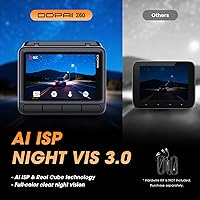
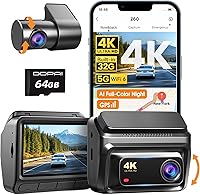
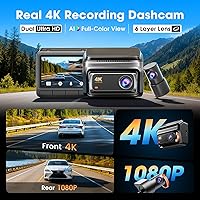
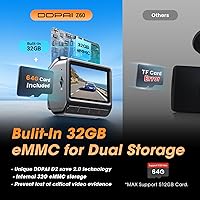
The front camera's 4K resolution isn't just a number — it's the difference between clearly reading a license plate at night and squinting at a smeared frame. DDPAI's AI image processing, paired with an F1.8 wide aperture, keeps footage sharp and color-accurate in genuinely dark conditions. The eMMC backup is a practical touch: if your memory card corrupts, gets ejected, or is simply left at home, the camera keeps recording internally without interruption. Footage transfer is fast thanks to WiFi 6, pushing clips to the app at speeds that make going wireless actually worthwhile. The super capacitor design also outperforms lithium battery alternatives in extreme heat or cold, adding long-term reliability most competitors overlook.

Best For

The Z60 dash cam suits daily commuters who want dependable, high-resolution footage without babysitting a memory card. The dual-storage approach eliminates a real failure point that frustrates owners of budget cameras. Drivers who regularly park overnight in unsecured areas will value the extended surveillance window — provided the hardwire kit is installed. Anyone upgrading from a single-channel 1080p setup will notice an immediate and meaningful jump in front-camera clarity. It also works well for tech-comfortable drivers who prefer pulling clips wirelessly over removing a card. One practical note: no TF card ships in the box, so plan to purchase one separately before your first drive.

User Feedback

Across well over 470 ratings, DDPAI's Z60 holds a 4.4-star average that reflects broad, consistent satisfaction rather than a skewed sample. Buyers frequently praise night vision clarity and the speed of the wireless connection, along with an installation process that most describe as straightforward. The app earns positive mentions overall, though a small number of users report minor connectivity hiccups during first-time pairing. The sharpest recurring criticism centers on parking mode — specifically, the requirement for a separate hardwire kit that many buyers did not anticipate. The absent memory card also surprises some. That said, no significant pattern of complaints around GPS accuracy or build quality has emerged, which is a good sign for long-term ownership.

Pros

  • Front camera footage is sharp enough to read license plates clearly in low-light and nighttime conditions.
  • Built-in 32GB eMMC automatically takes over recording if the TF card fails or goes missing.
  • WiFi 6 makes transferring clips to a smartphone fast enough to actually use regularly.
  • Super capacitor handles extreme heat and cold far better than lithium battery alternatives.
  • A 140-degree field of view captures full lane context without significant edge distortion.
  • Built-in GPS logs speed and location data directly onto footage, useful for insurance claims.
  • The Z60 dash cam comes with all cabling needed for a clean front-and-rear installation in one box.
  • ADAS lane departure and collision warnings add a practical secondary layer of road awareness.
  • Over 470 verified ratings averaging 4.4 stars reflects consistent real-world satisfaction, not a lucky launch spike.

Cons

  • Parking mode requires a separately purchased hardwire kit — it does not work at all without one.
  • No TF card is included in the box, which is a noticeable omission at this price point.
  • The rear camera's 1080P resolution is a clear step behind the front when clips are compared side by side.
  • Some Android users report occasional app crashes when browsing older footage stored on the TF card.
  • GPS lock can lag in dense urban areas with tall buildings, causing brief position inaccuracies.
  • ADAS alerts can trigger too frequently on winding or poorly marked roads, becoming more noise than signal.
  • The plastic housing feels lightweight relative to what buyers expect from a premium mid-range purchase.
  • The on-screen display washes out in strong direct sunlight, limiting usability during outdoor review.
  • Hardwire kit installation may require professional help for drivers unfamiliar with vehicle wiring.

Ratings

The DDPAI Z60 Front and Rear Dash Cam has been scored by our AI system after analyzing hundreds of verified global user reviews, with spam, bot submissions, and incentivized feedback actively filtered out to ensure the results reflect genuine ownership experiences. Scores across each category capture both what this dual-channel camera does well and where real buyers have run into friction. The breakdown below is intentionally transparent — strengths and limitations carry equal weight.
Video Quality (Daytime)
91%
Owners consistently report that daytime footage is sharp enough to read license plates several car lengths ahead, even at highway speeds. The wide 140-degree field of view captures full lane context without distorting edges, which matters when reviewing incident footage frame by frame.
A small number of users note that footage can appear slightly over-sharpened in bright direct sunlight, occasionally washing out fine details on reflective surfaces. This is a minor concern that applies to most cameras at this sensor size, not a unique flaw.
Night Vision Performance
88%
Night vision is one of the most praised aspects across reviews. The F1.8 aperture pulls in enough light that the camera can capture readable plates and pedestrians in poorly lit urban streets — a scenario where many competitors at this price point produce muddy, unusable clips.
At very high speeds on unlit rural roads, some users find the footage softens noticeably, with motion blur appearing on fast-moving objects. The AI noise reduction also occasionally smooths over fine details in extremely dark conditions, trading grain for a slightly painterly look.
Rear Camera Quality
74%
26%
The rear 1080P camera handles typical driving conditions well — it covers tailgating incidents and rear-end collisions with enough resolution to be useful as legal evidence. Installation of the rear unit is straightforward thanks to the included 18-foot extension cable.
The gap between the 4K front and 1080P rear is noticeable when you compare clips side by side. Reviewers upgrading from entry-level cameras may be satisfied, but buyers expecting parity between front and rear channels will find the rear footage a step behind the front's standard.
Built-in eMMC Storage
93%
This is one of the Z60 dash cam's most genuinely useful features in daily use. If the TF card gets corrupted mid-trip, ejected accidentally, or simply forgotten at home, the camera silently switches to internal storage and keeps recording — a failsafe that has saved footage for real users during unexpected incidents.
The 32GB internal capacity fills up relatively quickly under continuous recording, particularly in 4K. It works best as a backup buffer rather than a primary storage solution, and buyers who skip purchasing a TF card thinking the eMMC is sufficient may find themselves overwriting footage faster than expected.
Parking Mode
67%
33%
When properly set up with the hardwire kit, the AOV parking mode delivers genuinely extended surveillance — up to seven days of time-lapse coverage is a strong window for overnight or multi-day parking situations. The low-voltage protection is also a thoughtful touch that prevents battery drain.
The hardwire kit is sold separately, and this catches a meaningful number of buyers off guard after purchase. The parking mode simply does not function without it, which represents an additional cost and installation step that should be budgeted for upfront. Out-of-box parking capability is effectively zero.
WiFi & App Connectivity
84%
The 5GHz WiFi 6 implementation makes a real difference compared to older 2.4GHz dash cams. Transferring a minute-long 4K clip to a smartphone takes seconds rather than the drawn-out wait that frustrated early adopters of wireless dash cams. The DDPAI app interface is generally well-regarded for being intuitive.
A subset of reviewers report occasional pairing hiccups on first-time Bluetooth setup, requiring a restart of the app or the camera to reconnect. The issue appears inconsistent and not universal, but it surfaces often enough in reviews to be worth flagging for less tech-comfortable buyers.
GPS Accuracy
79%
21%
Built-in GPS logs speed and route data directly onto footage, which adds meaningful context when submitting clips as incident evidence. Commuters who track their regular routes appreciate being able to correlate timestamps with mapped locations in the app.
A few users report that GPS lock can take longer than expected in dense urban environments with tall buildings, occasionally showing position lag of a few seconds. Speed data is generally accurate on open roads but can stutter briefly during tunnel exits or signal-blocked stretches.
ADAS Features
72%
28%
Lane departure and forward collision warnings provide a secondary layer of awareness for distracted driving situations, and many buyers treat them as a useful bonus given the camera's primary recording purpose. The alerts are audible and timely under normal driving conditions.
ADAS performance is sensitive to camera mounting angle and calibration, and some users report that lane warnings trigger too frequently on curved or poorly marked roads. It functions as a helpful driver aid but falls short of the precision expected from dedicated ADAS systems in newer vehicles.
Build Quality & Durability
81%
19%
The super capacitor design rather than a lithium battery is a meaningful durability choice — it handles the temperature swings inside a parked car far better than battery-based alternatives, and owners in hot climates specifically call this out as a reason they chose this model over competitors.
A small number of users describe the plastic housing as feeling slightly lightweight relative to premium-tier dash cams. There are no widespread reports of mechanical failure, but the build does not convey the same solidity as higher-priced options from competing brands.
Installation & Setup
86%
Most owners report completing the full front-and-rear installation within 30 to 45 minutes, aided by the included installation tool and clear cable routing hardware. The adhesive windshield mount is secure and positions the unit cleanly without obstructing sightlines.
Routing the 18-foot rear cable cleanly through headliners and door seals can be fiddly in certain vehicle types, particularly SUVs and trucks with complex interiors. Those who opt to add the hardwire kit face an additional setup layer that may require professional installation for less experienced users.
Screen & On-Device UI
77%
23%
The 3-inch IPS screen is a comfortable size for reviewing recent clips without pulling out a phone. Brightness is adequate for daytime use, and the menu layout is logical enough that most users do not need to consult the manual after initial setup.
In very bright sunlight, screen visibility drops noticeably — outdoor glare can make the display difficult to read while parked with direct sun on the windshield. It is functional rather than impressive, and buyers accustomed to high-brightness displays may find it underwhelming.
Value for Money
83%
The combination of true 4K resolution, built-in eMMC backup storage, WiFi 6, GPS, and a super capacitor in a single package sits competitively in the mid-range dash cam tier. Buyers who understand the feature-to-price ratio generally come away feeling the purchase was justified.
The value calculus shifts if you factor in the separately purchased hardwire kit and a TF card — both effectively necessary for the full advertised feature set. That additional cost brings the real-world investment noticeably above the base price shown at checkout.
App Experience
80%
20%
The DDPAI app covers clip playback, download, sharing, and settings management in a clean layout that most users get comfortable with quickly. The fast wireless transfer speed makes the app feel genuinely useful rather than a gimmick tacked onto the product.
Some Android users flag occasional crashes or sluggish loading when browsing older footage stored on the TF card. iOS users appear to report fewer issues, but app updates have historically been uneven, and a small percentage of reviewers note the app has lagged behind firmware improvements on the camera itself.
Box Contents & Accessories
63%
37%
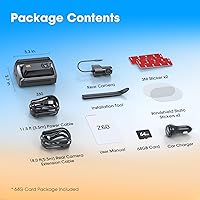
The included 11.5-foot power cable, rear camera extension cable, installation tool, and dual mounting options cover the basics well enough for a clean, cable-managed installation. Most buyers have everything they need to get the camera recording on day one.
No TF card is included, which frustrates a notable share of buyers at this price point who reasonably expect one to be bundled. Given that the eMMC alone is not a long-term standalone solution, the absence of even a starter card feels like a gap in an otherwise complete package.

Suitable for:

The DDPAI Z60 Front and Rear Dash Cam is a strong fit for daily commuters who want reliable, high-resolution footage from both ends of their vehicle without the constant overhead of managing memory cards. The dual-storage design — internal eMMC plus optional TF card — makes it particularly well-suited for drivers who have lost critical footage in the past due to card corruption or accidental removal. Drivers who regularly park in unsecured lots, on city streets overnight, or in shared garages will appreciate the extended parking surveillance window, assuming they invest in the required hardwire kit. Tech-comfortable users who want to pull clips directly to their phone without hunting for a card reader will find the fast wireless transfer genuinely useful in practice. It also works well for anyone upgrading from an aging single-channel or basic 1080p setup who wants a meaningful and immediately noticeable jump in front-camera quality.
Not suitable for:

The DDPAI Z60 Front and Rear Dash Cam is not the right pick for buyers who want a fully functional parking mode straight out of the box — it requires a separately purchased hardwire kit, and that is a firm requirement, not an optional upgrade. Budget-conscious shoppers should also note that no TF card is included, meaning the total cost to get the system fully running is higher than the sticker price suggests. Drivers who need true parity between front and rear footage quality may also be disappointed — the rear camera records in 1080P, which is noticeably a step down when compared side by side with the 4K front. Anyone expecting flagship-level build quality or the kind of robust software ecosystem found in premium dash cam brands should calibrate expectations accordingly, as this is a well-equipped mid-range device, not a top-tier one. Finally, drivers who are not comfortable with app-based setup and wireless configuration may find the initial pairing process more involved than a straightforward plug-and-record camera.

Specifications

  • Front Resolution: The front camera records at 3840×2160 (4K UHD), delivering footage sharp enough to identify license plates and road signage with clarity in most lighting conditions.
  • Rear Resolution: The included rear camera captures at 1080P full HD, providing solid coverage of vehicles approaching from behind during driving and parking.
  • Image Sensor: A 1/2.7-inch CMOS sensor is fitted in the front unit, balancing light sensitivity and detail capture across daytime and low-light environments.
  • Aperture: The front lens features an F1.8 maximum aperture, allowing more light to reach the sensor and improving color accuracy and sharpness in night driving conditions.
  • Built-in Storage: 32GB of eMMC internal flash storage is soldered directly onto the board, serving as an automatic backup recording destination if the TF card slot is empty or the card fails.
  • TF Card Support: The camera supports external TF (microSD) cards up to 512GB capacity; no card is included in the box and must be purchased separately.
  • Screen: A 3″ IPS touchscreen is built into the front unit, offering a reasonably clear live view and menu navigation interface for direct on-device control.
  • Field of View: The front camera covers a 140-degree horizontal field of view, capturing multiple lanes of traffic and roadside context without severe barrel distortion at the edges.
  • Connectivity: The device supports 5GHz WiFi 6 for high-speed wireless video transfer and Bluetooth for quick app pairing and camera management via the DDPAI mobile application.
  • WiFi Transfer Speed: Wireless video transfer to a connected smartphone reaches up to 15MB per second, significantly reducing the time needed to download 4K footage compared to older 2.4GHz implementations.
  • Power Backup: A built-in super capacitor provides approximately 3 to 4 seconds of power after the vehicle supply is cut, ensuring the final footage buffer is written and saved before shutdown.
  • Parking Mode: AOV-based parking surveillance supports up to 7 days of time-lapse recording, extendable to 20 days in low-power sleep mode, both requiring an optional hardwire kit (ASIN: B0DP639X2D).
  • GPS: A built-in GPS module records speed and geographic coordinates frame-by-frame, embedding route data directly into video files for playback and review in the DDPAI app.
  • ADAS: The camera includes active driver assistance features covering lane departure warning and forward collision alert, functioning via continuous front-facing video analysis while driving.
  • Dimensions: The front camera unit measures 1.8 × 3.3 × 2.7 inches, keeping the windshield footprint compact and minimizing obstruction to the driver's sightline.
  • Weight: The complete front unit weighs 1.4 pounds, which is typical for a dash cam with a built-in screen and capacitor-based power management.
  • Mounting Type: The front camera attaches to the windshield via an adhesive 3M mount; two adhesive stickers and two static cling options are included to suit different installation preferences.
  • Included Cables: The box contains an 11.5-foot power cable for the front unit and an 18-foot rear camera extension cable, providing enough reach for clean routing in most standard passenger vehicles.

Related Reviews

Pyle PLCMDVR49 Dual Dash Cam
73%
91%
Ease of Installation
78%
Video Quality (Daytime)
54%
Night Vision & Low-Light Performance
72%
Rear Camera Performance
83%
G-Sensor & Incident Protection
More
NHOPEEW Dual 1080P Touchscreen Dash Camera
76%
88%
Ease of Installation
83%
Video Quality (Daytime)
67%
Night Vision & Low-Light Performance
81%
G-Sensor & Incident Detection
63%
Parking Monitor Functionality
More
BOTSLAB G980H Dual Dash Cam
75%
88%
Video Quality (Front)
81%
Night Vision Performance
74%
Rear Camera Quality
63%
ADAS Reliability
58%
App & Wi-Fi Experience
More
ORSKEY CameraCore Dash Cam Front and Rear 1080P
88%
95%
Video Quality - Daytime
88%
Video Quality - Night
92%
Front Camera Coverage
90%
Rear Camera Coverage
85%
Low-Light Performance
More
Kingslim E4 4K Dual Dash Cam
74%
86%
Daytime Video Quality
61%
Night Vision Performance
78%
Build Quality
72%
WiFi App Experience
83%
G-Sensor & Incident Lock
More
Terunsoul D016 4K Front and Rear Dash Cam
85%
89%
Video Quality
91%
Ease of Installation
88%
Parking Mode Performance
72%
Wi-Fi Connectivity
80%
App Control & Management
More
YEECORE H22 4K Dual Dash Cam
76%
88%
Video Quality (Front)
79%
Night Vision
74%
Rear Camera Quality
83%
GPS Accuracy
63%
App & Wi-Fi Experience
More
Biuone A20 Dash Cam Front and Rear 1080P
83%
89%
Ease of Installation
92%
Video Quality (Daytime)
87%
Night Vision Performance
74%
Field of View (Rear Camera)
91%
Overall Value for Money
More
Affver A4 4K Dual Dash Cam
77%
88%
Daytime Video Clarity
72%
Night Vision Performance
74%
Rear Camera Quality
63%
App Experience & Wi-Fi Connectivity
81%
GPS Accuracy & Logging
More
ARIFAYZ Q4 4K Dual Dash Cam
72%
83%
Daytime Video Quality
61%
Night Vision Performance
67%
Rear Camera Quality
89%
Ease of Installation
63%
Wi-Fi App Reliability
More

FAQ

You will need to purchase a separate hardwire kit to use parking mode — it is not included and the feature does not function without it. The kit connects the camera directly to your vehicle's fuse box so it stays powered after you turn off the engine. DDPAI sells a compatible kit under ASIN B0DP639X2D, so make sure to budget for that if parking surveillance is part of why you are buying this camera.

No TF card is included in the box. The camera has built-in 32GB eMMC storage that works as a backup, but it is not designed to be your primary recording medium for long trips. For continuous loop recording you will want to pick up a Class 10 or UHS-I rated microSD card — the camera supports up to 512GB.

Think of the eMMC as a silent safety net. While a TF card is present, recordings go there as normal. But if the card gets corrupted, fills up unexpectedly, or is simply missing, the camera automatically switches to writing onto the internal eMMC without any interruption. It has saved footage for drivers who had no idea their card had failed until they went to review an incident clip.

Side by side, the gap is visible — the front footage is noticeably crisper and retains more detail when zoomed in, while the rear looks like a solid but conventional dash cam recording. For the purpose of capturing a rear-end collision or identifying a following vehicle, the rear camera does its job well. It is only if you are zooming in to read small text or distant plates that the difference becomes a real limitation.

The DDPAI Z60 Front and Rear Dash Cam uses a super capacitor instead of a lithium battery, which is specifically why it handles heat better than most competitors. Lithium batteries degrade and can swell in extreme temperatures, but capacitors are far more stable across a wide thermal range. Drivers in hot climates consistently call this out as a reason they chose it over similar-priced alternatives.

No card removal needed — the camera connects directly to the DDPAI app over 5GHz WiFi 6, and transfer speeds reach up to 15MB per second. In practical terms, a one-minute 4K clip lands on your phone in well under a minute. It is one of the more genuinely useful implementations of wireless transfer in this camera category.

The rear camera records continuously while you are driving, right alongside the front. Both channels run simultaneously during normal operation, so you have front and rear coverage of any incident that happens on the road. Parking mode also covers both channels when properly set up with the hardwire kit.

They are a mixed bag depending on where you drive. On straight, well-marked highways the lane departure and forward collision warnings behave reasonably. On winding roads, in heavy traffic, or on roads with faded lane markings, the alerts can trigger quite often and some users end up turning them down or off. Treat them as a light assist rather than a precision safety system.

Most people manage the basic installation without any specialized tools — the kit includes an installation tool for tucking cables behind trim panels, which helps a lot. Mounting the front camera and running the rear camera cable takes most owners about 30 to 45 minutes. If you plan to add the hardwire kit for parking mode, that part involves connecting to the fuse box and is a bit more involved — comfortable DIYers can manage it, but it is worth having a professional do it if you are not familiar with vehicle wiring.

On open roads and suburban driving, GPS accuracy is solid and speed logging is reliable. In dense urban environments with tall buildings blocking satellite signals, some users report a few seconds of position lag or brief speed data gaps when exiting tunnels or underpasses. It is not a dealbreaker for most use cases, but if you need forensic-grade GPS precision for commercial purposes, it is worth noting.

Where to Buy