Overview

The CyberPower OR2200PFCRT2U 2000VA Sinewave UPS has held a respectable position in the rack UPS market since its introduction in 2005, and it remains a serious contender for anyone outfitting a small business server room or IT closet. At 2000VA and 1540W with pure sine wave output, it targets a specific and underserved need: reliable power conditioning for equipment that won’t tolerate the modified sine wave cheaper units produce. The 2U rack/tower convertible chassis adds practical flexibility — mount it in a rack today, set it on a shelf tomorrow. What truly separates this CyberPower rack UPS from budget alternatives is its Active PFC compatibility, making it suitable for modern server-grade power supplies that cheaper UPS units simply can’t handle properly.
Features & Benefits

The headline capability here is pure sine wave output — and if you’re running servers or NAS devices with Active PFC power supplies, this isn’t a luxury, it’s a requirement. Modified sine wave UPS units can cause those supplies to run hot, behave erratically, or fail prematurely. The OR2200PFCRT2U’s Automatic Voltage Regulation handles brownouts and overvoltages without touching the battery, which meaningfully extends battery life in areas with unstable utility power. Eight outlets — two higher-amperage 5-20R and six standard 5-15R — cover a realistic mix of rack equipment. The rotatable LCD gives you a live read on load percentage and estimated runtime, and the free PowerPanel Business Edition software lets you configure graceful automated shutdowns before the battery runs dry.

Best For

This sine wave battery backup is most obviously suited to IT administrators who manage rack-mounted servers, switches, or NAS arrays and need more than a basic surge strip with a battery stapled on. Small businesses running point-of-sale systems or workstations where downtime costs real money will also find the reliability worth the investment. It makes particular sense for anyone upgrading from a modified sine wave UPS whose servers or storage devices have started showing instability. Home lab builders who want a genuinely professional setup — not a consumer-grade approximation — will appreciate the rack form factor and the headroom. If your facility deals with frequent voltage sags or swells, the AVR alone justifies the step up.

User Feedback

Among verified buyers, the most consistent praise centers on how well this CyberPower rack UPS handles brownouts — the AVR kicks in smoothly and the transition is barely noticeable to connected equipment. Runtime on moderate loads gets positive marks, though it’s worth being clear: at heavier loads, you’re buying minutes, not hours. On the downside, the 59.5-pound weight comes up repeatedly as a genuine challenge, especially for single-person rack installations. Battery replacement costs after the three-year warranty have also caused frustration, with some users noting the batteries aren’t cheap. Feedback on PowerPanel software is mixed — Windows users generally find it functional, while Linux compatibility has drawn more criticism for limited stability and inconsistent support.

Pros

  • Pure sine wave output keeps Active PFC power supplies running cleanly without overheating or instability.
  • Automatic Voltage Regulation handles brownouts and surges without draining the battery unnecessarily.
  • The 2U rack/tower convertible design gives real flexibility for different installation environments.
  • Eight outlets — including two higher-amperage 5-20R sockets — cover a practical mix of rack gear.
  • The rotatable LCD provides at-a-glance runtime estimates, load percentage, and battery status.
  • PowerPanel Business Edition software allows automated graceful shutdowns before power is fully exhausted.
  • A three-year warranty covering the batteries themselves is meaningfully better than most competitors offer.
  • The $300,000 connected equipment guarantee provides real financial backstop for expensive hardware.
  • AVR performance during brownouts is consistently praised by users in areas with unstable utility grids.
  • The unit has a long, proven track record in its category with a strong rank among rack UPS options.

Cons

  • At nearly 60 pounds, solo rack installation is impractical and potentially a physical hazard.
  • Runtime at heavy loads is measured in minutes — do not expect extended backup for a fully loaded rack.
  • Replacement batteries after the warranty period are a notable ongoing cost buyers should budget for.
  • This is a line-interactive unit, not double-conversion — there is a brief transfer delay when power fails.
  • PowerPanel software has drawn criticism for inconsistent behavior and limited support on Linux systems.
  • The unit requires a NEMA 5-20 outlet, which is not standard in all older offices or home environments.
  • The physical footprint and weight make returns or repositioning genuinely cumbersome.
  • No external battery module option means capacity cannot be expanded if runtime needs grow over time.
  • The upfront investment is significant, making it hard to justify for light or occasional use scenarios.
  • Shipping damage has been reported by some buyers, likely a consequence of the unit’s substantial weight and size.

Ratings

The scores below reflect an AI-driven analysis of verified global user reviews for the CyberPower OR2200PFCRT2U 2000VA Sinewave UPS, with spam, bot-generated, and incentivized submissions actively filtered out before scoring. Ratings are built from real-world feedback spanning IT administrators, small business owners, and home lab users across multiple countries and deployment environments. Both the genuine strengths and the recurring frustrations are represented transparently — nothing has been softened or inflated.

Power Protection Quality
93%
Users consistently report that this CyberPower rack UPS handles brownouts and voltage sags without so much as a blip on connected servers. The AVR correction is smooth and frequent in areas with unstable grids, and equipment stays online without the UPS ever needing to draw on battery power for minor fluctuations.
A small number of users in regions with severely degraded utility power note that AVR alone occasionally cannot keep pace with extreme voltage swings, forcing a battery transfer more frequently than expected. This is an edge case, but worth acknowledging for buyers in particularly unstable grid environments.
Pure Sine Wave Output
96%
IT professionals upgrading from modified sine wave units frequently highlight the immediate improvement in server stability after switching to the OR2200PFCRT2U. Active PFC power supplies that previously ran warm or triggered erratic behavior under battery power operate cleanly and quietly once connected to a true sine wave source.
There is essentially no criticism of the waveform quality itself in user feedback. The only marginal concern is that buyers who do not have Active PFC equipment may not notice any tangible benefit over a less expensive modified sine wave unit, making the premium feel less justified for those specific cases.
Battery Runtime
67%
33%
At moderate loads — a single server, a switch, and a NAS running simultaneously — users generally report enough runtime to save work and execute a clean, graceful shutdown without scrambling. For lightly loaded setups, the buffer is genuinely comfortable and the PowerPanel software countdown is reliable.
Buyers who load this unit near its rated capacity quickly discover that runtime shrinks to just a few minutes, which catches some off guard. Several reviewers explicitly noted they expected significantly longer backup time based on the 2000VA rating, and felt let down when reality did not match their assumptions.
Build & Physical Durability
84%
The chassis feels dense and well-constructed, which most users attribute to the internal battery weight rather than any superficial quality concern. Rack-mounted units show no flex or vibration issues, and the overall impression is of a unit built to sit in a server room for years without complaint.
The sheet metal enclosure, while sturdy, is not particularly refined and shows minor cosmetic scuffs if handled roughly during installation. A handful of users received units with shipping damage to the chassis corners, suggesting the packaging does not always protect the unit adequately given its weight.
Installation & Setup
58%
42%
Once physically in place, the setup process is relatively logical — the LCD walks you through initial status, the USB connection to PowerPanel is plug-and-play on Windows, and the unit is operational within minutes of being racked and plugged in.
The 59.5-pound weight is the single most complained-about aspect of physical installation. Solo rack mounting is genuinely dangerous, and multiple reviewers note that the unit requires at minimum two people and ideally a rack lift. The right-angle input plug also creates cable routing challenges in tight rack cabinets.
LCD Display & Monitoring
81%
19%
The rotatable LCD is a practical touch that IT admins appreciate — being able to orient it for tower or rack installations without losing readability is useful in real deployments. Load percentage, estimated runtime, and battery health are all visible at a glance without needing a connected computer.
The display is functional but not particularly modern, and the font and contrast are harder to read from across a dimly lit server room than some users would prefer. There is no remote display option, so physically approaching the unit is necessary for a quick status check when software monitoring is not configured.
PowerPanel Software
63%
37%
Windows users running PowerPanel Business Edition generally report that automated shutdown configuration works reliably and that the event logs are useful for diagnosing power events after the fact. The software is free, which removes a barrier that competing management platforms impose.
Linux compatibility is a recurring sore point, with users on various distributions reporting installation friction, unreliable communication with the unit, and inconsistent shutdown behavior. Even on Windows, some users describe the interface as dated and less intuitive than third-party UPS management alternatives.
Outlet Layout & Flexibility
78%
22%
The eight-outlet configuration covers a realistic small-rack scenario well, and the inclusion of two 5-20R outlets for higher-amperage devices is appreciated by users connecting servers or power-hungry storage arrays alongside standard networking gear.
Some users wish the outlet spacing allowed for wider power bricks without blocking adjacent ports, and a few noted that all outlets being on the rear of the unit complicates cable management in certain rack configurations. There is no outlet grouping for sequenced power cycling.
AVR Voltage Regulation
89%
In real-world deployments across regions with inconsistent utility power, the AVR is frequently cited as the feature that justifies the step up from basic UPS alternatives. Users in older office buildings report their connected equipment no longer shows instability symptoms that plagued them before the switch.
Because AVR intervention is largely invisible when working correctly, some users in stable grid environments question whether they are benefiting from it at all. There is no granular reporting in the LCD or basic software view of how many AVR corrections have occurred over time.
Warranty & Support
82%
18%
The three-year warranty covering the internal batteries is genuinely above average for this product category, and the $300,000 connected equipment guarantee gives business buyers meaningful financial peace of mind when protecting expensive server hardware.
CyberPower customer support quality receives inconsistent reviews, with some users reporting smooth warranty claim experiences and others describing slow response times or difficulty reaching knowledgeable representatives. Post-warranty battery replacement support is limited to parts availability, with no subsidized service program.
Battery Replacement Cost
54%
46%
The batteries are user-replaceable, and compatible sealed lead acid batteries are available from multiple third-party suppliers, giving buyers some flexibility in sourcing replacements rather than being locked into manufacturer pricing.
Post-warranty replacement costs are a consistent irritant in long-term owner reviews. Four 12V sealed lead acid batteries add up, and buyers who did not factor in this recurring cost feel the total cost of ownership is higher than the purchase price suggests. OEM replacement pricing through CyberPower is particularly criticized.
Form Factor Versatility
77%
23%
The rack/tower convertible design is genuinely useful for buyers whose infrastructure changes over time. Home lab users who started with a tower deployment and later built out a full rack appreciate not having to replace the unit to accommodate the new setup.
Transitioning between rack and tower modes requires repositioning brackets and is not as quick or tool-free as some competing units. At nearly 60 pounds, physically repositioning the unit for a configuration change is a significant effort that most users end up doing only once.
Value for Money
74%
26%
For IT buyers who genuinely need pure sine wave output and Active PFC compatibility in a rack unit, the OR2200PFCRT2U represents a fair trade between features and cost compared to enterprise-tier alternatives that carry substantially higher price tags.
Buyers who realize after purchase that their equipment does not require true sine wave power often feel they overpaid for capability they cannot use. The ongoing battery replacement cost also erodes long-term value, particularly for owners who push the unit through frequent discharge cycles.
Noise & Heat Output
71%
29%
Under normal operating conditions with utility power stable, the sine wave battery backup runs quietly enough that it is unremarkable in a dedicated server room. Most users in IT closet deployments report no meaningful noise contribution from this unit.
During heavy load or when the battery is actively charging after a power event, the cooling fan becomes noticeably audible. Users who have installed the unit in a home office or open workspace rather than a dedicated equipment room mention the fan noise as more disruptive than anticipated.

Suitable for:

The CyberPower OR2200PFCRT2U 2000VA Sinewave UPS is built for IT administrators and small business owners who need dependable power protection for rack-mounted servers, network switches, and NAS arrays. If your equipment uses Active PFC power supplies — which most modern servers do — you genuinely need pure sine wave output, and this unit delivers it at a price point well below enterprise-grade alternatives. Small businesses running point-of-sale systems or workstations where even a few minutes of unexpected downtime translates into lost revenue will find the combination of AVR and battery backup particularly valuable. Home lab enthusiasts who want a rack setup that performs like professional infrastructure, not a hobbyist approximation, will also fit right into this unit’s wheelhouse. It’s especially well-suited to environments where utility power is unreliable, since the automatic voltage regulation handles sags and swells without wearing down the battery on every minor fluctuation.
Not suitable for:

The CyberPower OR2200PFCRT2U 2000VA Sinewave UPS is not the right call for buyers who just need basic surge protection for a home desktop or consumer electronics setup — the cost and physical scale are far beyond what those use cases justify. It is also not a substitute for a double-conversion UPS in environments that demand zero transfer time and absolute power isolation; as a line-interactive unit, it does introduce a brief switching delay when utility power fails, which is acceptable for most IT workloads but not for highly sensitive medical or industrial equipment. Anyone expecting extended runtime under heavy load will be disappointed: at or near full capacity, the battery reserve is measured in minutes, not the half-hour some buyers hope for. The 59.5-pound weight makes solo rack installation genuinely difficult and potentially unsafe, so buyers without a second person or proper lifting equipment should factor that in before purchasing. Linux administrators should also be aware that the PowerPanel software has received uneven reviews for stability on non-Windows platforms, which limits remote monitoring value in mixed environments.
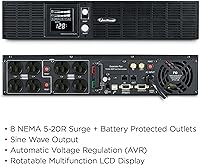
Specifications

  • Capacity: Rated at 2000VA and 1540W, providing enough headroom for a small rack of servers, switches, and storage devices without running close to the limit under typical loads.
  • Topology: Line-interactive design with Automatic Voltage Regulation, meaning the unit actively corrects voltage fluctuations without switching to battery power for every minor event.
  • Waveform: Delivers pure sine wave output, which is required for servers and workstations equipped with Active PFC power supplies to operate safely and efficiently.
  • Outlets: Provides 8 battery-backed and surge-protected outlets: two NEMA 5-20R (20A) and six NEMA 5-15R (15A), all protected against surges and spikes.
  • Input Plug: Uses a NEMA 5-20P right-angle, 45-degree offset plug on a 10-foot power cord, requiring a standard 20A outlet at the wall or PDU.
  • Batteries: Powered internally by four 12V sealed lead acid batteries, which are included in the box and covered under the three-year warranty.
  • Form Factor: Designed as a 2U rack-mountable unit that can also be deployed as a tower, giving administrators flexibility in how and where they install it.
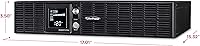
  • Dimensions: Measures 15.32″ deep by 17.01″ wide by 3.5″ tall, occupying two standard rack units in a 19-inch rack enclosure.
  • Weight: Weighs 59.5 pounds fully assembled with batteries installed, which requires two people or proper lifting equipment for safe rack installation.
  • Display: Features a rotatable multifunction LCD panel that shows estimated runtime, battery capacity, load percentage, and current input and output voltage in real time.
  • Connectivity: Includes a USB port for connecting to a host system running PowerPanel Business Edition software for monitoring and automated shutdown management.
  • Software: Compatible with PowerPanel Business Edition, a free downloadable management application that enables scheduled shutdowns, load monitoring, and event logging.
  • Voltage: Operates on 110V AC input and output, designed specifically for the North American electrical standard and not suitable for 220V markets without a converter.
  • Active PFC: Fully compatible with Active Power Factor Corrected power supplies, which are standard in modern rack servers and would be at risk with modified sine wave UPS units.
  • Warranty: Backed by a three-year warranty that explicitly covers the internal batteries, which is a longer and more comprehensive coverage than most competitors in this class.
  • Equipment Guarantee: Includes a $300,000 connected equipment guarantee, covering damage to attached devices caused by power events while the unit is properly installed and in use.
  • UL Certification: Carries UL certification, confirming the unit has been independently tested and meets recognized safety standards for electrical equipment in the United States.
  • Management Option: Supports optional remote management through compatible network management cards, allowing monitoring over a network without requiring a direct USB host connection.

Related Reviews

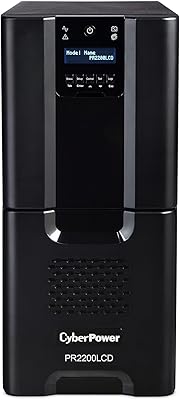
CyberPower PR2200LCD Smart App Sinewave UPS System
82%
91%
Performance
89%
Reliability
85%
Build Quality
92%
Ease of Setup
80%
Battery Life
More
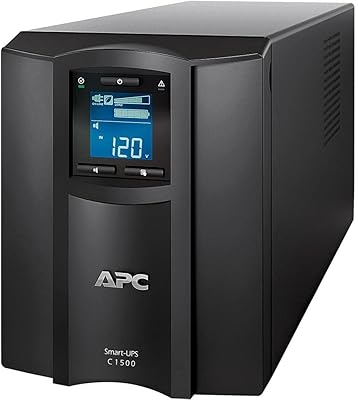
APC SMC1500C 1500VA Line Interactive UPS
81%
93%
Power Protection Reliability
91%
Pure Sine Wave Output Quality
88%
Automatic Voltage Regulation
71%
Battery Runtime
74%
SmartConnect Remote Monitoring
More
CyberPower BRG1000AVRLCD 1000VA UPS System
75%
88%
Value for Money
54%
Battery Runtime
91%
Voltage Regulation (AVR)
93%
Ease of Setup
86%
LCD Display Usability
More
CyberPower AVRG900LCD 900VA UPS System
78%
93%
Voltage Regulation (AVR)
47%
Battery Runtime
96%
Ease of Setup
88%
LCD Display & Monitoring
83%
Outlet Layout & Capacity
More
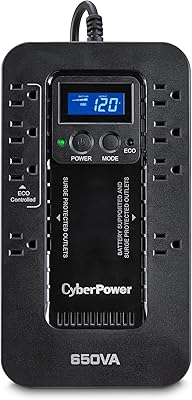
CyberPower EC650LCD 650VA Compact UPS System
79%
93%
Ease of Setup
84%
Battery Backup Reliability
58%
Runtime at Load
81%
ECO Mode Functionality
89%
LCD Display Usefulness
More
CyberPower OR1000PFCRT2U UPS System
85%
88%
Battery Life
91%
Ease of Setup
85%
Build Quality
93%
Flexibility (Rack/Tower Mount)
87%
Surge Protection
More
CyberPower OR1500PFCLCD UPS System
86%
92%
Performance During Power Outages
89%
Reliability of Surge Protection
81%
Ease of Setup
84%
Battery Runtime
88%
Build Quality
More
CyberPower BRG1500AVRLCD2 UPS Battery Backup
86%
88%
Overall Performance
90%
Reliability
68%
Battery Runtime
94%
Ease of Setup
92%
Surge Protection
More
CyberPower AVRG750U AVR UPS System
82%
92%
Value for Money
85%
Setup & Installation
64%
Battery Runtime
88%
Surge Protection
80%
Design & Build Quality
More
GOLDENMATE 2000VA/1600W LiFePO4 UPS Battery Backup
77%
93%
Battery Longevity
91%
Power Output Quality
88%
Voltage Regulation (AVR)
67%
Runtime at Load
84%
Build Quality
More

FAQ

Yes, and this is actually one of the main reasons to choose it over cheaper alternatives. Active PFC power supplies can behave erratically or even fail when powered by a modified sine wave UPS. The OR2200PFCRT2U outputs true pure sine wave power, which is exactly what those supplies expect, so compatibility is not a concern here.

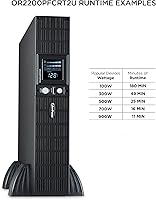
That depends heavily on how much load you have connected. At a light load of around 300 to 400 watts, you can expect roughly 15 to 20 minutes or more. At heavier loads approaching 1000 watts or beyond, you are looking at a few minutes at best. This unit is designed to give you enough time to save work and initiate a clean shutdown, not to run your equipment for extended periods.

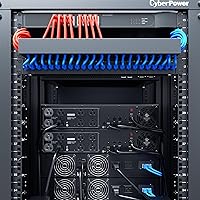
Yes, it takes up 2U in a standard 19-inch rack enclosure. The unit ships with rack mounting hardware, and the depth of about 15.3 inches is compatible with most modern rack cabinets. Just make sure your rack has at least 2U of free space and that the depth clearance works with your cable management setup.

Technically you can, but it is not recommended. At nearly 60 pounds with the batteries installed, maneuvering it into a rack alone is genuinely difficult and could result in injury or dropped equipment. If you are rack-mounting it, have a second person assist, or use a rack lift. Setting it up as a tower on a shelf is more manageable solo, but even then the weight warrants caution.

The unit has eight outlets total: two NEMA 5-20R and six NEMA 5-15R, all battery-backed and surge-protected. The 5-15R outlets accept standard three-prong plugs, which covers most servers and networking gear. The two 5-20R outlets are the same physical shape but support up to 20 amps, useful for higher-draw devices. Just note that the unit itself requires a 20A wall outlet via its NEMA 5-20P input plug.

Once you install PowerPanel Business Edition on a connected host machine via USB, you can configure rules so the system initiates a graceful shutdown after a defined period on battery power, when runtime drops below a set threshold, or when battery capacity reaches a certain level. It essentially protects you from an abrupt power cut even if you are not at the keyboard. On Windows the setup is fairly straightforward; on Linux, your experience may vary depending on your distribution.

The CyberPower OR2200PFCRT2U 2000VA Sinewave UPS uses line-interactive topology, which means it normally passes utility power through directly while the AVR corrects voltage anomalies. When power fails completely, there is a brief transfer delay of a few milliseconds before the battery takes over. A double-conversion UPS runs everything through the battery continuously, so there is zero transfer time, but those units cost significantly more and generate more heat. For most IT workloads, the line-interactive approach is perfectly adequate.
Sealed lead acid batteries in a unit like this typically last three to five years depending on how often they cycle and the ambient temperature of the installation environment. The three-year warranty covers battery replacement within that window, but after that, you will need to source replacement batteries yourself. The replacement process is designed to be user-serviceable, though the battery weight and the number of cells involved means it is not a quick job.

In areas with stable utility power, you may rarely notice it doing anything. But in environments with frequent brownouts, voltage sags during peak demand periods, or older building wiring, AVR can significantly reduce the number of times the unit switches to battery. That matters because every battery cycle contributes to wear, so AVR effectively extends battery life in unstable grid conditions. Users in areas with frequent minor fluctuations consistently report this as one of the most valued features.

No, this particular model does not support an external battery module option. The runtime you get is determined entirely by the four internal 12V batteries. If extended runtime is a priority for your use case, you would need to look at a different CyberPower model that specifically supports the external battery module add-on.

Where to Buy