Overview

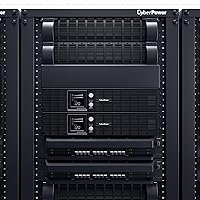
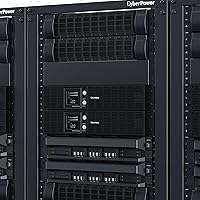
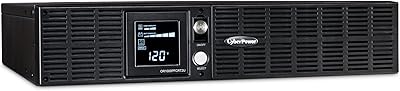
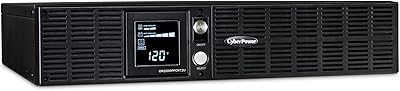
The CyberPower OR2200LCDRTXL2U 2U Rack Tower UPS is purpose-built for network closets and small server rooms — not repurposed home gear dressed up in rack ears. At 2100VA/1650W, it sits in the mid-to-high tier for departmental power protection, capable of keeping a typical two-server setup running for roughly six minutes at full load or closer to fifteen at half. The convertible rack/tower form factor gives you real flexibility depending on how your space is configured. Worth flagging early: this unit outputs a simulated sine wave, which is fine for most networking and server hardware but incompatible with some active PFC power supplies. A product shipping since 2010 carries a track record few competitors can match.
Features & Benefits

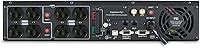
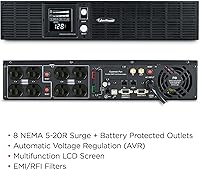
The Automatic Voltage Regulation is probably the feature that separates this rack UPS from cheaper alternatives. Rather than switching to battery every time the grid dips or spikes, AVR corrects minor fluctuations directly — which means battery cycles last longer and your equipment stays protected without unnecessary stress on the cells. The eight NEMA 5-20R outlets deliver more amperage per socket than standard 5-15R connections, a practical consideration for server-grade hardware. The multifunction LCD panel shows runtime, load percentage, and battery status at a glance — no software required. You can also chain up to ten external battery packs if uptime requirements grow. A three-year warranty that covers the battery is rare in this category and worth factoring into the total cost of ownership.

Best For

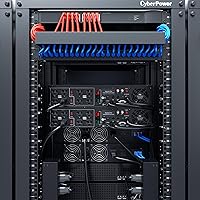
The CyberPower OR2200 is squarely aimed at IT professionals managing small server rooms — NAS arrays, managed switches, patch panels, and edge servers running on a shared circuit. It is a particularly good fit for environments where brownouts are frequent, since AVR handles voltage instability without touching the battery on every dip. The expandable battery option adds long-term value if your uptime needs grow beyond the stock runtime. One hard exception: equipment using active PFC power supplies requires pure sine wave output, and this unit does not provide that — wattage compatibility alone does not tell the whole story. Confirm your equipment's power supply type before committing.

User Feedback

Owners of this 2U battery backup unit consistently highlight how cleanly it slots into a standard rack enclosure, and the LCD is readable from across a room without squinting. Battery replacement gets praised repeatedly — parts are still easy to source years after purchase, which matters a lot for long-term deployments. Where the complaints land: at 66 pounds, this is not a one-person installation job, and a few reviewers mention discovering that only after the fact. The audible alarm during outages is also quite loud, which can be disruptive in open-plan offices or quiet environments. Overall, the feedback reflects a unit that earns its reputation through consistent performance rather than flashy specs.

Pros

  • Automatic Voltage Regulation protects equipment from brownouts without depleting battery life unnecessarily.
  • Eight NEMA 5-20R outlets deliver higher amperage per socket than typical UPS units, well-suited for server hardware.
  • The LCD panel shows runtime, load, and battery status at a glance — no laptop or software required during an outage.
  • Supports up to ten external battery packs, giving the CyberPower OR2200 serious runtime scalability for growing environments.
  • Three-year warranty that includes the battery is rare in this category and reduces long-term ownership risk.
  • Rack/tower convertible design offers real deployment flexibility without needing separate hardware.
  • Replacement batteries are widely available and straightforward to swap, supporting multi-year service life.
  • UL Certified with a connected equipment guarantee that provides meaningful financial protection for attached hardware.
  • PowerPanel software is free to download and provides basic monitoring without additional licensing costs.
  • Proven product history spanning well over a decade signals strong long-term vendor support and parts availability.

Cons

  • Simulated sine wave output is incompatible with active PFC power supplies, which are common in modern workstations and some servers.
  • At 66 pounds, installation is a two-person job — solo deployment is impractical and potentially unsafe.
  • The audible alarm during power events is noticeably loud, which can be disruptive in quiet or open-plan office settings.
  • Remote management capability requires purchasing an optional card separately, adding cost and setup complexity.
  • Full-load runtime of approximately six minutes is short if grid restoration times in your area regularly exceed that window.
  • The unit's physical footprint and weight make it impractical for cramped or shallow rack enclosures.
  • No pure sine wave output option is available within this model line, limiting compatibility with certain sensitive equipment.
  • Upfront cost is significant for very small operations that may not fully utilize the 2100VA capacity or expansion potential.

Ratings

The CyberPower OR2200LCDRTXL2U 2U Rack Tower UPS scores below reflect AI-synthesized analysis of verified purchaser reviews collected globally, with spam, bot-generated, and incentivized submissions actively filtered out. Ratings cover the full ownership experience — from initial installation through years of daily operation — and transparently surface both the genuine strengths and the real frustrations that buyers encounter in the field.
Voltage Regulation (AVR)
93%
Users in older office buildings and areas with notoriously unstable grid power consistently single out AVR as the feature that justifies the purchase on its own. Rather than burning through battery cycles every time there is a minor dip, the unit corrects voltage quietly in the background — equipment stays protected without the owner even noticing an event occurred.
A small number of users expected AVR to handle more extreme or prolonged undervoltage conditions than it is designed for, leading to occasional disappointment when the unit did switch to battery during a deeper sag. AVR is a correction tool, not a substitute for proper facility power conditioning in severely compromised electrical environments.
Waveform Compatibility
61%
39%
For the intended load profile — switches, NAS devices, patch panels, and conventional server power supplies — the simulated sine wave output performs reliably and without incident. The vast majority of networking hardware in small server rooms operates without any issues on this waveform type.
This is the single most divisive aspect of the unit. Buyers who connected equipment with active PFC power supplies reported instability, unexpected shutdowns, or outright incompatibility — a costly mistake when discovered after installation. The simulated sine wave limitation is a hard dealbreaker for a meaningful subset of prospective buyers and is not always clearly understood before purchase.
Runtime Performance
74%
26%
At realistic half-load usage — a common scenario in small server rooms running two servers and a managed switch — the internal batteries deliver around 15 minutes of runtime, which is enough for graceful shutdowns and UPS-triggered safe power-off sequences to complete without data loss.
At or near full load, runtime collapses to roughly 6 minutes, which is uncomfortably short if your facility experiences extended outages. Users in areas where grid restoration routinely takes longer than 10 minutes will need to invest in external battery packs to avoid the runtime ceiling becoming a real operational risk.
Installation Experience
71%
29%
Once two people are on the job, the physical install into a standard 2U rack enclosure is clean and straightforward. The rail mounting is well-designed, the unit seats solidly, and the 10-foot input cord gives enough slack to reach typical rack PDUs or wall circuits without an extension.
At 66 pounds, this is genuinely heavy for a 2U device, and a surprising number of buyers underestimated this until it arrived. Solo installation is impractical and potentially unsafe, especially at mid or upper rack positions — a logistical reality that is easy to overlook when ordering online.
Battery Warranty & Longevity
91%
A three-year warranty that explicitly covers the battery — not just the chassis — stands out sharply in a category where one-year battery coverage is the norm. Long-term owners frequently note that battery replacement parts remain widely available years after purchase, making multi-year service life realistic without hunting for obscure components.
While the warranty terms are generous, the sealed lead acid batteries do still require eventual replacement, and the internal swap process — while manageable — involves opening the unit and handling heavy battery modules. It is not difficult, but it is not a five-minute task either.
LCD Display Usability
88%
The multifunction LCD is bright, legible from across a server room, and delivers exactly the information that matters during an active outage: remaining runtime in minutes, current load percentage, and battery condition. Not needing a connected laptop or running software to read these figures during a crisis is a genuine operational advantage.
The display lacks backlighting adjustment options, which can make it harder to read in brightly lit environments at certain viewing angles. A small number of users also noted they would prefer more granular per-outlet load data rather than a single aggregate figure.
Outlet Configuration
86%
Eight NEMA 5-20R outlets is a well-considered spec for the target environment. The 20-amp rating per socket accommodates server-grade power supplies that draw more current than typical office equipment, reducing the risk of nuisance tripping under realistic rack loads.
All eight outlets are battery-backed and surge-protected, which is excellent for protection, but there are no surge-only outlets for lower-priority peripherals — a minor limitation compared to some competitors that offer mixed outlet banks to preserve runtime for critical loads.
Noise Level
66%
34%
During normal operation with stable power, the unit runs quietly enough that it disappears into the background noise of a typical server room. The fan noise under load is unremarkable and not a meaningful concern for enclosed IT spaces.
The audible alarm during power events is noticeably loud — by design, but disruptive in practice for offices where the rack is in or adjacent to a working space. Users in open-plan offices or quiet professional environments have flagged this as a genuine annoyance, and there is no straightforward way to reduce alarm volume.
Remote Management Capability
63%
37%
When paired with the optional management card, the CyberPower OR2200 integrates cleanly into SNMP-based network monitoring environments, giving IT teams centralized visibility over UPS status, event logs, and load conditions across multiple sites.
Remote management is not included — it requires purchasing and installing an additional card separately, which adds cost and a setup step that buyers focused on the base unit price may not anticipate. Out of the box, remote visibility is limited to what the free PowerPanel software can provide on a locally connected machine.
Software (PowerPanel)
77%
23%
PowerPanel Personal Edition is free to download and handles the core use cases well: scheduled shutdowns, battery runtime estimates, event logging, and basic alerts. For small deployments without a formal IT monitoring stack, it covers most day-to-day management needs without any licensing cost.
The software interface feels dated compared to modern monitoring tools, and its feature set does not scale well for users managing multiple UPS units across different locations. Integration with third-party monitoring platforms requires the separately purchased management card, limiting out-of-box utility for more sophisticated environments.
Build Quality & Durability
89%
The chassis construction is solid and rack-appropriate — no flex, no rattles, and the unit holds up well across years of continuous operation in server room conditions. The long commercial availability of this model since 2010 is itself a signal that the hardware holds together under sustained real-world use.
The enclosure surface shows wear and scuffing over time in high-traffic rack environments, which is largely cosmetic but worth noting for installations where appearance matters. A handful of long-term owners reported fan degradation after several years of continuous operation, though this appears to be within normal product lifecycle expectations.
Battery Expansion Scalability
82%
18%
Support for up to 10 external battery packs is a meaningful differentiator for organizations whose uptime requirements are likely to grow. Being able to extend runtime without replacing the main unit protects the initial investment and gives IT planners a credible long-term upgrade path.
Each external battery pack represents a significant additional investment, and they occupy additional rack space — factors that can accumulate quickly for smaller deployments with limited rack capacity or tighter budgets. The scalability benefit is real, but it is not free.
Value for Money
79%
21%
For buyers whose equipment is compatible with simulated sine wave output, the combination of AVR, an eight-outlet 5-20R configuration, a three-year battery warranty, and a $500,000 connected equipment guarantee represents solid long-term value at this price tier. The total cost of ownership compares favorably once battery longevity and parts availability are factored in.
Buyers who discover post-purchase that their power supplies require pure sine wave output will find the unit effectively unusable for their intended load — a painful way to learn a compatibility lesson at this price point. For those who need pure sine wave, spending more upfront on the right topology would have been the better value decision.
Form Factor Flexibility
84%
The rack-to-tower convertibility is a practical advantage for deployments that are still evolving. Shops that start with a tower configuration can transition to rack-mount without replacing hardware, and the 2U footprint is efficient for standard 19-inch enclosures used in most small server room builds.
The conversion process between rack and tower orientations requires some disassembly and is not something most users will do repeatedly. The depth of 18.8 inches also means shallow or non-standard rack enclosures may not accommodate the unit without clearance issues at the rear.

Suitable for:

The CyberPower OR2200LCDRTXL2U 2U Rack Tower UPS is a strong fit for IT administrators and small business owners running departmental server infrastructure — think NAS arrays, managed switches, edge servers, and VoIP equipment sharing a rack in a closet or dedicated server room. At 2100VA/1650W with Automatic Voltage Regulation, it handles environments where the utility power is inconsistent or aging building wiring causes frequent brownouts, correcting those fluctuations without touching battery reserves. The convertible rack/tower form factor makes it genuinely flexible for shops that are still figuring out their physical setup. For anyone whose uptime requirements are expected to grow, the ability to chain up to ten external battery packs means the unit can scale without requiring a full replacement. The three-year warranty covering the battery is a meaningful differentiator for small IT teams that cannot afford extended downtime or frequent replacement cycles.
Not suitable for:

The CyberPower OR2200LCDRTXL2U 2U Rack Tower UPS is not the right choice for anyone powering workstations or servers equipped with active Power Factor Corrected (PFC) power supplies — those components require a pure sine wave output, and this unit produces a simulated sine wave, which can cause instability or even hardware damage with incompatible loads. This is a physical, rack-grade piece of equipment weighing over 66 pounds, so buyers expecting a solo, quick install will likely be caught off guard; it realistically requires two people and some planning. Home users or remote workers looking for a simple desktop backup solution will find this oversized, over-specified, and harder to justify. Organizations with strict noise policies should also be aware that the audible alarm during power events is quite loud, which can be disruptive in open offices or quiet environments. Finally, buyers who need centralized remote management out of the box should know that feature requires an additional card purchased separately.
Specifications

  • Capacity: This rack UPS provides 2100VA and 1650W of power capacity, placing it in the mid-to-high tier for departmental power protection.
  • Form Factor: The unit ships as a 2U rackmount device but can be converted to freestanding tower orientation, offering flexibility for different installation environments.
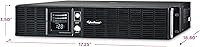
  • Dimensions: Physical dimensions are 18.8″ deep by 17″ wide by 3.5″ tall, occupying exactly 2U of rack space.
  • Weight: The unit weighs 66.1 pounds fully assembled, which makes two-person installation strongly advisable.
  • Outlets: Eight NEMA 5-20R outlets are provided, all battery-backed and surge-protected, offering higher per-socket amperage than standard 5-15R configurations.
  • Input Plug: Power input uses a NEMA 5-20P straight plug on a 10-foot power cord, compatible with 20-amp wall circuits.
  • Topology: The CyberPower OR2200 operates as a line-interactive UPS, meaning AVR handles minor voltage deviations without engaging the battery.
  • Waveform: Output waveform is simulated sine wave, which is compatible with most server and networking hardware but not with active PFC power supplies.
  • AVR: Automatic Voltage Regulation corrects brownouts and overvoltages in real time, protecting connected equipment without unnecessary battery discharge.
  • Runtime: Expected runtime is approximately 15 minutes at half load and approximately 6 minutes at full load using the internal batteries only.
  • Battery Type: Four sealed lead acid 12V batteries are installed internally, providing the base energy storage for backup and runtime.
  • Battery Expansion: Runtime can be extended by connecting up to 10 BP48VP2U02 external battery packs, significantly increasing uptime for critical infrastructure.
  • Display: A multifunction LCD screen shows real-time runtime in minutes, current load percentage, battery status, and active power condition alerts.
  • Warranty: CyberPower provides a three-year warranty that covers both the unit and the internal batteries, which is notably generous for this product category.
  • Equipment Guarantee: A connected equipment guarantee of $500,000 is included, covering damage to properly connected devices caused by power events during normal use.
  • Management Software: PowerPanel Personal Edition software is available as a free download and enables scheduled shutdowns, event logging, and basic UPS monitoring.
  • Remote Management: Full remote management and SNMP integration require the purchase and installation of an optional remote management card, sold separately.
  • Voltage: The unit operates on 120V AC input and is designed for North American electrical infrastructure.
  • Certifications: This 2U battery backup unit carries UL certification, confirming it meets established safety standards for electrical equipment.
  • Availability: The product has been commercially available since March 2010 and is not discontinued, indicating active manufacturer support and ongoing parts availability.

Related Reviews

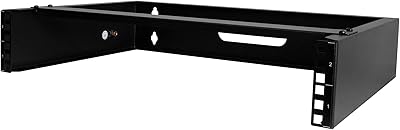
StarTech 2U Wall Mount Network Rack - 14 in Deep (RACK-2U-14-BRACKET)
88%
94%
Ease of Installation
89%
Build Quality
92%
Space Efficiency
85%
Weight Capacity
91%
Sturdiness
More
APC Smart-UPS X 2000VA Rack Tower UPS
76%
93%
Build Quality
96%
Power Protection
74%
Battery Runtime
89%
LCD Display & Monitoring
87%
Form Factor Flexibility
More
APC Smart-UPS X 3000VA Rack/Tower UPS
78%
91%
Build Quality
93%
Reliability & Uptime
61%
Runtime Performance
88%
Remote Management
86%
Outlet Flexibility
More
APC Smart-UPS SRT3000RMXLA 3000VA Rack UPS
77%
94%
Reliability & Uptime Protection
92%
Power Quality & Output
76%
Battery Performance
51%
Battery Replacement Cost
91%
Build Quality & Construction
More
CyberPower AVRG900LCD 900VA UPS System
78%
93%
Voltage Regulation (AVR)
47%
Battery Runtime
96%
Ease of Setup
88%
LCD Display & Monitoring
83%
Outlet Layout & Capacity
More
CyberPower BRG1000AVRLCD 1000VA UPS System
75%
88%
Value for Money
54%
Battery Runtime
91%
Voltage Regulation (AVR)
93%
Ease of Setup
86%
LCD Display Usability
More
CyberPower OR1500PFCLCD UPS System
86%
92%
Performance During Power Outages
89%
Reliability of Surge Protection
81%
Ease of Setup
84%
Battery Runtime
88%
Build Quality
More
CyberPower OR1000PFCRT2U UPS System
85%
88%
Battery Life
91%
Ease of Setup
85%
Build Quality
93%
Flexibility (Rack/Tower Mount)
87%
Surge Protection
More
CyberPower EC650LCD 650VA Compact UPS System
79%
93%
Ease of Setup
84%
Battery Backup Reliability
58%
Runtime at Load
81%
ECO Mode Functionality
89%
LCD Display Usefulness
More
CyberPower BRG1500AVRLCD2 UPS Battery Backup
86%
88%
Overall Performance
90%
Reliability
68%
Battery Runtime
94%
Ease of Setup
92%
Surge Protection
More

FAQ

This is one of the most important compatibility questions to ask before buying. The CyberPower OR2200LCDRTXL2U 2U Rack Tower UPS outputs a simulated sine wave, not a pure sine wave. Many modern server-grade and workstation power supplies use active Power Factor Correction, which requires a pure sine wave to operate safely and stably. If your equipment uses active PFC, you should look at a pure sine wave UPS instead to avoid potential instability or hardware damage.
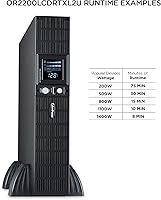
It depends heavily on your actual load. At half the unit's rated capacity — roughly 825 watts, which is realistic for two modest servers and a switch — you can expect around 15 minutes of runtime on the internal batteries. At a full 1650-watt draw, that drops to about 6 minutes. If your grid restoration times are typically longer, the external battery pack expansion option is worth considering seriously.

Technically you can attempt a solo install, but at 66 pounds it is genuinely awkward and potentially unsafe to slide into a rack enclosure alone. Most people who have done it recommend having a second person handle the lift while you guide the rails. If you are deploying into a high rack position, two people is not optional — it is a safety requirement.

A basic UPS either passes utility power through or switches to battery — there is no middle ground. AVR adds a third option: it corrects minor undervoltages and overvoltages on the fly without ever touching the battery. In practical terms, this means your battery is not being cycled every time there is a small grid fluctuation, which extends its useful life and keeps your equipment from riding on battery power unnecessarily.

The CyberPower OR2200 supports up to 10 external battery packs using the BP48VP2U02 model. Each pack adds meaningful runtime to your total capacity, so organizations with stricter uptime requirements can scale without replacing the main unit. Keep in mind each external pack also adds physical space and weight requirements, so plan your rack accordingly.

It is genuinely useful during an outage. The display shows remaining runtime in minutes, current load percentage, and battery status in real time, so you can make informed decisions about what to shut down gracefully and in what order. You do not need a laptop or software running to read it, which matters when things are going sideways quickly.

Loud enough to be heard clearly across a server room, which is the point. If your equipment is in a dedicated closet away from people, it is a non-issue. If the rack is in an open office or near a reception area, some users have found the alarm disruptive during events. There is no straightforward way to lower the alarm volume on this unit.

Yes. Remote management and SNMP integration require an optional management card that is not included with the unit. The free PowerPanel software handles local monitoring and scheduled shutdowns well, but if you want to manage the UPS through a network management system or monitor it remotely, budget for the additional card.

Battery replacement on this rack UPS is straightforward by UPS standards. The unit uses four 12V sealed lead acid batteries, which are a common and widely available form factor. CyberPower sells replacement packs directly, and third-party compatible batteries are easy to source. Multiple long-term owners have commented specifically on how easy the swap process is, which is part of why this unit holds up well over years of service.

Yes, it fits that use case well — provided your NAS and switches do not use active PFC power supplies, which most networking hardware does not. The eight 5-20R outlets give you plenty of connections, AVR handles the minor voltage instability that older office buildings often see, and the 2100VA capacity gives you comfortable headroom above typical loads for that kind of setup. The form factor and weight are slightly more than a small network closet typically needs, but the reliability and warranty make it a defensible investment.