


Overview

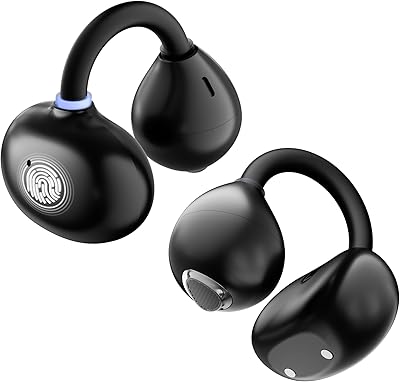
The CXK CT13 Open-Ear Bluetooth Earbuds enter a crowded budget category with a genuinely useful pitch: keep your music on without tuning out the world around you. One thing worth clarifying upfront — despite the bone conduction labeling, these rely on air conduction technology, delivering sound through the air rather than through bone vibration. That distinction matters if you were expecting true bone conduction performance. What immediately sets them apart is their ultra-lightweight build, at just 0.27 ounces per earbud. CXK is a relatively new name in fitness audio, but the CT13s are building a real following among buyers who want open-ear comfort on a tight budget.

Features & Benefits

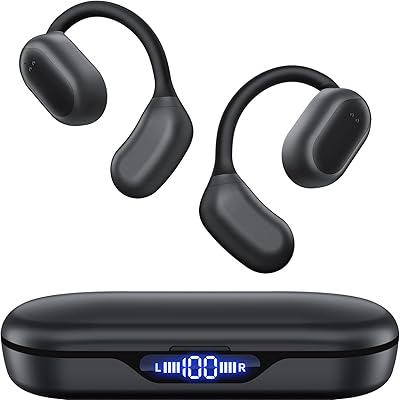
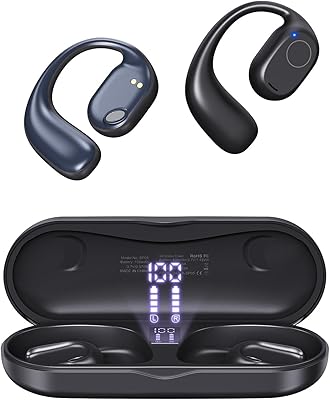
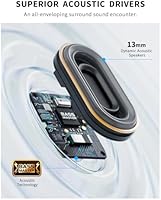
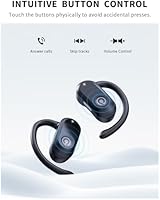
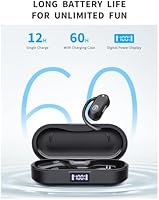
Bluetooth 5.4 keeps the connection stable and fast, and after the first pairing, the CT13s reconnect automatically when pulled from the case — a small but appreciated convenience. Battery life is a genuine strength here: the case and earbuds together deliver 60 hours of playtime, with each earbud running up to 12 hours independently, and an LED display on the case shows remaining charge without any guessing. The IPX6 waterproof rating handles sweat and light rain without issue. Audio from the 13mm driver is solid for this price tier — not audiophile-grade, but clear enough for workouts. Physical button controls let you adjust volume and manage calls without touching your phone.

Best For

These open-ear earbuds are built for people who genuinely cannot afford to zone out. Runners and cyclists sharing road space with traffic will immediately understand the value of hearing what's around them while still enjoying audio. Extended wear is where this wireless set holds a real advantage — the over-ear hook eliminates in-ear pressure entirely, making hours of continuous use comfortable for most people. Gym users dealing with heavy sweat sessions won't need to worry about damage thanks to the IPX6 rating. If you're curious about open-ear audio but haven't committed to a pricier option yet, the CT13s represent a low-risk, practical starting point.

User Feedback

Across roughly 200 ratings — a reasonable but still early dataset for a product that launched in mid-2025 — these open-ear earbuds hold a 4.3-star average, which reads as genuinely positive at this price tier. Buyers consistently praise the comfortable fit and the secure ear hook design during long wear sessions. On the downside, some users report that sound leakage in quiet settings is more noticeable than the marketed 97% reduction figure suggests — treat that claim as a ballpark, not a lab result. Call clarity in loud outdoor environments gets mixed reviews. Feedback on the charging case is mostly fine, though a few buyers note the hinge could feel more robust.

Pros

  • Weighing just 0.27oz per earbud, the CT13s are among the lightest open-ear options available at this price.
  • 60 hours of combined playtime means most users will go days between charges without thinking about it.
  • The LED battery indicator on the case is a small but genuinely useful touch that removes charging guesswork.
  • IPX6 waterproofing holds up well for sweaty workouts and light rain without any special care required.
  • Bluetooth 5.4 delivers a stable connection that auto-reconnects quickly after removing the earbuds from the case.
  • The over-ear hook design keeps these open-ear earbuds firmly in place during vigorous movement.
  • Physical button controls are reliable and don't require you to unlock your phone to skip a track or adjust volume.
  • For buyers new to open-ear audio, the accessible price makes this a genuinely low-risk first purchase.
  • Fast 1.5-hour charge time means a short break can top up the case without significant downtime.

Cons

  • Sound leakage reduction is overstated in marketing — people nearby can still hear audio at normal listening volumes in quiet settings.
  • These are air conduction earbuds, not true bone conduction, despite how they are marketed and described.
  • Call quality in loud outdoor environments, like busy streets or windy conditions, gets noticeably inconsistent.
  • Bass performance is limited compared to in-ear alternatives, which is partly a consequence of the open-ear format.
  • The charging case hinge has drawn occasional durability concerns from buyers, suggesting build quality could be sturdier.
  • With just over 200 ratings at time of review, long-term reliability data on the CT13s is still thin.
  • The 33-foot Bluetooth range is functional but shorter than what many competing earbuds in the same tier offer.
  • Open-ear audio at this price tier will always let in significant ambient noise, which can overwhelm quieter audio content.

Ratings

The scores below for the CXK CT13 Open-Ear Bluetooth Earbuds were generated by our AI after analyzing verified buyer reviews from global sources, with spam, bot-submitted, and incentivized feedback actively filtered out. Each category reflects the genuine consensus of real-world users across a range of use cases, from daily commutes to outdoor workouts. Strengths and recurring pain points are weighted equally so you get an honest picture before buying.

Wearing Comfort
91%
The over-ear silicone hook design consistently earns praise from buyers who wear these for extended periods — multiple hours of running, desk work, or commuting without the pressure or soreness that in-ear tips cause. The 0.27oz per-earbud weight means most users genuinely forget they have them on.
A small number of buyers with narrower or wider ear anatomy report that the hook sits slightly loose or requires repositioning during intense head movement. The fit is not universally adjustable, which can be a drawback for outliers on either end of the size spectrum.
Battery Life
88%
Sixty hours of combined playtime is a standout figure at this price tier, and buyers consistently note that charging frequency drops dramatically compared to their previous earbuds. The LED case indicator removes the frustrating guesswork of not knowing how much reserve power you have left before heading out.
The case's own 20-hour reserve is solid but not exceptional when stacked against competitors pushing higher case capacities. A few buyers also note that real-world per-earbud runtime lands slightly below the stated 12-hour ceiling at higher volume levels.
Situational Awareness
89%
For runners and cyclists sharing road space with traffic, the open-ear format delivers exactly what it promises — music plays while cars, pedestrians, and ambient cues stay clearly audible. Buyers who switched from in-ear models specifically for safety reasons report high satisfaction with how natural the ambient-plus-audio experience feels.
In very loud environments like busy gyms or urban construction zones, the ambient noise can overwhelm the audio entirely at moderate volumes, forcing users to push volume higher than comfortable. This is a fundamental trade-off of the open-ear format rather than a product defect, but it catches some buyers off guard.
Sound Quality
67%
33%
For a budget open-ear product, the 13mm driver produces acceptable clarity across mids and highs, making podcasts, voice calls, and pop music reasonably enjoyable during workouts. Buyers who come in with calibrated expectations for the format — rather than comparing to sealed in-ear options — generally rate audio quality as fair for the price.
Bass response is thin, which is a known physical limitation of the open-ear format but still disappoints buyers accustomed to in-ear or over-ear sound. Audiophile-oriented users or anyone used to mid-range sealed earbuds will find the soundstage flat and lacking depth, particularly with bass-heavy genres.
Sound Leakage Control
54%
46%
In moderately noisy environments — a gym floor, a busy sidewalk, or a crowded transit car — the leakage level is low enough that nearby people are unlikely to be bothered at typical listening volumes. For buyers using these outdoors or in ambient-noise-heavy settings, the practical leakage impact is minimal day-to-day.
The marketed 97% sound leakage reduction is a manufacturer claim without independent verification, and real-world use in quiet spaces like libraries, open-plan offices, or bedrooms reveals noticeable audio bleed. Multiple buyers specifically flagged that colleagues or partners could hear their audio at normal volumes in quiet settings.
Bluetooth Stability
84%
Bluetooth 5.4 delivers noticeably reliable pairing across the tested device range — smartphones, tablets, and laptops all connect quickly, and the auto-reconnect behavior after removing the earbuds from the case works consistently without requiring manual intervention. Buyers rarely report mid-session dropouts during typical use.
The 33-foot range is functional but on the shorter end for Bluetooth 5.4 capabilities, and a handful of buyers note occasional micro-stutters when the source device is in a pocket with multiple competing wireless signals nearby. Range through walls is limited compared to higher-end implementations.
Water Resistance
82%
18%
IPX6 holds up well for the core use case — gym sessions, outdoor runs in the rain, and heavily sweaty workouts all get covered without any reported failures in standard buyer usage. Most active users report zero weather-related issues after weeks of regular outdoor use.
IPX6 does not cover submersion, so swimmers or buyers who assumed shower use would be safe have occasionally been caught out. The case itself does not carry any water resistance rating, meaning it needs to stay dry even if the earbuds can handle moisture.
Microphone & Call Quality
61%
39%
In calm indoor environments or quiet streets, call recipients generally describe voice clarity as acceptable for casual conversation. The physical button controls make answering and ending calls straightforward without pulling out a phone.
Wind noise and loud outdoor environments expose clear microphone weaknesses — callers frequently report difficulty hearing in those conditions. Buyers who rely on hands-free calls during commutes or outdoor activities have flagged this as a meaningful limitation compared to even modest alternatives.
Build Quality
63%
37%
The silicone ear hooks feel durable in daily use and hold their shape well after extended wear cycles. The earbuds themselves show no obvious stress points during normal exercise handling, and the plastic construction feels adequate for the price tier.
The charging case hinge is the most cited structural concern — several buyers noted it feels less robust than expected, with some reporting looseness after a few weeks of regular opening and closing. At this price point the materials are unsurprisingly cost-engineered, and the case feels noticeably lightweight in a way that suggests longevity trade-offs.
Ease of Use
86%
Auto-pairing on removal from the case is a small but genuinely appreciated convenience that buyers mention repeatedly, especially for gym routines where fumbling with Bluetooth menus is a friction point. Physical buttons rather than touch controls reduce accidental activations during exercise.
The button layout can take a few sessions to memorize, and a couple of buyers note that pressing firmly enough to register a command without dislodging the earbud requires a small learning curve. No companion app means EQ customization or advanced settings are simply unavailable.
Charging Speed
79%
21%
A 1.5-hour case charge time is reasonable and means a short rest or lunch break can meaningfully top up the case. Buyers who forgot to charge overnight rarely report being stranded for long before the case is ready again.
There is no fast-charge feature, so the 1.5-hour window is fixed regardless of how urgently you need power. Some competing products in the same price range offer partial quick-charge functionality that adds an hour of playback in 10 to 15 minutes — this wireless set does not.
Secure Fit During Activity
83%
Buyers running on trails, cycling on uneven terrain, and doing high-rep gym movements consistently report that the CT13s stay put without requiring mid-session readjustment. The hook design handles lateral head movement and repeated bending better than clip-style alternatives in this category.
Very high-intensity movements — burpees, jump rope, or aggressive interval sprints — occasionally prompt the hooks to shift slightly on smaller ear shapes. It rarely results in the earbuds falling out, but the micro-adjustments needed afterward are mentioned by a subset of fitness-focused buyers.
Value for Money
81%
19%
For buyers entering the open-ear format for the first time, the CT13s deliver a genuinely usable product at a price point that makes the experiment low-risk. Battery life, water resistance, and Bluetooth reliability all punch noticeably above what the price alone would suggest.
Buyers who already own or have tested mid-range open-ear alternatives from established brands will feel the gap in audio quality and build polish fairly quickly. The value proposition depends heavily on whether this is a first open-ear purchase or an upgrade from something already decent.

Suitable for:

The CXK CT13 Open-Ear Bluetooth Earbuds are a practical fit for active people who need to stay aware of their surroundings while listening to audio. Runners and cyclists sharing space with traffic are the most obvious beneficiaries — keeping ambient sound accessible is a genuine safety consideration, not just a preference. People who struggle with ear fatigue from in-ear tips or the weight of over-ear headphones will likely appreciate how little these impose on the ears during long wear sessions. Gym users who deal with heavy sweat and don't want to baby their gear will find the IPX6 rating genuinely reassuring. Commuters, warehouse workers, or anyone in an environment where staying aurally aware matters will also find these a sensible daily companion. And if you've been curious about open-ear audio but aren't ready to spend significantly more on established brands, this wireless set offers a low-stakes way to try the format.

Not suitable for:

The CXK CT13 Open-Ear Bluetooth Earbuds are not the right pick if audio immersion is your priority. By design, open-ear listening means environmental noise bleeds in constantly — that's the point — so anyone wanting deep focus listening, noise isolation for travel, or serious music listening will be frustrated. The 97% sound leakage reduction claim should be taken with caution; in quiet environments like libraries or open offices, people nearby may still hear what you're playing at moderate volumes. The audio performance, while acceptable for this price range, won't satisfy anyone who has been using mid-range or premium earbuds and expects comparable bass depth or soundstage. Call quality in loud outdoor settings has drawn mixed feedback, so if you rely heavily on hands-free calls during commutes or noisy workspaces, these may disappoint. The brand is also still relatively unproven, with a review pool that, while positive, is still modest in size for drawing firm long-term reliability conclusions.

Specifications

  • Bluetooth Version: The earbuds use Bluetooth 5.4, offering faster pairing speeds and a more stable wireless connection compared to older Bluetooth standards.
  • Wireless Range: The connection remains stable up to 33 feet from the paired device under typical conditions.
  • Driver Size: Each earbud houses a 13mm audio driver designed to deliver clear sound with enhanced bass response for an open-ear form factor.
  • Earbud Weight: Each individual earbud weighs 0.27oz, making this one of the lighter open-ear options available in its price range.
  • Total Playtime: The earbuds and charging case together provide up to 60 hours of combined playtime before the case itself needs recharging.
  • Per-Earbud Battery: Each earbud supports up to 12 hours of continuous playback on a single full charge from the case.
  • Case Battery Life: The charging case holds enough charge to deliver approximately 20 hours of additional playback capacity beyond the earbuds themselves.
  • Charging Time: A full recharge of the case takes approximately 1.5 hours via the included charging connection.
  • Water Resistance: The earbuds carry an IPX6 rating, meaning they are protected against high-pressure water jets and heavy sweat during exercise.
  • Audio Latency: Audio latency is rated at 50 milliseconds, which is acceptable for music and casual video but may be noticeable in latency-sensitive gaming scenarios.
  • Impedance: The driver impedance measures 32 Ohms, which is standard for consumer wireless earbuds and compatible with typical smartphone output levels.
  • Sensitivity: Driver sensitivity is rated at 98 dB, indicating a reasonable loudness output for everyday listening environments.
  • Frequency Response: The stated low-end frequency response begins at 20 Hz; upper frequency limit data is not officially published by the manufacturer.
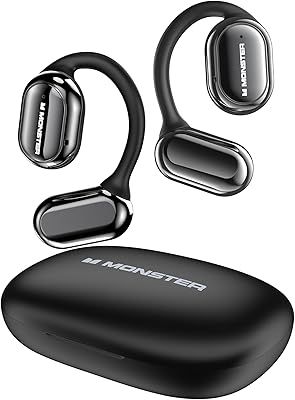
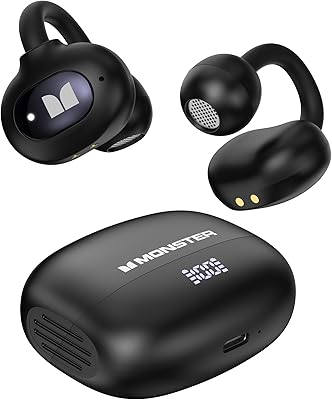
  • Ear Placement: The earbuds use an over-ear hook design that rests outside the ear canal, leaving the ears fully open to ambient sound.
  • Audio Transmission: Despite bone conduction labeling, the CT13s deliver sound via air conduction, projecting audio toward the ear without vibrating through bone or cartilage.
  • Controls: Physical buttons on each earbud handle volume adjustment, track navigation, call answering, and voice assistant activation.
  • Case Display: An LED indicator on the charging case shows remaining battery level, allowing users to monitor case charge without connecting to a device.
  • Compatible Devices: The earbuds pair with smartphones, tablets, laptops, and desktop computers that support Bluetooth connectivity.
  • Case Dimensions: The charging case measures 2.8 inches long by 2.5 inches wide by 1.5 inches tall, compact enough to fit in a pocket or gym bag.
  • Materials: The earbud hooks are made from skin-friendly silicone, while the charging case body is constructed from ABS plastic.

Related Reviews
PSIER EP20 Open Ear Bluetooth Earbuds
86%
85%
Sound Quality
92%
Comfort & Fit
90%
Battery Life
88%
Waterproof Performance
86%
Bluetooth Connectivity
More
AMINY U9 Open-Ear Clip-On Earbuds
78%
91%
Wearing Comfort
83%
Secure Fit During Activity
74%
AI Translation Accuracy
61%
Sound Quality
88%
Battery Life
More
VNMN S19 Open-Ear Clip Wireless Earbuds
75%
83%
Comfort & Fit
67%
Sound Quality
91%
Ambient Awareness
68%
Call Quality
86%
Battery Life
More
Mkilp Bejia HM-22 Bluetooth 6.0 Open-Ear Earbuds
84%
87%
Value for Money
92%
Battery Life
85%
Sound Quality
88%
Comfort & Fit
90%
Waterproofing
More
Nothing Ear (Open) Open-Ear Earbuds
79%
91%
Wearing Comfort
83%
Workout Stability
74%
Sound Quality
77%
Call Quality
49%
Sound Leakage
More
Monster AC100 Open-Ear Bluetooth Headphones
76%
88%
Battery Life
79%
Comfort & Fit
67%
Sound Quality
83%
Bluetooth Stability
71%
Call Quality
More
EarFun Clip Open-Ear Earbuds
75%
88%
Wearing Comfort
83%
Audio Quality
71%
Call Quality
74%
Fit Stability
91%
Battery Life
More
Monster AC338 Open-Ear Bluetooth Earbuds
75%
83%
Comfort & Fit
78%
Battery Life
61%
Audio Quality
86%
Water & Sweat Resistance
81%
Bluetooth Connectivity
More
CXK EP03 Open Ear Headphones
82%
89%
Comfort and Fit
93%
Battery Life
74%
Sound Quality
88%
Ease of Use
85%
Connectivity (Bluetooth)
More
Htcmf O8 Open Ear Earbuds
84%
75%
Sound Quality
90%
Comfort & Fit
95%
Battery Life
88%
Waterproof Durability
84%
Bluetooth Connectivity
More
Haowolf SP05 Open-Ear Bluetooth Sports Earbuds
80%
88%
Comfort & Wearability
83%
Fit & Stability
92%
Battery Life
67%
Sound Quality
71%
Call Quality
More

FAQ

No, and that is intentional. The open-ear design keeps your ear canal completely unobstructed, so ambient sound comes through freely. If you need noise isolation for focus or travel, these are not the right fit — but if you want to hear traffic, conversations, or your surroundings while still listening to audio, that openness is exactly the point.

Technically, they are air conduction earbuds. True bone conduction transmits sound by vibrating the skull directly, bypassing the ear canal entirely — a different technology typically found at a higher price point. The CT13s project sound through the air toward your open ear, which is more accurately described as open-ear air conduction. The bone conduction label in the marketing is misleading, so it is worth knowing the distinction before buying.

Take both earbuds out of the case and they should enter pairing mode automatically. Go to your device's Bluetooth settings, look for the CT13 in the available devices list, and tap to connect. After that first connection, they will reconnect automatically each time you remove them from the case — no manual pairing needed.

Yes, each earbud operates independently, so you can use either the left or right one on its own. This is handy if you want to keep one ear completely free, which also pairs well with the open-ear philosophy of the design.

Potentially, yes. The manufacturer claims 97% sound leakage reduction, but in real-world use — particularly in quiet environments like offices or libraries — people nearby may hear some audio at moderate to higher volumes. Treat that figure as a rough estimate rather than a guarantee, and keep the volume reasonable if you're in a shared space.

The IPX6 rating means they can handle sweat and rain without issue, but submerging them in water is a different story. Showering is generally outside what IPX6 is designed for, so it's best to keep them out of direct water streams or pools. For outdoor runs in the rain or heavy gym sessions, they should hold up fine.

The LED indicator on the case gives you a real-time readout of remaining battery. It is one of the more practical features on this wireless set — you don't need to open an app or connect to anything to check.

The over-ear silicone hooks are flexible and designed to fit a range of head sizes, but fit is always somewhat personal. Most buyers report a secure feel during running and exercise, but if you have a particularly narrow or wide head, it is worth keeping an eye on early reviews from buyers who mention fit specifics, since individual results can vary.

Call quality in calm environments is generally reported as clear. However, several buyers have noted that calls in loud outdoor settings — busy streets, wind, crowded areas — can be inconsistent, with the microphone picking up background noise noticeably. If you rely heavily on hands-free calls during outdoor commutes, this is worth factoring into your decision.

They pair with any device that has Bluetooth, including smartphones, tablets, laptops, and desktop computers with a Bluetooth adapter. The pairing process is the same across devices, and the auto-reconnect feature works with the last connected device once the earbuds are established in its memory.