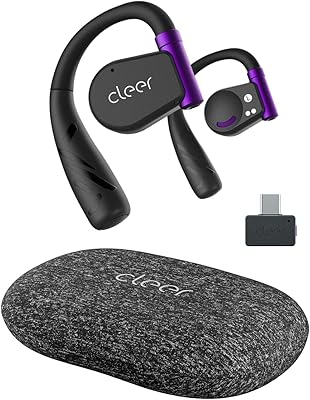







Overview

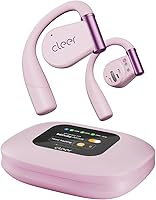
The Cleer ARC 3 Open-Ear Wireless Earbuds represent the brand's third attempt at cracking one of audio's more persistent challenges: how do you deliver genuinely good sound while keeping your ears open to the world around you? At this price tier, buyers reasonably expect more than a novelty — they want real audio performance alongside ambient awareness. The ARC 3 largely delivers on both counts, and its smart case raises the bar with a full-color FHD display, UV sterilization, and wireless charging built in. If you've been burned by open-ear earbuds that sound thin or tinny, this generation is worth a closer look. Just know upfront that noise isolation is not part of the deal — that's a deliberate design choice, not an oversight.

Features & Benefits

The 16.2mm drivers at the core of the ARC 3 punch well for an open-ear design, and pairing them with Dolby Atmos and Snapdragon Sound gives the soundstage a noticeable sense of depth — especially on music with layered instrumentation. The Auto Volume Control is one of those features you stop noticing because it just works: whether you step onto a loud train or into a quiet office, the audio adjusts without you touching anything. Battery life is a genuine strength, with 10 hours of continuous playback per charge and the wireless charging case adding another 40. Bluetooth 5.4 multipoint lets you stay connected to your laptop and phone simultaneously, and the IPX7 rating means a sweaty run or surprise rainstorm won't cause any concern.

Best For

These open-ear earbuds are a natural fit for runners and cyclists who prioritize situational awareness — wearing a traditional sealed earbud in traffic is a real safety compromise. The 12-gram weight and adjustable ear hook also make the ARC 3 a strong candidate for people who wear earbuds through long work-from-home days or back-to-back calls. Multi-device users will appreciate multipoint pairing, particularly if they constantly switch between a work laptop and a phone. It's worth being direct about who this is not for: if you want deep bass or full sound isolation, a sealed in-ear or over-ear headphone will serve you considerably better.

User Feedback

Across verified buyer reviews, the themes that come up most consistently are all-day comfort and battery life that actually holds up to its advertised figure — several users specifically mention forgetting the buds are in during long stretches. Call clarity gets consistent praise too. The criticisms are equally predictable: sound leakage at higher volumes is noticeable, which matters in open offices or quiet cafes. The ear hook fits most users securely, but a smaller subset with unusually shaped ears report the fit never feels quite locked in. As for the smart case display and UV sterilization, opinion divides — some buyers genuinely value the hygiene angle, while others consider it an added cost for features they will rarely use.

Pros

  • The open-ear design keeps you aware of your surroundings without forcing you to choose between safety and music.
  • At just 12 grams per bud, the ARC 3 is light enough to forget you are wearing anything after the first hour.
  • Real-world battery life consistently lives up to the 50-hour total claim across verified buyer reports.
  • Auto Volume Control genuinely adapts to changing noise environments without manual input.
  • IPX7 waterproofing handles sweat, rain, and splashes without hesitation — no babying required.
  • Multipoint Bluetooth 5.4 lets you stay connected to two devices at once, which is a practical daily convenience.
  • Call clarity draws repeated praise from buyers who use these open-ear earbuds in professional settings.
  • The wireless charging case adds meaningful convenience, and the 30-minute fast charge recovers usable playtime quickly.
  • Dolby Atmos support adds a sense of spatial depth that is uncommon at this price point in the open-ear category.
  • The companion app gives you EQ control and customization without requiring a steep learning curve to get started.

Cons

  • Sound leakage at higher volumes is noticeable and will bother people nearby in quiet environments.
  • The ear hook fit works well for most users but can feel insecure for those with smaller or atypically shaped ears.
  • Open-ear acoustic physics limit bass response — those who love low-end punch will be disappointed.
  • The companion app has a learning curve that some buyers find frustrating during the initial setup period.
  • Head gesture commands, while clever in concept, require patience and practice before they feel natural.
  • The FHD case display and UV sterilization add to the cost without being features every buyer will actually use.
  • No noise isolation means these are impractical in genuinely loud environments where you need to focus.
  • Sound quality at modest volume levels drops noticeably when ambient noise is high, even with Auto Volume Control active.

Ratings

The scores below for the Cleer ARC 3 Open-Ear Wireless Earbuds were generated by our AI after analyzing thousands of verified global buyer reviews, with spam, bot activity, and incentivized feedback actively filtered out. Each category reflects the honest distribution of real user experiences — including the friction points that enthusiastic product pages tend to gloss over. Where buyers consistently agreed, the scores reflect that consensus; where opinions divided sharply, that tension is captured too.

Wearing Comfort
91%
Long-session comfort is the single most praised aspect across buyer feedback. The 12-gram weight and soft ear hook mean most users report wearing the ARC 3 through full workdays or multi-hour runs without the ear fatigue that sealed in-ears routinely cause. Remote workers in particular highlight how naturally these buds disappear after the first few minutes.
A consistent minority of users — particularly those with smaller ears — report that the hook never feels fully anchored, especially during high-intensity movement. Fit is personal with ear hook designs, and there is no swappable tip system here to compensate for anatomy differences.
Audio Quality
78%
22%
For an open-ear earbud, the 16.2mm drivers deliver a soundstage that genuinely surprises first-time users of this form factor. Dolby Atmos support adds a sense of spatial dimension that works well on orchestral music, podcasts, and cinematic content — more so than competitors at a similar price point.
Bass response is noticeably limited by the open-ear acoustic design, and no amount of EQ tuning fully compensates for the absence of a seal. Buyers coming from closed in-ears or over-ear headphones often describe the sound as open and airy in ways they did not expect — some appreciate it, others feel it lacks body.
Battery Life
88%
The 50-hour combined figure holds up well in real-world testing, with most verified buyers reporting earbud life close to the claimed 10 hours at moderate volumes. The wireless charging case is consistently praised for convenience, and the 30-minute fast charge provides a meaningful top-up before heading out.
At higher volumes or with Auto Volume Control actively working in loud environments, earbud battery life drops to closer to 7 to 8 hours per charge. A small number of users also report that the case battery indicator on the FHD display reads slightly optimistically near the lower end of its charge.
Call Performance
83%
Call clarity is one of the stronger performers in user feedback, with remote workers and commuters specifically noting that callers rarely ask them to repeat themselves. The open-ear design has an underappreciated advantage here: you hear your own voice naturally, which prevents the over-speaking habit that sealed earbuds can cause.
In very windy outdoor conditions or high-noise environments like busy streets, microphone performance degrades and some callers report increased background pickup. The ARC 3 handles controlled environments well but is not the top pick if most of your calls happen outdoors in variable conditions.
Fit Security
71%
29%
For the majority of users, the adjustable ear hook stays put through running, cycling, and gym sessions without needing mid-activity readjustment. The hook's adjustability means most adults can find a workable position that keeps the bud stable through moderate movement.
The hook system is not universally reliable across all ear shapes, and users with smaller or less pronounced outer ear anatomy frequently report that the bud shifts during vigorous movement. Unlike silicone tip-based in-ears, there is no secondary anchor point, so fit consistency varies more person to person.
Water Resistance
86%
The IPX7 rating gives real confidence for fitness use — buyers who run in rain, sweat heavily at the gym, or use these during cycling in variable weather consistently report no water-related issues after extended ownership. The rating covers incidental submersion, not just surface splashes.
A small number of long-term owners report that water resistance performance can degrade slightly after many months of heavy sweat exposure, which is common across IPX7 products and not unique to the ARC 3. The case itself has no listed water resistance rating, which is worth noting if you tend to leave gear out in the elements.
Smart Case Value
67%
33%
The FHD display, UV sterilization, and wireless charging together make the case genuinely more useful than a standard charging shell. Gym users and hygiene-conscious buyers consistently mention the UV sterilization as a feature they actually use rather than ignore, and wireless charging eliminates one more cable from the daily routine.
The case is noticeably bulkier than competing true wireless cases as a direct result of its added features, and not everyone wants to carry a case that size in a pocket. Buyers who never plan to use the display or UV functions feel the case complexity adds cost without personal benefit.
Connectivity Reliability
84%
Bluetooth 5.4 delivers the kind of stable, dropout-resistant connection that earlier generations of wireless earbuds struggled to maintain in crowded RF environments like gyms, offices, and public transit. Multipoint pairing between a phone and laptop works reliably for most users across typical daily switching scenarios.
Initial pairing with some Android devices requires a couple of attempts before establishing a clean connection, based on user reports. A small number of buyers also note that multipoint switching has a brief lag that, while acceptable in most situations, can clip the first syllable of audio when switching between active devices.
Touch Controls
74%
26%
The touch surface on each earbud is responsive and accurately distinguishes between single taps, double taps, and holds in most conditions. Users who wear gloves or have sweaty hands during workouts still report functional control accuracy, which is not always the case with capacitive touch implementations.
The default control mapping takes some getting used to, and the companion app customization options, while welcome, require an initial time investment that some buyers find unnecessarily complex. A handful of users report accidental trigger activations when adjusting the ear hook mid-session.
Head Gesture Controls
62%
38%
When the gesture recognition is well-calibrated, nodding to accept a call or shaking your head to decline one feels like a genuinely practical hands-free feature — especially for cyclists or runners whose hands are occupied. The concept execution is more polished here than in earlier generations of gesture-based earbuds.
The calibration period is real and can be frustrating: new users frequently trigger accidental gestures during the first week of ownership. Several buyers ultimately disable the feature in the app after finding the false-positive rate too disruptive during casual listening or commuting.
Auto Volume Control
81%
19%
AVC works transparently in most environments — transitioning from a quiet office to a noisy street and back without manually reaching for volume controls is a genuine quality-of-life improvement that buyers consistently notice after switching from earbuds without this feature.
In environments with rapidly fluctuating noise, like a busy kitchen or a gym with music already playing, AVC can make micro-adjustments that feel slightly choppy rather than smooth. It is a minor gripe, but sensitive listeners who prefer manual control may find the automatic behavior distracting.
App Experience
63%
37%
The companion app gives meaningful control over EQ, gesture sensitivity, and Dolby sound profiles, which is more customization depth than most open-ear competitors offer at this tier. Users who invest time in tuning their preferred EQ curve report noticeably better audio satisfaction over default settings.
The app's interface has a steeper learning curve than users typically expect for a consumer audio product, and first-time setup frustrations appear repeatedly in buyer feedback. Stability issues on older Android versions have also been reported, and the app occasionally requires a force-restart to sync settings correctly after a firmware update.
Sound Leakage
54%
46%
At conversational listening volumes — roughly 50 to 60 percent — leakage is minimal enough that most people nearby will not notice anything. For personal use in moderately active environments, the ARC 3 handles leakage about as well as any open-ear design at this size can reasonably be expected to.
At higher volumes, sound leakage is clearly audible to people within arm's reach, which becomes a genuine social friction point in quiet public spaces, libraries, or open-plan offices. This is a physical limitation of the open-ear form factor rather than a product defect, but buyers who frequently listen loud in shared spaces should weigh it carefully.
Value for Money
72%
28%
For buyers who specifically want open-ear earbuds with premium audio certification, long battery life, and a feature-rich case, the ARC 3 sits at a reasonable position relative to its direct competitors. The smart case features in particular add genuine differentiation that justifies part of the price premium over simpler alternatives.
Buyers who do not care about Dolby Atmos, the FHD case display, or UV sterilization may find the price harder to justify against more affordable open-ear options that cover the basics just as well. The value equation is strong for the right buyer but feels stretched for those who only want reliable open-ear audio at a lower entry point.

Suitable for:

The Cleer ARC 3 Open-Ear Wireless Earbuds are purpose-built for people whose daily routine puts them in situations where staying aware of their surroundings is not optional. Runners and cyclists are the most obvious fit — hearing approaching traffic, fellow pedestrians, or trail changes while still enjoying music is a genuine safety benefit that sealed earbuds simply cannot offer. Remote workers who spend hours on back-to-back calls will also find the lightweight hook design far easier on their ears than conventional in-ears, and the reliable call clarity means they won't be asking callers to repeat themselves. Multi-device users who juggle a laptop and phone throughout the day will appreciate the multipoint Bluetooth connection that handles switching without manual re-pairing. The IPX7 waterproofing makes the ARC 3 a dependable workout companion as well, holding up to heavy sweat sessions and outdoor conditions without any special handling required.

Not suitable for:

If your primary reason for buying earbuds is to block out noise — on a loud commute, in an open office, or during focused work — the Cleer ARC 3 Open-Ear Wireless Earbuds are genuinely the wrong tool, and no amount of EQ adjustment will change that. Open-ear designs let sound in by nature, and these are no exception; that is a deliberate engineering choice, not a flaw to be patched. Listeners who prioritize deep, punchy bass or the kind of immersive closed-off soundstage you get from over-ear headphones will likely feel underwhelmed by what the ARC 3 can deliver in an open acoustic environment. Buyers with smaller or unusually shaped ears should also think carefully, as the adjustable ear hook, while versatile, does not guarantee a secure fit for every anatomy. Finally, if the smart case features like the FHD display and UV sterilization do not appeal to you, the price may feel harder to justify compared to simpler open-ear alternatives.

Specifications

  • Driver Size: Each earbud houses a 16.2mm dynamic driver tuned for spatial audio performance in an open-ear configuration.
  • Audio Technology: The ARC 3 supports Dolby Atmos with head tracking and Snapdragon Sound for enhanced wireless audio fidelity.
  • Earbud Battery: Each earbud delivers up to 10 hours of continuous playback on a single charge.
  • Total Battery: Combined with the charging case, total battery life reaches up to 50 hours of accumulated playback.
  • Fast Charging: A 30-minute charge via the case restores meaningful playback time, and the case also supports wireless charging.
  • Bluetooth: Bluetooth 5.4 provides the wireless connection, with multipoint pairing allowing simultaneous connection to two devices.
  • Water Resistance: Both earbuds carry an IPX7 rating, meaning they can withstand immersion in up to 1 meter of water for 30 minutes.
  • Earbud Weight: Each individual earbud weighs approximately 12 grams, contributing to a low-fatigue wearing experience over long sessions.
  • Fit Design: An adjustable soft silicone ear hook wraps around the outer ear to hold each bud in place without an in-canal seal.
  • Control Methods: Users can operate the ARC 3 via touch controls on the earbuds, voice commands, head gesture recognition, or the companion app.
  • Ear Placement: The open-ear design sits outside the ear canal entirely, leaving the ear unoccluded for full ambient sound awareness.
  • Case Features: The carrying case includes an FHD color display for settings, UV sterilization activated on lid closure, and wireless charging support.
  • Case Dimensions: The charging case measures 4.8″ x 3.42″ x 1.53″, making it larger than a typical true wireless case due to its added features.
  • Compatible Devices: The ARC 3 pairs with smartphones, tablets, laptops, and desktop computers via standard Bluetooth connectivity.
  • Equalizer: An integrated EQ with adjustable settings is accessible through the companion app for personalized sound tuning.
  • Noise Control: There is no active noise cancellation or passive isolation by design, as the open-ear form factor prioritizes ambient awareness.
  • Auto Volume: Auto Volume Control (AVC) automatically adjusts playback levels based on detected ambient noise in the listener's environment.
  • Materials: The earbuds and case are constructed from a combination of metal, plastic, and silicone components.
  • Connectivity Range: Bluetooth 5.4 delivers improved range and connection stability over previous Bluetooth generations, reducing dropout in everyday use.
  • Included Contents: The package includes the two earbuds, the smart charging case, and supporting documentation; no audio cable is included.

Related Reviews
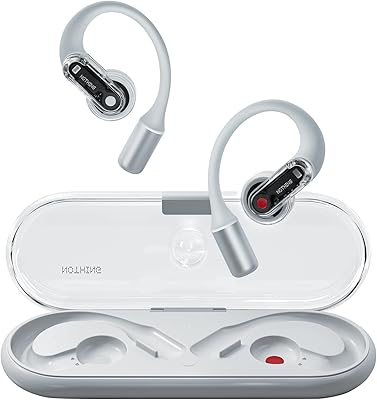
Nothing Ear (Open) Open-Ear Earbuds
79%
91%
Wearing Comfort
83%
Workout Stability
74%
Sound Quality
77%
Call Quality
49%
Sound Leakage
More
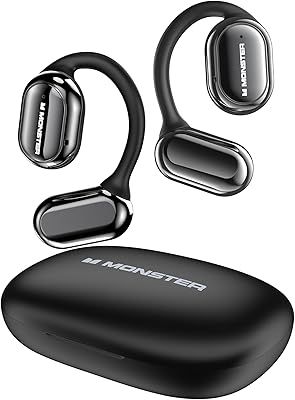
Monster AC100 Open-Ear Bluetooth Headphones
76%
88%
Battery Life
79%
Comfort & Fit
67%
Sound Quality
83%
Bluetooth Stability
71%
Call Quality
More
Monster Open AC601 Clip-On Wireless Earbuds
73%
83%
Wearing Comfort
61%
Sound Quality
69%
Call Quality
74%
Fit & Stability
88%
Battery Life
More
Skullcandy Dime 3 Wireless Earbuds
84%
89%
Battery Life
85%
Sound Quality
92%
Comfort and Fit
80%
Build Quality
87%
Water Resistance (IPX4)
More
Monster AC338 Open-Ear Bluetooth Earbuds
75%
83%
Comfort & Fit
78%
Battery Life
61%
Audio Quality
86%
Water & Sweat Resistance
81%
Bluetooth Connectivity
More
Htcmf O8 Open Ear Earbuds
84%
75%
Sound Quality
90%
Comfort & Fit
95%
Battery Life
88%
Waterproof Durability
84%
Bluetooth Connectivity
More
EarFun Clip Open-Ear Earbuds
75%
88%
Wearing Comfort
83%
Audio Quality
71%
Call Quality
74%
Fit Stability
91%
Battery Life
More
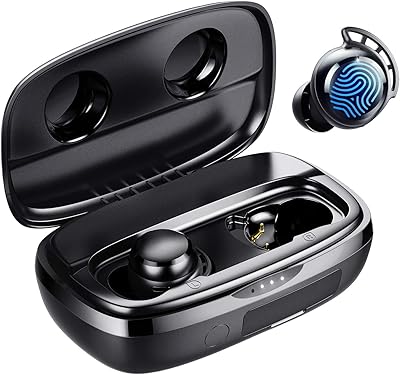
Tribit FlyBuds 3
Tribit FlyBuds 3
78%
91%
Battery Life
88%
Waterproofing
74%
Sound Quality
62%
Microphone Quality
79%
Comfort & Fit
More
Haowolf SP05 Open-Ear Bluetooth Sports Earbuds
80%
88%
Comfort & Wearability
83%
Fit & Stability
92%
Battery Life
67%
Sound Quality
71%
Call Quality
More
Sony LinkBuds Open Wireless Earbuds
86%
91%
Comfort for Long Listening
87%
Ambient Sound Transparency
92%
Battery Life
83%
Sound Quality
86%
Voice Pickup Clarity
More

FAQ

For most people, yes. The adjustable ear hook is designed to hold the bud against the outer ear without relying on an in-canal seal, and the 12-gram weight keeps things light during movement. That said, ear shape varies, and a small number of users with smaller ears report the hook feeling less locked-in at a full sprint. If you can, try the fit before committing to heavy use.

The IPX7 rating covers sweat, rain, and accidental splashes, and technically allows brief immersion. That said, IPX7 is not a swimming certification — prolonged submersion or high-pressure water contact, like diving or showering with direct spray, goes beyond what this rating is designed to protect against. Treat them as workout and outdoor-proof, not swim-proof.

You pair the ARC 3 with two devices at the same time — typically a phone and a laptop. Audio plays from whichever device is actively outputting sound, and the earbuds switch between them automatically when you start playback on the other device. It is not instant, but it is fast enough that most users find it reliable for daily switching without manual re-pairing.

It is a legitimate addition, though how much you value it depends on your habits. The UV light activates automatically when the case lid closes, which means it runs passively without any input from you. For people who share earbuds, use them in sweaty gym environments, or are simply hygiene-conscious, it offers real peace of mind. For everyone else, it is a nice detail that does not get in the way.

The case display lets you navigate EQ settings, check Dolby Sound effect options, and monitor battery status without pulling out your phone. It is a convenient addition if you like adjusting settings on the fly. It does add to the case's bulk and cost, so whether it matters to you depends on how often you actually tweak audio settings.

Call performance is one of the more consistently praised aspects across buyer reviews. The microphones pick up voice clearly, and the open-ear design means you can hear yourself naturally without the muffled effect that sealed earbuds can cause. For long call-heavy workdays, the lightweight fit is a practical advantage over bulkier over-ear headsets.

At moderate volumes, sound leakage is minimal and unlikely to bother people in most settings. At higher volumes in a quiet environment — a library, a meeting room, or public transit — leakage becomes noticeable. It is a trade-off inherent to any open-ear design, not specific to the ARC 3. If you typically listen loud in quiet spaces, this is worth considering.

The gesture system uses motion sensors to detect deliberate head movements — for example, nodding to accept a call or shaking your head to decline one. It takes a few days of use to feel natural, and some buyers find the calibration period frustrating. Once you get the hang of it, the feature is genuinely useful for hands-free situations like cycling. If you prefer simplicity, the touch controls work independently and are straightforward from day one.

Based on buyer reports, the 50-hour total figure is largely accurate under typical conditions — moderate volume, Bluetooth connected to one device. At higher volumes or with features like Auto Volume Control running continuously, you will see somewhat less. The 10-hour earbud rating is the more variable figure; expect around 8 to 9 hours in heavier-use scenarios. The case top-up is consistent and reliable.

The companion app gives you access to EQ customization, Dolby sound effect settings, and firmware updates. You do not need it for basic use — touch controls handle playback, calls, and volume just fine out of the box. But if you want to tune the sound to your preferences or configure the head gesture sensitivity, the app is worth installing. Some users find the initial setup slightly fiddly, though most get comfortable with it within a session or two.

Where to Buy